
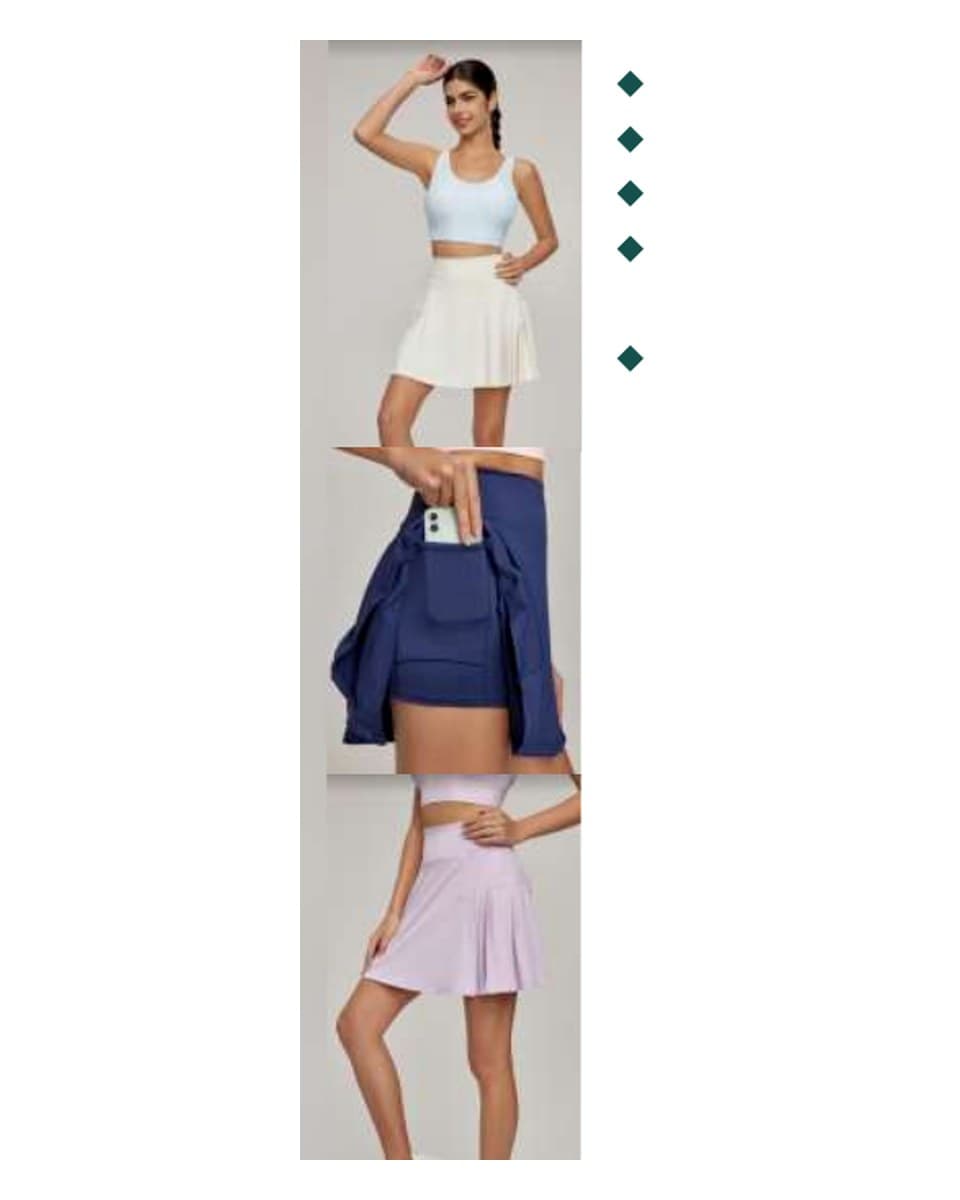
A padel skort with a ball pocket should be specified as one interacting system, not as a skirt plus a generic pocket. The outer layer, inner shorts, waistband, pocket opening, capacity, access direction, material, and wearer movement all affect one another. Buyers should define the intended ball and review the assembled sample before approving any function.
This guide focuses narrowly on skort development for B2B brands, designers, clubs, academies, and retailers. The wider assortment belongs in the women’s padel clothing range guide, while the custom padel apparel factory brief covers the broader manufacturer discussion. Here, the product under review is one skort and the evidence needed to approve it.
How should a padel skort with a ball pocket be scoped?
A ball pocket request leaves several decisions unanswered. Which ball will be used? Is the pocket intended for one ball? Which side should be accessible? Does the wearer load or retrieve it with the dominant or non-dominant hand? Is access expected through the top, lower edge, or another opening? How should the outer skirt clear the hand? What movement and retention questions must the sample answer?
The supplier also needs to know where the pocket is constructed. It may be part of an inner short, attached to another layer, or developed through a different solution. Its opening, depth, orientation, supporting seams, and material can influence fit and the way the garment loads the waistband. A flat sketch can communicate direction, but it cannot prove access or comfort on the body.
Do not substitute a phone pocket statement for the actual requirement. A phone and a padel ball have different shapes, loading behaviour, and retrieval needs. Likewise, a tennis-skirt description that mentions a tennis ball does not validate padel use. Treat existing products as references and ask the new sample to answer the new question.
The product team should write a one-sentence function before drafting measurements: “The wearer should be able to place and remove one identified padel ball from the left inner-short pocket using the agreed movement sequence, without an unapproved change to waist position, outer-skirt appearance, or intended coverage.” This is still a target, not a tested claim, but it makes the review boundary visible.
Which existing court-skirt references can start the discussion?
The A-Line Tennis Skirt can help a buyer point to an outer A-line direction and an inner-layer relationship. The Pleated Tennis Skirt can start a different conversation about pleats, outer volume, and visible movement. Neither URL should be duplicated into a new product page simply because the intended use expands to padel.
Choose the reference by the details it communicates, then create a delta list:
- Retain: visible outer silhouette, approximate waist position, or another named feature.
- Change: pocket route, liner length, material, fit, colour, or branding.
- Confirm: any detail believed to exist but not verified in the physical product record.
- Develop: interactions that require pattern, material, or sample work.
- Exclude: photographed styling, accessories, claims, or components that are not part of the new brief.
This protects the buyer from accidentally approving the whole reference. A product photo can show a skirt shape but not every seam inside the garment. A catalogue description can provide a starting fact while a new pocket, use case, or material combination still needs project-specific approval.
What must be defined for the outer skirt?
Specify the silhouette, waist position, finished length, front-to-back relationship, sweep or pleat direction, hem, and intended appearance at rest and in movement. If the buyer uses a reference, identify the exact feature to retain. “Like this skirt” is not enough to control pattern interpretation.
For an A-line outer, describe how much opening or sweep is intended and where the skirt should clear the thigh. For a pleated outer, identify the placement, rhythm, depth, and area of the pleats that matter to the design. The supplier can then explain which points need pattern or material sampling. Do not infer that two similar-looking pleated skirts use the same pattern or construction.
Agree how length will be measured. Name the starting point and hem point, and distinguish front and back where needed. If the waistband is a separate component, say whether the measurement begins at its top edge or joining seam. This small point prevents different teams from approving different numbers under the same label.
Describe acceptable inner-short visibility. Some brands want the liner visually hidden at rest and during most movement. Others use a visible contrast inner short as part of the design. The outer and inner lengths therefore need a shared appearance target, not independent measurements alone.
How should the inner shorts be specified?
Treat the liner as a fitted garment component. Define waist or joining position, rise, inseam, leg opening, seam layout, gusset direction where applicable, material, pocket side, and connection to the outer skirt. State the intended fit and coverage rather than relying on the word “built-in.”
Use named measurement points. A body measurement, pattern measurement, and finished-garment measurement are not interchangeable. The buyer should identify the sample size and any body or fit context used in the review. If the liner rises, migrates, or feels restrictive, record where and during which agreed movement.
The activewear inner-short brief provides a component-level worksheet. For a padel skort, extend it with the outer-layer and loaded-pocket interactions. An inner short can appear acceptable alone but transfer tension to the outer skirt or waistband once joined and loaded.
Do not automatically tighten the leg opening when movement is observed. The issue may involve rise, length, material recovery, attachment, pocket placement, or the complete fit. Ask the sample team to investigate the recorded observation instead of prescribing a universal fix before the cause is understood.
Which pocket decisions belong in the tech pack?
The pocket record should identify the wearer side, garment layer, opening direction, entry location, depth, width, orientation, seam or attachment route, material, and intended capacity. Use a marked drawing with measurement points. Distinguish wearer left and right from viewer left and right.
| Pocket decision | What the buyer should provide | What the sample should show | What must remain conditional |
|---|---|---|---|
| Intended object | Actual padel ball or agreed reference | Physical loading and removal with the specified object | Suitability for other balls, phones, or accessories |
| Side and access | Wearer side, preferred hand, entry direction | Whether the hand can reach the opening under the outer skirt | Universal ease of access for every wearer |
| Opening and depth | Proposed points of measure | Relationship between opening, pocket body, and ball | Final dimensions until the sample is reviewed |
| Attachment | Sketch of the proposed inner-short location | Effect on seams, fit, liner, and outer appearance | Retention or durability without agreed evidence |
| Movement condition | Repeatable review sequence | Pocket, ball, waist, and skirt behaviour during that sequence | Formal sport-performance or laboratory conclusions |
A pocket measurement copied from another style can be a starting hypothesis, not an automatic answer. The intended ball, material, fit, and access route may require a different solution. Record the first prototype accurately so the next revision can be compared with it.
If the brand wants pockets on both sides or more than one capacity, ask whether this is a real customer requirement. Added components affect pattern pieces, sewing, material, bulk, cost scope, QC, and the wearer experience. More features do not automatically make a stronger product.
How should a sample wearer test access and movement?
Create a short, repeatable sequence that reflects intended use without pretending it is a formal performance test. It may include standing, walking, side stepping, reaching, controlled rotation, bending, sitting, loading the ball, moving with it, and retrieving it. Record the sample size, wearer fit context, pocket setup, ball, and conditions.
Review the garment empty first. Then repeat the same sequence with the identified ball. Observe waist position, liner movement, outer-skirt rotation, visible pocket outline, opening access, ball displacement, and any need to readjust the garment. The wearer should describe pressure, seam contact, obstruction, or uncertainty in practical language.

*Pattern pieces and construction references help make component interactions visible. This image is manufacturing context, not proof that a pictured pattern is an approved padel skort.*
Separate three records: observation, proposed change, and approval. An observation might say, “During the agreed retrieval movement, the outer layer covered the pocket opening and the wearer lifted the skirt with the other hand.” The next decision is whether that two-hand action is acceptable or whether position, entry, or outer clearance needs revision. The record does not claim the problem exists in either linked catalogue product.
Where practical, use consistent photographs or short review clips with the wearer’s permission. Name the sample version and view. Media without a version, condition, or written observation can create more ambiguity rather than less.
Why must the waistband be reviewed with the loaded pocket?
The waistband connects the outer skirt, inner short, and sometimes the pocket-bearing component. A loaded pocket can create local pull or change how the liner and outer layer sit. Review the complete assembly using the intended setup.
Record waist measurements and construction, but also observe position during the agreed sequence. If one side moves, note when and by how much relative to an agreed garment landmark where useful. Avoid diagnosing the elastic or pattern from one impression. The factory needs the whole observation to assess connected causes.
If the design includes a drawcord, grip detail, elastic, or shaped waist, specify how it is used in the review. One sample adjusted differently between observations cannot support a clean comparison. Keep the setup consistent and state whether the chosen feature is part of the intended production design.
Any anti-roll or support claim must be supported by an agreed product and evidence scope. A visible waistband, silicone detail, or supplier description is not a universal guarantee. Use conditional language until the actual sample and any required testing are approved.
How should the outer and inner fabrics be selected?
Allocate material by component. The outer skirt controls much of the drape, visual movement, and surface appearance. The inner short affects body contact, stretch, recovery, coverage, pocket support, and the way the assembly fits. The pocket may need the same material as the liner or a separately considered structure.
Record the exact candidate for each component: supplier or internal reference, composition and construction where confirmed, weight where available, colour, surface, stretch direction, handfeel, and evidence status. Use the fabrics and trims overview to prepare the discussion, then verify the combination on the assembled garment.
Coverage needs defined conditions. Identify colour, lighting, garment fit, movement, and whether the sample is dry or reviewed under another agreed condition. A dark sample does not automatically approve a pale colour. A fabric description does not prove the finished garment’s opacity, drying, breathability, or sun protection.
Pocket function also depends on material. A pocket opening can stretch, recover, grip, or distort differently when the material changes. If the supplier substitutes or revises the liner fabric, ask which pocket and fit checks must be repeated.
How do logos and colourways affect the skort brief?
Place branding against real garment landmarks. A logo near a pleat, side seam, pocket opening, or highly elastic area may need different review from a logo on a stable outer panel. The activewear logo application guide helps the buyer compare the actual material, local stretch, artwork, handfeel, and appearance.
Build a colour map for outer, liner, waistband, pocket, stitching, and logo. Decide whether the inner layer is intended to match, contrast, or remain visually discreet. Use the activewear colour-approval guide to connect lab dips, components, artwork, and garment samples.
Every colourway can reopen appearance or coverage questions. If the first sample is dark, identify what must be repeated for a pale version. A digital recolour can help review design direction, but it cannot prove material availability, shade, coverage, or the assembled result.
Which measurements should appear in the skort specification?
Use a point-of-measure diagram and state the garment condition. The following set is a starting framework, not a universal tolerance sheet:
| Area | Measurement or record | Approval purpose |
|---|---|---|
| Waist | Relaxed and other agreed condition, measured at named points | Fit and production comparison |
| Outer length | Named start and hem point, front/back if required | Coverage and silhouette |
| Sweep or pleat layout | Location, depth, count, or visual reference where relevant | Outer movement and appearance |
| Inner rise and inseam | Agreed seam points | Liner fit and coverage |
| Inner leg opening | Named point and condition | Fit review and revision tracking |
| Pocket opening and body | Opening, depth, width, orientation, and boundaries | Ball access and sample comparison |
| Pocket position | Distance from waist or seam landmarks | Repeatable placement |
| Layer attachment | Joining points and construction reference | Outer-liner interaction |
Keep version history. When a pocket revision changes the liner or waist, identify which prior approval is reopened. A new table should not overwrite the record of what the earlier sample represented.
Use the activewear measurement specification guide to distinguish target measurements from separately agreed tolerances. Do not invent a tolerance to make the tech pack look complete.
What should be approved before bulk production?
Approval should identify the exact version and scope. Retain the outer pattern or visual reference, inner-short specification, pocket drawing, materials, colours, measurements, fit comments, movement review, logo, labels, care information, packing, and sample identity. Mark any open point and its owner.
Avoid the unqualified phrase “sample approved.” The buyer may approve outer appearance while pocket access remains open, or approve fit while awaiting the final colour and artwork. State what is accepted and what still blocks release.
The sample-to-bulk production guide explains how approved references move into production preparation. A later change to pocket, liner, waistband, material, or size plan can require connected checks to be repeated. Hidden components can still change the visible garment.
Discuss the proposed controls through the activewear manufacturing workflow. Production QC can compare the order with approved records, but it cannot create missing product decisions. Define measurements, pocket construction, layer attachment, seam and pleat checks, artwork, labels, packing, and any project-specific evidence requirements.
How should the skort be packed and identified?
Confirm whether the skort is sold separately or paired with a top. Separate SKU sales allow independent sizing but require their own labels, barcodes, stock, and replenishment records. Fixed sets need agreed size-pair logic and set packing. Do not assume one route from the styled photograph.
The product identifier should distinguish the approved skort version, colour, and size without turning every colour into a duplicate web page. Packing instructions should cover folding, bag and sticker fields where required, barcode, carton marks, quantities, and receiving needs. If personalised team allocations are used, keep them in a controlled roster and packing record.
For returns and product-page accuracy, retain factual descriptions of the outer skirt, inner shorts, and pocket. Do not publish ball-retention, compression, quick-dry, opacity, or tournament claims beyond the evidence approved for the specific product.
How should designers, buyers, and factory teams divide the decisions?
Assign an owner to each decision instead of expecting one team to resolve the whole garment. The brand or design team should state the intended wearer, appearance, product role, pocket purpose, and priorities. The technical or product team should turn those intentions into points of measure, drawings, material questions, and a sample-review plan. The supplier should identify construction assumptions, feasibility questions, material dependencies, and the physical evidence required before production discussion.
The fit reviewer should report observations in the agreed sample and movement conditions. The commercial buyer should keep quantities, target channel, packaging, and receiving needs visible without forcing an unapproved construction simply to reach a price discussion. The final approval owner should reconcile the current specification, sample, artwork, and packing scope.
Use a decision log with five columns: decision, current version, evidence, owner, and status. If the designer requests a deeper pocket after fit review, the log should show that the liner, pocket position, waist interaction, and possibly outer appearance need reassessment. If sourcing proposes a replacement material, the log should show which fit, pocket, colour, and logo approvals reopen.
This division is particularly useful when the brand, factory, fit reviewers, and ecommerce team work in different locations. It prevents a product-page deadline from being mistaken for physical approval and keeps an attractive visual from overriding unresolved functional questions.
What should a buyer send to develop a padel skort?
Prepare the following:
- Intended wearer, market, channel, and padel use.
- Outer A-line, pleated, or other silhouette reference.
- Waist position, outer length, and acceptable movement coverage.
- Inner-short rise, inseam, opening, attachment, and visibility direction.
- Actual padel ball or agreed reference, capacity, side, hand, and entry route.
- Pocket drawing with proposed opening, depth, position, and construction.
- Outer, inner, waistband, and pocket material candidates.
- Sample size, buyer size chart, fit priorities, and grading questions.
- Repeatable movement and access review sequence.
- Body and contrast colours, authorised artwork, labels, and care fields.
- Preliminary style-colour-size quantities, set logic, packing, and destination.
- Approval owner, open decisions, and requested evidence for each sample.
inPACE can review an existing court-skirt reference through the custom activewear development route, discuss the delta that needs pattern and sample work, and connect approved decisions to production and QC planning. The factory background does not make an untested pocket “padel ready”; the value comes from controlling the product question and its evidence.
Send the skort reference, ball-pocket requirement, fit information, and sample priorities to inPACE to discuss a buyer-specific development route.
Product directions
Explore relevant activewear products
Use these product pages as practical references for your brief, then confirm materials, fit, customization, and production details through sampling.
A-Line Court Skirt Reference
Identify the outer silhouette to retain, then review the inner short, waistband and padel-ball pocket as one assembly.
View product directionPleated Court Skirt Reference
Use this pleated direction to discuss outer movement, liner coverage and pocket access in the intended sample.
View product directionCustom Activewear Development
Develop the pocket, liner, fit and material questions through a controlled factory sample route.
View product directionFAQ
Buyer questions
Can a tennis skirt be used as the base for a padel skort?
Yes, it can be a silhouette or construction reference. The buyer should record what remains, what changes, and what needs verification. Padel use, inner-short fit, ball-pocket access, movement coverage, materials, colour, and branding still require an assembled sample and controlled approval.
Is a phone pocket suitable for a padel ball?
Not automatically. A phone and a padel ball create different access, loading, and retention questions. Specify the actual ball, capacity, side, opening, depth, position, and retrieval direction, then review the complete garment during the agreed movement sequence.
Which side should a padel ball pocket be on?
There is no universal side. The brand should define the intended wearer, preferred hand, access route, and whether one or two pockets are genuinely needed. Mark wearer left or right clearly and test the selected position under the outer skirt.
Should the pocket be tested while the wearer moves?
Yes. Review the empty garment first, then repeat the agreed sequence with the identified ball. Observe access, ball displacement, pocket shape, waist position, liner movement, outer-skirt rotation, coverage, and any need to readjust. Keep the review conditions and sample version recorded.
Can one fabric be used for the outer skirt and inner shorts?
It may be possible, but the components have different jobs. Compare drape, body contact, stretch, recovery, coverage, pocket support, colour, and assembled fit. Approve the actual combination rather than assuming that a shared composition makes it suitable.
What measurements are important for a padel skort?
Common records include waist, outer length, sweep or pleat layout, inner rise, inseam, leg opening, pocket opening, depth, position, orientation, and layer attachment. The buyer and supplier should agree measurement points, garment condition, units, and any project-specific tolerances.
What must be approved before bulk production?
Identify the accepted outer and inner construction, pocket drawing, materials, colours, measurements, fit and movement observations, artwork, labels, care fields, packing, and exact sample version. State the approval boundary and close or manage every remaining issue before release.