
What should a custom padel apparel factory brief cover?
A custom padel apparel factory brief should make the intended product and the next decision visible before a supplier is asked for a quotation or sample route. Start with the buyer, selling channel, product roles, reference styles, intended fit, material direction, components, colours, branding, size plan, packing needs, quantity direction, and the questions that still need physical evidence. The goal is not to make a brochure; it is to give the factory a controlled basis for discussing what can be reviewed, developed, sampled, and later approved.
For a brand, “padel apparel” can describe several different projects. One program may begin with an existing top, skirt, short, layer, or coordinated activewear direction and add a logo, labels, and packing. Another may need a different silhouette, inner short, pocket arrangement, waistband, panel layout, fabric, colour relationship, or construction detail. These routes should not be quoted or sampled as if they are identical. Naming the route early keeps a focused branding request separate from a factory-custom development discussion.
The Yoga Activewear Catalog can help a buyer identify an existing product direction. When the product must change beyond that reference, the custom activewear development route gives the factory a clearer place to review the new brief, sample purpose, and approval path.
Should a padel program start from a catalogue direction or a fully custom garment?
Start from a catalogue-informed direction when the main silhouette and construction already suit the collection and the buyer is principally deciding brand presentation. The discussion may then focus on the selected style, colour options, logo artwork, label system, hangtags, bags, and order-specific packing. A catalogue page is a reference point, not a promise that every colour, material, detail, or commercial term is already available.
Use Factory custom manufacturing when the buyer needs the garment itself to change. Examples can include a new fit, a different body or contrast material, an altered inner short, a pocket or waistband change, a new panel arrangement, an added layer, a distinct colour relationship, or a product-specific branding and sample plan. The factory should see which requested features are fixed requirements, which are reference ideas, and which remain open for review.
This boundary matters because a product can be visually close to an existing style while still requiring a different development route. A changed pocket may affect the construction and use question. A changed inner short can affect how the team reviews fit and garment layers. A new logo area may need to be considered with the relevant fabric, panel, and stretch context. A concise route statement prevents a buyer from treating a custom product request as a small label add-on.
Which product roles should the brief identify?
Do not begin with a list of unrelated garments. Give each style a role in the proposed padel assortment. A buyer may be considering a top, skirt or skort, short, bra, legging, light layer, or a coordinated set. Each role should answer a product or channel need that the factory can see in the brief. The record should distinguish the pieces that share a colour story or branding system from the pieces that need their own fit, material, construction, and sample review.
For example, a skirt reference may help the team discuss the visible silhouette, inner short, waistband, pocket, logo area, and colour direction, while a close-fit top may require separate notes about its neckline, sleeve, body length, panel layout, and branding zone. A matching campaign photograph is not enough to show that these garments can use the same construction or approval reference. Record what is genuinely shared and what must remain style-specific.
The A-Line Tennis Skirt is useful as a product-reference conversation, not as a substitute for a padel specification. A buyer can state what the reference helps communicate, what needs to be changed, and which questions require a sample. This lets the factory discuss the real garment rather than infer a whole collection from a category name.
What information lets a factory review the brief without guessing?
The following table is a buyer planning tool. It does not require every field to be final before a first discussion. It gives the factory a reliable way to identify what is confirmed, what is proposed, and what needs a physical or commercial review.
| Brief field | What to record | Why it changes the discussion | Useful next question |
|---|---|---|---|
| Buyer and channel | Brand, target customer, selling channel, and receiving context | Product presentation and packing can depend on where and how the range will be handled | Which channel requirements are confirmed and which are still open? |
| Style role | Top, skirt, short, layer, set, or other named product role | A collection name does not explain the job of each garment | What should this style contribute to the assortment? |
| Reference and version | Product URL, photo, sketch, physical sample, or tech-pack version | The factory needs to know which current product direction is being discussed | Which details must stay, change, or be reviewed? |
| Fit and movement question | Intended silhouette, wearer context, reviewed size, and observed concern | A vague request for “better fit” does not identify the next evidence needed | Which location, movement, or proportion should the sample clarify? |
| Material and components | Body material direction, lining, inner short, waistband, pocket, mesh, binding, or other relevant component | A visible silhouette can depend on material and construction choices | Which material or component must appear in the sample? |
| Branding and colour | Artwork version, logo area, colour relationship, labels, and hangtags in scope | Visual details need to be tied to the same style and sample version | What is being approved now and what belongs to a later stage? |
| Size and assortment | Intended size range, style-colour-size matrix, and any open grading questions | One sample size does not automatically prove a full range | Is this a base-size review or does the plan need a later size-set check? |
| Sample and approval purpose | Development, fit, material, decoration, packing, or pre-production question | A sample should have a named decision, not a general status of “approved” | What exact evidence should this piece provide next? |
| Quantity and timing context | Quantity direction, launch context, and target receiving window if known | These inputs can affect the route, quotation assumptions, and coordination plan | Which commercial assumptions need confirmation before a quote is compared? |
Use the table to expose gaps rather than hide them. “Body material under review” is more useful than choosing an unconfirmed fabric name. “Logo area to be sampled on the current panel” is more useful than treating an artwork file as a full garment approval. The factory can then respond with a concrete list of inputs, samples, and decisions instead of a generic promise.
How should a brand describe fit, movement, and garment layers?
Describe the product question rather than claiming a universal performance result. A buyer can state the intended wearer, product use, preferred silhouette, reviewed size, and the points that must be observed on the physical garment. Depending on the style, those points may include the waistband, rise, hem, neckline, sleeve, armhole, inner short, pocket opening, layer relationship, panel, or logo area. The appropriate observation depends on the actual product brief.
Separate an observation from a proposed solution. “The inner short needs a separate review at the current sample size” is a useful development question. “Make it better” is not. A marked photograph, sketch, or tech-pack page can help when it names the exact product version and area. It should also say whether the buyer wants a measurement review, a pattern discussion, a material check, a component revision, or another sample.
The activewear sample feedback guide explains how to turn these observations into a clear revision record. If the brief needs new measurements, construction, components, or product definitions, record that change before treating the next garment as a production reference.
Which material and component questions belong in a padel apparel brief?
List materials and components by their role in the garment. A broad fabric description does not explain which material is used for the body, contrast area, lining, inner short, pocket, waistband, binding, mesh, label, or logo zone. It also does not show whether the material in an early sample is the intended production direction or a stated substitute used to answer a different question.
Ask the factory to review the material in the product context that matters to the brief. The team may need to consider the surface, stretch relationship, handfeel, weight, opacity, recovery, colour relationship, component compatibility, or visible construction on the specified garment. A swatch can be a useful starting point, but it cannot answer every question about a finished style. Keep the product, material, component, and sample version together in the record.
The fabrics and trims overview is a useful starting point for a material conversation. It should not replace a project-specific review. If a changed material affects the intended fit, panel layout, logo method, lining, inner short, or construction, the buyer should mark that dependency before approving the next sample.
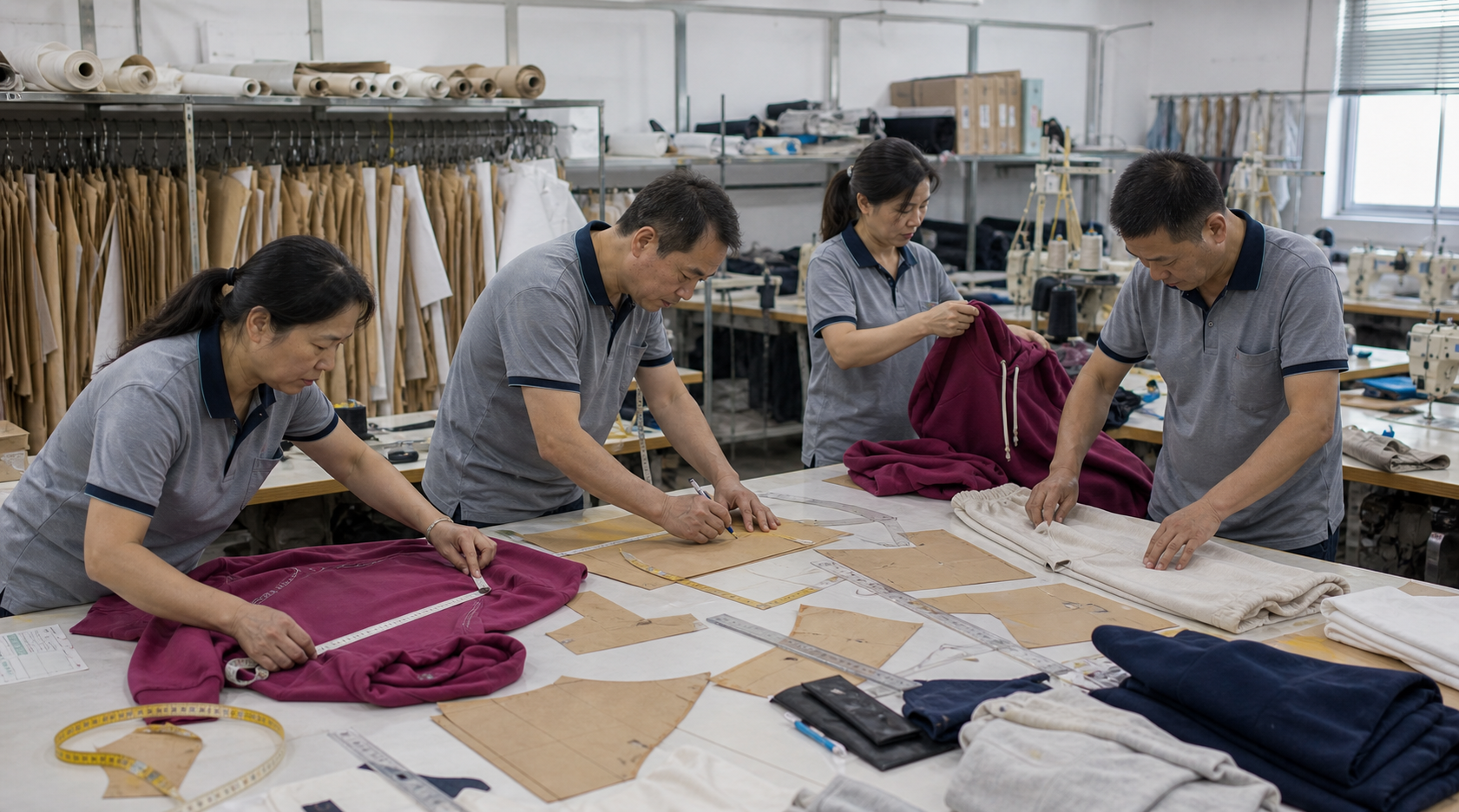
The image shows why a product brief needs more than a style name. Pattern pieces, sample garments, material directions, components, and written observations need to refer to the same product question before the team can decide what to adjust or approve.
How should logos, labels, and colour direction be handled?
Brand presentation should be connected to the garment, not collected as a final-minute list. Identify the current artwork version, logo area, intended scale or relationship to garment landmarks, colour direction, labels, hangtags, and packing elements that are in scope. Mark anything that is still exploratory. A logo displayed on one material or colour does not necessarily approve it for every garment panel, colourway, size, or construction version.
The activewear logo application guide helps buyers consider method, material, placement, and sample evidence for stretch garments. The activewear print-placement guide addresses how a named artwork area can be anchored to panels, seams, and a physical sample. Use these records with the padel product brief rather than treating a digital mock-up as a complete instruction.
Colour planning follows the same discipline. State which colour relationship the current sample is meant to show, whether contrast areas or components are included, and whether another colourway needs a separate review. The activewear colour approval guide provides a way to keep material, logo, trim, and garment colour references traceable without implying that one sample approves every variation.
What sample should a padel brand request first?
Request the sample that proves the next decision. An early development sample can help the team review the product interpretation. A fit sample can focus on the stated size, silhouette, movement, measurements, and construction questions. A material or component sample can help isolate a fabric, lining, inner short, waistband, pocket, logo, or trim decision. A decoration sample can focus on the physical relationship between an artwork and a specific garment area. A later pre-production reference may bring approved decisions together for a controlled production discussion.
One physical garment does not need to answer every question. Combining too many unconfirmed inputs can make it impossible to see which change caused the result. The activewear sample types guide explains these evidence boundaries, while the activewear sample plan guide helps a brand decide which styles, sizes, colours, versions, and review questions need separate pieces across a collection.
For inPACE projects, general planning commonly allows about 5–10 days for sampling and 25–50 days for production after relevant approvals and project conditions are confirmed. These are planning ranges, not fixed commitments. Product complexity, material availability, colours, branding, labels, packing, quantities, and revision requests can change the applicable route and timing.
How should size, colour, quantity, and packing connect to the product brief?
Keep the assortment record beside the product record, but do not allow one to replace the other. A brand can identify the intended size range, planned colours, style-colour-size quantities, and questions about base size or later grading. This allows the factory to see whether the current sample is a narrow fit review or one part of a broader size-set and collection decision.
Likewise, the buyer can name the brand components and receiving details that are known: garment labels, size information, hangtags, bags, stickers, folding direction, set grouping, carton marks, or warehouse fields. The activewear packaging checklist shows how these details can remain traceable as an order moves toward delivery preparation. They should be stated as project inputs to confirm, not as an assumption that a product image covers the complete packing route.
A quantity direction is valuable even when the final matrix is not ready. It helps the discussion distinguish an exploratory sample from a more developed order plan. It does not establish a fixed MOQ, price, capacity, or schedule. Those commercial terms remain subject to the actual style, material, colours, components, branding, packing, quantity, and approved scope.
What should the buyer review before discussing bulk production?
Before discussing a bulk-production release, the team should be able to find the current style reference, approved or open product decisions, material and component direction, measurements and fit notes, artwork and placement record, labels and packing points, size and colour plan, sample evidence, revision history, and the next required approval. The activewear sample-to-bulk production guide explains how these records connect to material review, production instructions, QC, packing, and delivery preparation.
Do not let a broad message such as “sample approved” expand beyond what was actually reviewed. A sample can be approved for a limited product question while another colourway, size, material, component, label, packing item, or construction point remains open. A controlled record preserves the work already completed and makes the remaining risk visible before production planning.
The activewear manufacturing workflow is the relevant next reference when a buyer needs to discuss how approved product details are carried into sewing, inspection, packing, and export preparation. The correct path is a discussion based on the real approved scope, not an assumption that a category name guarantees a finished order.
What should a padel apparel buyer prepare before contacting inPACE Sports?
Use this checklist to prepare a clear B2B factory discussion:
- State the brand, customer, selling channel, and intended product role for each style.
- Share a current reference garment, product URL, sketch, marked photograph, tech-pack page, or physical sample where available.
- Identify which details must remain, which should change, and which are open for factory review.
- Name the current size, target size range, fit intent, and any specific garment areas that need observation.
- List body material, contrast material, lining, inner short, waistband, pocket, mesh, binding, label, and other components relevant to the requested style.
- Supply the current artwork version, intended location, colour relationship, label and hangtag fields, and presentation details in scope.
- Separate a catalogue-informed branding request from a new fit, material, construction, component, or sample-development request.
- State the sample purpose and the precise question the physical garment must answer next.
- Mark each input as approved, proposed, substituted, or open, so a later comment does not rewrite an earlier decision.
- Include a preliminary style-colour-size quantity direction and target receiving context where known.
- Identify packing, SKU, barcode, folding, bag, carton, or receiving information that needs to be reviewed later.
- Ask the factory to identify assumptions that must be confirmed before a sample route, quotation, or production plan is compared.
inPACE Sports can review these inputs with B2B buyers developing activewear for a padel program. Ningbo Yinshan Garments Factory can connect the relevant product-development, sampling, material and trim, branding, sewing, QC, packing, and production discussions to the actual brief where those steps apply. The appropriate scope remains subject to the product, references, quantities, and approvals under review.
How can a brand start a custom padel apparel discussion?
Send the product references, assortment roles, intended fit and component questions, material direction, branding files, size and colour plan, sample purpose, packing context, quantity direction, and open decisions. This gives the factory a real basis for identifying the route, evidence, and assumptions that need confirmation. Share a custom padel apparel product brief when the team is ready to turn its product direction into a controlled sampling and manufacturing discussion.
Product directions
Explore relevant activewear products
Use these product pages as practical references for your brief, then confirm materials, fit, customization, and production details through sampling.
Yoga Activewear Catalog
Use the catalog as a starting reference when a padel program needs to compare top, skirt, short, layer, colour, logo, and presentation directions before deciding what must change.
View product directionA-Line Tennis Skirt
Use this skirt reference to name the silhouette, inner-short, waistband, pocket, colour, logo, and sample questions that belong in a racket-sport product brief.
View product directionCustom Activewear Development
Choose the factory-custom route when the padel brief needs a new fit, material direction, construction, component, colour relationship, or controlled sample plan.
View product directionFAQ
Buyer questions
What should a custom padel apparel factory brief include?
Include the buyer and channel, product roles, current references, fit and movement questions, material and component direction, branding and colour information, size and quantity plan, sample purpose, packing needs, and open decisions. The brief should show what the factory is being asked to review next.
Can a padel collection begin from an existing activewear style?
Yes, when the existing silhouette and construction are close to the intended product and the main decisions concern branding, colour, labels, packing, or other controlled presentation details. If the brief needs a new fit, material, component, construction, or sample route, it should move into a factory-custom discussion.
What should a padel apparel sample prove?
It should prove a stated next decision, such as product interpretation, fit, material or component relationship, artwork placement, packing presentation, or pre-production readiness. Record the style, sample version, size, colourway, inputs, observation, decision status, and next action so the evidence is not expanded beyond its scope.
Should tops, skirts, shorts, and layers share one approval record?
They can share collection fields such as colour direction or brand presentation, but each garment should retain its own fit, material, component, construction, and sample evidence. A matching appearance does not mean that one style's approval proves another style's product decisions.
How should a brand describe materials and components for padel apparel?
List them by garment role: body material, contrast area, lining, inner short, waistband, pocket, mesh, binding, label, or logo zone. State whether each is confirmed, proposed, substituted, or open, then review it on the relevant garment and sample version.
Do logo, label, and packing details belong in the first brief?
Include the details that are already known, such as artwork version, intended logo area, labels, hangtags, bags, folding, or receiving fields. Mark later-stage items as open. This lets the factory distinguish a current sample question from product or packing approvals that still need their own review.
How long do custom activewear samples and production normally take?
For inPACE projects, general planning commonly allows about 5–10 days for sampling and about 25–50 days for production after relevant approvals and project conditions are confirmed. These are planning ranges, not fixed commitments; product complexity, materials, colours, branding, packing, quantity, and revisions can change timing.