
Yoga Wear
Contrast-Trim Pleated Court Dress Manufacturer
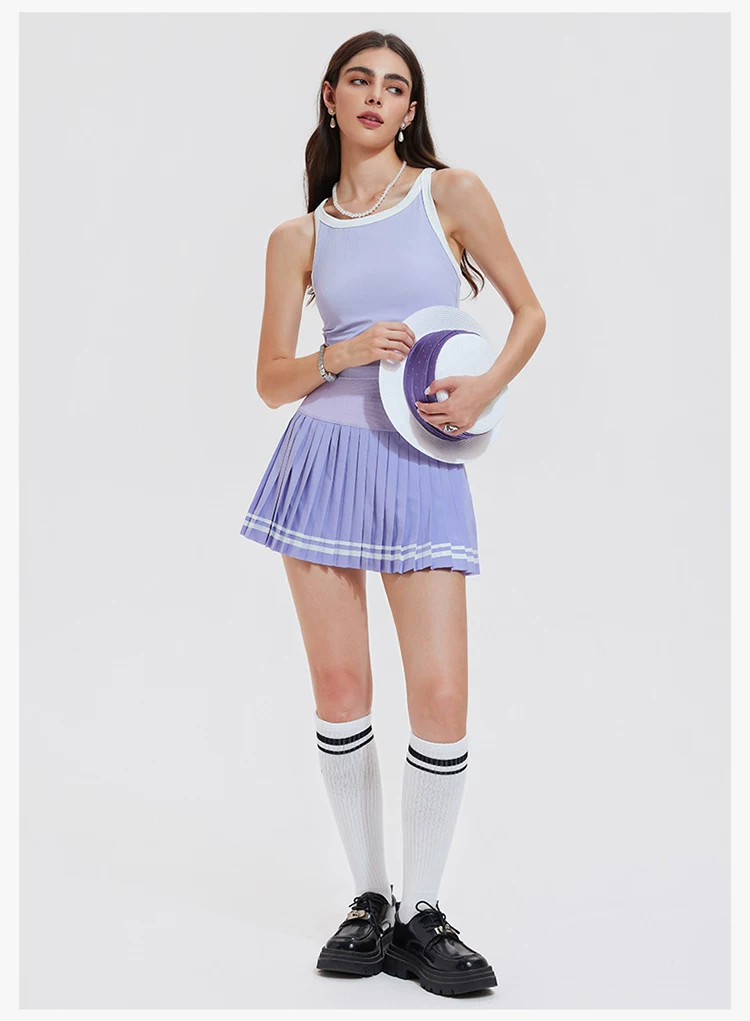
A sleeveless contrast-trim pleated court dress for private-label tennis, pickleball, club, and golf-capsule development. The reference combines a close sleeveless bodice, asymmetric racerback-style binding, defined waist panel, and short pleated skirt. Brands can confirm fabric, lining, inner short, pockets, fit, color, logo, labels, sampling, QC, and packing around the approved development brief.
Product Features
Sleeveless close-fit bodice with a rounded bound neckline visible in the reference images.
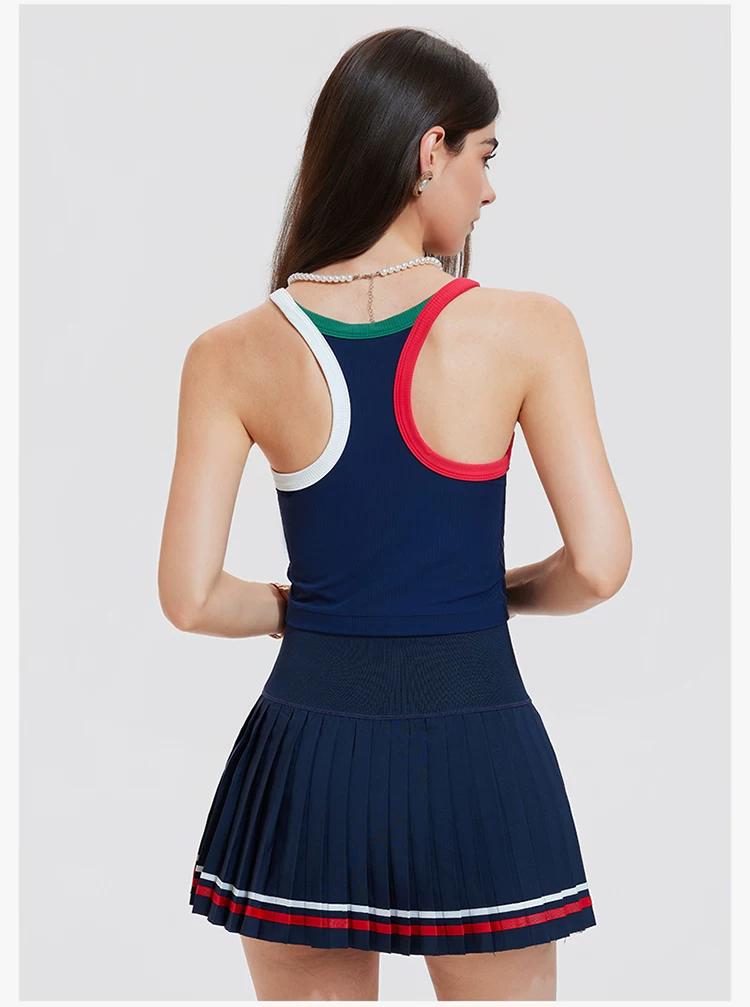
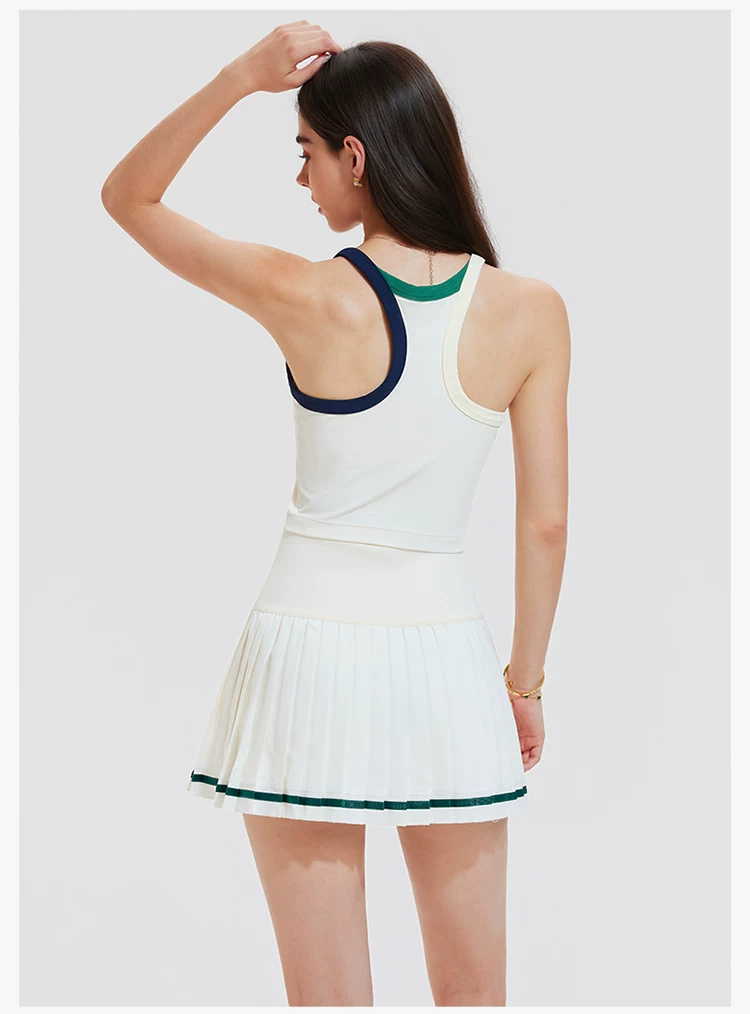
Asymmetric contrast binding around the shoulder and back creates a distinctive court-sport color story.
Defined waist panel transitions into a short pleated skirt silhouette.
Contrast hem bands offer a buyer-defined trim, club-color, and logo-placement direction.
Fabric, lining, inner-short, pocket, coverage, sun protection, and performance requirements require sample confirmation.
Use Scenarios
Tennis and pickleball club collections
Court-sport uniforms and league capsules
Golf and resort-club dress programs with buyer-confirmed length and construction
Seasonal retail color stories for online stores and boutiques
Private-label racquet-sport assortments paired with skirts, tops, or warm-up layers
A court dress should begin with the visible construction, not assumptions about performance
This contrast-trim pleated court dress is a private-label development reference for tennis, pickleball, club, and buyer-defined golf-capsule programs. The supplied images establish a recognisable visual direction: a sleeveless close-fit bodice, rounded bound neckline, asymmetric contrast finish around the shoulder and back, a defined waist panel, and a short pleated skirt with contrast bands at the hem. These are the reliable starting points for a product brief. The images do not prove the fabric composition, GSM, lining, inner short, pocket configuration, support level, opacity, sun protection, moisture management, colorfastness, durability, test results, MOQ, price, or lead time. Those choices must be confirmed before quotation and sampling.
That distinction is especially valuable for a court-sport garment. A silhouette can be suitable for a tennis club collection, a pickleball capsule, a resort assortment, or a golf-oriented club program, yet each use can ask different questions of the finished product. A buyer may need a particular skirt length, an inner short, a ball or scorecard pocket, a more covered back, a lighter or more substantial handfeel, a coordinated layer, or a logo zone that fits club identity. Rather than treating one campaign image as a finished specification, this product page turns the visible design into an organised development route.
Define the bodice and back before selecting material
The upper portion is the first construction area to document. The reference shows a rounded neckline, sleeveless armholes, close body fit, and an asymmetric contrast-binding direction that creates an open, racerback-style visual from behind. A technical brief should name the neckline depth and width, shoulder coverage, armhole shape, binding width, back opening, bodice length, and the exact route of every contrast line. It should also indicate whether the trim is a binding, a sewn panel edge, a cover-stitch detail, or another construction method. Each route can change stretch, seam comfort, recovery, production operations, and color matching.
The images show an athletic dress, not proof of a particular support or lining system. If the buyer wants an integrated bra, shelf layer, removable pads, extra lining, or a separate underlayer, that needs to be stated explicitly and sampled. The same is true of coverage. A tennis buyer may prefer a close body with a more open back; a golf-club buyer may request a different neckline, longer body, or compatible sleeve layer. Keep those decisions in the product brief so that the approved version can be repeated instead of being recreated from memory for every colorway.
Fit review should include normal court movements as well as a static mirror check. Ask the sample wearer to raise the arms, reach forward, rotate through the torso, bend, serve, squat, and walk. Observe neckline stability, armhole comfort, shoulder placement, binding tension, waist position, and whether the bodice remains aligned with the skirt. These observations do not create an automatic performance claim, but they help the buyer and factory decide what needs adjustment before a size set or bulk plan. The activewear size grading guide is useful when the approved base-size shape must remain proportionate across the intended range.
Treat the waist and pleated skirt as separate approval points
The defined waist panel and short pleated skirt are central to the style identity. The brief should document the seam location between bodice and skirt, waist circumference, panel height, pleat count or pleat direction, pleat depth, finished skirt length, hem-band width, and the position of each contrast color. A pleasing still image does not show how pleats recover after movement, care, or packing. That is why pleat retention, drape, hem behavior, and the relationship between the waist panel and skirt need review on the approved material.
An inner short, built-in brief, pocket, or ball-storage solution must not be assumed. These components are not confirmed by the supplied views, but they can be specified if the end use requires them. A tennis or pickleball program may ask for a buyer-approved ball pocket or a separate short; a golf or resort capsule may prioritize a particular coverage and length direction. Record the intended function, pocket location, lining route, rise, inseam, and access method before pattern work begins. This allows the factory to judge whether the proposed component works with the skirt and selected material rather than adding it after fit has been approved.
The existing Pleated Tennis Skirt reference is a useful related product when a buyer wants to compare a skirt-led program with a one-piece dress direction. It should not be treated as the same garment: the dress adds a bodice, neckline, back construction, and an additional fit relationship at the waist. If a collection also needs an upper layer for travel or a pre-match warm-up, the High-Waist Flared Yoga Pants provide a separate activewear silhouette for collection planning. Linking related products in this way helps a buyer compare product roles without collapsing distinct patterns into one generic description.
Build a controlled fabric and trim plan
The source images suggest a smooth stretch activewear surface, but visual evidence alone cannot determine fibre content, weight, coverage, recovery, sweat management, UPF, pilling resistance, or care performance. The buyer should identify the intended activity, climate, handfeel, desired coverage, price direction, color program, and any testing or restricted-substance requirement. inPACE can then review material options that suit the approved pattern and application. The final product page and sales materials should only use specific fabric or performance claims after the fabric, trims, construction, and evidence support them.
Contrast binding and hem bands require their own material controls. Specify the trim material, color standard, width, attachment method, stretch requirement, recovery expectation, and relationship to the main body fabric. Two materials that match as loose swatches can react differently to heat, light, stretch, and care. Lab dips and garment-level color review help a buyer confirm whether the body, shoulder binding, neck finish, and hem bands read as one intentional club-color story. The activewear color approval guide explains why target colors, reference versions, trim notes, and approval decisions should be kept together.
A seasonal retail program may use soft contrast colors, while a club order may need a defined team palette. Both paths benefit from one written color map. Name the main color, every contrast color, any logo color, the color standard, acceptable shade process, and which components must match. For a replenishment or repeat colorway, retain the approved fabric reference, lab-dip decisions, trim reference, and sample photos. This prevents a familiar dress silhouette from gradually changing between orders.
Choose the correct private-label development route
For a light-custom route, the buyer may retain the reference silhouette and confirm the available material route, body and trim colors, logo placement, labels, hangtag, size range, packing, quantity, and delivery context. A factory-custom route is appropriate when the product needs a different neckline, back construction, waist panel, pleat geometry, skirt length, pocket, inner-short system, fabric platform, fit block, or grading plan. The custom activewear development page outlines how these decisions connect to sampling, while the private-label service covers logo, labels, and retail presentation.
Branding should be located on a pattern area that is stable and visually intentional. Possible directions can include a small chest mark, waist-panel mark, back-neck label, or hem placement, but the final method and exact position require the buyer artwork and an approved sample. Avoid using the contrast binding as a presumed logo area until the stretch and seam behavior are understood. The custom padel apparel factory brief is also relevant because it shows how a court-sport collection can separate an existing silhouette from the product-specific changes that actually need development.
Use a product-specific QC record before bulk production
The QC record should identify the approved reference image, pattern version, base-size measurement chart, body fabric, trim material, color standards, neckline and armhole finish, binding route, waist-panel height, pleat direction, skirt length, any inner component, logo position, labels, folding, poly bag, barcode, and carton mark. Inspection points should include left-right balance, neckline recovery, binding tension, seam appearance, pleat consistency, hem-band alignment, loose threads, color consistency, measurement tolerances, logo execution, and packing accuracy. If the buyer requires a wear, wash, shade, or material test, add it to the agreed test plan before bulk production rather than relying on the source image.
The approval file should clearly separate confirmed choices from open questions. Store the material swatches, color references, trim standard, artwork, sample comments, fit observations, grading direction, measurement record, packing instructions, and QC outcome in one repeat-order file. The sample-to-bulk production guide explains why that traceability matters once sampling transitions into production preparation. It protects both the buyer and factory from treating a visual reference as a complete bulk instruction.
Send a buyer-ready RFQ for this court dress
For an accurate quotation and sampling discussion, send the reference images, intended tennis, pickleball, golf, resort, or club use; preferred body and trim colors; target fit and finished length; inner-short or pocket requirements; fabric and handfeel direction; size chart; quantity by color and size; logo artwork and placement; label, hangtag, barcode, and packing needs; destination market; target arrival window; and every test or compliance requirement. Note which details remain open. The custom activewear RFQ guide provides a practical way to organise that input.
With that information, inPACE can review material options, the trim and color route, pattern changes, sample sequence, fit and movement checks, grading, QC points, and export packing. The aim is not to overpromise what the images can prove. It is to create a court dress that has an approved visual direction, a documented construction route, and a clear path from buyer brief to sample and repeatable bulk production.
Specifications
- Product Type
- Contrast-trim pleated court dress
- Visible Silhouette
- Sleeveless close bodice, defined waist panel, and short pleated skirt
- Neckline and Back
- Rounded neckline with asymmetric contrast binding and racerback-style open shoulder direction
- Skirt Direction
- Short pleated skirt with contrast hem-band detail; pleat depth and finished length are confirmed in sampling
- Optional Construction
- Inner short, storage pocket, lining, and support route are buyer-defined and require a technical brief
- Size Range
- Buyer size chart or custom grading
- MOQ
- Discuss by fabric, trim, color plan, size ratio, logo method, labels, and order plan
- Packing
- Size sticker, individual poly bag, barcode, carton mark, and export-packing options
Fabric Information
- Main Fabric Direction
- Buyer-selected stretch activewear knit; exact composition, weight, and finish are confirmed before quotation and sampling
- Trim Direction
- Contrast binding and hem-band material, width, stretch, recovery, and color matching are reviewed on the approved sample
- Pleat Review
- Pleat retention, skirt drape, seam behavior, and care outcome depend on the approved material and construction
- Color Development
- Buyer-selected body and trim colors with lab-dip and bulk shade review where required
- Performance Claims
- Any opacity, quick-dry, sun-protection, moisture-management, colorfastness, or durability claim depends on approved material and test evidence
Customization Options
Main fabric, composition, weight, handfeel, coverage, stretch-recovery, and finish direction
Neckline height, armhole, asymmetric binding route, back opening, bodice length, waist panel, pleat depth, and finished skirt length
Optional inner short, pocket, lining, bra-support route, and golf- or court-specific utility details subject to sample review
Buyer body and contrast-color program, logo technique, logo placement, woven label, care label, hangtag, and barcode
Buyer size chart, grading, fit sample, movement review, size-set evaluation, and approved measurement record
Folding, poly bag, carton mark, QC checklist, retail presentation, and export-packing requirements