
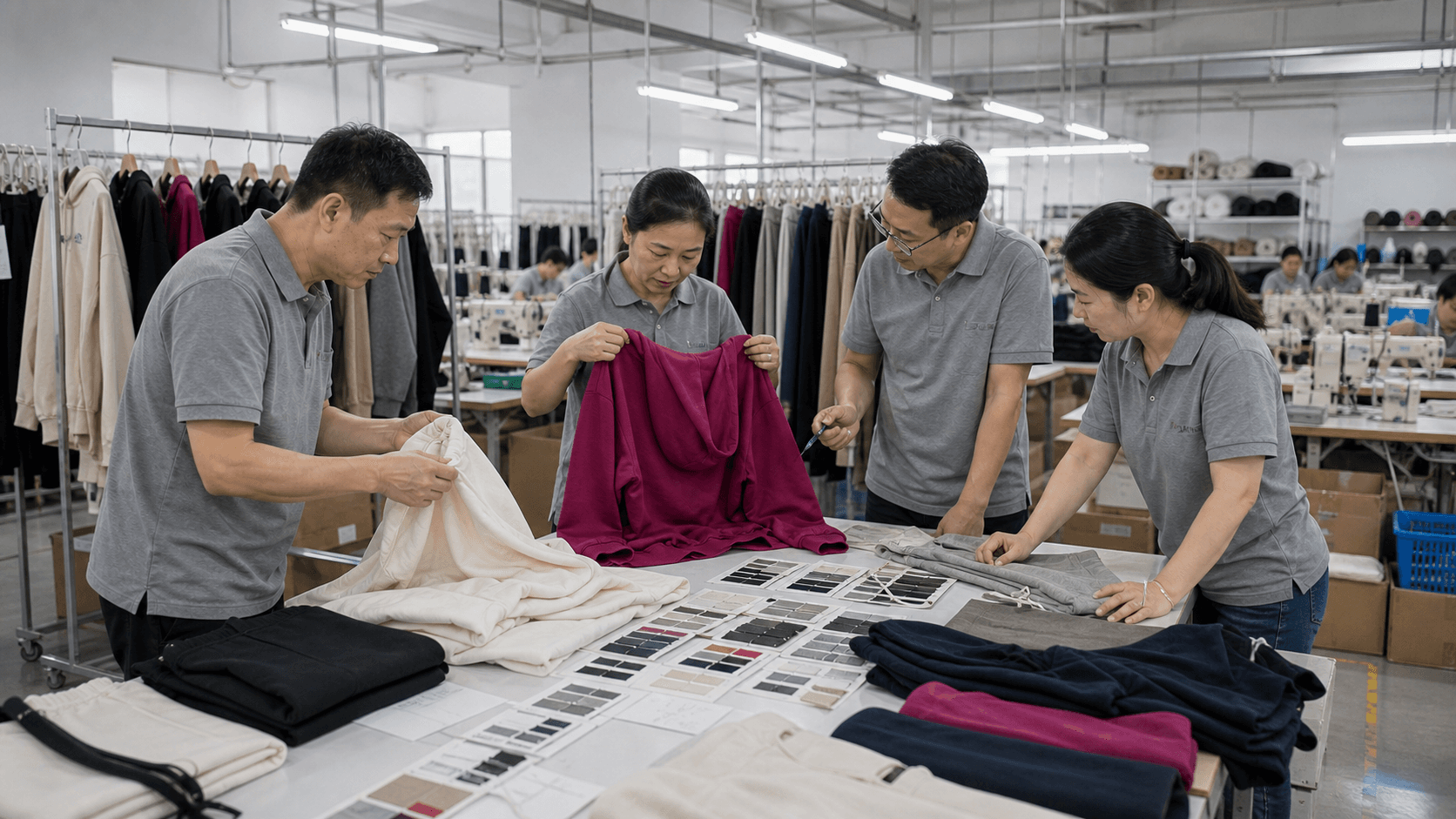
What makes a custom activewear RFQ usable?
An RFQ, or request for quotation, is a working brief that lets a factory assess the same product question that the buyer intends to buy. It does not have to answer every technical question before the first conversation. It does need to identify the garment, reference version, intended use, quantity direction, branding scope, destination market, and the details that remain open. A useful reply can then separate confirmed inputs from assumptions, exclusions, sample needs, and the next decision.
For custom activewear, this distinction matters because a photo, a broad fabric name, or a target price can hide the decisions that change the route. A leggings reference may still leave the waistband, rise, gusset, compression direction, opacity question, logo zone, size range, or packing requirement unresolved. A supplier can help turn those gaps into questions. It should not silently convert them into a different product scope.
This guide gives buyers a blank RFQ structure, an explicitly fictional example, and a way to compare replies without treating an early number as an approved commercial commitment. It is written for B2B brands, studios, retailers, and sourcing teams—not for individual-garment retail requests.
Start by naming the decision the factory is being asked to review
Before listing materials or sending images, write one sentence that describes the decision. For example: “We are assessing a high-waist training legging for a studio-and-gym collection; the first review should determine whether the reference fit, fabric direction, pocket position, and tonal logo can be developed into a sample.” That sentence tells a factory what it is evaluating, rather than merely what image the buyer likes.
The request should also say whether the project starts from an existing product direction or needs factory-custom development. A catalogue-informed route can be appropriate when the silhouette is already close and the main work is approved logo, label, hangtag, packing, or limited colour presentation. A factory-custom route is usually more suitable when the garment itself needs a changed fit, fabric, construction, panel, support, coverage, feature, or controlled sample plan. The custom activewear development route explains the latter path, while the Activewear Performance Collection can help a buyer identify an initial product reference.
Neither route confirms availability, MOQ, price, timing, or a final production specification. Those items depend on the actual style, materials, colours, components, decoration, quantity direction, packing, approvals, and the factory review. Calling out the route early prevents a quotation from appearing comparable when one supplier has priced an existing-style programme and another has assumed new product development.
Which fields belong in a copyable custom activewear RFQ?
Copy the structure below into an email, document, or sourcing form. Use confirmed, flexible, or open for factory review beside each field. That is more useful than filling gaps with guesses.
Copyable blank RFQ
RFQ title and version Project name: Brief version and date: Buyer contact and decision owner:
1. Product and use Garment type(s): Intended activity / wearer / channel: Is this catalogue-informed, adapted, or factory-custom?: What must remain from the reference?: What must change or be reviewed?:
2. References and technical inputs Reference photos, samples, sketches, product links, size chart, or tech pack: File names or links with version/date: For each reference: keep / change / review / ignore:
3. Fabric, fit, and construction direction Preferred handfeel, stretch, recovery, coverage, weight, surface, lining, mesh, or trim direction: Fit goal and base size to review: Measurements, size range, grading, support, coverage, seam, pocket, closure, or panel questions: Open technical questions for the factory:
4. Colour and brand components Colourways and any colour reference: Logo artwork file and version: Logo placement / method to review: Main label, care label, hangtag, barcode, bag, folding, carton mark, and receiving requirements:
5. Commercial and delivery context Styles, colours, sizes, and estimated quantity by line: Target market / destination and any buyer-supplied information requirements: Target launch window or decision date: Requested quotation currency or commercial format, if applicable:
6. Sample and response request Purpose of the next sample or physical review: What should the factory confirm, propose, or flag?: Questions the quotation must answer: Known assumptions, exclusions, and open decisions: Next reviewer, decision date, and required reply version:
The blank form is not a demand that the buyer become a pattern maker. It allows a buyer to be precise about what is known, and a manufacturer to state what must be clarified through material review, a sample, a revised file, or another approval. For a more garment-specific specification, use the activewear tech-pack checklist alongside the RFQ. The RFQ frames the commercial and development conversation; the tech pack takes the product instructions deeper.
What can a buyer provide when information is incomplete?
Incomplete information is normal at the enquiry stage. The important point is to label it honestly and ask a useful question. The table below turns common gaps into workable starting inputs.
| RFQ field | A useful input when the detail is not final | What the factory should make visible |
|---|---|---|
| Product reference | A photo, existing garment, catalogue link, sketch, or mood direction with notes on what to keep and change | Whether the reference is sufficient to assess a route, and which product details still need definition |
| Fabric | Desired handfeel, stretch, surface, coverage, weight direction, or a swatch if available | Candidate material questions, any sample need, and assumptions that affect construction or quotation scope |
| Fit and size | Intended wearer, use, base size, size range, a current chart, or a request for guidance | Which measurements, grading, support, coverage, or movement questions must be reviewed before approval |
| Colours | A colour name, image, standard, or “direction under review” label | Which material-specific colour and trim decisions remain open; a screen image is not a final production colour |
| Logo and labels | Artwork version, provisional placement, or a list of components not yet supplied | What can be evaluated now and which method, placement, label, proof, or sample decision remains conditional |
| Quantity | A range by style, colour, and size, or a clear statement that the assortment is still being built | How the quantity direction affects the proposed route and which commercial assumptions need confirmation |
| Packing and market | Destination, channel, bag or carton questions, and buyer-supplied receiving requirements | Which records or specifications are missing and whether they change the sample, quotation, or handover question |
Do not replace an open field with an untested performance claim. “We need a non-sheer, supportive legging for gym movement; please advise which material and sample evidence are appropriate” is a useful request. “Use the best squat-proof fabric” is not a specification. The fabrics and trims resource can help a buyer organise the material, elastic, mesh, lining, zipper, label, and logo questions before a sample is approved.
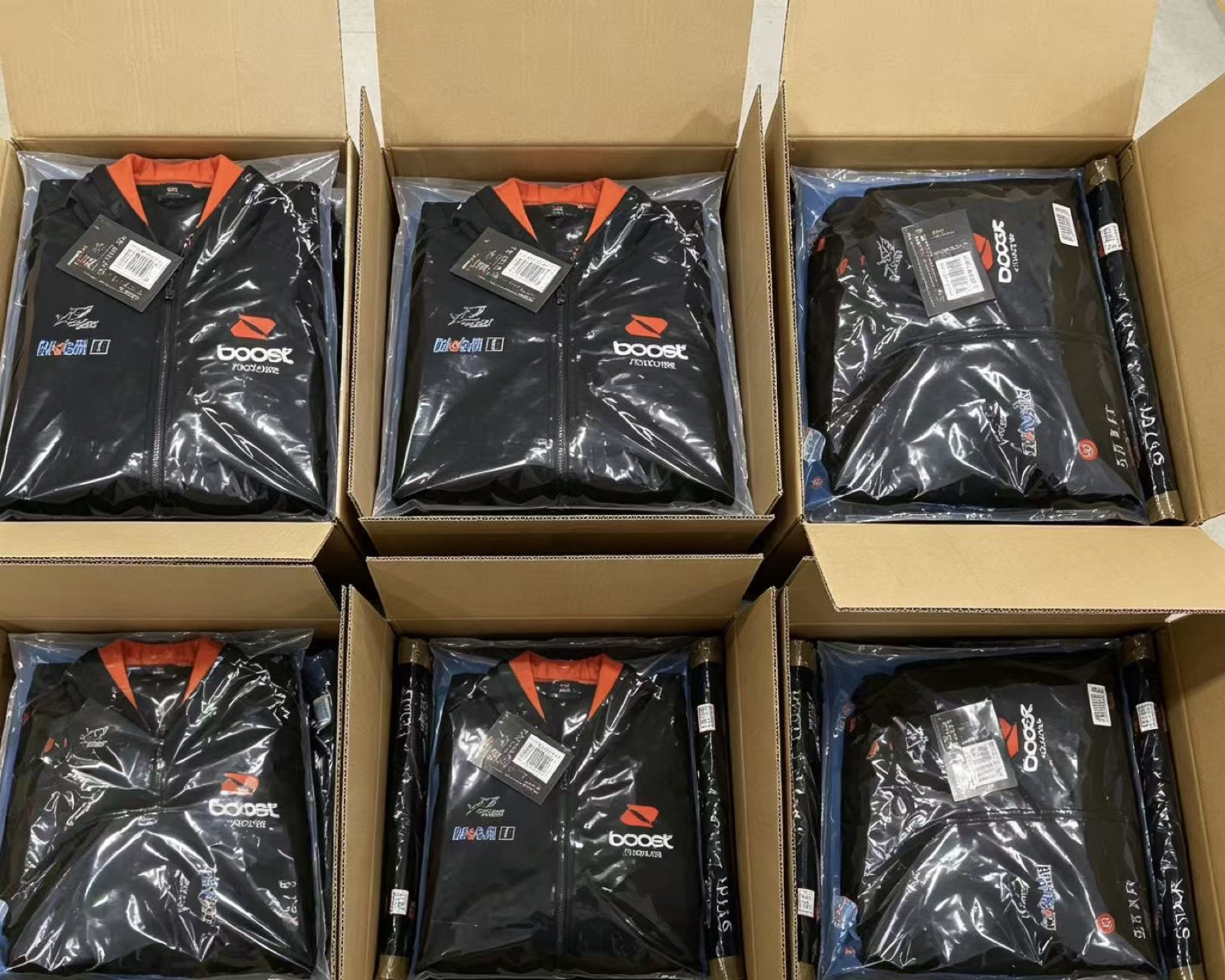
An RFQ should connect the visible reference to the evidence needed for the next decision. The image illustrates packing context only; it does not confirm the materials, construction, factory assignment, or approval status for another buyer’s project.
How should a reference image, sample, sketch, or tech pack be used?
Every reference needs a short instruction. A buyer can write “retain the longline proportion and front neckline; review the back strap construction and material; ignore the visible brand mark.” That is far more useful than attaching several images without context. A physical sample can show a direction, but it may use a different material, pattern, size, decoration, or construction from the new project. A catalogue product is likewise a starting reference, not a promise that the same specification or component option applies.
Keep file names and versions in the RFQ. If a later image replaces an earlier one, say so. When two documents conflict, name which document governs the current decision. This discipline becomes particularly valuable when the buyer, designer, sourcing contact, developer, and factory team do not all work from the same message thread.
A good first sample has a named job. It might review a fabric direction, base fit, waistband, logo placement, colour relationship, construction detail, or a combination that the team explicitly identifies. It should not be treated as approval of every unreviewed size, colourway, trim, label, packing instruction, or future product change. The activewear sample plan guide is useful for separating development, fit, material, decoration, and pre-production evidence.
What should a quotation response include, exclude, and question?
The buyer should ask each factory to answer against the same RFQ version. The goal is not to force a supplier to promise a final figure before the scope is understood. It is to show whether the reply is addressing the same garment, quantity structure, branding package, and delivery context as the other replies.
| Response area | A comparable response makes this visible | A buyer should ask if it is absent |
|---|---|---|
| Scope understood | The style, references, product changes, colours, sizes, branding, packing, quantity direction, and destination context used for the review | “Which brief version and reference files are you using?” |
| Assumptions | Provisional material, component, logo, label, packing, or quantity assumptions that still need confirmation | “What are you assuming because our RFQ is incomplete?” |
| Inclusions | The sample, development, product, branding, packing, or review items that the response covers | “Which named items are included in this response?” |
| Exclusions | Items not included, deferred, supplied by the buyer, or awaiting another decision | “Which costs or workstreams are outside this scope?” |
| Dependencies | Material availability, artwork, measurements, sample evidence, approvals, market information, or other conditions that could change the route | “What has to be decided before this can become a firmer proposal?” |
| Next action | The next file, sample, revision, discussion, or approval needed and its owner | “What exactly should we send or approve next?” |
Keep the reply attached to the RFQ version, not merely the project name. A lower number does not necessarily describe a closer match. One response may assume a simpler fabric, fewer colourways, a different logo method, a different packing route, or a product change that another supplier has treated as custom development. The manufacturer quote comparison guide can help a buyer compare these lines before treating any number as a decision.
What does a constructive response look like when key information is missing?
Factories do not need to reject a brief just because it is incomplete. A practical response should acknowledge what can be reviewed, identify the missing decision, and offer the next step. It should not invent a material, sample scope, or commercial term just to complete the reply.
Here is an example response pattern for a missing field:
We can review the high-waist legging direction using RFQ version 01 and the marked reference image. The material, base measurements, logo method, final colour reference, and size breakdown are still open, so any early quotation will need to state those assumptions separately. Please confirm whether the first sample should focus on fit and waistband behaviour, fabric and coverage review, logo placement, or a combined scope. Once that purpose is clear, we can recommend the next input and explain which commercial items remain provisional.
That wording does not pretend the factory has approved a product or guaranteed a price. It makes the uncertainty useful. If the buyer is unsure whether a request belongs on a catalogue-informed or custom-development route, they can share the closest product direction, mark the requested changes, and ask for a route recommendation. For brand components such as labels, hangtags, logo proofs, and packing, the private-label activewear route is a relevant companion resource.
Illustrative RFQ example: clearly fictional, not a customer order
The following is an invented example only. It is not a record of an inPACE customer, an approved product, a price, or a production commitment. Its purpose is to show how a buyer can distinguish decisions from assumptions.
Project: Studio training capsule — RFQ v0.3 — 15 October 2026 Product decision: Assess a women’s high-waist legging and longline bra direction for a studio-and-gym capsule. References: One product image for silhouette only; one flat sketch marked “keep neckline / review back straps”; one generic colour swatch marked “direction only.” Product and use: Close-fitting training garments for low-to-moderate impact studio and gym use. The buyer asks the factory to review coverage, support direction, and material suitability rather than assuming a final performance result. Fit and materials: Base size and size range are not yet final. The buyer provides a desired soft-but-supportive handfeel and asks for material options and a sample recommendation. Brand components: A tonal chest logo is proposed; artwork is not final. Main labels, care labels, hangtags, bags, and carton marks are listed as open components. Quantity direction: A preliminary range by the two styles and two colourways is supplied; the buyer states that the size ratio is still open. Requested response: State the product scope understood, identify the assumptions, recommend the first sample purpose, list inclusions and exclusions, and name the inputs required before a project-specific proposal can be confirmed.
The example is useful because it does not hide the gaps. It makes a factual response possible: the factory can tell the buyer which missing items affect the pattern, materials, logo route, sample, packing, or commercial scope. A real RFQ should replace the placeholders with the buyer’s actual files, decision owner, and approved version trail.
Why should an RFQ use version control and a decision log?
Change is normal in activewear development. A revised logo can affect placement and decoration review. A material substitution can reopen stretch, opacity, colour, or seam questions. A new size range can change grading and packing information. A destination change can create a different label or receiving information discussion. Without a versioned record, a supplier may reply correctly to an outdated brief and the buyer may compare that reply with a later scope.
Use a simple log with five columns: brief version, changed item, reason or question, owner, and effect on the next sample or quotation. Add a date and link to the current file set. Record whether the change is confirmed, proposed, superseded, or still open. If a change affects an already-reviewed sample, say whether another approval is needed instead of assuming the earlier approval carries forward.
This is also where the roles of supplier, manufacturer, and factory become clearer. A supplier conversation helps compare a viable route and response scope. A manufacturer conversation turns the brief into material, fit, construction, sample, and approval questions. A factory conversation applies the approved product and brand records to production coordination, quality checks, packing, and export preparation. The same organisation may support more than one role, but the buyer should keep the decision records distinct.
How can inPACE support an RFQ discussion?
inPACE can begin with the buyer’s current brief, reference, existing sample, sketch, or tech pack and help structure the decision around product role, fabric and fit direction, construction, branding, sample purpose, quantity context, QC attention points, packing, and destination. Where the confirmed product needs it, the team can coordinate an appropriate route through partner factories. The actual route depends on the garment, materials, construction, decoration, quantity direction, and approved scope.
More than 30 years of garment-production experience provides context for connecting design and material review with sampling, production coordination, QC, packing, and repeat-order records. It does not establish a fixed MOQ, price, lead time, capacity, certification, performance result, or universal production route. Printing, embroidery, washing, and other finishing discussions should be included only when the project brief makes them relevant and their sample or production implications can be reviewed.
Send an RFQ that produces a useful next decision
Before sending the request, check that the recipient can identify the current product, reference versions, intended use, material and fit questions, brand components, quantity direction, market context, and the purpose of the next sample or reply. Mark unknowns visibly. Ask the factory to return its assumptions, exclusions, dependencies, and next action alongside any commercial response.
When you are ready, share a custom activewear brief with the latest RFQ version, the reference files, and the decisions you want reviewed. A concise but transparent RFQ is usually more useful than a long message that leaves the product scope open to interpretation.
Product directions
Use product references without treating them as final specifications
These pages make the RFQ more concrete. Confirm the actual fabric, fit, branding, packing, quantity, and approval scope for the buyer's own project.
Custom Activewear Development
Use this route when the RFQ changes the garment's fit, fabric, construction, colour, feature, or sample plan.
View product directionZip-Neck Sculpt Set Reference
Use this identified product direction to explain what a reference shows, then mark the material, fit, logo, and sample decisions still open.
View product directionPrivate Label Service
Bring logo files, labels, hangtags, packing, and versioned approval questions into the same RFQ as the garment scope.
View product directionBuyer questions
FAQ: Custom activewear RFQs
What should a custom activewear RFQ include?
Include the garment and intended use, current reference files and their versions, what must remain or change, fabric and fit direction, size range, colours, logo and brand components, quantity direction, destination context, and the purpose of the next sample or supplier response. Mark incomplete details as open rather than guessing.
Can a factory quote a custom activewear project from a reference image?
A reference image can begin a conversation, but it is not a production-ready specification. Explain what the image is meant to show and what should be kept, changed, reviewed, or ignored. The factory may need material, measurement, branding, packing, quantity, or sample information before it can make a comparable project-specific proposal.
How should a buyer handle missing RFQ information?
Label the item as open and ask the factory what input or sample evidence would close it. A buyer can provide a use case, material behaviour target, base size, provisional artwork, quantity range, or destination context while making clear that the detail is not approved. The reply should state assumptions instead of treating missing information as final.
What assumptions should appear in an activewear quotation response?
A useful response identifies the brief and reference version used, provisional material or component choices, style, colour, size, branding, packing, quantity, and destination assumptions; what is included; what is excluded; dependencies; and the next input or approval required. This allows buyers to compare scope rather than only totals.
What is the difference between an RFQ and an activewear tech pack?
An RFQ frames the commercial and development conversation: what product is being considered, what is known, and what response is required. A tech pack records more detailed garment instructions such as measurements, construction, components, and artwork. They should agree, but a buyer can use an RFQ before every technical detail is final.
How can inPACE help with a custom activewear RFQ?
inPACE can review the current product brief, reference, sample, sketch, or tech pack and discuss product route, fabric and fit direction, construction, branding, sample purpose, quantity context, QC, packing, and delivery-market information. The final route and commercial scope remain subject to the confirmed product, materials, construction, decoration, quantity, and approvals.