
A studio range can contain several attractive bras yet leave the buyer unable to explain the differences between them. One has a square neckline, another a longer body and another a front opening. Those visible features help organise a shortlist, but they do not establish how the garments fit, what support they provide or which customers they will suit.
A more useful assortment starts with distinct roles and a manageable set of existing styles. The wholesale activewear sourcing route connects that selection with confirmed options, branding and an order record. The task here is choosing and organising those products, with clear reasons to retain each one.
What should a yoga bra wholesale supplier know about the intended range?
Describe who the range is intended to serve and how the garments will be worn. A bra sold as an under-layer, a visible studio top and a longer support-top direction may need different coverage and presentation discussions. Do not let the category name decide the garment's role without checking the actual reference.
State the intended activities in practical terms. The supplier needs to understand whether the review is for the buyer's specified yoga context, general studio movement or another use. A label such as “active lifestyle” is too broad to guide a meaningful sample conversation, and the word yoga should not be treated as a universal support specification.
Give each shortlisted style a reason to exist. That reason might concern neckline coverage, the way the garment is put on, an existing back detail or a confirmed body-length option. If two references answer the same question, compare them before multiplying colours and sizes across both. An assortment should be explainable without relying on decorative variation alone.
Use the yoga activewear catalogue to identify codes and visible directions. Then ask which current materials, sizes and colours can be discussed for the proposed order. A catalogue is a reference source; it does not automatically establish ready stock, a fixed size pack or the commercial conditions for the buyer's quantity.
How do you compare existing bra styles without assuming their fit?
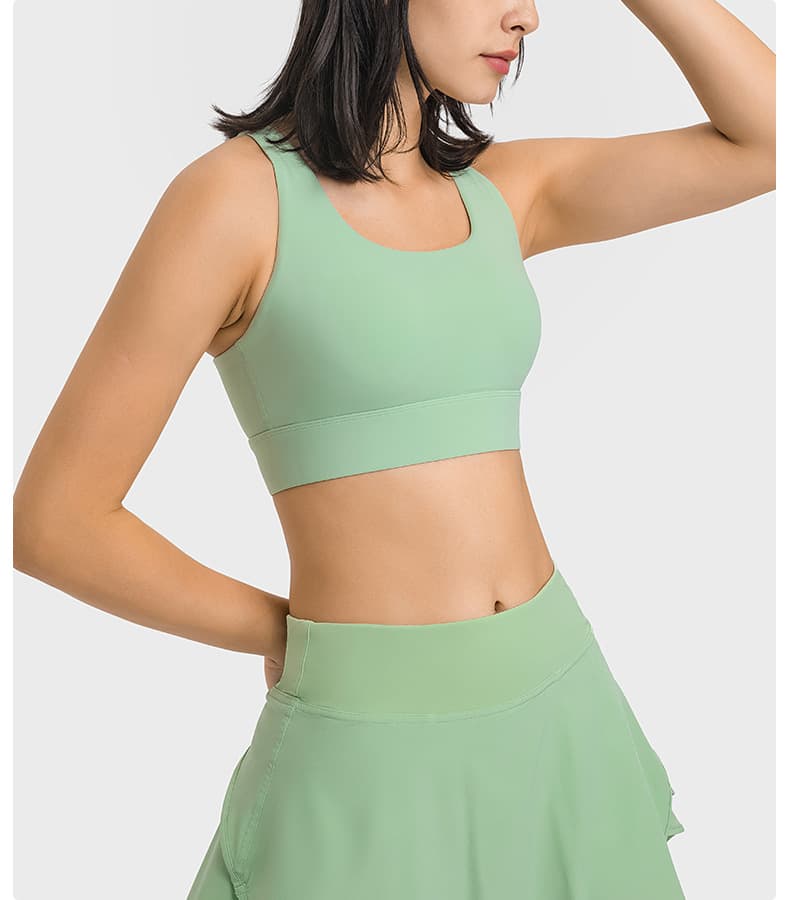
The catalogue identifies DWB115007 as a square-neck cross-back sports bra. This gives the buyer a specific starting reference for front coverage and back-shape questions. It does not establish whether the neckline stays where a particular wearer wants it during the intended movements or whether the sample fits the proposed size range.
DWB115005 is listed as a ribbed cross-back sports bra. Inspect its actual images and sample for body length and coverage rather than assuming that every item in a bra category ends at the same point. A longer-looking reference may occupy a different assortment role from a shorter bra, even when the catalogue groups them together.
The DWB115058 zip-front reference introduces a different opening direction. Review the actual closure arrangement and wearing experience with the sample. A front opening is a feature to assess; its presence alone is not evidence of suitability for every wearer or activity.
Keep the product code attached to every comment. “The cross-back one” becomes ambiguous if several styles share that description. Where the team uses internal nicknames, map them to the supplier's code, image and sample version. This prevents a fit comment on one garment from changing the branding brief for another.
The following worksheet separates visible design choices from the questions that still need review. It deliberately leaves performance conclusions open until appropriate evidence exists.
| Visible or stated feature | Useful assortment question | What the buyer should confirm | What should not be inferred |
|---|---|---|---|
| Square or higher front neckline | Does this coverage direction suit the planned role? | Actual front and side coverage in the reviewed size and movements | A support level from neckline shape alone |
| Longer body direction | Is the garment intended as a visible top or under-layer? | Body length, lower-edge position and the planned wearing combination | That every catalogue bra has the same length |
| Cross-back straps | Does the existing back arrangement suit the wearer and outfit? | Strap position, reach and the accepted wearing configuration | Universal comfort from a photograph |
| Front or back opening | Does the opening help the intended putting-on routine? | Actual closure, adjustment and handling on the sample | A safety or durability result from the feature name |
The mint front-view hero is a catalogue reference for neckline and coverage discussion. The coordinated skirt helps show an outfit direction; it does not mean the bra and skirt must be ordered together or in matching sizes.
What does a support requirement need beyond a category label?
Ask what the buyer means by support in the planned use. If a consumer-facing support category is proposed, the brand should identify the evidence and scope behind it. A fitted appearance, wide strap or firm handfeel is not enough to establish a measured performance claim. Keep the language at the level the evidence can support.
For an initial selection review, gather specific wearer observations on the identified sample. Record the size, relevant wearing configuration and movements reviewed. Ask about the garment's position, coverage and comfort in that context. Such observations help the buyer choose among existing styles, but they should not be presented as a laboratory result or a conclusion for every body shape.
A style can meet one selection requirement while leaving another unresolved. The neckline may be accepted while the intended support description remains unsubstantiated. A colour may be approved while the planned size coverage has not been reviewed. Record these as separate decisions so the whole product does not acquire an unsupported blanket approval.
If a required outcome cannot be met by the confirmed existing style, choose another reference or define the necessary development work. Altering the underband, straps, lining, cup arrangement or material can change the garment and its review needs. Those requests belong in custom activewear development, with explicit specifications and sample questions.
Do not substitute a promise in marketing copy for the unresolved product decision. A range can be described through verified construction and approved fit information while a performance statement remains pending. The buying record should make that distinction visible before product descriptions and packaging are finalised.
Which coverage and movement observations help with selection?
Review the front neckline, side coverage and lower edge together. A still front photograph shows only one position. The buyer's actual wearing context may involve reaching, turning, bending or moving between standing and floor positions. Choose the relevant review movements and record observations without claiming that one routine certifies the garment for every use.
Distinguish an exposure concern from a size-choice concern. If a neckline shifts, note the sample size and wearing configuration before deciding whether the issue belongs to that style, the chosen size or an unresolved fit requirement. This avoids treating every comment as a request to redesign the garment.
Where an existing style includes removable components or adjustment options, confirm the accepted configuration. The review record should say which components were present and how the garment was worn. A photograph of the exterior cannot establish the internal arrangement, and a supplier should not have to infer it from a general statement that the sample looked correct.
Consider the planned outfit as a separate observation. A bra worn under a tank may create a different visual result from the same bra worn as a visible top. Check neckline overlap, back visibility and lower-edge position with the intended companion garment where that relationship matters. Approval of the bra alone does not settle the complete outfit presentation.
Use the sports bra and leggings bulk-approval guide when the selected product is moving toward production release. This assortment guide helps identify the existing garment and unresolved questions; the bulk-approval process then needs the confirmed specification, sample comments and production handover.
How should straps, openings and putting-on routines be reviewed?
Describe the actual opening and strap arrangement, then ask the intended reviewer to assess the sample in that configuration. A back closure, a front zip and a pull-on garment involve different handling. The appropriate selection depends on the intended wearer and use, so avoid describing one arrangement as automatically easier for everyone.
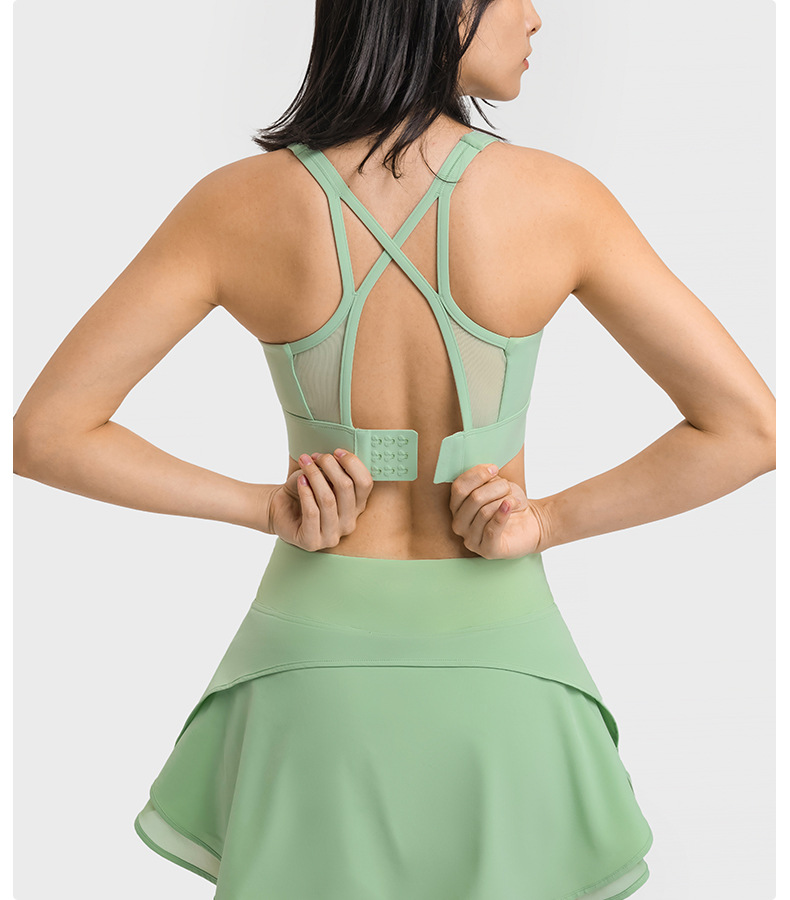
This catalogue view makes the crossed straps and open back band visible. It is a reference for closure and wearing-configuration questions, not evidence of a tested support rating or closure durability.
If a style has an adjustable setting, record which setting was used during the review and what options are confirmed for the order. Do not assume that an adjustment feature replaces the need for an appropriate size range. Likewise, a reviewer finding a closure convenient in one sample is useful feedback, but it should stay linked to that review context.
Check the interaction with the planned brand details. A label, logo or hangtag placement should not obscure a closure instruction or make the approved wearing arrangement ambiguous. Discuss the relevant location on the actual garment, particularly where the back contains several straps or the lower band opens.
If the buyer wants a different fastening or strap layout, document that as a garment change. It should not enter the order disguised as a small branding request. Selecting an existing arrangement and developing a new one require different information, even when the desired appearance seems close to the catalogue photograph.
How do you build a size and colour allocation for bras?
Start with the confirmed size information for each selected style. Clarify whether a chart contains body guidance, finished-garment measurements or both, and which measurement method is used. Do not convert those values into a new sizing promise without an agreed basis. A shared letter label does not establish identical dimensions or fit across different bra constructions.
Create a quantity line for every included style, colour and size combination. Keep the unit as individual bras unless a different commercial unit is explicitly agreed. If the buyer intends to sell a coordinated outfit, define the bra quantity independently from the bottom quantity so mixed sizes and separate sales remain understandable.
The size-colour quantity planning guide provides a way to organise the matrix. For bras, add any confirmed product option that changes the order identity, such as an accepted configuration specified by the supplier. Avoid creating an option column based only on what a photograph appears to suggest.
Use actual audience or sales information where available. A studio's previous top sales may be relevant background, but they do not automatically establish the size distribution for a new bra fit. Mark an initial allocation as a trial assumption when evidence is limited, and decide what observations will inform the next order.
Keep colour and size decisions connected to the selected style. A colour shown for one reference may not be a confirmed option for another. After the supplier reviews the proposed matrix, reconcile any changes with the brand's planned assortment and packaging list. This is more reliable than maintaining separate, contradictory totals in a presentation and a purchase worksheet.
How can coordinated colours remain clear without creating a fixed set?
State whether a bra and bottom are intended to match closely, coordinate as different tones or be sold independently. Those are different product and merchandising decisions. The supplier needs to know which relationship matters before reviewing colour references and the sample combination.
Use identified colour references and the agreed approval process. Images on different screens or photographed under different light can be useful for direction, but they do not settle the final colour decision. Where the bra and bottom use different materials, review their actual appearance together if matching is part of the brief.
Keep a separate product identity for each garment. A coordinated photograph should not conceal the style codes, sizes or quantities. If the brand offers mixed-size outfits, define how the receiver will identify the two garments and how any set-level label relates to their individual labels.
A wholesale buyer can also keep the products entirely separate while presenting them together in marketing. In that case, the packing and order records should still reflect individual items. Confirm the commercial unit with the supplier so a photographed pair is not mistaken for an automatically included two-piece set.
What should be approved for logos, labels and product descriptions?
For the private-label route, supply the actual artwork, proposed dimensions and a placement instruction tied to the selected garment. A small bra offers limited visible areas, and straps, seams, openings or textured panels may affect the location being discussed. The proposed position needs review on the real style.
Use the stretch-activewear logo guide to frame the application conversation. The method should be considered against the actual material, artwork and placement. Do not assume that an application accepted on leggings is automatically accepted on a bra's band, lining or front panel.
Give each artwork approval a version and scope. Identify the style, colour and placement it covers, along with any application sample or proof used for the decision. If the brand changes the logo file after a sample review, make that change explicit instead of allowing the older and newer artwork to circulate under the same filename.
Label information should reflect the confirmed garment and destination requirements. The responsible buyer should approve the brand text, size identity and verified composition and care information. Avoid transferring a label from another style because the products share a category or look similar in photographs.
Finally, review product descriptions against the evidence available for the actual assortment. Describe confirmed neckline, opening, coverage direction or other verified details accurately. Do not turn an internal preference for a particular sample into a universal comfort, support or performance promise on the retail page.
How should bra packing protect the approved presentation and identity?
Agree how the garment will be folded, positioned and identified for the intended receiving and sales process. Where the confirmed construction includes shaped or removable components, discuss the relevant handling and presentation requirements. Do not impose a packing method based on a different bra without checking its effect on this sample.
Use a suitable packing reference to settle the details that text alone cannot explain. A photograph may clarify hangtag position; a physical pack may be useful when the buyer needs to review the garment's arrangement. State what the evidence approves and retain it alongside the style and label records.
The activewear packaging checklist connects bags, identifiers and carton records. For a mixed bra order, the receiver should be able to match the outer information to the correct style, colour and size. An attractive hangtag does not solve a missing variant identifier.
Define any assortment pack precisely. State which individual bras belong in it and whether it is a receiving unit, a wholesale selling unit or a consumer-facing bundle. If the package contains a bra and another garment, identify both pieces and their sizes. Check the arithmetic between individual pieces, packs and cartons before confirming the order.
Which records make the selected assortment ready for an order discussion?
A short range document can summarise the assortment, but the supporting records still need to identify what has been accepted. Use the following structure to separate selection, evidence and commercial scope. The table is a planning aid, not a report that a sample has passed testing.
| Decision record | Minimum useful identity | Question it should answer |
|---|---|---|
| Garment selection | Product code, image and sample version | Which existing style is being discussed? |
| Wearing review | Size, configuration, intended use and recorded observations | What was assessed, and what remains unresolved? |
| Variant list | Style, colour, size, quantity and stated unit | Which exact assortment is proposed? |
| Brand approval | Artwork, placement, labels and approved descriptions | Which brand details belong to that garment? |
| Packing agreement | Individual or pack format, identifiers and carton allocation | How will the receiver identify and handle the goods? |
Ask a supplier proposal to reference the current versions of those records. Clarify whether unresolved colours, sample work, artwork or packing requirements are included or still to be reviewed. This gives the buyer a basis for comparing offers that cover the same garment and order scope.
Any later change should have an owner and a clear effect on the existing agreement. Replacing a colour reference, changing a label or requesting a different closure should not all be treated as the same kind of edit. The supplier needs to review the actual change before the buyer assumes that previous conditions still apply.
How do actual customer observations improve a bra reorder?
Separate receiving issues, product feedback and sales information. A size-label mismatch is a record or packing issue. A repeated comment about neckline coverage is a product observation. A slow-selling colour is a commercial signal whose meaning depends partly on its original allocation and how it was offered.
Keep feedback attached to an identifiable style and size. A comment that “the bra was too long” is difficult to use if the range contained several body lengths. Ask the retail team to record the relevant product identity and context without turning an isolated preference into a claim about all customers.
Use the repeat-order production guide to retain the accepted sample, specifications, branding and changes. For bras, preserve the wearing configuration and any support-related evidence that informed the approved description. A reorder should not silently inherit claims that were never resolved for the first order.
Reconfirm current material, colour, size and production conditions. Where a supplier proposes a substitute, review the relevant differences before calling it the same product. The previous order is a valuable reference, but it does not guarantee continued stock, unchanged terms or automatic acceptance of a replacement component.
How can inPACE support a focused bra assortment enquiry?
inPACE can help organise an existing-style shortlist, clarify the proposed branding and packing work and identify which sample questions remain open. Send specific garment references and the intended product roles, rather than a request for an undefined collection of “supportive yoga bras.” The resulting conversation can address actual choices.
The programme builds on Yinshan Garments' garment-production experience dating to 1986. This is production background, not an inPACE brand-age claim. Its relevance to the enquiry is the practical distinction between selecting a confirmed product, applying reviewed brand details and developing a different garment.
The appropriate production and sample route depends on the accepted style, material, decoration, quantity direction and scope. Confirm those conditions for the proposed order. Existing catalogue references can make the discussion more concrete, while final decisions still require the relevant sample and written records.
What belongs in your yoga bra wholesale brief?
Gather the following information before requesting a style and order review. Unknowns can be listed as questions rather than filled with assumed answers.
- Selected product codes, links and identified reference images.
- The intended wearer, activity and role of each bra in the range.
- Coverage, body-length and wearing-combination priorities.
- Support descriptions proposed by the brand and the evidence available for them.
- The actual opening, strap and adjustment configuration to review.
- Current size information and any proposed brand-size mapping.
- Quantities by style, colour and size, with pieces or packs clearly defined.
- Colour references and any bra-to-bottom coordination requirement.
- Artwork files, logo dimensions, placement and application questions.
- Label text, garment information and product-description approval needs.
- Packing, hangtag and receiving identifiers for the planned channel.
- Sample decisions, approval owner, destination and delivery target for discussion.
Share your bra references and wholesale brief with inPACE. Include the intended coverage, wearing requirements, size-colour allocation and brand details so the review can identify suitable existing options and any work that requires a separate development decision.
Product directions
Explore relevant activewear products
Use these product pages as practical references for your brief, then confirm materials, fit, customization, and production details through sampling.
Square-Neck Bra Reference
Use an identified catalogue style to review neckline, coverage and the actual sample fit for the intended wearer.
View product directionZip-Front Bra Reference
Review the existing front opening, garment identity and wearing requirements before allocating quantities.
View product directionBack-Closure Bra Reference
Compare the visible front and back details with the sample questions and confirmed options in your own brief.
View product directionFAQ
Buyer questions
Can a yoga bra wholesale supplier confirm support from a catalogue image?
A photograph can show visible design details, but it cannot establish a support rating. Define the intended use and ask for the relevant evidence for any proposed claim. Keep wearer observations, sample configuration and performance evidence distinct in the product record.
How many existing bra styles should a first assortment include?
There is no universal number. Give each proposed style a clear role, such as a different coverage or opening direction, and compare overlapping options before expanding colours and sizes. The manageable range depends on the buyer's actual audience, review resources and order conditions.
Can the same size label be used across different bra styles?
It can be discussed, but the underlying fit and measurements still need review for each style. Confirm whether charts show body guidance or garment measurements, and approve any mapping to brand labels. A shared letter does not make different constructions fit identically.
Does a front zip or back closure make a bra easier for every wearer?
No universal conclusion follows from the opening alone. Review the actual sample and wearing routine with the intended user context. Record the configuration and observations, then decide whether that existing arrangement suits the brief or whether another product route is needed.
Can we order bras and bottoms as mixed-size outfits?
Discuss the proposed combination with the supplier and identify each garment, size and quantity separately. Confirm the commercial unit and packing arrangement, including how individual items and any set-level identifier will be recorded. A coordinated image does not define those details.
What information should be approved before private-label packing?
Approve the garment identity, artwork and placement, brand and size labels, verified garment information, hangtags and the required packing arrangement. Keep the records linked to the correct style and version so outer identifiers agree with the garment inside.
What should be rechecked when reordering an existing yoga bra?
Use the retained sample and records to reconfirm the garment, material, configuration, colours, sizes, branding and packing. Review any proposed change and the current order conditions. Previous approval does not automatically cover a substituted material or component.