Sports Bras & Leggings
Adjustable Back-Buckle Multi-Strap Sports Bra Manufacturer
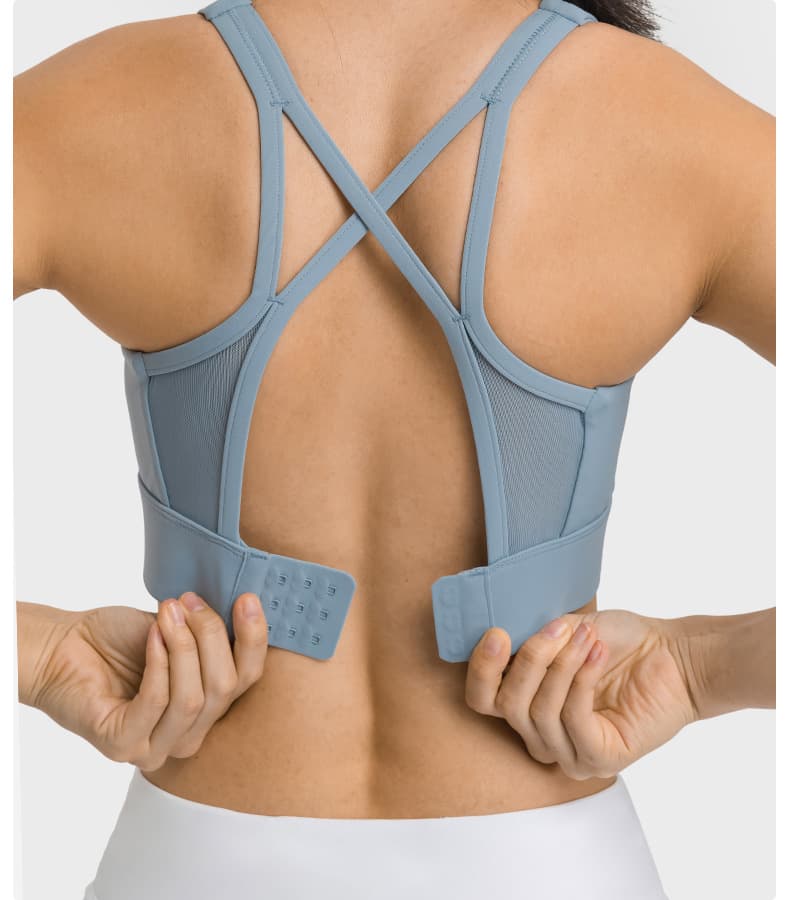
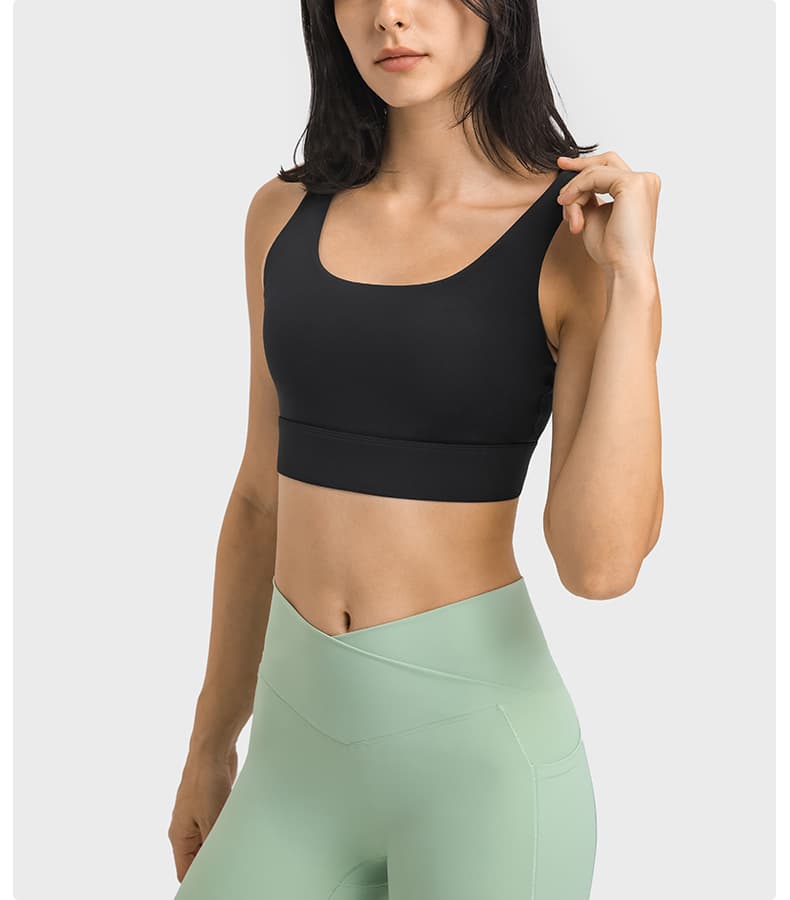
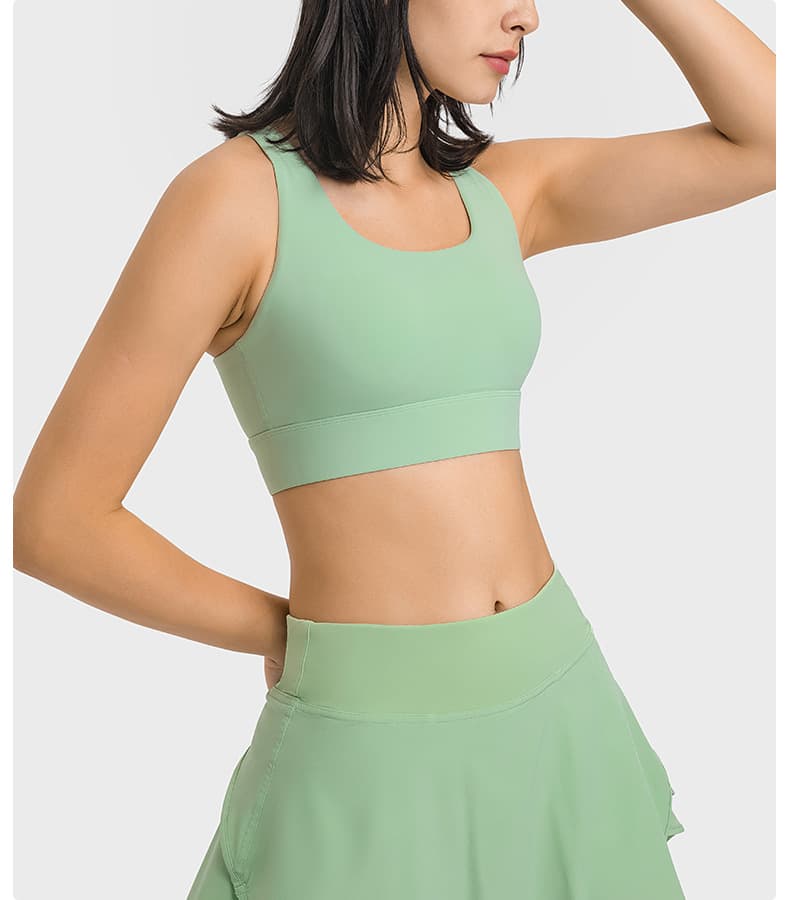
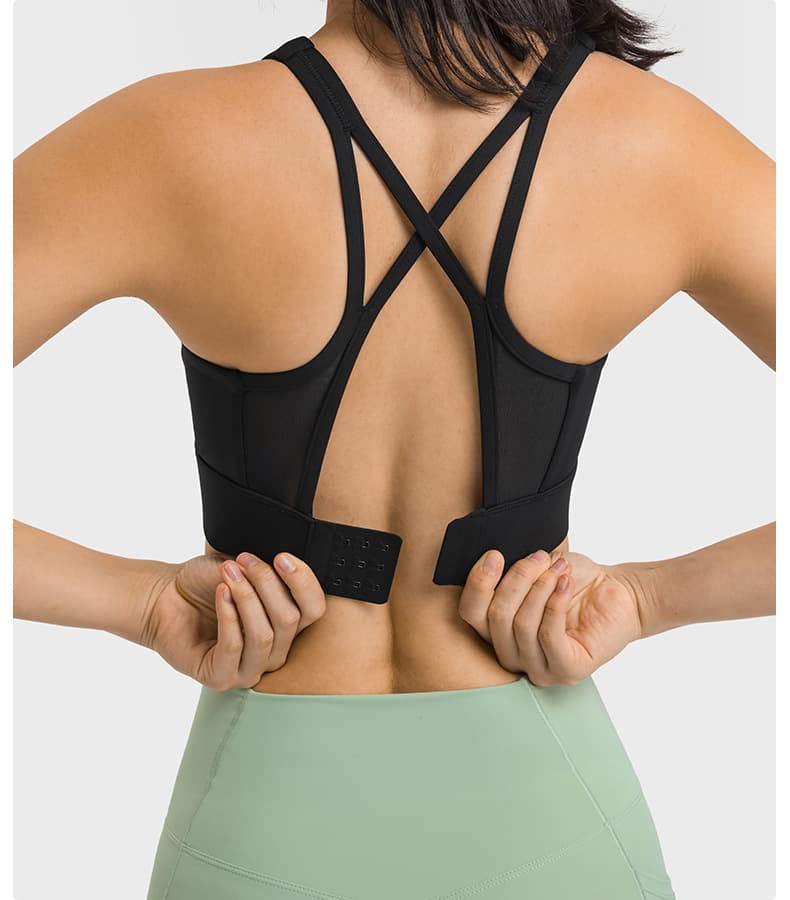
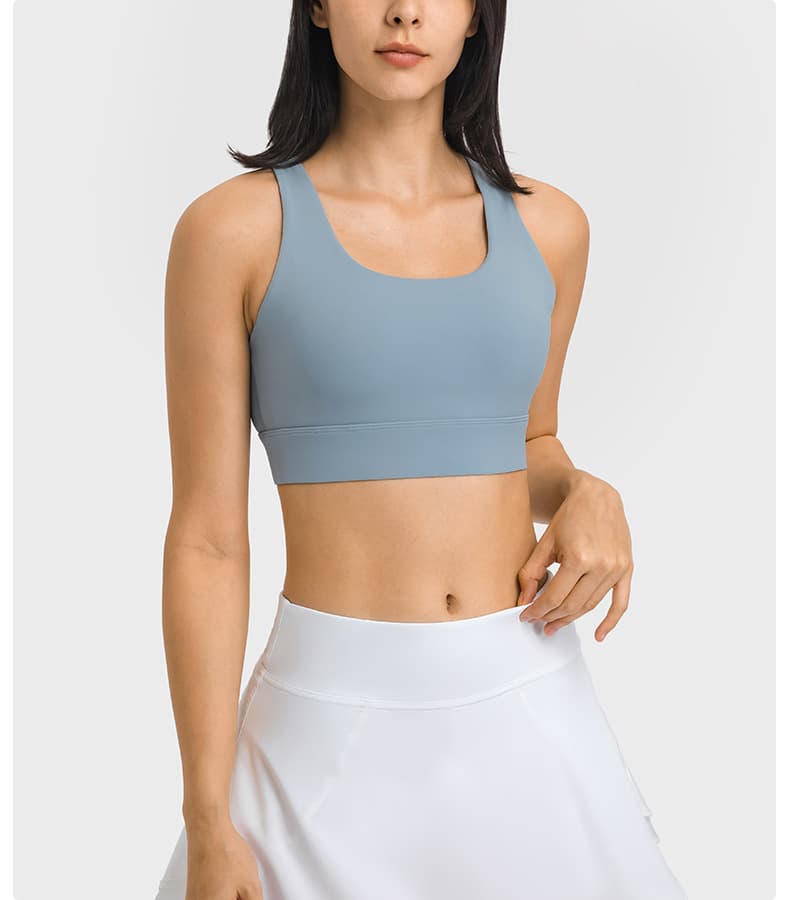
An adjustable back-buckle multi-strap sports bra for private-label yoga, Pilates, studio, gym wear, and coordinated activewear collections. The supplied reference combines a rounded front neckline, longline lower band, open multi-strap back, and center-back hook-and-eye closure. Buyers can review fabric, lining, cup-pad route, strap geometry, closure specification, fit, branding, grading, quality control, and export packing before production.
Product Features
Rounded front neckline with a close-fit longline sports-bra proportion.
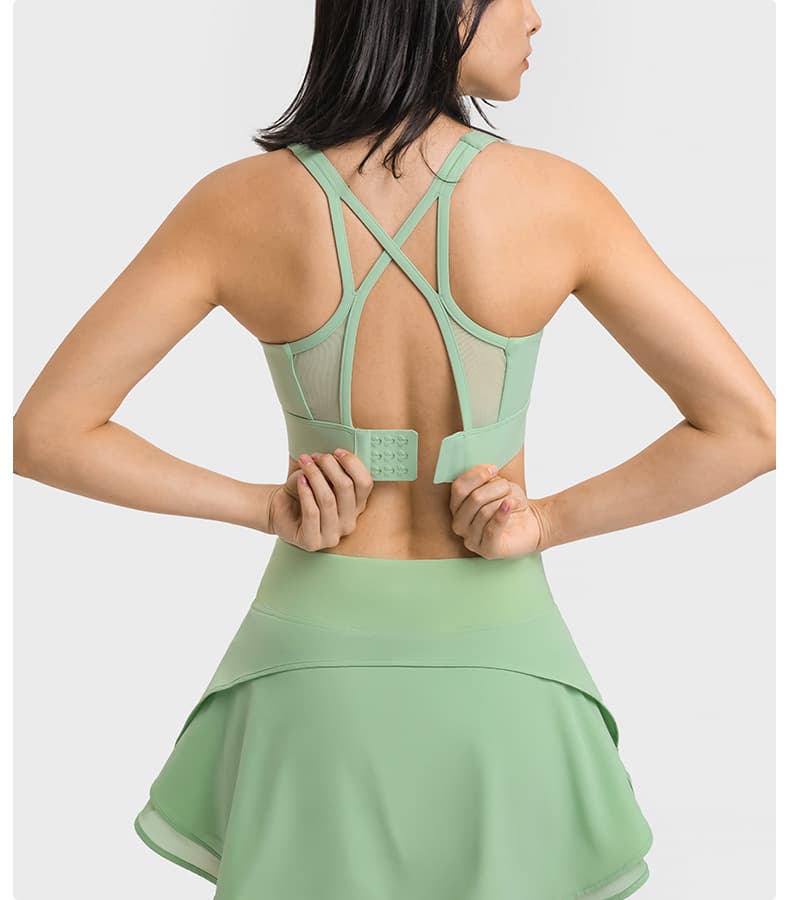
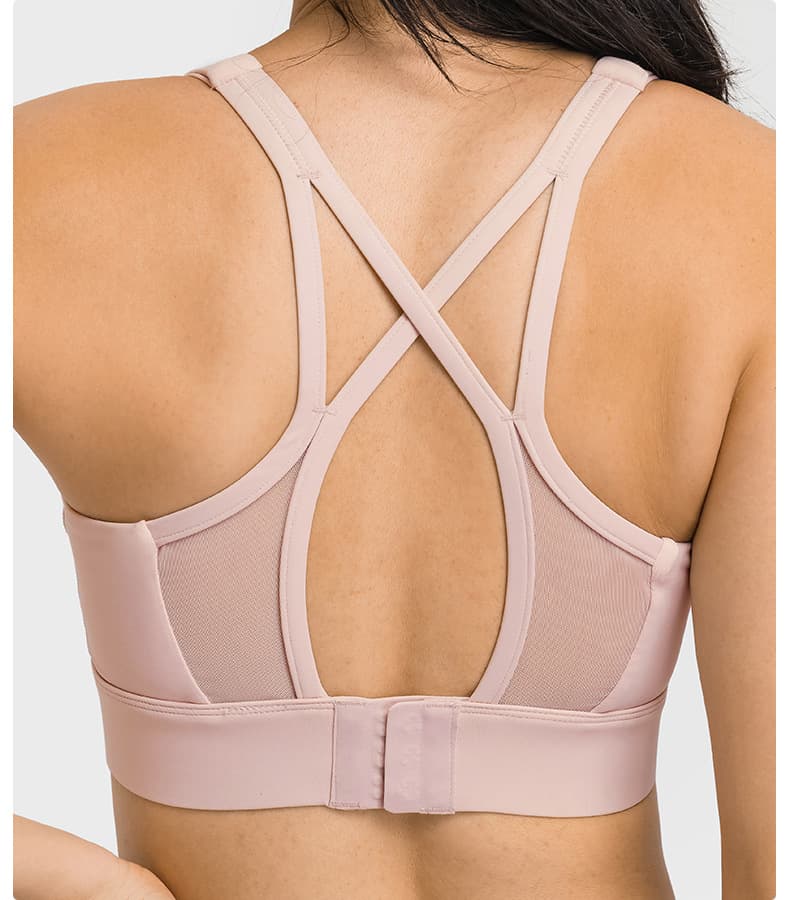
Layered multi-strap geometry creates an open-back design that is structurally different from a standard racerback.
Center-back hook-and-eye fastening, also described as a back-buckle closure, provides a defined closure route for buyer review.
Extended lower-band direction can be assessed with the selected fabric, lining, elastic, closure, and fit block.
Fabric, lining, cup-pad route, strap tension, closure specification, coverage, and performance direction remain sample-confirmed decisions.
Use Scenarios
Yoga and Pilates studio collections
Gym wear, mobility, and light-training activewear capsules
Coordinated sports-bra, legging, short, and tennis-skirt sets
Private-label ecommerce launches and boutique seasonal programs
Studio merchandise, club retail, and repeat-order core-color assortments
A multi-strap bra with a closure needs a complete development brief
An adjustable back-buckle multi-strap sports bra can give a private-label activewear collection a recognizable front-to-back identity. The supplied reference shows a rounded front neckline, a close-fit longline body, an extended lower-band direction, layered straps across an open back, and a center-back hook-and-eye fastening. That fastening is also described in this brief as a back-buckle closure. The combination can work in yoga, Pilates, studio, mobility, gym wear, and coordinated activewear programs, but the photographs are a design reference rather than a complete factory specification.
For a B2B buyer, every visible detail connects to another production decision. Strap geometry affects back coverage and tension. The closure affects the underbust measurement, extension range, skin-contact finish, donning, packing, and inspection plan. Fabric affects how the neckline, band, and straps recover after movement. Lining and any cup-pad route affect internal construction and the way the product must be folded. A responsible sports bra manufacturer therefore needs more than a reference image and a logo file before confirming the development route.
This page does not assign a fixed fibre composition, GSM, support level, moisture-management result, MOQ, lead time, certification, or ready-stock status. Those details cannot be verified from an image. They must be confirmed against the buyer brief, selected materials and components, approved samples, quantity plan, packaging requirements, and any agreed test method. Buyers who need broader program guidance can review the Sports Bras and Leggings manufacturing route before preparing an RFQ.
Product position and collection planning
A buyer should first decide what job this bra performs in the assortment. It may be a coordinated studio top for leggings, a fashion-led back-detail style for boutique retail, a private-label ecommerce launch item, or one part of a seasonal color capsule. Those positions can use the same visual reference but require different fabric targets, size plans, labels, photography needs, packaging, and replenishment records.
The product position should answer practical questions:
- Is the style intended for yoga, Pilates, mobility, gym wear, lifestyle use, or another named activity?
- Is the open multi-strap back the main design feature, or may the strap map change to improve fit and production consistency?
- Does the buyer want a longline bra-top proportion, a shorter band, more back coverage, or another neckline depth?
- Should the closure provide several adjustment positions, and what closure width or hook count should be evaluated?
- Is the garment lined, and does the collection require a cup pocket, removable pads, fixed pads, another cup construction, or no pads?
- Will the style be sold alone or coordinated with leggings, biker shorts, a skirt, or a warm-up layer?
- Is the commercial route light customization of the shown construction or a factory-custom pattern, material, and grading project?
These choices let the supplier interpret the product as a controlled program rather than a generic sports bra. They also make quotations easier to compare. One factory may assume an existing fabric and standard trim, while another may assume a new knit, custom-dyed elastic, a revised strap pattern, special closure hardware, a cup pocket, and retail-ready packaging. The activewear supplier audit checklist can help a sourcing team record those assumptions before it compares price or timing discussions.
Fabric, lining, and cup-pad direction remain buyer-approved decisions
The reference photography suggests a smooth stretch activewear surface, but it cannot confirm composition, knit structure, GSM, stretch percentage, recovery, opacity, pilling behavior, colorfastness, moisture management, or wash durability. A buyer should describe the required handfeel, coverage direction, climate, target retail position, stretch and recovery expectations, surface appearance, and intended activity. The manufacturer can then propose material options for swatch and sample review.
Fabric selection should be assessed on a sewn garment, not only as a loose cutting. The relevant questions include whether the neckline lies cleanly, whether the longline band rolls or shifts, whether the strap junctions recover, whether the closure area remains stable, and whether seams feel acceptable at the body. If the buyer changes fabric after approving fit, another sample or focused review may be needed because stretch and recovery can change the relationship among neckline, armhole, lower band, straps, and closure.
Lining and cup-pad construction must be specified rather than guessed. The product may be developed with lining, a cup pocket, removable pads, fixed pads, a molded component, or no pad route, but none of those options should be stated as a confirmed feature until the buyer and factory approve it. The internal route affects pattern pieces, seam bulk, edge finishing, cost, care labeling, packing, and fit comments.
| Development area | Buyer and manufacturer should confirm |
|---|---|
| Main fabric | Approved composition, knit structure, GSM, handfeel, color, coverage, stretch, recovery, and price direction |
| Lining | Full or partial lining, lining material, color, stretch compatibility, seam route, and skin-contact finish |
| Cup or pad route | Cup pocket, removable pad, fixed pad, molded component, or no-pad construction, including size and placement |
| Lower band | Band height, internal elastic or self-fabric route, seam placement, recovery, and comfort |
| Performance wording | Any support, breathability, moisture-management, colorfastness, or durability statement only after approved materials and relevant evidence support it |
A useful B2B description separates design direction from verified performance. Terms such as high support, sweat-proof, antimicrobial, UV protective, or guaranteed shape retention should not be assigned from photographs. If a buyer requires a measurable claim, the specification and test plan should identify what will be tested, which method applies, which sample or production lot is covered, and who owns approval.
Multi-strap geometry and the hook-and-eye back closure
The back construction is the defining feature of this style. The supplied views show multiple straps intersecting across an open-back area and connecting toward a center-back fastening. A change to one strap can alter the neckline, armhole, chest coverage, back opening, and lower-band balance. The strap map should therefore be controlled as a measured construction, not approved only because it looks attractive in one photograph.
For the development sample, record each strap width, attachment point, crossing order, extension length, seam or binding route, and its relationship to the lower band. Review whether straps twist, whether their spacing remains intentional, and whether the intersections sit consistently when the wearer moves. The correct tension depends on the selected material and size; it should not be inferred from a visual reference.
The center-back fastening also needs its own specification. The buyer and factory should confirm whether the final component is hook-and-eye tape or another approved back-buckle construction, the number of hook positions, tape width, extension range, coating or finish, color, edge softness, attachment seam, and replacement or repair policy if relevant to the order. Hardware must be assessed for the approved product and destination requirements. This draft makes no claim about a particular metal, coating, corrosion result, or certification.
The closure area should be reviewed while worn and while flat. It should not create unplanned gaps, excessive bulk, rough edges, distorted strap alignment, or a lower-band measurement that differs from the approved specification. The buyer can also decide whether the hooks should be closed before packing to reduce snagging and how the closure will be protected from adjacent fabric or cup components.
Fit, grading, and sample approval
Fit approval should connect the front, back, band, and closure. The base-size specification can include chest width, underbust or lower-band measurement, body length, neckline depth, armhole shape, strap lengths, crossing locations, back-opening dimensions, closure width, and approved extension position. Comments should be measurable. Raise the neckline by a stated amount, change the band height, move a crossing point, adjust a strap length, widen the closure, or revise the back opening. Requests such as make it more supportive or more comfortable are useful goals, but they still need a measurable pattern, material, or component instruction.
A multi-strap style benefits from size-set review because the geometry may not scale visually with a simple percentage. Strap spacing, closure width, back opening, neckline, and band length should be checked across the intended range. The buyer should provide a size chart or agree a grading route, identify the base size, record measurement tolerances, and separate fit approval from final color, logo, and packaging approval.
The activewear sample-to-bulk production guide explains how a buyer can keep measurements, materials, artwork, comments, and packing approvals connected. A sealed sample or another agreed approval reference should reflect the version being produced. If the closure, strap map, fabric, lining, cup route, or grading changes later, the affected approval should be revisited rather than silently carried forward.
Wholesale light customization or factory-custom development
A light-customization route may be suitable when the buyer accepts the existing silhouette, back-strap arrangement, closure direction, fabric platform, and grading. The work can focus on approved colors, logo application, inner and care labels, hangtags, barcodes, packaging, and a defined size and quantity plan. This route can help a studio, boutique, or early-stage activewear brand test a design direction while keeping the technical changes limited.
A project becomes factory-custom development when the buyer changes the main fabric, neckline, body length, lower band, strap geometry, back opening, closure component, lining, cup-pad route, pattern block, or grading. Each change can affect fit, construction, component sourcing, sample rounds, QC checkpoints, and quotation assumptions. Buyers should not expect a light-customization quotation to cover an unlisted pattern redevelopment.
The private-label service overview is useful when the main requirements are branding, labels, hangtags, barcodes, and retail presentation. The custom activewear development route is the clearer starting point when the garment itself needs structural changes. Defining the route early gives the buyer, supplier, and factory one shared understanding of what is being sampled and approved.
MOQ and lead time cannot be fixed safely at this draft stage. They depend on fabric and trim availability, color count, closure sourcing, cup-pad route, size ratio, logo method, testing, packaging, quantity, sample approval, and production capacity. A buyer should send the full matrix so the manufacturer can discuss the actual order plan rather than a number detached from the specification.
Quality control from sample through packing
Quality control should begin with the approved specification and sample, not only with a final inspection. Incoming or pre-production review may cover the approved fabric, lining, elastic, closure tape, hooks, pads if selected, labels, logo material, and packaging components. Production checkpoints can focus on measurements, strap symmetry, crossing order, secure attachment, closure alignment, skipped stitches, seam appearance, edge finish, color consistency, logo position, and the relationship between the lower band and back opening.
The closure deserves specific attention. Inspect hook engagement, extension positions, tape width, sharp or rough areas, coating appearance where applicable, stitch security, and whether the component matches the approved color and construction. These are inspection directions, not a promise of a particular test result. If the buyer requires pull testing, wash testing, colorfastness testing, restricted-substance documentation, or another protocol, the method, laboratory or responsible party, sample basis, and acceptance criteria should be agreed before production.
A pre-shipment review can compare labeled sizes with the order matrix, confirm garment measurements against tolerances, check visible construction and branding, verify quantities, and inspect the approved packing presentation. The exact inspection level and acceptance plan belong in the purchase and quality documents. No certification or universal pass result is implied by this product draft.
Branding, packing, and a buyer-ready RFQ
The front body and lower band provide possible branding zones, while labels and care information must remain compatible with the internal construction and destination-market requirements. The buyer should supply vector artwork, dimensions, colors, placement coordinates, application method, label files, care-content owner, hangtag, barcode data, and packing instructions. Logo suitability should be tested on the selected fabric before bulk approval because heat, adhesive, ink, stretch, and surface texture can affect the result.
Packing should protect the design rather than flatten it without a plan. The hook-and-eye or back-buckle closure may be closed and covered to reduce snagging. Straps should be arranged so they do not twist. If cups or pads are selected, the folding route should avoid unwanted deformation. The buyer can specify size stickers, individual poly bags, barcode placement, suffocation warnings where required, carton quantities, carton marks, assortment rules, and destination information. These details should be approved with the production specification and purchase order.
Send inPACE a buyer-ready RFQ with:
- the product reference and intended sales channel;
- target activities and open performance questions without assigning an unsupported support level;
- buyer size chart, base size, grading plan, and expected quantity by size and color;
- desired fabric handfeel, surface, coverage, stretch-recovery, climate, and price direction;
- lining and cup-pad route;
- preferred strap geometry, lower-band dimensions, and back-opening direction;
- hook-and-eye or back-buckle width, hook count, extension positions, finish, and color expectations;
- logo artwork, labels, hangtag, barcode, packaging, and carton requirements;
- destination market, testing or documentation needs, and target schedule for discussion.
Use the how to order guide to organize the next steps. A complete RFQ allows inPACE to review material and component options, identify which details remain open, plan the sample conversation, and discuss MOQ and lead time against the real order. The result is a traceable product-development record for an adjustable back-buckle multi-strap sports bra, rather than an unsupported promise built from a photograph.
Specifications
- Product Type
- Adjustable back-buckle multi-strap sports bra
- Fit Direction
- Close-fit longline bra-top body with rounded neckline, extended lower band, and open multi-strap back
- Back Construction
- Layered crossed straps with an open center-back area; final strap width, geometry, tension, and attachment require sample review
- Closure Direction
- Center-back hook-and-eye or buyer-approved back-buckle construction; hook count, width, finish, extension, and skin-contact details must be confirmed
- Size Range
- Buyer size chart or custom grading
- MOQ
- Discuss by fabric, lining, cup-pad route, elastic, closure, color count, size ratio, logo method, and order plan
- Branding
- Heat transfer, silicone print, inner label, care label, hangtag, barcode, and packaging options
- Packing
- Closure-protective folding, optional cup protection, size sticker, individual poly bag, carton mark, and export packing options
Fabric Information
- Main Fabric Direction
- Buyer-selected stretch active knit; exact fibre content, knit structure, and weight are confirmed before quotation and sampling
- Lining and Cup Route
- Lining, cup pocket, removable pad, fixed pad, molded component, or no-pad direction must be set from the buyer brief and approved sample
- Strap and Band Review
- Elasticity, recovery, strap width, lower-band construction, seam comfort, and stretch behavior should be checked on the development sample
- Closure and Hardware
- Hook-and-eye tape, back-buckle width, hook count, coating, edge finish, attachment, and color matching require buyer approval
- Color Development
- Buyer-selected core and seasonal colors with lab-dip, trim-color, and bulk color review where required
- Performance Claims
- Support, coverage, breathability, moisture management, colorfastness, durability, and wash claims depend on approved materials, construction, and an agreed test plan
Customization Options
Main fabric, lining, elastic, cup-pad route, handfeel, GSM, color, coverage, and stretch-recovery direction
Neckline depth, body length, lower-band height, strap width, crossed-strap geometry, back opening, and seam finish
Hook-and-eye or back-buckle width, hook count, extension range, coating, color, edge finish, and attachment method
Buyer colorways, logo method, logo position, artwork scale, inner label, care label, and hangtag
Buyer size chart, grading, fit sample, strap-tension review, closure review, size-set review, and measurement tolerances
Matching leggings, biker shorts, skirts, warm-up layers, barcode, folding, poly bag, carton mark, inspection checkpoints, and export packing