
Approval before scale
Why do sports bras and leggings need a product-specific bulk approval?
Sports bras and leggings often travel together in an activewear range, but each garment carries different product risks. A sports bra combines support direction, straps, underband, neckline, coverage, lining or cup decisions where relevant, fabric, and seam comfort. A legging brings its own questions around waist stability, rise, gusset, inseam, panels, coverage in movement, recovery, and construction. An approval process needs to make those garment-specific decisions visible before the project moves from a sample into bulk planning.
The goal is not to impose one universal specification. The right choice depends on the wearer, activity, channel, product position, fabric direction, color route, size range, branding, quantity, destination market, and the buyer’s approval plan. A studio-focused set may prioritise soft handfeel and flexible movement; a training piece may need a different balance of support, recovery, coverage, and durability. The factory can review those priorities, but the buyer needs to state which trade-offs matter for the intended product.
For a new product, the activewear performance collection can supply useful bra-and-legging references, but a reference is only a starting point. A selected catalogue style, physical garment, sketch, or tech pack should identify what remains, what changes, and what needs factory review. When fit, fabric, support, construction, or colour requires new development, the project belongs on the factory-custom route rather than a light branding path.
Approval table
Which points should a buyer approve before bulk production?
Use this table as a pre-production decision record. It distinguishes information the buyer can provide from the points a manufacturer needs to review or confirm. It should be completed alongside the actual sample, materials, artwork, labels, and packing requirements rather than treated as a generic checklist after the product is finished.
| Approval point | Why it matters before bulk | Buyer provides or confirms |
|---|---|---|
| Product role and intended movement | Defines whether the garment needs to prioritise studio movement, gym training, running, general fitness, or another use case. | State the target wearer, activity, support or coverage expectation, sales channel, and the reference product or product family. |
| Fit, measurements, and size range | Makes the sample review repeatable instead of relying on a visual impression alone. | Provide a size chart, measurement targets, reference sample, known fit comments, size range, and grading questions that need review. |
| Fabric and material behavior | Affects stretch, recovery, handfeel, support, opacity, weight, lining choices, logo compatibility, and the production route. | Describe the desired behavior and use; provide a swatch or comparable garment where available and identify any undecided material point. |
| Sports bra structure | Straps, underband, neckline, lining, cup direction, coverage, and seam placement work together to create the intended support and comfort. | Identify the support direction, strap and back shape, coverage, lining or cup expectations, and the movements that should be considered in sample review. |
| Legging construction | Waistband, gusset, rise, inseam, panels, seams, pockets, and edge finishes can change comfort, coverage, movement, and appearance. | Mark the fit points that must match a reference and the construction features that should change or be tested. |
| Branding and presentation | Logos, labels, hangtags, poly bags, barcodes, folding, carton marks, and receiving details must work with the garment and sales channel. | Attach artwork and label copy, then note placement, packing, carton, and destination-market requirements. |
| Sample, QC, and bulk handover | Records the approved reference and the points that production should check before packing and shipment preparation. | List what must be approved in sampling and which measurements, workmanship, branding, labels, packing, and carton details need review. |
An approval record is valuable because it makes open decisions visible. If the final fabric remains under review, the size range needs a grading discussion, or a logo method depends on the material, state that clearly. MOQ, cost, sample route, and timing are likewise project-specific: they depend on the style, material, colors, construction, branding, packaging, quantity, and delivery requirements. They should not be inferred from a product name or from a sample image alone.
Fit evidence
How should fit and size evidence be recorded before release?
Record measurements and wearer observations as two related forms of evidence. A measurement sheet can show the agreed points and tolerances for the sampled size, while a fit review explains how the garment behaves for the intended wearer and movement. Neither should be replaced by a note such as “standard fit.” The buyer should identify the sample size, the reference measurement record, the review conditions, and the exact comments that led to approval or revision.
For a sports bra, fit evidence may address strap position, neckline and arm opening, underband placement, body length, coverage, lining, and whether the planned support direction is consistent with the product brief. For leggings, it may address waist and hip fit, rise, waistband position, gusset and seam comfort, inseam, leg opening, coverage, and how the fabric recovers after the intended movement. These observations describe the sampled product; they do not establish a universal performance claim for every wearer.
The size range also needs an explicit plan. State which sizes are represented by physical samples, which measurements will be graded from the approved base, and which high-risk points require another review. If the bra and legging use different size labels or are sold as separates, keep their size records distinct. If they are packed as a set, document the approved pairing and any assortment rules. This makes grading and packing questions visible before production quantities are assigned.
Sports-bra decisions
What should a sports bra manufacturer review in the sample?
Start with the garment’s intended role. “Sports bra” can describe a range of products with different expectations for movement, coverage, support, layering, and visual presentation. A buyer should state the activity, target wearer, fit direction, coverage expectation, and the movements or situations that matter most in review. This gives the manufacturer a clearer basis for discussing strap placement, underband, neckline, back shape, lining, cup direction where relevant, fabric, and seam location.
The sample should make a focused set of questions answerable. Does the strap layout sit where intended? Does the underband stay in the planned position for the intended movement? Is the neckline and arm opening aligned with the coverage target? Does the material and construction feel consistent with the product’s support direction? Do lining, seams, labels, and logos sit as specified? A sample can reveal questions that need revision; it is not a reason to present unfinished assumptions as already approved.
Record the sample comments in product terms. Instead of writing “make it better,” identify whether the change concerns length, coverage, strap location, underband, lining, elastic, seam comfort, fabric feel, logo placement, or size. This turns a visual review into a product reference that can be used in the next discussion. When a product needs a new silhouette, material, support direction, or construction, move to the custom activewear development route rather than treating the change as a standard logo or label request.
Legging decisions
What should a leggings manufacturer review before bulk?
For leggings, buyers should identify the fit and movement priorities before they evaluate a sample. The waistband, rise, gusset, leg shape, inseam, seams, panels, pockets, and hem all contribute to the garment in use. A reference may communicate a look, but it may not show how the waistband is intended to sit, the degree of compression or ease, the desired coverage in a selected color, or which seam positions are important to the wearer.
A useful legging sample review compares the garment with the stated product role and measurement direction. Buyers can check whether the waistband and rise align with the fit target, whether the gusset and seam layout meet the intended movement and comfort priorities, and whether the material direction is appropriate for the desired handfeel, recovery, coverage, and finish. These are project questions, not universal product guarantees. Record what has been approved and what should be reconsidered before the garment enters production preparation.
For a bra-and-legging set, do not assume that a material or color decision automatically suits both pieces. A range may share a fabric direction, or it may require different construction, lining, or finish decisions by style. The buyer and manufacturer should confirm the product-specific route before one garment’s approval is carried into another style.
Coordinated-set approval
How should buyers approve a sports bra and leggings set as one collection?
Approve the bra and legging as separate garments first, then review the decisions that connect them as a set. This order matters. A coordinated colour palette or campaign image can make two pieces look resolved while fit, fabric, measurements, support, opacity, labelling, or packing remains different by style. The collection review should confirm intentional relationships without allowing one garment’s approval to stand in for the other.
Begin with product role. If the bra may be sold alone, its support and coverage direction must make sense without the legging. If the legging may be paired with other tops, its waistband, fit, colour, and logo placement should still work inside the wider collection. When the set is sold together, record the intended size and colour pairing. Do not assume that every buyer will select the same bra and legging size, or that a visually matching colour eliminates garment-specific material review.
The approval record should also show whether shared components are genuinely shared. Two styles may use one main fabric, or the bra may add lining, elastic, binding, or another internal component. The same artwork may need a different size or position on a curved bra panel and a legging waistband. A shared hangtag may still sit beside different care labels, size labels, barcodes, folding directions, or bag markings. Writing those relationships down gives the factory a clearer production and packing reference.
| Set decision | What the buyer should record | What the record prevents |
|---|---|---|
| Product role | Write a separate role for the bra and the legging, then state whether they are sold only as a set or may also be sold separately. | Prevents the set concept from hiding different support, coverage, fit, or construction priorities. |
| Fabric and colour | Confirm whether both garments use the same material and colour reference or whether each style has its own approved direction. | Avoids carrying one material approval across two garments when lining, opacity, recovery, or construction needs differ. |
| Fit and size relationship | Review each garment against its own measurement record, then check how the two pieces look and move together in the intended size pairing. | Keeps a coordinated appearance from replacing product-specific fit approval. |
| Branding placement | Record each logo, label, and hangtag location by garment and size, including the artwork version and the approved sample reference. | Makes placement repeatable across a curved bra panel, waistband, or leg panel. |
| Packing and assortment | State whether pieces are folded, bagged, labelled, barcoded, and packed individually or as coordinated units, and show the intended size and colour assortment. | Connects the approved garments with warehouse, retail, studio, or wholesale receiving requirements. |
A collection approval is therefore not one signature over two products. It is a short map of which decisions are shared, which are style-specific, and which remain open. That map helps the buyer review samples, approve artwork, plan assortments, and ask focused questions before production release.
Material and branding
How do fabric, colour, and logo decisions affect approval?
Fabric is a product decision, not a line item to add after fit approval. It can affect stretch, recovery, handfeel, support direction, coverage, weight, seam behavior, lining choices, logo compatibility, and the available production route. A buyer may have a swatch or a comparable garment, but final material suitability should be discussed with the actual style, color, construction, and intended use in mind. Review the fabric and trim considerations when the material decision still needs a structured discussion.
Colour and branding should be checked on the actual garment. Artwork placement may look different across a curved bra panel, stretch fabric, waistband, or leg panel. Labels, hangtags, poly bags, barcodes, folding, and carton marks should also be documented before bulk preparation, especially when the product will move through retail, studio, wholesale, or warehouse receiving. Those details form part of the same approval record as the sample—not a separate presentation task after the manufacturing discussion.
Product references
Which product references make the manufacturing brief more concrete?
These references help a buyer make the first conversation specific. They are not a substitute for confirming the final fabric, measurements, construction, branding, size range, sample comments, packing, quantity, or destination-market requirements. Use the custom development card when the intended garment cannot be defined by a catalogue reference and light branding changes.

Cross-Back Sports Bra Set
A bra-and-legging reference for discussing strap layout, back detail, waistband, color direction, logo placement, and sample comments.
Review route or referenceLight Support Bra Program
A core sports-bra reference for support direction, colour packs, labels, logo placement, and repeatable presentation decisions.
Review route or reference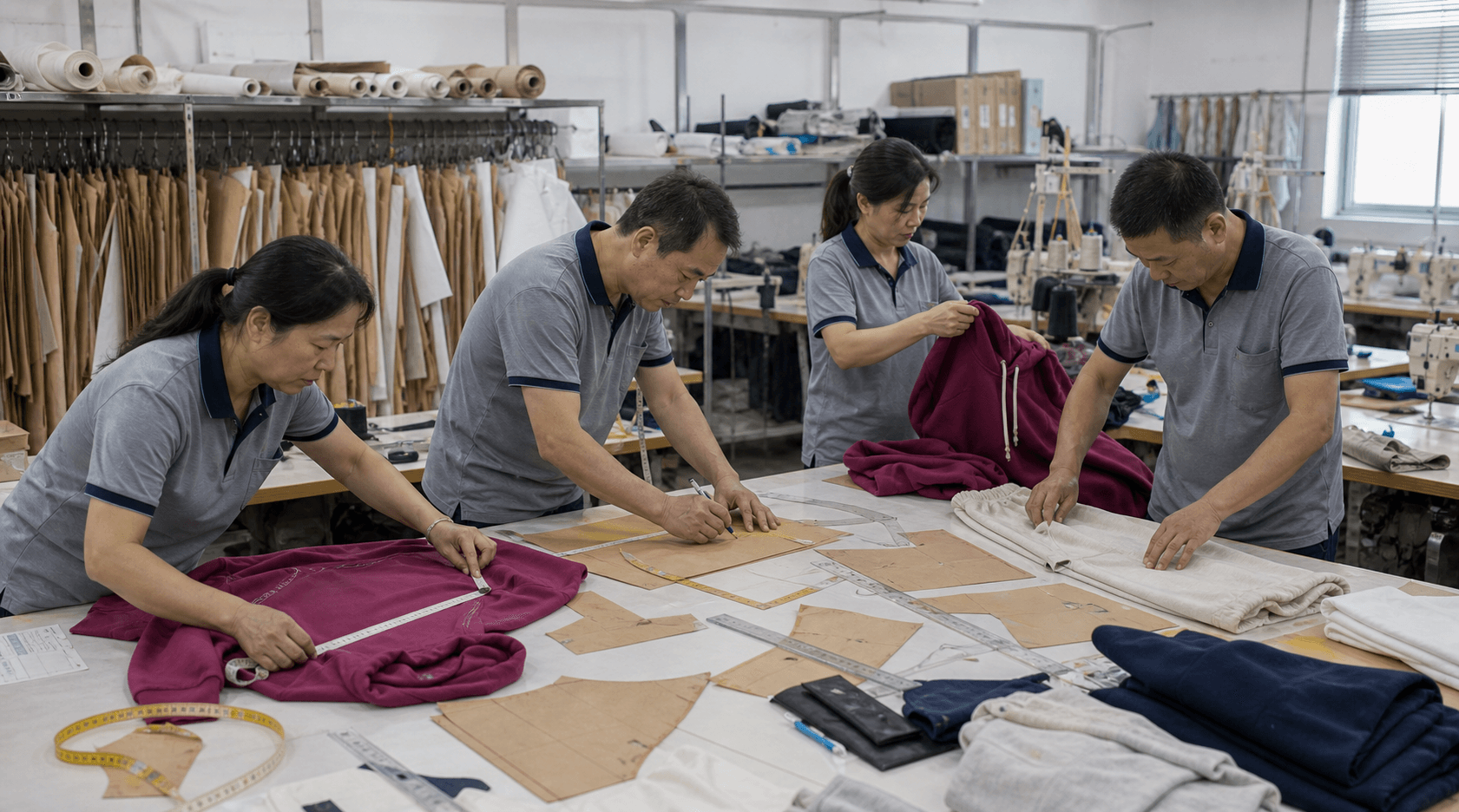
Custom Activewear Development
Use the factory-custom route when the project needs a new fit, fabric, support direction, construction, colour, or complete sample development rather than catalogue-led branding.
Review route or referenceFrom sample to production
How should approved sample comments move into bulk production?
After the product decisions are reviewed, create one usable record for the factory and buyer teams. It should identify the sample version, material and color direction, measurements, construction details, logo and label placements, packaging, carton information, and the specific points that are approved, pending, or still under review. This helps prevent an approved visual direction from becoming separated from the details that affect sewing, branding, QC, and packing.
The record is also the basis for buyer questions during production. Instead of asking only whether goods are “on schedule,” the buyer can ask which approved reference is being used for measurements, fabric and trims, logo location, labels, folding, and carton marks. Where an issue arises, the buyer and factory can return to the agreed specification and sample comments. The adjacent activewear sample-to-bulk production guide explains how a documented sample release connects with material confirmation, production preparation, and later checks.
Before goods are prepared for shipment, the review should connect the approved product record to workmanship, measurements, branding, labels, packing, and carton requirements. The manufacturing and QC overview provides the related factory-process context. It does not replace project-specific approval, but it helps a buyer see why the production reference needs to be complete before the final checks begin.
Release risks
Which approval gaps should stop a bulk-production release?
Pause the release when a decision that affects the garment, branding, or receiving plan cannot be traced to an approved reference. A factory can only work from the information available to the project. If the buyer and factory are referring to different sample versions, artwork files, measurement sheets, or packing instructions, apparent agreement may hide a real production conflict.
A visual approval has no version reference
A message saying that a sample “looks good” is difficult to use if the team cannot identify the physical sample, measurement sheet, artwork file, colour reference, or comment revision that was approved. Give every approval a version and date, and list the items that remain open.
One garment is carrying the other garment’s assumptions
A matching colour or collection story does not prove that the bra and legging share the same fabric, construction, lining, recovery, opacity, fit, or logo solution. Approve each style separately, then confirm the details that intentionally connect the set.
Packing is discussed after the product release
Labels, barcodes, folding, bags, assortment, and carton marks affect the final production record. If those requirements are missing, the factory may have an approved garment but an incomplete shipment brief. Keep presentation and receiving details inside the release checklist.
A pause does not mean the entire project has failed. It means the open point needs an owner, a reference, and a clear next action. The buyer may need to approve a revised sample, confirm an artwork file, state a size assortment, or answer a packing question. Once the record is complete enough for the planned release, the factory and buyer can review the same evidence instead of relying on memory or scattered messages.
Buyer checklist
What should buyers check before requesting bulk approval?
Next step
Share a sports-bra and leggings product brief before bulk planning
Send the garment reference or tech pack, intended activity, fit and size information, fabric and colour direction, sports-bra support or legging construction priorities, logo and label artwork, packaging and carton requirements, estimated quantity, destination market, sample needs, and target arrival window. Mark the open decisions so inPACE can review the appropriate development and production route with you.