
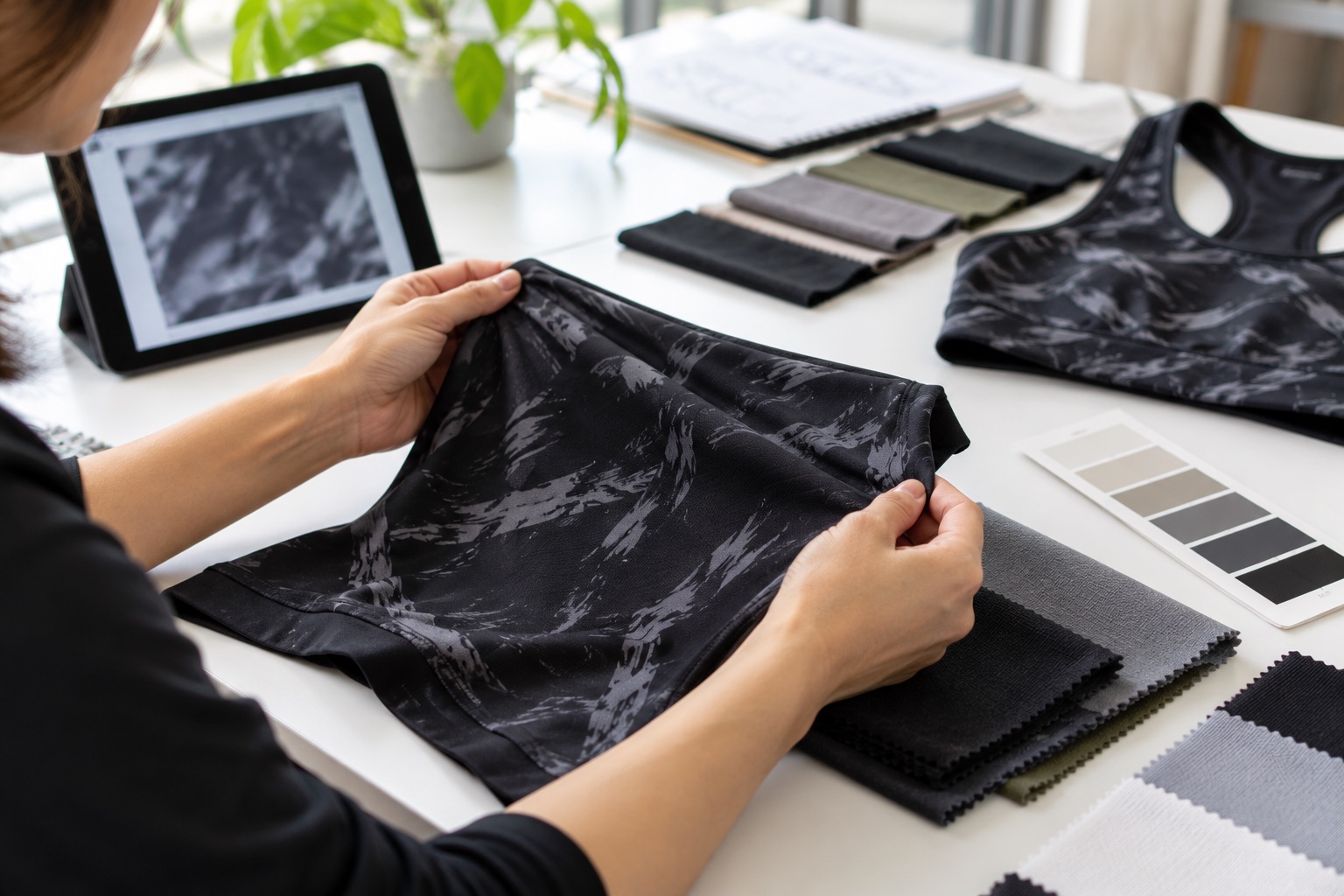
Direct answer: compare the same print and garment scope before comparing quotes
Sportswear printing cost factors are only comparable when each supplier sees the same artwork revision, garment reference, fabric direction, colourways, print coverage, sample request, brand components and style-colour-size quantities. Ask every supplier to separate confirmed scope from assumptions, exclusions and open questions. A headline unit figure cannot show whether two proposals include the same print route, setup work, sample evidence or packing.
This guide is an RFQ framework, not a pricing page. It explains which inputs can change the question a supplier needs to answer and how a buyer can request a like-for-like response. It does not publish a standard setup charge, MOQ, unit price, discount, production lead time or price advantage. A quote is project-specific and should be interpreted against its written scope and validity terms.
For an existing silhouette with a branding requirement, the private-label activewear route may be relevant. If the request changes fit, construction, fabric, panel design or another product specification, use custom activewear development. The route boundary matters because development work, blank garment selection and decoration scope can be quoted in different ways.
Why can two activewear printing quotes appear different?
A quotation is a response to the brief the supplier received, not a universal price for a phrase such as “printed leggings.” One supplier may have priced a small placed logo on a named catalogue garment; another may have interpreted the request as an all-over print across custom panels, a new fabric direction and multiple samples. The totals would not describe the same project even if the email subjects matched.
The brief can change at several points. Artwork revisions alter the information that needs prepress review. A new colourway may require a distinct colour discussion or proof. A change from one logo location to broad garment coverage changes the amount and position of decoration. A different fabric or finish can change which route or sample is being discussed. A new label, hangtag, bag or carton instruction adds a separate brand or packing scope. A different style-colour-size mix changes the quantities the supplier is being asked to plan against.
These are reasons to make assumptions visible, not proof that every variable creates a fixed fee. The supplier may combine activities, outsource a process, recommend an alternative, or ask for more information. The buyer’s task is to request the same response fields and the same evidence from each supplier, then resolve differences before treating quotes as comparable.
Start with the activewear printing methods guide if the team is still deciding between a garment-applied mark, a transfer, an all-over print or another route. Naming the intended visual task helps suppliers avoid pricing different interpretations of the same artwork.
Which artwork details belong in a printing RFQ?
Send one current file set and identify the version that each supplier should review. Include the artwork filename or ID, revision date, intended garment and colourway, placement map, dimensions or scale reference, and the file owner. If a graphic has alternate colourways, mark which combinations are in scope and whether each uses the same artwork geometry. Keep exploratory concepts separate so a supplier does not quote the wrong option.
For all-over or repeat artwork, include the tile, scale, direction, repeat relationship, colour separations if applicable, intended print area and garment panel map. A flat garment mock-up is helpful context, but it does not automatically define usable fabric width, cut orientation, motif placement at seams or print coverage. Mark which borders or alignments matter and which crops can vary.
For a logo or local graphic, give the garment reference, body location, dimensions, orientation and distance from relevant seams or edges. Indicate whether the mark is intended for a finished garment, a cut panel, a fabric section or another stage. If multiple placements use separate files or methods, list them individually. This lets suppliers identify scope differences without assuming every mark shares the same preparation or application process.
Use a version-controlled print artwork file checklist to package the source, output size, placement and review questions. Ask the supplier to return the filename or revision they priced. That confirmation gives both sides a way to spot a mismatched attachment before sample or bulk decisions begin.
How do colourways and print coverage affect a like-for-like scope?
Count the actual combinations in the programme, but do not reduce the request to “three colours” without explaining what the phrase means. It may refer to three ink colours in one artwork, three garment body colours, three artwork colourways, or a mix of those. A supplier can only confirm what the quote includes when the buyer defines the garment colour, print palette, coverage and repeat structure separately.
Coverage can be local, panel-based, partial, all-over or engineered around garment shapes. It affects the work the supplier must assess and the evidence the buyer may need. A small left-chest mark, a broad front panel, a full leg, a continuous fabric repeat and a garment with several placed graphics create different preparation and approval questions. The buyer should identify zones on a placement drawing rather than relying only on a product name or verbal description.
An RFQ should say whether every colourway uses the same location and artwork scale, whether the body fabric changes, and whether the visual crosses seams or cut lines. If one colourway has a different ground, contrast panel or graphic placement, show it as a separate scope line. This avoids a later disagreement over whether a sample or quote covered the variant.
The colour approval guide helps define the named colour reference and the purpose of a colour decision. The print quotation should then distinguish an artwork colour discussion from a fabric shade approval or a measured colour requirement. A digital image is useful for direction but does not, by itself, confirm a physical result on the final material.
| RFQ input | What to specify | Assumption to expose | Evidence before approval |
|---|---|---|---|
| Artwork revision | File ID, date, output size, scale and owner | Whether supplier is quoting an old or exploratory version | Returned file/revision reference and a controlled proof |
| Colourway count | Garment ground, artwork palette and named combinations | Whether “colour” means ink, garment shade or design variant | Colourway matrix and defined approval reference |
| Coverage | Print zones, dimensions, panels and full or partial scope | Whether seams, sides, inside surfaces or repeat areas are included | Placement map and sample showing the relevant area |
| Material | Candidate fabric code or documented direction, composition and finish if known | Whether the quote assumes a different base or surface | Identified material and project sample plan |
| Decoration route | Intended process if known, or request for feasibility review | Whether an alternative route changes handoff or appearance | Written proposed route and relevant physical sample |
Why must the garment and fabric scope stay visible?
A print request is attached to a product, even when the garment itself is not the buyer’s main concern. The quote should identify whether the supplier is pricing a catalogue reference, a modified silhouette, a new custom garment or a print-only activity against a buyer-provided base. These routes can include different development, sourcing, pattern, sample and approval responsibilities.
If the buyer supplies a garment or fabric, state who is responsible for material identity, condition, storage, yield or replacement. If the supplier is sourcing the base, ask for the candidate code or description and note what is not yet confirmed. The words “stretch fabric” or “polyester activewear” may not identify a unique construction, finish, weight, colour or supplier. A quote based on a provisional fabric should say so.
Share the intended wearer, garment role and use context when these details help the supplier review the proposed print location or coverage. A graphic on a fitted legging may be placed across a different pattern area from the same artwork on a loose tee. A print that runs across a seam or waistband may need a different panel discussion from a simple front placement. The goal is to make the commercial scope recognizable, not to ask the supplier to infer construction from a mood board.
When fit, material, support, panel design or construction is still open, identify that development work separately from the decoration. Identify the candidate fabric and relevant components in the RFQ; custom garment changes should be reflected in a project brief and sample plan. Do not compare a print-only quote with a custom-product quote as though both include the same work.
What should the quote say about samples and setup?
Ask what sample is included and what decision it is intended to support. A digital proof, printed swatch, strike-off, cut panel and assembled garment can answer different questions. A sample might show artwork position without representing production material, or show print appearance without confirming fit and construction. Record the sample type, fabric, garment, artwork revision, colourway, coverage and approval owner.
A term such as “setup” needs a supplier-specific explanation. It could refer to prepress preparation, screen or colour separation work, a partner process, a sample stage, equipment preparation or something else. Do not assume that suppliers use the word the same way. Ask which activity is included, which styles or colourways it covers, whether it recurs when the artwork or base changes, and what event would require a fresh review. The supplier should describe its own quotation structure.
Separate sample and development charges from bulk unit terms if the quote does so. Ask whether a sample is chargeable, what it includes, which revision it represents, and whether any credit or refund condition applies. inPACE’s general project planning guidance lists usual sample timing ranges of 5–10 days and production ranges of 25–50 days after scope and approvals are confirmed; exact conditions, process, timing and commercial terms must be confirmed for the project. Do not treat those planning ranges as a guaranteed date or assume they apply to every print route.
The sample-to-bulk handoff guide explains why an approved sample needs a clear identity and change record before bulk work is released. Ask a supplier to state what happens if the final artwork, fabric, coverage or garment differs from the sample reference. A quote without that boundary can leave both teams uncertain about what the unit scope covers.
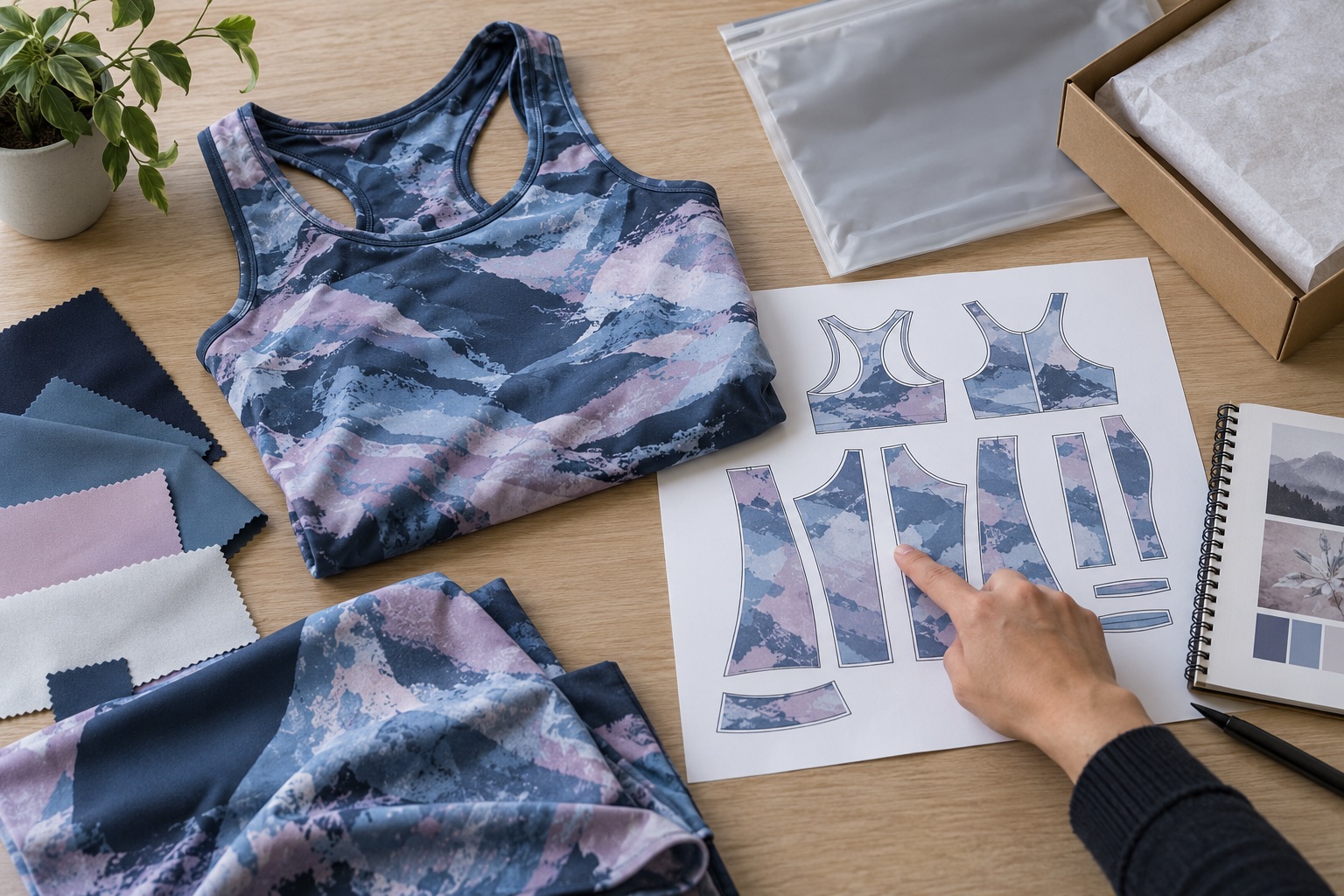
*Illustrative scope-planning scene only. It does not show an actual quote, order, customer project or approved garment.*
How should quantity and size-colour mixes be shown?
Give a style-colour-size matrix instead of one total that hides the order structure. A buyer may have multiple styles, garment colours, artwork colourways and sizes. State each combination that is in scope and identify any quantities that are estimates rather than approved order values. If the planned mix is not final, explain which assumption the supplier should use for an initial comparison and ask that the assumption be repeated in the quote.
The matrix matters because “total units” may describe different work. One plan might concentrate volume in one style and one artwork; another may divide units among several styles and colourways. Those are distinct briefs. The article does not define a universal MOQ, volume break, per-colour minimum, setup threshold or discount schedule. Request the supplier’s actual conditions for the proposed project and keep them tied to a named scope.
If the brand expects a reorder, ask whether the quote assumes the same artwork, material, colourway, placement, packing and approval reference. A repeat may still include change, material substitution, sampling or setup questions. Record those conditions separately from the initial order so that a planned reorder is not priced as a guaranteed continuation.
Share the quantity direction early, even if it is preliminary. If the exact mix remains open, mark it as a range or scenario and ask each supplier to price the same comparison case. When the buyer finalizes quantities, refresh the quote and confirm which inputs changed. This helps distinguish a real cost change from a scope change that was already present but not visible in the first request.
What should brands compare beyond the quoted unit amount?
A quote review should compare scope, exclusions, evidence and commercial conditions beside any unit amount. Check whether the garment, fabric, artwork preparation, decoration, sampling, labels, hangtags, packing, inspection or freight is included, excluded or provisional. If an item is not stated, ask whether it is included before making a decision. Absence of a line item is not proof that the work is free or omitted.
Review the currency, quotation validity, payment terms, tax or duty treatment where relevant, delivery point and any shipping assumptions. Confirm which party owns supplied materials, the permitted use of artwork files, the sample approval event, bulk tolerances and how changes affect the quote. Commercial terms may depend on the destination, procurement model and contractual relationship; a buyer should have the responsible purchasing or legal owner review those terms.
Request a response table with the same rows for every supplier. A useful comparison can include quoted scope, included services, exclusions, assumptions, required buyer inputs, sample evidence, approval owner, quote validity and unresolved questions. The table should preserve the supplier’s own wording where it defines a process or charge, with a separate buyer note explaining what still needs clarification.
For a broader comparison of supplier quotes, follow the activewear manufacturer quote comparison guide. This article keeps its scope on printing variables; the broader guide handles manufacturer selection and overall quotation comparability. If the request is still being assembled, organize the full product brief before sending it.
| Quote field | Supplier response to request | Buyer comparison question | Change that can reopen the quote |
|---|---|---|---|
| Garment and material | Named style/reference and base assumptions | Do all suppliers price the same product and fabric scope? | New fit, fabric, construction or component |
| Print work | Route, artwork revision, locations and coverage | Does the quote include the same zones and artwork preparation? | New route, scale, colourway, panel or placement |
| Samples and approval | Sample type, included scope, charge and reviewer | Does each sample answer the same buyer question? | Additional revision, material or garment sample |
| Quantity mix | Style-colour-size matrix and quoted scenario | Are the comparison quantities identical? | Rebalanced styles, colours or size pack |
| Brand and packing | Logo files, labels, hangtags, bags and carton brief | Are components and packing steps stated the same way? | New artwork, barcode, fold, bag or carton instruction |
| Conditions | Validity, exclusions, delivery and payment terms | Which conditions remain provisional or need review? | Expired quote, destination or scope change |
How should a buyer handle unknown costs or open assumptions?
Do not fill gaps with a guessed figure. Put the question in an open-items column and ask the supplier to confirm the variable, the evidence needed and whether the current quote includes it. Examples include a fabric still under review, a print route that depends on the artwork, an unapproved label design, uncertain quantities or a sample requirement that has not been defined. A clean open item is more useful than a false comparison.
Ask suppliers to separate a quotation from a confirmed order scope. A quotation may rely on draft artwork, provisional quantities or a candidate material. A confirmed scope should identify the current version and list any conditions that need buyer approval. If the supplier cannot confirm a line yet, record whether it is excluded, provisional or pending information. Avoid an ambiguous “included” status when the details remain conditional.
When a proposal looks higher or lower than another, inspect the underlying assumptions. One may include more sampling, a different garment, wider print coverage, extra brand components, more colourways, a different size mix or a separate packing instruction. These differences may be commercially important, but they should be resolved before selecting a supplier based on a headline amount.
Maintain one source of truth for the quote request. Distribute the same artwork and matrix to each supplier, record when a revision is sent, and ask the suppliers to confirm receipt. If one supplier receives a later version, note that its response is based on a changed scope. A response log can include supplier, quote date, validity, scope version, open items, owner and next action.
Buyer checklist for a comparable activewear printing quote
Before sending the RFQ, confirm that the request names both the garment and print task. Attach the files that a supplier needs, but label draft and final options clearly. Include a matrix that makes the order structure visible and identify which details remain provisional. If you do not yet know the right print route, ask for a feasibility discussion instead of forcing suppliers to quote different interpretations.
- Identify the route: existing catalogue branding, small-batch custom review or factory-custom garment development.
- Name each style, product reference, fabric direction and colourway in the quote scope.
- Attach the current artwork files and state revision, output size, dimensions and owner.
- Mark print placements, coverage zones, panel maps, repeat direction and seam relationships.
- Separate garment ground colours from artwork colours and print colour separations.
- Provide the style-colour-size matrix or the same comparison scenario for all suppliers.
- List sample types, sample purpose, approval owners and any agreed test question.
- Specify logo, labels, hangtags, bags, folding, cartons and delivery requirements separately.
- Ask suppliers to identify process assumptions, setup wording, exclusions and provisional lines.
- Compare quotation validity, currency, delivery terms and payment conditions with the responsible buyer.
- Record each supplier’s quoted revision and the date it received the files.
- Re-quote when artwork, fabric, coverage, quantities, packaging or garment scope changes.
How inPACE can review a printing RFQ
inPACE works with B2B brands and product teams on activewear sourcing, custom product development and project-specific sampling. A useful RFQ review begins with the garment, current artwork, print locations, fabric direction, colourways, quantity matrix, sample question and approval owner. The team can identify what is clear, which assumptions need confirmation and what sample or supplier input may be needed next.
For an existing silhouette, name the product direction and the exact garment reference. This does not establish stock, fabric, print method, colour or project availability. A custom programme also needs a clear production and sourcing scope.
For a like-for-like quotation review, send the artwork revision, garment or product reference, print coverage map, fabric direction, style-colour-size matrix, sample requirements and brand/packing scope through inPACE’s contact page. If a detail is still open, label it as an assumption or question. The response can then distinguish confirmed inputs from provisional ones instead of presenting an incomplete brief as a final order specification.
Product directions
Explore relevant activewear products
Use these product pages as practical references for your brief, then confirm materials, fit, customization, and production details through sampling.
Jogging & Printed Activewear Direction
Use this catalogue direction to identify the garment scope for a print quote, then confirm the actual fabric, artwork, colourway, and quantities for the project.
View product directionPrivate Label Activewear
Use the existing-style route when the brief includes a defined garment direction, branding, labels, hangtags, and packing scope.
View product directionCustom Activewear Development
Use the factory-custom route when the garment fit, material, construction, panels, colour programme, or sample scope changes.
View product directionFAQ
Buyer questions
What are the main sportswear printing cost factors?
The factors a buyer should define include artwork revision, print route, colourways, coverage, garment and fabric scope, samples, quantity mix, brand components, packing and quote conditions. A supplier must confirm how those inputs apply to the specific project.
Does each extra print colour create a fixed charge?
There is no universal rule that one added colour creates the same charge in every process or supplier quote. Define whether colour means artwork colours, garment colourways or print separations, then ask the supplier to explain the effect within the proposed route and scope.
What does setup mean in an activewear printing quote?
Suppliers may use setup to describe different activities, such as prepress preparation, separations, sample work or process preparation. Ask what task is included, which styles or colourways it covers and what change would require it to be reviewed again.
Can I compare quotes using one total quantity?
A single total may hide differences in styles, colours, artwork versions and size mixes. Share the same style-colour-size matrix or comparison scenario with each supplier and identify estimates separately from approved quantities.
Should sampling be included in a printing quote?
State which sample is needed and what decision it should support, then ask whether it is included, charged separately or provisional. A digital proof, fabric swatch, printed panel and assembled garment answer different questions and should be named in the quote.
What information should I send for a printed activewear RFQ?
Send the product reference, fabric direction, current artwork revision, print locations and coverage, colourway matrix, style-colour-size quantities, sample requirements, brand components, packing scope and delivery context. Mark unknowns and request written assumptions and exclusions.
When should a printing quote be updated?
Ask for an updated quote when artwork, print route, coverage, colourway, material, garment construction, sample scope, quantity mix, packing or delivery conditions change. The supplier should identify which prior assumptions and approvals remain applicable.