
Direct answer: rotary screen printing needs a fabric-and-garment brief, not only a pattern file
Rotary screen printing for sportswear is worth discussing when a brand has a continuous fabric visual to assess—not merely a chest logo—and can identify the repeat artwork, intended scale, fabric direction, usable width, colourways, garment panels and sample question. A repeat file alone does not establish that a route is suitable. The supplier still needs to review the named fabric base, print coverage, cut-and-sew context, quantity direction and physical evidence required before any bulk handoff.
This article helps a B2B buyer organise that conversation. It does not say that inPACE owns a rotary line, that one process suits every knit, or that a screen proof establishes a finished-garment result. inPACE can coordinate a project-specific review with relevant production partners after the brief is defined. If the project changes the garment’s fit, fabric, pattern, construction or colour programme, it belongs on the custom activewear development route, not inside a decoration-only request.
A buyer using an established silhouette plus a repeat visual may begin by identifying a direction in the Jogging & Printed Activewear collection. The collection is a reference point, not an availability, material, colour or production promise. The print route, actual base fabric and sample scope remain project decisions.
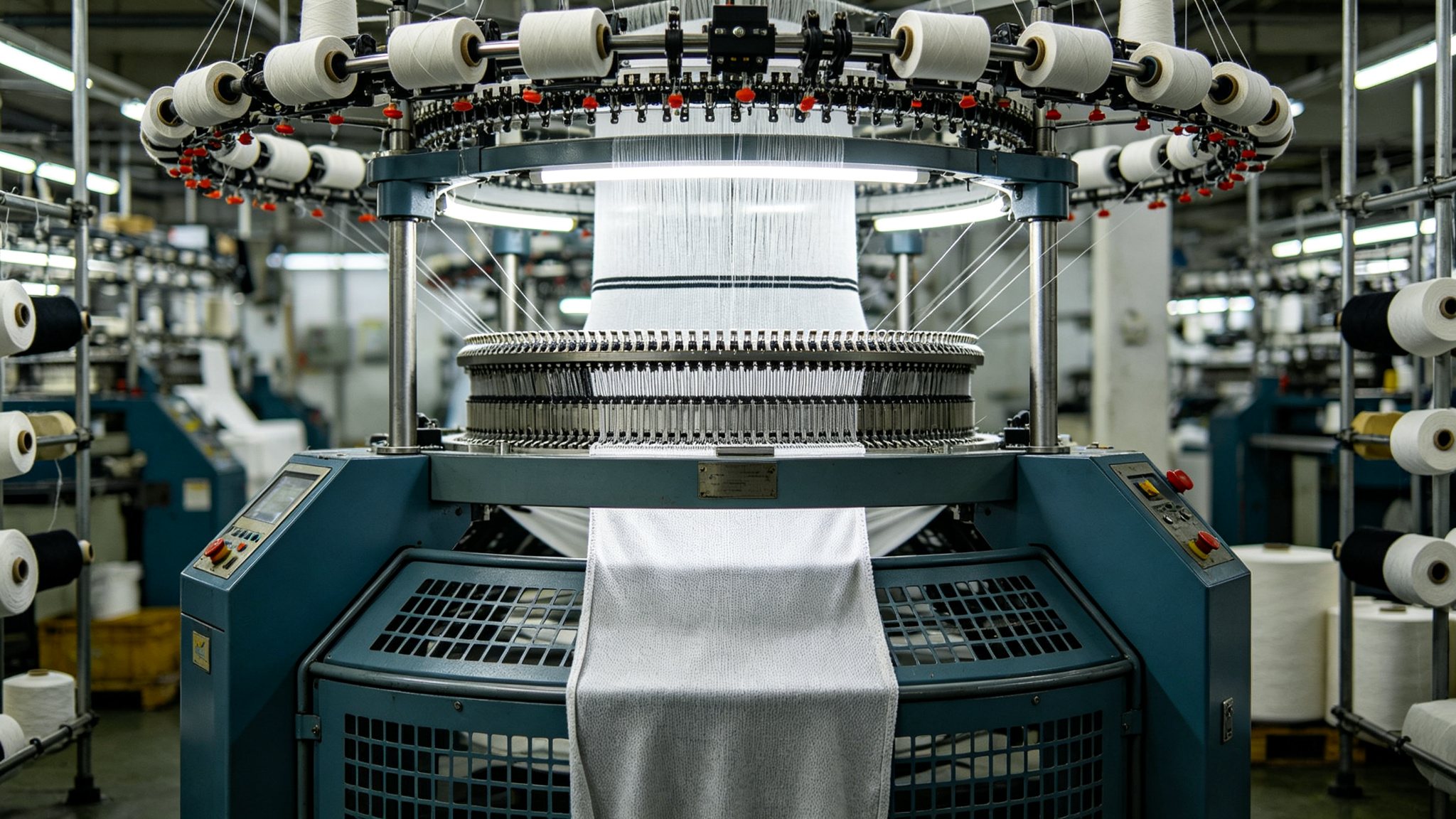
*This unprinted knit-fabric image is production context only. It does not show rotary screen printing or prove that a particular material, print route or result has been approved for an inPACE project.*
What does rotary screen printing mean in a sportswear brief?
Buyers sometimes use “screen printing” for several different jobs: a small logo placed on a completed garment, a large graphic on one panel, a cut-piece design, or a repeated visual intended to run across fabric before it is cut. Those jobs create different questions. A local mark needs a placement, dimensions and garment surface. A repeat needs a tile, an edge relationship, a direction, an intended scale, a relationship to the printable fabric width, and a plan for how the pattern pieces will be cut.
For this guide, rotary screen printing is discussed as one possible continuous fabric-print route for a repeating design. That wording is deliberately narrow. It does not make “rotary” a universal synonym for screen printing, nor does it decide whether the route is technically or commercially right for a particular order. Suppliers may use different terminology for their equipment, colour-separation workflow or partner process. Ask them to define the route they are proposing and identify which part of the project it addresses.
The wider activewear printing methods guide helps buyers distinguish a placed logo, panel decoration, transfer-style request and all-over visual at a high level. This page goes further on the fabric-repeat task: what must be recorded before a supplier can review feasibility, quote a comparable scope or recommend a sample.
A useful first sentence in a brief can be simple: “This is a directional repeating fabric visual for the side panels and outer leg of a training tight; the current request is to review whether the repeat, scale, selected fabric direction and panel map can be sampled.” That gives the supplier a decision to address. “Please print this pattern” does not.
When is a continuous repeat different from a placed logo?
A placed logo is usually assessed against a named point on an assembled garment: for example, a chest, side leg, back neck, sleeve or hem position. The buyer can describe its size and distance from a landmark. A continuous repeat begins earlier in the chain. It may be applied to fabric, then cropped by pattern pieces, intersected by seams, changed by grading, broken by a gusset, wrapped around a leg or stopped at a waistband. The visual therefore needs both a fabric-facing record and a garment-facing record.
Consider three distinct instructions:
| Print task | What the buyer must identify | Sample question | Do not assume |
|---|---|---|---|
| Local brand mark | Garment, placement, dimensions, artwork version and material surface | Does the proposed mark and location need a garment-context proof? | A logo file identifies its own size or application route |
| Engineered panel visual | Named panel, crop, orientation, seam boundaries, garment size and artwork version | Can the intended visual survive the chosen cut and construction context? | A flat front image shows every seam or grading effect |
| Continuous repeat | Repeat tile, edge relationship, direction, intended scale, fabric base, usable width and panel map | Can a named fabric and cut plan be reviewed through the agreed sample stage? | A seamless digital tile will remain visually seamless on every finished panel |
The point is not to promise that every repeat will align across every seam. In some designs, controlled variation is acceptable; in others, a stripe, central motif, directional print or engineered logo needs a named relationship to the panel. A buyer should state which is which. “Alignment required at outer-leg seam” is a useful instruction. “Make it look even” is too open to manage.
If a visible decision is mostly about the final garment position rather than fabric coverage, first read the activewear print placement guide. If the team has not yet controlled the source file, direction and scale, start with the print artwork files preflight guide. These pages have separate jobs so the buyer does not mistake a placement note for a full repeat record.
What artwork should be frozen before a route is assessed?
“Frozen” does not mean creatively final forever. It means that a named revision is stable enough to review. Before the supplier discusses a route, prepare one current artwork package with a revision name, owner, date, intended output and the exact question being asked. Keep exploratory alternatives separate from the issue being reviewed. That lets a supplier say, for example, that the current tile can be considered on the identified base but the colourway or scale needs a physical proof.
For a repeat, include these elements:
- Tile identity and dimensions. Name the current file and give real dimensions for the tile, not only a preview image.
- Edge relationship. Explain whether the visual is straight repeat, half-drop, mirrored, directional, engineered, or another named arrangement. Mark the edges that must connect.
- Direction. Give an arrow or unmistakable “top” note. A directional motif can be inverted when a fabric/pattern assumption is not recorded.
- Scale. State the intended physical scale and whether it may vary by garment size. “Large” is not an approval criterion.
- Colourway map. Match each artwork version to its intended garment ground or collection colourway. Keep light-base and dark-base variants distinct.
- Panel map. Identify front, back, side, inner leg, waistband, pocket, mesh, sleeve, opening or other relevant zones. Mark where the visual may crop, stop, continue or avoid a seam.
- Open decisions. List what remains unknown: actual material, colour count, coverage, cut plan, sample type, quantity mix or approval owner. Open information is safer when it is visible.
A production-ready file format is not the only concern. Linked assets, fonts, masks, transparencies and exports can matter, but the first question is still physical intent. A perfectly organised vector file is not a complete fabric-print brief if no one has stated the intended scale, panel context or sample purpose. Likewise, a high-resolution raster image may be useful creative direction while still needing a real-size output review.
Do not treat a screen render as proof of physical colour, surface appearance, stretch behaviour or edge definition. When colour is central to the decision, retain the named references and use the activewear colour approval guide to organise the project-specific physical review.
Why do fabric identity and usable width belong in the same conversation?
A repeat is designed for a surface. Before making a route decision, identify the intended fabric base as precisely as the project can at that point: material or candidate reference, construction description, finish direction, colour ground and any known constraints. A category such as “stretch fabric” or “performance knit” is a starting point, not a production identity. The fabrics and trims resource and activewear fabric sourcing guide can help a buyer structure material questions, but neither one proves that a particular repeat will work on a proposed base.
Usable width also changes the discussion. The buyer does not need to prescribe a machine setting, but the supplier cannot responsibly map a repeated visual to panels without discussing the actual fabric width, the intended repeat scale and the way pattern pieces may sit on the material. A visual that reads well across a wide flat layout may create awkward crops on a narrow panel, a waistband, a curved hip, a sleeve or a gusset.
Use a fabric-and-panel matrix rather than expecting the artwork file to answer alone:
| Item to record | Why the supplier needs it | Evidence or question for the next stage |
|---|---|---|
| Candidate fabric identity | Places the visual on a named material direction rather than an abstract category | Supplier material reference, current specification or a clear “to be proposed” note |
| Ground colour and artwork version | Makes light/dark or colourway-specific assumptions visible | Named colourway map and current artwork revision |
| Usable width and repeat scale | Lets the review discuss layout and crop questions in physical terms | Supplier confirmation of what must be checked on a proof or sample |
| Pattern-piece map | Shows where seams, curves, pockets, openings and panels affect the visual | Current style reference or a preliminary pattern/panel layout |
| Grade/size scope | Stops one size’s crop from silently becoming an all-size approval | Size range and a note on whether scale/orientation changes are allowed |
| Sample purpose | Separates a fabric strike-off from an assembled garment review | Written question, sample ID, reviewer and decision owner |
A buyer need not wait until every field is final before opening a conversation. The important practice is to label unknowns. If the base fabric is not chosen, say so and ask the supplier what information would be needed to propose a candidate. If the panel map is preliminary, call it preliminary. An honest open item is more useful than a confident-looking instruction that the team later discovers cannot be traced.
How should colour count, coverage and setup questions be handled?
Colour count, coverage and setup are quotation and sample-scope variables, not automatic quality indicators. They must be linked to the actual artwork revision, fabric direction, colourways and quantity matrix. A buyer asking for “the same print” should make clear whether “same” means identical tile, same garment base, same palette, same coverage, same panel layout, same print route and same sample evidence. Often it does not.
Keep the supplier’s response comparable by asking it to identify assumptions rather than forcing a premature number. For example, the supplier can state that a route review depends on a named repeat, a proposed base and a colourway plan, while the buyer can decide whether to provide a pattern map before sampling. The aim is not to turn a first conversation into a final production instruction; it is to make the conditions of a later quotation or sample legible.
Avoid importing generic performance language. A design may use a dense dark area, a fine line, a light ground or a large coverage zone, but none of those facts proves a particular wash outcome, colour result, handfeel or stretch result. The relevant sample should be defined around the actual concern. If the buyer wants to examine a print across a stretch area, the record should name the garment zone, material reference, artwork revision, observation condition and what decision is expected after review.
This is also why a continuous-print discussion should not be confused with a local private-label logo programme. For an existing style plus local logo, label, hangtag and packing needs, the private-label service may be the appropriate path. If the requested visual changes the fabric, panels, construction or product identity, move the conversation to custom development so the print assumptions stay connected to the wider garment brief.
What should a strike-off, fabric proof or garment sample answer?
A sample only has value when it is tied to a question. A fabric proof may help the team look at the named artwork on a named candidate base. It does not automatically answer how the print will crop at a seam, sit over a gusset, relate to a waistband or appear across the full size range. An assembled garment sample may answer some of those questions, but it still needs a documented scope: which garment version, colourway, artwork revision, material direction and panel map were reviewed?
Use a short evidence chain:
- Artwork feasibility review: Is the file, tile, scale, direction and intended output understood?
- Candidate material discussion: Which base is being considered, and what remains unknown about it?
- Fabric or strike-off evidence: What visual question is the proof intended to answer?
- Panel/cut review: Which crops, orientation points and seam relationships need to be seen?
- Garment-context review: What is observed on the named assembled style, and what is still open?
- Written approval or change request: Who made which decision, on what reference, and what must be repeated if another input changes?
- Bulk handoff: Which approved references, exclusions and open items travel with the production instructions?
The sample-to-bulk production guide is useful for keeping the final handoff distinct from early creative approval. A sample plan should say whether it is a feasibility item, a colour/visual proof, a fabric review, a fit sample, a pre-production reference or another defined stage. Do not call every early item “approved for bulk.”
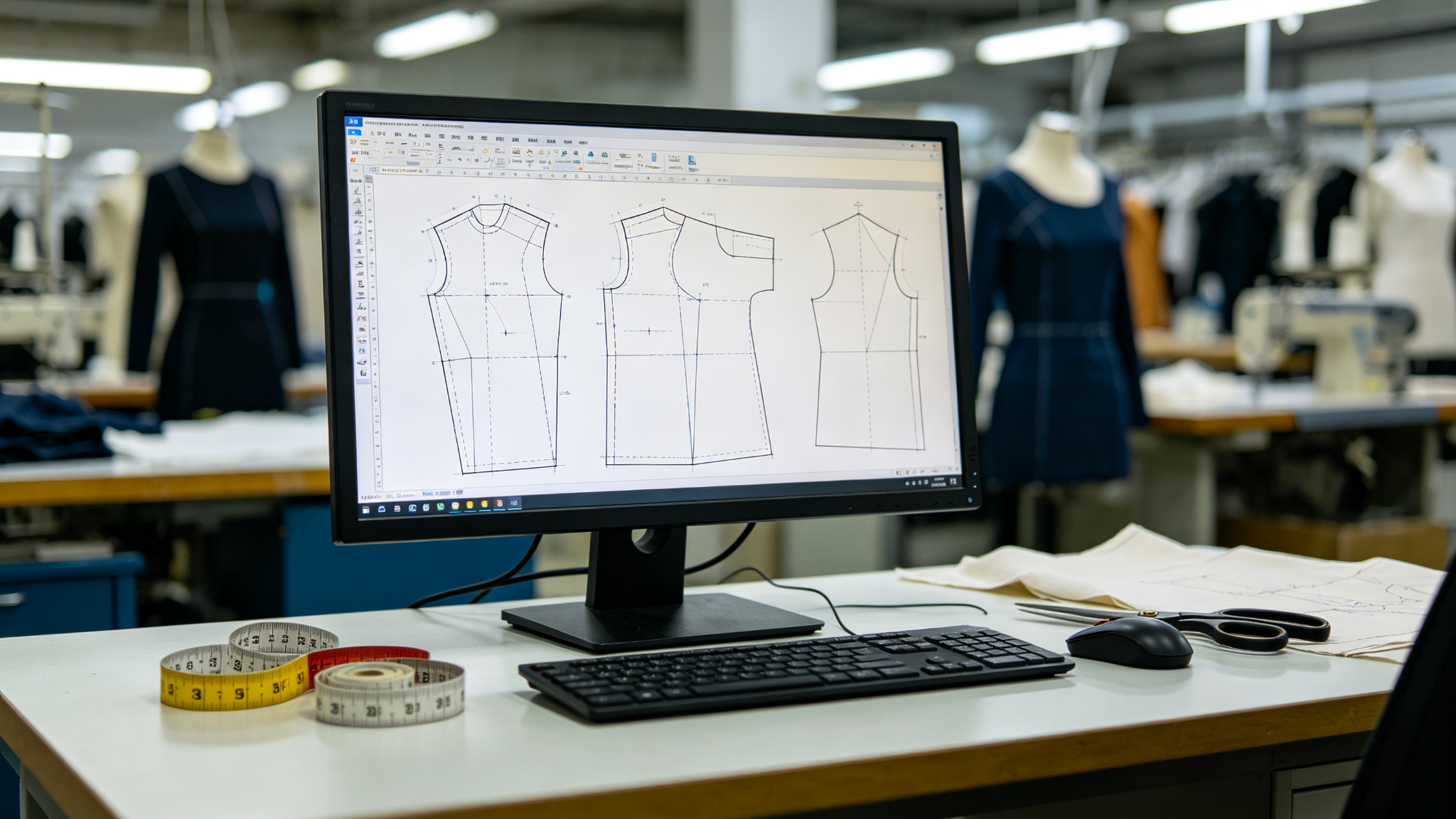
*Pattern-layout context can help explain why a fabric visual needs a panel map. The image does not show the buyer’s artwork, a rotary screen, or a confirmed print layout for any order.*
What commonly changes the review after a first sample?
The first evidence often exposes a decision rather than an error. The artwork may need a different scale; a repeat direction may be unclear; a motif may land on an unwanted seam; the selected base may not be the one originally assumed; or the buyer may decide that the all-over visual should become a panel treatment. Treat these as managed changes, not informal messages that vanish in an email thread.
Create a revision note whenever one of the following changes: artwork tile, scale, direction, colourway, fabric base, usable width assumption, panel map, garment pattern, size range, coverage, print route or sample purpose. The note can be concise: list the prior reference, what changed, why it changed, which earlier approval is affected and the next evidence needed. That record is especially important for reorders. A saved artwork file can be useful, but a previous approval may no longer fit a new garment, colourway, material or print scope.
The buyer should also separate visual discussion from unverified test claims. If a sample review finds a question at a seam or a stretched panel, the next action might be to clarify the scope, request a new proof or agree a test/inspection approach. It is not automatically evidence that all fabric printed by the route will perform in a certain way. Keep the observation as an observation unless project-specific evidence supports a wider conclusion.
How can a brand prepare a concise rotary-print RFQ?
A good RFQ does not need to contain a complete technical thesis. It needs to allow a supplier to see the same defined job and disclose what is missing. The custom activewear RFQ guide contains a wider manufacturing brief. For a continuous-print route review, add the following list:
- Current artwork revision and source format;
- Repeat tile dimensions, edge relationship, direction and intended scale;
- Garment/style reference and colourway map;
- Candidate fabric identity or the material requirements that remain open;
- Required usable-width or panel-layout question;
- Pattern/panel map with seams, no-print zones, crops and priority alignment points;
- Print coverage and colourway/count direction;
- Style–colour–size quantity direction, marked as preliminary where needed;
- Required sample stage and the question it must answer;
- Branding, label, packing and delivery-market inputs if they affect the same programme;
- Reviewer, approval owner and any non-negotiable visual requirement.
The supplier’s reply should identify its assumptions, any missing inputs and the next decision it recommends. A responsive answer is not one that pretends every detail is fixed. It is one that can distinguish an identified artwork/fabric/panel instruction from a proposal that still needs physical evidence.
Choose the right next route for the programme
For an existing garment direction with a defined decoration scope, a buyer may stay on a light-custom or private-label route while still requesting careful artwork, fabric and sample review. For a new fit, base material, panel architecture, colour system or performance-related product change, the appropriate next conversation is custom activewear development. In either case, the repeat record keeps the creative idea tied to the actual product decision.
Send the repeat artwork, intended scale, panel map, fabric direction, colourways and quantity direction to contact inPACE for a feasibility review. The first response can identify what can be assessed from the supplied material, what needs a strike-off or garment sample, and which open details should be decided before a controlled production handoff.
Product directions
Explore relevant activewear products
Use these product pages as practical references for your brief, then confirm materials, fit, customization, and production details through sampling.
Jogging & Printed Activewear Direction
Use the catalogue to identify a garment and panel context before a repeat artwork, fabric and sample review; confirm actual project options separately.
View product directionHoundstooth Statement Set Reference
Use this graphic product direction to name the intended style and panel context before reviewing a proposed repeat on the actual project fabric.
View product directionCustom Activewear Development
Choose this route when the print brief also changes fabric, fit, panels, construction, colour programme or sample-development scope.
View product directionLong-form buyer framework
How can a buyer turn this research into a production-ready decision?
The central task in turning a repeat artwork into a controlled fabric-print and garment-review brief is deciding whether a named repeat, fabric direction, panel map and sample question are clear enough for a supplier to assess a continuous print route. That decision cannot be made from a headline price, a product photo, or a general statement about customization. It needs a record that connects the commercial goal to the garment, material, fit, construction, branding, quantity, quality checks, packing, and destination. When those elements are visible together, a buyer can ask more precise questions and a factory can explain the route without pretending that open details are already confirmed.
The purpose of the framework below is not to turn a brand founder or buyer into a garment technician. It is to make responsibility and evidence clear. The buyer defines the customer and business need, shares what is known, and identifies the decisions that matter. The factory should identify the artwork, fabric and garment assumptions; distinguish what can be assessed from what needs a physical proof; and retain any agreed change as a controlled new revision. Both sides then record what was reviewed, what remains conditional, what must be approved physically, and what information will guide production or a later repeat order.
Keep one reviewable repeat revision
Name the current tile, scale, direction, colourway map and owner so a supplier can identify the exact visual being considered rather than respond to a collection of near-duplicate files.
Connect the repeat to a named fabric question
Identify the candidate base or keep it explicitly open. A material category cannot establish usable width, surface appearance, cut behaviour or the result of a particular print route.
Use a panel map before promising alignment
Show seams, crops, no-print areas, gussets, waistbands, pockets and direction arrows. Decide where controlled variation is acceptable and where a visual relationship must be reviewed.
Ask one physical sample question at a time
A fabric proof, panel/cut review and assembled garment sample answer different questions. State the reference, reviewer, observation scope and decision expected from each item.
Reopen narrow approvals when a related input changes
A new tile, base, colourway, panel, grading or sample purpose can make earlier evidence incomplete. Record the change and the next proof instead of carrying an old approval forward by assumption.
Buyer scenarios
How does the decision change in common sourcing situations?
Real projects rarely arrive with every detail complete. The useful question is not whether the brief is perfect; it is whether the missing information is visible and whether the next step will produce evidence. These scenarios show how a buyer can keep turning a repeat artwork into a controlled fabric-print and garment-review brief practical without converting early assumptions into promises.
The buyer has a direction but incomplete technical files
Start with the product role, target customer, intended use, reference material, and the decisions already made. Mark missing measurements, fabric, artwork, or packing details as open questions. The supplier response should show what can be reviewed immediately, what needs a sample, and what information is required before the route becomes more specific.
A catalogue reference is close but not exact
List the features that already work and separate brand presentation from garment changes. A logo, label, hangtag, or bag may stay within a catalogue-informed route, while a new fit, material, pattern, construction, or performance feature may require custom development. The decision should be based on the requested change, not a category label.
The order contains several colours, sizes, and brand components
Create one assortment record by style, colour, and size, then connect every logo, label, barcode, bag, and carton instruction to the correct SKU. Ask which choices affect material planning, application methods, packing ratios, or quotation assumptions. This is where a simple-looking collection can become operationally complex.
The programme is expected to repeat
Decide which approved records will be retained after shipment and which changes should trigger a new sample. Product specifications, material and colour references, artwork, placement, labels, packing, QC notes, and prior order data make later replenishment more controlled. A reorder should not depend on memory or an old message thread.
Relevant product directions
Which products can make the next brief more concrete?
Use these product pages to identify a silhouette or collection direction, then state what should remain, change, or be reviewed. Product images are useful references, but fabric, fit, construction, colour, branding, quantity, and packing still require project-specific confirmation.
Jogging & Printed Activewear Direction
Use an identified silhouette and panel context before discussing a repeat artwork, candidate fabric and sample question; confirm actual project options separately.
View product directionHoundstooth Statement Set Reference
Use this graphic product direction to name the garment context before reviewing a proposed repeat on the actual project fabric.
View product directionCustom Activewear Development
Choose this route when the repeat-print brief also changes fabric, fit, panels, construction, colour programme or sample-development scope.
View product directionDecision record
Which evidence should the buyer request and retain?
The table turns the article's key questions into a working review format. It is intentionally broader than a unit-price comparison because a complete activewear programme includes product, material, sample, branding, packing, and delivery assumptions.
| Decision area | Buyer evidence | Factory review | Record before approval |
|---|---|---|---|
| Keep one reviewable repeat revision | Reference, requirement, intended result, and any non-negotiable constraint. | Feasibility, dependencies, assumptions, sample need, and effect on connected decisions. | Approved reference, open issue, owner, date, and the next checkpoint. |
| Connect the repeat to a named fabric question | Reference, requirement, intended result, and any non-negotiable constraint. | Feasibility, dependencies, assumptions, sample need, and effect on connected decisions. | Approved reference, open issue, owner, date, and the next checkpoint. |
| Use a panel map before promising alignment | Reference, requirement, intended result, and any non-negotiable constraint. | Feasibility, dependencies, assumptions, sample need, and effect on connected decisions. | Approved reference, open issue, owner, date, and the next checkpoint. |
| Ask one physical sample question at a time | Reference, requirement, intended result, and any non-negotiable constraint. | Feasibility, dependencies, assumptions, sample need, and effect on connected decisions. | Approved reference, open issue, owner, date, and the next checkpoint. |
| Reopen narrow approvals when a related input changes | Reference, requirement, intended result, and any non-negotiable constraint. | Feasibility, dependencies, assumptions, sample need, and effect on connected decisions. | Approved reference, open issue, owner, date, and the next checkpoint. |
Buyer checklist
What should be ready before the next factory conversation?
A buyer can begin even when some boxes remain open. Label them clearly and ask what evidence would close them. That approach is more useful than hiding uncertainty or waiting for an impossible level of perfection. It also makes a supplier's reasoning easier to evaluate: the response should identify connected decisions and explain why a sample, component approval, revised brief, or packing record is needed.
Continue the buyer journey
Keep the next step tied to the product decision
Continue with activewear print artwork files guide when that question is adjacent to the current decision. If the project is ready for factory review, send the product type, reference, material and fit priorities, branding scope, estimated quantity, packing needs, and destination market. inPACE Sports can then discuss whether the next step is product selection, private-label review, custom development, sampling, or a more complete quotation brief.
State what is confirmed, flexible, and still open for factory guidance.
Ask how decisions move into sampling, production, QC, and packing.
Retain the approval and receiving records needed for shipment and reorders.
FAQ
Buyer questions
What should a rotary screen printing sportswear brief include?
Include the current repeat artwork revision, tile dimensions, edge relationship, direction, intended scale, garment or panel map, candidate fabric direction, colourways, coverage, quantity direction and the sample question. Mark unknown details rather than leaving them implicit.
Is rotary screen printing the same as a garment logo print?
No. A placed logo and a continuous fabric repeat create different review questions. A logo is usually assessed by its garment location and size, while a repeat also needs a tile, direction, fabric-width and cut-panel discussion.
Can a repeat artwork file be approved without a fabric sample?
The creative file can be approved for a limited purpose, but it does not establish its physical appearance on a named material, garment ground, seam, panel or size range. Record the next proof or sample needed for the specific decision.
Why is a panel map useful for printed activewear?
It identifies where a visual can crop, stop, continue, avoid a seam or align to a garment feature. This helps the buyer and supplier discuss the same cut-and-sew context instead of relying on a flat artwork preview.
Does an on-screen proof confirm final colour or wash performance?
No. An on-screen proof communicates artwork direction. Physical colour, surface appearance and any wash or stretch question require project-specific material, process, sample and observation evidence.
What should trigger another rotary-print sample review?
Re-review when the artwork tile, scale, direction, colourway, fabric base, usable-width assumption, panel map, garment pattern, coverage, print route or sample purpose changes in a way that affects the earlier evidence.
When should a printed sportswear request move into custom development?
Move it when the request changes the garment’s fit, fabric, construction, panel architecture, colour programme or other product features. The repeat artwork then becomes one part of a broader custom activewear sample brief.