
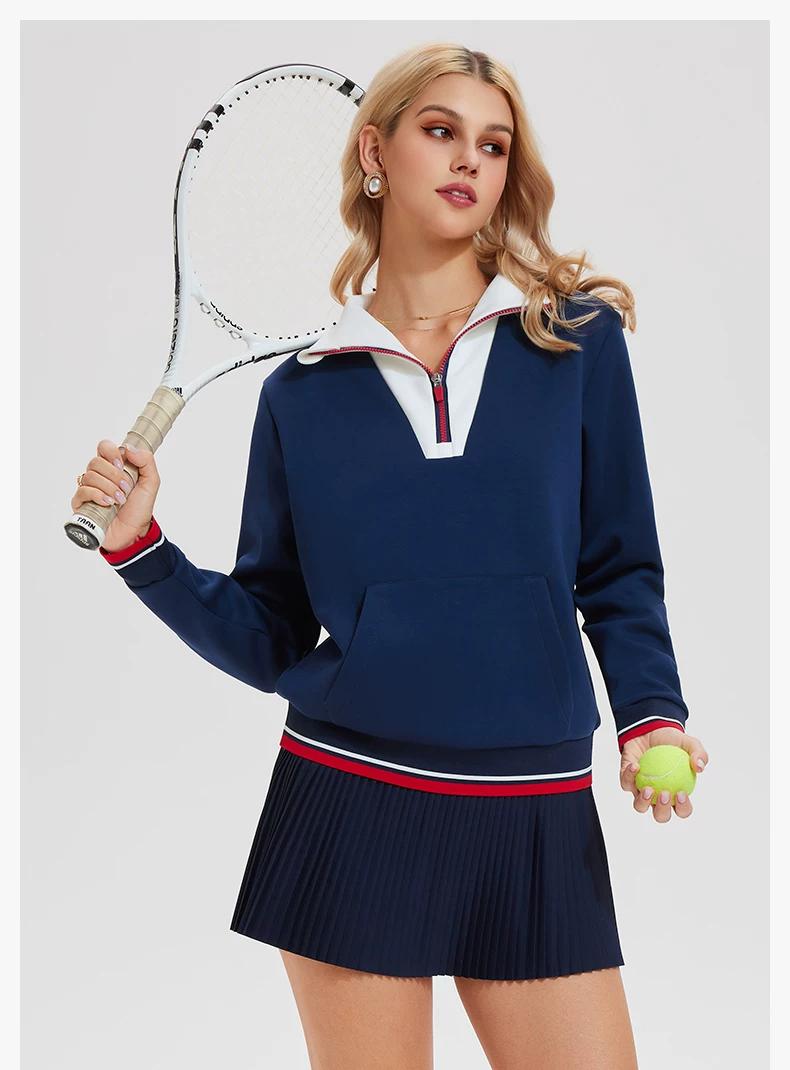
A private label padel clothing collection should start with an identified garment and an approved sourcing route. Existing-style branding can focus on confirmed product options, logos, labels, and packing. New fit, fabric, pocket, construction, or performance requirements need factory-custom development. Keeping those routes separate protects the sample plan, quotation scope, launch claims, and reorder record.
This guide is for B2B founders, sports brands, clubs, academies, online stores, and retailers that want to sell padel apparel under their own identity. It focuses on the launch system around the products. For assortment architecture, use the women’s padel clothing range guide; for broader product-development inputs, use the custom padel apparel factory brief.
Which private-label route fits the collection?
Begin by deciding whether the garment itself is accepted. A light-custom or existing-style route can be appropriate when the buyer has selected a current product direction and the requested changes are limited to confirmed colour options, logo, labels, hangtag, barcode, packing, and other presentation details. The supplier still needs to confirm current materials, options, quantities, and commercial conditions.
A factory-custom route is appropriate when the buyer changes fit, pattern, fabric, construction, components, length, pocket, liner, closure, colour-block architecture, or another part of the garment. A new padel-ball pocket is not just a private-label decoration. A different skirt length or inner-short construction is not just a new colour. These changes need a product brief, sample purpose, review, and approval.
| Route | Appropriate starting point | Buyer inputs | Main approval risk |
|---|---|---|---|
| Existing-style private label | Identified product accepted within confirmed options | Product code, colour, size plan, logo, labels, packing, quantities | Branding or order data is approved while the underlying product remains unclear |
| Catalogue-informed custom | Existing reference communicates part of the desired garment | Retain/change/open list, fit, material, construction, sample questions | Reference image is treated as a full specification |
| Fully custom development | Sketch, tech pack, sample, or original product brief | Product role, measurements, materials, components, artwork, sample plan | Too many unresolved variables are combined in one approval |
The private-label activewear service supports brand components after the product direction is identified. The custom activewear development route is the relevant path when the product itself changes. State the route in the RFQ so suppliers do not quote different scopes under the same title.
Which products belong in the first branded padel launch?
Use customer and channel evidence to choose the capsule. A club shop may need a polo or top, skort or short, and optional warm-up layer in repeatable club colours. A specialist online brand may start with one hero skort and one coordinated top. A retailer may need a clear good-better or silhouette choice without multiplying similar SKUs.
The Short-Sleeve Performance Polo can start a club-top discussion. The A-Line Tennis Skirt and Pleated Tennis Skirt provide two visible lower-body directions. They remain product references; the buyer must verify their current scope and define padel-specific fit, liner, pocket, colour, and branding requirements.
Choose each garment because it has a commercial role:
- Core product: the dependable item that explains the brand’s main offer.
- Coordinated product: a top or bottom that creates an outfit and supports cross-selling.
- Entry product: a lower-complexity item or accessible product position where appropriate.
- Hero product: a distinctive design that communicates the collection identity.
- Layer: an arrival, warm-up, cool-weather, team, or lifestyle piece.
Do not launch all five roles automatically. Model the complete SKU count and operational burden. A focused capsule with clear product pages, sizes, and replenishment records can be more useful than a broad collection with shallow evidence.
What brand assets should be ready before samples?
Prepare authorised logo files in suitable vector or high-resolution formats where available. Maintain a master logo, approved colour versions, minimum-size or exclusion rules if the brand has them, and a current artwork version identifier. Do not ask the supplier to choose between several conflicting attachments without an approval owner.
Create a placement map for each garment. Use real seams, panels, openings, and edges as landmarks. State the intended physical size or relationship, orientation, colour, and method to discuss. A floating digital mock-up is not a production placement record.
List every branded component separately:
- Main brand label or heat-transfer identity.
- Size marking.
- Care, fibre, origin, or other product information required for the destination.
- Hangtag, string, pin, seal, or other attachment where used.
- Barcode, SKU, price, or retailer fields.
- Individual bag, sticker, tissue, insert, and carton mark where required.
- Club, player, sponsor, or event personalisation where authorised.
The buyer remains responsible for correct trademark rights, wording, translations, legal fields, product claims, and destination requirements. A factory can make the accepted component; it should not invent regulated or brand-owned information.
How should the logo method be selected for padel apparel?
Select the method after the actual material, garment area, artwork, colour, local stretch, surface, and desired handfeel are known. A chest mark on a polo, a mark near a skort pleat, and a large warm-up-layer graphic are different decoration tasks even if they use the same logo.
Use the activewear logo application guide to compare physical evidence. Review edge definition, colour, opacity, texture, handfeel, garment distortion, local stretch appearance, and any agreed care observations on the named material and colour. A method label alone does not guarantee the result.
Keep artwork approval and product approval separate. A logo proof can be accepted while garment fit is still open. A fit sample can be accepted while final artwork remains pending. A pre-production reference may bring the accepted decisions together, but its scope should be stated.
If names, numbers, or sponsor marks vary by wearer, create a controlled roster with stable identifiers. Confirm spelling, case, accents, number, garment, size, colour, and artwork version. Late roster changes can affect production and packing; manage them through a dated replacement file rather than chat messages.
What should labels and care information contain?
Build the label content from the actual product and destination requirements. Fields may include brand, size, fibre composition, care instructions, country-of-origin information, responsible-party details, warnings, or other required information depending on the market and product. Obtain qualified advice where needed; do not copy a label from an unrelated garment.
Connect the final material and construction record to label approval. If a fabric or component changes, ask whether the fibre statement, care route, performance claim, or product description must change. A label approved before material confirmation may become inaccurate.
Keep the physical label specification beside the copy: type, dimensions, material, colour, fold, edge, attachment position, and orientation. A beautiful digital layout can still create discomfort, bulk, visibility, or sewing problems when applied to a close-fit sports garment.
Translate only approved source text and preserve the meaning of mandatory fields. A translation workflow should not invent claims or omit required information. The buyer should approve the final language versions for the destination.
How should hangtags and packaging support the selling channel?
Start with receiving and retail needs. An ecommerce warehouse may need a scannable barcode, SKU, size-colour identification, bag warning where applicable, and consistent unit presentation. A club may need player or team grouping. A retailer may have ticket, hanger, folding, or carton requirements. The solution should follow the actual channel.
Avoid packaging that makes unsupported claims. “Tournament ready,” “UV protection,” “quick dry,” “antibacterial,” or sustainability language requires an evidence and compliance review. A generic material description or supplier statement should not become a prominent consumer promise without approval.
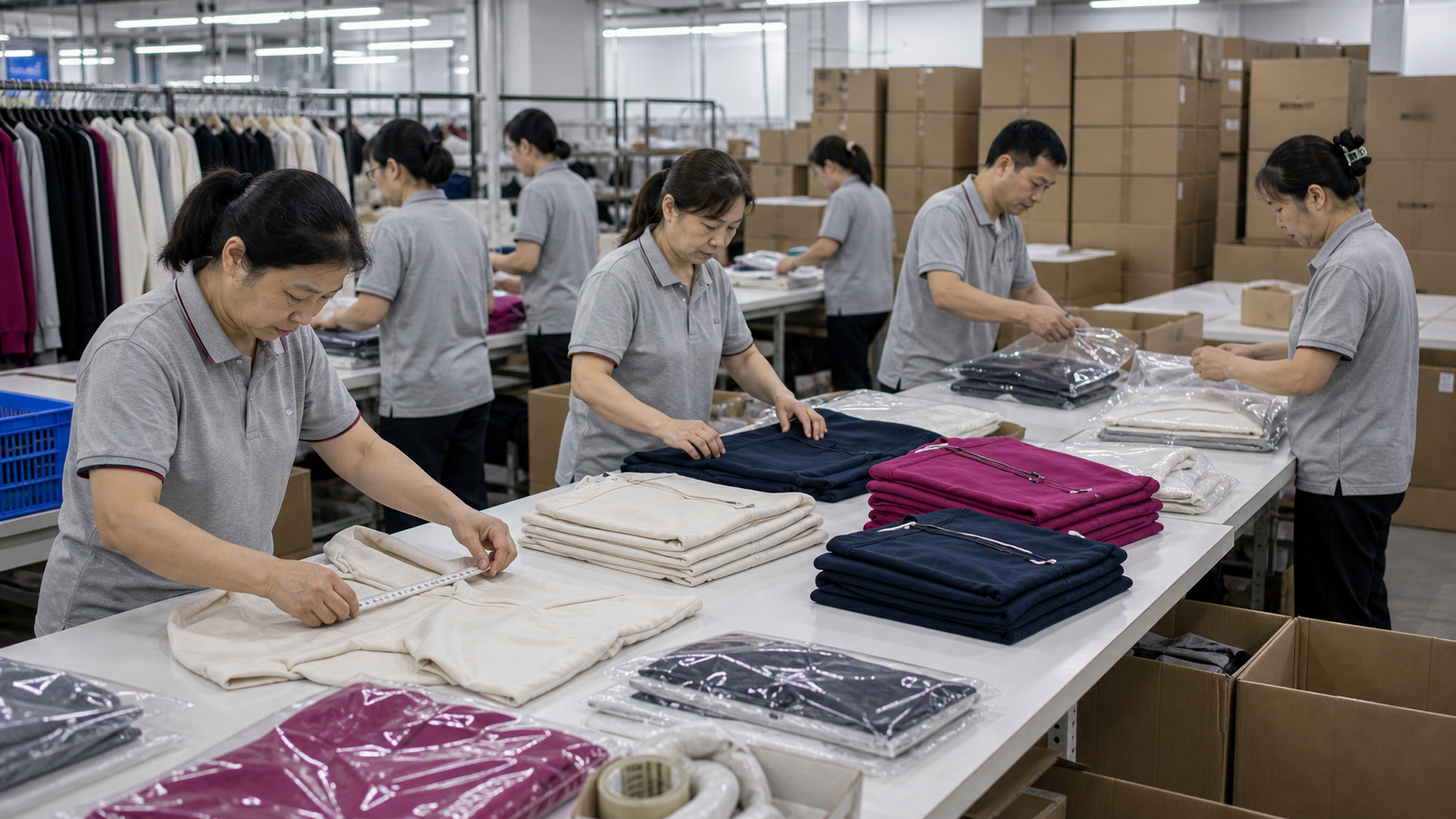
*Labels, SKU information, folding, bags, and carton records should remain connected to the accepted garment. This factory-context image is not a customer padel order or proof of a specific packing programme.*
Use a controlled packaging checklist to identify unit, set, and carton fields. Confirm whether a top and skort are separate SKUs or a fixed set. If sold separately, each needs its own product identity and size plan. If packed as a set, define allowed size pairings, barcode logic, folding, and replacement handling.
How should product claims be controlled before launch?
Create a claim register that lists every statement planned for the product page, hangtag, advertisement, or wholesale line sheet. For each claim, record the exact product and version, evidence source, review owner, approved wording, market, and expiry or change trigger where relevant.
Separate visible design facts from performance conclusions. A garment can visibly have a pleated outer, inner shorts, half zip, contrast panels, or pocket. It does not follow that the garment is moisture-wicking, breathable, sun protective, anti-odour, high support, squat proof, tournament approved, or universally comfortable.
If padel use is a positioning statement, explain the intended product role and the sample questions reviewed. Do not imply official sport approval unless the responsible organisation has provided it. The buyer should check current event rules and requirements separately.
When a material, pattern, colour, component, logo method, or supplier changes, reopen the affected claims. Evidence should follow the product version, not the marketing calendar.
What samples should a private-label collection request?
Give every physical item a purpose. A product sample can establish the selected garment. A fit or development sample can answer pattern and construction questions. A colour sample can answer a specific shade relationship. A decoration sample can show the approved artwork on the named material. A label or packaging proof can answer content, scale, and presentation questions.
The activewear sample-plan guide helps decide which styles, colours, sizes, and components need separate evidence. Do not combine all open questions into one expensive sample if the result will be impossible to diagnose.
Maintain a sample register:
| Field | Why it matters |
|---|---|
| Product and version | Connects comments to the correct garment |
| Sample purpose | Defines which decisions it can support |
| Material and colour | Prevents approval from spreading to unrepresented variants |
| Artwork and component versions | Keeps logo, label, and packing proofs traceable |
| Reviewer and date | Identifies the approval owner |
| Accepted, revise, open, not represented | Makes the decision boundary explicit |
Use one sample-feedback record to consolidate comments. A supplier should not have to choose between several current-looking files or interpret whether “looks good” approves the whole garment.
How should sizes, colours, and quantities be planned?
Build the complete matrix by product, colour, size, and any personalised variant. Then distinguish estimates, approved order lines, samples, spares, and marketing pieces. This prevents provisional ideas from entering production totals.
For a limited-budget launch, protect the sample and product-information work before expanding styles or colours. A smaller, approved assortment can produce clearer customer evidence. Additional variants create inventory, photography, product-page, barcode, packing, and replenishment work beyond the unit count.
Use the activewear size-colour-quantity guide to model SKU depth and size ratios. Do not use the base sample size as an automatic order ratio. The brand should combine its customer information, channel evidence, and available cash while marking assumptions.
MOQ, price, and timing depend on the actual product, material, colours, components, artwork, labels, packing, quantities, and approvals. Ask suppliers to identify the assumptions behind their proposal. Do not compare an existing-style branded quote with a fully custom product-development quote as if the scope were identical.
What product-page information should be prepared?
The product page should accurately describe the garment, fit direction, visible construction, materials where confirmed, care, size information, colour, pocket, branding, and intended use. Use photographs of the approved product version. A tennis reference used during development should not appear as proof of the final padel garment.
Prepare a measurement or size guide that matches the approved product and method. Explain whether measurements refer to the body or garment. Keep fit language factual and avoid universal body-shape promises.
Write alt text that describes the actual image and buyer-relevant detail. For wholesale line sheets, state what is included and what remains subject to order confirmation. Do not publish fixed stock, MOQ, prices, or lead times unless they are current, authorised, and maintained.
Connect the launch page to useful supporting content. A padel skort can link to the padel skort with ball pocket guide where that feature is present and verified. A broader range can link to fabric and manufacturing information. Internal links should help a buyer understand the decision, not repeat keywords.
What QC records protect the brand and the reorder?
QC should compare production against approved product, measurement, material, colour, artwork, label, and packing records. Define the inspection scope and responsible decision-makers. Product development review and production inspection are related but not identical.
For padel tops, relevant controls may include measurements, neckline, shoulder or armhole, sleeves, seams, hem, artwork, and labels. For skorts and shorts, controls may include waist, outer and inner lengths, layer attachment, pleats, pocket construction, seams, artwork, and packing. Project-specific tests or claims need their own approved method and criteria.
Use the activewear manufacturing workflow to discuss how accepted inputs move through production, inspection, packing, and export preparation. Keep a final handoff pack with the exact sample and document versions.
For reorders, compare the new request with the approved baseline. Record changed material, colour, quantities, size ratios, artwork, label copy, packaging, or destination. A repeat order is not automatically identical, and an undocumented substitution can reopen fit, appearance, claim, or compliance decisions.
What should appear in the wholesale line sheet and retailer handoff?
A B2B line sheet should help the buyer identify the real product and the decisions that remain subject to order confirmation. Include the product code, accurate garment name, concise construction description, available or proposed colour direction, size information, packaging unit, branding scope, order variables, and a clear contact route. Do not present a development option as if it were already part of the base style.
Separate confirmed facts from project choices. A skort may visibly include an outer layer and inner shorts, while a padel-ball pocket remains an optional development. A polo may have an identified collar and sleeve, while a different fabric, logo method, or club colour remains subject to a sample. This distinction reduces mismatched RFQs and helps retailers understand what they are selecting.
Product photography should represent the approved garment version. Label a colour rendering, styling image, or development illustration honestly. Do not use a tennis lifestyle image as proof of padel performance, or a factory image as proof that one particular garment has completed every manufacturing step.
The retailer handoff should also include size-guide method, care information, barcode fields, carton or case information where relevant, and the version date. If a distributor adds translations or channel copy, keep one approved source description and review any new performance or compliance claims before use.
What makes a private label padel clothing collection launch-ready?
Create explicit stop points before photography, purchase-order release, and public launch. A project should pause when the current garment cannot be identified, fit or construction questions remain material to customer use, artwork rights or versions conflict, label content is incomplete, product claims lack evidence, or the packing and SKU record cannot distinguish the intended units.
Use a simple gate table:
| Gate | Minimum evidence | Stop condition |
|---|---|---|
| Product-ready | Current specification, sample identity, fit and construction decisions | The photographed or ordered garment does not match the accepted version |
| Brand-ready | Approved artwork, placement, labels, hangtags, and rights owner | Conflicting files, unapproved text, or missing owner |
| Channel-ready | Product copy, size information, SKU/barcode, images, care, packing | Retailer or ecommerce data describes a different scope |
| Order-ready | Quantities, colours, sizes, commercial assumptions, approvals | Provisional lines are mixed with confirmed order lines |
| Reorder-ready | Baseline product and change log | The team cannot identify what must be repeated |
These gates are management controls, not a certification. They help the buyer expose missing work before it becomes printed packaging, unscannable stock, or customer-facing misinformation.
What should a private-label padel RFQ include?
Send:
- Brand, target customer, sales countries, channels, and intended use.
- Selected products and route: existing-style branding, catalogue-informed custom, or fully custom.
- Product references and a retain/change/open list.
- Fit, measurements, materials, components, and sample questions.
- Padel-specific skort, liner, and ball-pocket requirements where applicable.
- Approved logo files, colour versions, placement maps, and personalisation data.
- Label, care, hangtag, barcode, bag, folding, and carton requirements.
- Product claims planned for the market and evidence still needed.
- Size range, colourways, preliminary quantities, and set/SKU logic.
- Destination and receiving requirements.
- Sample plan, reviewers, approval boundaries, and target launch sequence.
- Open decisions and assumptions the supplier should identify before quotation.
inPACE can review an existing-style private-label path or a factory-custom path, coordinate the approved product and brand-component records, and prepare a production discussion through the how-it-works process. The company’s manufacturing background helps organise sampling, sewing, QC, and packing, but every product, claim, commercial term, and market requirement remains project-specific.
Send your product references, brand files, label and packing brief, size-colour plan, and launch questions to inPACE for a private-label padel clothing review.
Product directions
Explore relevant activewear products
Use these product pages as practical references for your brief, then confirm materials, fit, customization, and production details through sampling.
Short-Sleeve Performance Polo
Use an existing club-top direction when the product is accepted and the private-label scope is clearly defined.
View product directionPrivate Label Activewear
Connect an identified product with approved logos, labels, hangtags, barcodes and retail packing.
View product directionCustom Activewear Development
Choose this route when the collection changes fit, fabric, construction, pockets or other physical product decisions.
View product directionFAQ
Buyer questions
What is private label padel clothing?
It is padel-positioned apparel sold under the buyer’s brand using an identified product and approved branding, labels, and packing. The route may use a confirmed existing style or factory-custom development. The scope should state whether the garment itself changes, rather than treating every private-label project as the same.
Can an existing tennis garment be private labelled for padel?
It can be a starting product when its current scope is confirmed and the buyer accepts the garment for the intended use. Padel-specific fit, liner, pocket, movement, colour, claims, and event requirements still need review. A category rename alone does not create product evidence.
Which logo method is best for padel clothing?
There is no universal method. Choose after reviewing the actual artwork, size, placement, garment area, material, colour, local stretch, surface, desired handfeel, and care question. Approve physical evidence on the named product instead of relying on a process name or mock-up.
Who is responsible for label and care information?
The buyer should approve accurate, authorised content for the actual product and destination, with qualified compliance advice where needed. The manufacturer can produce and attach the accepted label but should not invent fibre, care, origin, trademark, warning, or regulated information.
How many samples does a private-label collection need?
The answer depends on product risk and open decisions. Assign a purpose to each product, fit, material, colour, decoration, label, or packing sample. Shared components can sometimes reduce duplication, but one sample should not be treated as approval for unrepresented products, colours, sizes, or claims.
Can inPACE guarantee a fixed MOQ or launch date?
No fixed figure should be assumed from a general guide. Product complexity, materials, colours, components, artwork, labels, packaging, quantities, sample revisions, approvals, and destination affect the route. inPACE can discuss an order plan after reviewing the actual brief.
What records should be kept for a padel clothing reorder?
Keep the approved product specification, measurements, sample identity, materials, colours, artwork, labels, care copy, packaging, size-colour quantities, QC scope, and shipment record. Compare every new order against that baseline and reopen affected approvals when anything changes.