What should an activewear sample plan help a brand decide?
An activewear sample plan should identify which physical garments are needed to answer the next product decision. Rather than asking for “samples” as one undefined group, a brand can map each style, size, colourway, material, component, decoration, version, review question, owner, and next action. The result is a controlled set of evidence for a specific product decision, not a pile of garments that different teams interpret differently.
This matters because one collection can contain different questions at the same time. A legging may need a fit and opacity review. A bra may need support, underband, lining, and coverage observations. A zip-neck top may need a panel, zipper, collar, and logo-placement check. A matching jacket may need a colour relationship and packing review. Calling all four pieces “the first sample” hides the fact that each garment may need a different physical proof before the project can move.
For Factory custom manufacturing, the plan is part of the brief. It can begin from a reference garment, product image, sketch, tech pack, existing pattern direction, or approved catalogue starting point. It should make clear where the project is still exploratory and where the team is seeking a controlled confirmation. A catalogue-informed product may need one focused branding or presentation sample. A new fit, fabric, construction, colour, feature, print, embroidery, washing process, or component relationship may require a broader development plan. The factory can then review the actual route rather than assuming every style needs the same sampling path.
Why is a sample plan different from choosing a sample type?
A sample type describes the purpose of one physical garment: for example, development, fit, material and trim, decoration or wash, size-set, packing, or pre-production review. The activewear sample types guide explains those evidence boundaries. A sample plan is the collection-level record that decides which of those purposes applies to which style, size, colourway, version, and open question.
That distinction prevents a useful shortcut from becoming a blind spot. A buyer may correctly request a fit sample, but still need to decide which size represents the fit question, whether the fabric and lining are the intended direction, whether an alternate colour needs its own visual review, and whether a later size-set or decoration check is required. The type is one label. The plan connects that label to the garment and decision it must serve.
The plan also separates a physical review from a future order decision. It should not imply that every sample confirms bulk production, every colourway, every size, or every packaging detail. Instead, it names what the specific sample proves and what remains open. A simple “not reviewed” field is often more useful than an assumption that a one-piece sample has approved an entire collection.
Which fields belong in an activewear sample matrix?
The matrix below gives a buyer a practical record to use before requesting samples and after each review. It is not a universal required form. Its purpose is to make sure a factory, designer, merchandiser, buyer, and reviewer are discussing the same physical evidence.
| Sample-plan field | What to record | Why the field matters | Useful review question |
|---|---|---|---|
| Style identity | Style code, garment type, activity, collection, and current version | Related garments can have different construction and approval needs | Which exact garment does this row describe? |
| Sample purpose | Development, fit, material and trim, decoration, wash, size-set, packing, or pre-production purpose | A sample needs a defined decision to avoid becoming a generic visual reference | What decision should this piece allow the team to make? |
| Size and body context | Sample size, intended wearer or fit block, relevant measurements, movement, coverage, or support question | One size does not automatically represent the whole range | What does this size demonstrate, and what needs a separate size-set check? |
| Colour and material direction | Colour reference, body fabric, contrast fabric, lining, elastic, mesh, trim, and known substitutes | A visual sample is meaningful only when its material and colour assumptions are visible | Which materials and colours are physical evidence, and which are still open? |
| Construction and components | Panels, seams, pockets, zipper, binding, straps, hardware, labels, or other product features | The relevant component must be present if the sample is expected to prove it | Which feature needs physical review rather than a drawing-only decision? |
| Branding and finish | Artwork version, placement, print, embroidery, wash, label, hangtag, bag, or packing point | Branding can be a separate proof point from fit or construction | Is this piece reviewing the finished effect, or only setting a later direction? |
| Version, owner, and next action | Sample ID, date, current files, reviewer, decision status, comments, and next required evidence | A dated record keeps feedback connected to the correct garment | What must change, who decides, and what evidence comes next? |
Use the same identifiers in the tech pack, sample request, photos, comments, and quote discussion. A style code alone may not be enough when there are multiple versions, colours, or sizes. A practical identifier can show the style, version, sample purpose, size, and colour. The point is not to impose a naming system; it is to stop a comment about one garment from being applied accidentally to another.
How should a brand decide which styles belong in the first sample plan?
Start with the styles that carry a different product risk or buyer decision. A collection may look coordinated, but a tank, bra, legging, short, jacket, and dress can have different fit, material, construction, movement, support, opacity, opening, lining, pocket, or branding questions. If a decision cannot reasonably be transferred from one garment to another, it deserves its own line in the plan.
Next, identify which style is an established product direction and which is a new development. An existing silhouette can provide a useful starting point when the buyer needs to verify a logo, label, hangtag, packaging element, or selected presentation change. A request with a new fit, fabric, construction, colour, feature, decoration, or sampling route belongs in a Factory custom manufacturing discussion. The plan should make that route boundary visible instead of implying that a catalogue reference covers an unrelated development request.
The buyer can then prioritize the style that unlocks the next decision. A team may first need a close-fit top to review stretch, coverage, panel placement, and zipper behavior before planning matching bottoms. Another project may need the intended body fabric and trim relationship before deciding whether the construction is ready for a size-set. The plan does not need to predict every possible garment at the beginning. It should show the current priority and what evidence would justify the next step.
For a product direction that starts from the Activewear Performance Collection, note exactly what remains catalogue-informed and what has changed. A light branding request and a custom development request should not share the same undefined sample line simply because they use a similar silhouette. The buyer gets a clearer comparison and the factory receives a more usable project brief.
How should sizes be planned without treating one sample as a full size range?
Choose a sample size because it answers a particular fit question, not because it is assumed to speak for every body or market. Record the intended sample size, the base-size relationship if known, target measurements, fit intent, and the movement or coverage question to be checked. For a legging, the plan might identify waistband stability, rise, stretch recovery, opacity, or knee behavior. For a bra, it might identify support, underband tension, cup coverage, strap placement, and armhole movement. For a jacket, it might identify layering room, sleeve movement, collar, and opening behavior.
The activewear size grading guide covers the separate question of reviewing a base-size direction across a full range. A sample plan should therefore say whether the current piece is an early fit check, a base-size confirmation, or part of a later size-set. It should not let a successful review in one size become an undocumented approval for other sizes.
If the team has an existing garment, record what is being used as a comparison and what is not transferable. A familiar sample may give useful context for length or overall silhouette, while the new material, elastic, construction, or intended activity changes the fit question entirely. Observations should be connected to the actual sample size and wearer context, not reduced to a general statement that the style “fits well.”
When does a colourway need its own physical sample or review?
A colourway deserves a separate plan entry when the buyer has a distinct decision to make about it. That can happen when the body fabric, contrast panel, mesh, lining, binding, elastic, logo, print, embroidery, wash, or trim may look different in the chosen colour relationship. It can also happen when a brand needs to confirm how a light or dark direction reads across material types, or when an artwork and garment area need a physical review together.
One colour sample can be sufficient for a narrowly defined construction or fit question. It should not automatically approve every planned colourway. Record whether the colour is a construction placeholder, an intended approval direction, or the exact relationship that the project needs to assess. That allows the team to distinguish a physical product observation from an assumption about the full range.
The activewear colour approval guide provides a more detailed version-control approach for target references, materials, logos, and trims. Within the sample plan, keep the colour reference, material context, artwork version, and decision owner next to the relevant garment. When the project changes, the record will show whether the old sample is still useful or whether a new visual proof is needed.
How should materials, trims, print, embroidery, and washing be placed in the plan?
List only the elements that the sample is intended to prove, and mark the rest as open. The body fabric, contrast fabric, lining, elastic, zipper, mesh, binding, label, drawcord, hardware, print, embroidery, or washing process can each affect what a physical sample needs to show. A development garment may use a stated substitute while the team is still choosing a final material. That can be useful, provided the plan says that it is a substitute rather than silently presenting it as approved production material.
For print, embroidery, or washing, identify the artwork or finish version, location, garment area, and question being reviewed. A logo file by itself may not answer how the result relates to stretch, texture, seams, panels, or colour. A physical piece may be needed to assess the placement and visual relationship. The plan should not overstate that a decoration sample approves all construction, colourways, sizes, or packing requirements.
This is also where a buyer can separate a material proof from a fit proof. If a fabric needs review for hand feel, recovery, opacity, appearance, or component compatibility, name that purpose. If the garment also needs a fit decision, decide whether the same physical piece can answer both questions or whether the plan needs another controlled sample. Clear boundaries make subsequent quotes, revisions, and approval records easier to understand.
How should a team make sample reviews reproducible?
Attach the plan to a dated evidence record. Each review should identify the sample ID, style, version, size, colour, purpose, relevant specification or artwork file, material and component direction, observations, requested change, decision status, owner, and next action. The activewear sample feedback guide explains how to turn those observations into a controlled revision brief rather than a message chain with disconnected images.
Photographs are most useful when their file names and annotations point back to the same sample record. A close-up can show a seam, print edge, zipper, label, or finish issue; a full garment image can show proportion, placement, or colour relationship. Neither should replace a short statement of the decision being made. The record should state whether the observation is approved, needs revision, needs factory clarification, or needs another physical proof.
When the review introduces a new fit, fabric, component, colour, feature, decoration, or sampling route, update the plan before treating it as a minor comment. That is a material change in the product question. Keeping it visible helps the buyer decide whether the current sample remains a useful reference and gives the factory a chance to review the revised scope.
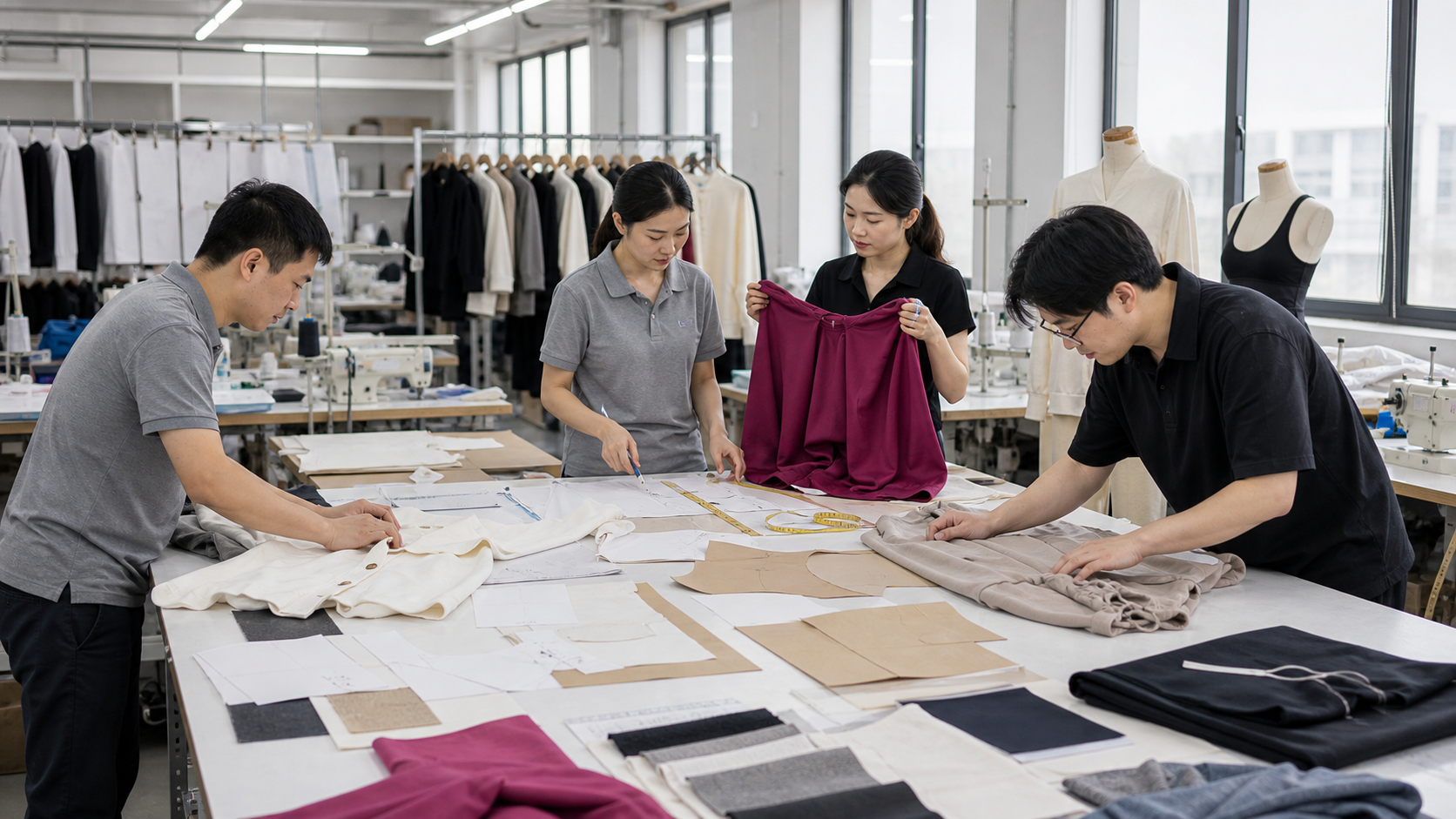
The image represents the practical value of a sample plan: the physical garment, pattern pieces, material references, measurements, and people reviewing the work need to point to the same current version. A plan turns that information into an ordered review rather than an informal collection of requests.
How does a sample plan relate to sample cost and later order terms?
The plan defines the physical scope that a buyer is asking a factory to review. It should be kept alongside, rather than confused with, the commercial quote. The activewear sample cost guide explains how to compare sample quotations by the style, purpose, materials, components, decoration, revision evidence, and stated per-style refund terms that each quote represents.
For inPACE projects, the sample plan can help a buyer make those quote assumptions more explicit. It should identify the relevant style and sample purpose before the team compares charges or later order conditions. It does not replace the actual project quotation, nor does it make an unapproved bulk order. When product scope changes, the buyer should ask which sample and commercial assumptions still apply to the defined style.
Normal planning commonly allows about 5–10 days for sampling and about 25–50 days for production after the relevant approvals and project conditions are confirmed. These are planning ranges, not fixed commitments. Complexity, fabric availability, colourways, printing, embroidery, washing, labels, packing, quantity, and revisions can affect the applicable route and timing. The sample plan helps a team see what needs to be resolved within that schedule rather than assuming every product follows the same sequence.
What should happen after the first sample-plan review?
After the review, update every plan line with one of four clear outcomes: approved for the stated purpose, revise and review again, clarify before another physical piece, or defer to a later controlled stage. The team should then identify the next evidence required. That might be a revised development sample, a focused fit check, a material or component confirmation, a decoration or wash review, a size-set, a packing example, or a pre-production reference.
Do not use “approved” without defining what was approved. A sample may approve a collar shape while leaving fabric, zipper, colour, or size range open. It may approve a print placement while leaving the body fit under review. By carrying the stated purpose into the approval line, a buyer preserves the useful evidence while preventing it from being stretched into a general bulk release.
The activewear tech pack checklist can help the team confirm whether the current specifications, measurements, materials, construction, branding, labels, packing, and version controls are sufficiently complete for the next factory discussion. The activewear manufacturing workflow connects the approved product information to material review, sewing, QC, packing, and export preparation. A sample plan is the bridge between an early product question and that more controlled production conversation.
What should a buyer include in an activewear sample-plan request?
Before asking a factory to discuss a sample plan, prepare the following information:
- The collection name, style code, garment type, intended activity, and whether each line starts from an existing product direction or Factory custom manufacturing.
- The current version of the reference garment, sketch, tech pack, measurements, or other product record.
- The decision each sample must prove: development direction, fit, material and trim relationship, decoration or wash, size-set, packing, or production readiness.
- The sample size, intended wearer or fit context, relevant measurements, and movement, coverage, support, or layering questions.
- The body fabric, contrast material, lining, elastic, zipper, mesh, binding, label, hardware, or other components that should be present or reviewed.
- The colour reference, colourway relationship, artwork version, print, embroidery, washing, and placement points that require physical evidence.
- Which details are approved, proposed, substituted, or still open for each garment.
- A clear list of styles, colours, sizes, and versions that need their own sample line rather than being assumed from another piece.
- The sample ID convention, review owner, review date, and file location for comments, annotated photos, and measurements.
- The quantity direction for the later order, kept separate from the current sample scope and approval status.
- The next action required after each review: approve, revise, clarify, another sample type, size-set, or production-stage discussion.
- A request for the factory to identify any assumptions that make two sample lines materially different in scope.
This request lets a factory respond to the current product question without forcing the buyer to pretend that every decision is already final. It also gives the brand a durable record to use when the project moves from a single garment to a multi-style collection.
How can inPACE Sports support a controlled activewear sample plan?
inPACE Sports can review the buyer’s styles, product references, sample purposes, fit and construction questions, material and trim direction, colour and branding files, labels, packing points, quantity direction, and open decisions to discuss an appropriate Factory custom manufacturing path. Ningbo Yinshan Garments Factory can connect sampling, printing, embroidery, washing, sewing, QC, packing, and production conversations to the actual brief where those processes apply.
Use the product directions below when a team needs a practical starting point for a plan. A catalogue-informed direction can help separate light branding confirmation from a deeper product-development request. When the plan introduces a new fit, fabric, construction, colour, feature, decoration, or sample route, the discussion should move into controlled Factory custom development so that the physical evidence matches the defined scope.
What should a brand send to begin a sample-plan discussion?
Send the style list, current references, sample purpose for each line, required sizes and colour relationships, materials and components, branding and packing notes, the review question each physical piece must answer, quantity direction, and open decisions. Share an activewear sample plan when the team needs to turn a collection brief into a controlled set of physical review pieces without assuming that every style or version is already approved.
Product directions
Explore relevant activewear products
Use these product pages as practical references for your brief, then confirm materials, fit, customization, and production details through sampling.
Activewear Performance Collection
Use an established product direction to identify whether the sample plan needs a light-branding confirmation or a deeper development matrix for fit, materials, colours, and components.
View product directionZip-Neck Sculpt Set
Use this close-fit reference to identify the size, panel, zipper, material, colour, and construction questions that a physical sample plan should make visible.
View product directionCustom Activewear Development
Use the factory-custom route when the sample plan must prove a new fit, fabric, construction, colour relationship, feature, decoration, or controlled development sequence.
View product directionFAQ
Buyer questions
What is an activewear sample plan?
An activewear sample plan is a record of which physical garments are needed to answer the next product decisions. It connects every style, version, sample purpose, size, colour, material, component, reviewer, and next action so the team can see what each piece is expected to prove.
Is a sample plan the same as choosing a sample type?
No. A sample type describes the purpose of one piece, such as development, fit, material and trim, decoration, size-set, packing, or pre-production review. A sample plan decides which type applies to each style, size, colourway, version, and open product question.
Should every activewear style have its own sample line?
A style should have its own plan line when it carries a different fit, material, construction, component, colour, branding, packing, or approval question. Related garments should not be treated as interchangeable if a decision on one cannot reasonably transfer to another.
Can one sample size approve a full activewear size range?
No. A sample size can answer a defined fit question, but it does not automatically approve other sizes. Record what the current size demonstrates and whether a later size-set review is required for the range.
When does a colourway need a separate sample review?
Plan a separate colourway review when it has a distinct decision about body fabric, contrast material, trim, logo, print, embroidery, washing, or the visual relationship of those elements. One colour can support a narrow construction question without approving every planned colourway.
How do materials and decoration affect an activewear sample plan?
Record the material, trim, print, embroidery, washing, label, or component that the physical piece is intended to prove. Mark substitutes and open items clearly so a development sample is not mistaken for an approved production material or finish.
How long do activewear samples and production normally take?
For inPACE projects, normal planning commonly allows about 5–10 days for sampling and about 25–50 days for production after relevant approvals and project conditions are confirmed. These are planning ranges, not fixed commitments; complexity, materials, colours, processes, packing, quantity, and revisions can affect timing.