
Start with the environment
Why does OCR apparel need its own B2B development brief?
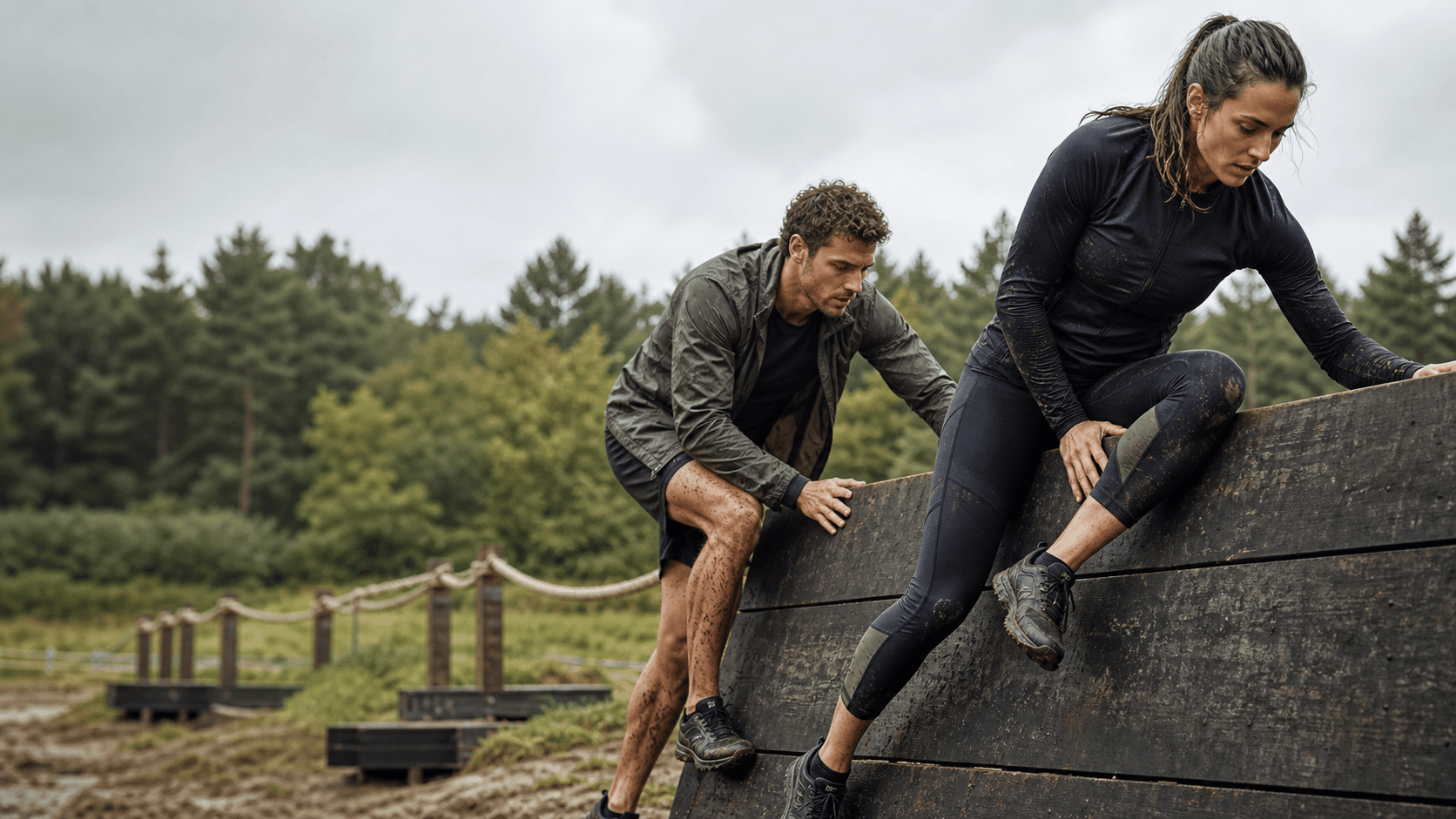
OCR, or obstacle course racing, overlaps with running and functional fitness, but it is not simply another name for indoor hybrid training. An outdoor course can add mud, wet ground, temperature changes, ropes, walls, crawls, carries, and repeated contact with surfaces. Those conditions change what a buyer should ask of a short, legging, top, bra, warm-up layer, or team kit. A useful brief identifies the actual environment before a factory recommends fabric or construction.
Brands serving both segments can build adjacent collections, but they should not treat every requirement as identical. Our HYROX training apparel buyer guide focuses on the mix of running and functional training. OCR development adds outdoor exposure and obstacle-contact risks, which is why a buyer should separate the two use cases in a product brief. For broader manufacturing support across both categories, start with the hybrid racing apparel development solution.
If a buying team is deciding whether products can share a collection route, use the HYROX training apparel vs OCR apparel comparison to review the material, construction, and sample-test differences side by side.
Product scope
What should buyers ask an OCR apparel manufacturer to make?
A first OCR collection does not need every garment category. It needs a small, coherent system matched to the buyer's athlete, climate, retail channel, and price direction. Technical tees or long sleeves can prioritize movement and coverage. Shorts or leggings can address running, kneeling, and stability. Sports bras need the right support and seam comfort. A light layer may solve a cool start or changing weather, but only if it has a defined role rather than becoming an extra SKU without a use case.
Existing training products can give a brand a sensible starting point. Buyers can review activewear performance styles for training sets, bras, and logo-custom directions, then decide which changes are needed for an outdoor obstacle environment. A brand with a wider fitness range can also use the custom gym wear manufacturing page to compare everyday training categories with the more specialized OCR brief.
Terrain and contact
Map crawling, climbing, carries, wall contact, knees on the ground, and any point where fabric or a trim can catch, rub, or wear early.
Water and soil
Decide how the product should feel after rain, splash, sweat, or mud exposure. Quick dry is useful only when it is balanced with the intended weight and coverage.
Weather range
Clarify whether the collection is for warm conditions, cool starts, variable weather, or a narrow event window before choosing a shell, layer, or fabric weight.
Repeat use
Describe the expected training frequency, wash routine, logo use, and retail position so sample comments can focus on the risks that matter to the program.
Fabric and construction
Which material and construction details should be specified?
Material names alone do not describe an OCR product. A buyer should explain the behavior expected from each garment: quick dry after sweat or splash, a stable waistband after a run, coverage during squats and crawling, reduced friction at high-contact points, or a lightweight layer that can be removed easily. The factory can then discuss practical routes around fabric weight, stretch and recovery, surface texture, mesh use, lining, seam type, logo method, color availability, and sample feasibility.
Construction details matter just as much. A seam that works on a clean studio legging may be poorly placed for knees on the ground. Exposed mesh can improve ventilation but may not be suitable for every abrasion zone. A pocket, drawcord, zipper, silicone logo, or hardware detail should be judged by how it behaves while running, climbing, carrying, and washing. Use the fabrics and trims overview to begin a material conversation, then record the garment-specific requirements in the sample brief rather than assuming one fabric can serve every SKU.

Buyer brief / specification table
Use an OCR apparel brief to connect the obstacle, product detail, and sample test
This table helps a brand turn a broad request for custom obstacle course racing apparel into specific questions a development team can review. It is not a universal specification; the final choices still depend on the product, customer, conditions, and sourcing plan.
| Use case or exposure | Details to specify | What to test in the sample |
|---|---|---|
| Running plus obstacles | Top length, waistband stability, short inseam, pocket security, drawcord position | Run, climb, carry, and move from standing to the ground without excessive shifting or bounce. |
| Mud, damp ground, and splash | Fabric weight, surface texture, lining, dry feel, color behavior | A fabric may be comfortable indoors but feel heavy, clingy, or transparent when wet or dirty. |
| Crawling and wall contact | Knee and seat zones, seam placement, exposed mesh, trim location | These areas receive abrasion and snag risk that a standard studio brief may not capture. |
| Rope, grip, and climbing | Sleeve and leg coverage, pocket shape, hardware, logo position | Loose details and hard trims can interfere with movement or become noticeable under contact. |
| Outdoor start and finish | Warm-up layer, ventilation, visibility detail, packability | The buyer can decide whether a layer is a separate SKU, a weather option, or not needed at all. |
| Private-label program | Logo method, labels, colorways, size range, packing, replenishment intent | The factory needs these commercial details to discuss a repeatable route rather than only a one-off sample. |
Sample testing
How should an OCR apparel sample be tested before bulk production?
A visual approval is not enough for an OCR program. The wearer should use the sample in conditions close to the intended product promise: run, climb, crawl, carry, pull, kneel, and move while warm or damp when appropriate. Record what happens to fit, hems, waistbands, pockets, seams, coverage, logo feel, and exposed panels. The goal is not to create a laboratory test for every style. It is to identify the practical risks a buyer would rather solve before production planning.
From concept to quote
What should a brand send for an OCR apparel quotation discussion?
Send the product type, intended training or event environment, reference images or samples, fabric priorities, target size range, colorways, estimated units, logo files, labels, packing requirements, delivery market, and target launch timing. If the exact material, quantity, or construction is still open, say so. That allows a manufacturer to explain the trade-offs and record quotation assumptions instead of treating a preliminary discussion as a fixed production commitment.
inPACE Sports can review an OCR-oriented brief alongside the broader custom activewear development route. Buyers can explore custom activewear options for product and private-label context, then use the ordering process to prepare the information needed for a sample or quotation conversation. Fabric availability, colorways, logo and packaging requirements, style complexity, and quantity all affect what can be confirmed next.
Buyers planning a branded capsule can also use the private-label OCR apparel collection guide to connect product roles with labels, packaging, sample testing, and a future replenishment discussion.
Trademark clarity
HYROX is referenced in this article only as a related hybrid-training context. HYROX is a registered trademark of its respective owner. inPACE is not affiliated with or endorsed by HYROX.
Next step
Build an OCR product brief around the conditions your customer actually faces
Strong OCR apparel is not defined by an obstacle-themed graphic. It is defined by a specific product promise that connects the athlete, environment, garment role, material behavior, construction details, and sample review. Start with a small group of relevant styles and make the outdoor assumptions visible. That gives the factory a practical basis for discussing development choices and gives the brand a clearer route to a repeatable collection.
Discuss your OCR apparel briefLong-form buyer framework
How can a buyer turn this research into a production-ready decision?
The central task in specifying OCR apparel for outdoor obstacle training is deciding how garment roles, materials, fit, construction, pockets, branding, and sample tests respond to outdoor exposure, ground contact, climbing, and repeated moisture. That decision cannot be made from a headline price, a product photo, or a general statement about customization. It needs a record that connects the commercial goal to the garment, material, fit, construction, branding, quantity, quality checks, packing, and destination. When those elements are visible together, a buyer can ask more precise questions and a factory can explain the route without pretending that open details are already confirmed.
The purpose of the framework below is not to turn a brand founder or buyer into a garment technician. It is to make responsibility and evidence clear. The buyer defines the customer and business need, shares what is known, and identifies the decisions that matter. The factory should review product-specific risks without implying universal abrasion, weather, or performance claims that have not been tested. Both sides then record what was reviewed, what remains conditional, what must be approved physically, and what information will guide production or a later repeat order.
Map the actual OCR environment
Distance, weather, temperature, mud, water, vegetation, ground contact, ropes, walls, carries, and training frequency change the product brief.
For this decision, the buyer should state the intended result, provide the closest available evidence, and identify what is flexible. The supplier can then explain the product or process implications and flag any dependency on fabric availability, colour, construction, logo method, components, quantity, or packing. A useful response distinguishes a recommendation from a confirmed production instruction and says what would need to be reviewed through a sample or another approval step.
Record the outcome inside an OCR product brief and test log linking each garment to environment, obstacle contact, material, construction, fit, branding, damage observations, and approval status. Include the date, relevant file or sample, the person responsible for the next action, and the status of the decision. If a later change affects fit, material, workmanship, branding, assortment, or delivery preparation, return to this record and identify which related approvals need to be checked again. This prevents a local change from creating an unnoticed downstream inconsistency.
Prioritise contact and surface behaviour
Fabric face, snag risk, abrasion exposure, water retention, drying direction, opacity, and recovery should be discussed for each garment and environment.
For this decision, the buyer should state the intended result, provide the closest available evidence, and identify what is flexible. The supplier can then explain the product or process implications and flag any dependency on fabric availability, colour, construction, logo method, components, quantity, or packing. A useful response distinguishes a recommendation from a confirmed production instruction and says what would need to be reviewed through a sample or another approval step.
Record the outcome inside an OCR product brief and test log linking each garment to environment, obstacle contact, material, construction, fit, branding, damage observations, and approval status. Include the date, relevant file or sample, the person responsible for the next action, and the status of the decision. If a later change affects fit, material, workmanship, branding, assortment, or delivery preparation, return to this record and identify which related approvals need to be checked again. This prevents a local change from creating an unnoticed downstream inconsistency.
Control fit when the garment is wet
Waistband stability, hem movement, strap security, neckline, pocket position, and excess fabric can behave differently after moisture and repeated obstacle contact.
For this decision, the buyer should state the intended result, provide the closest available evidence, and identify what is flexible. The supplier can then explain the product or process implications and flag any dependency on fabric availability, colour, construction, logo method, components, quantity, or packing. A useful response distinguishes a recommendation from a confirmed production instruction and says what would need to be reviewed through a sample or another approval step.
Record the outcome inside an OCR product brief and test log linking each garment to environment, obstacle contact, material, construction, fit, branding, damage observations, and approval status. Include the date, relevant file or sample, the person responsible for the next action, and the status of the decision. If a later change affects fit, material, workmanship, branding, assortment, or delivery preparation, return to this record and identify which related approvals need to be checked again. This prevents a local change from creating an unnoticed downstream inconsistency.
Place seams away from predictable friction
Ground movement, harness or vest contact, ropes, walls, and repeated flexion can make otherwise acceptable seam and trim positions uncomfortable.
For this decision, the buyer should state the intended result, provide the closest available evidence, and identify what is flexible. The supplier can then explain the product or process implications and flag any dependency on fabric availability, colour, construction, logo method, components, quantity, or packing. A useful response distinguishes a recommendation from a confirmed production instruction and says what would need to be reviewed through a sample or another approval step.
Record the outcome inside an OCR product brief and test log linking each garment to environment, obstacle contact, material, construction, fit, branding, damage observations, and approval status. Include the date, relevant file or sample, the person responsible for the next action, and the status of the decision. If a later change affects fit, material, workmanship, branding, assortment, or delivery preparation, return to this record and identify which related approvals need to be checked again. This prevents a local change from creating an unnoticed downstream inconsistency.
Treat pockets and trims as risk points
Pocket opening, zipper, cord, puller, reflective mark, silicone detail, and label placement need review for security, snagging, comfort, and drainage.
For this decision, the buyer should state the intended result, provide the closest available evidence, and identify what is flexible. The supplier can then explain the product or process implications and flag any dependency on fabric availability, colour, construction, logo method, components, quantity, or packing. A useful response distinguishes a recommendation from a confirmed production instruction and says what would need to be reviewed through a sample or another approval step.
Record the outcome inside an OCR product brief and test log linking each garment to environment, obstacle contact, material, construction, fit, branding, damage observations, and approval status. Include the date, relevant file or sample, the person responsible for the next action, and the status of the decision. If a later change affects fit, material, workmanship, branding, assortment, or delivery preparation, return to this record and identify which related approvals need to be checked again. This prevents a local change from creating an unnoticed downstream inconsistency.
Use branding methods that suit the surface
Artwork detail, stretch, texture, mud exposure, placement, handfeel, and wash expectation should guide the sample conversation.
For this decision, the buyer should state the intended result, provide the closest available evidence, and identify what is flexible. The supplier can then explain the product or process implications and flag any dependency on fabric availability, colour, construction, logo method, components, quantity, or packing. A useful response distinguishes a recommendation from a confirmed production instruction and says what would need to be reviewed through a sample or another approval step.
Record the outcome inside an OCR product brief and test log linking each garment to environment, obstacle contact, material, construction, fit, branding, damage observations, and approval status. Include the date, relevant file or sample, the person responsible for the next action, and the status of the decision. If a later change affects fit, material, workmanship, branding, assortment, or delivery preparation, return to this record and identify which related approvals need to be checked again. This prevents a local change from creating an unnoticed downstream inconsistency.
Record realistic sample tests
The buyer should document the activity, duration, conditions, garment size, observations, damage, comfort, and requested changes without presenting informal wear trials as certification.
For this decision, the buyer should state the intended result, provide the closest available evidence, and identify what is flexible. The supplier can then explain the product or process implications and flag any dependency on fabric availability, colour, construction, logo method, components, quantity, or packing. A useful response distinguishes a recommendation from a confirmed production instruction and says what would need to be reviewed through a sample or another approval step.
Record the outcome inside an OCR product brief and test log linking each garment to environment, obstacle contact, material, construction, fit, branding, damage observations, and approval status. Include the date, relevant file or sample, the person responsible for the next action, and the status of the decision. If a later change affects fit, material, workmanship, branding, assortment, or delivery preparation, return to this record and identify which related approvals need to be checked again. This prevents a local change from creating an unnoticed downstream inconsistency.
Buyer scenarios
How does the decision change in common sourcing situations?
Real projects rarely arrive with every detail complete. The useful question is not whether the brief is perfect; it is whether the missing information is visible and whether the next step will produce evidence. These scenarios show how a buyer can keep specifying OCR apparel for outdoor obstacle training practical without converting early assumptions into promises.
The buyer has a direction but incomplete technical files
Start with the product role, target customer, intended use, reference material, and the decisions already made. Mark missing measurements, fabric, artwork, or packing details as open questions. The supplier response should show what can be reviewed immediately, what needs a sample, and what information is required before the route becomes more specific.
Apply the scenario to how garment roles, materials, fit, construction, pockets, branding, and sample tests respond to outdoor exposure, ground contact, climbing, and repeated moisture. Note what can be accepted as direction, what requires factory review, and what must become part of an OCR product brief and test log linking each garment to environment, obstacle contact, material, construction, fit, branding, damage observations, and approval status before the buyer compares suppliers or approves the next stage.
A catalogue reference is close but not exact
List the features that already work and separate brand presentation from garment changes. A logo, label, hangtag, or bag may stay within a catalogue-informed route, while a new fit, material, pattern, construction, or performance feature may require custom development. The decision should be based on the requested change, not a category label.
Apply the scenario to how garment roles, materials, fit, construction, pockets, branding, and sample tests respond to outdoor exposure, ground contact, climbing, and repeated moisture. Note what can be accepted as direction, what requires factory review, and what must become part of an OCR product brief and test log linking each garment to environment, obstacle contact, material, construction, fit, branding, damage observations, and approval status before the buyer compares suppliers or approves the next stage.
The order contains several colours, sizes, and brand components
Create one assortment record by style, colour, and size, then connect every logo, label, barcode, bag, and carton instruction to the correct SKU. Ask which choices affect material planning, application methods, packing ratios, or quotation assumptions. This is where a simple-looking collection can become operationally complex.
Apply the scenario to how garment roles, materials, fit, construction, pockets, branding, and sample tests respond to outdoor exposure, ground contact, climbing, and repeated moisture. Note what can be accepted as direction, what requires factory review, and what must become part of an OCR product brief and test log linking each garment to environment, obstacle contact, material, construction, fit, branding, damage observations, and approval status before the buyer compares suppliers or approves the next stage.
The programme is expected to repeat
Decide which approved records will be retained after shipment and which changes should trigger a new sample. Product specifications, material and colour references, artwork, placement, labels, packing, QC notes, and prior order data make later replenishment more controlled. A reorder should not depend on memory or an old message thread.
Apply the scenario to how garment roles, materials, fit, construction, pockets, branding, and sample tests respond to outdoor exposure, ground contact, climbing, and repeated moisture. Note what can be accepted as direction, what requires factory review, and what must become part of an OCR product brief and test log linking each garment to environment, obstacle contact, material, construction, fit, branding, damage observations, and approval status before the buyer compares suppliers or approves the next stage.
Relevant product directions
Which products can make the next brief more concrete?
Use these product pages to identify a silhouette or collection direction, then state what should remain, change, or be reviewed. Product images are useful references, but fabric, fit, construction, colour, branding, quantity, and packing still require project-specific confirmation.
Activewear Performance Collection
Compare existing training sets, sports bras, and performance silhouettes before defining fabric, branding, and order requirements.
View product directionHooded Thumbhole Training Set
Use a coordinated training set to discuss fit, colour direction, logo position, labels, packing, and repeat-order records.
View product directionJogging & Printed Activewear Catalog
Review training layers, printed directions, coverage options, and graphic placements as references for an OCR product brief.
View product directionDecision record
Which evidence should the buyer request and retain?
The table turns the article's key questions into a working review format. It is intentionally broader than a unit-price comparison because a complete activewear programme includes product, material, sample, branding, packing, and delivery assumptions.
| Decision area | Buyer evidence | Factory review | Record before approval |
|---|---|---|---|
| Map the actual OCR environment | Reference, requirement, intended result, and any non-negotiable constraint. | Feasibility, dependencies, assumptions, sample need, and effect on connected decisions. | Approved reference, open issue, owner, date, and the next checkpoint. |
| Prioritise contact and surface behaviour | Reference, requirement, intended result, and any non-negotiable constraint. | Feasibility, dependencies, assumptions, sample need, and effect on connected decisions. | Approved reference, open issue, owner, date, and the next checkpoint. |
| Control fit when the garment is wet | Reference, requirement, intended result, and any non-negotiable constraint. | Feasibility, dependencies, assumptions, sample need, and effect on connected decisions. | Approved reference, open issue, owner, date, and the next checkpoint. |
| Place seams away from predictable friction | Reference, requirement, intended result, and any non-negotiable constraint. | Feasibility, dependencies, assumptions, sample need, and effect on connected decisions. | Approved reference, open issue, owner, date, and the next checkpoint. |
| Treat pockets and trims as risk points | Reference, requirement, intended result, and any non-negotiable constraint. | Feasibility, dependencies, assumptions, sample need, and effect on connected decisions. | Approved reference, open issue, owner, date, and the next checkpoint. |
| Use branding methods that suit the surface | Reference, requirement, intended result, and any non-negotiable constraint. | Feasibility, dependencies, assumptions, sample need, and effect on connected decisions. | Approved reference, open issue, owner, date, and the next checkpoint. |
| Record realistic sample tests | Reference, requirement, intended result, and any non-negotiable constraint. | Feasibility, dependencies, assumptions, sample need, and effect on connected decisions. | Approved reference, open issue, owner, date, and the next checkpoint. |
Buyer checklist
What should be ready before the next factory conversation?
A buyer can begin even when some boxes remain open. Label them clearly and ask what evidence would close them. That approach is more useful than hiding uncertainty or waiting for an impossible level of perfection. It also makes a supplier's reasoning easier to evaluate: the response should identify connected decisions and explain why a sample, component approval, revised brief, or packing record is needed.
Continue the buyer journey
Keep the next step tied to the product decision
Continue with compare HYROX training and OCR apparel when that question is adjacent to the current decision. If the project is ready for factory review, send the product type, reference, material and fit priorities, branding scope, estimated quantity, packing needs, and destination market. inPACE Sports can then discuss whether the next step is product selection, private-label review, custom development, sampling, or a more complete quotation brief.
State what is confirmed, flexible, and still open for factory guidance.
Ask how decisions move into sampling, production, QC, and packing.
Retain the approval and receiving records needed for shipment and reorders.