
Collection first
What does private label OCR apparel mean for a B2B buyer?
Private label OCR apparel is a branded product program for obstacle course racing and outdoor obstacle training. The brand owns the collection direction: what the athlete needs, which garments are included, how they look and fit, which colors represent the range, and how the finished goods are labeled and packed. The factory supports the development route, but a useful result depends on the buyer making the key commercial and product assumptions clear before production details are treated as final.
OCR has overlap with running, gym training, and hybrid fitness, but an outdoor obstacle brief adds questions around terrain, moisture, climbing, crawling, abrasion, coverage, and temperature change. Start with the OCR apparel buyer guide to define those conditions. If the collection also serves run-and-functional-fitness customers, the HYROX training apparel vs OCR apparel comparison helps separate the shared product foundation from the scenario-specific brief. For an end-to-end B2B conversation, use the hybrid racing apparel development solution.
Assortment planning
Which products belong in a first private label OCR apparel collection?
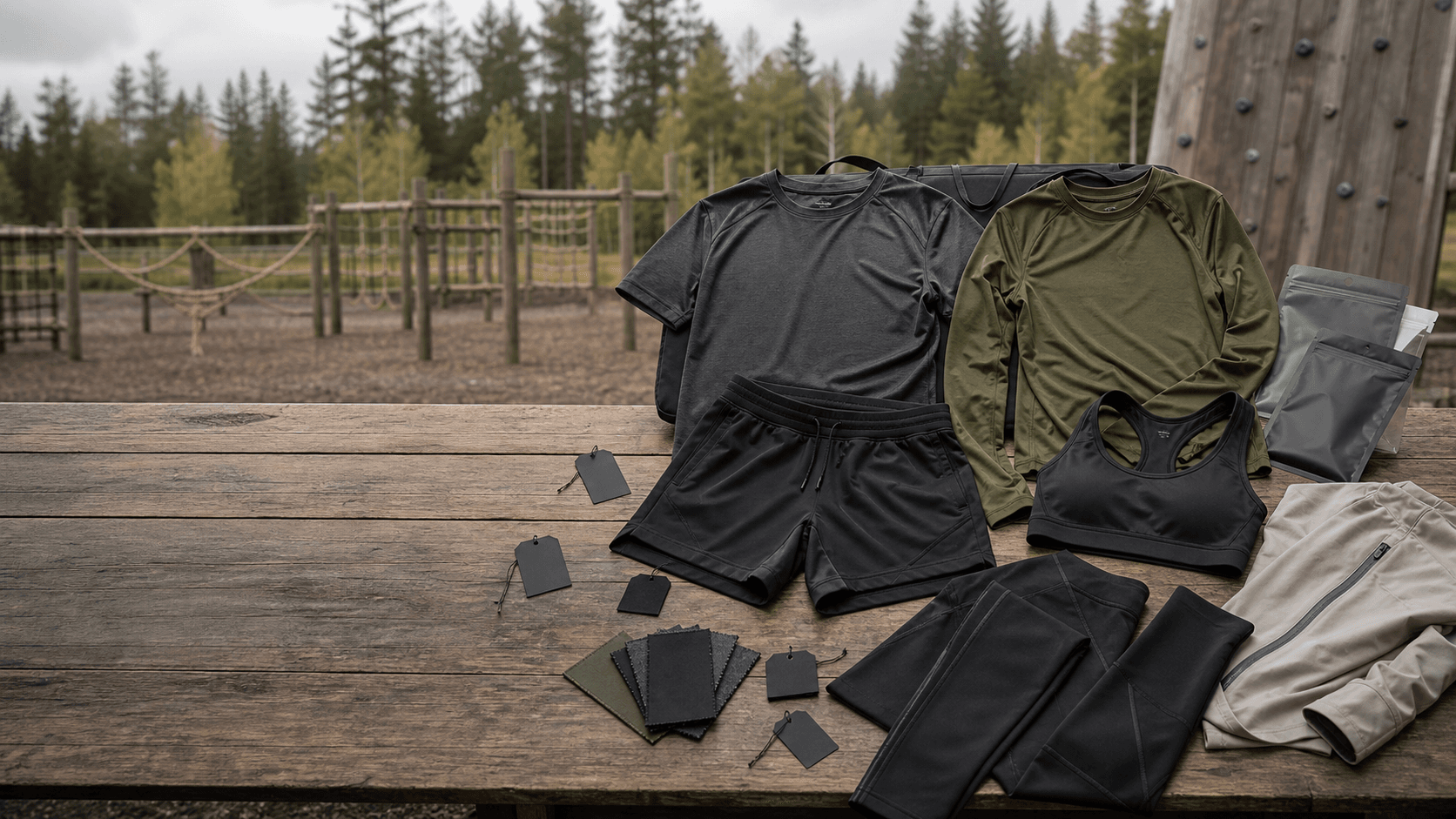
An effective first collection usually has clear garment roles rather than a large number of loosely related SKUs. Start with the products your target athlete is most likely to wear, then decide which roles must be solved for outdoor obstacle training and which can share an existing training silhouette. A brand may choose a core short and technical tee as its foundation, add a coverage bottom or support piece for the intended customer, and only add a layer when its climate or use case makes that product commercially useful.
Buyers can review activewear performance styles to compare possible starting silhouettes. The catalog is a development reference, not a substitute for the OCR brief: each item still needs the right fabric behavior, construction details, branding, and sample test for the final use case.
| Product role | Why it belongs in the capsule | OCR development questions | Buyer decision |
|---|---|---|---|
| Technical tee or tank | A core running-and-training top that establishes the collection handfeel and logo approach | Heat, sweat, arm movement, hem movement, and graphic or logo comfort | Decide whether it is a shared core style or needs an OCR-specific coverage or construction update. |
| Training short | A versatile lower-body option for running, carries, and general training | Waistband stability, pocket bounce, drawcord position, liner choice, and contact areas | Use the product brief to state where the short will be worn and whether wet ground or climbing changes the design route. |
| Legging or coverage bottom | An option for athletes who need more coverage in cool conditions or ground contact | Fit recovery, knee and seat exposure, seam location, opacity, and abrasion zones | Do not assume a studio legging is ready for outdoor obstacles without a scenario-specific sample review. |
| Sports bra or fitted support top | A product that can complete a women's assortment or coordinate with shared bottom styles | Support level, strap placement, lining, seam comfort, coverage, and logo location | Define the activity, support expectation, and testing movements before deciding the final construction. |
| Light warm-up layer | A weather or travel piece for a capsule, rather than an automatic addition to every launch | Packability, ventilation, sleeve construction, trim, and the role it plays before or after training | Add it only when the brand's climate, athlete, and assortment strategy give it a clear reason to exist. |
Fabric and construction
How should fabric weight, panels, and seams be chosen for OCR products?
Fabric weight should be discussed as part of garment behavior, not as an isolated number. A technical top may need a light, breathable handfeel and comfortable recovery after sweat. A short may need stable movement and practical pocket or liner decisions. A legging may need coverage, stretch recovery, and closer attention to knee, seat, or seam exposure. The right material direction depends on the product, climate, athlete, intended level of contact, color and logo expectations, and the brand's price direction.
The same principle applies to panels and stitching. Mesh can be useful for ventilation, but it may not suit every contact zone. A seam can look clean on a fitting sample yet become noticeable when an athlete crawls, climbs, or works while damp. A drawcord, zipper, pocket, print, or reflective detail needs to be checked for movement and contact, not simply appearance. The fabrics and trims overview can start the conversation; the collection brief should explain what every key product must do before a construction route is confirmed.
Brand presentation
How should private-label details carry across an OCR capsule?
A private-label collection is more than a logo placed on a garment. It is a repeatable set of decisions that helps a buyer recognize the range through product, color, labels, packaging, and receiving. Those decisions should be made early enough to appear in sample review. A logo method that works on a technical tee may need a different placement on a stretch legging or a light outer layer. The same is true of hangtags, size labels, care labels, poly bags, and carton marks.
Logo method
Choose a logo direction that suits the stretch, texture, placement, washing expectation, and product use. A large graphic, reflective mark, heat transfer, or woven detail should be reviewed on the actual garment panel.
Color architecture
Set a core color direction and identify which styles, trims, logos, and labels must match across the capsule. A limited, coherent range is easier to evaluate than many unrelated colorways.
Labels and size system
Confirm neck labels, care labels, size labels, placement, and the size range alongside fit comments. These elements should be checked before the product moves from sample approval to bulk planning.
Packing and receiving
Record hangtags, poly bags, barcode or size-sticker needs, folding direction, carton marks, and destination requirements. Packing should support the buyer's sales and receiving route, not be an afterthought.
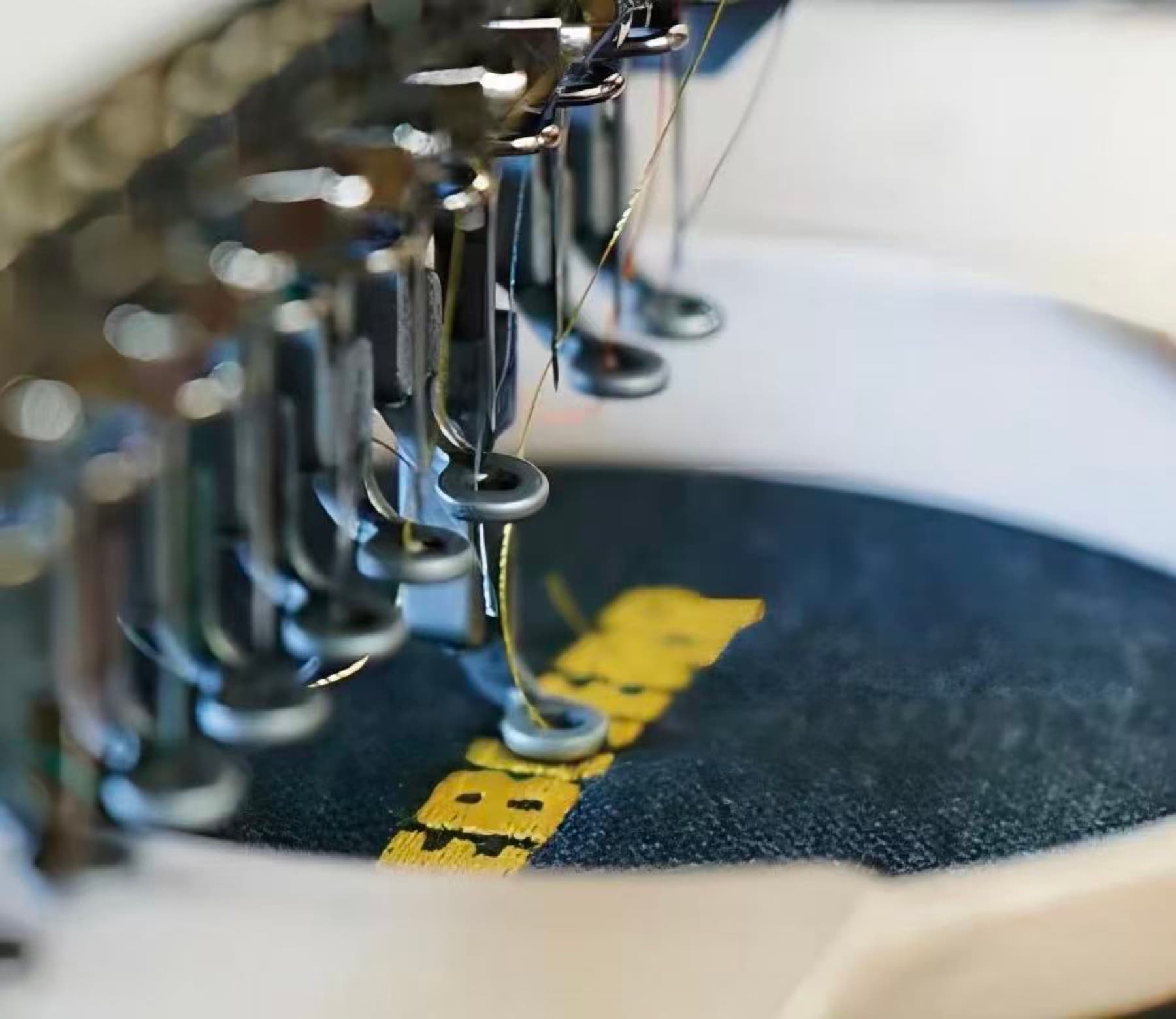
For a broader view of brand identifiers and package components, see the private-label activewear service. Keep the OCR product decisions connected to that plan: labels and packaging must serve the same collection, market, and order route as the garment itself.
Fit, color, and size
How should a brand plan fit, color, and sizing before the first sample?
Fit direction needs to be stated by garment role. A buyer might prefer a close training tee, a more relaxed layer, a short with particular coverage, or a legging with a stable but not overly restrictive waistband. The brief should include reference styles, size range, target measurements where known, and written notes about what the brand wants to retain or change. This creates a useful starting point even when a complete tech pack is not yet available.
Color is also a product decision, not only a marketing decision. Explain which colors are core, which are optional, whether tops and bottoms must coordinate, how the logo should read on each colorway, and whether a product needs a more practical outdoor color direction. The factory can then discuss color availability and any related development decisions without treating a broad mood board as a final approval.
Small-batch learning
How should a brand use small-batch testing before replenishment?
A small initial program can help a buyer learn which product roles deserve a larger repeat plan, but it should still have a real approval process. Test the sample or early run in the conditions the collection is designed for. Record what happens to movement, fabric feel, coverage, seams, pockets, logo behavior, labels, and packing. The goal is not to make every project more complex; it is to resolve the few risks that would be costly to discover after a larger production decision.
Production route
How can a private-label OCR collection be prepared for a repeat order?
A repeat order is easier to discuss when the first collection documents its decisions. Keep the approved sample, measurements, fabric direction, colorway, logo method, labels, packing, and quality reference together. Identify which changes are intentional for the next run and which elements must remain consistent. This prevents an early product discussion from being reinterpreted every time a buyer considers replenishment.
The production route remains conditional on the full order plan. Fabric availability, colorways, logo and packaging requirements, style complexity, quantity, and delivery market all affect what can be reviewed or confirmed. Buyers can use the ordering process to organize these requirements before requesting the next quotation or sample discussion.
Trademark clarity
HYROX is referenced elsewhere on this site only as a hybrid-training and race-preparation context. HYROX is a registered trademark of its respective owner. inPACE is not affiliated with or endorsed by HYROX.
Next step
Build the private-label brief before the collection becomes a production problem
A practical OCR collection does not need to solve every sport, climate, and customer at once. It needs a clear athlete, a small group of purposeful products, credible environmental assumptions, and private-label details that can be repeated from sample to bulk. Begin with the styles that express the brand's point of view, then give the factory enough context to discuss the material, construction, label, packing, and testing decisions that make the range workable.
Discuss your private-label OCR briefLong-form buyer framework
How can a buyer turn this research into a production-ready decision?
The central task in building a private-label OCR apparel collection is deciding which garments, materials, construction details, brand components, sample tests, packing rules, and replenishment records belong in a focused obstacle-training range. That decision cannot be made from a headline price, a product photo, or a general statement about customization. It needs a record that connects the commercial goal to the garment, material, fit, construction, branding, quantity, quality checks, packing, and destination. When those elements are visible together, a buyer can ask more precise questions and a factory can explain the route without pretending that open details are already confirmed.
The purpose of the framework below is not to turn a brand founder or buyer into a garment technician. It is to make responsibility and evidence clear. The buyer defines the customer and business need, shares what is known, and identifies the decisions that matter. The factory should connect the collection's outdoor and obstacle requirements to product-specific development and a consistent private-label system. Both sides then record what was reviewed, what remains conditional, what must be approved physically, and what information will guide production or a later repeat order.
Build around a few athlete needs
Start with essential base, bottom, support, and layer roles rather than filling the collection with similar products that divide order quantities.
For this decision, the buyer should state the intended result, provide the closest available evidence, and identify what is flexible. The supplier can then explain the product or process implications and flag any dependency on fabric availability, colour, construction, logo method, components, quantity, or packing. A useful response distinguishes a recommendation from a confirmed production instruction and says what would need to be reviewed through a sample or another approval step.
Record the outcome inside an OCR collection file linking every SKU to environment, product role, material, fit, construction, branding, testing, packing, and repeat-order information. Include the date, relevant file or sample, the person responsible for the next action, and the status of the decision. If a later change affects fit, material, workmanship, branding, assortment, or delivery preparation, return to this record and identify which related approvals need to be checked again. This prevents a local change from creating an unnoticed downstream inconsistency.
Assign material priorities by SKU
A top, short, legging, sports bra, and outer layer can share brand direction without forcing the same weight, stretch, surface, or drying behaviour.
For this decision, the buyer should state the intended result, provide the closest available evidence, and identify what is flexible. The supplier can then explain the product or process implications and flag any dependency on fabric availability, colour, construction, logo method, components, quantity, or packing. A useful response distinguishes a recommendation from a confirmed production instruction and says what would need to be reviewed through a sample or another approval step.
Record the outcome inside an OCR collection file linking every SKU to environment, product role, material, fit, construction, branding, testing, packing, and repeat-order information. Include the date, relevant file or sample, the person responsible for the next action, and the status of the decision. If a later change affects fit, material, workmanship, branding, assortment, or delivery preparation, return to this record and identify which related approvals need to be checked again. This prevents a local change from creating an unnoticed downstream inconsistency.
Review obstacle-facing construction
Seams, pockets, zippers, reinforcement, bindings, hems, elastic, and trim exposure need purpose-driven decisions for the intended training environment.
For this decision, the buyer should state the intended result, provide the closest available evidence, and identify what is flexible. The supplier can then explain the product or process implications and flag any dependency on fabric availability, colour, construction, logo method, components, quantity, or packing. A useful response distinguishes a recommendation from a confirmed production instruction and says what would need to be reviewed through a sample or another approval step.
Record the outcome inside an OCR collection file linking every SKU to environment, product role, material, fit, construction, branding, testing, packing, and repeat-order information. Include the date, relevant file or sample, the person responsible for the next action, and the status of the decision. If a later change affects fit, material, workmanship, branding, assortment, or delivery preparation, return to this record and identify which related approvals need to be checked again. This prevents a local change from creating an unnoticed downstream inconsistency.
Create a consistent logo hierarchy
Primary marks, secondary marks, placement, colour, scale, and application method should feel related while adapting to different fabrics and contact areas.
For this decision, the buyer should state the intended result, provide the closest available evidence, and identify what is flexible. The supplier can then explain the product or process implications and flag any dependency on fabric availability, colour, construction, logo method, components, quantity, or packing. A useful response distinguishes a recommendation from a confirmed production instruction and says what would need to be reviewed through a sample or another approval step.
Record the outcome inside an OCR collection file linking every SKU to environment, product role, material, fit, construction, branding, testing, packing, and repeat-order information. Include the date, relevant file or sample, the person responsible for the next action, and the status of the decision. If a later change affects fit, material, workmanship, branding, assortment, or delivery preparation, return to this record and identify which related approvals need to be checked again. This prevents a local change from creating an unnoticed downstream inconsistency.
Plan labels and packing by channel
Care and size information, hangtags, barcode fields, bags, folding, assortment, and carton marks should match the retailer, studio, distributor, or fulfilment route.
For this decision, the buyer should state the intended result, provide the closest available evidence, and identify what is flexible. The supplier can then explain the product or process implications and flag any dependency on fabric availability, colour, construction, logo method, components, quantity, or packing. A useful response distinguishes a recommendation from a confirmed production instruction and says what would need to be reviewed through a sample or another approval step.
Record the outcome inside an OCR collection file linking every SKU to environment, product role, material, fit, construction, branding, testing, packing, and repeat-order information. Include the date, relevant file or sample, the person responsible for the next action, and the status of the decision. If a later change affects fit, material, workmanship, branding, assortment, or delivery preparation, return to this record and identify which related approvals need to be checked again. This prevents a local change from creating an unnoticed downstream inconsistency.
Test products together and separately
Collection trials should identify interaction between layers while still recording garment-specific fit, moisture, contact, comfort, and durability observations.
For this decision, the buyer should state the intended result, provide the closest available evidence, and identify what is flexible. The supplier can then explain the product or process implications and flag any dependency on fabric availability, colour, construction, logo method, components, quantity, or packing. A useful response distinguishes a recommendation from a confirmed production instruction and says what would need to be reviewed through a sample or another approval step.
Record the outcome inside an OCR collection file linking every SKU to environment, product role, material, fit, construction, branding, testing, packing, and repeat-order information. Include the date, relevant file or sample, the person responsible for the next action, and the status of the decision. If a later change affects fit, material, workmanship, branding, assortment, or delivery preparation, return to this record and identify which related approvals need to be checked again. This prevents a local change from creating an unnoticed downstream inconsistency.
Prepare for replenishment from day one
Approved materials, colours, measurements, artwork, components, packing, prior changes, and sales results help the buyer distinguish a reorder from new development.
For this decision, the buyer should state the intended result, provide the closest available evidence, and identify what is flexible. The supplier can then explain the product or process implications and flag any dependency on fabric availability, colour, construction, logo method, components, quantity, or packing. A useful response distinguishes a recommendation from a confirmed production instruction and says what would need to be reviewed through a sample or another approval step.
Record the outcome inside an OCR collection file linking every SKU to environment, product role, material, fit, construction, branding, testing, packing, and repeat-order information. Include the date, relevant file or sample, the person responsible for the next action, and the status of the decision. If a later change affects fit, material, workmanship, branding, assortment, or delivery preparation, return to this record and identify which related approvals need to be checked again. This prevents a local change from creating an unnoticed downstream inconsistency.
Buyer scenarios
How does the decision change in common sourcing situations?
Real projects rarely arrive with every detail complete. The useful question is not whether the brief is perfect; it is whether the missing information is visible and whether the next step will produce evidence. These scenarios show how a buyer can keep building a private-label OCR apparel collection practical without converting early assumptions into promises.
The buyer has a direction but incomplete technical files
Start with the product role, target customer, intended use, reference material, and the decisions already made. Mark missing measurements, fabric, artwork, or packing details as open questions. The supplier response should show what can be reviewed immediately, what needs a sample, and what information is required before the route becomes more specific.
Apply the scenario to which garments, materials, construction details, brand components, sample tests, packing rules, and replenishment records belong in a focused obstacle-training range. Note what can be accepted as direction, what requires factory review, and what must become part of an OCR collection file linking every SKU to environment, product role, material, fit, construction, branding, testing, packing, and repeat-order information before the buyer compares suppliers or approves the next stage.
A catalogue reference is close but not exact
List the features that already work and separate brand presentation from garment changes. A logo, label, hangtag, or bag may stay within a catalogue-informed route, while a new fit, material, pattern, construction, or performance feature may require custom development. The decision should be based on the requested change, not a category label.
Apply the scenario to which garments, materials, construction details, brand components, sample tests, packing rules, and replenishment records belong in a focused obstacle-training range. Note what can be accepted as direction, what requires factory review, and what must become part of an OCR collection file linking every SKU to environment, product role, material, fit, construction, branding, testing, packing, and repeat-order information before the buyer compares suppliers or approves the next stage.
The order contains several colours, sizes, and brand components
Create one assortment record by style, colour, and size, then connect every logo, label, barcode, bag, and carton instruction to the correct SKU. Ask which choices affect material planning, application methods, packing ratios, or quotation assumptions. This is where a simple-looking collection can become operationally complex.
Apply the scenario to which garments, materials, construction details, brand components, sample tests, packing rules, and replenishment records belong in a focused obstacle-training range. Note what can be accepted as direction, what requires factory review, and what must become part of an OCR collection file linking every SKU to environment, product role, material, fit, construction, branding, testing, packing, and repeat-order information before the buyer compares suppliers or approves the next stage.
The programme is expected to repeat
Decide which approved records will be retained after shipment and which changes should trigger a new sample. Product specifications, material and colour references, artwork, placement, labels, packing, QC notes, and prior order data make later replenishment more controlled. A reorder should not depend on memory or an old message thread.
Apply the scenario to which garments, materials, construction details, brand components, sample tests, packing rules, and replenishment records belong in a focused obstacle-training range. Note what can be accepted as direction, what requires factory review, and what must become part of an OCR collection file linking every SKU to environment, product role, material, fit, construction, branding, testing, packing, and repeat-order information before the buyer compares suppliers or approves the next stage.
Relevant product directions
Which products can make the next brief more concrete?
Use these product pages to identify a silhouette or collection direction, then state what should remain, change, or be reviewed. Product images are useful references, but fabric, fit, construction, colour, branding, quantity, and packing still require project-specific confirmation.
Activewear Performance Collection
Compare existing training sets, sports bras, and performance silhouettes before defining fabric, branding, and order requirements.
View product directionHooded Thumbhole Training Set
Use a coordinated training set to discuss fit, colour direction, logo position, labels, packing, and repeat-order records.
View product directionPrivate Label Activewear
Plan the logo hierarchy, labels, hangtags, barcode fields, bags, and carton details for an obstacle-training collection.
View product directionDecision record
Which evidence should the buyer request and retain?
The table turns the article's key questions into a working review format. It is intentionally broader than a unit-price comparison because a complete activewear programme includes product, material, sample, branding, packing, and delivery assumptions.
| Decision area | Buyer evidence | Factory review | Record before approval |
|---|---|---|---|
| Build around a few athlete needs | Reference, requirement, intended result, and any non-negotiable constraint. | Feasibility, dependencies, assumptions, sample need, and effect on connected decisions. | Approved reference, open issue, owner, date, and the next checkpoint. |
| Assign material priorities by SKU | Reference, requirement, intended result, and any non-negotiable constraint. | Feasibility, dependencies, assumptions, sample need, and effect on connected decisions. | Approved reference, open issue, owner, date, and the next checkpoint. |
| Review obstacle-facing construction | Reference, requirement, intended result, and any non-negotiable constraint. | Feasibility, dependencies, assumptions, sample need, and effect on connected decisions. | Approved reference, open issue, owner, date, and the next checkpoint. |
| Create a consistent logo hierarchy | Reference, requirement, intended result, and any non-negotiable constraint. | Feasibility, dependencies, assumptions, sample need, and effect on connected decisions. | Approved reference, open issue, owner, date, and the next checkpoint. |
| Plan labels and packing by channel | Reference, requirement, intended result, and any non-negotiable constraint. | Feasibility, dependencies, assumptions, sample need, and effect on connected decisions. | Approved reference, open issue, owner, date, and the next checkpoint. |
| Test products together and separately | Reference, requirement, intended result, and any non-negotiable constraint. | Feasibility, dependencies, assumptions, sample need, and effect on connected decisions. | Approved reference, open issue, owner, date, and the next checkpoint. |
| Prepare for replenishment from day one | Reference, requirement, intended result, and any non-negotiable constraint. | Feasibility, dependencies, assumptions, sample need, and effect on connected decisions. | Approved reference, open issue, owner, date, and the next checkpoint. |
Buyer checklist
What should be ready before the next factory conversation?
A buyer can begin even when some boxes remain open. Label them clearly and ask what evidence would close them. That approach is more useful than hiding uncertainty or waiting for an impossible level of perfection. It also makes a supplier's reasoning easier to evaluate: the response should identify connected decisions and explain why a sample, component approval, revised brief, or packing record is needed.
Continue the buyer journey
Keep the next step tied to the product decision
Continue with specify OCR apparel for brands when that question is adjacent to the current decision. If the project is ready for factory review, send the product type, reference, material and fit priorities, branding scope, estimated quantity, packing needs, and destination market. inPACE Sports can then discuss whether the next step is product selection, private-label review, custom development, sampling, or a more complete quotation brief.
State what is confirmed, flexible, and still open for factory guidance.
Ask how decisions move into sampling, production, QC, and packing.
Retain the approval and receiving records needed for shipment and reorders.