
The buyer decision
What is the product-development difference between HYROX training apparel and OCR apparel?
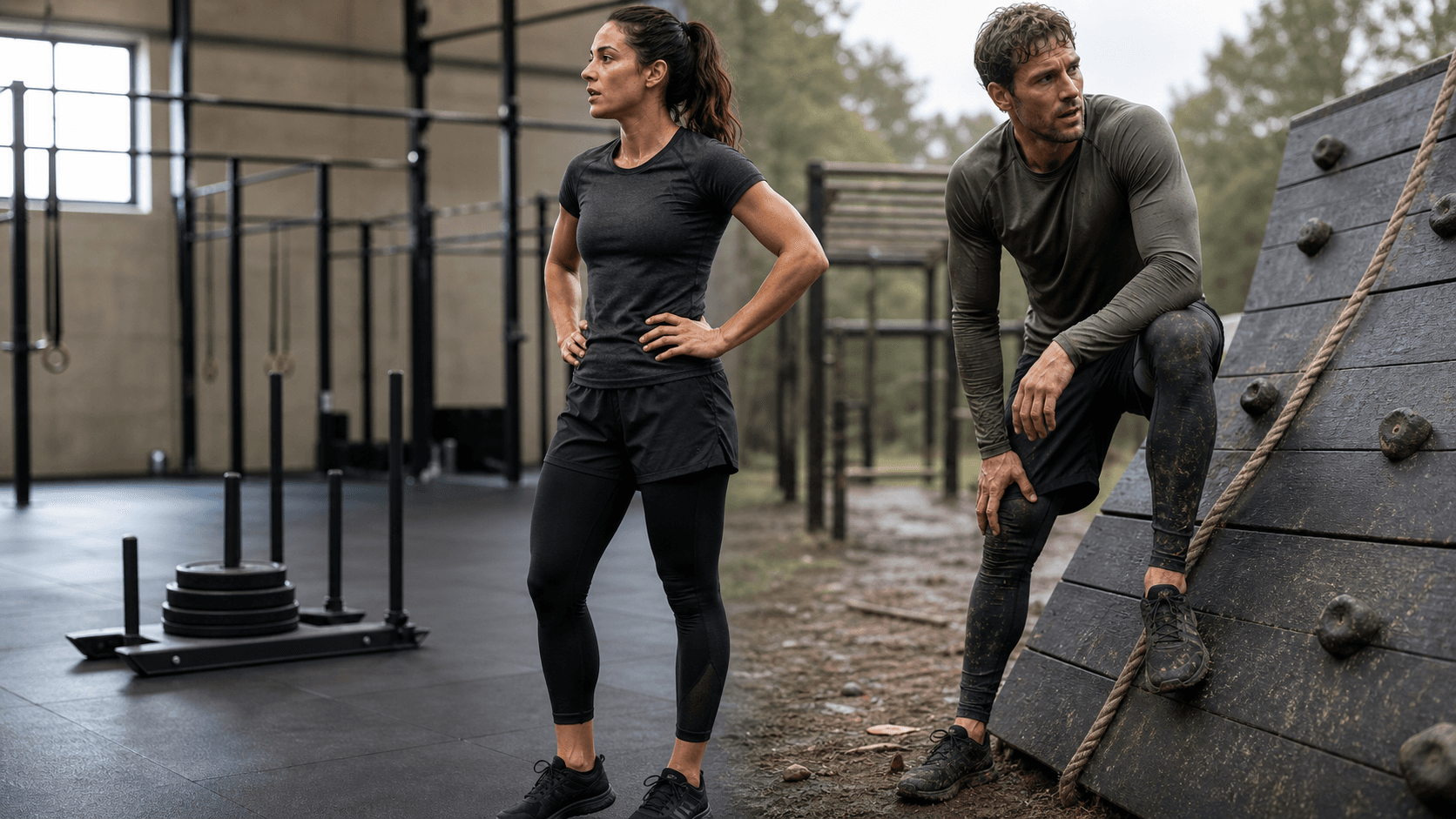
The difference begins with the environment, not the logo or colorway. Training for HYROX is commonly discussed around running combined with functional movements, often in a controlled indoor or gym-based setting. OCR, or obstacle course racing, adds outdoor terrain, weather variation, wet or muddy surfaces, crawling, climbing, rope contact, and obstacle abrasion. Both categories can demand movement, sweat management, and a stable fit, but the additional exposure changes which details should be reviewed before a sample is approved.
A brand does not need two unrelated collections to serve both audiences. It does need a brief that separates the shared athlete needs from the conditions that are unique to each product direction. Use the HYROX training apparel buyer guide for the run-and-functional-fitness route, and the OCR apparel buyer guide for outdoor obstacle-specific questions. The hybrid racing apparel development solution connects both to a B2B product-development discussion.
Comparison chart
HYROX training apparel vs OCR apparel: what should change in the buyer brief?
This comparison chart is a planning tool for brands, not a universal product specification. It helps a buyer identify which questions belong in a shared activewear brief and which require a separate decision before fabric, construction, or sample comments are confirmed.
| Development area | HYROX training apparel | OCR apparel | Buyer action |
|---|---|---|---|
| Primary setting | Indoor or controlled run-and-functional-fitness training environments | Outdoor obstacle training with terrain, weather, water, mud, and contact variables | Define the environment before approving a shared product brief. |
| Movement pattern | Running, carries, sled work, floor work, lunges, and transitions | Running plus climbing, crawling, rope work, wall contact, uneven ground, and carries | Map movements that affect hems, waistbands, pockets, seams, and coverage. |
| Moisture exposure | Mostly sweat and indoor heat management | Sweat plus rain, splash, wet ground, mud, and variable drying conditions | Specify the desired dry feel and coverage rather than simply requesting a quick-dry fabric. |
| Abrasion and snag risk | Equipment contact and repeated body movement | Obstacle surfaces, ground contact, rope friction, branches, and coarse terrain | Identify high-contact zones before choosing exposed mesh, trim, print, or seam locations. |
| Fabric direction | Breathable stretch, recovery, stable support, comfort when warm | Durability and outdoor behavior alongside stretch, recovery, dry feel, and coverage | Choose material directions by garment role; one fabric may not suit every SKU. |
| Construction focus | Anti-chafe seams, stable waistbands, pocket bounce, logo comfort | Reinforced or protected zones where appropriate, coverage, snag awareness, seam placement | Review whether construction features remain comfortable while climbing, crawling, and washing. |
| Sample test | Run, squat, lunge, carry, floor work, and sweat-management review | Run, climb, crawl, carry, kneel, move in damp conditions where relevant, and inspect wear points | Test the garment in conditions close to its product promise before bulk planning. |
| Commercial brief | Core training assortment, retail position, colorways, branding, repeat demand | Course environment, seasonal use, outdoor product roles, plus the same private-label and production details | Separate shared details from scenario-specific requirements so supplier comparisons are fair. |
Collection architecture
When can a brand use one collection, and when should it branch the product direction?
A compact performance collection can often begin with shared styles: a technical tee or tank, a short or legging, a supportive bra where relevant, and a light layer. These pieces can express one brand identity across training, running, and functional fitness. The question is not whether every SKU must be duplicated. It is whether the intended use asks the same garment to handle conflicting conditions without a clear design response.
For example, a close-fitting run-and-training tee may work in both programs if movement, seam comfort, and dry feel match the target athlete. A long sleeve, legging, pocket, or warm-up layer may need a different direction when the buyer expects ground contact, mud, exposure, or climbing. Reviewing activewear performance styles can help a buyer choose a starting silhouette; the brief should then state the modifications that make it fit the final training environment.
Start with a shared core
A technical tee, tank, short, legging, sports bra, or lightweight layer can form a common starting point when the athlete, fit direction, and commercial collection make sense for both uses.
Branch by environment
Indoor heat management and repeated movement may lead one product direction. Outdoor temperature, wind, water, mud, and obstacle contact can lead another. The distinction should appear in the brief, not only after sampling.
Approve by garment role
The correct fabric, seam, pocket, trim, or logo method is not universal. Review each choice against the specific top, bottom, layer, or support piece the buyer plans to produce.
Fabric and construction
How should fabric and construction choices change between the two categories?
Buyers should specify the behavior needed, not only the fiber name. For a hybrid training product, the brief may prioritize a breathable, comfortable fabric with recovery, stable support, and a dry feel during repeated indoor movement. For an OCR-oriented product, the same requirements may still matter, but the brief should also address the likely exposure: damp fabric against the body, dirt on the surface, knee or seat contact, rope friction, a longer outdoor session, or a temperature change before and after training.
Construction should follow the same logic. Waistband stability, hem movement, anti-chafe seams, pocket bounce, and logo comfort matter across both routes. OCR may require a closer look at where seams cross contact areas, whether mesh is exposed in a likely abrasion zone, how trims behave around climbing and crawling, and how a garment feels after it becomes damp or dirty. The fabrics and trims overview is useful for an initial material discussion, but product-specific sample notes are what make the decision actionable.
Sample test plan
How should sample testing differ before bulk production?
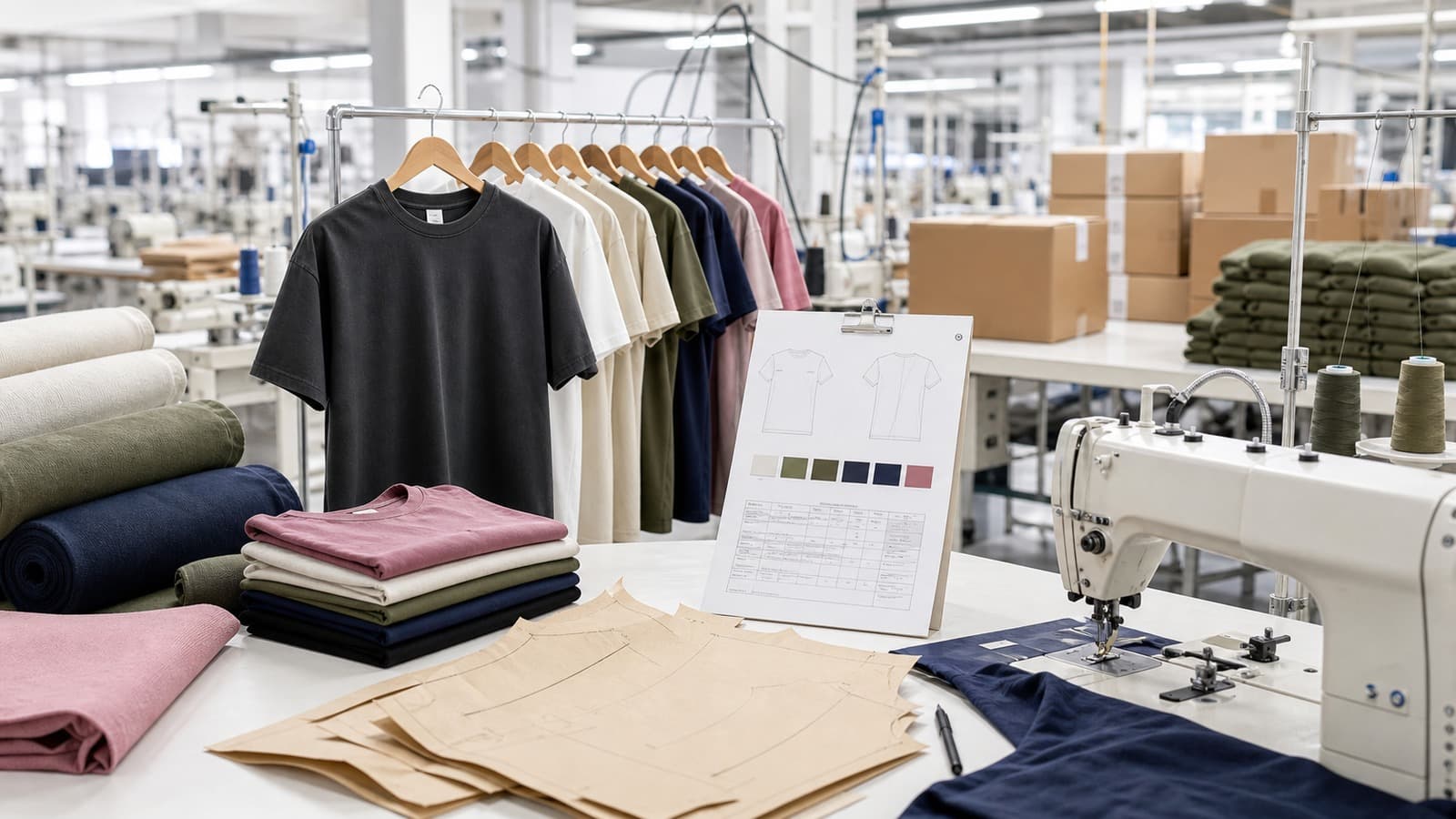
The correct sample test recreates the product promise closely enough to reveal a real decision. For hybrid training apparel, wearers can run, squat, lunge, carry, pull, and move to and from the floor while checking heat, movement restriction, waistband migration, pocket bounce, seam rub, coverage, and logo feel. For OCR apparel, add the obstacle-specific actions that the collection claims to support: climb, crawl, kneel, use a rope, move across uneven ground, and inspect the garment after damp or dirty use where that is relevant.
B2B production brief
What should a brand include when briefing a manufacturer for both segments?
Start with the collection plan: which pieces are shared, which products are specific to hybrid training or OCR, and which details are open. Then send the target athlete, training environment, reference images or samples, desired fabric behavior, fit direction, colors, size range, estimated quantity, logo files, labels, packing needs, destination market, and target launch timing. A reference image can establish direction, but it does not replace decisions about performance, construction, measurements, branding, or approval criteria.
inPACE Sports can review this information as part of a custom activewear development discussion. Use the custom activewear product route to assess customization options and the ordering process to organize the next steps. Fabric availability, colorways, logo and packaging requirements, style complexity, and quantity can all change the sample and quotation route, so it is better to make those assumptions visible early.
If the brand is building an outdoor obstacle capsule rather than only comparing scenarios, continue with the private-label OCR apparel collection guide for assortment, branding, sample, and replenishment planning.
Commercial alignment
Which commercial decisions should stay separate from the performance comparison?
Product performance is only one part of a buyer's decision. A brand also needs to decide whether the two segments will share the same color story, retail price direction, logo scale, packaging, size range, and replenishment plan. A collection can use one visual language while still assigning different product roles to its training and OCR pieces. For example, a core tee might carry the same brand mark across the range, while a more exposed outdoor layer needs its own color, coverage, or trim discussion. The purpose is not to multiply SKUs without reason; it is to avoid hiding a meaningful product difference inside a generic style name.
Keep the commercial assumptions visible in the same document as the product assumptions. Note which styles are expected to be repeatable core items, which are small test capsules, which colorways are essential, and which branding or packing details cannot change after approval. This gives a buyer a cleaner basis for comparing factory discussions. It also prevents a sample that solves a movement issue from being mistaken for approval of every label, logo, packaging, size, or order-planning decision.
Trademark clarity
HYROX is a registered trademark of its respective owner. It is referenced here only to describe a popular hybrid-training and race-preparation context. inPACE is not affiliated with or endorsed by HYROX.
Next step
Choose the product route before asking for a production quote
The strongest comparison is not “which category is better.” It is which conditions the product must genuinely handle, and which details a factory should review before the brand invests in a sample. A clear brief makes it easier to choose a compact shared collection, identify the styles that need a separate OCR direction, and compare manufacturing discussions on the same assumptions.
Discuss your product-development briefLong-form buyer framework
How can a buyer turn this research into a production-ready decision?
The central task in comparing HYROX training apparel with OCR apparel is deciding which product requirements can share a performance-activewear foundation and which need separate material, construction, fit, and test briefs. That decision cannot be made from a headline price, a product photo, or a general statement about customization. It needs a record that connects the commercial goal to the garment, material, fit, construction, branding, quantity, quality checks, packing, and destination. When those elements are visible together, a buyer can ask more precise questions and a factory can explain the route without pretending that open details are already confirmed.
The purpose of the framework below is not to turn a brand founder or buyer into a garment technician. It is to make responsibility and evidence clear. The buyer defines the customer and business need, shares what is known, and identifies the decisions that matter. The factory should separate indoor hybrid-training assumptions from outdoor obstacle exposure before proposing fabrics, construction, trims, or sample tests. Both sides then record what was reviewed, what remains conditional, what must be approved physically, and what information will guide production or a later repeat order.
Separate environments before products
Indoor running and functional stations create a different exposure profile from outdoor distance, mud, water, weather, ground contact, walls, ropes, and vegetation.
For this decision, the buyer should state the intended result, provide the closest available evidence, and identify what is flexible. The supplier can then explain the product or process implications and flag any dependency on fabric availability, colour, construction, logo method, components, quantity, or packing. A useful response distinguishes a recommendation from a confirmed production instruction and says what would need to be reviewed through a sample or another approval step.
Record the outcome inside a two-column development matrix showing shared garment roles, different environments, risk points, sample questions, branding, and production decisions. Include the date, relevant file or sample, the person responsible for the next action, and the status of the decision. If a later change affects fit, material, workmanship, branding, assortment, or delivery preparation, return to this record and identify which related approvals need to be checked again. This prevents a local change from creating an unnoticed downstream inconsistency.
Compare garment roles one by one
A tee, short, legging, sports bra, compression layer, and warm-up piece may appear in both programmes but require different priorities.
For this decision, the buyer should state the intended result, provide the closest available evidence, and identify what is flexible. The supplier can then explain the product or process implications and flag any dependency on fabric availability, colour, construction, logo method, components, quantity, or packing. A useful response distinguishes a recommendation from a confirmed production instruction and says what would need to be reviewed through a sample or another approval step.
Record the outcome inside a two-column development matrix showing shared garment roles, different environments, risk points, sample questions, branding, and production decisions. Include the date, relevant file or sample, the person responsible for the next action, and the status of the decision. If a later change affects fit, material, workmanship, branding, assortment, or delivery preparation, return to this record and identify which related approvals need to be checked again. This prevents a local change from creating an unnoticed downstream inconsistency.
Use different material questions
Hybrid training may emphasise heat, dry feel, stretch, and repeated transitions while OCR adds surface contact, snag, water retention, and outdoor exposure.
For this decision, the buyer should state the intended result, provide the closest available evidence, and identify what is flexible. The supplier can then explain the product or process implications and flag any dependency on fabric availability, colour, construction, logo method, components, quantity, or packing. A useful response distinguishes a recommendation from a confirmed production instruction and says what would need to be reviewed through a sample or another approval step.
Record the outcome inside a two-column development matrix showing shared garment roles, different environments, risk points, sample questions, branding, and production decisions. Include the date, relevant file or sample, the person responsible for the next action, and the status of the decision. If a later change affects fit, material, workmanship, branding, assortment, or delivery preparation, return to this record and identify which related approvals need to be checked again. This prevents a local change from creating an unnoticed downstream inconsistency.
Adjust construction to contact
Seam position, pocket opening, zipper, reinforcement, binding, elastic, and trim exposure need separate review where obstacles or ground contact are expected.
For this decision, the buyer should state the intended result, provide the closest available evidence, and identify what is flexible. The supplier can then explain the product or process implications and flag any dependency on fabric availability, colour, construction, logo method, components, quantity, or packing. A useful response distinguishes a recommendation from a confirmed production instruction and says what would need to be reviewed through a sample or another approval step.
Record the outcome inside a two-column development matrix showing shared garment roles, different environments, risk points, sample questions, branding, and production decisions. Include the date, relevant file or sample, the person responsible for the next action, and the status of the decision. If a later change affects fit, material, workmanship, branding, assortment, or delivery preparation, return to this record and identify which related approvals need to be checked again. This prevents a local change from creating an unnoticed downstream inconsistency.
Evaluate fit under different loads
Sleds, carries, lunges, climbing, crawling, wet garments, and long outdoor sessions create different waistband, hem, strap, and mobility questions.
For this decision, the buyer should state the intended result, provide the closest available evidence, and identify what is flexible. The supplier can then explain the product or process implications and flag any dependency on fabric availability, colour, construction, logo method, components, quantity, or packing. A useful response distinguishes a recommendation from a confirmed production instruction and says what would need to be reviewed through a sample or another approval step.
Record the outcome inside a two-column development matrix showing shared garment roles, different environments, risk points, sample questions, branding, and production decisions. Include the date, relevant file or sample, the person responsible for the next action, and the status of the decision. If a later change affects fit, material, workmanship, branding, assortment, or delivery preparation, return to this record and identify which related approvals need to be checked again. This prevents a local change from creating an unnoticed downstream inconsistency.
Design distinct sample tests
A gym wear trial cannot answer every outdoor question, and an OCR trial may not reveal repeat indoor heat and transition issues in the same way.
For this decision, the buyer should state the intended result, provide the closest available evidence, and identify what is flexible. The supplier can then explain the product or process implications and flag any dependency on fabric availability, colour, construction, logo method, components, quantity, or packing. A useful response distinguishes a recommendation from a confirmed production instruction and says what would need to be reviewed through a sample or another approval step.
Record the outcome inside a two-column development matrix showing shared garment roles, different environments, risk points, sample questions, branding, and production decisions. Include the date, relevant file or sample, the person responsible for the next action, and the status of the decision. If a later change affects fit, material, workmanship, branding, assortment, or delivery preparation, return to this record and identify which related approvals need to be checked again. This prevents a local change from creating an unnoticed downstream inconsistency.
Keep brand identity while changing execution
Logo hierarchy, labels, colours, and collection presentation can stay coherent even when materials, placements, trims, or packing differ by programme.
For this decision, the buyer should state the intended result, provide the closest available evidence, and identify what is flexible. The supplier can then explain the product or process implications and flag any dependency on fabric availability, colour, construction, logo method, components, quantity, or packing. A useful response distinguishes a recommendation from a confirmed production instruction and says what would need to be reviewed through a sample or another approval step.
Record the outcome inside a two-column development matrix showing shared garment roles, different environments, risk points, sample questions, branding, and production decisions. Include the date, relevant file or sample, the person responsible for the next action, and the status of the decision. If a later change affects fit, material, workmanship, branding, assortment, or delivery preparation, return to this record and identify which related approvals need to be checked again. This prevents a local change from creating an unnoticed downstream inconsistency.
Buyer scenarios
How does the decision change in common sourcing situations?
Real projects rarely arrive with every detail complete. The useful question is not whether the brief is perfect; it is whether the missing information is visible and whether the next step will produce evidence. These scenarios show how a buyer can keep comparing HYROX training apparel with OCR apparel practical without converting early assumptions into promises.
The buyer has a direction but incomplete technical files
Start with the product role, target customer, intended use, reference material, and the decisions already made. Mark missing measurements, fabric, artwork, or packing details as open questions. The supplier response should show what can be reviewed immediately, what needs a sample, and what information is required before the route becomes more specific.
Apply the scenario to which product requirements can share a performance-activewear foundation and which need separate material, construction, fit, and test briefs. Note what can be accepted as direction, what requires factory review, and what must become part of a two-column development matrix showing shared garment roles, different environments, risk points, sample questions, branding, and production decisions before the buyer compares suppliers or approves the next stage.
A catalogue reference is close but not exact
List the features that already work and separate brand presentation from garment changes. A logo, label, hangtag, or bag may stay within a catalogue-informed route, while a new fit, material, pattern, construction, or performance feature may require custom development. The decision should be based on the requested change, not a category label.
Apply the scenario to which product requirements can share a performance-activewear foundation and which need separate material, construction, fit, and test briefs. Note what can be accepted as direction, what requires factory review, and what must become part of a two-column development matrix showing shared garment roles, different environments, risk points, sample questions, branding, and production decisions before the buyer compares suppliers or approves the next stage.
The order contains several colours, sizes, and brand components
Create one assortment record by style, colour, and size, then connect every logo, label, barcode, bag, and carton instruction to the correct SKU. Ask which choices affect material planning, application methods, packing ratios, or quotation assumptions. This is where a simple-looking collection can become operationally complex.
Apply the scenario to which product requirements can share a performance-activewear foundation and which need separate material, construction, fit, and test briefs. Note what can be accepted as direction, what requires factory review, and what must become part of a two-column development matrix showing shared garment roles, different environments, risk points, sample questions, branding, and production decisions before the buyer compares suppliers or approves the next stage.
The programme is expected to repeat
Decide which approved records will be retained after shipment and which changes should trigger a new sample. Product specifications, material and colour references, artwork, placement, labels, packing, QC notes, and prior order data make later replenishment more controlled. A reorder should not depend on memory or an old message thread.
Apply the scenario to which product requirements can share a performance-activewear foundation and which need separate material, construction, fit, and test briefs. Note what can be accepted as direction, what requires factory review, and what must become part of a two-column development matrix showing shared garment roles, different environments, risk points, sample questions, branding, and production decisions before the buyer compares suppliers or approves the next stage.
Relevant product directions
Which products can make the next brief more concrete?
Use these product pages to identify a silhouette or collection direction, then state what should remain, change, or be reviewed. Product images are useful references, but fabric, fit, construction, colour, branding, quantity, and packing still require project-specific confirmation.
Activewear Performance Collection
Compare existing training sets, sports bras, and performance silhouettes before defining fabric, branding, and order requirements.
View product directionZip-Neck Sculpt Set
Use a close-fit training set to compare indoor performance priorities with the modifications required for outdoor obstacle exposure.
View product directionCustom Activewear Development
Move into a custom route when environment-specific fit, material, construction, pocket, or trim decisions change the garment.
View product directionDecision record
Which evidence should the buyer request and retain?
The table turns the article's key questions into a working review format. It is intentionally broader than a unit-price comparison because a complete activewear programme includes product, material, sample, branding, packing, and delivery assumptions.
| Decision area | Buyer evidence | Factory review | Record before approval |
|---|---|---|---|
| Separate environments before products | Reference, requirement, intended result, and any non-negotiable constraint. | Feasibility, dependencies, assumptions, sample need, and effect on connected decisions. | Approved reference, open issue, owner, date, and the next checkpoint. |
| Compare garment roles one by one | Reference, requirement, intended result, and any non-negotiable constraint. | Feasibility, dependencies, assumptions, sample need, and effect on connected decisions. | Approved reference, open issue, owner, date, and the next checkpoint. |
| Use different material questions | Reference, requirement, intended result, and any non-negotiable constraint. | Feasibility, dependencies, assumptions, sample need, and effect on connected decisions. | Approved reference, open issue, owner, date, and the next checkpoint. |
| Adjust construction to contact | Reference, requirement, intended result, and any non-negotiable constraint. | Feasibility, dependencies, assumptions, sample need, and effect on connected decisions. | Approved reference, open issue, owner, date, and the next checkpoint. |
| Evaluate fit under different loads | Reference, requirement, intended result, and any non-negotiable constraint. | Feasibility, dependencies, assumptions, sample need, and effect on connected decisions. | Approved reference, open issue, owner, date, and the next checkpoint. |
| Design distinct sample tests | Reference, requirement, intended result, and any non-negotiable constraint. | Feasibility, dependencies, assumptions, sample need, and effect on connected decisions. | Approved reference, open issue, owner, date, and the next checkpoint. |
| Keep brand identity while changing execution | Reference, requirement, intended result, and any non-negotiable constraint. | Feasibility, dependencies, assumptions, sample need, and effect on connected decisions. | Approved reference, open issue, owner, date, and the next checkpoint. |
Buyer checklist
What should be ready before the next factory conversation?
A buyer can begin even when some boxes remain open. Label them clearly and ask what evidence would close them. That approach is more useful than hiding uncertainty or waiting for an impossible level of perfection. It also makes a supplier's reasoning easier to evaluate: the response should identify connected decisions and explain why a sample, component approval, revised brief, or packing record is needed.
Continue the buyer journey
Keep the next step tied to the product decision
Continue with specify OCR apparel for brands when that question is adjacent to the current decision. If the project is ready for factory review, send the product type, reference, material and fit priorities, branding scope, estimated quantity, packing needs, and destination market. inPACE Sports can then discuss whether the next step is product selection, private-label review, custom development, sampling, or a more complete quotation brief.
State what is confirmed, flexible, and still open for factory guidance.
Ask how decisions move into sampling, production, QC, and packing.
Retain the approval and receiving records needed for shipment and reorders.