
Commencez par l'environnement
Pourquoi les vêtements de l'OCR ont-ils besoin de son propre mémoire de développement B2B?
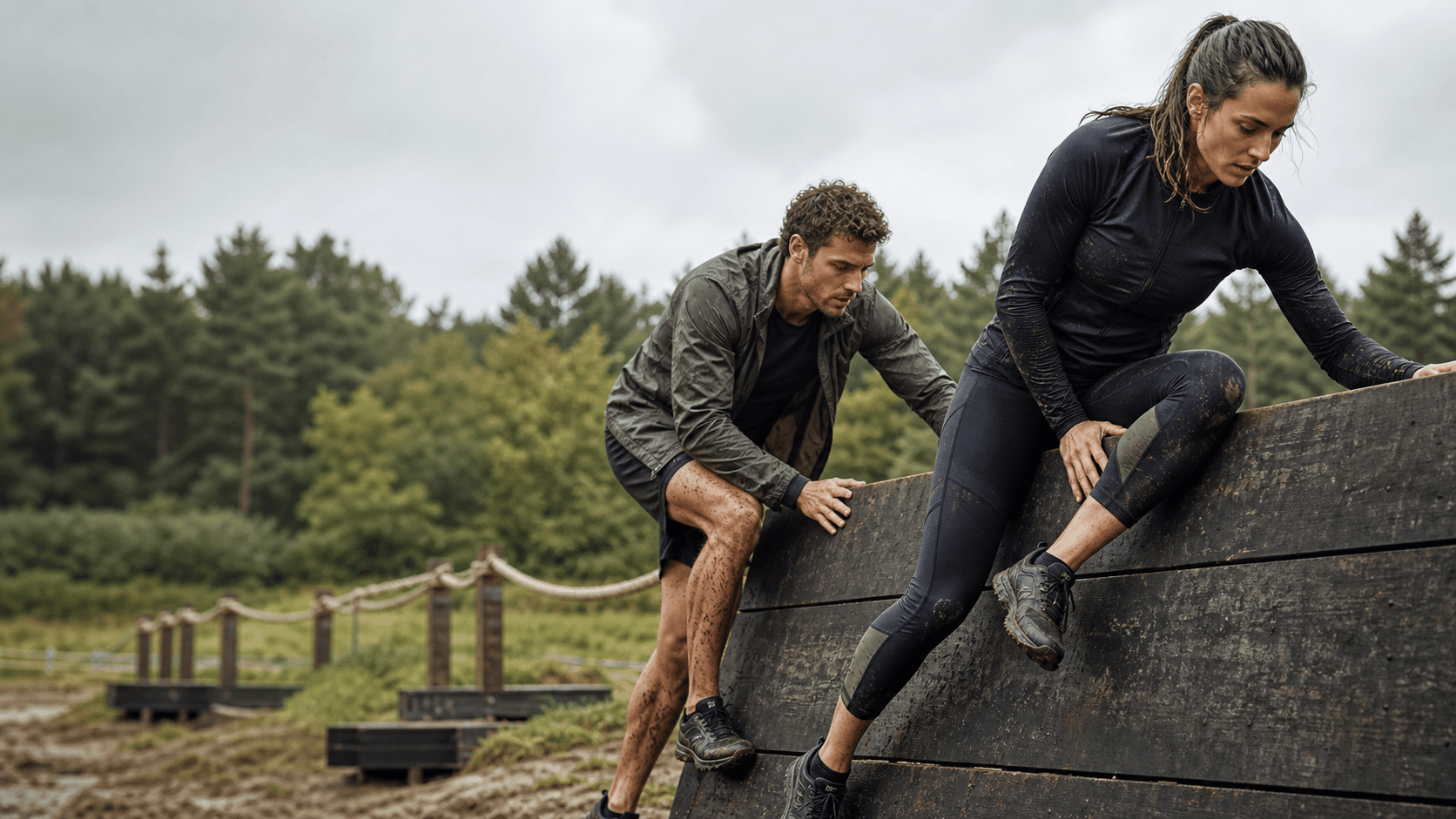
Un cours extérieur peut ajouter de la boue, du sol mouillé, des changements de température, des cordes, des murs, des rampes, des porte-corps et un contact répété avec les surfaces. Ces conditions changent ce qu'un acheteur devrait demander d'un court, legging, haut, soutien-gorge, couche de réchauffage, ou un kit d'équipe. Un bref utile identifie l'environnement réel avant qu'une usine recommande le tissu ou la construction.
Les marques des deux segments peuvent construire des collections adjacentes, mais elles ne doivent pas traiter toutes les exigences comme identiques. Guide de l'acheteur de vêtements de formation HYROX Le développement de la ROC ajoute des risques d'exposition à l'extérieur et de contact avec les obstacles, c'est pourquoi un acheteur devrait séparer les deux cas d'utilisation dans un mémoire produit. solution de développement de vêtements de course hybrides.
Si une équipe d'achat décide si les produits peuvent partager une route de collecte, utilisez le Comparaison des vêtements d'entraînement HYROX vs OCR examiner côte à côte les différences entre les matériaux, les constructions et les essais d'échantillons.
Champ d'application du produit
Que devraient demander les acheteurs à un fabricant de vêtements de l'OCR?
Une première collection OCR n'a pas besoin de toutes les catégories de vêtements. Elle a besoin d'un petit système cohérent adapté à l'athlète de l'acheteur, climat, canal de détail, et la direction des prix. Les tee-shirts techniques ou manches longues peuvent prioriser le mouvement et la couverture. Les shorts ou les leggings peuvent s'occuper de la course, des agenouillages et de la stabilité.
Les produits de formation existants peuvent donner à une marque un point de départ raisonnable. revoir les styles de performance actifwear pour les ensembles d'entraînement, les soutiens-gorge et les directions personnalisées de logo, puis décider quels changements sont nécessaires pour un environnement d'obstacle extérieur. page de fabrication de port de gym sur mesure comparer les catégories d'entraînement quotidien avec le mémoire plus spécialisé de l'OCR.
Terrain et contact
Carte ramper, escalader, porter, contact mural, genoux au sol, et tout point où le tissu ou une garniture peut attraper, frotter ou porter tôt.
Eau et sol
Décidez comment le produit doit se sentir après la pluie, les éclaboussures, la sueur ou l'exposition à la boue.
Aire météorologique
Précisez si la collection est pour des conditions chaudes, des démarrages frais, des conditions météorologiques variables ou une fenêtre d'événement étroite avant de choisir une coquille, une couche ou un poids de tissu.
Répéter l' utilisation
Décrivez la fréquence de formation prévue, la routine de lavage, l'utilisation du logo et la position au détail, de sorte que les commentaires d'échantillons puissent se concentrer sur les risques qui comptent pour le programme.
Tissu et construction
Quels sont les matériaux et les détails de construction à préciser?
Un acheteur devrait expliquer le comportement attendu de chaque vêtement: sèche rapide après la sueur ou l'éclaboussure, une ceinture stable après un parcours, une couverture pendant les squats et le rampage, une friction réduite aux points de contact élevés, ou une couche légère qui peut être enlevée facilement. L'usine peut ensuite discuter des itinéraires pratiques autour du poids du tissu, stretch et récupération, texture de surface, utilisation de mailles, doublure, type de couture, méthode de logo, disponibilité des couleurs, et faisabilité de l'échantillon.
Une couture qui fonctionne sur un legging de studio propre peut être mal placée pour les genoux sur le sol. La maille exposée peut améliorer la ventilation, mais peut ne pas être adaptée à chaque zone d'abrasion. Une poche, cordon de serrage, fermeture à glissière, logo en silicone, ou détail matériel doit être jugée par la façon dont il se comporte en courant, escalade, transport et lavage. tissus et garnitures aperçu pour commencer une conversation matérielle, puis enregistrer les exigences spécifiques du vêtement dans le mémoire d'échantillon plutôt que de supposer qu'un tissu peut servir chaque UGS.
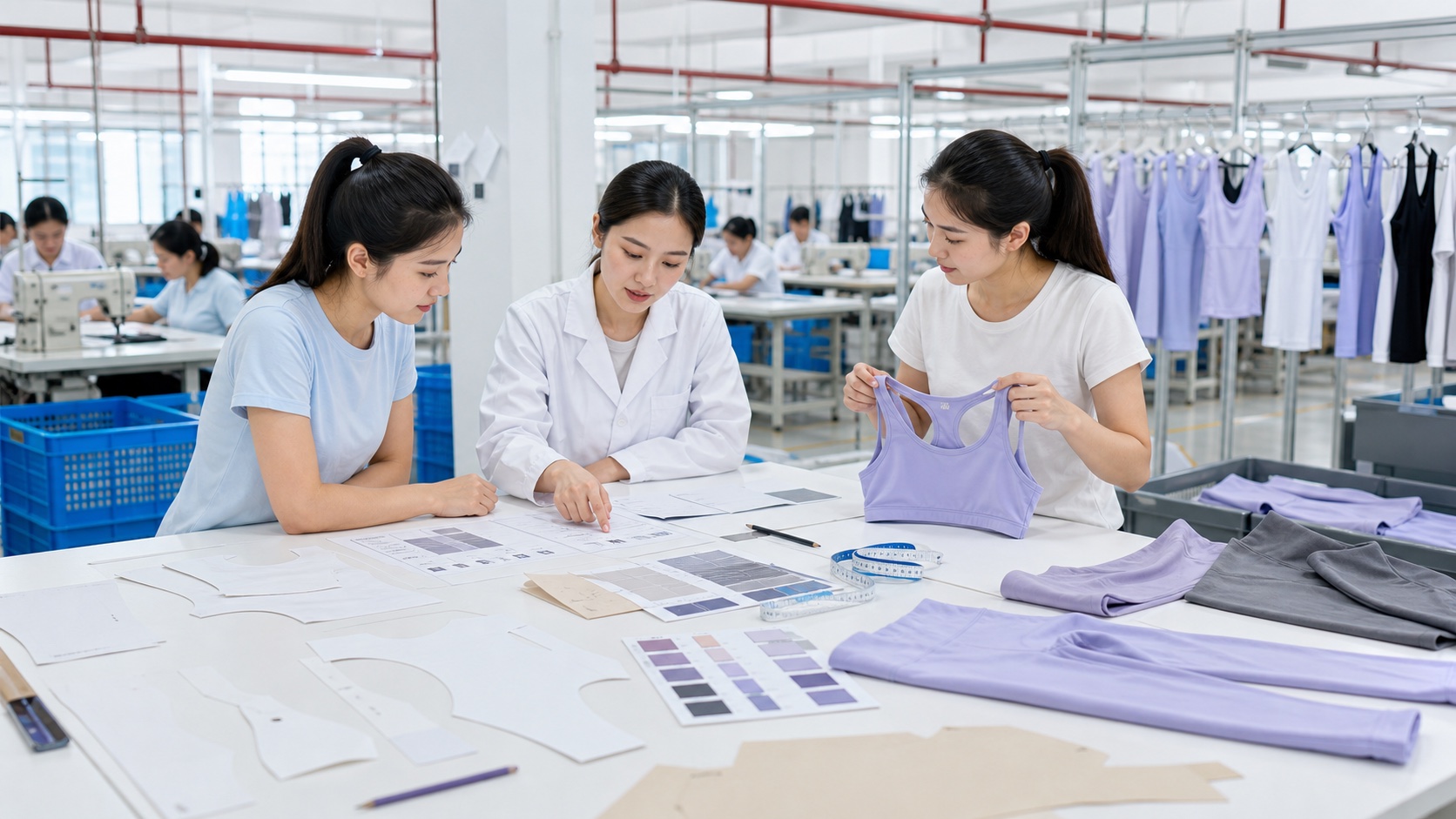
Les commentaires de l'échantillon du ROC sont les plus utiles lorsqu'ils identifient l'environnement, les points de contact et le comportement du vêtement à examiner.
Slip de l'acheteur / tableau des spécifications
Utilisez un porte-vêtement OCR pour relier l'obstacle, le détail du produit et l'échantillon d'essai
Ce tableau aide une marque à transformer une large demande de vêtements de course sur mesure en questions spécifiques qu'une équipe de développement peut examiner. Ce n'est pas une spécification universelle; les choix finaux dépendent toujours du produit, du client, des conditions et du plan d'approvisionnement.
| Cas d'utilisation ou exposition | Détails à préciser | Quoi faire dans l'échantillon? |
|---|---|---|
| Courir plus les obstacles | Longueur du haut, stabilité de la ceinture, étanchéité courte, sécurité de la poche, position du cordon de serrage | Courir, monter, transporter et passer de debout au sol sans déplacement excessif ou rebondissement. |
| Mouche, sol humide et éclaboussures | Poids du tissu, texture de surface, doublure, sensation sèche, comportement de couleur | Un tissu peut être confortable à l'intérieur, mais se sentir lourd, collant, ou transparent quand humide ou sale. |
| Crawling et contact mural | Zones de genou et de siège, emplacement de la couture, maille exposée, emplacement de la garniture | Ces zones subissent un risque d'abrasion et de snag qu'un mémoire standard de studio ne soit pas capturé. |
| Corde, adhérence et escalade | Couverture des manches et des jambes, forme de poche, matériel, position du logo | Des détails et des garnitures rigides peuvent interférer avec le mouvement ou devenir visibles sous le contact. |
| Départ et fin en plein air | Couche chauffante, ventilation, détails de visibilité, empaquetabilité | L'acheteur peut décider si une couche est un SKU séparé, une option météorologique, ou pas du tout nécessaire. |
| Programme de label privé | Méthode logo, étiquettes, colorways, gamme de tailles, emballage, intention de réapprovisionnement | L'usine a besoin de ces détails commerciaux pour discuter d'un itinéraire répétable plutôt que d'un échantillon unique. |
Essais d'échantillons
Comment un échantillon de vêtements du ROC devrait-il être testé avant la production en vrac?
Une approbation visuelle ne suffit pas pour un programme OCR. Le porteur doit utiliser l'échantillon dans des conditions proches de la promesse de produit prévue: courir, grimper, ramper, transporter, tirer, agenouiller et se déplacer quand il est chaud ou humide, le cas échéant. Enregistrer ce qui se passe pour s'adapter, ourlets, ceintures, poches, coutures, couverture, logo feel, et panneaux exposés. L'objectif n'est pas de créer un test de laboratoire pour chaque style. C'est d'identifier les risques pratiques qu'un acheteur préférerait résoudre avant la planification de production.
Confirmer l'environnement d'entraînement et les contacts ou obstacles que le vêtement doit manipuler.Séparer le mouvement et le confort des commentaires de couleur, logo, étiquette et emballage.Utilisez des photos et des notes concises pour montrer où une couture, un ourlet, une poche ou une garniture doit être revue.Vérifiez le produit après l'usure et le lavage lorsque le comportement à l'utilisation répétée compte pour le programme.Confirmer quels commentaires sont essentiels pour le prochain échantillon et quels choix restent ouverts.Approuver l'ajustement final, la marque, l'étiquette, l'emballage, le rapport de taille et la référence de production avant la planification du vrac.
Du concept à la citation
Qu'est-ce qu'une marque devrait envoyer pour une discussion sur la soumission de vêtements OCR?
Envoyer le type de produit, l'environnement de formation ou d'événement prévu, les images de référence ou les échantillons, les priorités de tissu, la taille cible, les colorways, les unités estimées, les fichiers de logo, les étiquettes, les exigences d'emballage, le marché de livraison et le calendrier de lancement cible. Si le matériel, la quantité exacte ou la construction est encore ouverte, dites-le. Cela permet au fabricant d'expliquer les compromis et les hypothèses de cotation au lieu de traiter une discussion préliminaire comme un engagement de production fixe.
inPACE Sports peut examiner un mémoire orienté OCR à côté de la route plus large de développement de vêtements de sport sur mesure. explorer les options de vêtements de sport sur mesure pour le contexte de produit et de marque privée, puis utilisation le processus de commande La disponibilité du tissu, les couleurs, les exigences de logo et d'emballage, la complexité du style et la quantité affectent tous ce qui peut être confirmé ensuite.
Les acheteurs qui planifient une capsule de marque peuvent également utiliser la guide de collection de vêtements de marque privée OCR relier les rôles des produits aux étiquettes, aux emballages, aux essais d'échantillons et à une discussion future sur la reconstitution.
Limpidité des marques
HYROX est une marque déposée de son propriétaire respectif. inPACE n'est pas affiliée à HYROX ou endossée par celle-ci.
Prochaine étape
Construisez une fiche produit OCR autour des conditions auxquelles votre client est réellement confronté
Les vêtements puissants de l'OCR ne sont pas définis par un graphique à thème d'obstacle. Il est défini par une promesse de produit spécifique qui relie l'athlète, l'environnement, le rôle du vêtement, le comportement matériel, les détails de construction, et l'examen d'échantillon. Commencez par un petit groupe de styles pertinents et rendre visible les hypothèses extérieures.
Discutez de votre brief sur les vêtements de l'OCR
Cadre d'acheteurs de longue durée
Comment un acheteur peut-il transformer cette recherche en une décision prête à la production?
La tâche centrale dans spécifiant les vêtements OCR pour l'entraînement à l'obstacle extérieur décide comment les rôles, les matériaux, l'ajustement, la construction, les poches, la marque et les tests d'échantillonnage répondent à l'exposition extérieure, le contact avec le sol, l'escalade et l'humidité répétéeCette décision ne peut être prise à partir d'un prix global, d'une photo de produit ou d'une déclaration générale sur la personnalisation. Il faut un dossier qui relie l'objectif commercial au vêtement, au matériau, à l'ajustement, à la construction, à la marque, à la quantité, aux contrôles de qualité, à l'emballage et à la destination. Lorsque ces éléments sont visibles ensemble, un acheteur peut poser des questions plus précises et une usine peut expliquer le parcours sans prétendre que les détails ouverts sont déjà confirmés.
L'objectif du cadre ci-dessous n'est pas de transformer un fondateur de marque ou un acheteur en un technicien en vêtements. Il est de rendre la responsabilité et la preuve claires. L'acheteur définit les besoins du client et de l'entreprise, partage ce qui est connu, et identifie les décisions qui importent. examiner les risques spécifiques au produit sans impliquer des allégations universelles d'abrasion, de météo ou de performance qui n'ont pas été testées. Les deux parties enregistrent ensuite ce qui a été examiné, ce qui reste conditionnel, ce qui doit être approuvé physiquement, et quelles informations guideront la production ou une nouvelle commande ultérieure.
1
Cartographier l'environnement réel de l'OCR
Distance, temps, température, boue, eau, végétation, contact avec le sol, cordes, murs, porte-pièces et fréquence d'entraînement changent le brief produit.
Dans le cadre de cette décision, l'acheteur doit indiquer le résultat escompté, fournir les éléments de preuve les plus proches disponibles et identifier ce qui est flexible. Le fournisseur peut alors expliquer les implications du produit ou du procédé et signaler toute dépendance à l'égard de la disponibilité du tissu, de la couleur, de la construction, de la méthode du logo, des composants, de la quantité ou de l'emballage.
Enregistrez le résultat à l'intérieur un sommaire du produit OCR et un registre d'essai reliant chaque vêtement à l'environnement, au contact d'obstacles, au matériau, à la construction, à l'ajustement, à la marque, aux observations de dommages et à l'état d'approbation. Inclure la date, le dossier ou l'échantillon pertinent, la personne responsable de la prochaine mesure et l'état de la décision. Si un changement ultérieur affecte l'ajustement, le matériel, l'exécution, la marque, l'assortiment ou la préparation de la livraison, retourner à ce dossier et déterminer quelles approbations connexes doivent être vérifiées à nouveau.
2
Priorité au contact et au comportement de surface
La face du tissu, le risque de snag, l'exposition à l'abrasion, la rétention d'eau, la direction de séchage, l'opacité et la récupération doivent être discutés pour chaque vêtement et environnement.
Dans le cadre de cette décision, l'acheteur doit indiquer le résultat escompté, fournir les éléments de preuve les plus proches disponibles et identifier ce qui est flexible. Le fournisseur peut alors expliquer les implications du produit ou du procédé et signaler toute dépendance à l'égard de la disponibilité du tissu, de la couleur, de la construction, de la méthode du logo, des composants, de la quantité ou de l'emballage.
Enregistrez le résultat à l'intérieur un sommaire du produit OCR et un registre d'essai reliant chaque vêtement à l'environnement, au contact d'obstacles, au matériau, à la construction, à l'ajustement, à la marque, aux observations de dommages et à l'état d'approbation. Inclure la date, le dossier ou l'échantillon pertinent, la personne responsable de la prochaine mesure et l'état de la décision. Si un changement ultérieur affecte l'ajustement, le matériel, l'exécution, la marque, l'assortiment ou la préparation de la livraison, retourner à ce dossier et déterminer quelles approbations connexes doivent être vérifiées à nouveau.
3
Contrôler l'ajustement lorsque le vêtement est mouillé
La stabilité de la bande de brassage, le mouvement de l'ourlet, la sécurité de la sangle, l'encolure, la position de la poche et l'excès de tissu peuvent se comporter différemment après l'humidité et le contact d'obstacle répété.
Dans le cadre de cette décision, l'acheteur doit indiquer le résultat escompté, fournir les éléments de preuve les plus proches disponibles et identifier ce qui est flexible. Le fournisseur peut alors expliquer les implications du produit ou du procédé et signaler toute dépendance à l'égard de la disponibilité du tissu, de la couleur, de la construction, de la méthode du logo, des composants, de la quantité ou de l'emballage.
Enregistrez le résultat à l'intérieur un sommaire du produit OCR et un registre d'essai reliant chaque vêtement à l'environnement, au contact d'obstacles, au matériau, à la construction, à l'ajustement, à la marque, aux observations de dommages et à l'état d'approbation. Inclure la date, le dossier ou l'échantillon pertinent, la personne responsable de la prochaine mesure et l'état de la décision. Si un changement ultérieur affecte l'ajustement, le matériel, l'exécution, la marque, l'assortiment ou la préparation de la livraison, retourner à ce dossier et déterminer quelles approbations connexes doivent être vérifiées à nouveau.
4
Placer les coutures à l'écart de la friction prévisible
Les mouvements au sol, le contact harnais ou gilet, les cordes, les murs et les flexions répétées peuvent rendre les coutures et les garnitures inconfortables par ailleurs.
Dans le cadre de cette décision, l'acheteur doit indiquer le résultat escompté, fournir les éléments de preuve les plus proches disponibles et identifier ce qui est flexible. Le fournisseur peut alors expliquer les implications du produit ou du procédé et signaler toute dépendance à l'égard de la disponibilité du tissu, de la couleur, de la construction, de la méthode du logo, des composants, de la quantité ou de l'emballage.
Enregistrez le résultat à l'intérieur un sommaire du produit OCR et un registre d'essai reliant chaque vêtement à l'environnement, au contact d'obstacles, au matériau, à la construction, à l'ajustement, à la marque, aux observations de dommages et à l'état d'approbation. Inclure la date, le dossier ou l'échantillon pertinent, la personne responsable de la prochaine mesure et l'état de la décision. Si un changement ultérieur affecte l'ajustement, le matériel, l'exécution, la marque, l'assortiment ou la préparation de la livraison, retourner à ce dossier et déterminer quelles approbations connexes doivent être vérifiées à nouveau.
5
Traiter les poches et les garnitures comme des points de risque
Ouverture de poche, fermeture à glissière, cordon, puller, marque réfléchissante, détails de silicone, et placement d'étiquettes ont besoin d'être examinés pour la sécurité, le collage, le confort et le drainage.
Dans le cadre de cette décision, l'acheteur doit indiquer le résultat escompté, fournir les éléments de preuve les plus proches disponibles et identifier ce qui est flexible. Le fournisseur peut alors expliquer les implications du produit ou du procédé et signaler toute dépendance à l'égard de la disponibilité du tissu, de la couleur, de la construction, de la méthode du logo, des composants, de la quantité ou de l'emballage.
Enregistrez le résultat à l'intérieur un sommaire du produit OCR et un registre d'essai reliant chaque vêtement à l'environnement, au contact d'obstacles, au matériau, à la construction, à l'ajustement, à la marque, aux observations de dommages et à l'état d'approbation. Inclure la date, le dossier ou l'échantillon pertinent, la personne responsable de la prochaine mesure et l'état de la décision. Si un changement ultérieur affecte l'ajustement, le matériel, l'exécution, la marque, l'assortiment ou la préparation de la livraison, retourner à ce dossier et déterminer quelles approbations connexes doivent être vérifiées à nouveau.
6
Utiliser des méthodes de marquage qui conviennent à la surface
Les détails de l'artwork, l'étirement, la texture, l'exposition à la boue, le placement, le toucher des mains et l'attente de lavage devraient guider la conversation de l'échantillon.
Dans le cadre de cette décision, l'acheteur doit indiquer le résultat escompté, fournir les éléments de preuve les plus proches disponibles et identifier ce qui est flexible. Le fournisseur peut alors expliquer les implications du produit ou du procédé et signaler toute dépendance à l'égard de la disponibilité du tissu, de la couleur, de la construction, de la méthode du logo, des composants, de la quantité ou de l'emballage.
Enregistrez le résultat à l'intérieur un sommaire du produit OCR et un registre d'essai reliant chaque vêtement à l'environnement, au contact d'obstacles, au matériau, à la construction, à l'ajustement, à la marque, aux observations de dommages et à l'état d'approbation. Inclure la date, le dossier ou l'échantillon pertinent, la personne responsable de la prochaine mesure et l'état de la décision. Si un changement ultérieur affecte l'ajustement, le matériel, l'exécution, la marque, l'assortiment ou la préparation de la livraison, retourner à ce dossier et déterminer quelles approbations connexes doivent être vérifiées à nouveau.
7
Enregistrer des essais d'échantillons réalistes
L'acheteur devrait documenter l'activité, la durée, les conditions, la taille du vêtement, les observations, les dommages, le confort et les modifications demandées sans présenter des essais d'usure informels comme certification.
Dans le cadre de cette décision, l'acheteur doit indiquer le résultat escompté, fournir les éléments de preuve les plus proches disponibles et identifier ce qui est flexible. Le fournisseur peut alors expliquer les implications du produit ou du procédé et signaler toute dépendance à l'égard de la disponibilité du tissu, de la couleur, de la construction, de la méthode du logo, des composants, de la quantité ou de l'emballage.
Enregistrez le résultat à l'intérieur un sommaire du produit OCR et un registre d'essai reliant chaque vêtement à l'environnement, au contact d'obstacles, au matériau, à la construction, à l'ajustement, à la marque, aux observations de dommages et à l'état d'approbation. Inclure la date, le dossier ou l'échantillon pertinent, la personne responsable de la prochaine mesure et l'état de la décision. Si un changement ultérieur affecte l'ajustement, le matériel, l'exécution, la marque, l'assortiment ou la préparation de la livraison, retourner à ce dossier et déterminer quelles approbations connexes doivent être vérifiées à nouveau.
Scénarios d'achat
Comment la décision change-t-elle dans les situations d'approvisionnement courantes?
La question n'est pas de savoir si le mémoire est parfait; c'est de savoir si les informations manquantes sont visibles et si la prochaine étape produira des preuves. spécifiant les vêtements OCR pour l'entraînement à l'obstacle extérieur pratique sans convertir des hypothèses précoces en promesses.
L'acheteur a une direction mais des dossiers techniques incomplets
Commencer par le rôle du produit, cibler le client, l'utilisation prévue, le matériel de référence et les décisions déjà prises. Marquer les mesures manquantes, le tissu, l'oeuvre d'art ou les détails d'emballage comme des questions ouvertes. La réponse du fournisseur doit montrer ce qui peut être examiné immédiatement, ce qui a besoin d'un échantillon et quelles informations sont nécessaires avant que l'itinéraire devienne plus précis.
Appliquer le scénario à comment les rôles, les matériaux, l'ajustement, la construction, les poches, la marque et les tests d'échantillonnage répondent à l'exposition extérieure, le contact avec le sol, l'escalade et l'humidité répétée. Noter ce qui peut être accepté comme direction, ce qui nécessite un examen de l'usine, et ce qui doit devenir une partie de un sommaire du produit OCR et un registre d'essai reliant chaque vêtement à l'environnement, au contact d'obstacles, au matériau, à la construction, à l'ajustement, à la marque, aux observations de dommages et à l'état d'approbation avant que l'acheteur ne compare les fournisseurs ou n'approuve l'étape suivante.
Une référence de catalogue est proche mais pas exacte
Énumérer les caractéristiques qui fonctionnent déjà et séparer la présentation de la marque des changements de vêtements. Un logo, une étiquette, un accroche-étiquette ou un sac peut rester dans un itinéraire éclairé par le catalogue, tandis qu'un nouvel ajustement, un matériau, un motif, une construction ou une caractéristique de performance peuvent nécessiter un développement personnalisé.
Appliquer le scénario à comment les rôles, les matériaux, l'ajustement, la construction, les poches, la marque et les tests d'échantillonnage répondent à l'exposition extérieure, le contact avec le sol, l'escalade et l'humidité répétée. Noter ce qui peut être accepté comme direction, ce qui nécessite un examen de l'usine, et ce qui doit devenir une partie de un sommaire du produit OCR et un registre d'essai reliant chaque vêtement à l'environnement, au contact d'obstacles, au matériau, à la construction, à l'ajustement, à la marque, aux observations de dommages et à l'état d'approbation avant que l'acheteur ne compare les fournisseurs ou n'approuve l'étape suivante.
La commande contient plusieurs couleurs, tailles et composants de marque
Créez un enregistrement d'assortiment selon le style, la couleur et la taille, puis connectez chaque logo, étiquette, code à barres, sac et instruction de carton au bon UGS. Demandez quels choix affectent la planification du matériel, les méthodes d'application, les rapports d'emballage ou les hypothèses de cotation.
Appliquer le scénario à comment les rôles, les matériaux, l'ajustement, la construction, les poches, la marque et les tests d'échantillonnage répondent à l'exposition extérieure, le contact avec le sol, l'escalade et l'humidité répétée. Noter ce qui peut être accepté comme direction, ce qui nécessite un examen de l'usine, et ce qui doit devenir une partie de un sommaire du produit OCR et un registre d'essai reliant chaque vêtement à l'environnement, au contact d'obstacles, au matériau, à la construction, à l'ajustement, à la marque, aux observations de dommages et à l'état d'approbation avant que l'acheteur ne compare les fournisseurs ou n'approuve l'étape suivante.
Le programme devrait se répéter.
Décider quels documents approuvés seront conservés après l'expédition et quels changements devraient déclencher un nouvel échantillon. Spécifications du produit, matériaux et références de couleur, artwork, placement, étiquettes, emballage, notes de QC, et données de commande préalable rendent plus contrôlée la reconstitution ultérieure.
Appliquer le scénario à comment les rôles, les matériaux, l'ajustement, la construction, les poches, la marque et les tests d'échantillonnage répondent à l'exposition extérieure, le contact avec le sol, l'escalade et l'humidité répétée. Noter ce qui peut être accepté comme direction, ce qui nécessite un examen de l'usine, et ce qui doit devenir une partie de un sommaire du produit OCR et un registre d'essai reliant chaque vêtement à l'environnement, au contact d'obstacles, au matériau, à la construction, à l'ajustement, à la marque, aux observations de dommages et à l'état d'approbation avant que l'acheteur ne compare les fournisseurs ou n'approuve l'étape suivante.
Instructions de produit pertinentes
Quels produits peuvent rendre le prochain bref plus concret?
Utilisez ces pages de produit pour identifier une silhouette ou une direction de collection, puis indiquez ce qui doit rester, changer ou être examiné. Les images de produit sont des références utiles, mais le tissu, l'ajustement, la construction, la couleur, la marque, la quantité et l'emballage nécessitent toujours une confirmation spécifique au projet.
Collection de performance vêtements de sport
Comparez les ensembles d'entraînement existants, les soutiens-gorge de sport et les silhouettes de performance avant de définir les exigences en matière de tissu, de marque et de commande.
Ensemble d'entraînement à capuchon
Utilisez un ensemble d'entraînement coordonné pour discuter de l'ajustement, de la direction des couleurs, de la position du logo, des étiquettes, de l'emballage et des enregistrements de répétition.
Catalogue Jogging & Printed vêtements de sport
Examiner les couches de formation, les directives imprimées, les options de couverture et les placements graphiques comme références pour un mémoire de produit du ROC.
Compte rendu des décisions
Quels éléments de preuve l'acheteur devrait-il demander et conserver?
Le tableau transforme les questions clés de l'article en un format d'examen de travail. Il est intentionnellement plus large qu'une comparaison de prix unitaire parce qu'un programme complet de vêtements de sport comprend des produits, matériaux, échantillon, marque, emballage et hypothèses de livraison.
| Domaine de décision | Preuves de l'acheteur | Révision en usine | Enregistrement avant l ' homologation |
|---|---|---|---|
| Cartographier l'environnement réel de l'OCR | Référence, exigence, résultat escompté et toute contrainte non négociable. | Faisabilité, dépendances, hypothèses, besoin d'échantillon et effet sur les décisions connexes. | Référence approuvée, numéro ouvert, propriétaire, date et prochain point de contrôle. |
| Priorité au contact et au comportement de surface | Référence, exigence, résultat escompté et toute contrainte non négociable. | Faisabilité, dépendances, hypothèses, besoin d'échantillon et effet sur les décisions connexes. | Référence approuvée, numéro ouvert, propriétaire, date et prochain point de contrôle. |
| Contrôler l'ajustement lorsque le vêtement est mouillé | Référence, exigence, résultat escompté et toute contrainte non négociable. | Faisabilité, dépendances, hypothèses, besoin d'échantillon et effet sur les décisions connexes. | Référence approuvée, numéro ouvert, propriétaire, date et prochain point de contrôle. |
| Placer les coutures à l'écart de la friction prévisible | Référence, exigence, résultat escompté et toute contrainte non négociable. | Faisabilité, dépendances, hypothèses, besoin d'échantillon et effet sur les décisions connexes. | Référence approuvée, numéro ouvert, propriétaire, date et prochain point de contrôle. |
| Traiter les poches et les garnitures comme des points de risque | Référence, exigence, résultat escompté et toute contrainte non négociable. | Faisabilité, dépendances, hypothèses, besoin d'échantillon et effet sur les décisions connexes. | Référence approuvée, numéro ouvert, propriétaire, date et prochain point de contrôle. |
| Utiliser des méthodes de marquage qui conviennent à la surface | Référence, exigence, résultat escompté et toute contrainte non négociable. | Faisabilité, dépendances, hypothèses, besoin d'échantillon et effet sur les décisions connexes. | Référence approuvée, numéro ouvert, propriétaire, date et prochain point de contrôle. |
| Enregistrer des essais d'échantillons réalistes | Référence, exigence, résultat escompté et toute contrainte non négociable. | Faisabilité, dépendances, hypothèses, besoin d'échantillon et effet sur les décisions connexes. | Référence approuvée, numéro ouvert, propriétaire, date et prochain point de contrôle. |
Liste de contrôle de l'acheteur
Qu'est-ce qui devrait être prêt avant la prochaine conversation d'usine?
Rédigez la décision de l'acheteur en une seule phrase: comment les rôles des vêtements, les matériaux, l'ajustement, la construction, les poches, la marque et les tests d'échantillonnage répondent à l'exposition extérieure, le contact au sol, l'escalade et l'humidité répétée.Nommez le produit, l'activité prévue, le client, le canal de vente et l'objectif de lancement.Joindre les références et expliquer ce qui doit être conservé, modifié, testé ou ignoré.Décrivez le comportement matériel, l'ajustement, la construction, la couleur et les priorités de marque lorsqu'elles sont connues.Énumérez les styles, les couleurs, la gamme de tailles, la quantité estimée, la destination et la route de réception.Identifiez le logo, les étiquettes, les accroche-étiquettes, le code-barres, les sacs, le pliage et les détails de carton dans la portée.Définir ce que le premier échantillon ou l'examen physique doit prouver avant d'être approuvé.Demandez au fournisseur de séparer les faits confirmés, les recommandations, les hypothèses et les questions non résolues.Tenir un sommaire du produit de l'OCR et un registre d'essai reliant chaque vêtement à l'environnement, au contact des obstacles, au matériau, à la construction, à l'ajustement, à la marque, aux observations de dommages et à l'état d'approbation.Conservez le produit final, le composant, le QC, l'emballage et les dossiers de changement pour la planification de la reprise de commande.
Un acheteur peut commencer même lorsque certaines boîtes restent ouvertes. Étiquetez-les clairement et demandez-leur quelles preuves les fermeraient. Cette approche est plus utile que de cacher l'incertitude ou d'attendre un niveau impossible de perfection. Elle rend également le raisonnement d'un fournisseur plus facile à évaluer: la réponse devrait identifier les décisions liées et expliquer pourquoi un échantillon, approbation de composants, bref révisé, ou dossier d'emballage est nécessaire.
Continuer le voyage de l'acheteur
Maintenir la prochaine étape liée à la décision du produit
Continuer avec comparer l'entraînement HYROX et les vêtements OCR Si le projet est prêt pour l'examen de l'usine, envoyez le type de produit, la référence, le matériel et les priorités d'ajustement, la portée de la marque, la quantité estimée, les besoins d'emballage et le marché de destination. inPACE Sports peut alors discuter de la prochaine étape est la sélection de produit, examen de marque privée, développement personnalisé, échantillonnage, ou un bref de soumission plus complet.
Revoir le flux de commandeEnvoyer une fiche produit
Indiquer ce qui est confirmé, flexible et encore ouvert à l'orientation de l'usine.
Demandez comment les décisions passent à l'échantillonnage, à la production, au QC et à l'emballage.
Conserver les dossiers d'approbation et de réception nécessaires à l'expédition et aux réordres.
Questions de l'acheteur
FAQ pour les acheteurs de vêtements OCR
Utilisez ces questions pour clarifier un concept de vêtements d'obstacle à l'extérieur avant de commencer une discussion sur un échantillon ou une citation.
Qu'est-ce que les vêtements OCR?
Les vêtements OCR sont des vêtements de performance conçus pour les courses d'obstacles et l'entraînement des obstacles extérieurs connexes. Selon le programme, il peut inclure des tops techniques, des shorts, des leggings, des soutiens-gorge de sport, des couches et des accessoires qui doivent gérer la course, l'escalade, le rampage, le transport, les changements météorologiques, l'humidité et le contact de tissu avec les obstacles.
En quoi les vêtements OCR sont-ils différents des vêtements standard de gym?
L'usure standard du gymnase peut être un point de départ utile, mais le développement de l'OCR nécessite une attention particulière aux conditions extérieures, aux surfaces humides ou boueuses, aux zones d'abrasion, aux risques de nausées, à la couverture et au contact des obstacles.
Quel tissu est le meilleur pour les vêtements de course d'obstacles?
Il n'y a pas de meilleur tissu pour chaque vêtement OCR. Un acheteur devrait d'abord définir le cas d'utilisation, la sensation sèche souhaitée, l'étirement, la couverture, l'exposition à l'abrasion, le climat, la méthode du logo et la direction du prix cible.
Une marque peut-elle adapter un style de vêtements de sport existant pour l'OCR?
Souvent oui. Un catalogue ou un style existant peut fournir une silhouette de départ, mais il devrait être examiné pour le placement de couture, le comportement du tissu, les détails de poche ou de garniture, la couverture, et les essais d'échantillons dans le cadre de l'utilisation prévue de l'OCR.
Que dois-je envoyer à un fabricant de vêtements de l'OCR pour une soumission?
Envoyer le type de produit, l'environnement de formation ou d'événement prévu, les styles de référence, les priorités de tissu, les couleurs, la gamme de taille, la quantité estimée, les fichiers logo, les étiquettes, les besoins d'emballage, le marché de destination, et le calendrier de lancement cible.