
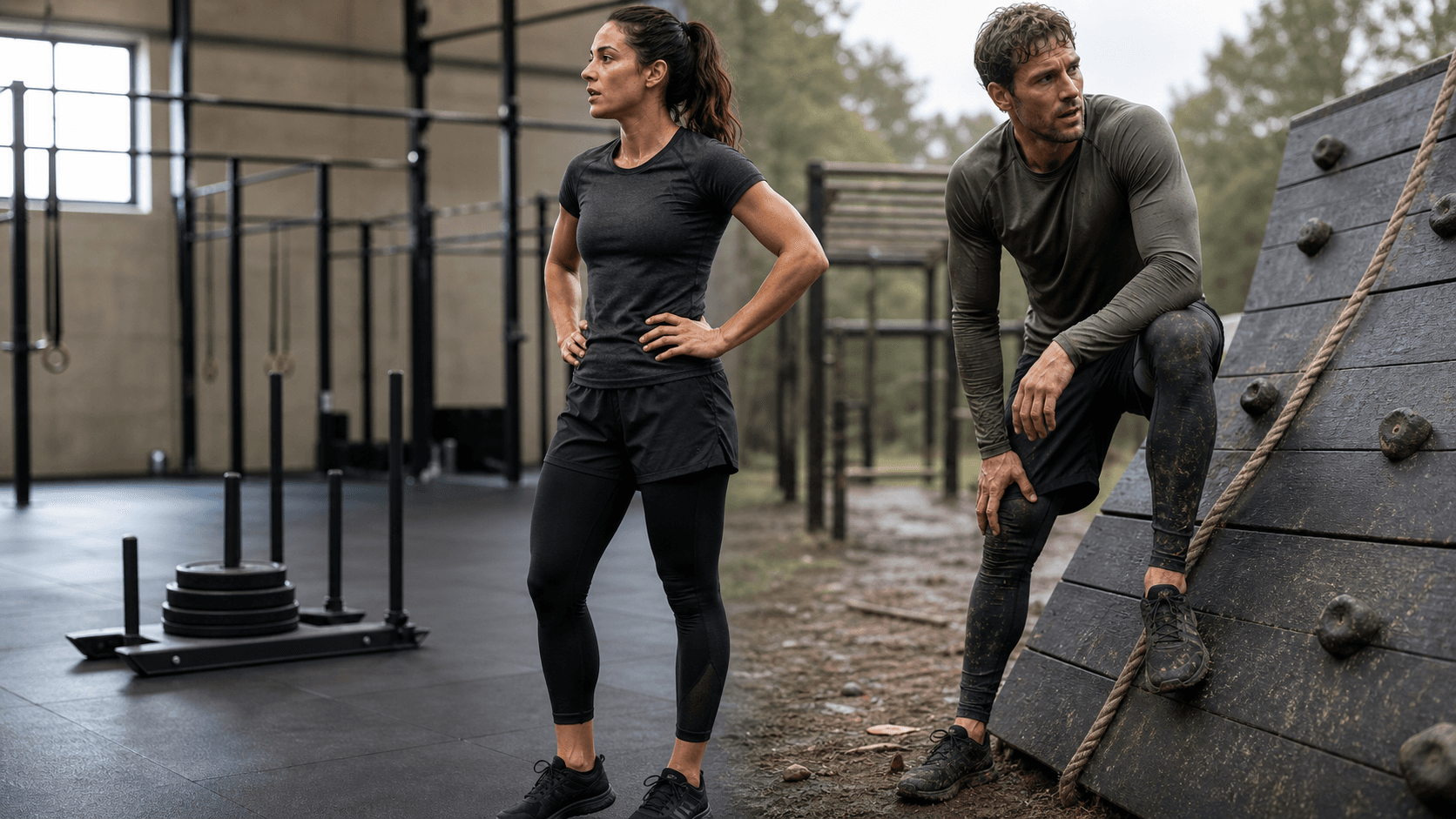
Decisão do comprador
Qual é a diferença de desenvolvimento de produtos entre o vestuário de treinamento HYROX e o vestuário OCR?
A diferença começa com o ambiente, não com o logotipo ou a colorway. O treinamento para HYROX é comumente discutido em torno de corrida combinada com movimentos funcionais, muitas vezes em um ambiente interno ou baseado em ginásio controlado. OCR, ou corrida de pista de obstáculos, adiciona terreno ao ar livre, variação do tempo, superfícies molhadas ou lamacentas, rastejando, escalada, contato com corda e abrasão de obstáculos. Ambas as categorias podem exigir movimento, gerenciamento de suor e um ajuste estável, mas as mudanças de exposição adicionais que os detalhes devem ser revistos antes de uma amostra é aprovada.
Uma marca não precisa de duas coleções não relacionadas para servir a ambos os públicos. Precisa de um breve que separe as necessidades do atleta compartilhado das condições que são únicas para cada direção do produto. Guia de comprador de vestuário de treinamento HYROX para a rota de execução e adaptação funcional, e Guia de comprador de vestuário OCR para perguntas específicas de obstáculos ao ar livre. solução híbrida de desenvolvimento de vestuário de corrida conecta ambos a uma discussão de desenvolvimento de produtos B2B.
Gráfico de comparação
HYROX vestuário de treino vs vestuário OCR: o que deve mudar no resumo do comprador?
Este gráfico de comparação é uma ferramenta de planejamento para marcas, não uma especificação universal de produto. Ajuda um comprador a identificar quais perguntas pertencem a um briefing de uso ativo compartilhado e que exigem uma decisão separada antes de tecido, construção ou comentários de amostra são confirmados.
| Área de desenvolvimento | Vestuário de treino HYROX | Vestuário OCR | Ação do comprador |
|---|---|---|---|
| Configuração primária | Ambientes de treino internos ou controlados para a execução e a adaptação funcional | Treinamento de obstáculos ao ar livre com variáveis de terreno, tempo, água, lama e contato | Defina o ambiente antes de aprovar um resumo do produto compartilhado. |
| Padrão de movimento | Correr, carregar, trenó, chão, pulmãos e transições | Correndo mais escalada, rastejando, trabalho de corda, contato com a parede, terra desigual, e carrega | Mapa movimentos que afetam bainhas, cinturas, bolsos, costuras, e cobertura. |
| Exposição à humidade | Principalmente suor e gestão de calor interior | Suor mais chuva, salpicos, terra molhada, lama e condições variáveis de secagem | Especifique a sensação seca desejada e cobertura, em vez de simplesmente solicitar um tecido de secagem rápida. |
| Risco de abrasão e de estrangulamento | Contacto do equipamento e movimentos corporais repetidos | Superfícies de obstáculos, contato com o solo, fricção de cordas, galhos e terreno grosso | Identificar zonas de alto contato antes de escolher locais de malha exposta, corte, impressão ou costura. |
| Direção do tecido | Estirpe respirável, recuperação, suporte estável, conforto quando quente | Durabilidade e comportamento ao ar livre ao lado de estiramento, recuperação, sensação seca e cobertura | Escolha direções materiais por papel de vestuário; um tecido pode não se adequar a cada SKU. |
| Foco na construção | Anti-chafe costuras, cinturas estáveis, salto de bolso, conforto logotipo | Zonas reforçadas ou protegidas, se for caso disso, cobertura, consciencialização para os obstáculos, colocação das costuras | Analise se as características de construção permanecem confortáveis enquanto sobe, rasteja e lava. |
| Ensaio de amostragem | Correr, agachar, agachar, carregar, trabalho no chão, e suar-gestão revisão | Correr, escalar, rastejar, carregar, ajoelhar, mover-se em condições húmidas onde for relevante, e inspecionar pontos de desgaste | Teste a roupa em condições próximas à promessa do produto antes do planejamento em massa. |
| Resumo comercial | Varejo de treinamento principal, posição de varejo, colorways, branding, repetição da demanda | Ambiente de curso, uso sazonal, funções de produto ao ar livre, além do mesmo rótulo privado e detalhes de produção | Separar os detalhes compartilhados dos requisitos específicos do cenário para que as comparações dos fornecedores sejam justas. |
Arquitectura da coleção
Quando uma marca pode usar uma coleção e quando deve ramificar a direção do produto?
Uma coleção compacta de desempenho pode muitas vezes começar com estilos compartilhados: um tee ou tanque técnico, um curto ou legging, um sutiã de suporte, quando relevante, e uma camada leve. Estas peças podem expressar uma identidade de marca através de treinamento, execução e aptidão funcional. A questão não é se cada SKU deve ser duplicado. É se o uso pretendido pede o mesmo vestuário para lidar com condições conflitantes sem uma resposta clara do design.
Por exemplo, um tee de corrida e treinamento próximo pode funcionar em ambos os programas se o movimento, conforto costura, e sensação seca corresponder ao atleta alvo. Uma manga longa, legging, bolso, ou camada de aquecimento pode precisar de uma direção diferente quando o comprador espera contato com o solo, lama, exposição, ou escalada. estilos de desempenho do roupas esportivas pode ajudar um comprador a escolher uma silhueta de partida; o breve deve então indicar as modificações que a tornam adequada ao ambiente de formação final.
Iniciar com um núcleo partilhado
Um tee técnico, tanque, curto, legging, sutiã esportivo, ou camada leve pode formar um ponto de partida comum quando o atleta, ajuste direção, e coleção comercial fazem sentido para ambos os usos.
Ramo por ambiente
A gestão de calor interior e o movimento repetido podem conduzir a uma direcção do produto. A temperatura exterior, o vento, a água, a lama e o contacto de obstáculos podem conduzir a outra. A distinção deve aparecer no breve, não só após a amostragem.
Aprovar por papel de vestuário
O tecido correto, costura, bolso, aparar, ou método de logotipo não é universal. Revise cada escolha contra a parte superior, inferior, camada, ou peça de suporte específica que o comprador planeja produzir.
Tecido e construção
Como as escolhas de tecido e construção devem mudar entre as duas categorias?
Os compradores devem especificar o comportamento necessário, não só o nome da fibra. Para um produto de treinamento híbrido, o resumo pode priorizar um tecido respirável, confortável com recuperação, suporte estável, e uma sensação seca durante o movimento interno repetido. Para um produto orientado para OCR, os mesmos requisitos podem ainda importar, mas o resumo também deve abordar a provável exposição: tecido úmido contra o corpo, sujeira na superfície, contato joelho ou assento, atrito corda, uma sessão mais ao ar livre, ou uma mudança de temperatura antes e após o treinamento.
A construção deve seguir a mesma lógica. A estabilidade da cintura, o movimento da bainha, as costuras anti-chafe, o salto de bolso, e a matéria de conforto do logotipo em ambas as rotas. OCR pode exigir um olhar mais atento onde as costuras cruzam áreas de contato, se a malha é exposta em uma provável zona de abrasão, como as aparas se comportam em torno de escalada e rastejando, e como uma roupa se sente depois que se torna úmido ou sujo. Tecidos e aparas visão geral é útil para uma discussão inicial de material, mas notas de amostra específicas de produtos são o que tornam a decisão acionável.
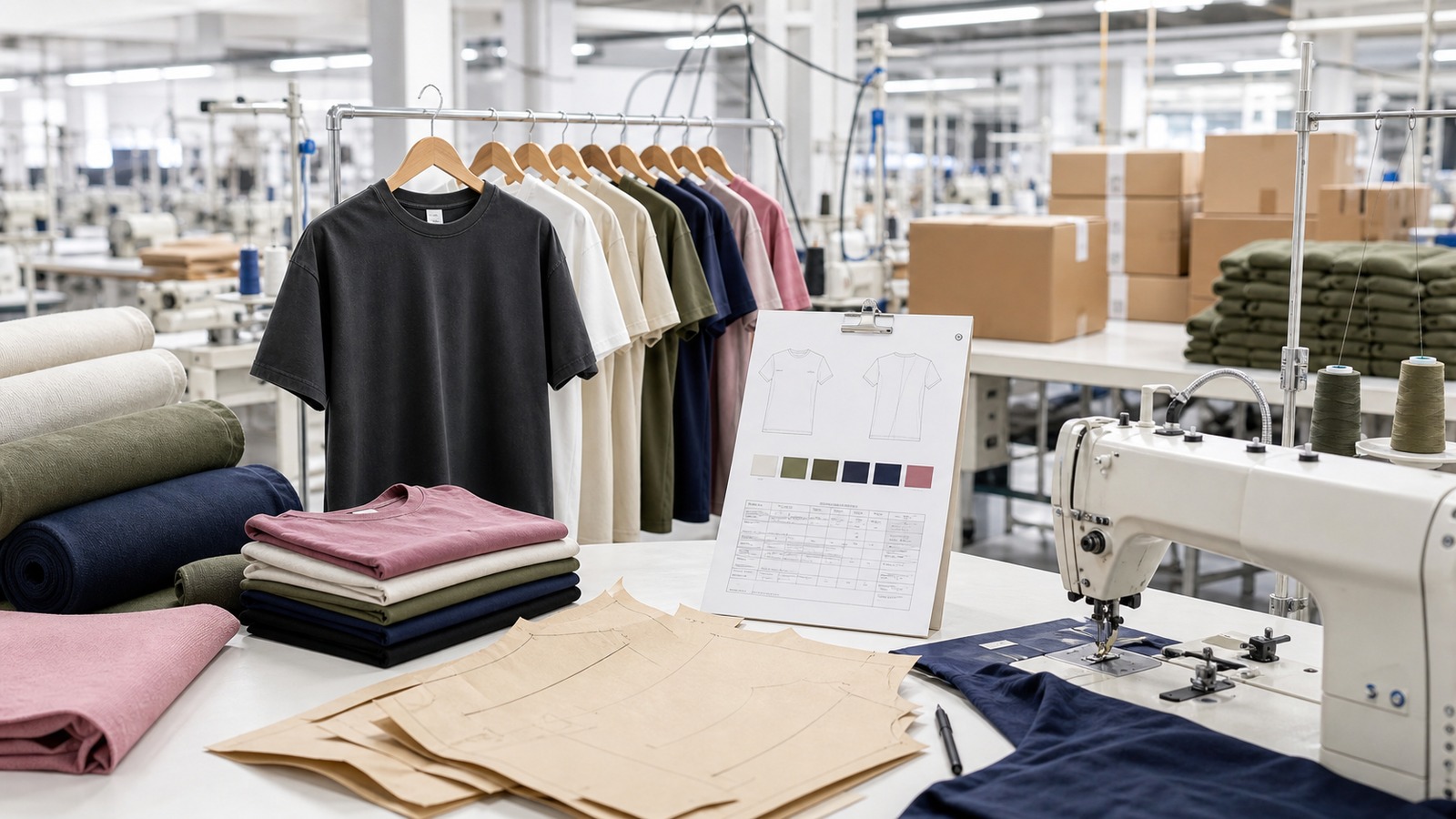
A discussão do material deve conectar o papel do vestuário, movimento, umidade, pontos de contato, branding e revisão de amostra – não apenas um nome de tecido.
Plano de ensaio da amostra
Como os testes de amostra devem diferir antes da produção a granel?
O teste de amostra correto recria o produto promete de perto o suficiente para revelar uma verdadeira decisão. Para vestuário de treinamento híbrido, os usuários podem correr, agachar, lançar, transportar, puxar, e mover-se para e para o chão, enquanto verificando o calor, restrição de movimento, migração cintura, salto de bolso, esfregar costura, cobertura e sensação de logotipo. Para vestuário OCR, adicione as ações específicas de obstáculos que a coleção pretende apoiar: subir, rastejar, ajoelhar, usar uma corda, mover-se através de terreno desigual, e inspecionar a roupa após uso úmido ou sujo onde isso é relevante.
Grave o papel do produto e o ambiente de treinamento antes do usuário iniciar o teste.Separe o feedback de ajuste e movimento do feedback estético, logotipo, etiqueta e embalagem.Fotografe e note pontos de desgaste específicos em vez de enviar um comentário amplo, como “mais durável”.Verifique se tecidos, costuras, bolsos, cordas, aparas e impressões permanecem confortáveis através do movimento pretendido.Reveja o vestuário após o desgaste e lavagem quando o comportamento de uso repetido faz parte da promessa da marca.Confirme quais comentários devem ser resolvidos na amostra seguinte e quais opções ainda precisam de uma decisão comercial.
Resumo da produção B2B
O que uma marca deve incluir ao informar um fabricante para ambos os segmentos?
Comece com o plano de coleta: quais peças são compartilhadas, quais produtos são específicos para treinamento híbrido ou OCR, e quais detalhes estão abertos. Em seguida, envie o atleta-alvo, ambiente de treinamento, imagens de referência ou amostras, comportamento de tecido desejado, direção de ajuste, cores, faixa de tamanho, quantidade estimada, arquivos de logotipo, etiquetas, necessidades de embalagem, mercado de destino, e hora de lançamento do alvo. Uma imagem de referência pode estabelecer direção, mas não substitui decisões sobre desempenho, construção, medições, branding, ou critérios de aprovação.
inPACE Sports pode rever esta informação como parte de uma discussão de desenvolvimento personalizado de vestuário ativo. rota personalizada do produto do roupas esportivas para avaliar opções de personalização e o processo de ordenação para organizar os próximos passos. A disponibilidade de tecido, colorways, logo e requisitos de embalagem, complexidade de estilo e quantidade podem mudar a rota de amostragem e cotação, então é melhor tornar esses pressupostos visíveis precocemente.
Se a marca está construindo uma cápsula de obstáculos ao ar livre em vez de apenas comparar cenários, continue com o Guia de coleção de vestuário OCR de marca privada para sortimento, branding, amostra e planejamento de reabastecimento.
Alinhamento comercial
Quais decisões comerciais devem ficar separadas da comparação de desempenho?
O desempenho do produto é apenas uma parte da decisão de um comprador. Uma marca também precisa decidir se os dois segmentos irão compartilhar a mesma história de cor, direção do preço de varejo, escala de logotipo, embalagem, faixa de tamanho e plano de reposição. Uma coleção pode usar uma linguagem visual, enquanto ainda atribui diferentes papéis do produto para o seu treinamento e peças OCR. Por exemplo, um tee núcleo pode levar a mesma marca em toda a gama, enquanto uma camada mais exposta ao ar livre precisa de sua própria cor, cobertura ou discussão de aparar. O objetivo é não multiplicar SKUs sem razão; é evitar esconder uma diferença significativa do produto dentro de um nome de estilo genérico.
Mantenha as suposições comerciais visíveis no mesmo documento que as suposições do produto. Observe quais estilos são esperados para serem itens essenciais repetiveis, que são pequenas cápsulas de teste, que colorways são essenciais, e que os detalhes de marcação ou embalagem não podem mudar após a aprovação. Isto dá a um comprador uma base mais limpa para comparar discussões de fábrica. Também impede uma amostra que resolve um problema de movimento de ser confundido para aprovação de cada rótulo, logotipo, embalagem, tamanho, ou decisão de planejamento de ordem.
Claridade das marcas
HYROX é uma marca registrada de seu respectivo proprietário. É referenciado aqui apenas para descrever um contexto popular de treinamento híbrido e preparação de raça. inPACE não é afiliado ou endossado pela HYROX.
Próxima etapa
Escolha a rota do produto antes de pedir uma cotação de produção
A comparação mais forte não é “qual categoria é melhor”. É a que condições o produto deve manusear genuinamente, e que detalha uma fábrica deve rever antes que a marca invista em uma amostra. Um breve claro torna mais fácil escolher uma coleção compartilhada compacta, identificar os estilos que precisam de uma direção OCR separada, e comparar discussões de fabricação sobre os mesmos pressupostos.
Discuta o seu resumo de desenvolvimento de produtos
Estrutura de comprador de longa duração
Como um comprador pode transformar esta pesquisa em uma decisão pronta para a produção?
A tarefa central em comparando o vestuário de treino HYROX com o vestuário OCR está decidindo quais requisitos de produto podem compartilhar uma fundação de desempenho-uso ativo e que precisam de material separado, construção, ajuste e resumos de teste. Essa decisão não pode ser tomada a partir de um preço de manchete, uma foto de produto, ou uma declaração geral sobre personalização. Precisa de um registro que ligue o objetivo comercial ao vestuário, material, ajuste, construção, branding, quantidade, verificação de qualidade, embalagem e destino. Quando esses elementos são visíveis juntos, um comprador pode fazer perguntas mais precisas e uma fábrica pode explicar o caminho sem fingir que os detalhes abertos já estão confirmados.
O objetivo do framework abaixo não é transformar um fundador da marca ou comprador em um técnico de vestuário. É tornar clara a responsabilidade e evidência. O comprador define a necessidade do cliente e do negócio, compartilha o que é conhecido, e identifica as decisões que importam. Suposições de formação híbrida em interiores separadas da exposição a obstáculos exteriores antes de propor tecidos, construções, aparas ou ensaios de amostras. Ambos os lados então registram o que foi revisado, o que permanece condicional, o que deve ser aprovado fisicamente, e que informação guiará a produção ou uma ordem posterior de repetição.
1
Ambientes separados antes dos produtos
Estações internas de corrida e funcionais criam um perfil de exposição diferente da distância exterior, lama, água, tempo, contato terrestre, paredes, cordas e vegetação.
Para esta decisão, o comprador deve indicar o resultado pretendido, fornecer as provas mais próximas disponíveis e identificar o que é flexível. O fornecedor pode então explicar as implicações do produto ou processo e sinalizar qualquer dependência da disponibilidade do tecido, cor, construção, método de logotipo, componentes, quantidade ou embalagem. Uma resposta útil distingue uma recomendação de uma instrução de produção confirmada e diz o que precisa ser revisto através de uma amostra ou outra etapa de aprovação.
Gravar o resultado dentro uma matriz de desenvolvimento de duas colunas apresentando papéis compartilhados de vestuário, diferentes ambientes, pontos de risco, questões de amostra, branding e decisões de produção. Inclua a data, arquivo relevante ou amostra, a pessoa responsável pela próxima ação e o status da decisão. Se uma mudança posterior afetar o ajuste, material, mão de obra, marca, variedade, ou preparação de entrega, retorne a este registro e identifique quais aprovações relacionadas precisam ser verificadas novamente. Isto impede que uma mudança local crie uma inconsistência despercebida a jusante.
2
Compare papéis de vestuário, um por um
Um tee, curto, legging, sutiã esportivo, camada de compressão, e peça de aquecimento podem aparecer em ambos os programas, mas requerem prioridades diferentes.
Para esta decisão, o comprador deve indicar o resultado pretendido, fornecer as provas mais próximas disponíveis e identificar o que é flexível. O fornecedor pode então explicar as implicações do produto ou processo e sinalizar qualquer dependência da disponibilidade do tecido, cor, construção, método de logotipo, componentes, quantidade ou embalagem. Uma resposta útil distingue uma recomendação de uma instrução de produção confirmada e diz o que precisa ser revisto através de uma amostra ou outra etapa de aprovação.
Gravar o resultado dentro uma matriz de desenvolvimento de duas colunas apresentando papéis compartilhados de vestuário, diferentes ambientes, pontos de risco, questões de amostra, branding e decisões de produção. Inclua a data, arquivo relevante ou amostra, a pessoa responsável pela próxima ação e o status da decisão. Se uma mudança posterior afetar o ajuste, material, mão de obra, marca, variedade, ou preparação de entrega, retorne a este registro e identifique quais aprovações relacionadas precisam ser verificadas novamente. Isto impede que uma mudança local crie uma inconsistência despercebida a jusante.
3
Usar diferentes questões materiais
O treinamento híbrido pode enfatizar calor, sensação de seca, estiramento e transições repetidas, enquanto o OCR adiciona contato superficial, snag, retenção de água e exposição ao ar livre.
Para esta decisão, o comprador deve indicar o resultado pretendido, fornecer as provas mais próximas disponíveis e identificar o que é flexível. O fornecedor pode então explicar as implicações do produto ou processo e sinalizar qualquer dependência da disponibilidade do tecido, cor, construção, método de logotipo, componentes, quantidade ou embalagem. Uma resposta útil distingue uma recomendação de uma instrução de produção confirmada e diz o que precisa ser revisto através de uma amostra ou outra etapa de aprovação.
Gravar o resultado dentro uma matriz de desenvolvimento de duas colunas apresentando papéis compartilhados de vestuário, diferentes ambientes, pontos de risco, questões de amostra, branding e decisões de produção. Inclua a data, arquivo relevante ou amostra, a pessoa responsável pela próxima ação e o status da decisão. Se uma mudança posterior afetar o ajuste, material, mão de obra, marca, variedade, ou preparação de entrega, retorne a este registro e identifique quais aprovações relacionadas precisam ser verificadas novamente. Isto impede que uma mudança local crie uma inconsistência despercebida a jusante.
4
Ajustar a construção ao contacto
Posição da costura, abertura de bolso, zíper, reforço, ligação, elástico e aparar exposição precisam revisão separada onde obstáculos ou contato de terra são esperados.
Para esta decisão, o comprador deve indicar o resultado pretendido, fornecer as provas mais próximas disponíveis e identificar o que é flexível. O fornecedor pode então explicar as implicações do produto ou processo e sinalizar qualquer dependência da disponibilidade do tecido, cor, construção, método de logotipo, componentes, quantidade ou embalagem. Uma resposta útil distingue uma recomendação de uma instrução de produção confirmada e diz o que precisa ser revisto através de uma amostra ou outra etapa de aprovação.
Gravar o resultado dentro uma matriz de desenvolvimento de duas colunas apresentando papéis compartilhados de vestuário, diferentes ambientes, pontos de risco, questões de amostra, branding e decisões de produção. Inclua a data, arquivo relevante ou amostra, a pessoa responsável pela próxima ação e o status da decisão. Se uma mudança posterior afetar o ajuste, material, mão de obra, marca, variedade, ou preparação de entrega, retorne a este registro e identifique quais aprovações relacionadas precisam ser verificadas novamente. Isto impede que uma mudança local crie uma inconsistência despercebida a jusante.
5
Avaliar o ajuste sob diferentes cargas
Os trenós, os carretéis, as pulgas, a escalada, o rastejar, as roupas molhadas e as sessões ao ar livre criam diferentes questões de cintura, bainha, cinta e mobilidade.
Para esta decisão, o comprador deve indicar o resultado pretendido, fornecer as provas mais próximas disponíveis e identificar o que é flexível. O fornecedor pode então explicar as implicações do produto ou processo e sinalizar qualquer dependência da disponibilidade do tecido, cor, construção, método de logotipo, componentes, quantidade ou embalagem. Uma resposta útil distingue uma recomendação de uma instrução de produção confirmada e diz o que precisa ser revisto através de uma amostra ou outra etapa de aprovação.
Gravar o resultado dentro uma matriz de desenvolvimento de duas colunas apresentando papéis compartilhados de vestuário, diferentes ambientes, pontos de risco, questões de amostra, branding e decisões de produção. Inclua a data, arquivo relevante ou amostra, a pessoa responsável pela próxima ação e o status da decisão. Se uma mudança posterior afetar o ajuste, material, mão de obra, marca, variedade, ou preparação de entrega, retorne a este registro e identifique quais aprovações relacionadas precisam ser verificadas novamente. Isto impede que uma mudança local crie uma inconsistência despercebida a jusante.
6
Concepção de ensaios de amostras distintos
Um teste de desgaste de ginásio não pode responder a todas as perguntas ao ar livre, e um teste OCR pode não revelar repetição de problemas de calor e transição dentro da mesma maneira.
Para esta decisão, o comprador deve indicar o resultado pretendido, fornecer as provas mais próximas disponíveis e identificar o que é flexível. O fornecedor pode então explicar as implicações do produto ou processo e sinalizar qualquer dependência da disponibilidade do tecido, cor, construção, método de logotipo, componentes, quantidade ou embalagem. Uma resposta útil distingue uma recomendação de uma instrução de produção confirmada e diz o que precisa ser revisto através de uma amostra ou outra etapa de aprovação.
Gravar o resultado dentro uma matriz de desenvolvimento de duas colunas apresentando papéis compartilhados de vestuário, diferentes ambientes, pontos de risco, questões de amostra, branding e decisões de produção. Inclua a data, arquivo relevante ou amostra, a pessoa responsável pela próxima ação e o status da decisão. Se uma mudança posterior afetar o ajuste, material, mão de obra, marca, variedade, ou preparação de entrega, retorne a este registro e identifique quais aprovações relacionadas precisam ser verificadas novamente. Isto impede que uma mudança local crie uma inconsistência despercebida a jusante.
7
Manter a identidade da marca enquanto altera a execução
Hierarquia do logotipo, etiquetas, cores e apresentação da coleção podem permanecer coerentes mesmo quando materiais, colocações, aparas ou embalagem diferem pelo programa.
Para esta decisão, o comprador deve indicar o resultado pretendido, fornecer as provas mais próximas disponíveis e identificar o que é flexível. O fornecedor pode então explicar as implicações do produto ou processo e sinalizar qualquer dependência da disponibilidade do tecido, cor, construção, método de logotipo, componentes, quantidade ou embalagem. Uma resposta útil distingue uma recomendação de uma instrução de produção confirmada e diz o que precisa ser revisto através de uma amostra ou outra etapa de aprovação.
Gravar o resultado dentro uma matriz de desenvolvimento de duas colunas apresentando papéis compartilhados de vestuário, diferentes ambientes, pontos de risco, questões de amostra, branding e decisões de produção. Inclua a data, arquivo relevante ou amostra, a pessoa responsável pela próxima ação e o status da decisão. Se uma mudança posterior afetar o ajuste, material, mão de obra, marca, variedade, ou preparação de entrega, retorne a este registro e identifique quais aprovações relacionadas precisam ser verificadas novamente. Isto impede que uma mudança local crie uma inconsistência despercebida a jusante.
Cenários do comprador
Como é que a decisão muda em situações comuns de abastecimento?
Os projetos reais raramente chegam com cada detalhe completo. A questão útil não é se o resumo é perfeito; é se a informação em falta é visível e se o próximo passo irá produzir evidências. Estes cenários mostram como um comprador pode manter comparando o vestuário de treino HYROX com o vestuário OCR prática sem converter as suposições iniciais em promessas.
O comprador tem uma direção, mas arquivos técnicos incompletos
Comece com o papel do produto, cliente alvo, uso pretendido, material de referência, e as decisões já tomadas. Marque os detalhes faltantes de medições, tecido, arte ou embalagem como perguntas abertas. A resposta do fornecedor deve mostrar o que pode ser revisto imediatamente, o que precisa de uma amostra, e que informação é necessária antes que a rota se torne mais específica.
Aplicar o cenário ao quais requisitos de produto podem compartilhar uma fundação de desempenho-uso ativo e que precisam de material separado, construção, ajuste e resumos de teste. Observe o que pode ser aceito como direção, o que requer revisão de fábrica, eo que deve tornar-se parte de uma matriz de desenvolvimento de duas colunas apresentando papéis compartilhados de vestuário, diferentes ambientes, pontos de risco, questões de amostra, branding e decisões de produção Antes de o comprador comparar fornecedores ou aprovar a fase seguinte.
Uma referência de catálogo é fechada, mas não exata
Liste as características que já funcionam e a apresentação da marca separada das mudanças de vestuário. Um logotipo, etiqueta, hangtag, ou saco pode permanecer dentro de uma rota de catálogo informado, enquanto um novo ajuste, material, padrão, construção, ou característica de desempenho pode exigir desenvolvimento personalizado. A decisão deve ser baseada na mudança solicitada, não uma etiqueta de categoria.
Aplicar o cenário ao quais requisitos de produto podem compartilhar uma fundação de desempenho-uso ativo e que precisam de material separado, construção, ajuste e resumos de teste. Observe o que pode ser aceito como direção, o que requer revisão de fábrica, eo que deve tornar-se parte de uma matriz de desenvolvimento de duas colunas apresentando papéis compartilhados de vestuário, diferentes ambientes, pontos de risco, questões de amostra, branding e decisões de produção Antes de o comprador comparar fornecedores ou aprovar a fase seguinte.
A ordem contém várias cores, tamanhos e componentes da marca
Crie um registro de sortimento por estilo, cor e tamanho, então conecte cada logotipo, etiqueta, código de barras, saco e instruções de caixa para o SKU correto. Pergunte quais escolhas afetam o planejamento de material, métodos de aplicação, razões de embalagem ou suposições de cotação. É aqui que uma coleção de aparência simples pode se tornar operacionalmente complexa.
Aplicar o cenário ao quais requisitos de produto podem compartilhar uma fundação de desempenho-uso ativo e que precisam de material separado, construção, ajuste e resumos de teste. Observe o que pode ser aceito como direção, o que requer revisão de fábrica, eo que deve tornar-se parte de uma matriz de desenvolvimento de duas colunas apresentando papéis compartilhados de vestuário, diferentes ambientes, pontos de risco, questões de amostra, branding e decisões de produção Antes de o comprador comparar fornecedores ou aprovar a fase seguinte.
Prevê-se que o programa se repita
Decida quais registros aprovados serão retidos após o envio e quais alterações devem desencadear uma nova amostra. Especificações do produto, material e referências de cor, arte, colocação, etiquetas, embalagem, notas de QC, e dados de ordem prévia fazer posterior reposição mais controlada. Uma reordenação não deve depender da memória ou de um tópico de mensagem antiga.
Aplicar o cenário ao quais requisitos de produto podem compartilhar uma fundação de desempenho-uso ativo e que precisam de material separado, construção, ajuste e resumos de teste. Observe o que pode ser aceito como direção, o que requer revisão de fábrica, eo que deve tornar-se parte de uma matriz de desenvolvimento de duas colunas apresentando papéis compartilhados de vestuário, diferentes ambientes, pontos de risco, questões de amostra, branding e decisões de produção Antes de o comprador comparar fornecedores ou aprovar a fase seguinte.
Direções relevantes do produto
Quais produtos podem tornar o próximo breve mais concreto?
Use estas páginas de produto para identificar uma direção de silhueta ou coleção, então indique o que deve permanecer, mudar ou ser revisto. As imagens do produto são referências úteis, mas tecido, ajuste, construção, cor, branding, quantidade e embalagem ainda requerem confirmação específica do projeto.
Colecção de Desempenho roupas esportivas
Compare os conjuntos de treinamento existentes, sutiãs esportivos e silhuetas de desempenho antes de definir os requisitos de tecido, marca e ordem.
Conjunto de Esculturas Zip- Neck
Use um conjunto de treinamento de close-fit para comparar as prioridades de desempenho indoor com as modificações necessárias para a exposição de obstáculos ao ar livre.
Desenvolvimento personalizado do roupas esportivas
Mova-se para uma rota personalizada quando o ajuste, o material, a construção, o bolso ou as decisões de corte específicos do ambiente mudarem a roupa.
Registo da decisão
Quais as provas que o comprador deve solicitar e conservar?
A tabela transforma as questões-chave do artigo em um formato de revisão de trabalho. É intencionalmente mais ampla do que uma comparação unidade-preço, porque um programa completo de uso ativo inclui produto, material, amostra, marca, embalagem e pressupostos de entrega.
| Domínio da decisão | Provas do comprador | Revisão da fábrica | Registo antes da aprovação |
|---|---|---|---|
| Ambientes separados antes dos produtos | Referência, exigência, resultado pretendido e qualquer restrição não negociável. | Viabilidade, dependências, suposições, necessidade de amostra e efeito nas decisões conectadas. | Referência aprovada, número aberto, proprietário, data e o próximo ponto de controle. |
| Compare papéis de vestuário, um por um | Referência, exigência, resultado pretendido e qualquer restrição não negociável. | Viabilidade, dependências, suposições, necessidade de amostra e efeito nas decisões conectadas. | Referência aprovada, número aberto, proprietário, data e o próximo ponto de controle. |
| Usar diferentes questões materiais | Referência, exigência, resultado pretendido e qualquer restrição não negociável. | Viabilidade, dependências, suposições, necessidade de amostra e efeito nas decisões conectadas. | Referência aprovada, número aberto, proprietário, data e o próximo ponto de controle. |
| Ajustar a construção ao contacto | Referência, exigência, resultado pretendido e qualquer restrição não negociável. | Viabilidade, dependências, suposições, necessidade de amostra e efeito nas decisões conectadas. | Referência aprovada, número aberto, proprietário, data e o próximo ponto de controle. |
| Avaliar o ajuste sob diferentes cargas | Referência, exigência, resultado pretendido e qualquer restrição não negociável. | Viabilidade, dependências, suposições, necessidade de amostra e efeito nas decisões conectadas. | Referência aprovada, número aberto, proprietário, data e o próximo ponto de controle. |
| Concepção de ensaios de amostras distintos | Referência, exigência, resultado pretendido e qualquer restrição não negociável. | Viabilidade, dependências, suposições, necessidade de amostra e efeito nas decisões conectadas. | Referência aprovada, número aberto, proprietário, data e o próximo ponto de controle. |
| Manter a identidade da marca enquanto altera a execução | Referência, exigência, resultado pretendido e qualquer restrição não negociável. | Viabilidade, dependências, suposições, necessidade de amostra e efeito nas decisões conectadas. | Referência aprovada, número aberto, proprietário, data e o próximo ponto de controle. |
Lista de verificação do comprador
O que deve estar pronto antes da próxima conversa de fábrica?
Escreva a decisão do comprador em uma frase: quais requisitos do produto podem compartilhar uma fundação de desempenho-uso ativo e que precisam de material separado, construção, ajuste e cuecas de teste.Nomeie o produto, atividade pretendida, cliente, canal de venda e finalidade de lançamento.Anexar referências e explicar o que deve ser retido, alterado, testado ou ignorado.Descreva as prioridades de comportamento material, ajuste, construção, cor e marcação, onde for conhecido.Listar estilos, colorways, faixa de tamanho, quantidade estimada, destino e rota de recebimento.Identifique o logotipo, etiquetas, hangtags, código de barras, sacos, dobradura, e detalhes da caixa no escopo.Define o que a primeira amostra ou revisão física deve provar antes da aprovação.Peça ao fornecedor para separar fatos confirmados, recomendações, suposições e perguntas não resolvidas.Manter uma matriz de desenvolvimento de duas colunas mostrando papéis de vestuário compartilhados, ambientes diferentes, pontos de risco, questões de amostra, branding e decisões de produção.Mantenha o produto final, componente, QC, embalagem e alterar registros para o planejamento de pedidos repetidos.
Um comprador pode começar mesmo quando algumas caixas permanecem abertas. Rotule-as com clareza e pergunte quais evidências as fechariam. Essa abordagem é mais útil do que esconder incerteza ou esperar um nível impossível de perfeição. Também torna mais fácil avaliar o raciocínio de um fornecedor: a resposta deve identificar decisões conectadas e explicar por que uma amostra, aprovação de componentes, revisão breve, ou registro de embalagem é necessária.
Continue a viagem de comprador
Mantenha o próximo passo vinculado à decisão do produto
Continuar com especificar vestuário OCR para marcas se o projeto estiver pronto para revisão de fábrica, envie o tipo de produto, referência, material e prioridades de ajuste, escopo de marca, quantidade estimada, necessidades de embalagem e mercado de destino. inPACE Sports pode então discutir se o próximo passo é a seleção de produtos, revisão de rótulo privado, desenvolvimento personalizado, amostragem ou um resumo de cotação mais completo.
Revise o fluxo de trabalho de pedidosEnviar um resumo do produto
Diga o que é confirmado, flexível e ainda aberto para orientação de fábrica.
Pergunte como as decisões vão para a amostragem, produção, QC e embalagem.
Mantenha os registros de aprovação e recebimento necessários para envio e reordens.
Perguntas do comprador
FAQ para treinamento híbrido e compradores de vestuário OCR
Use estas respostas diretas para esclarecer o que pertence a uma coleção compartilhada e o que precisa de uma decisão de desenvolvimento de produto separada.
A HYROX é o mesmo que a OCR?
Não. Ambas as categorias podem servir atletas que correm e treinam em alta intensidade, mas eles não são o mesmo caso de uso de desenvolvimento de produto. HYROX vestuário de treinamento é comumente discutido em torno de treino de corrida e funcional-adequação, enquanto vestuário OCR precisa de consideração adicional para o terreno ao ar livre, tempo, água, lama, rastejante, escalada e contato de obstáculos.
Uma coleção de roupas ativas pode servir tanto o treinamento híbrido quanto o OCR?
Uma coleção de núcleo compartilhado pode ser possível quando o vestuário papéis e atleta precisa de sobreposição. No entanto, os compradores ainda devem rever cada SKU separadamente para o ambiente, exposição à umidade, abrasão, cobertura, colocação de costura e teste de amostra. Uma marca pode manter uma identidade visual compartilhada ao usar diferentes materiais ou instruções de construção para produtos específicos.
O que deve uma marca testar em uma amostra de vestuário OCR?
Teste o produto em movimentos e condições próximas ao seu uso pretendido. Dependendo do breve, que pode incluir corrida, escalada, rastejar, carrega, ajoelhar, contato com a corda, condições úmidas, lavagem e inspeção de ponto de desgaste. Record fit, cobertura, conforto da costura, comportamento de bolso, corte, sensação de logotipo, e mudanças de tecido com comentários concisos e fotos.
Que tecido é melhor para corridas híbridas ou vestuário OCR?
Não há um único melhor tecido para cada produto. A rota adequada depende do tipo de vestuário, ambiente pretendido, necessidades de alongamento e recuperação, sensação de secura, cobertura, exposição à abrasão, exigências de cor e logotipo, quantidade, e direção de preço alvo. Um fabricante pode discutir opções após a revisão dessas condições.
Como os compradores devem informar um fabricante quando servem ambos os segmentos?
Separe os requisitos de coleta compartilhados dos requisitos específicos do cenário. Envie os papéis do produto, atleta alvo, ambiente de treinamento, estilos de referência, prioridades de tecido, faixa de tamanho, colorways, quantidade estimada, marca, etiquetas, necessidades de embalagem, mercado de destino e cronograma. Marque decisões abertas claramente para que a fábrica possa indicar seus pressupostos antes de amostragem ou planejamento de cotações.