
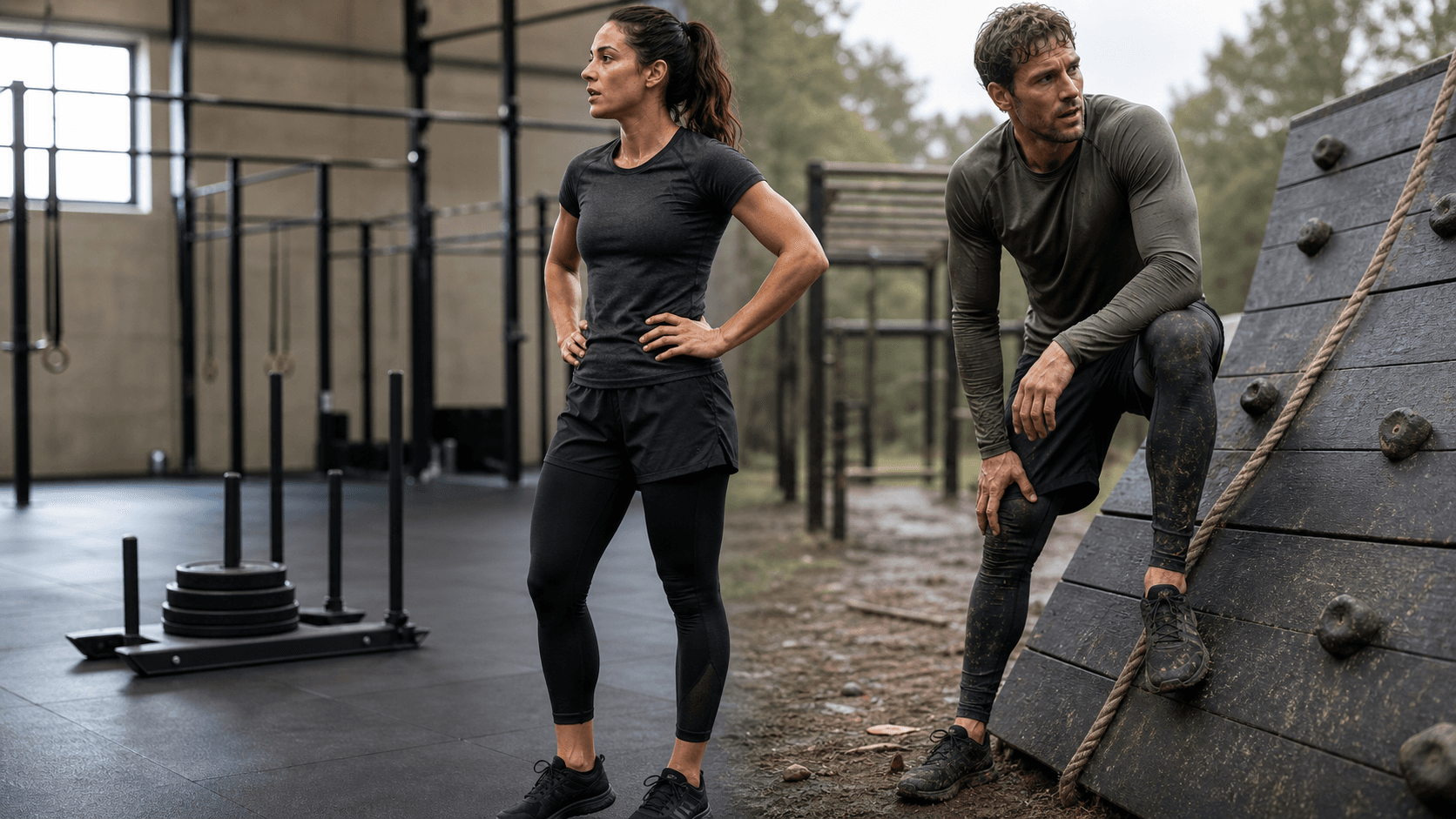
Die Käuferentscheidung
Was ist der Unterschied zwischen HYROX Trainingsbekleidung und OCR-Bekleidung?
Der Unterschied beginnt mit der Umgebung, nicht mit dem Logo oder der Farbgebung. HYROX-Training wird häufig in Kombination mit funktionellen Bewegungen diskutiert, oft in einer kontrollierten Innen- oder Fitness-Umgebung. OCR oder Hindernisparcours-Rennen fügt Outdoor-Gelände, Wetterschwankungen, nassen oder schlammigen Oberflächen, Kriechen, Klettern, Seilkontakt und Hindernisabrieb hinzu. Beide Kategorien können Bewegung, Schweißmanagement und eine stabile Passform erfordern, aber die zusätzliche Exposition ändert sich, welche Details überprüft werden sollten, bevor eine Probe genehmigt wird.
Eine Marke braucht nicht zwei nicht verwandte Kollektionen, um beide Zielgruppen zu bedienen, sondern einen Brief, der die gemeinsamen Bedürfnisse des Athleten von den Bedingungen trennt, die für jede Produktrichtung einzigartig sind. HYROX Training Bekleidung Buyer Guide für die Run-and-Functional-Fitness-Route und die OCR Bekleidungskäuferführer für Outdoor-Hindernis-spezifische Fragen. Hybrid-Rennbekleidung Entwicklungslösung verbindet beides mit einer B2B-Produktentwicklungsdiskussion.
Vergleichstabelle
HYROX-Trainingsbekleidung vs OCR-Bekleidung: Was sollte sich im Käuferbrief ändern?
Diese Vergleichstabelle ist ein Planungsinstrument für Marken, keine universelle Produktspezifikation, sondern hilft einem Käufer zu erkennen, welche Fragen in einen gemeinsamen Activewear-Briefing gehören und welche eine gesonderte Entscheidung erfordern, bevor Stoff-, Konstruktions- oder Musterkommentare bestätigt werden.
| Entwicklungsgebiet | HYROX-Trainingsbekleidung | OCR-Bekleidung | Käuferaktion |
|---|---|---|---|
| Primäreinstellung | Indoor oder kontrollierte Run-and-Functional-Fitness Trainingsumgebungen | Hindernistraining im Freien mit Gelände, Wetter, Wasser, Schlamm und Kontaktvariablen | Definieren Sie die Umgebung, bevor Sie einen gemeinsamen Produktbrief genehmigen. |
| Bewegungsmuster | Laufen, Tragen, Schlittenarbeiten, Bodenarbeiten, Ausfallschritte und Übergänge | Laufen plus Klettern, Kriechen, Seilarbeiten, Wandkontakt, unebener Boden und Tragen | Kartenbewegungen, die Saum, Bund, Taschen, Nähte und Abdeckung beeinflussen. |
| Feuchtigkeitsexposition | Hauptsächlich Schweiß- und Innenwärmemanagement | Schweiß plus Regen, Spritzer, nasser Boden, Schlamm und variable Trocknungsbedingungen | Geben Sie das gewünschte Trockengefühl und die gewünschte Abdeckung an, anstatt einfach einen schnelltrockenen Stoff anzufordern. |
| Abrieb- und Hakenrisiko | Kontakt mit der Ausrüstung und wiederholte Körperbewegung | Hindernisflächen, Bodenkontakt, Seilreibung, Verzweigungen und grobes Gelände | Identifizieren Sie hochkontaktierte Zonen, bevor Sie exponierte Maschen-, Trimm-, Druck- oder Nahtstellen auswählen. |
| Stoffrichtung | Atmungsaktive Dehnung, Erholung, stabile Unterstützung, Komfort bei Wärme | Haltbarkeit und Outdoor-Verhalten neben Dehnung, Erholung, Trockengefühl und Abdeckung | Wählen Sie Materialrichtungen nach Kleidungsstückrolle; ein Stoff passt möglicherweise nicht zu jeder SKU. |
| Bauschwerpunkte | Anti-Chake-Nähte, stabile Hosenbänder, Pocket Bounce, Logo Komfort | Gegebenenfalls Verstärkungs- oder Schutzgebiete, Abdeckung, Snag-Awareness, Nahtplatzierung | Überprüfen Sie, ob die Konstruktionsmerkmale beim Klettern, Krabbeln und Waschen angenehm bleiben. |
| Probenuntersuchung | Laufen, Squat, Ausfallen, Tragen, Bodenarbeit und Schweißmanagement-Überprüfung | Laufen, klettern, kriechen, tragen, knien, sich gegebenenfalls unter feuchten Bedingungen bewegen und Verschleißstellen prüfen | Testen Sie das Kleidungsstück unter Bedingungen, die dem Produktversprechen nahe kommen, bevor Sie eine Massenplanung durchführen. |
| Geschäftsbrief | Kerntrainingssortiment, Einzelhandelsposition, Colorways, Branding, Wiederholungsnachfrage | Kursumgebung, saisonale Nutzung, Outdoor-Produktrollen sowie die gleichen Private-Label- und Produktionsdetails | Getrennte gemeinsame Details von szenariospezifischen Anforderungen, damit Lieferantenvergleiche fair sind. |
Sammlungsarchitektur
Wann kann eine Marke eine Kollektion verwenden und wann sollte sie die Produktrichtung verzweigen?
Eine kompakte Performance-Kollektion kann oft mit gemeinsamen Stilen beginnen: einem technischen Tee oder Tank, einem kurzen oder legging, einem unterstützenden BH, wo relevant, und einer Lichtschicht. Diese Stücke können eine Markenidentität über Training, Laufen und funktionale Fitness ausdrücken. Die Frage ist nicht, ob jede SKU dupliziert werden muss. Es ist, ob der vorgesehene Gebrauch dasselbe Kleidungsstück verlangt, um mit widersprüchlichen Bedingungen umzugehen, ohne eine klare Designantwort zu haben.
Zum Beispiel kann ein eng anliegendes Lauf- und Trainings-T-Shirt in beiden Programmen funktionieren, wenn Bewegung, Nahtkomfort und Trockengefühl mit dem Zielsportler übereinstimmen. Eine lange Ärmel-, Legging-, Taschen- oder Aufwärmschicht kann eine andere Richtung erfordern, wenn der Käufer Bodenkontakt, Schlamm, Exposition oder Klettern erwartet. Activewear Performance Styles kann einem Käufer helfen, eine Startsilhouette zu wählen; Der Auftrag sollte dann die Änderungen angeben, die ihn in die endgültige Trainingsumgebung passen lassen.
Beginnen Sie mit einem Shared Core
Ein technischer Tee, Tank, kurz, Legging, Sport-BH oder leichte Schicht kann einen gemeinsamen Ausgangspunkt bilden, wenn der Athlet, die Fit-Richtung und die kommerzielle Sammlung für beide Anwendungen sinnvoll sind.
Verzweigung nach Umweltbedingungen
Wärmemanagement in Innenräumen und wiederholte Bewegungen können eine Produktrichtung bestimmen, Außentemperatur, Wind, Wasser, Schlamm und Hinderniskontakt können eine andere Richtung haben. Die Unterscheidung sollte nicht nur nach der Probenahme im Kurztext erfolgen.
Genehmigen Sie nach Kleidungsstück Rolle
Die richtige Stoff-, Naht-, Taschen-, Zier- oder Logo-Methode ist nicht universell. Überprüfen Sie jede Auswahl mit dem spezifischen Ober-, Unter-, Schicht- oder Stützstück, das der Käufer produzieren möchte.
Gewebe und Baugewerbe
Wie sollten sich Stoff- und Konstruktionsentscheidungen zwischen den beiden Kategorien ändern?
Käufer sollten das Verhalten angeben, nicht nur den Fasernamen. Bei einem Hybrid-Trainingsprodukt kann der Auftrag einen atmungsaktiven, komfortablen Stoff mit Erholung, stabiler Unterstützung und einem trockenen Gefühl während wiederholter Innenbewegungen priorisieren. Bei einem OCR-orientierten Produkt können die gleichen Anforderungen immer noch von Bedeutung sein, aber der Auftrag sollte auch die wahrscheinliche Exposition berücksichtigen: feuchter Stoff gegen den Körper, Schmutz auf der Oberfläche, Knie- oder Sitzkontakt, Seilreibung, eine längere Außensitzung oder eine Temperaturänderung vor und nach dem Training.
Die Konstruktion sollte der gleichen Logik folgen. Waistbandstabilität, Saumbewegung, Anti-Chafe-Nähte, Taschenhüpfen und Logo-Komfort sind auf beiden Routen wichtig. OCR kann einen genaueren Blick darauf erfordern, wo Nähte Kontaktbereiche kreuzen, ob Maschen in einer wahrscheinlichen Abriebzone ausgesetzt sind, wie sich Zierleisten beim Klettern und Krabbeln verhalten und wie sich ein Kleidungsstück anfühlt, nachdem es feucht oder schmutzig geworden ist. Stoffe und Ziergegenstände Übersicht ist nützlich für eine erste Materialdiskussion, aber produktspezifische Beispielnotizen machen die Entscheidung umsetzbar.
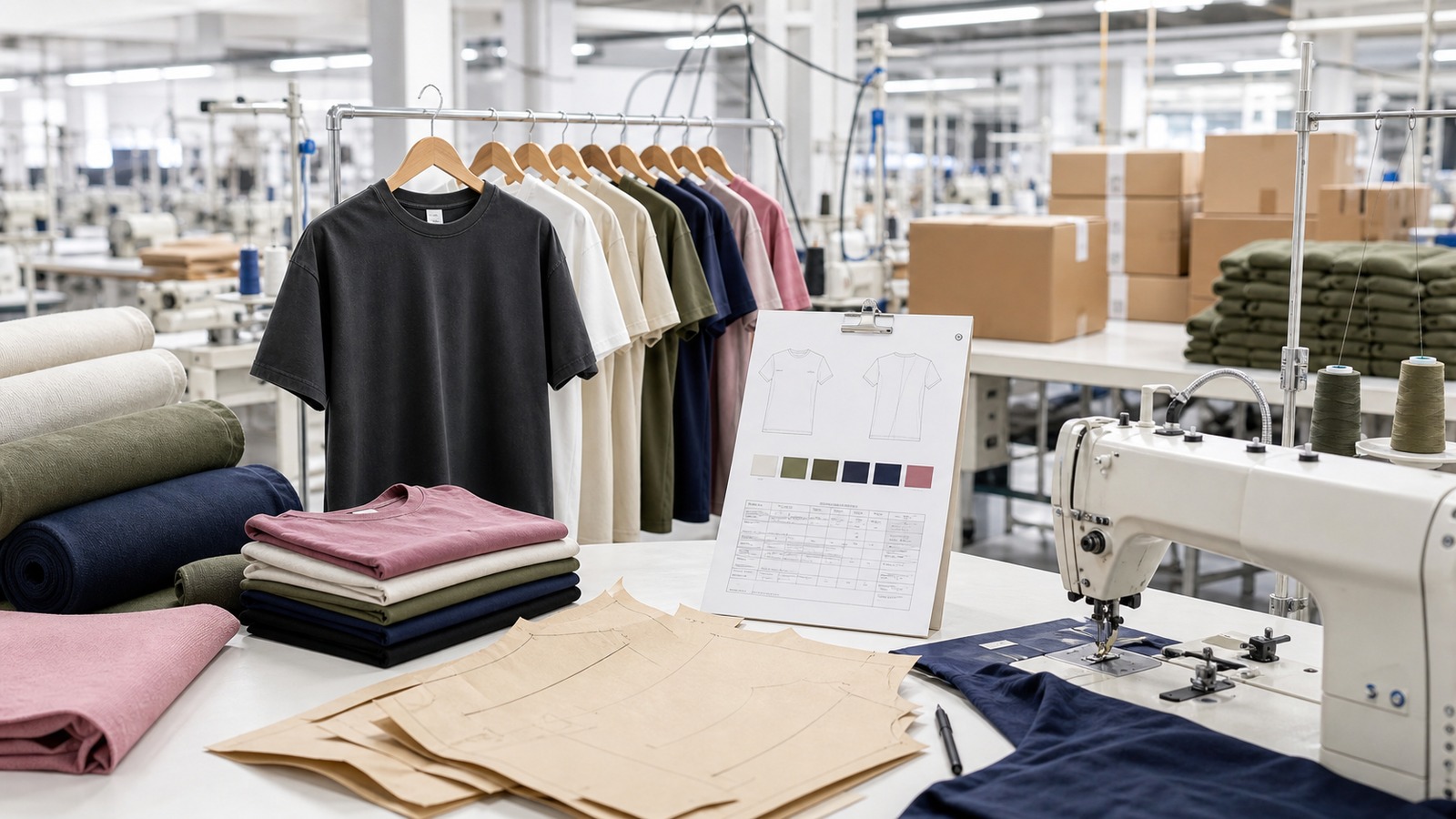
Die Materialdiskussion sollte Kleidungsstückrolle, Bewegung, Feuchtigkeit, Kontaktpunkte, Branding und Probenüberprüfung verbinden - nicht nur einen Stoffnamen.
Stichprobentestplan
Wie sollte sich die Probenprüfung vor der Massenproduktion unterscheiden?
Der korrekte Mustertest stellt das Produktversprechen so genau wieder her, dass es eine echte Entscheidung erkennen lässt. Bei Hybrid-Trainingsbekleidung können Träger laufen, hocken, lungern, tragen, ziehen und sich zum und vom Boden bewegen, während sie die Hitze, Bewegungseinschränkungen, Bundmigration, Taschenhüpfen, Nahtreiben, Abdeckung und Logo-Gefühl überprüfen. Bei OCR-Bekleidung fügen Sie die hindernisspezifischen Aktionen hinzu, die die Kollektion angeblich unterstützt: Klettern, Kriechen, Knien, ein Seil benutzen, sich über unebenen Boden bewegen und das Kleidungsstück nach feuchtem oder schmutzigem Gebrauch inspizieren, wo dies relevant ist.
Notieren Sie die Produktrolle und die Trainingsumgebung, bevor der Träger den Test beginnt.Separates Pass- und Bewegungs-Feedback von Ästhetik-, Logo-, Etiketten- und Pack-Feedback.Fotografieren und notieren Sie spezifische Verschleißpunkte, anstatt einen breiten Kommentar wie "dauerhafter" einzureichen.Überprüfen Sie, ob Stoffe, Nähte, Taschen, Drawcords, Zierleisten und Drucke durch die beabsichtigte Bewegung angenehm bleiben.Überprüfen Sie das Kleidungsstück nach dem Tragen und Waschen, wenn das Wiederholverhalten Teil des Markenversprechens ist.Bestätigen Sie, welche Kommentare im nächsten Beispiel gelöst werden müssen und welche Optionen noch eine kommerzielle Entscheidung erfordern.
B2B-Produktions-Brief
Was sollte eine Marke beinhalten, wenn ein Hersteller für beide Segmente informiert wird?
Beginnen Sie mit dem Sammelplan: welche Teile geteilt werden, welche Produkte spezifisch für Hybridtraining oder OCR sind und welche Details offen sind. Dann senden Sie den Zielsportler, die Trainingsumgebung, Referenzbilder oder Proben, das gewünschte Stoffverhalten, die Richtung, Farben, den Größenbereich, die geschätzte Menge, Logo-Dateien, Etiketten, Verpackungsanforderungen, den Zielmarkt und das Zielstart-Timing. Ein Referenzbild kann die Richtung festlegen, ersetzt jedoch keine Entscheidungen über Leistung, Konstruktion, Messungen, Branding oder Genehmigungskriterien.
inPACE Sports kann diese Informationen im Rahmen einer benutzerdefinierten Activewear-Entwicklungsdiskussion einsehen. Custom Activewear Produktroute um Anpassungsoptionen zu bewerten und Bestellvorgang Stoffverfügbarkeit, Farbgebungen, Logo- und Verpackungsanforderungen, Stilkomplexität und Menge können die Muster- und Angebotsroute ändern, daher ist es besser, diese Annahmen frühzeitig sichtbar zu machen.
Wenn die Marke eine Outdoor-Hinderniskapsel baut, anstatt nur Szenarien zu vergleichen, fahren Sie mit dem Private-Label-OCR-Bekleidungssammlung Leitfaden für die Sortiments-, Branding-, Muster- und Nachschubplanung.
Kommerzielle Angleichung
Welche kaufmännischen Entscheidungen sollten vom Leistungsvergleich getrennt bleiben?
Die Produktleistung ist nur ein Teil der Entscheidung eines Käufers. Eine Marke muss auch entscheiden, ob die beiden Segmente die gleiche Farbstory, Einzelhandelspreisrichtung, Logoskala, Verpackung, Größenbereich und Nachschubplan teilen. Eine Kollektion kann eine visuelle Sprache verwenden, während sie ihren Trainings- und OCR-Stücken immer noch verschiedene Produktrollen zuweist. Zum Beispiel könnte ein Kern-T-Stück die gleiche Markenmarke über das gesamte Sortiment tragen, während eine exponiertere Außenschicht eine eigene Farbe, Abdeckung oder Zierdiskussion benötigt. Der Zweck besteht nicht darin, SKUs ohne Grund zu multiplizieren; es soll vermeiden, einen bedeutenden Produktunterschied innerhalb eines generischen Stilnamens zu verbergen.
Halten Sie die kommerziellen Annahmen im selben Dokument sichtbar wie die Produktannahmen. Beachten Sie, welche Stile als wiederholbare Kernelemente zu erwarten sind, das sind kleine Testkapseln, welche Farbgebungen wesentlich sind und welche Marken- oder Verpackungsdetails sich nach der Genehmigung nicht ändern können. Dies gibt einem Käufer eine sauberere Grundlage für den Vergleich von Werksdiskussionen. Es verhindert auch, dass ein Muster, das ein Bewegungsproblem löst, mit der Genehmigung jedes Etiketts, Logos, Verpackung, Größe oder Auftragsplanungsentscheidung verwechselt wird.
Klarheit der Marke
HYROX ist eine eingetragene Marke des jeweiligen Inhabers. Es wird hier nur zur Beschreibung eines beliebten Hybrid-Trainings- und Rennvorbereitungskontextes verwendet. inPACE ist nicht mit HYROX verbunden oder wird von HYROX unterstützt.
Nächster Schritt
Wählen Sie die Produktroute, bevor Sie nach einem Produktionsangebot fragen
Der stärkste Vergleich ist nicht „welche Kategorie ist besser. Es ist, welche Bedingungen das Produkt wirklich bewältigen muss und welche Details eine Fabrik überprüfen sollte, bevor die Marke in eine Probe investiert. Ein klarer Auftrag erleichtert die Auswahl einer kompakten gemeinsamen Kollektion, die Identifizierung der Stile, die eine separate OCR-Richtung benötigen, und Vergleich der Fertigungsdiskussionen über die gleichen Annahmen.
Besprechen Sie Ihren Produktentwicklungsbrief
Long Form Buyer Framework
Wie kann ein Käufer diese Forschung in eine produktionsbereite Entscheidung verwandeln?
Die zentrale Aufgabe in Vergleich von HYROX-Trainingsbekleidung mit OCR-Bekleidung entscheidet welche Produktanforderungen eine Performance-Activewear-Grundlage teilen können und welche separate Material-, Konstruktions-, Pass- und Test-Shorts benötigen. Diese Entscheidung kann nicht anhand eines Headline-Preises, eines Produktfotos oder einer allgemeinen Aussage über die Anpassung getroffen werden. Es braucht eine Aufzeichnung, die das kommerzielle Ziel mit dem Kleidungsstück, dem Material, der Passform, der Konstruktion, dem Branding, der Menge, der Qualitätskontrolle, der Verpackung und dem Zielort verbindet. Wenn diese Elemente zusammen sichtbar sind, kann ein Käufer genauere Fragen stellen und eine Fabrik kann die Route erklären, ohne vorzugeben, dass offene Details bereits bestätigt sind.
Der Zweck des folgenden Rahmens ist nicht, einen Markengründer oder Käufer in einen Bekleidungstechniker zu verwandeln, sondern Verantwortung und Beweise klar zu machen, der Käufer definiert die Kunden- und Geschäftsbedürfnisse, teilt das Bekannte und identifiziert die Entscheidungen, die wichtig sind. separate Annahmen für Hybrid-Training in Innenräumen von der Exposition gegenüber Hindernissen im Freien, bevor Stoffe, Konstruktions-, Zier- oder Mustertests vorgeschlagen werdenBeide Seiten notieren dann, was überprüft wurde, was an Bedingungen geknüpft bleibt, was physisch genehmigt werden muss und welche Informationen die Produktion oder einen späteren Wiederholungsauftrag leiten.
1
Getrennte Umgebungen vor Produkten
Indoor-Lauf- und Funktionsstationen erzeugen ein anderes Expositionsprofil als Außendistanz, Schlamm, Wasser, Wetter, Bodenkontakt, Wände, Seile und Vegetation.
Für diese Entscheidung sollte der Käufer das beabsichtigte Ergebnis angeben, die nächstgelegenen verfügbaren Nachweise vorlegen und angeben, was flexibel ist. Der Lieferant kann dann die Auswirkungen auf das Produkt oder den Prozess erläutern und jede Abhängigkeit von der Verfügbarkeit des Stoffes, Farbe, Konstruktion, Logomethode, Komponenten, Menge oder Verpackung markieren. Eine nützliche Antwort unterscheidet eine Empfehlung von einer bestätigten Produktionsanweisung und gibt an, was durch ein Muster oder einen anderen Genehmigungsschritt überprüft werden müsste.
Notieren Sie das Ergebnis im Inneren eine zweispaltige Entwicklungsmatrix mit gemeinsamen Kleidungsstückrollen, verschiedenen Umgebungen, Risikopunkten, Musterfragen, Branding und Produktionsentscheidungen. Datum, einschlägige Akte oder Muster, die für die nächste Maßnahme verantwortliche Person und den Status der Entscheidung angeben. Wenn eine spätere Änderung die Passform, das Material, die Verarbeitung, das Branding, das Sortiment oder die Vorbereitung der Lieferung betrifft, kehren Sie zu diesem Protokoll zurück und geben Sie an, welche diesbezüglichen Genehmigungen erneut überprüft werden müssen. Dadurch wird verhindert, dass eine lokale Änderung zu einer unbemerkten nachgelagerten Inkonsistenz führt.
2
Vergleichen Sie Kleidungsstücke Rollen eins nach dem anderen
Ein Tee, kurze, Legging, Sport-BH, Kompressionsschicht und Aufwärmstück kann in beiden Programmen erscheinen, erfordert aber unterschiedliche Prioritäten.
Für diese Entscheidung sollte der Käufer das beabsichtigte Ergebnis angeben, die nächstgelegenen verfügbaren Nachweise vorlegen und angeben, was flexibel ist. Der Lieferant kann dann die Auswirkungen auf das Produkt oder den Prozess erläutern und jede Abhängigkeit von der Verfügbarkeit des Stoffes, Farbe, Konstruktion, Logomethode, Komponenten, Menge oder Verpackung markieren. Eine nützliche Antwort unterscheidet eine Empfehlung von einer bestätigten Produktionsanweisung und gibt an, was durch ein Muster oder einen anderen Genehmigungsschritt überprüft werden müsste.
Notieren Sie das Ergebnis im Inneren eine zweispaltige Entwicklungsmatrix mit gemeinsamen Kleidungsstückrollen, verschiedenen Umgebungen, Risikopunkten, Musterfragen, Branding und Produktionsentscheidungen. Datum, einschlägige Akte oder Muster, die für die nächste Maßnahme verantwortliche Person und den Status der Entscheidung angeben. Wenn eine spätere Änderung die Passform, das Material, die Verarbeitung, das Branding, das Sortiment oder die Vorbereitung der Lieferung betrifft, kehren Sie zu diesem Protokoll zurück und geben Sie an, welche diesbezüglichen Genehmigungen erneut überprüft werden müssen. Dadurch wird verhindert, dass eine lokale Änderung zu einer unbemerkten nachgelagerten Inkonsistenz führt.
3
Verwenden Sie verschiedene Materialfragen
Hybridtraining kann Hitze, trockenes Gefühl, Dehnung und wiederholte Übergänge betonen, während OCR Oberflächenkontakt, Haken, Wasserretention und Außeneinwirkung hinzufügt.
Für diese Entscheidung sollte der Käufer das beabsichtigte Ergebnis angeben, die nächstgelegenen verfügbaren Nachweise vorlegen und angeben, was flexibel ist. Der Lieferant kann dann die Auswirkungen auf das Produkt oder den Prozess erläutern und jede Abhängigkeit von der Verfügbarkeit des Stoffes, Farbe, Konstruktion, Logomethode, Komponenten, Menge oder Verpackung markieren. Eine nützliche Antwort unterscheidet eine Empfehlung von einer bestätigten Produktionsanweisung und gibt an, was durch ein Muster oder einen anderen Genehmigungsschritt überprüft werden müsste.
Notieren Sie das Ergebnis im Inneren eine zweispaltige Entwicklungsmatrix mit gemeinsamen Kleidungsstückrollen, verschiedenen Umgebungen, Risikopunkten, Musterfragen, Branding und Produktionsentscheidungen. Datum, einschlägige Akte oder Muster, die für die nächste Maßnahme verantwortliche Person und den Status der Entscheidung angeben. Wenn eine spätere Änderung die Passform, das Material, die Verarbeitung, das Branding, das Sortiment oder die Vorbereitung der Lieferung betrifft, kehren Sie zu diesem Protokoll zurück und geben Sie an, welche diesbezüglichen Genehmigungen erneut überprüft werden müssen. Dadurch wird verhindert, dass eine lokale Änderung zu einer unbemerkten nachgelagerten Inkonsistenz führt.
4
Anpassung der Konstruktion an den Kontakt
Nahtposition, Taschenöffnung, Reißverschluss, Verstärkung, Bindung, elastische und Trimmexposition müssen separat überprüft werden, wenn Hindernisse oder Bodenkontakt erwartet werden.
Für diese Entscheidung sollte der Käufer das beabsichtigte Ergebnis angeben, die nächstgelegenen verfügbaren Nachweise vorlegen und angeben, was flexibel ist. Der Lieferant kann dann die Auswirkungen auf das Produkt oder den Prozess erläutern und jede Abhängigkeit von der Verfügbarkeit des Stoffes, Farbe, Konstruktion, Logomethode, Komponenten, Menge oder Verpackung markieren. Eine nützliche Antwort unterscheidet eine Empfehlung von einer bestätigten Produktionsanweisung und gibt an, was durch ein Muster oder einen anderen Genehmigungsschritt überprüft werden müsste.
Notieren Sie das Ergebnis im Inneren eine zweispaltige Entwicklungsmatrix mit gemeinsamen Kleidungsstückrollen, verschiedenen Umgebungen, Risikopunkten, Musterfragen, Branding und Produktionsentscheidungen. Datum, einschlägige Akte oder Muster, die für die nächste Maßnahme verantwortliche Person und den Status der Entscheidung angeben. Wenn eine spätere Änderung die Passform, das Material, die Verarbeitung, das Branding, das Sortiment oder die Vorbereitung der Lieferung betrifft, kehren Sie zu diesem Protokoll zurück und geben Sie an, welche diesbezüglichen Genehmigungen erneut überprüft werden müssen. Dadurch wird verhindert, dass eine lokale Änderung zu einer unbemerkten nachgelagerten Inkonsistenz führt.
5
Bewerten Sie den Fit unter verschiedenen Lasten
Schlitten, Tragen, Ausfallschritte, Klettern, Krabbeln, nassen Kleidungsstücken und langen Outdoor-Sessions erstellen unterschiedliche Bund, Saum, Gurt und Mobilität Fragen.
Für diese Entscheidung sollte der Käufer das beabsichtigte Ergebnis angeben, die nächstgelegenen verfügbaren Nachweise vorlegen und angeben, was flexibel ist. Der Lieferant kann dann die Auswirkungen auf das Produkt oder den Prozess erläutern und jede Abhängigkeit von der Verfügbarkeit des Stoffes, Farbe, Konstruktion, Logomethode, Komponenten, Menge oder Verpackung markieren. Eine nützliche Antwort unterscheidet eine Empfehlung von einer bestätigten Produktionsanweisung und gibt an, was durch ein Muster oder einen anderen Genehmigungsschritt überprüft werden müsste.
Notieren Sie das Ergebnis im Inneren eine zweispaltige Entwicklungsmatrix mit gemeinsamen Kleidungsstückrollen, verschiedenen Umgebungen, Risikopunkten, Musterfragen, Branding und Produktionsentscheidungen. Datum, einschlägige Akte oder Muster, die für die nächste Maßnahme verantwortliche Person und den Status der Entscheidung angeben. Wenn eine spätere Änderung die Passform, das Material, die Verarbeitung, das Branding, das Sortiment oder die Vorbereitung der Lieferung betrifft, kehren Sie zu diesem Protokoll zurück und geben Sie an, welche diesbezüglichen Genehmigungen erneut überprüft werden müssen. Dadurch wird verhindert, dass eine lokale Änderung zu einer unbemerkten nachgelagerten Inkonsistenz führt.
6
Entsprechende Musterprüfungen
Eine Fitness-Studio-Verschleißstudie kann nicht jede Outdoor-Frage beantworten, und eine OCR-Studie kann nicht zeigen, wiederholte Innenwärme und Übergangsprobleme auf die gleiche Weise.
Für diese Entscheidung sollte der Käufer das beabsichtigte Ergebnis angeben, die nächstgelegenen verfügbaren Nachweise vorlegen und angeben, was flexibel ist. Der Lieferant kann dann die Auswirkungen auf das Produkt oder den Prozess erläutern und jede Abhängigkeit von der Verfügbarkeit des Stoffes, Farbe, Konstruktion, Logomethode, Komponenten, Menge oder Verpackung markieren. Eine nützliche Antwort unterscheidet eine Empfehlung von einer bestätigten Produktionsanweisung und gibt an, was durch ein Muster oder einen anderen Genehmigungsschritt überprüft werden müsste.
Notieren Sie das Ergebnis im Inneren eine zweispaltige Entwicklungsmatrix mit gemeinsamen Kleidungsstückrollen, verschiedenen Umgebungen, Risikopunkten, Musterfragen, Branding und Produktionsentscheidungen. Datum, einschlägige Akte oder Muster, die für die nächste Maßnahme verantwortliche Person und den Status der Entscheidung angeben. Wenn eine spätere Änderung die Passform, das Material, die Verarbeitung, das Branding, das Sortiment oder die Vorbereitung der Lieferung betrifft, kehren Sie zu diesem Protokoll zurück und geben Sie an, welche diesbezüglichen Genehmigungen erneut überprüft werden müssen. Dadurch wird verhindert, dass eine lokale Änderung zu einer unbemerkten nachgelagerten Inkonsistenz führt.
7
Behalten Sie die Markenidentität, während Sie die Ausführung ändern
Logo-Hierarchie, Etiketten, Farben und Sammlungspräsentation können auch dann kohärent bleiben, wenn sich Materialien, Platzierungen, Zierleisten oder Verpackungen je nach Programm unterscheiden.
Für diese Entscheidung sollte der Käufer das beabsichtigte Ergebnis angeben, die nächstgelegenen verfügbaren Nachweise vorlegen und angeben, was flexibel ist. Der Lieferant kann dann die Auswirkungen auf das Produkt oder den Prozess erläutern und jede Abhängigkeit von der Verfügbarkeit des Stoffes, Farbe, Konstruktion, Logomethode, Komponenten, Menge oder Verpackung markieren. Eine nützliche Antwort unterscheidet eine Empfehlung von einer bestätigten Produktionsanweisung und gibt an, was durch ein Muster oder einen anderen Genehmigungsschritt überprüft werden müsste.
Notieren Sie das Ergebnis im Inneren eine zweispaltige Entwicklungsmatrix mit gemeinsamen Kleidungsstückrollen, verschiedenen Umgebungen, Risikopunkten, Musterfragen, Branding und Produktionsentscheidungen. Datum, einschlägige Akte oder Muster, die für die nächste Maßnahme verantwortliche Person und den Status der Entscheidung angeben. Wenn eine spätere Änderung die Passform, das Material, die Verarbeitung, das Branding, das Sortiment oder die Vorbereitung der Lieferung betrifft, kehren Sie zu diesem Protokoll zurück und geben Sie an, welche diesbezüglichen Genehmigungen erneut überprüft werden müssen. Dadurch wird verhindert, dass eine lokale Änderung zu einer unbemerkten nachgelagerten Inkonsistenz führt.
Käuferszenarien
Wie verändert sich die Entscheidung in gängigen Sourcing-Situationen?
Echte Projekte kommen selten mit jedem Detail an. Die nützliche Frage ist nicht, ob der Auftrag perfekt ist, sondern ob die fehlenden Informationen sichtbar sind und ob der nächste Schritt Beweise liefern wird. Vergleich von HYROX-Trainingsbekleidung mit OCR-Bekleidung praktisch, ohne frühe Annahmen in Versprechungen umzuwandeln.
Der Käufer hat eine Richtung, aber unvollständige technische Dateien
Beginnen Sie mit der Rolle des Produkts, dem Zielkunden, dem Verwendungszweck, dem Referenzmaterial und den bereits getroffenen Entscheidungen. Markieren Sie fehlende Messungen, Stoffe, Kunstwerke oder Verpackungsdetails als offene Fragen. Die Antwort des Lieferanten sollte zeigen, was sofort überprüft werden kann, was ein Muster benötigt und welche Informationen benötigt werden, bevor die Route spezifischer wird.
Anwendung des Szenarios auf welche Produktanforderungen eine Performance-Activewear-Grundlage teilen können und welche separate Material-, Konstruktions-, Pass- und Test-Shorts benötigenBeachten Sie, was als Richtung akzeptiert werden kann, was eine Werksüberprüfung erfordert und was Teil von eine zweispaltige Entwicklungsmatrix mit gemeinsamen Kleidungsstückrollen, verschiedenen Umgebungen, Risikopunkten, Musterfragen, Branding und Produktionsentscheidungen bevor der Käufer Lieferanten vergleicht oder die nächste Stufe genehmigt.
Eine Katalogreferenz ist nah, aber nicht genau
Liste der bereits funktionierenden Merkmale und separate Markenpräsentation von Kleidungsstückänderungen. Ein Logo, Etikett, Hangtag oder eine Tasche kann innerhalb einer kataloggestützten Route verbleiben, während eine neue Passform, ein neues Material, ein neues Muster, eine neue Konstruktion oder ein neues Leistungsmerkmal möglicherweise eine individuelle Entwicklung erfordern. Die Entscheidung sollte auf der gewünschten Änderung basieren, nicht auf einem Kategorielabel.
Anwendung des Szenarios auf welche Produktanforderungen eine Performance-Activewear-Grundlage teilen können und welche separate Material-, Konstruktions-, Pass- und Test-Shorts benötigenBeachten Sie, was als Richtung akzeptiert werden kann, was eine Werksüberprüfung erfordert und was Teil von eine zweispaltige Entwicklungsmatrix mit gemeinsamen Kleidungsstückrollen, verschiedenen Umgebungen, Risikopunkten, Musterfragen, Branding und Produktionsentscheidungen bevor der Käufer Lieferanten vergleicht oder die nächste Stufe genehmigt.
Der Auftrag enthält mehrere Farben, Größen und Markenkomponenten
Erstellen Sie eine Sortimentsaufzeichnung nach Stil, Farbe und Größe und verbinden Sie dann jede Logo-, Etiketten-, Barcode-, Beutel- und Kartonanweisung mit der richtigen SKU. Fragen Sie, welche Entscheidungen sich auf die Materialplanung, die Anwendungsmethoden, die Verpackungsverhältnisse oder die Zitatannahmen auswirken. Hier kann eine einfach aussehende Sammlung operativ komplex werden.
Anwendung des Szenarios auf welche Produktanforderungen eine Performance-Activewear-Grundlage teilen können und welche separate Material-, Konstruktions-, Pass- und Test-Shorts benötigenBeachten Sie, was als Richtung akzeptiert werden kann, was eine Werksüberprüfung erfordert und was Teil von eine zweispaltige Entwicklungsmatrix mit gemeinsamen Kleidungsstückrollen, verschiedenen Umgebungen, Risikopunkten, Musterfragen, Branding und Produktionsentscheidungen bevor der Käufer Lieferanten vergleicht oder die nächste Stufe genehmigt.
Das Programm soll sich wiederholen
Entscheiden Sie, welche genehmigten Aufzeichnungen nach dem Versand aufbewahrt werden und welche Änderungen ein neues Muster auslösen sollen. Produktspezifikationen, Material- und Farbreferenzen, Artwork, Platzierung, Etiketten, Verpackung, QC-Notizen und vorherige Bestelldaten machen eine spätere Nachfüllung kontrollierter. Eine Neubestellung sollte nicht vom Speicher oder einem alten Nachrichtenthread abhängen.
Anwendung des Szenarios auf welche Produktanforderungen eine Performance-Activewear-Grundlage teilen können und welche separate Material-, Konstruktions-, Pass- und Test-Shorts benötigenBeachten Sie, was als Richtung akzeptiert werden kann, was eine Werksüberprüfung erfordert und was Teil von eine zweispaltige Entwicklungsmatrix mit gemeinsamen Kleidungsstückrollen, verschiedenen Umgebungen, Risikopunkten, Musterfragen, Branding und Produktionsentscheidungen bevor der Käufer Lieferanten vergleicht oder die nächste Stufe genehmigt.
Relevante Produktanweisungen
Welche Produkte können den nächsten Brief konkreter machen?
Auf diesen Produktseiten können Sie eine Silhouette oder eine Sammlungsrichtung identifizieren und dann angeben, was bleiben, sich ändern oder überprüft werden soll. Produktbilder sind nützliche Referenzen, aber Stoff, Passform, Konstruktion, Farbe, Branding, Menge und Verpackung erfordern immer noch eine projektspezifische Bestätigung.
Activewear Performance Collection
Vergleichen Sie vorhandene Trainingssets, Sport-BHs und Performance-Silhouetten, bevor Sie Stoff-, Branding- und Bestellanforderungen definieren.
Zip-Neck Sculpt Set
Verwenden Sie ein Close-Fit-Training, um die Leistungsprioritäten in Innenräumen mit den für die Exposition gegenüber Hindernissen im Freien erforderlichen Änderungen zu vergleichen.
Custom Activewear Entwicklung
Bewegen Sie sich in eine benutzerdefinierte Route, wenn umgebungsspezifische Passform, Material, Konstruktion, Tasche oder Trimmentscheidungen das Kleidungsstück ändern.
Entscheidungsprotokoll
Welche Beweise sollte der Käufer anfordern und behalten?
In der Tabelle werden die wichtigsten Fragen des Artikels in ein Arbeitsrezensionsformat umgewandelt. Es ist absichtlich breiter als ein Vergleich zwischen Einheitspreisen, da ein vollständiges Activewear-Programm Produkt-, Material-, Muster-, Branding-, Verpackungs- und Lieferannahmen enthält.
| Entscheidungsgebiet | Käufernachweis | Überprüfung der Fabrik | Aufzeichnung vor der Genehmigung |
|---|---|---|---|
| Getrennte Umgebungen vor Produkten | Referenz, Anforderung, beabsichtigtes Ergebnis und jede nicht verhandelbare Einschränkung. | Machbarkeit, Abhängigkeiten, Annahmen, Stichprobenbedarf und Auswirkungen auf verbundene Entscheidungen. | Genehmigte Referenz, offene Ausgabe, Besitzer, Datum und der nächste Checkpoint. |
| Vergleichen Sie Kleidungsstücke Rollen eins nach dem anderen | Referenz, Anforderung, beabsichtigtes Ergebnis und jede nicht verhandelbare Einschränkung. | Machbarkeit, Abhängigkeiten, Annahmen, Stichprobenbedarf und Auswirkungen auf verbundene Entscheidungen. | Genehmigte Referenz, offene Ausgabe, Besitzer, Datum und der nächste Checkpoint. |
| Verwenden Sie verschiedene Materialfragen | Referenz, Anforderung, beabsichtigtes Ergebnis und jede nicht verhandelbare Einschränkung. | Machbarkeit, Abhängigkeiten, Annahmen, Stichprobenbedarf und Auswirkungen auf verbundene Entscheidungen. | Genehmigte Referenz, offene Ausgabe, Besitzer, Datum und der nächste Checkpoint. |
| Anpassung der Konstruktion an den Kontakt | Referenz, Anforderung, beabsichtigtes Ergebnis und jede nicht verhandelbare Einschränkung. | Machbarkeit, Abhängigkeiten, Annahmen, Stichprobenbedarf und Auswirkungen auf verbundene Entscheidungen. | Genehmigte Referenz, offene Ausgabe, Besitzer, Datum und der nächste Checkpoint. |
| Bewerten Sie den Fit unter verschiedenen Lasten | Referenz, Anforderung, beabsichtigtes Ergebnis und jede nicht verhandelbare Einschränkung. | Machbarkeit, Abhängigkeiten, Annahmen, Stichprobenbedarf und Auswirkungen auf verbundene Entscheidungen. | Genehmigte Referenz, offene Ausgabe, Besitzer, Datum und der nächste Checkpoint. |
| Entsprechende Musterprüfungen | Referenz, Anforderung, beabsichtigtes Ergebnis und jede nicht verhandelbare Einschränkung. | Machbarkeit, Abhängigkeiten, Annahmen, Stichprobenbedarf und Auswirkungen auf verbundene Entscheidungen. | Genehmigte Referenz, offene Ausgabe, Besitzer, Datum und der nächste Checkpoint. |
| Behalten Sie die Markenidentität, während Sie die Ausführung ändern | Referenz, Anforderung, beabsichtigtes Ergebnis und jede nicht verhandelbare Einschränkung. | Machbarkeit, Abhängigkeiten, Annahmen, Stichprobenbedarf und Auswirkungen auf verbundene Entscheidungen. | Genehmigte Referenz, offene Ausgabe, Besitzer, Datum und der nächste Checkpoint. |
Checkliste des Käufers
Was sollte vor dem nächsten Fabrikgespräch bereit sein?
Schreiben Sie die Käuferentscheidung in einem Satz: Welche Produktanforderungen können sich eine Performance-Activewear-Grundlage teilen und welche separate Material-, Konstruktions-, Pass- und Testbriefs benötigen.Benennen Sie das Produkt, die beabsichtigte Aktivität, den Kunden, den Verkaufskanal und den Startzweck.Fügen Sie Referenzen bei und erklären Sie, was beibehalten, geändert, getestet oder ignoriert werden sollte.Beschreiben Sie Materialverhalten, Passform, Konstruktion, Farbe und Branding-Prioritäten, soweit bekannt.Listenstile, Farbvarianten, Größenbereich, geschätzte Menge, Ziel und Empfangsroute.Identifizieren Sie das Logo, die Etiketten, die Aufhängeschilder, den Barcode, die Beutel, die Faltung und die Kartondetails im Umfang.Definieren Sie, was die erste Stichprobe oder physische Überprüfung vor der weiteren Genehmigung nachweisen muss.Bitten Sie den Lieferanten, bestätigte Fakten, Empfehlungen, Annahmen und ungelöste Fragen zu trennen.Pflegen Sie eine zweispaltige Entwicklungsmatrix mit gemeinsamen Kleidungsstückrollen, verschiedenen Umgebungen, Risikopunkten, Musterfragen, Branding und Produktionsentscheidungen.Halten Sie das Endprodukt, die Komponente, das QC, die Verpackung und die Änderungsaufzeichnungen für die Planung von Wiederholungsaufträgen bereit.
Ein Käufer kann auch dann beginnen, wenn einige Kisten offen bleiben. Beschriften Sie sie deutlich und fragen Sie, welche Beweise sie schließen würden. Dieser Ansatz ist nützlicher, als Unsicherheit zu verbergen oder auf ein unmögliches Maß an Perfektion zu warten. Er erleichtert auch die Beurteilung der Argumentation eines Lieferanten: Die Antwort sollte zusammenhängende Entscheidungen identifizieren und erklären, warum ein Muster, eine Komponentenzulassung, ein überarbeiteter Auftrag oder ein Verpackungsprotokoll erforderlich sind.
Fortsetzung der Buyer Journey
Halten Sie den nächsten Schritt an die Produktentscheidung gebunden
Weiterfahren mit OCR-Bekleidung für Marken angeben Wenn das Projekt für die Werksüberprüfung bereit ist, senden Sie den Produkttyp, die Referenz, die Material- und Passungsprioritäten, den Markenumfang, die geschätzte Menge, den Verpackungsbedarf und den Zielmarkt. inPACE Sports kann dann besprechen, ob der nächste Schritt die Produktauswahl, die Überprüfung des Eigenmarkens, die kundenspezifische Entwicklung, die Probenahme oder ein vollständigeres Angebot ist.
Überprüfen Sie den Order WorkflowSenden Sie ein Produkt Briefing
Geben Sie an, was bestätigt, flexibel und immer noch offen für die Fabrikführung ist.
Fragen Sie, wie sich Entscheidungen in Probenahme, Produktion, QC und Verpackung bewegen.
Bewahren Sie die Genehmigungs- und Empfangsunterlagen auf, die für den Versand und die Neubestellungen erforderlich sind.
Fragen des Käufers
FAQ für Hybrid-Training und OCR Bekleidung Käufer
Verwenden Sie diese direkten Antworten, um zu klären, was in eine gemeinsame Sammlung gehört und was eine separate Produktentwicklungsentscheidung erfordert.
Ist HYROX-Trainingsbekleidung die gleiche wie OCR-Bekleidung?
Beide Kategorien können Athleten dienen, die mit hoher Intensität laufen und trainieren, aber sie sind nicht derselbe Anwendungsfall für die Produktentwicklung. HYROX-Trainingsbekleidung wird häufig um Lauf- und Funktionsfitness-Training diskutiert, während OCR-Bekleidung zusätzliche Berücksichtigung für Outdoor-Gelände, Wetter, Wasser, Schlamm, Kriechen, Klettern und Hinderniskontakt benötigt.
Kann eine Activewear-Kollektion sowohl Hybrid-Training als auch OCR dienen?
Eine gemeinsame Kernkollektion kann möglich sein, wenn sich die Kleidungsstücke und die Bedürfnisse des Athleten überschneiden. Käufer sollten jedoch jede einzelne SKU separat auf Umwelt, Feuchtigkeitsbelastung, Abrieb, Abdeckung, Nahtplatzierung und Probenprüfung überprüfen. Eine Marke kann eine gemeinsame visuelle Identität beibehalten, während sie für bestimmte Produkte unterschiedliche Material- oder Konstruktionsrichtungen verwendet.
Was sollte ein Markentest an einer OCR-Bekleidungsprobe sein?
Testen Sie das Produkt bei Bewegungen und Bedingungen in der Nähe seines Verwendungszwecks. Je nach Auftrag kann dies Laufen, Klettern, Kriechen, Tragen, Knien, Seilberührung, feuchte Bedingungen, Waschen und Verschleißpunktkontrolle umfassen. Aufzeichnungssitz, Abdeckung, Nahtkomfort, Taschenverhalten, Trimmen, Logogefühl und Stoffwechsel mit kurzen Kommentaren und Fotos.
Welcher Stoff eignet sich am besten für Hybrid-Rennen oder OCR-Bekleidung?
Es gibt keinen einzigen besten Stoff für jedes Produkt. Die geeignete Route hängt vom Kleidungsstücktyp, der vorgesehenen Umgebung, den Dehnungs- und Erholungsbedürfnissen, dem Trockengefühl, der Abdeckung, der Abriebbelastung, den Farb- und Logoanforderungen, der Menge und der Zielpreisrichtung ab. Ein Hersteller kann Optionen nach Überprüfung dieser Bedingungen diskutieren.
Wie sollten Käufer einen Hersteller informieren, wenn sie beide Segmente bedienen?
Trennen Sie die gemeinsamen Sammlungsanforderungen von den szenariospezifischen Anforderungen. Senden Sie die Produktrollen, Zielsportler, Trainingsumgebung, Referenzstile, Stoffprioritäten, Größenbereich, Farbgebungen, geschätzte Menge, Branding, Etiketten, Verpackungsanforderungen, Zielmarkt und Zeitleiste. Markieren Sie klare Entscheidungen, damit die Fabrik ihre Annahmen vor der Probenahme oder Angebotsplanung angeben kann.