
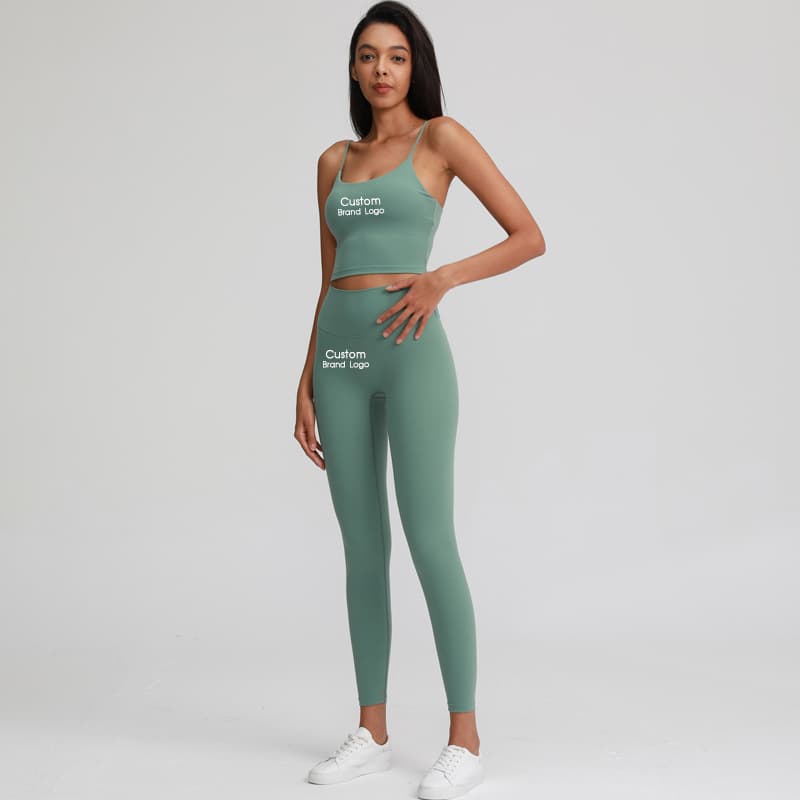
Direct answer. A hot yoga apparel manufacturer brief should define the class context, garment roles, coverage boundaries, lining zones, colour questions, seams, logo method and care-review evidence. Do not assume a fabric name, composition or product image proves moisture management, opacity, comfort, colourfastness or wash durability; approve the identified physical sample under a written review method.
This guide is for activewear brands, yoga studios and B2B buyers developing apparel for heated yoga classes. The buyer decision is not simply which material sounds “technical.” It is how to convert the intended class, outfit, colours and care expectations into product questions that a supplier can develop, sample and document.
The commercial path is factory custom manufacturing. Existing Yoga products can provide useful silhouette and construction references, but any requested change to fit, material, lining, coverage, seam route, colour, logo or size range requires controlled development. With more than 30 years of garment-production experience and coordination across partner factories, inPACE can support design discussion, material review, sampling and production handoff. Every result still depends on the confirmed product scope, physical evidence and buyer approval.
What should a hot yoga apparel manufacturer brief define first?
Start with the garments and decisions, not a performance adjective.
Send:
- The class format and environmental conditions supplied by the buyer or studio.
- Intended customer, selling market and product roles.
- Top, bra, legging, short and optional arrival-layer references.
- Intended fit and coverage boundaries.
- Neckline, armhole, strap, lower-edge, waistband, rise and inseam questions.
- Main material, lining, elastic, binding and thread direction.
- Light, mid and dark colour plan.
- Areas where the buyer expects moisture exposure or visible appearance changes.
- Logo artwork, method proposal and measured placement.
- Base sample size, intended size range and fit-review wearers.
- Care instructions or review procedure that the buyer wants evaluated.
- The purpose of each sample and the person authorised to approve it.
The broader Yoga Wear Manufacturer guide helps buyers compare studio collection roles and supplier capability. This page is narrower: it creates a hot-yoga evidence plan without promising that a named fibre, finish or silhouette will perform in a particular class.
How should class context change the product brief?
“Hot yoga” can refer to different class formats, room conditions, movement sequences and customer expectations. The brand should document the context it intends to serve instead of asking the manufacturer to infer one universal use case.
| Brief area | Buyer defines | Physical review asks | Do not assume |
|---|---|---|---|
| Class context | Intended format, duration and buyer-supplied environment | Which garment positions, transitions and exposure conditions belong in the review? | That every heated class has identical conditions |
| Product role | Bra, top, legging, short or arrival layer | What must each garment cover, support visually and coordinate with? | That one outfit solves every studio programme |
| Material direction | Handfeel, stretch, recovery, surface and construction questions | What can be observed or tested on the actual garment and colour? | That composition or marketing terminology proves performance |
| Care expectation | Buyer’s intended wash, dry and handling instructions | Which measurements, colours, surfaces, seams and logos are compared before and after? | That one wash or one swatch approves a production programme |
The buyer or a qualified class professional should choose the movement context. The garment supplier should not prescribe exercise technique, hydration, temperature limits or health guidance. Apparel review records product observations; it does not make a class medically safe.
Which product roles belong in the first hot-yoga capsule?
A focused first capsule gives clearer evidence than a broad range of unresolved silhouettes.
Consider:
- A close bra or top with an identified neckline, armhole, strap route and lower edge.
- A legging or short with an identified waistband, rise, gusset, seam route and opening.
- A second top only when it tests a different coverage or lining decision.
- An arrival layer only when it has a real before-class, after-class or retail role.
The Yoga Activewear collection can help name product roles. The Square-Neck Cross-Back Sports Bra supports discussion of neckline, strap route, back coverage, lining and lower-edge construction. The High-Waist Flared Yoga Pants can support waistband, rise, inseam, opening and colour-review questions.
These pages are product-direction references. They do not prove the current material, opacity, moisture behaviour, wash result, stock, price, minimum or hot-yoga suitability. If a buyer changes the underlying product, use the Custom Activewear development route and approve the new sample.
How should coverage and opacity be reviewed?
Coverage is a decision that should be tied to a garment, colour, size, wearer, light and body position. The word “opaque” without those conditions is incomplete.
Define:
- The garment and sample revision.
- Material, lining and colour identity.
- Sample size and wearer.
- Lighting selected by the buyer.
- Dry or conditioned state included in the review.
- Body positions and stretch zones to observe.
- Front, side and back viewing distance.
- Acceptance boundary.
- Person who records the result and person who approves it.
Do not use a dark swatch to approve a pale finished garment. Do not use a flat material to approve a double-curved or highly stretched product area. A waistband may have more layers than a leg panel; a lined top may differ from an unlined side panel; a print may behave differently from a solid. Record each relevant zone.
Avoid treating “squat proof” as a technical result. State the physical condition and observation instead: for example, “On sample HY2, colour L2, size M, review back-leg coverage in the buyer-selected standing and forward-fold positions under the agreed studio light.” The buyer can then approve, revise or request more evidence without turning a marketing phrase into a production specification.
What should a lining brief include?
Lining can serve different product purposes, and each purpose affects the pattern and construction.
Identify:
- Full or partial lining zone.
- Intended coverage or internal-finish purpose.
- Main and lining material identities.
- Stretch-direction relationship.
- Edge, seam and elastic attachment.
- Cup pocket or cup construction when applicable.
- Whether lining should be free, anchored or integrated by panel.
- Colour relationship between shell, lining and components.
- Bulk, edge visibility and seam-intersection questions.
- Review sizes and resample triggers.
| Garment zone | Lining question | Evidence to retain | Reopen when |
|---|---|---|---|
| Front top or bra | Is the intended coverage and inner finish achieved on the actual colour and size? | Front, side and inside views linked to the sample identity | Shell, lining, colour, neckline or size changes |
| Cup or pocket area | Which internal construction was reviewed, and how are edges and openings finished? | Component list, inside photos and physical sample | Cup, pocket, lining, elastic or attachment changes |
| Lower edge or underband | Does the lining relationship add bulk or alter the intended edge position? | Measured edge, worn views and construction record | Elastic, seam, lining extent or circumference changes |
| Legging panel | Is lining local or full, and how does it affect seam, stretch and colour appearance? | Zone map, material identity and movement-linked views | Panel route, colour, material or size changes |
A double layer is not automatically cooler, more supportive, more opaque or more comfortable. It can change handfeel, stretch, recovery, bulk, drying behaviour, sewing response and cost. These outcomes require the actual materials and product evidence.
How should light, mid and dark colours be compared?
Colour can change what a buyer sees in a material or garment. The same construction may present differently across pale, saturated and dark shades.
Build a colour plan that records:
- Colour reference and approval method.
- Main fabric, lining, elastic, binding, thread and logo colour.
- Material surface and finish.
- Dry appearance under the buyer’s chosen light.
- Conditioned appearance included in the project review.
- Coverage observations by garment zone.
- Shade relationship at seams and layered areas.
- Potential colour transfer or staining questions that require a defined test.
- Approval owner and retained reference.
The Activewear Colour Approval guide explains how to connect colour standards, materials, components, lighting and production references. A screen image is not an exact production standard. A product photograph can help position a palette, but it cannot approve shade, metamerism, colourfastness or lot consistency.
If the project uses light colours, do not promise coverage before the garment review. If it uses dark or saturated colours, do not promise colourfastness or transfer resistance without a method and evidence. The appropriate lab or supplier test, acceptance criterion and sample condition should be named where the buyer requires a technical claim.
What does a useful “sweat-zone” review mean?
In a product brief, a sweat-zone map is an exposure and appearance question, not proof that the garment manages moisture.
The buyer can mark:
- Centre front and back.
- Underarm and side body.
- Underbust or lower edge.
- Waistband and front/back rise.
- Inner thigh, knee and other selected leg areas.
- Strap, binding and elastic intersections.
- Logo and label locations.
For each zone, state what the team will observe: visible darkening, cling, surface change, edge movement, seam appearance, logo appearance, lining relationship or another project-specific question. State how the sample is conditioned and who approves the observation.
Do not infer “sweat wicking,” “quick drying,” “breathable,” “cooling” or “antibacterial” performance from fibre content, knit name, handfeel or an image. If the brand wants one of those claims, it needs a defined test method, test specimen, acceptance level and evidence appropriate to the intended market and claim.
The Choose Activewear Fabric guide helps separate intended use, stretch, recovery, coverage, surface, construction and testing questions. Use a swatch to narrow options, then review the actual garment.
Which seams and edges should the buyer map?
Hot-yoga product review should identify seams and edges that combine close fit, stretch, layers, elastic or repeated contact.
Map:
- Neckline and armhole finishes.
- Strap attachment and intersections.
- Cup pocket or lining openings.
- Lower edge or underband.
- Waistband joins and top edge.
- Front and back rise.
- Gusset and inseam intersections.
- Side, contour or decorative panel seams.
- Hem or leg opening.
- Logo-adjacent seams.
The Activewear Seam Construction guide explains why seam type, stitch, allowance, thread, material, position and assembly order must be reviewed together. “Flat seam” is not enough information to approve comfort, strength or elongation.
Record any visible or wearer-reported issue without assigning a cause too early. Fit, sample size, material, elastic, seam location, construction thickness, body position or review condition can contribute. The technical team should propose the next controlled change and identify what must be rechecked.
How should tops and bras be reviewed?
For tops and bras, connect coverage and internal construction to the named outfit and size.
Observe:
- Neckline position at rest and in the selected positions.
- Armhole and side coverage.
- Strap position and back relationship.
- Lower-edge or underband position.
- Shell and lining behaviour at edges.
- Cup, pocket or inner layer when included.
- Top body length and overlap with the waistband.
- Whether the wearer adjusts neckline, armhole, strap or hem.
- Logo visibility before, during and after the review.
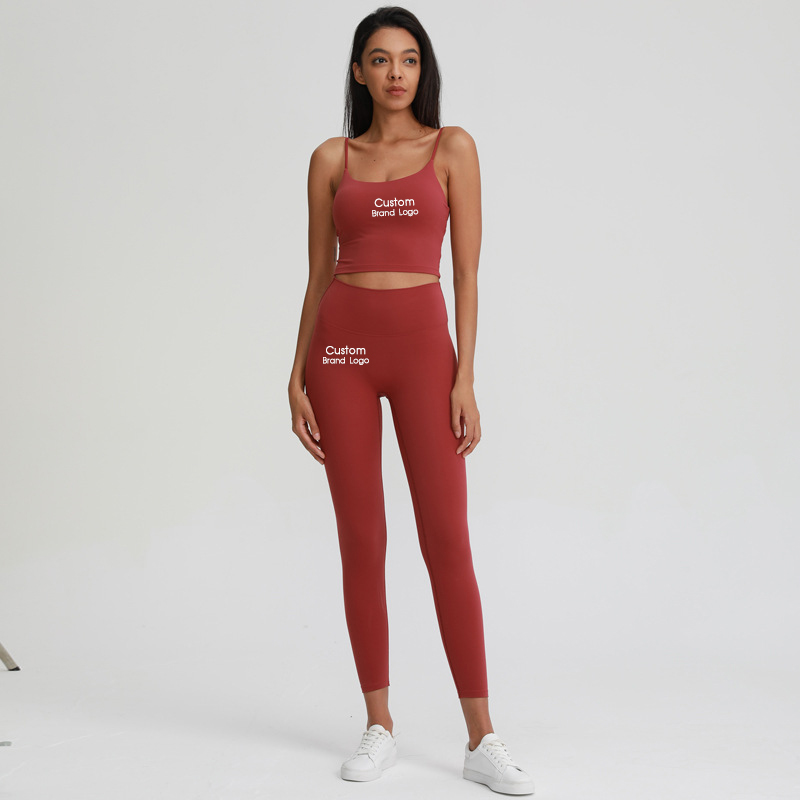
*Real inPACE product-direction image. It does not document a hot-yoga test, material performance, universal coverage, support level, customer programme or production approval.*
The image supports a precise design conversation: the buyer can mark the square neckline, fine straps, body length, waistband relationship and logo zones. It cannot approve the intended lining, size range or class use.
If the brand requests removable cups, fixed cups or another internal support route, identify the exact construction reviewed. The outside silhouette alone cannot approve the inner components.
How should leggings, shorts and flared bottoms be reviewed?
Review the lower garment as a system: waist opening, waistband, rise, hip, thigh, gusset, seams, inseam and opening.
For close leggings or shorts, record:
- Waistband height and position.
- Front and back rise.
- Gusset shape and seam intersections.
- Hip, thigh and leg relationship.
- Selected coverage zones by colour.
- Hem or leg opening.
- Any wearer adjustment.
- Top-to-waistband overlap.
For flared bottoms, also record knee position, flare start, opening, inseam and footwear context. A hot-yoga brief should state whether a flare is intended for the class itself, arrival styling or another studio-to-street role; do not assume the silhouette belongs in every heated session.

*Real inPACE product-direction image. It does not prove hot-yoga suitability, opacity, moisture behaviour, wash durability, fit approval or current availability.*
When a bottom material or colour changes, reopen the relevant coverage, fit, seam and care observations. Do not transfer approval from one colourway because the measurements are unchanged.
How should logo application be planned?
Logo decisions should follow the material, panel and stretch zone.
Record:
- Approved artwork file and revision.
- Method proposed, subject to feasibility confirmation.
- Exact dimensions and measured placement.
- Garment panel, material, colour and size.
- Stretch direction and expected garment position.
- Proximity to lining, elastic, seam or edge.
- Review condition before and after the buyer’s care procedure.
- Physical evidence required for approval.
Printing and embroidery can be discussed when relevant to the project, but neither should be promised suitable before artwork, material, placement and construction are confirmed. A logo method that works on a stable arrival layer may not transfer to a highly stretched bra or legging panel.
If the buyer wants a performance or durability statement for the logo, define the test and acceptance criterion. “Washable logo” is not a complete approval record.
What should a wash-review record contain?
A care review should be reproducible enough for the team to understand what changed and what did not. It is not automatically a formal laboratory test.
Use a record with:
- Sample code, revision, size and colour.
- Main material, lining, elastic, thread, logo and label identities.
- Garment measurements before review.
- Exact care procedure, equipment and products used.
- Number of cycles selected by the buyer.
- Drying and conditioning method.
- Measurements after review.
- Colour, surface, seam, edge, logo and label observations.
- Photographs taken under a consistent setup.
- Decision, open issue and resample trigger.
The Activewear Wash Sample Brief explains how to separate a buyer’s visual and dimensional care review from a standardized colourfastness, dimensional-stability or other technical test. If a claim or market requirement needs a formal method, identify the responsible test party and evidence.
Do not call a garment “wash resistant,” “colourfast” or “durable” because it looked acceptable after one informal cycle. State exactly what procedure and sample produced the observation.
How should fit-model and size-range evidence be recorded?
Use an identifiable fit record.
Include:
- Controlled wearer ID and relevant body measurements.
- Sample code, revision, colour and size.
- Top, bottom and layer pairing.
- Starting garment position.
- Named movement or body position.
- Coverage, seam, edge or fit point being observed.
- Observation and any wearer adjustment.
- Requested action and decision owner.
- Resample trigger.
The Activewear Fit-Model Brief helps separate wearer identity, measurement, movement, observation and action. One wearer supports one named sample decision; the evidence does not approve every customer or size.
After the base sample is stable, use the Activewear Size Grading guide to document measurement progressions, pattern relationships, components and selected cross-size samples. Light and dark colours, lined and unlined variants, or different materials may need separate physical evidence even when the size names match.
How should sample comments separate evidence from a claim?
Write comments while the sample, wearer and review condition are still identifiable. A useful comment states what the reviewer saw, where and when it appeared, what outcome the buyer wants and what the next sample must demonstrate.
Avoid “fabric is not breathable,” “legging is not sweat proof” or “logo will not last.” Those sentences make broad performance judgments without a defined method. Record the narrower evidence instead: “On sample HY3, colour L1, size M, the back-leg surface became visibly darker in the buyer’s selected conditioned review; photograph references 12–14 show the agreed zone. The buyer will compare an alternative material in the same pattern, colour family and review setup.”
That record preserves:
- Sample, colour and size.
- Wearer or specimen identity.
- Review condition and garment zone.
- Observation rather than a universal conclusion.
- Requested comparison or product action.
- Evidence needed to close the issue.
- Approvals that remain valid and those that reopen.
When several people review the garment, consolidate their comments. A class professional can define the movement context, a fit reviewer can measure balance and coverage, the brand can approve appearance and customer promise, and the technical team can propose material or construction changes. Name the final decision owner so a comment in a group chat is not treated as production approval.
Close each issue with a status such as approved, accepted with a recorded limitation, revise and recheck, or open pending a named test. If a later change affects material, lining, colour, seam, logo or care instruction, connect it to the earlier decision instead of deleting the history.
What should each hot-yoga sample prove?
Give every sample a decision and an exit condition.
| Sample purpose | Inputs required | Review focus | Exit evidence |
|---|---|---|---|
| Silhouette and fit | Reference, measurements, intended coverage and wearer | Neckline, armhole, straps, lower edge, waistband, rise and balance | Marked comments and next pattern action |
| Lining and construction | Shell, lining, elastic, cup and seam proposal | Layer zones, edges, bulk, stretch relationship and inside finish | Approved physical construction or defined revision |
| Colour and coverage | Controlled materials, colour reference, size and light | Zone-specific appearance in buyer-selected conditions | Views, observations and approval by colour/size |
| Logo confirmation | Artwork, method, dimensions and placement | Surface, stretch zone, colour, seam and edge relationship | Approved strike-off or branded sample |
| Care review | Identified complete sample and written procedure | Measurements, colour, surface, seams, edges, logo and labels | Before/after record with open issues closed |
| Size evidence | Grade rules, named sizes and identified wearers | Key proportions, coverage and component relationships | Size-specific comments and approval status |
If the material, colour, lining, pattern, seam, elastic, logo or care instruction changes, state which approvals remain valid and which must reopen. A sample is evidence for its identified configuration, not for every future variation.
When is the factory-custom route appropriate?
Use factory-custom development when the buyer needs:
- A new or materially changed pattern.
- Project-specific material or colour.
- Changed neckline, armhole, strap, back or body length.
- New lining, cup, elastic, binding or inner construction.
- Changed waistband, rise, gusset, seam route, inseam or opening.
- A defined coverage or opacity review.
- A project-specific logo method and stretch-zone placement.
- A controlled care-review or technical-test plan.
- A new size range and grading rules.
A catalogue-informed private-label route may fit when an accepted base garment remains unchanged and the work is limited to confirmed branding, labels and packing. Changing the garment and calling it private label does not remove the need for development and sampling.
inPACE may coordinate different partner factories or specialist processes when the product mix requires it. Coordination still needs one controlled specification, sample identity, approval record and production handoff. The specific factory route, printing, embroidery, wash effects, timing and commercial conditions require project confirmation.
Buyer checklist for a hot-yoga apparel brief
Before requesting a quote or sample, confirm that the team can provide:
- Class format and buyer-supplied environmental context.
- Intended customer and product roles.
- Reference garments, sketches or tech packs.
- Intended fit and coverage boundaries.
- Neckline, armhole, strap, lower-edge, waistband, rise and inseam questions.
- Main material, lining and component direction.
- Light, mid and dark colour plan.
- Zone-specific coverage and moisture-exposure questions.
- Logo artwork, method proposal and measured placement.
- Base sample size, size range and fit-model information.
- Care-review procedure and any formal test requirement.
- Sample purpose, reviewers and approval owner.
- Quantity direction, destination and desired launch date as project context.
The inPACE process overview shows how a brief can move through feasibility, material review, sampling, approval, production coordination, QC and packing. Share the hot-yoga product roles, material and colour direction, coverage and lining questions, logo brief and required sample evidence with inPACE when the project is ready for a factory-custom discussion.
Product directions
Explore relevant activewear products
Use these product pages as practical references for your brief, then confirm materials, fit, customization, and production details through sampling.
Yoga Activewear Collection
Use real studio product directions to define bra, top, bottom and layer roles before writing the hot-yoga evidence plan.
View product directionSquare-Neck Cross-Back Sports Bra
Use this real product direction to mark neckline, strap, back, lining and lower-edge questions for physical sample review.
View product directionCustom Activewear Development
Use factory-custom development when material, colour, lining, coverage, fit, seams, logo or care requirements must change.
View product directionFAQ
Buyer questions
What should a hot yoga apparel manufacturer brief include?
Include the class context, product roles, intended fit and coverage, reference garments, material and lining direction, colour plan, zone-specific review questions, seams, logo scope, base size, size range, care-review procedure, sample purpose and approval owner.
Does nylon-spandex automatically make a fabric suitable for hot yoga?
No. Composition alone does not prove moisture management, drying, opacity, comfort, recovery, colourfastness or wash durability. Review the actual material in the intended garment and colour, and use a defined test method when the brand needs a technical claim.
How should opacity be reviewed for hot-yoga leggings?
Identify the sample, material, colour, size, wearer, lighting, condition and body positions. Review each relevant garment zone and retain the observation. A result on one dark sample should not be transferred to a pale colour, another size or a revised pattern.
Does adding lining guarantee coverage or support?
No. Lining changes layers, stretch, bulk, edges and sewing relationships. Define its zone and purpose, then review the actual shell, lining, colour, size and construction. Do not claim coverage, support or comfort without suitable physical evidence.
Can a product image prove moisture-wicking or quick-drying performance?
No. An image can show silhouette, colour and visible construction direction. Moisture-wicking, drying, breathability and similar claims require a defined method, specimen, acceptance criterion and supporting evidence appropriate to the claim.
What should a hot-yoga apparel wash review record?
Record sample and component identities, measurements, exact care procedure, cycle count, drying and conditioning, before-and-after colour and surface views, seams, edges, logo, labels, decision and resample trigger. State whether the review is informal or a named technical test.
Does one fit sample approve the whole hot-yoga size range?
No. A base sample supports the named garment, colour, size and wearer. The range still needs grade rules, key measurements, component relationships, selected cross-size evidence and separate review where material, colour or lining changes the product.
When should a hot-yoga apparel sample be made again?
Resample when a change can affect an approved decision, including pattern, measurements, material, colour, lining, elastic, seam, neckline, strap, waistband, logo, care instruction or size pairing. State what the new sample must prove.