
What should an activewear wash sample brief define before sampling?
An activewear wash sample brief should define the garment and sample version, material and construction context, intended visual and hand-feel direction, colour relationship, branding areas, sample purpose, evidence, and approval boundary. It helps a brand and factory review a specific wash-related product question without treating one physical piece as proof for every material, colourway, size, artwork, or later production version.
The useful buyer question is not simply “can this garment be washed?” It is “what appearance or material relationship is this sample meant to help the team review, on which garment version, and what must remain open?” A brand may need to discuss a washed visual direction, the relationship between a body material and contrast panel, the way a colour direction reads beside a logo, or whether a garment area, construction detail, lining, trim, or component must be present before the sample can answer the intended question.
inPACE can discuss sampling work that includes washing where it is part of the selected product brief. This is a Factory custom manufacturing topic when the requested wash direction changes the material, colour, surface, construction, branding, sample route, or evidence required. A catalogue-informed reference can still help identify a garment starting point, but an existing product image should not be treated as proof that a changed finish, fabric, colour relationship, or sample result is already approved.
Why is a wash sample brief different from a fabric swatch or a colour reference?
A fabric swatch can begin a material conversation. A colour reference can describe a visual direction. Neither necessarily shows how the selected material, garment panels, seams, trims, logo areas, or construction details relate on the physical activewear piece that the buyer expects to review. A wash-sample brief identifies that connected product context before the team assumes that a flat material reference answers a garment decision.
For example, a brand may have a preferred visual direction but still need to state which body material, contrast material, panel, seam, zipper, logo, label, or trim is relevant to the review. It may need to decide whether the sample is reviewing an early development direction, a material and finish relationship, a colourway question, a decoration relationship, or a later pre-production reference. The brief should make that purpose visible and state which inputs are approved, proposed, substituted, or open.
The fabrics and trims overview is a useful starting point for material direction. The wash-sample brief gives the team a narrower record: what physical garment relationship should be reviewed now, what evidence must remain connected to that sample, and what decision does the buyer need next.
When does a wash direction require factory-custom development?
Start by separating an established product reference from a changed product scope. A brand may choose an existing garment direction and discuss light branding, labels, or packing for a wholesale-oriented project. The actual style, colour, material, logo, labels, packing, quantity direction, and project conditions still need review. A selected reference does not remove the need to confirm whether its visual and material direction fits the proposed program.
Move into a Factory custom manufacturing review when the buyer needs a new wash-related appearance, different material direction, changed colour relationship, contrast panel, altered construction, logo or artwork context, revised fit, new component, or a controlled sample sequence. The route is not determined by the word “wash” alone. It depends on whether the physical product and its required evidence have changed beyond the established reference.
For a close-fit reference such as the Zip-Neck Sculpt Set, a buyer can use the page to name the body, panel, zipper, sleeve, logo area, and intended garment context. When the material, colour, finish, construction, component, or sample purpose changes, the factory-custom brief should show that changed scope before the reference is used as an instruction.
What information belongs in an activewear wash-sample brief?
The following table keeps the finish question tied to the actual garment and the next buyer decision. It is a planning record, not a test report, certification, universal material claim, or promise that a sample result will apply to every later garment condition.
| Brief field | What the buyer can record | Why it matters in the sample | Useful next question |
|---|---|---|---|
| Garment and version | Style code, garment type, current sample version, reviewed size, and relevant colourway | A visual or hand-feel observation must attach to a real physical piece | Which version does this observation apply to? |
| Sample purpose | Development, material and finish review, colourway review, decoration context, fit context, or later pre-production purpose | One piece should not silently approve every product decision | What exact question should the sample answer? |
| Material and construction context | Body and contrast materials, lining, elastic, binding, zipper, seam, panel, pocket, or trim that must be present | Surface direction can depend on connected garment parts | Which material or construction input is part of the review? |
| Intended direction | Marked reference, descriptive visual direction, intended hand-feel question, and any clearly stated limits | A broad request such as “make it washed” is not a controlled instruction | What relationship should the team compare on the physical garment? |
| Colour and branding context | Named colour reference, contrast relationship, logo or artwork version, label, or visible trim in scope | One colour or logo relationship may not represent all planned combinations | Which colour and branding fields does this sample actually prove? |
| Evidence record | Dated sketch, swatch, reference image, marked photograph, current file version, reviewer, and owner | A record prevents a result being moved to another style or material | Which reference is current and which is only exploratory? |
| Decision status | Approved for the stated purpose, revise, clarify, substitute, or open | A useful sample needs an explicit next action | What must be changed or confirmed next? |
| Approval boundary | Items approved for this one review and items still requiring evidence | A wash review should not become a blanket bulk release | Which sizes, materials, colours, decoration, labels, packing, or production points remain open? |
The value of this table is clarity. A buyer does not need every final answer before requesting a discussion. It is better to state “body-material and colour relationship under review” or “branding area excluded from this sample purpose” than to let an early reference become an unintended production instruction. The factory can then respond to the real product decision instead of guessing what a broad finish description means.
How do materials, panels, trims, and construction affect the wash review?
The review concerns a garment system, not a detached finish label. A changed body material, contrast panel, lining, elastic, binding, zipper, seam, pocket, mesh, logo area, or trim can change the visual and hand-feel question that a physical piece provides. The brief should identify the inputs that need to be present in the sample and the inputs that are still substitute, proposed, or open directions.
This does not require the buyer to claim a laboratory result or a universal performance outcome. It lets the team identify whether the next action is a material discussion, an altered construction, a colour review, a branding check, another sample, or a later product approval. A sample made with an available development material can be useful when the record clearly distinguishes it from a confirmed production material.
The activewear seam construction guide can help a buyer name the construction areas that may affect the garment context. Use it to support a specific brief, not to assume that one construction reference decides the material and finish question for a changed product.
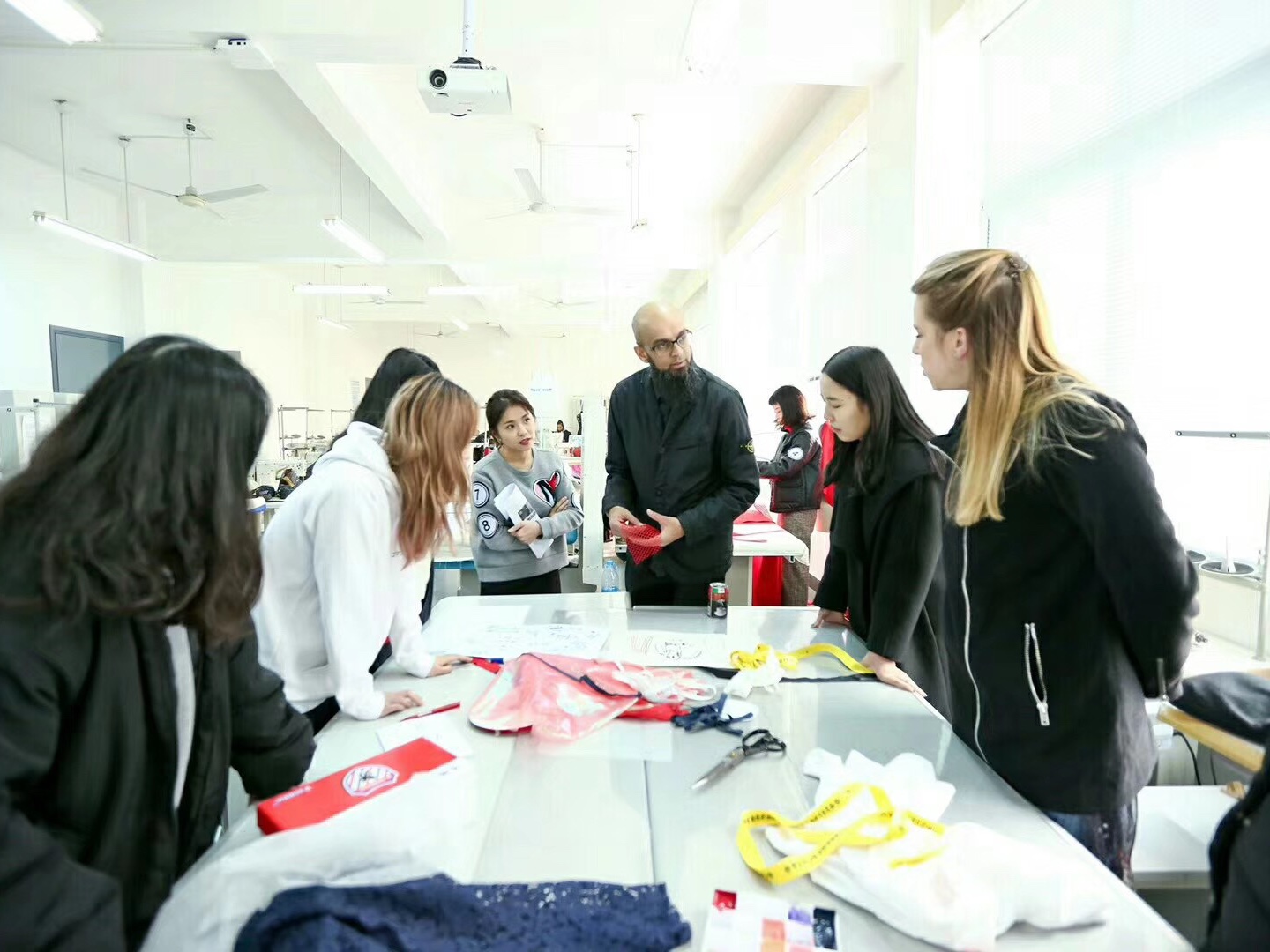
The image shows why a wash question needs a linked product record. The material, garment version, colour relationship, component areas, reference evidence, and next action should remain connected before the team decides whether to revise, approve a limited point, or request another physical piece.
How should colour, print, embroidery, and visible branding be handled?
Name the visual fields that belong to the current review, and mark the rest as open. A buyer can state the material and colour relationship, the artwork or logo version, the garment area, and whether the sample needs to show that relationship. It should also state if the current sample is not intended to review a logo, print, embroidery, labels, packing, or another brand detail.
This boundary protects useful work. A material-and-finish sample may reveal a question about a colour or visible logo area without approving its final placement or decoration method. A print or embroidery review may need its own garment area and evidence. The activewear print-placement guide explains how to tie artwork to a named panel, seam, opening, or landmark instead of relying on a general visual reference.
Avoid treating “same colour” or “same finish” as a universal approval. A different body material, contrast panel, logo, trim, construction detail, or garment size can create another buyer decision. Record what the current physical piece actually demonstrated and what still needs a separate review.
What should the team check on the physical wash sample?
Check only the relationships named in the brief. The team may review the stated visual direction, hand-feel question, body and contrast material relationship, relevant colourway, panel or seam context, trim or component visibility, and whether the physical garment presents the selected evidence. The team can then decide whether the observation supports the current purpose, requires a revision, needs a clearer material or colour direction, or should move to another controlled sample.
Do not turn a sample review into an unsupported test, durability, compliance, or performance claim. One physical garment can provide useful evidence for the stated product question and conditions. It does not automatically prove an identical result across every material lot, size, colourway, decoration, use situation, or later production garment. Record the observation and next action in the project record instead of expanding it into a broad promise.
The activewear sample types guide explains why development, fit, material and trim, decoration or wash, size-set, packing, and pre-production samples support different decisions. A wash sample can answer a narrow product question while leaving fit, grading, final artwork, labels, packing, or production release open.
How should feedback be recorded after the review?
Record feedback against the exact sample. Include the style and version, reviewed size, colourway, material and trim references, construction context, named visual or hand-feel observation, reference image or marked photo, requested action, owner, decision status, and the next evidence needed. A comment such as “make the finish softer” becomes useful only when the team can identify the product, material, physical garment, intended relationship, and decision that the next sample must address.
Separate an observation from a proposed manufacturing solution. An observation may identify a material, colour, surface, panel, seam, trim, or branding relationship. The factory can then review whether the next action concerns the material, construction, component, colour direction, artwork context, or another sample. This is more reliable than combining messages from different sizes, fabrics, colourways, or reference versions.
The activewear sample feedback guide provides a controlled revision-record structure after a physical review. The wash-sample brief comes earlier: it defines the product context and question that make later feedback comparable.
When can the wash-sample decision move toward production planning?
Move to a later stage only when the required current decision has been recorded. A brand may approve a visual or material direction for a stated sample purpose while still needing to review another size, colourway, material, component, logo, print, embroidery, label, packing condition, or pre-production reference. Make those open items visible instead of using a single broad approval label.
If the product, material, construction, branding, packing, and production instructions are converging, the activewear sample-to-bulk production guide explains how controlled records can support a production discussion. For inPACE projects, general planning commonly allows about 5–10 days for sampling and 25–50 days for production after relevant approvals and project conditions are confirmed. These are planning ranges, not fixed commitments. Product complexity, material availability, colourways, printing, embroidery, washing, labels, packing, quantities, and revision requests can change the applicable route and timing.
What should a buyer prepare before requesting an activewear wash sample?
Use this checklist before asking a factory to prepare or review a wash sample:
- Identify the style code, garment category, current sample version, reviewed size, and intended product role.
- State whether the request is catalogue-informed or Factory custom manufacturing, and name the reason for that route.
- Name the exact material, panel, lining, trim, component, seam, or garment area that the sample must clarify.
- Describe the intended visual or hand-feel direction in relation to a specific reference and current garment version.
- Attach a marked sketch, fabric reference, current tech-pack page, image, sample photograph, or physical piece that identifies the direction.
- State the colourway, contrast relationship, artwork, logo, label, or visible trim that must be present, excluded, proposed, substituted, or left open.
- Identify the sample purpose and the exact evidence the physical garment needs to provide.
- Keep wash and material questions separate from fit, grading, print placement, labels, packing, and bulk-release decisions unless the sample is deliberately assigned to prove them.
- Record the current observation, requested next action, owner, decision status, and date.
- State which inputs are approved, proposed, substituted, or still open for the named review.
- Ask the factory to identify any assumption that must be confirmed before another sample or quotation discussion.
- Keep later quantity and commercial terms distinct from the current product evidence and approval record.
This checklist lets a factory respond to a real product decision without asking the buyer to claim a test result, accept a fixed commercial term, or treat a visual reference as a complete production specification.
How can inPACE Sports support a controlled wash-sample review?
inPACE Sports can review a buyer's product reference, intended visual and material direction, current garment version, colour and branding context, construction and component areas, sample purpose, packing points, quantity direction, and unresolved questions to discuss an appropriate Factory custom manufacturing route. Ningbo Yinshan Garments Factory can connect the applicable product-development, sampling, material and trim, washing, sewing, QC, packing, and production discussions to the actual brief.
Use the product directions above to decide whether the request can begin from an established garment direction or needs deeper custom-development evidence. When the buyer changes the finish direction, material, colour relationship, fit, construction, component, branding, or sample plan, the factory should review the changed brief so the evidence and approval boundary match the actual product scope.
How should a buyer start an activewear wash-sample discussion?
Send the style reference, current sample version, reviewed size, material and construction context, desired visual direction, colour and branding context, reference evidence, sample purpose, open items, and the exact next decision. Share an activewear wash-sample brief when the team needs a controlled product review rather than an untracked request for a “washed look.”
Product directions
Explore relevant activewear products
Use these product pages as practical references for your brief, then confirm materials, fit, customization, and production details through sampling.
Activewear Performance Collection
Use an established product direction to identify the garment, panel, colour, logo, and material context that a wash-sample brief must make visible.
View product directionZip-Neck Sculpt Set
Use this close-fit reference to name the body fabric, zipper, panel, seam, colour, and branding questions that could require a controlled wash-sample review.
View product directionCustom Activewear Development
Use the factory-custom route when the desired wash appearance, material direction, colour relationship, construction, or sample evidence changes the product scope.
View product directionFAQ
Buyer questions
What is an activewear wash sample brief?
It is a product-development record that defines the garment version, reviewed size, material and construction context, intended visual and hand-feel direction, colour and branding relationship, sample purpose, evidence, approval boundary, and next decision. It helps a buyer and factory review one stated wash-related product question without treating one piece as approval for every variation.
What should a wash-sample brief include?
Include the style and version, reviewed size, sample purpose, relevant materials, panels, seams, trims, components, desired visual direction, colourway, branding context, marked evidence, current open items, owner, decision status, and the next proof needed. Mark important inputs as approved, proposed, substituted, or open.
Is a wash sample the same as a fabric swatch?
No. A swatch can begin a material discussion, while a wash sample brief defines the garment context that the physical piece needs to show. The relevant body material, contrast areas, construction, components, colour relationship, and review purpose should remain connected to the same sample.
Does one wash sample approve every colourway and size?
No. A wash sample can support a defined decision for the stated garment version and conditions, but it does not automatically approve another material, size, colourway, construction, logo, label, packing requirement, or production version. Record the approval boundary and later evidence still required.
What should be checked on an activewear wash sample?
Check the specific relationships named in the brief, such as the intended visual direction, hand-feel question, relevant body and contrast materials, colourway, panel, seam, trim, component, or branding context. The appropriate review depends on the actual garment and sample purpose.
How should wash-sample feedback be recorded?
Record it against the exact style, version, reviewed size, colourway, materials, construction context, reference evidence, observation, requested action, owner, decision status, and next evidence needed. Separate the observed product question from the proposed manufacturing solution.
How long do activewear samples and production normally take?
For inPACE projects, general planning commonly allows about 5–10 days for sampling and about 25–50 days for production after relevant approvals and project conditions are confirmed. These are planning ranges, not fixed commitments; product complexity, materials, colours, processes, packing, quantities, and revisions can change timing.