
Quick answer
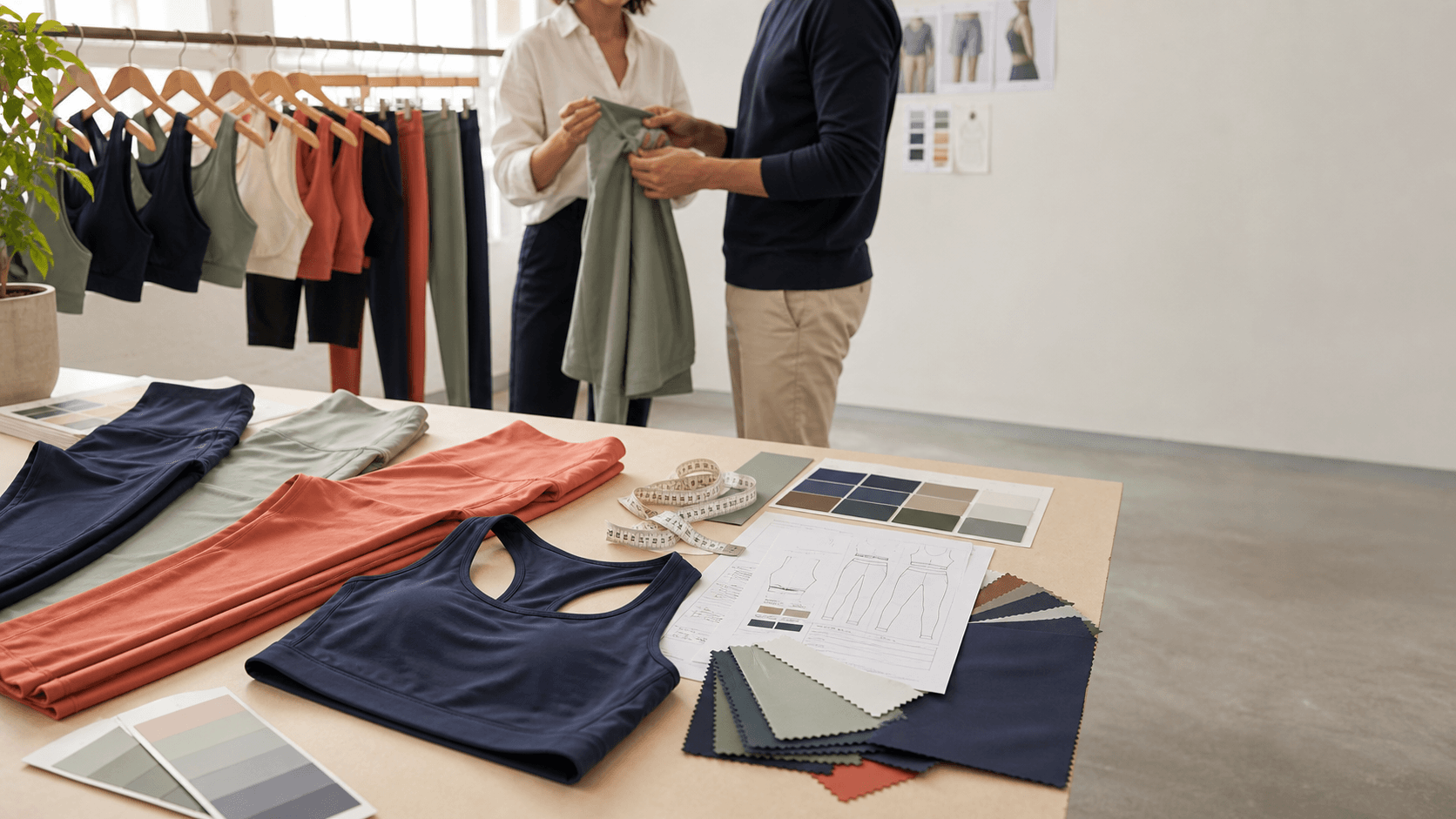
Choose a yoga wear manufacturer that can connect product development, fabric selection, fit sampling, private-label details, quality control, and export preparation. MOQ, cost, and timing should be reviewed against the actual fabric, colourways, logo method, packaging, style complexity, and order plan.
Product starting points
Four useful routes to discuss before sampling
Yoga activewear directions
Use existing yoga silhouettes to explain the desired set, bra, legging, or studio layer before deciding what needs to change.
Review this routeFactory custom development
Choose this route when fit, fabric, construction, support, colour, or product details need to be developed around your brief.
Review this routePrivate-label presentation
Review logo, labels, hangtags, bags, barcodes, and carton information against the actual yoga garment and sales channel.
Review this routeYoga manufacturing overview
See the B2B production context for yoga programmes before sharing a sample brief or requesting an initial quotation.
Review this routeWhat should you look for in a yoga wear manufacturer?
For a new collection, start with five questions: Can the manufacturer develop the product you need? Can they explain fabric trade-offs? Is the sample process clear? Can they handle your logo and retail details? Will the quote state what is included?
Yoga apparel sits close to the body and is often made with high-stretch fabrics. Small issues in recovery, waistband tension, seam placement, gusset construction, or opacity become obvious when a customer bends, stretches, or washes the garment. Compare the manufacturer's process and documentation—not only the first unit price.
1. Start with the collection brief, not a factory list
A supplier cannot make a realistic recommendation from “I need yoga leggings” alone. Prepare a short product brief with:
- Product types: leggings, sports bras, tanks, long sleeves, shorts, skirts, or matching sets.
- Intended use: yoga studio, pilates, low-impact training, athleisure, or e-commerce launch.
- Reference material: photos, sketches, an existing sample, measurements, or a tech pack.
- Fabric direction: soft or slick handfeel, light or firm compression, stretch, opacity, weight, and finish.
- Colorways, size range, logo placement, labels, hangtags, packaging, estimated quantity, destination market, and launch window.
This helps a factory separate a catalogue-based route from fully new development. For a complete request, use the custom activewear RFQ guide.
2. Check yoga-specific product and fit knowledge
Ask how the manufacturer reviews waistband rise, elastic width, gusset, front seam, leg opening, bra support, lining, and the relationship between body and garment measurements.
For leggings, discuss waistband recovery, coverage during movement, seam comfort, panel shape, stretch direction, and how the fabric behaves at full extension. For sports bras, discuss support level, lining, elastic, strap placement, and cup construction. A soft studio bra and a higher-support training bra may need different development decisions.
Clear fit comments matter. “Make it tighter” is less useful than “reduce the waist opening by 1 cm, keep hip ease unchanged, and confirm recovery after stretch.”
3. Ask practical fabric questions
Fabric is one of the largest variables in yoga wear development. A soft handfeel may suit studio wear, while firmer fabric may suit a sculpting legging or supportive set. The intended activity, silhouette, target customer, color, and price position all matter.
| Buyer question | Why it matters |
|---|---|
| How does the fabric recover after stretch? | Poor recovery can affect fit and waistband stability. |
| Is it sufficiently opaque for the intended style? | Opacity can change with color, stretch, and tension. |
| What handfeel and compression levels are available? | These choices shape comfort and positioning. |
| Is the material stock-supported or custom-developed? | Availability can affect color, minimums, and planning. |
| How might finishing affect performance? | Treatments can change feel, appearance, and durability. |
For more detail, link buyers to Fabrics & Trims. Approve the fabric direction against the actual product and use case, not a fabric name alone.
4. Review sampling before discussing bulk
A sensible route may include feasibility review, material direction, first fit sample, buyer comments, revision where needed, final approval standard, and bulk production. Ask what each stage includes, whether the requested fabric is used, whether branding is included, and how comments are recorded.
Sample cost and timing vary with style complexity, available materials, trims, logo technique, and revision rounds. The How It Works page can help map the conversation from brief to delivery.
5. Compare MOQ, cost, and timing on the same assumptions
There is no responsible one-size-fits-all MOQ or lead-time answer for custom yoga wear. A catalogue style using available fabric may follow a different plan from a new pattern using custom-dyed fabric, special labels, and individual packaging.
Ask whether the quotation includes development, sampling, logo application, labels, packaging, inspection, and delivery preparation. If one supplier quotes stock fabric and another quotes custom fabric, the unit prices are not directly comparable.
6. Confirm private-label details early
Discuss logo artwork, placement, size, color, and the method suitable for the fabric. Heat transfer, print, woven labels, silicone details, embroidery, and other methods differ in stretch, handfeel, wash performance, and appearance.
A retail-ready set may also need care labels, composition labels, size labels, hangtags, barcode stickers, poly bags, and carton marks. See the private-label activewear guide. Request a physical approval sample rather than relying only on a digital mockup.
7. Look for a quality process, not only final inspection
Before bulk production, document the approved sample, measurement points, tolerances, fabric, color, trim, logo files, labels, and packing instructions.
Buyer checklist
- Approved sample and measurement points are documented.
- Fabric, color, trim, and logo references are identified.
- Tolerances are discussed rather than assumed.
- Sewing and construction are checked during production where applicable.
- Logo, label, size, and packaging details are verified.
- Final inspection and shipment-preparation checks are planned.
Ask who owns the project, how revisions are confirmed, and where the latest files are recorded. Fast replies help, but written confirmation protects the project.
8. Use a buyer scorecard
| Criterion | What to look for |
|---|---|
| Product focus | Relevant yoga, studio, and stretch-activewear experience. |
| Fabric guidance | Clear explanation of stretch, recovery, opacity, and handfeel. |
| Sample process | Defined stages and a usable feedback method. |
| Customization | Logo, labels, colorways, and packaging discussed in context. |
| Quotation | Assumptions are visible and comparable. |
| Quality control | Checks from approval through packing. |
| Communication | Clear project ownership and change records. |
| Export preparation | Packing and shipment information can be coordinated. |
9. Choose the route before comparing a quotation
The phrase “custom yoga wear” can describe three quite different projects. A catalogue-informed programme begins with a style whose silhouette and construction already suit the buyer, then reviews colour, logo, labels, hangtags, bags, and carton presentation. A small-batch custom project is often used to test a new fit, material direction, support level, or collection position before the buyer defines a wider order. Factory custom manufacturing is for a new pattern, fabric, construction, colour route, performance detail, or product system that an existing style cannot reasonably provide.
This distinction is operational, not marketing language. A logo on an existing legging does not automatically make the garment a new custom development. Conversely, a buyer who needs a different waistband, support direction, strap layout, fabric handfeel, panel design, or integrated print should not expect a catalogue route to solve the product question. Name the route in the brief so a manufacturer can discuss the right sample, material, and approval plan.
| Starting route | Suitable when | Buyer inputs | Decisions still requiring review |
|---|---|---|---|
| Catalogue-informed / light customization | Existing yoga styles already match the main silhouette and construction. | Selected reference, colour direction, artwork, labels, packing, estimated quantity, and destination. | Fabric availability, logo suitability, placement, branded components, packing, and order assumptions. |
| Small-batch custom exploration | The buyer is testing a new fit, fabric direction, support level, or market position. | Product hypothesis, target wearer, references, open decisions, sample purpose, and order context. | Feasibility, sample route, material options, revisions, branding, packing, and next approval. |
| Factory custom manufacturing | The collection needs a new pattern, material, construction, colour, fit, or functional feature. | Brief, reference sample or tech pack, measurements, material and construction priorities, branding, and channel requirements. | Pattern, sample plan, fabric and trims, fit evidence, production instructions, QC, and packing. |
The immediate question is not which route is cheapest. Ask which requirements are non-negotiable, which can be adapted, and which must be proven physically. Use the custom activewear development route for a new product system; use the private-label activewear route when the garment direction is already established and the main task is brand presentation.
10. Build the collection around product roles
A clear yoga brief explains what each style contributes to the range. A legging and sports bra may be the core set, a studio top or long sleeve may be a layering option, and a second colourway or neckline should have a customer or channel reason. This does not require a fixed number of SKUs. It prevents a collection becoming a list of unrelated product images that a factory has to interpret.
Studio-focused yoga apparel may place more weight on soft handfeel, flexible movement, waistband comfort, coordinated colour, and presentation suitable for class merchandise. A training-oriented yoga programme may need a more detailed discussion of recovery, coverage, support, lining, straps, and construction. An online retail programme may also need a defined size presentation, product-photography sample, barcode information, and receiving instructions. “Yoga leggings” is a category; it is not yet a sufficient product plan.
| Product direction | Useful discussion | Relevant entry point |
|---|---|---|
| Private Label Yoga Set | Bra-and-legging proportion, colour coordination, logo placement, labels, hangtags, and bag presentation. | View yoga activewear directions |
| High-Waist Leggings | Waistband height, rise, compression direction, inseam, pockets, opacity, and leg-logo placement. | Review activewear performance directions |
| Yoga Wear programme | Leggings, bras, studio tops, fit comments, fabric direction, and channel-specific packing. | Review yoga wear manufacturing |
| Custom Activewear | A new pattern, construction, fabric direction, or complete development route. | Discuss custom activewear |
Existing product pages are a useful starting point, not a production specification. When using one as a reference, state what should remain, what should change, and what needs factory review. A bra and legging may share a colour direction but still need separate decisions on support, lining, elastic, fabric weight, seam construction, and logo placement.
11. Treat the sample as evidence, then record the approval
Sample development is where a buyer's commercial intention becomes a physical product decision. The first sample may confirm the silhouette while exposing a different issue in the waistband, strap, fabric, opacity, neckline, logo scale, or construction. That is useful evidence. It becomes a problem only when feedback is scattered across messages or a revised sample is treated as approved without a written record of what changed.
Maintain one approval record for each style. It can be a tech pack, a shared product file, or a clearly managed comment sheet. Each observation should identify the sample, location on the garment, requested outcome, reference point, responsible person, and status: approved, open, or requiring another physical check. This is more practical than a request such as “make it better,” and it helps preserve the meaning of a buyer's fit feedback when the project moves beyond sampling.
What a yoga sample should prove
- The intended product use and fit direction are understood, including the distinction between studio comfort, support, coverage, and training intensity.
- Measurements, waistband, straps, leg opening, gusset, seams, and other construction points have been checked against the brief.
- The material direction has been reviewed on the actual pattern and colour, not inferred from a loose swatch or generic composition name.
- Logo, labels, and packaging elements are tested where they affect stretch, handfeel, appearance, or the production sequence.
- The approved reference and the remaining decisions are recorded before bulk planning is discussed.
This is also a communication test. A manufacturer should be able to distinguish a confirmed point from a recommendation, a production instruction from a visual reference, and an open question from an approved detail. See the sample-to-bulk production guide for the way these records continue into material confirmation, branding, QC, packing, and shipment preparation.
12. Include QC and packing before production preparation
Quality control is not solely a final-inspection event. For yoga wear, the useful checkpoints start with the approved product reference. Buyer and factory need the same understanding of measurements, fabric and colour direction, construction points, logo artwork and placement, labels, individual packing, carton information, and the points needing attention before shipment preparation.
Ask how the approved sample and written comments are carried into production coordination. A credible answer does not rely on a generic promise about quality. It explains how approved materials and components are identified, how the relevant product details reach production and inspection teams, how branded components are compared with the approved reference, and how packing instructions are checked before goods are prepared for shipping. If the destination is a retailer, warehouse, studio, or fulfilment partner, provide what affects receiving: size assortment, SKU or barcode information, folding, bags, carton marks, and any agreed carton presentation.
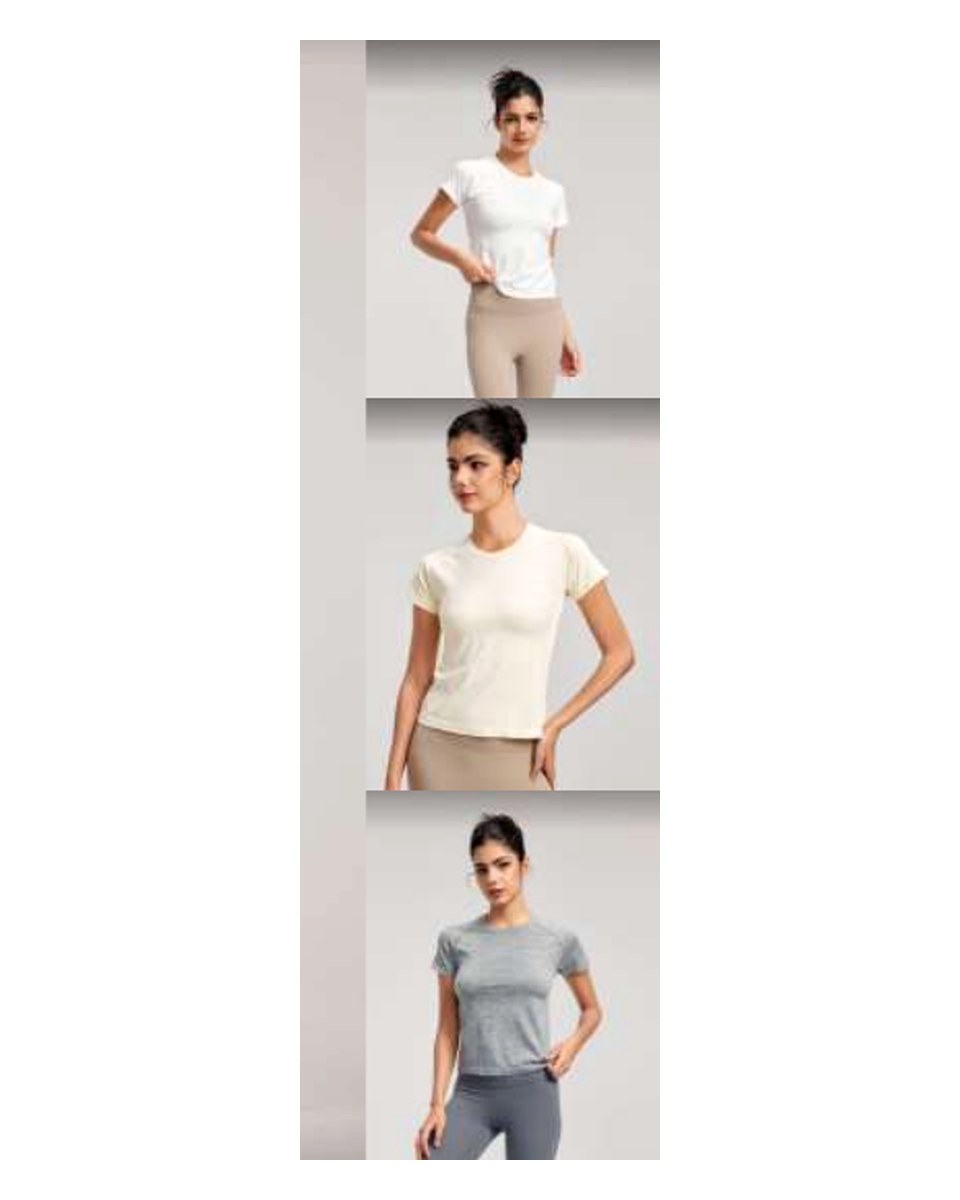
This product-detail image is a reference for construction and presentation, not a promise that the same fabric, logo method, or construction will suit every programme. It shows why buyer instructions must connect garment surface, seam placement, branding, and packaging. Review the manufacturing and quality-control overview when the team needs to discuss production checks, packing, and export preparation.
13. Make commercial assumptions visible
Buyers often want an early answer about cost, minimums, and timing. A useful manufacturer conversation starts with the variables before it presents a precise number. A yoga programme can change materially when a buyer moves from available fabric to a different material direction, adds colourways, requests a new pattern, changes the logo method, includes branded labels and packaging, broadens the size range, or specifies a receiving route. Product complexity and the number of approvals also influence the plan.
The practical alternative is not to wait until every detail is known. It is to make assumptions visible. A factory can review a first brief, explain which material or construction choices need confirmation, suggest what a sample should prove, and identify the missing inputs that affect an order plan. A buyer can then compare responses on the same scope instead of treating an early headline figure as a final commercial answer.
Before requesting a quote or sample route, make sure the brief identifies product roles, references, material behaviour, fit priorities, colour direction, size range, branding, packaging, quantity context, destination, and target launch window. Mark any unresolved point as open. This is more reliable than filling the brief with guesses.
Working with inPACE Sports
inPACE Sports supports B2B buyers developing custom activewear, including brands, online retailers, wholesalers, studios, clubs, teams, and startup designers. The organization is connected with Ningbo Yinshan Garments Factory in Ningbo, Zhejiang, China.
A project can begin with a product brief, tech pack, reference image, physical sample, or catalogue style. Depending on the brief, the discussion may cover yoga leggings, sports bras, tanks, sets, fabric direction, fit, logo placement, labels, hangtags, packaging, sampling, QC planning, packing, and export preparation.
MOQ, cost, and timing are reviewed project by project because they depend on fabric availability, colorways, logo method, packaging, style complexity, and the order plan. Buyers can review the custom activewear product page before starting a sample or quote discussion.
FAQ: Choosing a yoga wear manufacturer
What does a yoga wear manufacturer do?
A yoga wear manufacturer can help turn an idea, reference image, sample, tech pack, or catalogue style into a production plan covering fabric, fit, samples, branding, packaging, bulk production, QC, and export preparation.
What affects MOQ for custom yoga wear?
Fabric availability, custom dyeing, number of colors, style complexity, logo and label methods, packaging, and the total order plan can all affect MOQ. Ask for the assumptions behind the quoted minimum.
How should I compare yoga wear manufacturers in China?
Compare product experience, fabric guidance, sample handling, quotation assumptions, private-label support, QC checkpoints, communication, and export preparation. Look for evidence and written process details.
What should I approve before bulk production?
Approve the sample, measurements and tolerances, fabric and color direction, logo placement, labels, packaging, size range, quantity, and shipment requirements. Keep the approved information in one written record.
Should a yoga collection begin with a catalogue style or a new pattern?
Begin with a catalogue-informed style when the silhouette and construction are already close to the intended product and the main decisions are branding, colour, labels, packaging, and order preparation. Use a new pattern or factory custom route when the customer promise depends on a different fit, waistband, support level, material direction, panel layout, construction, or integrated graphic. Confirm the route from the actual brief.
What should a yoga wear sample approval record include?
Include the sample identity, reference files, intended use, measurements and fit comments, material and colour direction, construction details, logo placement, labels, packing, outstanding questions, decision owner, and approval status. It should separate approved items from those requiring another review, giving production and QC a usable reference instead of relying on an informal message thread.
Can the same fabric be used for yoga bras and leggings?
One material direction may be suitable for more than one style, but that should not be assumed from a swatch alone. A bra and legging can place different demands on support, lining, elastic, opacity, seam construction, fit, and logo placement. Review fabric on the intended garments and record whether a shared material works for the complete set or whether separate decisions are needed.
What packing information should a yoga wear buyer provide?
Provide the destination channel, label and barcode requirements, individual bag or folding instructions, size assortment, carton marks, and any warehouse or retailer receiving information that is available. The correct packing route depends on the sales channel and order plan. Mark information that is not final as open so it can be confirmed before bulk preparation.
Conclusion: choose the process you can work with
The right yoga wear manufacturer is the partner that can explain the product, test fabric and fit, document sample changes, clarify order assumptions, manage branding details, and raise quality issues early. Prepare a focused brief, compare manufacturers on the same assumptions, and start with a realistic sample discussion.
Next step
Send a yoga wear brief a manufacturer can review
Share the product type, intended use, reference image, sample, or tech pack; fabric and fit direction; size and colour plan; logo, labels, and packing needs; estimated quantity; destination market; sample needs; and target arrival window. Mark what still needs factory review.