
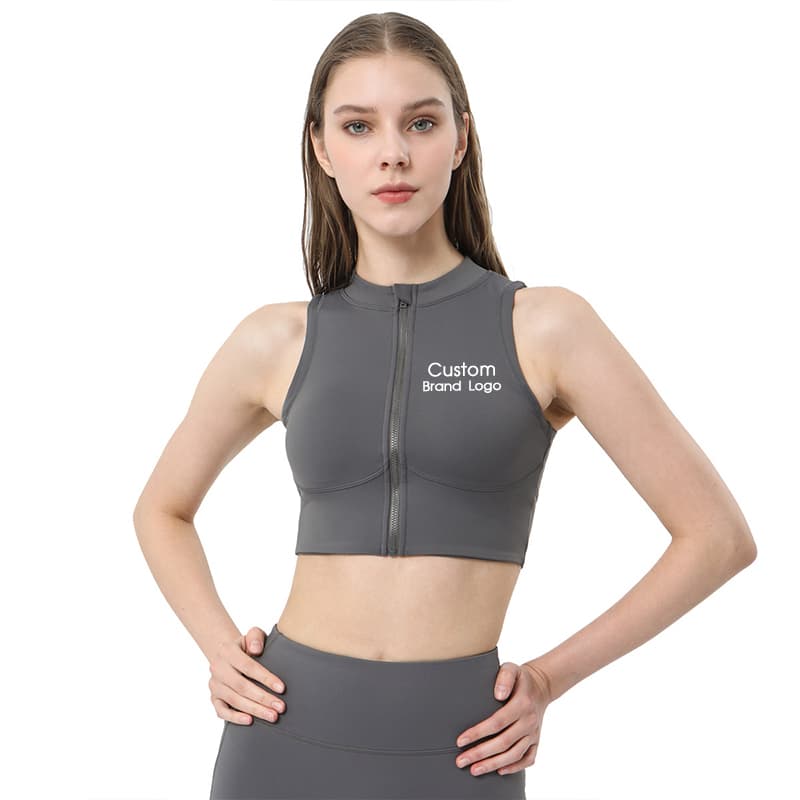
Direct answer. A high-neck zip-front training top manufacturer brief should define the neckline, zipper, armhole, crop length, support construction, material, branding zone and sample movements. Review the exact top on an identified wearer, open and closed, with the intended bottom. Approve physical sample evidence before production—not a catalogue image or feature label.
This guide is for B2B activewear brands, gyms, studios, wholesalers and online retailers developing a sleeveless, high-neck, front-zip cropped training top. It focuses on the garment and its sample decisions. It does not repeat a general women’s workout-top assortment guide or imply that a photographed reference is live stock with fixed specifications.
The commercial route is factory custom manufacturing when the project changes fit, neckline, armhole, zip, crop length, support, material, panels, construction or another product feature. If the actual product remains unchanged and the work is limited to an approved logo, labels, hangtags and packing, a private label route may be more suitable after the base style is reviewed. The route should follow the real work, not the buyer’s preferred service label.
What should a high-neck zip-front training top manufacturer brief define?
Start with the intended wearer, activity and role in the outfit. “High-neck crop top” describes an appearance, not a pattern or approval standard. A buyer needs to explain why the neck is high, how the zip will be used, which inner layer is planned and where the hem should sit relative to the bottom.
Define:
- The intended wearer, fit model and review size.
- The activity or use context and representative movements.
- Whether the garment is a base top, outer top or support-led top.
- Neckline height, shape and accepted position.
- Armhole depth, shoulder width and planned inner-layer coverage.
- Zip length, opening direction, puller and inside finishing.
- Crop length and required overlap with the planned bottom.
- Bust shaping, lining, cup, underband or elastic direction when included.
- Body fabric, lining, binding, zip tape and thread references.
- Seam, panel and topstitch direction.
- Logo method, size, placement and stretch-zone questions.
- Sample purpose, reviewer, evidence and resample triggers.
The existing high-neck zip-front cropped training top is a useful product-direction reference. Its images help a buyer point to a neckline, front opening, sleeveless armhole, seam layout, crop proportion and possible logo zone. They do not confirm inventory, a final material, measurements, support level, decoration result or suitability for another brand’s wearer.
Which details belong in the product specification?
Break the garment into zones so comments can be assigned to the correct pattern or component. “Make it more fitted” is not enough: it does not say whether the neck, armhole, bust, underbust, waist or hem needs a change.
| Product zone | Brief input | Sample observation | Approval record |
|---|---|---|---|
| Neckline and collar | Height, shape, seam or binding, zip-top relationship | Position at rest, overhead, hinge and floor positions; contact at front neck | Measurement, photos and accepted or revised shape |
| Front zip | Length, gauge/type direction, tape, puller, top/bottom stops and guard | Opening and closing, alignment, inside contact, appearance open and closed | Identified component, operation notes and physical approval |
| Armhole and shoulder | Shoulder width, armhole depth, binding and inner-layer relationship | Gaping, restriction, bra exposure and seam position through reach | Front, side and back views linked to sample size |
| Bust and support | Shaping seams, lining, cup, underband or elastic when included | Fit, layer relationship and wearer observation during selected movement | Construction record and named fit decision |
| Body and crop hem | Body width, length, hem finish and bottom pairing | Hem lift, twisting and overlap with the intended waistband | Garment measurement, outfit view and accepted overlap |
| Branding zone | Artwork, method, size, colour, placement and material | Distortion, seam conflict, zip clearance and visibility open/closed | Physical logo reference and placement measurement |
This table is a development prompt, not a universal specification. A brand can use the same silhouette direction with different construction, material and fit decisions, but each resulting version needs its own controlled record.
How should the high neckline be reviewed?
A high neckline can support a coverage direction, frame a front zip and create a distinct visual identity. It can also pull, gap, fold or contact the wearer if the pattern, material, binding and zip relationship are not balanced.
Review the neck:
- Fully closed while standing naturally.
- During overhead reach and shoulder rotation.
- In a forward hinge or plank position.
- With the head turned left and right.
- Partially opened if that is an intended wearing state.
- With the planned inner layer.
- After the selected movement sequence, before adjustment.
Record where the neckline sits rather than calling it simply “comfortable” or “secure.” A useful observation is: “The front neck edge stays within the accepted position during the defined overhead and hinge movements on the reviewed fit model.” This remains evidence for that sample and wearer; it is not a universal performance claim.
If the neckline changes, also review the zip top, shoulder line and armhole. These zones interact. Raising the neck or changing its shape can alter the front length and zip, while a shoulder or armhole change can affect how the neckline sits.
What should the buyer specify about the front zipper?
The zip is a functional component and a strong design line. The brief should identify the intended length, opening range, component direction, tape colour, puller, top and bottom stops, inside guard or facing, and how the zip meets the neckline and hem.
Ask:
- Is the zip decorative, used for dressing, used for ventilation or used to change the neckline?
- Must it open fully or stop above the hem?
- Is the puller accessible in the intended wearing position?
- Does the top stop sit away from the wearer as intended?
- Is an inside guard, facing or other finish required?
- Does the zip tape lie flat with the selected fabric and seam construction?
- Does opening the top alter coverage or reveal an inner layer?
- Does the component colour match, coordinate or intentionally contrast?
- Does the logo maintain clear distance from the tape and puller?
- Which physical sample will approve component and operation?
A catalogue description such as “zip-front” does not answer these questions. Component details and suppliers can change between projects. Confirm the identified zip on the physical development sample, then carry that exact record into the bill of materials and production discussion.
How should armhole coverage and movement be checked?
For a sleeveless training top, the armhole must balance movement, coverage and the intended inner layer. A smaller opening can restrict or pull; a larger opening can expose more than planned. The right decision depends on wearer, size, material, shoulder shape, bust construction and use.
Use controlled movements that match the garment role:
- Arms relaxed, to establish starting balance.
- Forward and overhead reach.
- Cross-body reach and torso rotation.
- Push, pull or plank position when relevant.
- Layer change if the top is worn under another piece.
Observe the front and back armhole, side coverage, shoulder seam, binding, bust relationship and any planned bra. Record the exact top and inner-layer sizes. The activewear fit model brief helps teams keep wearer identity, measurements, movements, photos, observations and resample decisions connected to one version.
Do not approve armhole coverage from a front photograph alone. A sample can look balanced while standing and open differently during reach or hinge. Side and back views are part of the evidence.
How should crop length be paired with the bottom?
Crop length should be reviewed as part of an outfit. State where the hem should sit at rest and what overlap or gap is accepted with the planned waistband during movement. The same top length can create a different result with a low, mid or high waistband and with different torso proportions.
| Outfit check | What to record | Why it matters |
|---|---|---|
| Standing balance | Top length, bottom rise and visible overlap or gap | Establishes the approved starting proportion |
| Overhead reach | Hem lift and waistband relationship | Shows whether the intended coverage changes |
| Hinge or squat | Front, side and back overlap | Reveals changes in torso and back-waist coverage |
| Rotation | Side-seam and hem movement | Shows twisting or uneven lift |
| After movement | Final hem position before adjustment | Separates the garment result from wearer readjustment |
The Activewear Performance collection can help a buyer compare coordinated top-and-bottom directions. A particular image does not approve a different top with a different bottom. Record the exact pairing and size combination used for the review.
For set-based planning, the gym training set manufacturer guide explains how to approve each garment separately and then together. Keep top fit, bottom fit and outfit relationship as three distinguishable decisions.
How should bust shaping and support be discussed?
Support is not established by a high neckline or close fit alone. It can result from pattern, material tension, lining, cup, underband, elastic, strap or shoulder construction, and the fit on the wearer.
First state the product role:
- Outer top worn over a separate bra.
- Lined top without a defined support component.
- Top with removable or fixed cups.
- Top with an internal bra or underband structure.
- Fashion-led crop top that does not carry a support claim.
Then record the relevant construction and sample observations. If cups or padding are included, identify shape, size range, pocket or attachment method and alignment. If an underband or internal elastic is included, record width, position and relationship to the outer body. If the top is worn over a bra, review the intended bra shape and size with it.
Avoid converting one fit model’s observation into a universal support claim. Marketing language about low, medium or high support needs the brand’s evidence and destination-market review. A manufacturer brief should focus on construction, fit and the physical decision that moves the sample forward.
Which materials and trims need confirmation?
A product image can show colour and surface direction, but it cannot confirm fabric identity, composition, structure, weight, stretch, recovery, coverage, handfeel, support or production availability.
Record:
- Body fabric reference and intended stretch direction.
- Lining, cup fabric, pocketing or internal layer when included.
- Binding or fold-over finish at neck and armhole.
- Zip tape, teeth or coil direction, puller and stops.
- Elastic or underband component.
- Thread and seam direction.
- Planned colour and any coverage question under stretch.
- Logo method and physical proof requirement.
- Care direction and project-specific validation.
- Lot, shade and substitution control for production.
The fabrics and trims overview provides a starting point for these questions. A supplier may propose options after reviewing the brief, but the final body material, lining, binding, elastic and zip must be connected to the approved version.
Do not infer moisture management, breathability, abrasion resistance or support from a fibre name. If those claims matter to the brand, define the relevant evidence and who will review it. The assembled garment still needs a fit and movement review because component and seam choices can change how the material behaves.
How should seams and panels be reviewed?
Seams can shape the bust, join materials, frame the zip, create panels or carry topstitching. They can also distort or become prominent in high-stretch or body-contact zones.
Review:
- Centre-front alignment on both sides of the zip.
- Neckline and shoulder seam balance.
- Armhole binding joins.
- Bust and underbust shaping seams.
- Side-seam position.
- Hem seam and any elastic or facing.
- Panel symmetry and stretch direction.
- Inside seam profile and thread ends.
- Topstitch spacing and consistency in the sample.
- Logo clearance from zip, seam and armhole.
Record the purpose of each line. A reference photo may communicate a visual panel, but it does not determine whether that line is a seam, topstitch, bonded detail or colour block. The factory needs a marked drawing or technical instruction that identifies the intended construction and sample question.
Where can a custom logo be placed?
Logo placement should follow the garment structure and intended visibility. Common directions include the upper chest, side body, back neck, centre back or hem area, but none is automatically suitable.
Review the artwork version, size, colour, method and exact measurement from stable garment references. Keep it clear of the zip tape and puller path unless the design specifically accounts for that relationship. Check whether a chest logo appears level when worn, whether it crosses a shaping seam and how it looks with the zip open and closed.
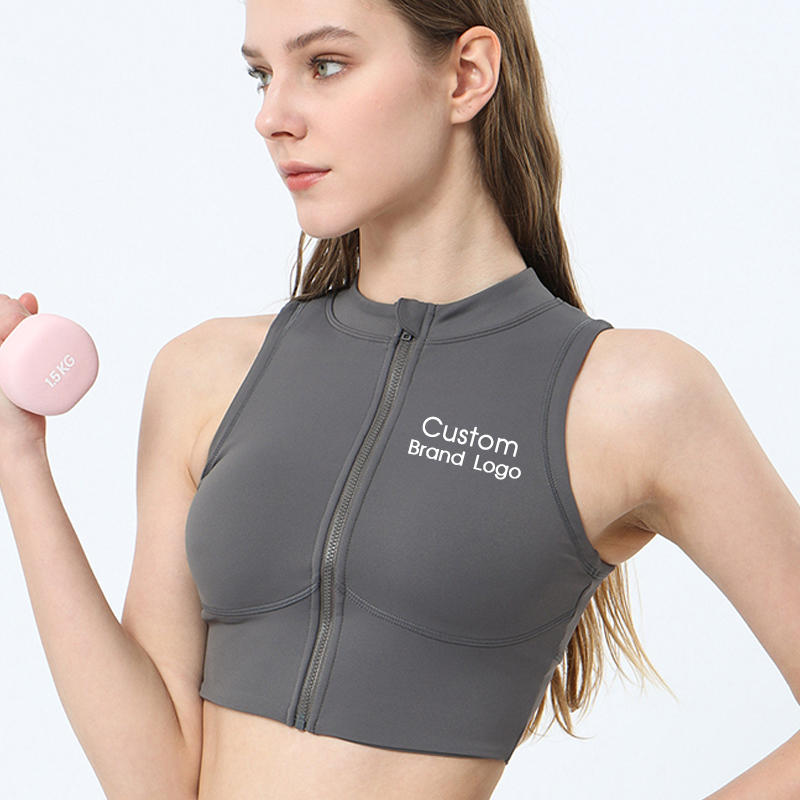
*Product-direction reference from the existing inPACE catalogue. The shown logo area is an example placement, not a customer order, production approval or guarantee for another material.*
The logo methods for stretch activewear guide helps buyers connect artwork, method, size and placement to the actual garment material and stretch zone. Printing or embroidery may be discussed when relevant, but the chosen method and result require project confirmation and physical approval.
How should a brand choose private label or factory custom?
Use a private label discussion when the identified top remains materially unchanged and the requested work is logo, labels, hangtags and packing. The buyer still needs to approve the actual base garment, branding proof and pack information.
Use custom activewear development when the project changes:
- Neckline height or shape.
- Shoulder width or armhole depth.
- Bust shaping, lining, cups or underband.
- Zip length, component, position or inside finish.
- Body width, crop length or hem construction.
- Fabric, colour system, panels or seam direction.
- Logo zone because the garment construction changes.
- Size range, fit block or sample sequence.
One route is not inherently better. The correct route is the one that makes the intended product work visible, quotable and approvable. A brand should not hide structural changes inside a “simple custom logo” request.
The women’s workout tops wholesale supplier guide covers broader existing-style selection, assortment, branding and packing. This page stays focused on developing and approving one high-neck zip-front top.
What should the sample plan prove?
Give each sample a named purpose. A first sample may test pattern interpretation and fit. A later sample may confirm the selected material, zip and construction. A physical decoration proof may address logo method and placement. The production handoff should combine only accepted decisions.
| Sample question | Required input | Human approval evidence | Resample trigger |
|---|---|---|---|
| Is the silhouette and fit direction workable? | Wearer, measurements, reference, neckline, armhole, body and crop brief | Garment measurements, standing and movement photos, fit comments | Pattern or measurement change |
| Does the zip and construction work with the selected material? | Identified fabric, lining, binding, zip and seam direction | Component record, operation notes and assembled-garment review | Fabric, component or construction change |
| Is branding correctly positioned? | Approved artwork, method, size, colour and placement | Physical logo proof and placement measurement on the actual zone | Artwork, method, scale, colour or location change |
| Can the approved top move toward production? | Closed comments, current specification, BOM, labels, packing and quantity plan | Named approval of the exact version | Any product, material, component, branding or pack change |
The activewear sample plan guide helps buyers define purpose, review owner and decision gates. Exact sample and production timing depends on confirmed material, component, artwork, colours, quantities, revisions and approval sequence. Planning ranges can be discussed only after that scope is clear.
What should a fit-session record contain?
Keep:
- Style code, product name and revision.
- Sample stage and review date.
- Fit model identity or controlled code.
- Body measurements and garment size.
- Garment measurements and measurement method.
- Body fabric, lining, binding, zip and component references.
- Planned bra, bottom and layer pairing.
- Movement sequence and views.
- Observations by neckline, armhole, zip, bust, body and hem.
- Wearer comments separated from technical observations.
- Requested action and owner.
- Accept, revise or reject decision.
- Resample scope and next evidence.
Write the observation before the proposed fix. “Front neckline contacts the wearer during the defined hinge” records what occurred. “Lower the neckline” is one proposed response that can affect the zip, front length and appearance. Keeping them separate allows the pattern and development team to review cause and consequence.
When should the top be resampled?
Resample when a change can alter fit, coverage, support, movement, appearance, construction, material behaviour, component operation or branding. Typical triggers include:
- Pattern or measurement change.
- New body fabric, lining, binding, elastic or cup.
- Changed neckline, shoulder, armhole, bust, body width or crop length.
- New zip length, component, tape, puller, guard or facing.
- Changed seam or panel construction.
- New logo method, size or placement.
- Changed colour where appearance under stretch matters.
- Changed bra or bottom pairing when coverage approval depends on it.
- A comment that cannot be verified on the current physical sample.
An email decision cannot display the physical result of a change. Record what changed, which earlier evidence is affected and whether a replacement garment or component proof is required.
How should the approved top move into production?
The production handoff should identify the exact approved version. Include the current technical specification, measurement chart, material and component references, zip details, artwork and placement, labels, hangtags, packing information, colour-size quantity plan and sample approval record.
inPACE can coordinate development and production through multiple partner factories according to the confirmed product, material, construction, decoration, quantity direction and approval record. More than 30 years of garment-production experience informs the way design discussion, sampling, production coordination, QC and packing are organised. This does not create a fixed MOQ, price, capacity or timing promise.
When printing, embroidery or wash effects are relevant, include them in the scope before the product is treated as complete. The method, garment zone, material, colour and physical approval evidence need to be reviewed together. The final sample-to-bulk handoff should prevent an old artwork file, component or measurement from re-entering the production record.
What should a buyer send before requesting a sample?
Send:
- The intended use, wearer and sales channel.
- The product reference and marked retained or changed features.
- Neckline, shoulder, armhole, bust, body and crop-length direction.
- Zip purpose, length, opening state and component questions.
- Support, lining, cup or underband requirements when relevant.
- Body fabric, colour, binding, elastic and trim directions.
- The intended bra, bottom and layer pairing.
- Logo artwork, method questions, size and placement.
- Labels, hangtags, care information, packing and destination needs.
- Size range and preliminary colour-size quantities.
- The next sample’s purpose, review owner and movements.
- The decisions that would trigger another sample.
A useful request can contain open questions. It should make those questions visible so a zip-front gym crop top supplier or manufacturer can recommend a controlled route. Share the top reference, intended use, artwork placement, construction changes and fit questions with inPACE when the project is ready for a factory-custom sample review.
Product directions
Explore relevant activewear products
Use these product pages as practical references for your brief, then confirm materials, fit, customization, and production details through sampling.
High-Neck Zip-Front Cropped Training Top
Use the real product direction to mark neckline, armhole, zip, crop length, seam and logo-zone questions for the sample brief.
View product directionPrivate Label Activewear
Use this route when the accepted base top remains unchanged and the main work is logo, labels, hangtags and packing.
View product directionCustom Activewear Development
Use factory-custom development when fit, neckline, armhole, zip, support, material, construction or crop length must change.
View product directionFAQ
Buyer questions
What should a high-neck zip-front training top brief include?
Include the intended wearer and use, neckline, shoulder, armhole, bust construction, body and crop length, zipper purpose and component direction, material and lining, seams, branding zone, outfit pairing, sample movements, approval owner and resample triggers.
Does a high neckline prove support?
No. Support can depend on pattern, material tension, lining, cups, underband, elastic, shoulder construction and fit on the wearer. A high neckline can contribute to coverage or appearance, but support language should follow the actual construction, physical sample evidence and the brand’s substantiation review.
What should be checked on the front zipper?
Check the intended length and opening range, tape, puller, top and bottom stops, inside guard or facing, alignment, operation, wearer contact, appearance open and closed, and clearance from seams and branding. Approve the identified physical component on the assembled garment.
How should armhole coverage be reviewed?
Review front, side and back views on an identified fit model, with the planned inner layer, through relaxed, forward, overhead, rotational and floor positions relevant to the top. Record the exact sizes, observations and any pattern or binding changes that require another sample.
Should crop length be approved with the bottom?
Yes. Record the exact top and bottom sizes, standing overlap or gap, and changes during overhead, hinge, squat or rotation movements. A top length approved with one waistband height and wearer does not automatically approve every bottom or size pairing.
Can the top use a private label route?
A private label route may suit an identified base top that remains materially unchanged and needs approved logo, labels, hangtags and packing. Changes to fit, neckline, armhole, zip, support, material, construction, crop length or another product feature belong in a factory-custom development discussion.
When should the training top be resampled?
Resample when a change can affect fit, coverage, support, movement, appearance, construction, zip operation, material behaviour or branding. This includes pattern, measurement, material, lining, binding, elastic, cup, neckline, armhole, body, hem, zip, seam, colour and decoration changes.
What should a buyer send inPACE before requesting a sample?
Send the product reference, intended wearer and use, marked retained and changed features, neckline and armhole direction, zip questions, support construction, material and colour, outfit pairing, branding files, labels, packing, size range, preliminary quantities and the decisions the next sample must answer.