
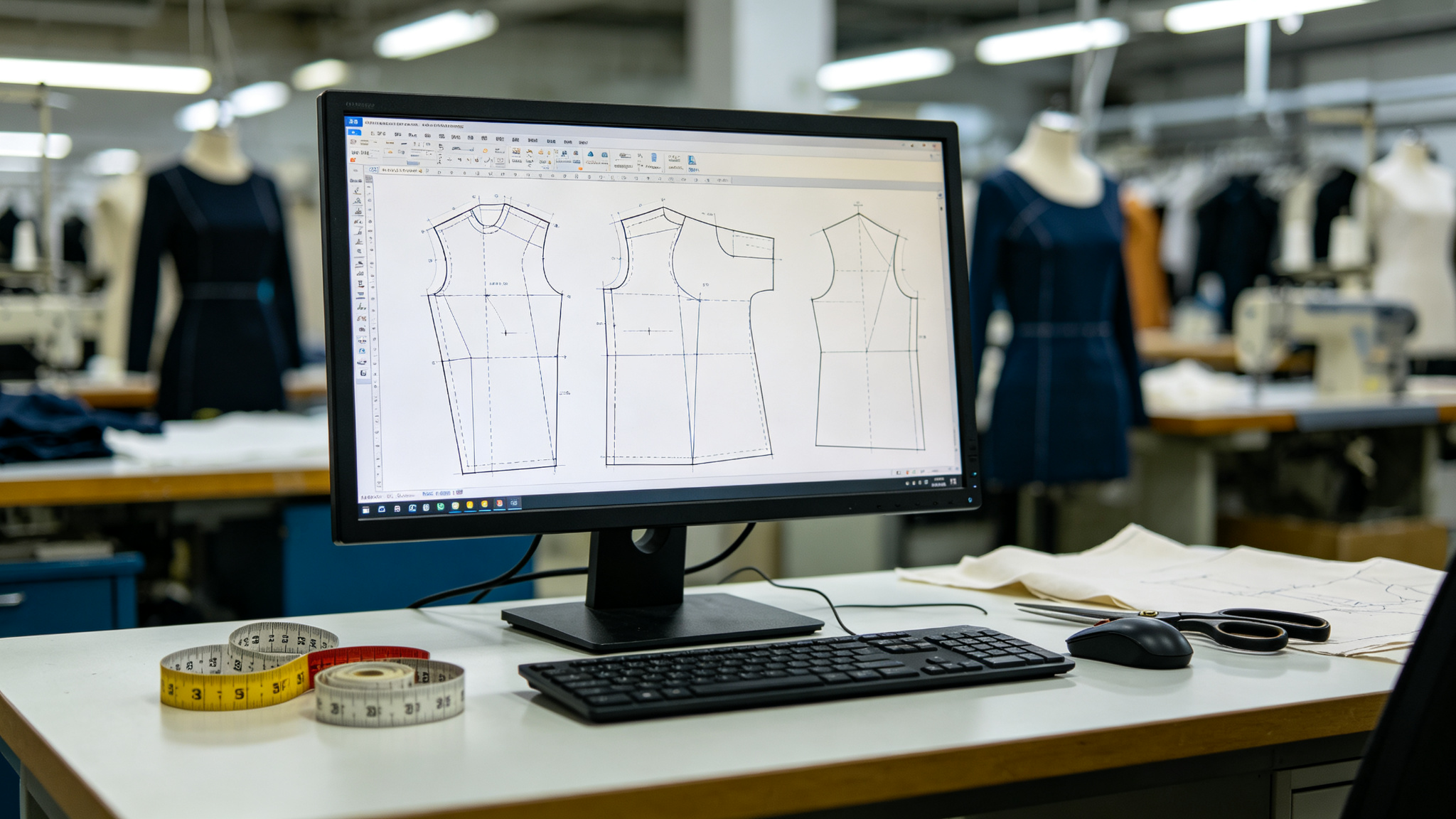
What should a gym training set manufacturer review before sampling?
A gym training set manufacturer should review the role of each top and bottom, the fabric and fit relationship, colour and logo system, size range, components, sample purpose, QC points, packing, and approval boundary as one programme. A matching image can begin a design conversation. It does not prove that the two garments share an approved material, colour, fit, measurement set, logo method, or production specification.
A training set is not simply two styles sold together. A close top and high-waist legging may need to coordinate in colour and branding while using different constructions, stretch directions, support questions, body coverage, or size priorities. A jacket and short may need a shared trim language without using the same fabric. A bra and legging can appear related yet need separate sample observations. The buyer should make those relationships explicit before asking a factory to create a “set.”
The Gym Wear Manufacturer solution is the right starting route when the project needs a changed top, bottom, fabric, fit, panel, colour, feature, or paired-sample plan. A catalogue-informed route can be useful when each selected product direction already fits the intended programme and the work is mainly branding, labels, hangtags, packing, or limited colour direction. In either route, the set still needs a controlled record of what makes the products a coordinated range.
| Set decision | What the buyer can provide | Why it matters | What the paired sample should show |
|---|---|---|---|
| Set purpose | Strength training, studio, warm-up, travel, coach uniform, gym retail, or another named role | Product role changes the layer sequence, movement, colour, packing, and branding questions | The top and bottom used in the declared situation rather than only displayed side by side |
| Top and bottom roles | A named top, bra, layer, legging, short, jogger, or open product decision | “Set” does not establish which item leads the fit, fabric, logo, or size conversation | Whether each garment does its named job and the two products read as one range |
| Fabric relationship | Same fabric, related fabric, different fabric, shared surface, or open factory review | Matching colour does not mean the materials will drape, stretch, recover, or take decoration in the same way | Whether the selected materials, seams, trims, and colour directions work together for the intended set |
| Fit relationship | Base sizes, top and bottom size pairing, length, rise, coverage, layer sequence, and movement questions | One garment can fit as intended while its companion does not | Whether the set remains coherent in the declared size pairing and movement observations |
| Colour and branding | Core, secondary, accent, logo zones, artwork files, label and packing direction | Colour and artwork must be placed against each garment’s actual material and construction | Whether the colour hierarchy and brand details are legible without creating unreviewed assumptions |
| Sample purpose | Development, fit, material, branding, presentation, pre-production, or another named review | The buyer needs evidence for the whole set, not vague approval of two samples | Which product and range decisions are approved, open, revised, or need another sample |
The table is a working brief, not a demand for a finished tech pack. A request such as “review a close long-sleeve top and high-waist legging as a studio training set in the declared base-size pair; confirm whether the rib surface, hem, waistband, and tonal logo directions read as one range” gives the factory a decision to test. “Make a matching set” does not tell the team what should match or how approval will be measured.
How should a buyer decide what makes two garments one training set?
Start with the customer’s use rather than a product name. The set may be designed for a warm-up-to-training transition, a studio session, a travel layer, staff wear, a small retail programme, or a coordinated launch. That role determines whether the garments must be worn at the same time, purchased together, colour-matched across a range, packed as a pair, or simply presented as complementary options. It also clarifies the questions the first samples need to answer.
Then give each garment its own job. A top may need to provide a particular neckline, sleeve, shoulder, armhole, body length, coverage, or logo zone. A bottom may need a waistband, rise, inseam, gusset, pocket, leg opening, panel, or movement review. A training jacket has different component and layer questions from a sports bra. A short with a liner does not share the same construction decision as a legging. The manufacturer can only coordinate the set when the buyer has separated these product decisions before asking for common styling.
The Hooded Thumbhole Training Set can help a buyer discuss a hooded layer, sleeve, thumbhole, companion bottom, logo zones, and coordinated training role. The Zip-Neck Sculpt Set can frame a close top, front opening, panel balance, and matching-bottom direction. These are product references, not promises that a different material, fit, construction, artwork, or size system will work without custom review and a physical sample.
When should top and bottom fabrics match, and when should they differ?
Fabric is one of the easiest ways to make a set look related and one of the easiest ways to create a misleading assumption. The top and bottom may use the same material, related materials with a shared surface, or different materials chosen for different product functions. For example, a fitted layer may need a different handfeel, thickness, or component treatment from a bottom. A training short may need a different construction from the top it coordinates with. The buyer should state whether sameness is essential or whether the range needs visual, colour, or branding harmony instead.
Material decisions influence fit and production decisions. They can change how a neckline holds shape, how a waistband returns, how seams sit, how a panel reads, how colour appears, where a logo can be applied, and what a sample should review. Do not conclude that a fabric is suitable simply because it appears in a product photo. The fabrics and trims resource is useful for structuring fabric, elastic, lining, mesh, label, artwork, and component questions. The actual materials and sample remain the approval boundary for the specific set.
The Activewear Performance Collection and Yoga Activewear catalogue can provide a starting point for different upper and lower silhouettes. A catalogue page can help a buyer select a product direction and identify what needs to change. It should not be used as evidence of common fabric availability, exact colour matching, fixed specifications, or set-level production approval.
How can a buyer coordinate top and bottom fit without forcing one product to copy the other?
The buyer should name the intended size pairing. That may mean the same labelled size, a planned mix-and-match option, or a range where the top and bottom have different fit priorities. Identify the base sizes to sample, intended layer sequence, shoulder and body-length question for the top, and rise, inseam, waist, hip, or leg question for the bottom. State how the pair will be worn and which movement or coverage observations need review.
Do not treat a good-looking flat lay as evidence of paired fit. A top can have the desired neckline and still expose an unwanted overlap with the waistband when the wearer moves. A legging can have the right visual panel balance but sit differently against a shorter or longer top. A layer can work when open but change the set’s proportions when zipped. Use the sample to observe the actual declared pair, material, and size. Record whether the issue belongs to measurements, pattern balance, material, construction, styling, or preference before requesting a revision.
The custom activewear development route is appropriate when either garment needs a changed fit, fabric, construction, panel, feature, colour, or sample plan. It prevents the factory from treating a pair of catalogue references as if they had already become a complete set specification.
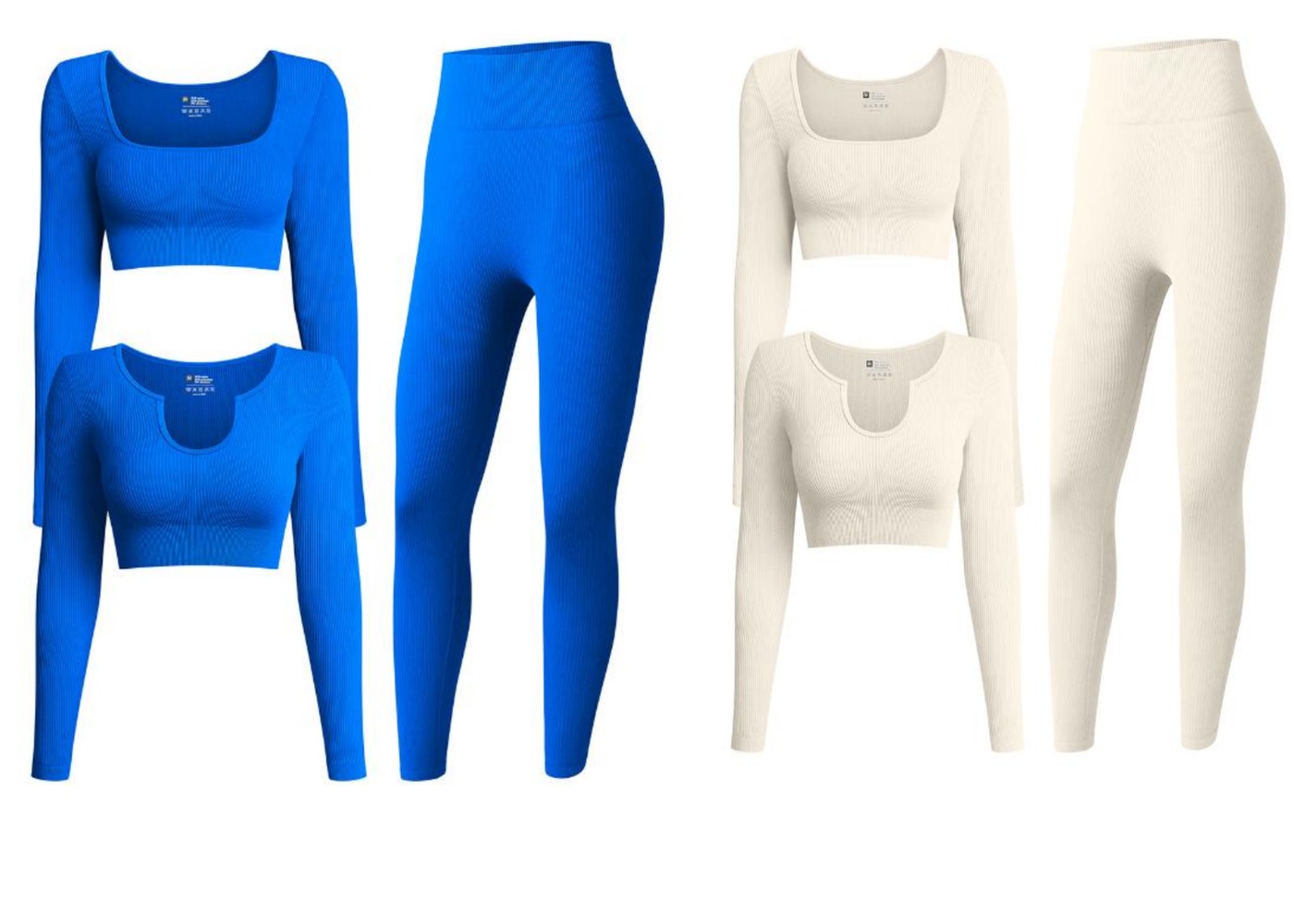
This product image is an editorial reference for set coordination. It does not confirm the actual fabric, colours, logo method, measurements, product availability, or construction for a buyer’s programme. Those details need to be confirmed in the project brief and sample.
What should the set-level colour, logo, and trim system include?
Treat colour and branding as a system across actual garments. The buyer can identify a core colour, secondary colour, accent, logo zones, artwork version, label, hangtag, packaging, and the parts of each garment that must align. A tonal mark may work on one fabric and disappear on another. A contrast binding can relate a top and bottom while requiring different sewing or material treatment. A label position can be suitable on a jacket but not on a close top. Every direction should be reviewed against the actual product rather than assumed from a screen or colour reference.
State whether the same artwork must appear on both items, whether the scale changes by garment, and which locations are prohibited by seams, stretch zones, pockets, zips, or panels. If one component is still open, label it as open. This protects both the buyer and the manufacturer from treating an early visual preference as final artwork or a bulk instruction.
For relevant inPACE projects, sample discussion can include printing, embroidery, or wash effects after the scope is confirmed. General planning commonly allows about 5–10 days for samples and about 25–50 days for production after scope and approvals are confirmed. These are planning ranges, not fixed promises. Material availability, colours, construction, decoration, labels, packing, quantity direction, revisions, and factory scheduling can change the actual plan.
Why should a training set use a paired-sample approval record?
Each sample needs a job. A top development sample can answer top-specific questions. A bottom fit sample can answer bottom-specific questions. A paired set sample can answer the relationship between them: size pairing, coverage, colour hierarchy, panel balance, logo placement, layer sequence, and presentation. Keep these purposes distinct so the buyer does not interpret a single approved item as approval of an unreviewed companion garment.
The activewear sample-plan guide helps separate development, fit, material, branding, and pre-production samples. Record the product version, material, colour direction, size pairing, components, artwork, reviewer, observation, requested change, approval boundary, and next owner. An accepted top does not automatically approve all bottoms, grades, colours, trims, labels, packing, or production details. The pair needs its own record of what was reviewed together.
Sample fees are generally quoted at 1.5–3 times the corresponding bulk unit quotation, subject to the specific products, materials, construction, and scope. For one style, the stated refund guide is 10% at 100 units, 30% at 300, 50% at 500, and 100% at 1,000. These are planning references, not standing prices or unconditional terms. Confirm the actual products, scope, quantities, conditions, and approval route before an order is discussed.
How should factory production and QC handle a paired training set?
Production coordination begins with the approved garment and set records. The factory needs the current material and colour direction for each item, approved sample references, measurement specifications, panel and seam notes, artwork, labels, packing, quantity breakdown, size pairing logic where relevant, and set-level QC points. A shared style name is not enough when the top and bottom have different fabrics, components, measurements, or production questions.
QC should be product-specific first, then set-specific. Product checks may review the declared top neckline, sleeve, body length, opening, logo zone, or hem; and the declared bottom waistband, rise, inseam, gusset, pocket, leg opening, or panel. Set checks can confirm that the selected colours, trim language, branding, labels, folding, bags, and carton information match the approved programme. The manufacturing overview and order workflow show how a controlled record can connect product review, production coordination, QC, packing, and export preparation without promising a fixed outcome.
How can inPACE support a gym training set discussion?
Use supplier, manufacturer, and factory language for the decision in front of the buyer. A supplier conversation starts with viable product directions and the inputs required to compare scope. A manufacturer conversation turns top and bottom roles into fabric, fit, construction, sample, and approval questions. A factory conversation applies the approved records to production coordination, QC, packing, and repeat-order control.
inPACE can begin with a brief, reference, existing sample, sketch, or tech pack and discuss top-bottom roles, fabric relationship, fit, colour, logo, components, sample purpose, QC, packing, and production coordination. Where appropriate to the confirmed style, materials, construction, decoration, quantity direction, and scope, it can coordinate a route through multiple partner factories. More than 30 years of garment-production experience gives context for connecting design and material review with sampling, production coordination, QC, packing, and repeat-order records. It is not an inPACE brand-age claim, capacity promise, or guarantee of price, timing, certification, or performance.
How should a buyer prepare the set for later colour updates or repeat orders?
A repeat order is easier to discuss when the original set is recorded as two related but distinct garments. Keep the approved top reference, bottom reference, material and colour direction, measurements, panels, components, artwork, labels, packing, and size breakdown together. Also keep the decisions that make it a set: the approved size-pair logic, colour hierarchy, shared or different trims, logo system, presentation, and any set-level QC attention points. A broad product name such as “training set navy” is not enough to identify the actual version.
When a later programme changes only one item, identify that boundary. A new top colour may need a material and logo check even if the bottom is unchanged. A new legging fabric may affect waistband, panel, seam, and colour review while the top keeps the prior record. A refreshed logo can change the artwork positions on both garments. A size expansion may reopen the paired-fit discussion. Rather than assuming the prior set automatically covers the new request, compare the current brief with the approved versions and name what still matches, what has changed, and which sample evidence is needed.
This discipline is useful for a first launch as well as a repeat. A buyer may want a narrow colour selection before a broader range, a core top with two bottom options, or several top choices around a single legging. The set system should show which combinations are approved product directions and which are only visual concepts. It should also retain the quantity, packing, receiving, and destination assumptions that affected the earlier discussion. That makes the next supplier, manufacturer, or factory conversation specific instead of relying on memory or a collage of old images.
For packaging, state whether the set is folded and packed together, allocated as separate SKUs, bundled for a named programme, or only marketed as a coordinated look. Each route affects the label, barcode, size sticker, bag, carton mark, size ratio, and receiving instruction conversation. The buyer does not need to fix every commercial detail before the first sample. They do need to identify which presentation questions are part of the set and which remain open. The factory can then connect the approved garment records to the correct packing and production discussions when the scope is confirmed.
What questions should a factory ask before moving a training set into production coordination?
Before the range moves beyond sampling, the factory should be able to identify each exact garment version, material and colour direction, base size, size range, current measurement specification, panel and seam notes, components, artwork, labels, packing, quantity direction, and approvals. At set level, it should also be clear whether the products have to share materials, trim, colour, logo, packaging, or pairing logic. Where an item is open, it should be recorded as an open dependency rather than silently assumed.
The buyer can ask the factory to separate four categories: decisions confirmed by an approved sample; proposed changes awaiting review; alternatives that have been substituted for a previous reference; and details still requiring a material, component, sizing, artwork, packing, or production decision. This is more useful than a single “approved set” label because it protects the manufacturing handoff from carrying an earlier assumption into a changed garment.
It also gives QC a clear starting point. A product-specific check can use the measurement, material, construction, and branding records for each item. A set-specific check can compare the approved colour direction, presentation, labels, packing instructions, and paired product information. The appropriate checks are determined by the actual brief; they should not be written as universal guarantees for every training set. Recording them early allows the buyer, manufacturer, and factory teams to see the same version before production coordination begins.
Which product directions can help clarify a gym training set brief?
Hooded Thumbhole Training Set
Use the Hooded Thumbhole Training Set to discuss a top layer, sleeve, thumbhole, companion bottom, colour relationship, and a set-level sample question. Final materials, measurements, branding, labels, packing, and construction need confirmation for the actual programme.
Zip-Neck Sculpt Set
Use the Zip-Neck Sculpt Set to frame a close top, front opening, panel balance, and related-bottom direction. It is not a substitute for defining the actual fabric, fit, set pairing, or factory approval route.
Ribbed Top-and-Bottom Reference
Use the Ribbed Activewear Set to discuss how surface texture, neckline, top length, waistband, and colour may read across a coordinated range. Treat it as a product-direction reference, not a guarantee that an identical fabric or colourway is available for a new set.
What should a buyer send before asking for a gym training set quote?
- Name the programme, intended wearer, use, sales or team context, and whether the garments must be worn, packed, or bought together.
- Identify each top and bottom, the closest references, what must remain, what must change, and which decisions need factory advice.
- Describe the material relationship, colour hierarchy, logo zones, components, labels, packing, and destination information.
- Provide the base-size pairs, planned size range, fit and movement observations, and the questions that the paired sample must answer.
- Separate confirmed, proposed, substituted, and unresolved details. Keep a controlled record of the current version before asking for another sample or production plan.
When the brief is ready, send a gym training set development request with the top, bottom, fabric, fit, colour, branding, paired-sample, QC, and packing questions that matter to the actual programme.
Product directions
Explore relevant activewear products
Use these product pages as practical references for your brief, then confirm materials, fit, customization, and production details through sampling.
Hooded Thumbhole Training Set
Use this reference to discuss an upper layer, companion bottom, sleeve and thumbhole direction, logo zones, and the paired sample questions for a training-set programme.
View product directionZip-Neck Sculpt Set
Use this close-fit reference to define top-bottom roles, front-opening questions, panel balance, and the fabric and fit evidence needed from a paired sample.
View product directionCustom Activewear Development
Use the factory-custom route when either garment needs a changed fabric, fit, construction, panel, feature, colour, branding, or paired-sample plan.
View product directionFAQ
Buyer questions
What should a gym training set manufacturer brief include?
Include the programme role, named top and bottom, closest references, fabric relationship, colour and logo system, base-size pair, size range, fit and movement questions, components, sample purpose, labels, packing, quantity direction, QC points, and open decisions. Record what must coordinate and what can differ between the garments.
Do tops and bottoms in a training set need the same fabric?
Not always. A set can use the same material, related materials, or different materials chosen for different garment roles. The buyer should state whether sameness is essential or whether colour, surface, trim, branding, or product role provides the connection. Confirm the actual material relationship on samples.
Why does a gym training set need a paired sample?
A paired sample can assess size pairing, layer sequence, colour hierarchy, top-bottom proportions, logo placement, and range presentation. Individual samples can answer garment-specific questions, but approving one product does not automatically approve an unreviewed companion garment or the relationship between them.
How should a buyer describe sizes for a workout set?
Name the base-size pair, planned size range, whether the top and bottom can be mixed, and the measurements or movement observations needing review. Treat fit notes separately for each garment, then add set-level observations about coverage, waistband overlap, layer sequence, and proportion.
Can catalogue activewear products be used as a training set reference?
Yes. Catalogue pages can help identify upper and lower silhouettes, product roles, colour direction, and logo zones. They do not confirm common material availability, measurements, construction, exact colours, or production approval. Changes to the garments require project-specific development and sample review.
How can inPACE support a gym training set project?
inPACE can begin with a brief, reference, sample, sketch, or tech pack and discuss top-bottom roles, materials, fit, colour, branding, paired samples, QC, packing, and production coordination. It can coordinate a suitable route through partner factories subject to the confirmed styles, materials, construction, decoration, quantity direction, and scope.
How long do gym training set samples and production normally take?
For inPACE projects, general planning commonly allows about 5–10 days for samples and about 25–50 days for production after scope and approvals are confirmed. These are planning ranges rather than fixed commitments. Materials, colours, construction, decoration, labels, packing, quantity direction, revisions, and factory scheduling can change the applicable plan.