
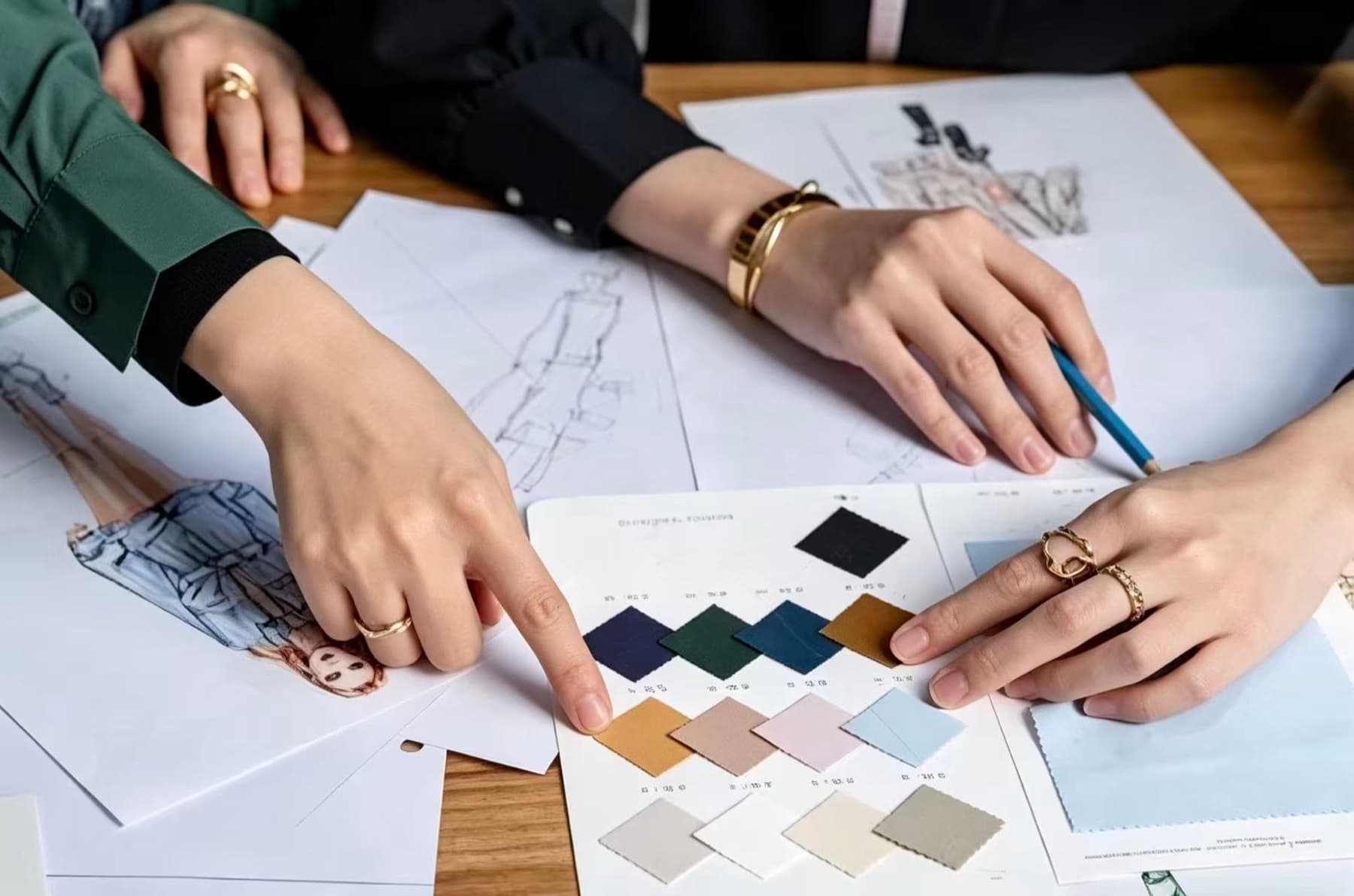
Fabric for padel clothing should be chosen for a named garment and product question. A polo, close-fit top, dress, outer skirt, inner short, pocket, and warm-up layer do different jobs. Compare identified materials through composition, construction, weight, stretch, recovery, surface, drape, coverage, colour, decoration, care, and sample evidence rather than selecting a generic “padel fabric.”
This guide is for B2B buyers, designers, sourcing teams, clubs, academies, and retailers. It owns the material-selection decision. The custom padel apparel factory brief covers the overall product brief, while the women’s padel clothing range guide explains which garment roles may belong in a collection.
Why is there no single best fabric for padel clothing?
The word “padel” describes a use context, not one textile construction. A garment may be close fitting or relaxed, indoor or outdoor, lightweight or layered, pale or dark, printed or solid, and designed for play, warm-up, club identity, or lifestyle use. Those variables change the material question.
A buyer should begin with the product role and the decision the material must support. For a top, priorities may include fit, reach, drape, coverage, seam interaction, and branding. For a skort, the outer material controls appearance and movement while the liner controls body contact, fit, coverage, and pocket support. For a warm-up layer, weight, structure, closure, layering, and surface can become more important.
Avoid choosing from a fibre name alone. Two fabrics with similar nylon, polyester, elastane, or other fibre percentages can differ in knit or weave, yarn, weight, finish, stretch, recovery, surface, colour, and performance. Conversely, a useful garment can combine more than one material because each component has a different job.
The correct question is not “Which fibre is best for padel?” It is “Which identified fabric, on this garment and colour, provides the evidence needed for the intended fit, movement, appearance, branding, care, and product claims?”
What information should a material candidate record contain?
Create a candidate register before comparing swatches. Record what is known, who supplied it, and which garment component it is proposed for. Mark missing information as pending rather than filling it with an assumption.
| Candidate field | Why the buyer needs it | Evidence status to record |
|---|---|---|
| Supplier or internal code | Distinguishes materials that look similar | Confirmed code, provisional reference, or pending |
| Fibre composition | Supports product, label, and material discussion | Supplier declaration, test/certificate scope, or pending |
| Knit or weave construction | Helps explain surface, stretch, and drape | Confirmed construction or description pending |
| Weight or GSM | Supports comparison and product planning | Measured/declared value with method or pending |
| Width and usable width | Affects marker and production planning | Supplier information or pending |
| Stretch and recovery direction | Connects material to fit and movement | Supplier data, internal observation, agreed test, or pending |
| Surface and handfeel | Affects appearance, wearer contact, and decoration | Controlled swatch/sample observation |
| Colour and batch reference | Prevents one shade from approving another | Lab dip, swatch, lot, or garment reference |
| Finish or treatment | May affect claims, care, colour, or process | Exact supplier information and evidence boundary |
| Proposed garment component | Keeps approval product-specific | Top body, skirt outer, liner, pocket, waistband, or layer |
The fabrics and trims overview gives buyers a vocabulary for this discussion. It is not a substitute for current project records. Material availability, commercial conditions, colour, finish, and evidence need confirmation for the real order.
How should fabric for padel tops and polos be compared?
Define the top silhouette first. A structured club polo, close-fit crop, relaxed tee, sleeveless tank, or long-sleeve layer may need different drape, body, stretch, collar support, and surface. A material that works for one cannot be transferred automatically to another.
Use the Short-Sleeve Performance Polo as a visible club-top reference and the Sleeveless Training Tank as a different movement and coverage reference. Confirm their current materials and product scope instead of assuming the photograph proves a specification.
For each candidate, review:
- Drape and structure against the intended silhouette.
- Stretch direction and recovery in the shoulder, armhole, body, and hem relationship.
- Coverage in the actual colour and fit.
- Surface next to the skin and at seams or bindings.
- Stability at collar, placket, zip, or other components.
- Appearance with the proposed logo method and placement.
- Agreed care observations and dimensional questions.
Ask a sample wearer to complete a repeatable reach and rotation sequence. Record what the garment does, not just whether the fabric “feels good.” If the body length shifts, the armhole contacts the wearer, or the collar changes shape, the issue may involve fit, construction, material, or their interaction.
How should outer-skirt and inner-short fabrics be allocated?
Separate the layers. The outer skirt contributes to drape, sweep, pleat appearance, surface, and movement. The inner short contributes to body contact, fit, coverage, recovery, and any ball-pocket support. The waistband and pocket can introduce additional material decisions.
The A-Line Tennis Skirt and Pleated Tennis Skirt offer visible silhouette directions. They do not prove that the pictured material combination is suitable for a new padel skort. Use the padel skort with ball pocket guide when the project includes a new storage function.
Compare the assembled garment. An outer fabric may drape well on a hanger but interact poorly with the liner during a lunge or retrieval movement. A liner may stretch well alone but pull the outer skirt through the shared waistband. A pocket can change local load and recovery. The material decision must therefore follow the construction and fit brief.
For pale colours, define the coverage review conditions. State lighting, fit, movement, underlayer, dry or other agreed condition, and sample version. Avoid an unqualified “squat proof” or “opaque” statement based on one dark swatch or a stationary photograph.
Which material properties should buyers distinguish?
Do not compress several properties into one marketing word. Stretch, recovery, moisture transport, drying, air permeability, thermal comfort, abrasion, pilling, colourfastness, dimensional stability, and sun protection are different questions. They may require different observations or tests and can apply to different material or garment scopes.
Stretch describes extension under stated conditions; recovery concerns return after extension. Both can affect fit, but a high stretch value alone does not guarantee a stable waistband, pocket, or neckline. Drape concerns how material hangs and moves. Handfeel is a controlled sensory description, not a measurement of every wearer’s comfort.
Moisture movement, absorption, wicking, and drying should not be used as interchangeable claims. If a claim is commercially important, define the wording, relevant standard or agreed method, sample, condition, and acceptance criterion with appropriate technical advice. A mesh look or supplier phrase is not evidence by itself.
Airflow or breathability also needs a defined scope. A perforated panel can look open while the complete garment includes layers, lining, prints, or construction that change the wearer experience. Explain what has actually been reviewed.
Sun-protection statements require evidence for the material or garment and relevant market claim. Do not transfer a UPF statement from one catalogue style, colour, or supplier document to a new padel product without confirming scope.
How do climate and use conditions change the material brief?
State where and when the garment is intended to be used: indoor or outdoor courts, warm or cool conditions, high or lower intensity, practice, competition, club events, travel, or warm-up. These inputs guide comparison; they do not create a guaranteed comfort outcome.
For warm conditions, a buyer may prioritise lower weight, coverage, surface, seam plan, and specific moisture or airflow evidence. For cooler conditions, the range may add a long-sleeve or pullover layer. Layering fit and removability become part of the material discussion. A heavier fabric is not automatically warmer in every garment configuration, and a lighter fabric is not automatically more breathable.
Outdoor colour and sun exposure can introduce colourfastness, heat perception, coverage, and sun-protection questions. Agree which matter to the product and how they will be assessed. Do not fill the page with claims the buyer does not need.
When one collection is sold across regions, decide whether the same product platform serves all markets or whether a seasonal material direction is necessary. Multiple material variants create separate samples, labels, product descriptions, inventory, QC, and reorder records.
How should colour be reviewed on padel fabrics?
Colour approval belongs to the actual material and component. A digital swatch can communicate intent, but material surface, construction, light, finish, and batch influence the physical result. Top fabric, skirt outer, liner, waistband, zip tape, thread, rib, and logo can render one nominal colour differently.
Use a controlled colour-approval record for the target reference, lab dip, material code, sample, component, reviewer, and decision. State which elements should match and which are intentional contrasts.
Review pale and dark colours separately where the product question changes. Coverage, logo contrast, surface marks, and wet appearance may differ. A buyer can define the observation it needs without turning it into an unsupported universal claim.
Check the requirements for actual events and clubs. A manufacturer can prepare an accepted colour version, but it does not grant tournament permission. Keep event acceptance and production colour approval as separate records.
How do prints and logos interact with fabric selection?
The material is the substrate for the artwork. Surface texture, stretch, recovery, colour, thickness, openness, heat sensitivity, and seam position can affect method choice and visible result. Select the decoration route after the product and material direction are known.
The activewear printing-methods decision should distinguish local marks, panel graphics, and larger visuals. The logo application guide focuses on stretch garment branding. In both cases, request physical evidence for the actual artwork, material, colour, size, and garment area.
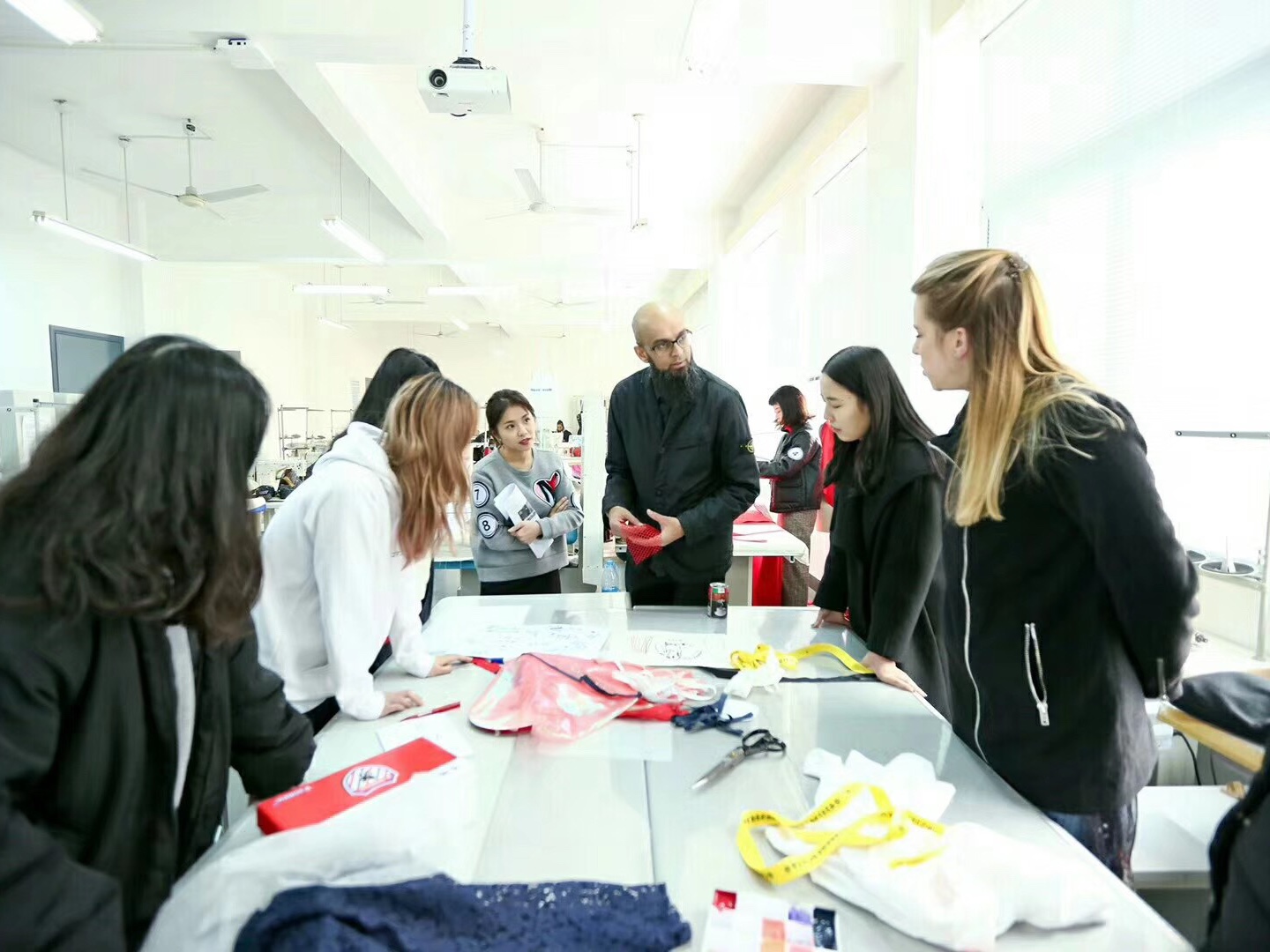
*Material, trim, and colour decisions should remain connected to the named garment and sample. This image shows factory review context, not an approved padel fabric or test result.*
Avoid approving a logo only on a flat swatch when garment curvature, local stretch, seam, pleat, pocket, or opening affects the application. A swatch can answer an early colour or process question. A garment sample should answer the assembled placement question.
What should a fabric sample and garment sample each prove?
A swatch, hanger, or lab dip can help compare colour, surface, handfeel, weight, construction, and early decoration direction. It does not show complete garment fit, seam interaction, layer behaviour, pocket support, or movement. Label what the swatch can and cannot approve.
A garment sample connects the material to pattern, construction, components, fit, colour, and artwork. Give it a defined purpose. A fit sample using substitute material should state that limitation. A final-material sample should state whether the colour, branding, labels, and packing are represented.
Separate development, fit, material, size-set, decoration, and pre-production evidence by sample purpose. Use the sample-feedback framework to record observations against the correct version.
If a material changes after fit approval, ask which fit, movement, coverage, artwork, care, and claim questions need to be repeated. Similar composition does not guarantee equivalent behaviour.
How should care and wash observations be planned?
Begin with the intended consumer care route and destination requirements. Confirm which method or instruction is being discussed and who approves the final label. An informal internal wash observation can support development, but it is not automatically a standard test or durability claim.
The activewear wash-sample brief helps record sample identity, procedure, drying condition, measurements, surface, seams, colour, artwork, and component observations. Compare like with like and keep the original record.
For a skort, review outer and inner lengths, layer relationship, waistband, pocket opening, seams, pleats, and appearance after the agreed care review. For a polo or top, review measurements, collar or opening, seams, hem, surface, colour, and decoration. Record the actual result without extrapolating to unlimited washes.
Any care-related claim should match the evidence scope. If the colour, fabric, artwork method, or construction changes, determine what review must be repeated.
How should suppliers be compared on fabric proposals?
Send the same product and evidence brief to each supplier. Ask them to identify the candidate material, source, known specification, garment component, colour route, available evidence, assumptions, alternatives, sample need, and commercial dependencies. A price without an equivalent material and approval scope is not a like-for-like comparison.
Use this decision sequence:
- Confirm the product role and component.
- Record the required and optional material characteristics.
- Collect candidate identity and evidence.
- Eliminate candidates that cannot support the core product question.
- Request the smallest useful swatch, decoration, or garment sample.
- Review against the same conditions and decision owner.
- Approve, revise, reject, or keep open with reasons.
- Carry the accepted identity into production and QC records.
Do not accept “same fabric” without a traceable identity and agreed comparison. A later source or batch change can require colour, fit, decoration, care, or claim review even when the marketing name stays the same.
What fabric controls belong in bulk production and QC?
The production handoff should identify approved material and colour references for every garment component. Include supplier or internal code, composition and construction where confirmed, weight or other key fields, colour standard, finish, usable width where relevant, and approved sample or evidence.
Define incoming, cutting, sewing, and finished-garment checks appropriate to the project. The exact inspection and test plan should follow the product and order, not a generic promise. The activewear manufacturing workflow provides context for connecting material approval to sewing, QC, packing, and export preparation.
Maintain change control. If the proposed material becomes unavailable or a substitution is requested, do not approve it through an isolated message. Record the replacement candidate, affected components, comparison evidence, and approvals that need to reopen.
For reorders, retain material identity, colour references, approved garment, artwork, care, and QC information. A repeat order still requires confirmation of current availability and any changed scope.
How should laboratory evidence and wearer observations be kept separate?
Both can be useful, but they answer different questions. A laboratory report should identify the tested material or garment, method, conditions, result, date, and reporting organisation. A wearer observation should identify the sample, fit context, movement, environment, question, and reviewer. Neither record should be expanded beyond its actual scope.
For example, an agreed test may provide evidence about one material property under stated conditions. It does not automatically prove that every colour, garment construction, logo application, care history, or wearer experiences the same outcome. A wearer may report that one sample felt warm or shifted during a session. That observation can guide development, but it is not a universal measure of breathability, thermal comfort, or fit.
Create an evidence table with columns for claim or decision, product/component, sample or material code, evidence type, method or review condition, result or observation, limitation, owner, and approval status. This makes it easier for marketing, sourcing, and factory teams to use the same boundary.
If the company plans a strong public performance statement, ask a qualified compliance or testing specialist which evidence and wording are appropriate for the target market. The factory material discussion can support sample selection and production control; it should not be used to manufacture a claim that the evidence does not support.
What should happen when a supplier proposes a substitute fabric?
Treat substitution as a controlled product change. Ask why the original candidate is changing, identify the replacement with the same material fields, and compare the properties relevant to the garment. “Equivalent,” “same quality,” or the same fibre percentage is not a complete comparison.
Map the approvals affected by the substitution. A different candidate can change colour, drape, stretch, recovery, fit, coverage, seam behaviour, pocket support, logo appearance, care, label content, claims, cost scope, and production planning. The buyer does not always need to repeat every activity, but it should make that decision deliberately.
Request the smallest useful evidence. A swatch may answer early surface or colour questions. A decoration sample may answer logo compatibility. A garment sample may be necessary where fit, layers, pockets, or construction are involved. Record the accepted substitute and retire ambiguous references to the earlier material in current production documents.
The change log should remain with reorder records. Otherwise, a later team may ask for the “same fabric” without knowing whether that means the original candidate or the approved replacement.
What should a padel fabric brief contain?
Send:
- Garment roles and target wearer, market, channel, and use conditions.
- Product references, patterns, tech packs, or approved samples.
- Material component map for top, skirt outer, liner, pocket, waistband, and layer.
- Known composition, construction, weight, width, stretch, surface, and finish requirements.
- Fit, drape, coverage, recovery, movement, and handfeel priorities.
- Colour standards and pale/dark colour review questions.
- Logo, print, trim, seam, and component compatibility needs.
- Claims planned for the product and evidence required.
- Care route, label questions, and agreed development observations or tests.
- Sample purpose, sizes, colours, reviewers, and approval boundaries.
- Preliminary quantities, destination, packing, and reorder expectations.
- Open fields and assumptions the supplier should identify.
inPACE can review this material brief through the custom activewear development route, connect candidates to the intended garments, and coordinate swatches, samples, fit comments, branding, and production records subject to the actual project. The manufacturing background supports the process; it does not turn an unidentified swatch into a verified padel performance fabric.
Send your padel garment references, component map, material priorities, colour direction, and evidence questions to inPACE for a project-specific fabric discussion.
Product directions
Explore relevant activewear products
Use these product pages as practical references for your brief, then confirm materials, fit, customization, and production details through sampling.
A-Line Court Skirt Reference
Use the outer and inner components to discuss separate material roles rather than one generic padel fabric.
View product directionSleeveless Training Tank Reference
Connect top-fabric candidates with a named silhouette, fit, colour and movement review.
View product directionFabrics & Trims
Prepare the identified materials, colours, components and evidence questions for a project-specific review.
View product directionFAQ
Buyer questions
What is the best fabric for padel clothing?
There is no single best fabric. Choose an identified candidate for a named garment and component, then compare fit, stretch, recovery, drape, coverage, surface, colour, decoration, care, climate, and required evidence. Tops, outer skirts, inner shorts, pockets, and warm-up layers may need different materials.
Is polyester or nylon better for padel apparel?
A fibre name alone cannot decide. Fabrics with similar fibre percentages can differ in construction, weight, stretch, recovery, surface, colour, finish, and garment behaviour. Compare the actual material and sample against the product brief rather than ranking fibres without context.
Should a padel skort use the same fabric for the skirt and inner shorts?
It may, but the layers have different jobs. The outer controls drape and appearance; the liner affects body contact, fit, coverage, recovery, and pocket support. Review the proposed combination in the assembled skort before approving it.
How should fabric opacity be checked?
Define the actual colour, garment fit, lighting, movement, underlayer, sample version, and dry or other agreed condition. Record observations and use an appropriate test where the claim requires it. Do not generalise from a dark swatch, static photograph, or different garment.
Does a moisture-wicking description prove quick drying?
No. Moisture movement, absorption, wicking, and drying are different questions. Define the claim, material or garment, method, conditions, and acceptance criteria. Keep supplier descriptions, internal observations, and formal test evidence clearly distinguished.
Can a fabric swatch approve the final garment?
A swatch can support colour, surface, handfeel, construction, weight, or early decoration decisions. It cannot fully demonstrate garment fit, seams, layer interaction, pocket loading, movement, or assembled appearance. Use a garment sample for those product-level questions.
What happens if the approved fabric changes before production?
Record the replacement candidate and identify which colour, fit, movement, coverage, artwork, care, claim, and commercial approvals need to reopen. Do not treat a similar composition or marketing name as proof that the new material is equivalent.