
Direct answer: DTF must be reviewed on the actual activewear, not approved by its name
DTF printing for activewear can be a useful route for a defined logo or graphic, but it is not a universal approval for every stretch fabric, garment area or visual size. A sound decision identifies the garment, fabric face, base colour, local stretch, artwork coverage, proposed film-and-adhesive system, heat application process and sample question. The label “DTF” alone does not establish handfeel, edge appearance, stretch behaviour, colour result or suitability for a production order.
For a brand, the right first question is not “Can you do DTF?” It is “What does the proposed DTF system need to demonstrate on this named activewear style?” That keeps a local chest logo separate from a large back graphic, a waistband placement or a full-panel design. It also prevents a digital mock-up from becoming an undocumented production instruction.
What does DTF mean in an activewear decoration brief?
DTF commonly describes a direct-to-film decoration workflow: artwork is prepared digitally, printed onto a film, combined with an adhesive-powder step, cured or prepared according to the supplier’s system, then heat-applied to a garment or identified garment panel. That plain-language description is useful for a sourcing conversation, but it is not a technical specification on its own. Film, ink, powder, pressing conditions, fabric, artwork and supplier process all need to be identified for the project being discussed.
This is also why a current heat-transfer service should not automatically be called DTF. “Heat transfer” can describe several decoration routes. Ask the proposed supplier to state exactly which system it is recommending, what material it assumes, what artwork it will receive, where it will be applied, and which physical sample will answer the open question. A supplier’s answer should be recorded as a project proposal, not turned into a general promise about every garment.
For a local visual on an existing silhouette, the project may begin from the private-label activewear route. For example, a team can use the Hooded Thumbhole Training Set as a reference to discuss a local chest, sleeve or upper-body placement. When the garment itself needs a new fabric, panel, fit, structure or function, the conversation belongs in custom activewear development. Either route still needs a garment-specific decoration review.
Why DTF is a fabric-and-zone decision, not simply a logo decision
Activewear is rarely one unchanging textile field. A single item may include a body fabric, contrast panel, mesh zone, pocket bag, waistband, binding, lining, zip guard or elastic. Two fabrics with a similar fibre description may differ in surface texture, coating, stretch direction, recovery, thickness, dye, finish or heat sensitivity. A logo that looks acceptable on one body panel may need a different proposal on another part of the same garment.
The fabric face is especially important. A very smooth surface, a textured knit, a brushed material, a coated panel and an open mesh do not create the same review conditions. The buyer does not need to declare a result in advance. It is more useful to name what must be assessed: local visual coverage, edge visibility, feel in the relevant zone, recovery appearance after the stated movement or stretch observation, and any interaction with seams or components.
The same caution applies to base colour. A bright mark intended for a pale garment and a tonal mark on a dark colourway are not automatically the same task. The artwork file may be the same while the visual hierarchy, opacity question or sample priority changes. State the actual planned colourways and nominate which one must be represented in the first physical review. Do not let a screen view or an unlabelled photograph quietly approve all colours.
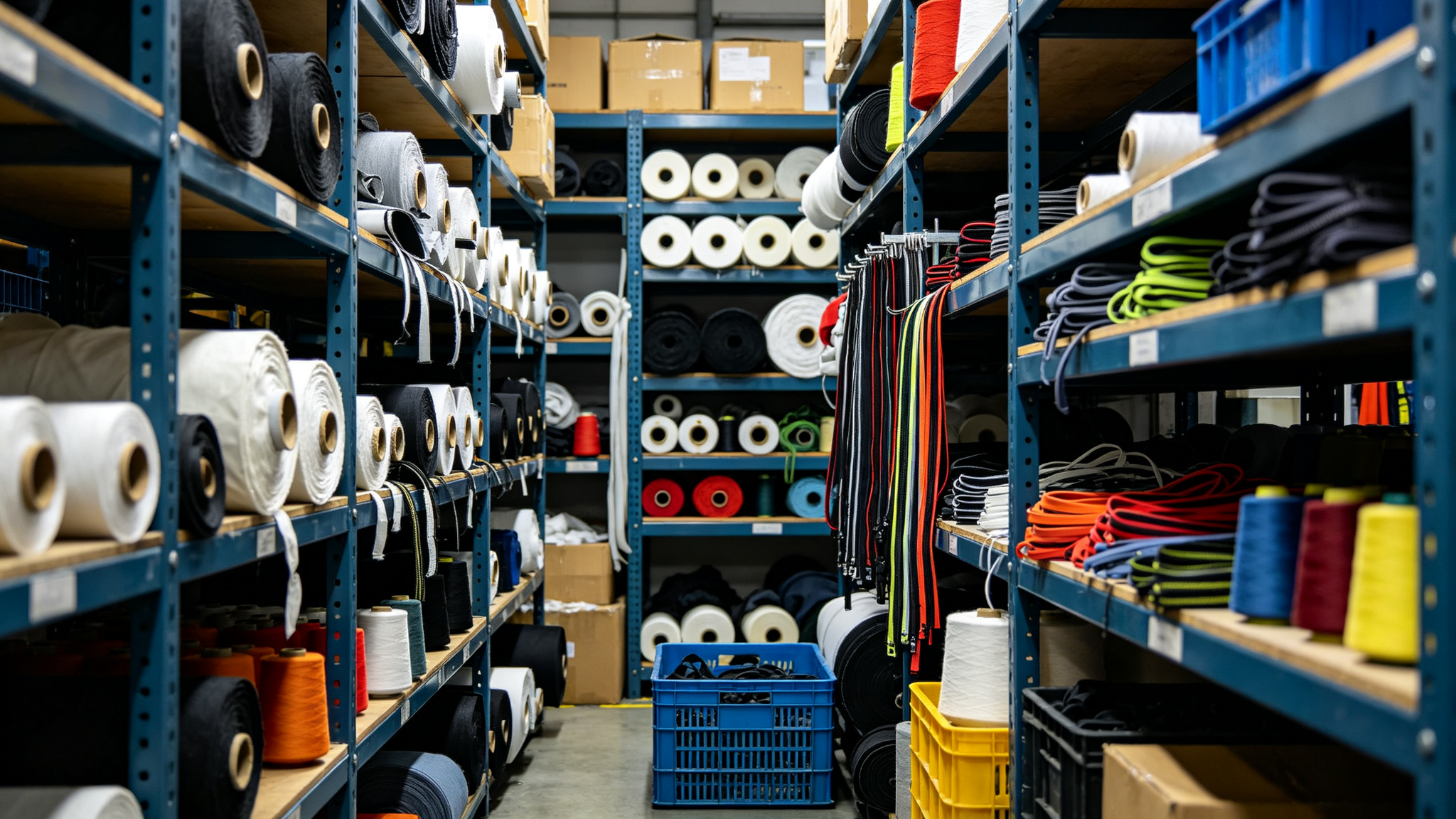
*This materials image illustrates the kind of fabric and trim context a brief should identify. It is not evidence that a particular DTF system, material combination or result has been approved.*
The fabrics and trims resource can help a buyer organise what is known about each material and component. It should be used to prepare questions, not to infer DTF compatibility from a generic fabric category.
Which activewear areas need the closest review?
The practical risk is usually connected to the garment zone rather than to the word “activewear.” Begin by sorting the decoration into one of four zones.
A low-stretch or stable branding zone
A small chest, upper back, hem-adjacent or pocket-area mark may sit on a relatively stable part of the garment. That does not make it automatic. The team still needs to check the exact surface, visual proportion, seam distance, zipper relationship, fabric colour and local handfeel. But the sample question can be narrow: does this identified logo look and feel appropriate on this named area?
A stretch or recovery zone
Leggings, bras, close-fitting tops, cuffs, waistbands and body-contouring panels may put the decoration into visible extension or compression. “Stretch fabric” is not enough information. The brief should identify the orientation of likely extension, the artwork size, the surrounding seam layout, the intended wearer context and the particular appearance the reviewer needs to inspect. Do not claim a tested stretch result until the actual sample, conditions and observation are recorded.
A heat-sensitive or component-heavy zone
Near zips, pockets, drawcords, reflective details, elastic, bonded structures, mesh, labels or layered construction, a local decoration request can become a component and process question. The drawstring training shorts reference is useful for naming a pocket and drawcord context; it does not show that a DTF application is suitable for the shown garment. Share a front, back and local placement mark-up so the supplier can identify what needs physical review.
A broad-coverage graphic zone
DTF is not automatically the best comparison for a large visual, broad panel treatment or all-over garment programme. Once the visual crosses multiple panels, seams and large body areas, it may require a different print-route discussion and a cut-piece or sewn-garment sample plan. The activewear printing methods guide and digital versus offset sublimation guide explain how to frame those broader artwork questions. They should not be used to relabel a specific local DTF request.
How do film, adhesive powder and heat application affect the buyer brief?
The buyer does not need to prescribe a supplier’s machine settings. It is usually more accurate to request a clear process statement: the proposed film-and-ink system, adhesive-powder or bonding approach, application stage, garment material assumed, artwork coverage, and sample evidence planned. The supplier is responsible for explaining its own proposed process. The brand is responsible for providing a controlled artwork file and a clear acceptance question.
In practical terms, ask whether the proposal is for a local mark, a multi-colour logo, type, a small graphic, a sleeve treatment or another defined placement. Ask how the supplier expects the edge and handfeel to be reviewed on the named material, and whether it needs a transfer-only trial, a fabric swatch, a logo sample or a finished garment sample. Avoid copying a generic press time, temperature, pressure, film type or wash claim from another project. Those details have meaning only when tied to the specific system and material being proposed.
It is also worth separating visual approval from process approval. A team may approve the artwork file while still needing to evaluate the proposed sample on fabric. It may approve a local decoration sample while leaving a second colourway or garment zone open. A disciplined record says what was reviewed, by whom, on which garment or swatch, with which artwork version, and what remains unresolved.
Handfeel: how should a brand describe the question without making claims?
“Soft handfeel” is an intention, not a measurable instruction by itself. A local applied decoration can be more or less noticeable depending on its coverage, film construction, edge, fabric thickness, garment fit and body location. Large coverage in a close-fitting zone can create a different wearing question than a small logo away from regular extension. The correct supplier conversation is therefore about the physical sample, not a generic claim that DTF feels light or performs the same on every fabric.
Ask the review team to record practical observations in context. Is the concern visual edge, local stiffness, skin-side contact, the relative contrast between an applied area and its surrounding fabric, or the way a mark sits beside a seam? Which sample size and wearer context were used? Was the garment relaxed or in movement? Is the observation an accepted feature, an open question or a requested revision? This language gives a factory something actionable without inventing a performance guarantee.
For a logo placement specifically on stretch-oriented product, use the logo methods for stretch activewear guide alongside this article. It helps the team distinguish logo-method choice from a universal DTF recommendation. For the physical location itself, the activewear print placement guide is the better reference; it cannot prove that a chosen method suits the named material.
Artwork files: the detail that prevents many DTF sample mistakes
Provide a controlled artwork pack before asking a supplier to assess DTF. At minimum, include the current source file, version name or date, intended placement, approximate dimensions, colour references, orientation, garment colourways, no-print zones and the product or panel reference. If the artwork contains thin details, small type, texture or gradients, state that the sample should review those features. Do not treat the most recent image in a chat thread as the production asset.
Keep the artwork file separate from the mock-up. A mock-up explains the intended visual relationship. It does not define the actual physical scale, final fabric, local seam distance or approved process. The artwork pack should identify which document controls each decision. If the creative team issues a new version, update the version record before sampling rather than relying on a verbal instruction to “use the newest one.”
When a brand has several logos, colourways or placement variants, create a matrix rather than sending loose files. For every row, name the garment, colourway, artwork version, placement, dimensions or scale, zone, sample requirement and approval owner. This may feel formal for a small first order, but it prevents a small collection from becoming an untraceable mixture of near-identical files.
The wholesale activewear with custom logo guide can help frame the wider purchase route when the garment direction already exists. It does not make logo placement, material compatibility or DTF sample approval automatic.
A sample ladder for DTF printing on activewear
Use the smallest sample that can answer the remaining decision, then escalate only when necessary. The following sequence is a planning tool, not a promise that every project needs every step.
- Brief and artwork check. Confirm garment reference, material information known so far, colourways, artwork version, placement, coverage and the open decision.
- Supplier process note. Ask the supplier to name the proposed DTF system in plain language and identify the film, adhesive and application assumptions it needs checked on the actual material.
- Targeted logo or material trial. Where the issue is a local design on a known fabric face, request a sample that clearly identifies the fabric, artwork and intended zone.
- Garment-context sample. When seams, fit, component proximity, stretch or body curvature matter, review the mark on the intended garment area rather than extrapolating from a flat swatch.
- Documented observation. Record the version, material, colour, placement, reviewer, date, observations, accepted points, changes and remaining open items.
- Production handover. Move only the controlled artwork, approved scope and named open points into production planning. Reopen the decision when a relevant material, artwork, placement or garment input changes.
If wash appearance or repeated-use appearance is important, agree in advance what is to be observed, on which identified sample and under which documented condition. Do not turn a general DTF statement, an unrecorded home test or one sample photo into a universal durability or colourfastness claim. The sample-to-bulk production guide explains why a sample record must stay connected to the production handover.
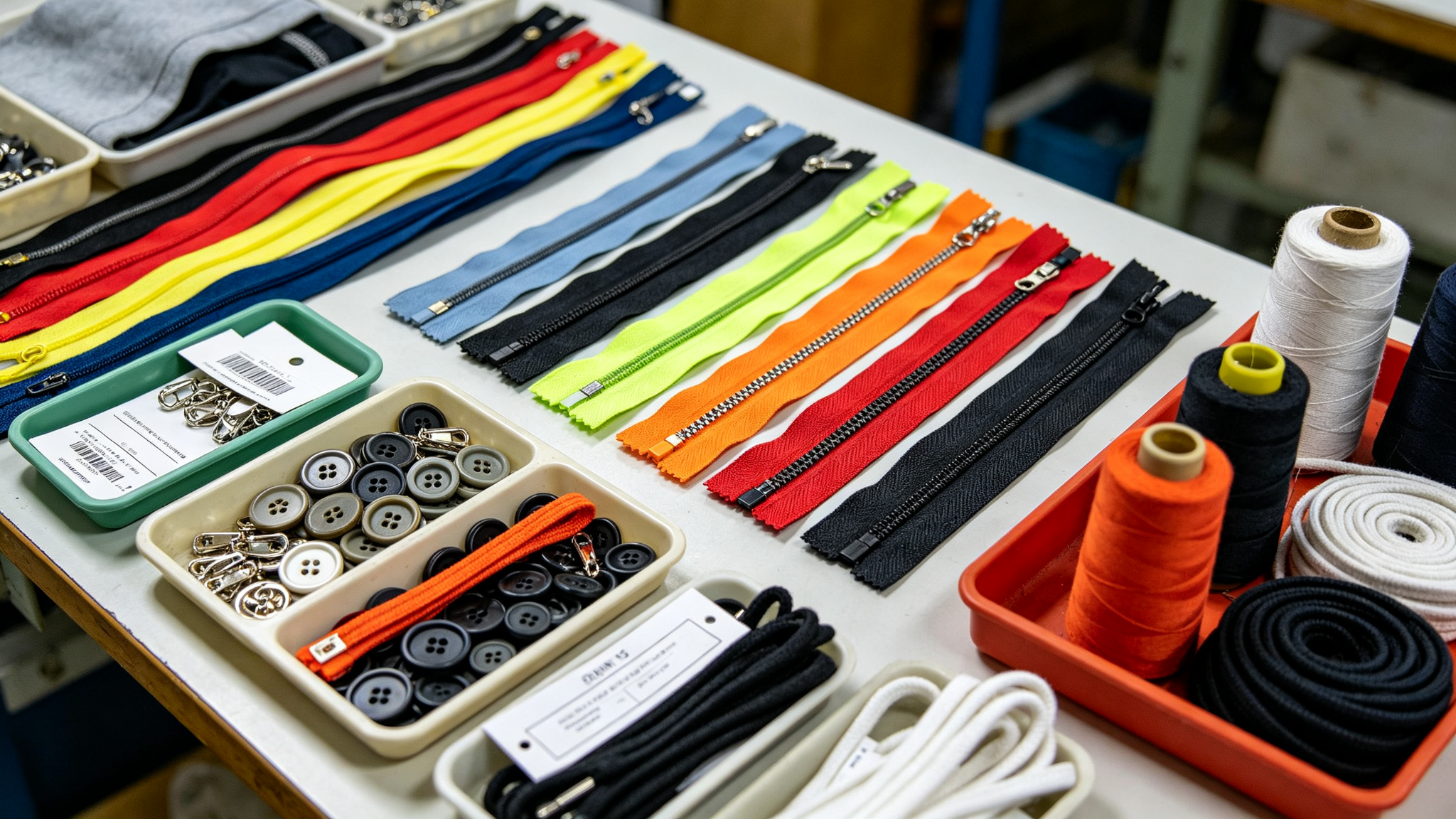
*Trims and components can change the placement discussion around a local graphic. This image is a development-context illustration, not proof of a DTF process or result.*
Use one decision matrix for every proposed DTF application
The quickest way to lose control of a logo programme is to keep the decoration conversation in informal messages. A single approved-looking image can then be applied to another garment, colourway or fabric without anyone noticing that the assumptions have changed. A decision matrix does not make the project bureaucratic; it keeps the evidence attached to the exact question that was reviewed.
| Brief field | What to name | Why it matters for DTF activewear | Evidence or response to request |
|---|---|---|---|
| Garment reference | Style name, product URL or sample identifier, colourway and intended size scope | Shows which fabric zones, seams and components are actually part of the request | Annotated front, back and local placement reference |
| Material context | Known composition, fabric face, finish, stretch direction and nearby trims | Stops a generic material term from being treated as a complete compatibility statement | Named swatch, garment piece or supplier questions listed as open |
| Artwork control | File name, version, colour references, placement, orientation and intended scale | Prevents an old mock-up, export or colourway from becoming the supplier instruction | Controlled source file and revision log |
| Decoration scope | Local logo, sleeve feature, number, small graphic, panel or broad coverage | Coverage changes the likely handfeel, edge, visual and sample question | Supplier process note tied to the named visual scope |
| DTF system proposal | Supplier description of the film, ink, adhesive and heat-application route | Makes it clear that DTF is a defined proposal rather than a generic label | Plain-language statement of assumptions and limitations |
| Review objective | Edge visibility, position, colour relationship, local feel, stretch-zone appearance or component proximity | Keeps a sample focused on a decision instead of producing an unreviewed object | Named acceptance question for every sample |
| Approval boundary | Exact material, colourway, garment zone, artwork version and reviewer | Makes clear what a positive sample observation does and does not cover | Dated review record with open items and decision owner |
The supplier may need more information before it can propose a sample. That is a useful result, not a failure. It is safer to record the missing material, file or placement input than to proceed on an assumption that later gets mistaken for an approved instruction.
What should not be inferred from a successful DTF sample?
Even a well-documented sample has limits. A logo trial on one fabric does not automatically validate another fabric face, a new colourway, a larger artwork, a different garment size, a new location or a changed supplier process. A good sample tells the team something specific. It does not remove the need to notice what changed around it.
Avoid shortcut claims such as “DTF always stretches,” “DTF is always softer,” or “the logo is already production ready” unless the record defines the exact material, application, observation conditions and accepted scope. A supplier may have useful experience with its own system, but the buyer’s production decision still needs to be grounded in the named product and sample evidence. That distinction is especially important for small brands that want to move from first samples to a broader assortment without silently multiplying untested combinations.
When several production partners are involved, maintain one versioned brief rather than sending different image exports to different contacts. The brief should show which party is evaluating what, but it should not imply that every party owns or performs every process. A central discussion record lets the brand compare proposals, preserve the sample boundary and decide what needs a second review before it enters bulk planning.
What should production QC check after sample approval?
Sample approval and production QC are separate controls. The first defines what the named sample demonstrated and what the buyer accepted. The second compares production output against that record and any agreed inspection scope. A production team should not have to infer whether “approved logo” means a file, a colourway, a position, a sample photograph or a physical garment.
The handover can include the controlled artwork, garment style, material direction, colourway, placement reference, intended dimensions or proportion, sample identifier, process note supplied by the vendor, accepted visual observations, approved exceptions and any open questions. The appropriate QC points depend on the project; do not copy an inspection list from another style and call it complete. A changed fabric face, artwork revision, component, colourway or placement can require a fresh review.
inPACE can coordinate the discussion with suitable cooperating production partners when a project combines activewear development, decoration, labels and packing. More than 30 years of garment manufacturing experience through Yinshan Garments helps inform the conversation, but it does not mean every decoration step is owned in-house or that every project follows one fixed route. Actual capability, sample plan, commercial terms and production schedule must be confirmed for the named brief.
The manufacturing overview provides the broader context for samples, production communication, QC and delivery preparation. This article’s narrower point is simple: a documented DTF sample decision should travel into the production conversation instead of remaining a vague visual reference.
Buyer checklist: request a decision-ready DTF review
Before contacting a supplier, make the following information visible:
- the exact garment or product reference, including the intended decoration zone;
- fabric composition if known, fabric face, colourway and any component or seam near the mark;
- controlled artwork file, version, colours, placement and approximate size or proportion;
- whether the artwork is a local logo, small graphic, broad graphic or panel-led treatment;
- why DTF is being considered and what alternative route, if any, also needs comparison;
- the physical question to answer: visual edge, local handfeel, placement, colour relationship, stretch-zone appearance or another specific point;
- requested evidence: swatch, logo trial, garment-context sample or another named review;
- the style-colour-size quantity direction, packing requirements and destination context for a commercial discussion;
- who can approve artwork changes, sample observations and the final handover record.
Do not use this checklist to imply a fixed MOQ, price, lead time, production capacity, wash result or universal material compatibility. Those conditions depend on the actual garment, materials, artwork, coverage, supplier proposal, sample result, order plan and scheduling context.
Send a clear DTF activewear enquiry
Send the garment reference, fabric details, logo file, size, placement and colourways for a DTF suitability review. Add photographs or a panel mark-up where a seam, zip, pocket, drawcord, waistband or stretch zone is relevant. The first request should state which decision the sample must settle and which elements remain open.
Contact inPACE with the controlled artwork and garment context. We can help structure the discussion between an existing-product route, a custom-development request and the appropriate sample evidence—without treating a generic DTF label as approval for the final activewear programme.
Product directions
Explore relevant activewear products
Use these product pages as practical references for your brief, then confirm materials, fit, customization, and production details through sampling.
Private Label Service
Use this route when an identified activewear style needs a controlled logo, label, hangtag and packing discussion alongside a DTF suitability review.
View product directionHooded Thumbhole Training Set
Use this training-set reference when discussing a local logo zone, fabric face and the garment-context sample questions for a proposed decoration.
View product directionDrawstring Training Shorts Reference
Use this lower-body reference to identify a pocket or drawcord context before confirming the actual material and DTF sample scope.
View product directionFAQ
Buyer questions
Is DTF printing suitable for every activewear fabric?
No. A material name or stretch claim does not approve a DTF application. Review the actual fabric face, colour, stretch zone, artwork coverage, garment construction and the proposed film-and-adhesive system through the relevant sample evidence.
Is every heat-transfer logo on activewear DTF?
No. Heat transfer is a broad description that can include several decoration routes. Ask the supplier to identify the actual proposed system, material assumptions, application process and sample scope rather than treating a general heat-transfer service as DTF.
When should I request a DTF garment sample instead of a fabric swatch?
A targeted swatch or logo trial can help when the question is artwork on a known material. Request a garment-context sample when seams, stretch, fit, curvature, zips, pockets, waistbands or other construction features affect the proposed placement.
Can a mock-up approve DTF print placement and size?
A mock-up communicates visual intent, but it does not prove the result on the actual garment, material, colourway, seam layout or movement context. Use a controlled artwork file and the physical sample that can answer the remaining decision.
What should I send for a DTF sportswear logo review?
Send the garment reference, material details known so far, colourways, controlled artwork file and version, placement, dimensions or proportion, surrounding components, quantity direction and the specific question the first sample must answer.
Does one approved DTF sample cover every colourway and style?
Not automatically. The approval record should identify the garment, material, colourway, artwork version, placement, sample condition and decision it covers. A changed fabric, colour, artwork, zone or construction can require a new review.
Can a supplier promise DTF wash performance before sampling?
Avoid universal claims. If wash appearance is important, agree what will be observed on which identified sample and under which documented condition. Record the observation and do not generalise it beyond the sample and conditions reviewed.