
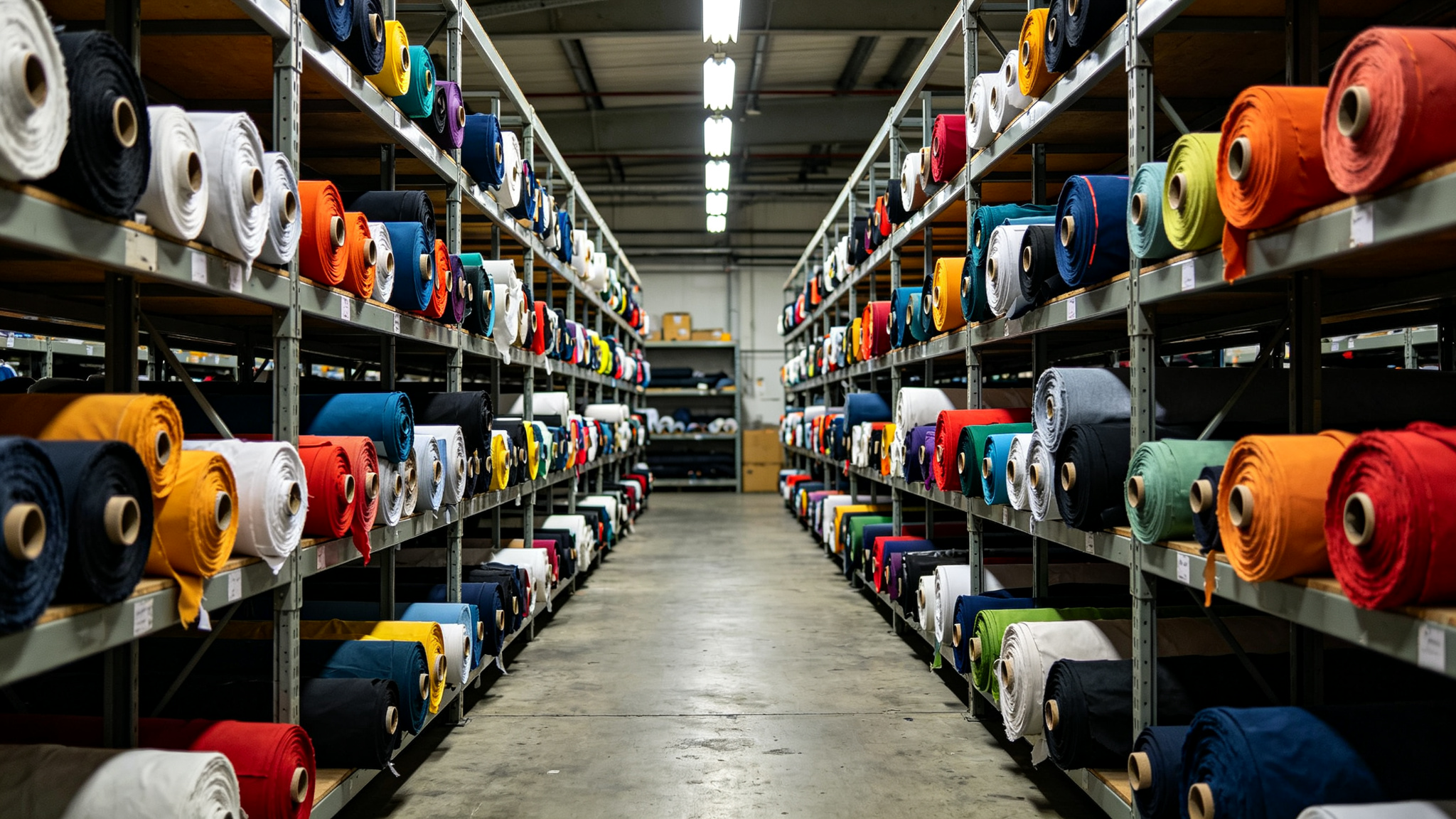
Direct answer: define the supplier’s process before comparing the label
For digital vs offset sublimation sportswear, the first buyer decision is not which label sounds more advanced. It is whether the supplier can define the actual image-making and transfer sequence for the identified polyester garment, artwork, colourway, coverage and order plan. “Digital”, “offset” and “transfer” are not used as one universal industry vocabulary. Ask for the proposed substrate, artwork file, proof or strike-off, cut-piece sequence and sewn sample evidence before approving a route.
This is a factory-custom or sample-led discussion when the print affects a garment’s visual identity, panel map, fabric choice or construction. It can begin from an existing jogging and printed activewear direction when the silhouette is already useful. It should move into custom activewear development when the brief changes the fit, fabric, panel construction, colour programme or product function. Neither path removes the need to confirm the actual garment and physical sample.
What does “digital vs offset sublimation” actually mean in a supplier conversation?
The safest answer is: it depends on how the named supplier is using the words. A buyer may use “digital sublimation” to mean artwork that is output from a digital file for a transfer workflow. Another supplier may use “offset sublimation” to describe a more conventional or analogue-style printing stage for the transfer image. A third may call the whole route “transfer sublimation” without saying how the image was first made. Those phrases may help start a discussion, but they do not by themselves define the equipment, ink system, paper, material limits, colour-control process, ownership of each production step, or expected result on a garment.
That ambiguity matters because a procurement decision should compare like with like. One proposal might cover a short graphic on a pale polyester panel. Another might assume a broad, repeating visual across multiple cut pieces. A third might include only transfer-paper output while a fourth includes a colour proof, a cut-piece trial and a sewn garment sample. Calling all four quotations “sublimation” makes the differences disappear.
Use the names as search and briefing terms, then ask every supplier to translate them into one written process statement. A practical statement answers five questions:
- How is the current artwork file converted into the proposed transfer or print output?
- Which identified fabric, base colour and garment area are being assumed?
- Does the visual apply to a finished garment, a panel or a cut piece before sewing?
- What colour proof, strike-off or sample is proposed, and what will it demonstrate?
- Which changes to artwork, colourway, fabric, coverage, quantity or construction would reopen the recommendation?
The activewear printing methods guide explains how this broader print-route question differs from logo-only decoration, panel graphics and all-over visuals. This page focuses more narrowly on making a vague digital-versus-offset request usable for a sportswear sourcing decision.
Why is the term not a universal technical specification?
Manufacturing vocabulary often develops around local equipment, supplier experience, production history and commercial shorthand. That does not make the vocabulary wrong; it makes it incomplete. An “offset” label can describe an image-preparation step in one supply chain and mean something different in another. “Digital” can refer to a file workflow, a printing device, a sampling route or simply a visual style in a sales conversation. “Sublimation” describes a family of heat-transfer conversations, but it does not automatically tell the buyer whether the process is suitable for the selected product, whether the colour proof is from the final material, or whether a pattern piece has been considered.
For B2B buyers, the distinction is useful only when it changes a real decision. It may change the artwork preparation, number of colourways, source file requirements, proof sequence, panel layout, repeat-order record or commercial assumptions. It should not be used as a shortcut to claim that one route always has better colour, lower cost, faster timing, greater durability or universal suitability. Those conclusions depend on a confirmed project and physical evidence.
Ask the supplier to avoid an unqualified “works on polyester” answer. A more useful reply identifies the specific composition supplied for review, surface and knit or weave context, ground colour, artwork coverage, garment zone, sample purpose and any open questions. The fabrics and trims resource can help a buyer organise that material input. It does not establish that an untested fabric is compatible with a particular route.
*A material library can help a team identify colour and surface direction. It is not evidence that a particular roll, fibre blend or print route has been approved for a garment programme.*
Which route question should a sportswear brand answer first?
Start with the visual job, not with the technology name. A sportswear programme usually falls into one of three practical scopes.
A contained graphic on an identified garment area
This might be a small chest visual, sleeve element, team number, limited side-panel feature or branded insert. The buyer should identify the garment, exact artwork version, scale, location, ground colour and the local material zone. A contained graphic might not need the same panel mapping as a full graphic set, but its visible edge, local stretch, texture and placement still need a sample decision. If the request is primarily a logo application on a stretch area, the activewear logo application guide is the more specific next reference.
A panel-led visual with construction boundaries
This includes a side-panel graphic, shoulder treatment, leg placement, contrast panel or visual that meets a seam, zip, pocket, binding or waistband. The print discussion becomes a garment-construction discussion because the visual may shift when the pieces are sewn. A flat artwork file cannot show every relationship that a curved, stretched or multi-panel garment will introduce. The buyer should supply a panel or pattern reference, indicate no-print zones, and state whether the artwork must align across a seam or may accept controlled variation.
A broad or all-over artwork programme
Repeats, gradients, photographic surfaces, engineered graphics and large teamwear treatments need a clear cut-piece or garment strategy. The important question is not simply whether the design can be output digitally or through an offset-described transfer workflow. It is whether the visual is being planned before or after key construction decisions, how it relates to each panel, and which visual interruptions are acceptable. A current YA-13 fluid graphic set reference can help a team name a product direction, but it is not a claim that its material, print route or panel map applies to a new project.
A comparison table for the written supplier brief
The table below does not rank digital and offset sublimation. It shows the information that makes the comparison real. Use the same fields for every supplier so that a difference in scope is visible before the team treats two responses as competing like-for-like offers.
| Brief field | What the buyer should name | Why it changes the digital/offset comparison | Physical or written evidence to request |
|---|---|---|---|
| Process definition | The supplier’s own description of image preparation, transfer stage and garment/cut-piece sequence | Stops “digital”, “offset” and “transfer” from being treated as interchangeable labels | A plain-language process note with all assumptions listed |
| Garment reference | Existing style, panel map, selected size range and any construction change | Shows whether the visual crosses seams, curves, openings or stretch zones | Product reference, panel drawing or annotated sample photo |
| Fabric and ground | Confirmed composition if known, surface, knit/weave direction, colour and relevant zones | The same artwork can read differently across surfaces, colours and garment areas | Identified swatch or material record; open points marked clearly |
| Artwork control | File version, repeat, scale, colour references, no-print zones and orientation | Prevents an older mock-up or unfinished colourway from becoming the production instruction | Controlled artwork package and change log |
| Coverage | Local, panel, cut-piece, all-over or mixed treatment | Affects layout, output planning, sample need and the meaning of a visual proof | Coverage map linked to the garment reference |
| Proof route | Screen proof, transfer sample, strike-off, cut-piece sample or sewn garment | A flat proof may answer colour direction but not seam, fit or panel questions | Named sample purpose and acceptance questions |
| Order plan | Style-colour-size matrix, repeat expectation, packing scope and quantity direction | Lets suppliers state commercial assumptions without pretending that one total number settles the route | Written order-plan assumptions; no fixed MOQ or price implied |
Use “unknown” rather than filling a field with a guess. A supplier can explain what it needs next. A blank field that is silently interpreted as an assumption is more likely to cause rework after a proof or sample is already in motion.
How do polyester fabric and ground colour change the brief?
Sublimation is commonly discussed for polyester sportswear, but “polyester” is still too broad for a production instruction. A buyer may be comparing a smooth interlock, a textured knit, a mesh-like structure, a bonded panel, a lining, a brushed surface or a garment made from more than one material. Even where a composition is known, the face, weight, stretch direction, recovery question, surface texture and ground colour can change what the team needs to review.
Ground colour deserves its own line in the brief. A design developed on a white screen background is not a complete instruction for a darker, coloured or texture-led panel. A buyer can state the intended visual relationship, such as “bright graphic over a light ground” or “tonal repeat on a darker panel,” without promising a colour result that has not been physically reviewed. Each planned colourway should be named, especially when it changes the visual hierarchy rather than merely repeating the same body colour.
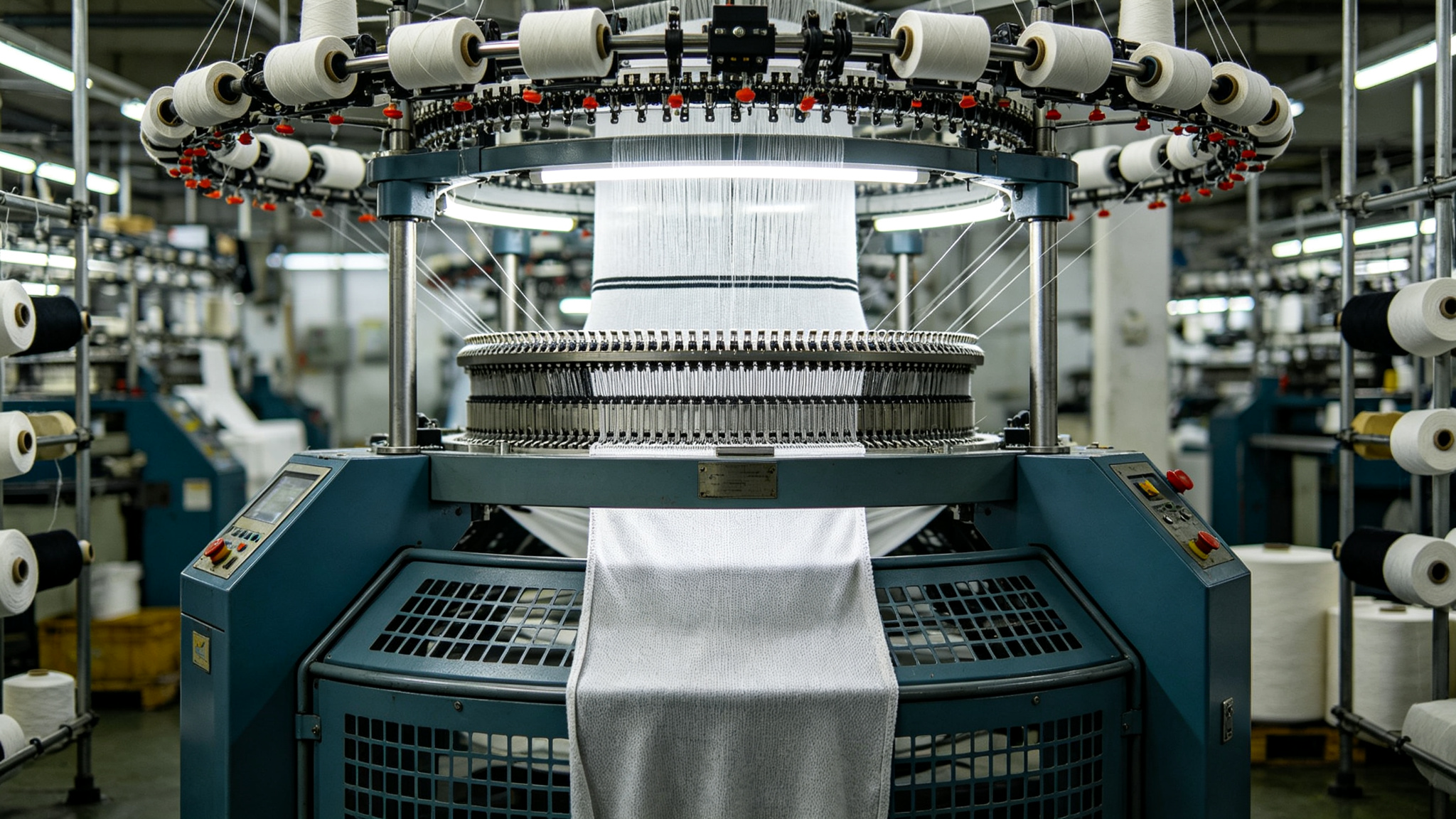
*Fabric construction and surface context should be documented alongside the artwork. This image is a production-context reference, not proof of a selected fabric or sublimation capability for a particular order.*
The activewear colour approval guide is useful when a brand needs to coordinate a colour reference, fabric, component and visual sample. It does not replace a sublimation-specific proof. The proof should name the same artwork version, material direction, ground colour and review question that the final programme needs to resolve.
When is a paper proof enough, and when is a sewn sample needed?
A proof can be valuable, but only for the question it was designed to answer. A paper or screen view may help the brand review artwork completeness, approximate colour relationship, repeat direction, file version and typography. It does not show the image on the actual fabric, through a seam, around a curved body area, beside a trim or after the garment has been constructed.
A transfer, strike-off or cut-piece trial can move the review closer to the real material. It is useful when the open issue is the image on an identified material and ground. A sewn sample is more important when the visual interacts with panel shape, seam placement, stretch zones, body curvature, a waistband, pocket, zip, lining or fit. The right sample is not automatically the largest one. It is the one that can answer the decision that remains open.
Use a simple escalation sequence:
- Artwork file review: confirm the current file, scale, repeat, colour reference, orientation and no-print zones.
- Process proposal: ask the supplier to define what it means by digital, offset and transfer for the project, including materials and scope assumed.
- Targeted proof or strike-off: review the named visual on the identified material or relevant transfer context.
- Cut-piece check: where panel layout matters, review the visual with seam allowance, placement and orientation information.
- Sewn garment sample: when construction, fit, movement or seam relationships affect the visual decision.
- Approved-record handover: keep the artwork file, material direction, colourway, panel reference, sample photos, observed points and open items together before production discussion.
The sample-to-bulk production guide explains why a named approval record needs to travel with the production conversation. “Sample approved” is not complete unless the team can identify the exact visual, garment, material and boundary of that approval.
How should a brand prepare artwork for both routes?
The most reliable artwork package is specific without pretending to be a final factory instruction before the supplier has reviewed it. Include the controlled source file, version number or date, intended dimensions, repeat and scale where relevant, colour references, placement or cut-piece map, orientation, no-print zones, garment reference, known fabric direction, list of planned colourways and any question the first proof must answer.
For a broad visual, add an annotated front, back and panel view. For a local graphic, add the intended size, location and base garment area. For a programme with multiple styles, do not assume that the same artwork behaves identically on a top, bra, legging and jacket. Each garment has a different panel arrangement, material zone and visual scale. A shared artwork may remain the same creative asset while requiring distinct sample evidence.
Keep the brand’s artwork ownership and approval authority separate from the supplier’s process recommendation. The supplier can explain what file form, layout information or physical proof is needed for a proposed route. The brand should identify which artwork version is controlled and who may approve a revision. This separation is especially useful when several cooperating factories contribute to a project. inPACE can coordinate project discussion across suitable production partners, but the commercial route, sample sequence and production scope remain conditional on the confirmed brief and approvals.
If the chosen garment direction is already known and the project mainly adds a visual identity, the private-label activewear service can structure the logo, label, hangtag and packing discussion. If the artwork requires a new panel layout, new base material or a changed garment construction, use the custom activewear development route instead of forcing it into a catalogue-only request.
What should a colour proof and strike-off record include?
The point of a record is not paperwork for its own sake. It lets a buyer, designer, sample reviewer and production contact see what was looked at and what still must be decided. A useful proof record can include:
- garment style or reference and the intended garment zone;
- artwork file name, version and colourway name;
- supplier’s written process description and any “digital”, “offset” or transfer terminology used;
- material description as actually provided for review, including anything not yet confirmed;
- proof type, date, reviewer and lighting or observation context when relevant;
- observations about visual scale, panel relationship, edge, texture, handfeel or colour relationship stated as observations rather than guarantees;
- accepted items, change requests, open issues and the decision owner;
- whether a separate material, colourway, size scope, placement or sewn-garment review is still needed.
This record protects both a small first collection and a repeat programme. It prevents a later buyer from assuming that a successful proof on one pale polyester top automatically approves a dark, textured legging, another fabric lot, a changed repeat or a new size range. It also helps a supplier state whether a change requires a fresh proposal rather than quietly copying an old transfer setup.
How do colourways, coverage and reorder plans affect the production discussion?
The buying team should make the style-colour-size matrix visible before asking for a commercial proposal. A total unit estimate cannot explain whether the order is concentrated in one colourway, split across many colours, divided between top and bottom styles, or intended as a test followed by a controlled repeat. Those patterns may change artwork preparation, proof needs, material allocation, packing requirements and the way a supplier scopes the route.
Do not use the matrix to imply a fixed MOQ, price, production time or capacity. Those commercial conditions depend on the project’s confirmed materials, visual coverage, colourway count, product complexity, partner-factory scheduling, sample rounds, packing and approval timing. A clear matrix is valuable because it lets the supplier identify the assumptions that still need agreement.
For a future repeat, retain the approved version rather than relying on a remembered phrase such as “use the digital one again.” Record the artwork, garment, material direction, panel treatment, colourway, proof type and production notes that were actually accepted. Reopen the discussion if a relevant input changes. A change can be beneficial, but it should be visible: a new fabric surface, revised graphic scale, different ground colour, another style, altered cut piece, changed label or packing request can all make a former proof incomplete.
A buyer checklist before requesting a digital or offset sublimation proposal
Before sending an inquiry, check that the following points are visible. This checklist is designed to make supplier responses comparable, not to turn a preliminary brief into a promise about the final product.
- Name the garment and whether it begins from an existing product direction or custom development.
- State whether the visual is local, panel-led, cut-piece-led or broad/all-over.
- Share the controlled artwork file, version, repeat, scale, orientation and no-print zones.
- List every intended colourway and explain which is a visual priority for the first proof.
- Identify the material supplied for review, what is known about its composition and surface, and what remains open.
- Ask the supplier to define its digital, offset and transfer terminology in one project-specific process note.
- Provide a garment or panel reference so that seam, construction and placement questions are visible.
- Name the proof question: artwork detail, colour relationship, material face, panel continuity, scale, sewn-garment relationship or another specific point.
- Provide a style-colour-size matrix, quantity direction and packing questions without presenting them as final commercial terms.
- Record who can approve artwork revisions, proof observations, sample changes and the production handover.
- Keep proof photos and comments connected to the material, artwork and garment version they actually represent.
- Reopen the route when material, construction, visual coverage, colourway, artwork version or planned order changes.
What can inPACE help a sportswear brand review?
inPACE can discuss a B2B activewear print brief from the garment direction through fabric and artwork questions, sample planning, production coordination, QC and packing records. Where a project uses multiple specialist steps, inPACE can coordinate discussion with suitable cooperating factories rather than representing every process as a single in-house capability. That support builds on more than 30 years of garment-production experience through Yinshan Garments, while the final method, sample path, commercial terms and production plan remain tied to the confirmed project.
Share the selected style, artwork versions, intended polyester or other fabric direction, colourways, visual coverage, panel references, quantity matrix and the decision you want the first proof to answer. Contact inPACE with a sublimation route brief to distinguish what can be reviewed from an existing product direction and what needs a custom garment or sample-development discussion.
Product directions
Explore relevant activewear products
Use these product pages as practical references for your brief, then confirm materials, fit, customization, and production details through sampling.
Jogging & Printed Activewear Direction
Use the catalogue to identify the garment and panel context before a sublimation artwork, fabric and colourway review.
View product directionYA-13 Fluid Graphic Set Reference
Use this distinct graphic set as a product reference, then confirm the actual material, artwork scale and sample scope for the proposed project.
View product directionCustom Activewear Development
Choose this route when the sublimation brief also changes the garment fit, fabric, construction, colour programme or sample-development scope.
View product directionFAQ
Buyer questions
Is digital sublimation the same as offset sublimation for sportswear?
Not necessarily. Suppliers can use digital, offset and transfer terminology differently. Ask each supplier to define the image-preparation step, transfer sequence, material and garment assumptions, proof route and sample scope for the named project before comparing proposals.
Can I choose a sublimation route from a mock-up alone?
A mock-up can communicate a visual direction, but it does not prove the result on the selected fabric, ground colour, panel map, seam, fit or garment area. Use the controlled artwork file with a supplier process note and the physical proof or sample needed for the open decision.
Does polyester automatically approve a sportswear sublimation programme?
No. Polyester is commonly part of a sublimation conversation, but a fibre name does not establish the actual material, surface, ground colour, garment zone, coverage, construction or sample result. Review the identified material and project conditions.
When should a brand request a sewn sublimation sample?
Request a sewn sample when the visual interacts with seams, panels, stretch zones, fit, curvature, openings, pockets, waistbands or construction. A proof or strike-off may answer an artwork-on-material question, but it may not answer those garment-context questions.
What should a supplier include in a digital or offset sublimation proposal?
Ask for a plain-language process description, the artwork and material assumptions, ground colour, garment or panel scope, proof or sample route, commercial assumptions, open questions and the changes that would require the proposal to be revisited.
Does one colour proof approve every colourway and garment?
No. A proof should state the exact artwork version, material, ground colour, garment or panel, sample condition and decision it covers. Another colourway, fabric surface, garment construction, coverage or artwork revision can require a separate review.
Can inPACE quote a sublimation programme from a total unit number only?
A total quantity is only one input. A useful project discussion also needs the garment, material direction, artwork coverage, colourway count, style-colour-size matrix, sample route, packing scope and requested delivery context. Commercial terms remain project-specific.