

Direct answer. An activewear should-cost model is a buyer’s internal map of the cost drivers implied by one controlled product specification. It connects materials, consumption, construction, components, branding, packing, quantity and approval work to documented assumptions. Use it to challenge scope gaps and prepare negotiation questions—not to declare a market price, estimate a factory’s profit or replace a supplier quotation.
This guide is for B2B activewear buyers, product developers, merchandisers and finance teams preparing to discuss a new style or programme with a supplier. The model is useful before quotation and again when a proposal differs from the buyer’s target, but it must remain tied to the same garment version that the supplier is pricing.
The route is factory custom manufacturing when fit, fabric, construction, colour, support, coverage, components or sample evidence must be developed. An accepted existing style with only confirmed logo, labels and packing may follow a private-label route. The should-cost sheet should show that boundary because a catalogue-branding scope and a new product-development scope do not contain the same work.
What is an activewear should-cost model?
An activewear should-cost model is a structured estimate of what may drive the cost of a defined product. It starts with the physical garment and the work needed to approve it. A useful model links every assumption to a source: specification, bill of materials, pattern or measurement record, material quotation, process proposal, artwork, packing brief, quantity matrix, sample plan or buyer policy.
The model is not a claim that a supplier should charge one universal amount. It cannot know a factory’s actual material purchase, efficiency, equipment, labour plan, partner-process terms, overhead allocation, commercial risk or margin unless the supplier discloses those details for the project. It should therefore separate three things:
- Known product inputs supported by the current brief.
- Planning assumptions that the buyer must label and later replace.
- Supplier-specific commercial information that only the supplier can confirm.
This distinction makes negotiation more productive. Instead of saying “your price is too high,” the buyer can ask whether the proposal uses a different fabric, consumption, lining route, stitch process, component, logo method, packing standard, quantity allocation or sample scope. The discussion moves from pressure on one number to evidence behind a product.
The activewear manufacturer quote comparison guide remains the right resource for comparing several supplier proposals. This article is narrower: it helps a buyer build an internal cost-driver baseline before or alongside that comparison.
Why should buyers lock the product scope before modelling cost?
A should-cost model fails when the garment keeps changing while the spreadsheet appears fixed. A sketch may show a sports bra, but the cost scope is still open if lining, cup construction, elastic, binding, seam route, logo, size range and packing are not defined. A legging may look complete in a reference image while rise, waistband layers, gusset, pocket, panel count, inseam, fabric and grading remain unresolved.
Begin with one named version. Record:
- Style ID, revision and date.
- Product role and intended wearer.
- Current reference, sketch, sample or tech pack.
- Base size and intended size range.
- Main measurements and fit assumptions.
- Main material, lining and component direction.
- Panel, seam, edge and opening decisions.
- Colourways and style-colour-size quantities.
- Branding, labels, hangtags and packing.
- Sample purpose, review method and approval owner.
- Delivery basis and the quotation scope being requested.
If an input is unknown, keep it open. Do not silently insert the cheapest or most convenient value. For example, “main stretch fabric: provisional supplier option A; weight and usable width pending” is more useful than a fabricated consumption cost. The model can still show the dependency and the scenario it affects.
The activewear bill of materials guide explains how to identify the materials, components, units, colour references and approved substitutes that belong to one product version. A should-cost model can use that controlled BOM as its input, but it should not overwrite the BOM with commercial guesses.
Which layers belong in a buyer’s should-cost framework?
Use layers so the team can see where a difference originates.
| Model layer | Typical inputs | Buyer question | Evidence or owner |
|---|---|---|---|
| Product baseline | Style revision, measurements, pattern direction, size range and colourways | Are we pricing the same garment? | Tech pack, sample record and product owner |
| Material scope | Main fabric, lining, mesh, elastic, binding, thread and components | Which materials, units and consumption assumptions are included? | BOM, supplier proposals and material review |
| Conversion scope | Cutting, sewing, bonding, printing, embroidery, wash effect or other confirmed operations | Which processes does the design require, and where? | Construction sheet, artwork and process proposal |
| Brand and pack | Logo, labels, hangtags, barcode, bag, fold, carton and destination information | Is presentation included or still open? | Artwork, packing brief and channel owner |
| Development evidence | Samples, revisions, fit review, colour approval, testing and pre-production confirmation | What work is required before release? | Sample plan and approval log |
| Quantity scenario | Style-colour-size matrix, expected loss assumptions and reorder boundary | Which production and purchase scenario is being modelled? | Buyer quantity plan |
| Commercial boundary | Currency, quotation basis, named delivery point, validity and exclusions | What is inside the supplier amount and what sits outside it? | Written quotation and purchasing owner |
Keep the landed-cost and channel-margin layers separate. Freight, duty, import handling and destination delivery belong in a landed cost per activewear SKU model. Marketplace fees, fulfilment, discounts, returns and advertising belong in the selling-channel model. Mixing every business expense into one “factory cost” line makes supplier negotiation less accurate.
How should material consumption be modelled without inventing a figure?
Material cost is not just price per kilogram or metre. A garment model needs the identified material, its purchasing unit, usable width or other yield basis, marker or consumption assumption, colour, finish, loss treatment and the number of layers or components using it. The buyer may not know all of these before a supplier review. The correct response is to show the missing fields, not to copy a generic consumption from another style.
For each material, record:
- Material code or controlled description.
- Role in the garment.
- Composition, construction, weight and usable width when confirmed.
- Colour and finish.
- Purchase unit and quoted currency.
- Consumption source and revision.
- Cutting, inspection or process allowance included in the estimate.
- Minimum purchase, dye-lot or colour assumptions supplied for the project.
- Approved substitute status.
- Confidence level and next confirmation.
A sports bra with outer fabric, lining, cup pockets, elastic and binding should not inherit the same material logic as a single-layer top. A legging with pockets, a contoured waistband and contrast panels may have a different marker relationship from a plain legging. A coordinated set may use the same colour but different materials, so each garment needs its own consumption record.
Use the fabrics and trims resource to organise material and component questions. The actual supplier or factory should confirm available material, purchase condition and expected consumption for the current pattern. inPACE can discuss material and fit direction and coordinate review across partner factories, but exact material terms remain project-specific.
How do pattern shape, size range and colourways change the scenario?
Pattern shape affects how pieces use the material area. Curved panels, long inseams, directional surfaces, engineered artwork, large size ranges and paired components can change yield or handling. A buyer’s should-cost sheet should not pretend to calculate a production marker from a product photograph. It can identify the pattern features that need a marker or consumption response.
Size range matters because one base-size estimate may not represent the full mix. Record the planned size distribution and ask whether the supplier’s consumption or quotation uses an average, the largest size, a graded marker set or another method. If the range expands, reopen the consumption and component assumptions instead of adjusting only the selling plan.
Colourways can affect material purchasing, components, artwork and packing. The model should distinguish:
- One material across several colours.
- Separate materials by colour.
- Common components versus colour-matched components.
- Shared artwork geometry versus different artwork colourways.
- Core colour volume versus smaller accent-colour volume.
- Colour-specific lining, thread, elastic, labels or bags.
The Activewear Performance collection can help a buyer name different tops, bottoms and sets before modelling. The Yoga Activewear collection can do the same for studio silhouettes. These pages are product-direction references, not evidence of current material prices, stock, consumption or production terms.
Which construction decisions should appear in the model?
Construction cost cannot be reduced to panel count, but the panel and operation map is a useful starting point. Record the product zones and the confirmed or proposed assembly route. A design with lined cups, an internal shelf, bound edges, elastic insertion, a zip opening, pockets, gusset, contoured waistband or several panel intersections asks different production questions from a simpler silhouette.
Map:
- Pattern pieces and paired or mirrored components.
- Main seams and seam types.
- Edge finishes and bindings.
- Elastic positions and attachment.
- Lining, cup or support structures.
- Pockets, zips, drawcords, eyelets and hardware.
- Panels that require alignment.
- Areas with topstitching, coverstitching or another visible finish.
- Print, embroidery or other artwork positions.
- Labels, heat-applied marks and final trim.
- Inspection points that are specific to the construction.
Do not assign a universal minute value to an operation unless the responsible production team has supplied a method for the actual style. A buyer can use relative complexity—baseline, added operation, specialist process, open review—to compare design options internally. The supplier can then explain the real production route.
The Cutout Logo Training Set is a useful visual prompt for mapping top and bottom roles, cutout edges, panels, waistband, logo zones and set packing. The image does not establish the actual material, operation sequence, consumption, labour time, approval or quotation for a new programme.
How should branding and special processes be handled?
Branding needs its own scope. List the artwork revision, method proposal, colours, dimensions, locations, garment panels, material, sample evidence and approval owner. A small logo on one stable panel is not the same scope as several placements, a large stretch-zone graphic or an engineered all-over print.
Printing, embroidery and wash effects can be discussed when relevant, but the model should not assume feasibility, price or timing before the artwork, material, garment and process are confirmed. Ask:
- Is the process performed on fabric, cut panels or finished garments?
- How many artwork files, colours and placements are included?
- Does each colourway use the same artwork and method?
- Which proof, strike-off, swatch or garment sample is expected?
- Are setup, sample and bulk activities separated in the quote?
- Which external or partner process is included?
- What change would require a new sample or quotation?
For a private-label route, include brand labels, care labels, size marks, hangtags, barcode data and packing. For a custom route, keep those items beside the product-development work rather than assuming they are automatically included. The private-label activewear service helps frame branding and presentation inputs; the custom activewear route is appropriate when the garment itself changes.
How should quantity, waste and minimum-purchase assumptions be shown?
Use a style-colour-size matrix, not one programme total. The matrix makes fragmentation visible. A total of 1,000 units concentrated in one style and colour is a different sourcing question from 1,000 units divided across several styles, colours and sizes. The article does not define a universal minimum, discount threshold or price break. Each supplier must confirm the conditions for the actual project.
Separate:
- Planned sale units.
- Quotation scenario units.
- Material or component purchase assumptions.
- Sample and approval units.
- Buyer-approved contingency, replacement or testing units where applicable.
- Expected saleable units used later in the financial model.
“Waste” should not become an unexplained percentage copied between products. Identify whether the assumption relates to marker yield, material defects, process setup, shade separation, component purchasing, inspection, cutting, print alignment or another named source. Ask the supplier which allowances are built into its proposal and whether they vary by material, colour, pattern or process.
If the buyer wants to test different quantity cases, use clearly labelled scenarios such as concentrated, balanced and fragmented. Keep the garment specification constant while changing the style-colour-size mix. That shows which difference comes from commercial fragmentation rather than a design change.
How do samples, testing and approvals affect should-cost?
Development work is real work, but it should not be hidden inside a bulk unit assumption without explanation. Record which samples are requested and what each must prove: silhouette, fit, material, colour, branding, construction, size range, packing or pre-production confirmation.
The activewear sample plan can help the team assign an objective, inputs, reviewers and exit condition to each sample. The usual inPACE planning ranges—5–10 days for samples and 25–50 days for production after scope and approvals are confirmed—are project-planning references, not fixed promises. Samples are generally quoted at 1.5–3 times the corresponding bulk unit quotation, and stated one-style refund conditions are 10% at 100 units, 30% at 300, 50% at 500 and 100% at 1,000; the exact scope, quotation, eligibility and timing still require confirmation for the actual project.
The should-cost model should show:
- Sample type and number of planned versions.
- Materials, colourways and sizes included.
- Artwork or component evidence.
- Fit-model or wearer review.
- Formal test or buyer observation.
- Courier or handling boundary if included.
- Approval owner and resample trigger.
- Whether any sample charge is separate, credited or conditional.
Do not amortise a sample fee across bulk units without noting the buyer’s accounting policy. Do not assume a refund before its conditions are confirmed and met.
Where do QC and packing belong?
QC is not a generic percentage that proves quality. The buyer should identify the checks required by the approved product: material identity, measurements, fit-related points, seams, components, colour, artwork, labels, packing and any project-specific test. The supplier can then state which inspection or documentation activity is included and what requires a separate scope.
Packing should be equally visible. List:
- Brand and care labels.
- Size marking and SKU logic.
- Hangtag and barcode.
- Folding and unit presentation.
- Individual bag or other agreed protection.
- Size or colour sticker.
- Carton quantity and assortment.
- Carton marks.
- Destination or warehouse instructions.
The manufacturing and QC overview explains how approved records can move into production coordination, inspection and packing. A should-cost model should connect those activities to the approved scope without claiming that one line item guarantees an outcome.
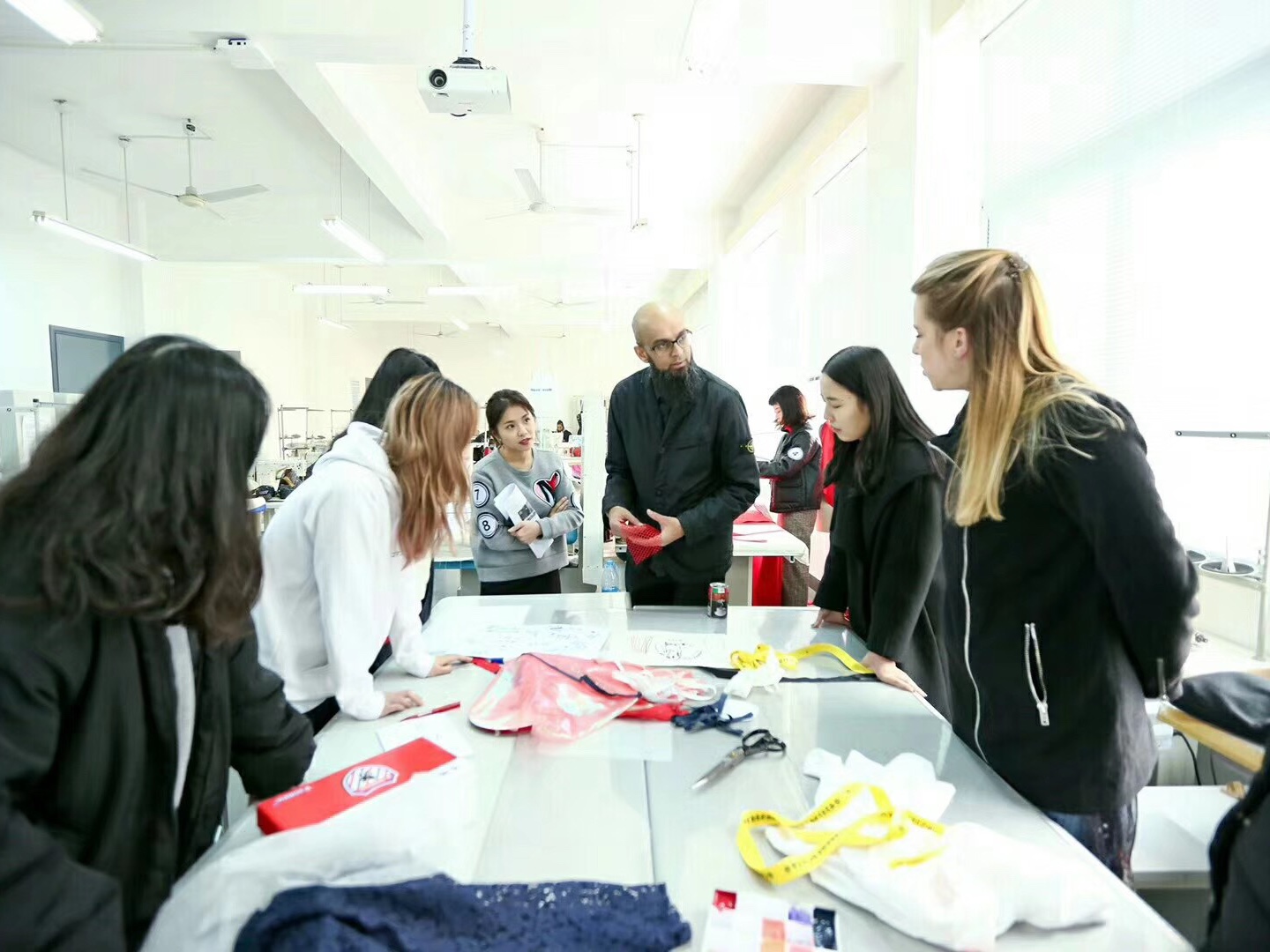
*Real inPACE manufacturing-context image used to show the kind of material and component review that informs a cost-driver discussion. It is not a quotation, consumption record, customer order or approval document.*
How should buyers compare the model with a supplier quotation?
Create a variance bridge. Do not start by replacing the supplier’s figures with the buyer’s estimate. Align the scope first, then list differences.
| Variance question | Buyer model says | Supplier quotation says | Required next action |
|---|---|---|---|
| Product version | Named style revision and approved/open points | Product reference and assumptions priced | Confirm both refer to the same garment |
| Materials | BOM, provisional consumption and source confidence | Material, purchase basis and included components | Resolve identity, unit, yield and open substitutes |
| Construction | Operation and component map | Factory route and specialist processes | Clarify missing, combined or alternative work |
| Quantity | Style-colour-size scenario | Quoted quantity breaks and conditions | Requote the same matrix where needed |
| Development | Planned samples, reviews and tests | Included and separately charged work | Confirm evidence, revisions and credit conditions |
| Brand and pack | Artwork, labels and packing brief | Included items, exclusions and assumptions | Close open files and presentation instructions |
Classify every variance:
- Scope difference: the two sides priced different products or work.
- Data difference: one side has a newer material, consumption or quantity input.
- Method difference: the supplier uses a different process or allocation.
- Commercial difference: currency, validity, payment, delivery or risk terms differ.
- Open item: evidence is not yet available.
This prevents an internal estimate from being treated as proof that the supplier is wrong. The model’s job is to expose questions. The supplier’s job is to explain its project-specific proposal. The buyer’s job is to choose and approve the scope.
What should buyers ask in a negotiation meeting?
Use questions that connect a variance to a product decision:
- Which exact product revision and size-colour matrix does the quote cover?
- Which main fabric, lining, elastics, bindings and components are included?
- What consumption or yield basis is used, and which items remain provisional?
- Which pattern, construction or process route differs from the buyer’s brief?
- Which print, embroidery, wash or partner processes are included?
- What sample, colour, fit, artwork, testing and packing evidence is included?
- Which labels, hangtags, bags, stickers and cartons are included?
- Which change would reopen material, sampling, production or price review?
- Are quantity breaks based on total units, style, colour, size or another scope?
- Which exclusions, validity terms and delivery assumptions require owner approval?
Avoid asking for the supplier’s confidential margin as though it were a product specification. If commercial disclosure is part of the relationship, the parties can agree what may be shared. A buyer can still make a responsible decision by comparing scope, evidence, risk and total economics.
What should an activewear should-cost worksheet contain?
Build a workbook with controlled inputs and visible assumptions. A practical structure is:
- Product baseline: style, revision, role, sizes, colours and quantity scenario.
- BOM: material/component code, role, unit, consumption source, allowance, quote and confidence.
- Construction map: operation, garment location, proposed route and evidence status.
- Brand and packing: artwork, labels, hangtags, barcode, bag, fold and carton.
- Development: sample, test, reviewer, approval condition and resample trigger.
- Scenario logic: concentrated, balanced or fragmented quantity cases.
- Variance bridge: buyer assumption, supplier response, difference, owner and due date.
- Approval log: version, source date, decision, limitation and next action.
Use formulas only where the input basis is documented. Protect source fields, keep units and currency visible, and never overwrite the supplier’s original quote. If the model changes, retain the previous version or at least the change date and reason.
The activewear startup budget planning guide helps keep inventory development, launch and operating cash categories visible. The should-cost model answers what may drive one product’s manufacturing scope; it does not determine whether the whole business has enough cash.
Buyer checklist before using the model in negotiation
- Confirm one product revision, base size and intended size range.
- Attach the current BOM, artwork, label and packing files.
- Mark every input as confirmed, provisional, buyer assumption or supplier response.
- Keep material identity, unit, usable width and consumption source visible.
- Map construction, components and specialist processes by garment zone.
- Use a style-colour-size matrix for every scenario.
- Separate sample, testing and approval work from bulk unit scope.
- Record QC and packing requirements instead of assuming they are included.
- Keep landed cost and channel costs outside the factory should-cost boundary.
- Compare the same scope before analysing a variance.
- Assign an owner and due date to every open item.
- Reopen the model when fit, fabric, construction, colour, branding, quantity or packing changes.
- Preserve the supplier quotation unchanged and date every internal model revision.
How can inPACE support a cost-driver review?
inPACE can review the product brief, reference, sample or tech pack; discuss material, stretch, coverage, support, structure and fit questions; and help identify which product details need physical sample evidence before production. It can also coordinate suitable work across multiple partner factories and connect the approved specification to production, QC and packing. This support is informed by more than 30 years of garment-production experience, not a claim that every project uses one factory, process, price or lead time.
For a useful review, send the product specification, BOM direction, colour-size quantity matrix, branding files, packing requirements, current quotation basis and the assumptions in your should-cost sheet. Mark the cost drivers you believe are fixed, flexible or still unknown.
Send the product specification, BOM direction, colour-size quantities, branding and quotation basis to inPACE for a cost-driver review. The next step is to align the product and evidence scope before discussing a supplier-specific quotation.
Product directions
Explore relevant activewear products
Use these product pages as practical references for your brief, then confirm materials, fit, customization, and production details through sampling.
Activewear Performance Collection
Use real product directions to name the garment, material, construction and quantity assumptions before building the internal model.
View product directionCutout Logo Training Set
Use this coordinated set reference to map top, bottom, cutout, waistband, logo, colour and set-packing cost drivers.
View product directionCustom Activewear Development
Use factory-custom development when fit, fabric, construction, colour, components or sample evidence must change.
View product directionFAQ
Buyer questions
What is an activewear should-cost model?
It is a buyer’s internal map of the product, material, construction, branding, packing, quantity and approval assumptions that may drive manufacturing cost. It supports scope review and negotiation questions; it is not a market price, supplier quotation or estimate of factory profit.
Is should-cost the same as a target price?
No. A target price is a commercial goal. A should-cost model documents the product and process assumptions behind an internal estimate. The two can be compared, but neither replaces a supplier’s project-specific quotation or proves that a requested target is feasible.
Can a buyer calculate exact activewear material consumption from a photo?
No. A photo can show silhouette and visible construction direction, but exact consumption depends on the pattern, sizes, material width or unit, marker, layers, panels, colour plan and process allowances. Use supplier or factory evidence for the current pattern.
Should a should-cost model include supplier margin?
Only when the supplier has disclosed an agreed commercial structure. Buyers should not invent a factory margin and treat it as fact. The model can compare scope, inputs, methods, commercial terms and risk without claiming confidential supplier economics.
How should samples appear in an activewear should-cost model?
List the sample type, purpose, materials, colours, sizes, artwork, reviewers, approval condition, resample trigger and commercial treatment. Keep any charge or refund condition separate and project-specific rather than silently spreading it across bulk units.
Does a lower should-cost mean a supplier quote is too high?
Not automatically. The buyer and supplier may use different product versions, materials, consumption, processes, quantities, evidence or commercial terms. Align the scope, build a variance bridge and ask for the assumptions behind the difference before drawing a conclusion.
What changes should reopen an activewear should-cost model?
Reopen it when fit, pattern, size range, material, colour, lining, elastic, component, seam, artwork, logo method, sample plan, testing, quantity mix, packing, delivery basis or another priced assumption changes.
What should a buyer send for an inPACE cost-driver review?
Send the current product specification, reference or sample, BOM direction, size-colour quantity matrix, material and construction questions, branding files, packing scope, quotation basis and the confirmed, flexible and open assumptions in the internal model.