
What should activewear capsule collection sourcing establish first?
A capsule needs a reason for its pieces to exist together. Begin with the intended wearer and use context, then describe what the collection should help that person do or choose. A coordinated colour palette can support the range, but it does not explain whether a second top, another bottom or a cover layer adds useful variety. Product roles should come before the final style count.
Write the collection proposition in concrete terms. For example, a brand might explore a pocket-focused training bottom, a compatible close-fitting top and a separate layer for use before or after the activity. This is an illustrative product structure, not a proven assortment recommendation. The brand still needs to decide which customer questions each garment should answer and which details are central to its own proposition.
The product-style selection guide can help turn a mood board into a short list of garment directions. For capsule sourcing, add the relationship between those directions: what is shared, what is deliberately different, and what decision on one piece would require another piece to be reviewed?
This guide follows a factory custom collection route in which the brand is developing product features and their coordination. A wholesale or light-customization programme may instead begin with accepted existing styles and focus on selection, branding and packing. State that boundary early. A collection name does not make a new pattern, material or construction request part of simple logo application.
What does a hero SKU mean in a first activewear range?
Brands often use “hero SKU” to mean the product that carries the main proposition. In the purchasing record, however, a stock-keeping unit normally identifies a particular sellable style, colour and size combination. Keep these meanings distinct. The hero garment may generate several SKUs, each of which needs a place in the order and receiving data.
Define the hero at the product level before expanding its variants. State what the garment must contribute to the collection, which feature needs the strongest evidence and what would make the product unsuitable for the intended use. A pocket-focused short might need a clear brief about pocket placement and access alongside waist and leg fit. A bra-led range would need a different set of product questions. Neither role can be approved from its marketing name alone.
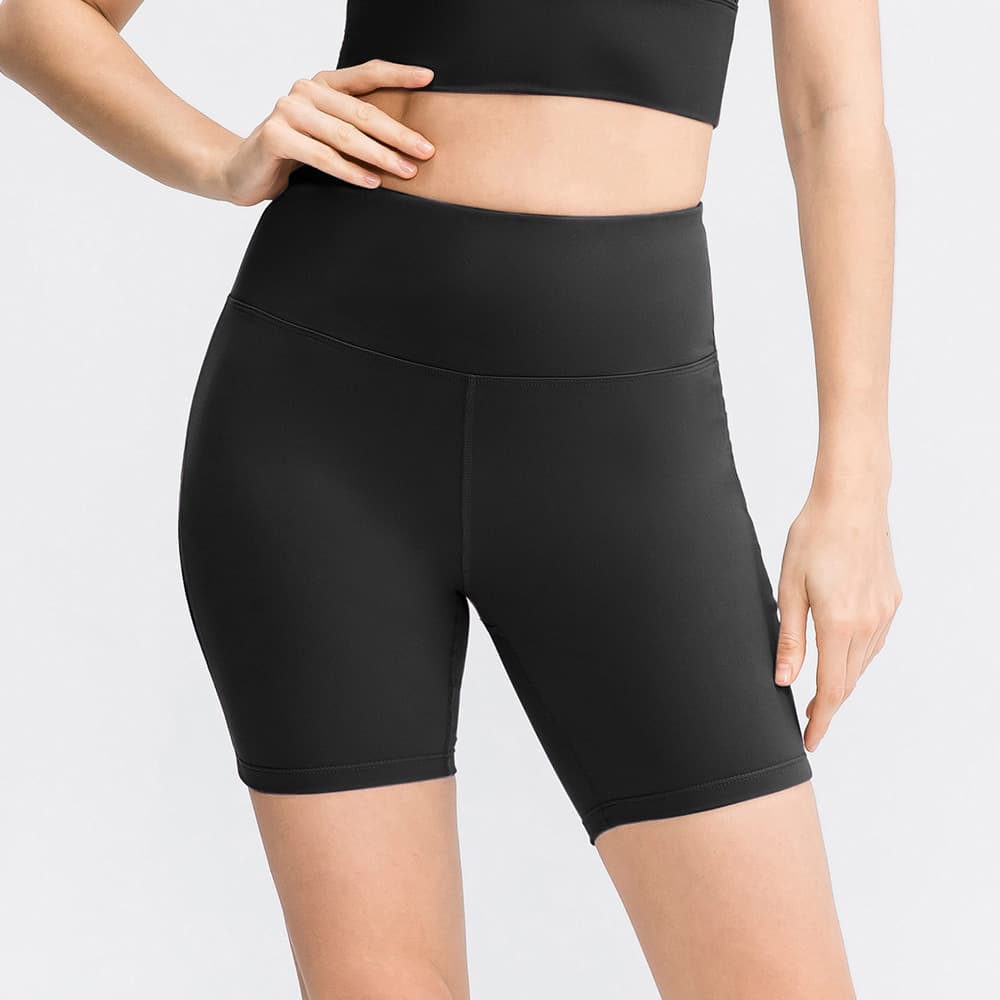
Choose a reference that makes the discussion tangible. The side-pocket biker shorts show a high-waist, close-leg direction with a pocket panel. Use the reference to identify what the brand wants to retain and what it wants to develop. The image does not establish the intended fabric, pocket performance, grading or final fit.
Give the hero priority without allowing it to absorb every decision in the capsule. Its development can set useful references for other garments, but a companion piece may have different construction and material needs. The purpose of a hero is to clarify the range, not to make all other products copies of it.
How should supporting garments earn a place beside the hero?
For each proposed style, write a separate customer or collection role. A supporting garment may complete an outfit, provide a different coverage option, add a layer or offer another use within the same programme. If two styles serve the same purpose, explain the meaningful difference before asking the supplier to develop both. Another seam line or colour alone may not justify a separate product project.
| Product role | Question it should answer | Potential connection to the capsule | Approval that remains its own |
|---|---|---|---|
| Hero bottom | What makes the primary bottom useful for the intended wearer? | Main silhouette, colour direction and product proposition | Waist, rise, leg, pocket and material behaviour |
| Paired close-fitting top | What does the upper-body item add to the intended outfit? | Visual relationship and compatible wearing context | Coverage, fit, construction and any support questions |
| Separate layer | When and how will the wearer use the additional garment? | Palette, styling and overall range identity | Layering ease, sleeves, opening and trim behaviour |
| Alternative garment | Which need is not already met by the selected pieces? | A deliberate additional choice | The feature that makes it meaningfully different |
The wide-strap longline sports bra can provide a reference for a paired upper-body direction. Its strap and extended-band appearance give the brand something specific to discuss. They do not establish the support level or prove that the material chosen for the hero bottom is suitable for this garment.
Use an exclusion note for ideas that do not yet have a clear role. Keeping a future style outside the first brief is more precise than asking the supplier to develop it “just in case.” The brand can retain the idea without allowing it to multiply current materials, samples and approval questions.
Which relationships should be recorded across the collection?
Create a collection map with a row for each style and columns for its role, material direction, colour reference, key components, branding and sample status. Add a short dependency note where a decision affects another garment. This makes coordination visible without pretending that the whole collection shares one specification.
Distinguish a common design intention from a confirmed shared component. Two pieces may be intended to look related while using different fabrics. Several garments may use the same logo artwork at different dimensions or locations. A common colour name may need review on multiple materials and trims. Write what “shared” means in each case so the supplier can respond accurately.
The activewear performance collection can help the team compare product directions. Select references for their role in the brief and annotate the relevant details. Do not send a group of images with no explanation of which garment is the priority or which features can change.
Assign ownership of the collection map to one brand contact. Other people may review fit, artwork or channel presentation, but their decisions should return to the same current record. This reduces the chance that the hero is developed from one assumption while a supporting piece follows an older conversation.
When can materials and components be shared responsibly?
Start with the requirements of each garment. A bottom, close-fitting top and outer layer can place different demands on coverage, shape, recovery, feel and construction. Similar appearance does not prove that one material should be used for all three. Ask the supplier which proposed common materials are suitable for review and what garment evidence would be needed before approving them.
Use the fabric and trim review to describe the required outcomes and the flexible details. Record the actual material reference rather than relying on a general phrase such as “the same stretch fabric.” Include the parts of the garment that use it. A shared outer material does not automatically imply shared lining, elastic, reinforcement or pocket construction.
Components also need a use-specific check. A label can share artwork while requiring a different attachment location. A zipper introduces its own dimensions and finishing details. A logo application may need separate review on different surfaces. Common purchasing language should not hide these physical differences.
Keep a shared-material decision conditional until it has been reviewed in the affected garments. If the first sample leads to a material change, identify every style that relied on the earlier assumption. The collection map should show what needs revisiting before the new choice becomes the basis of the wider range.
How should colour coordination work when fabrics differ?
Give each proposed colour a defined reference and list the garments and components that use it. Then clarify the relationship the brand wants: close visual coordination, a deliberate contrast or a tonal difference. A shared colour name cannot settle that choice. The supplier needs to know which differences would be acceptable in the collection and which would undermine the intended presentation.
Review related materials and trims together through the agreed process. A colour that appears suitable on one piece may need further evaluation beside another surface or component. Record the accepted combination, the evidence reviewed and any restrictions. A photograph of the full outfit is useful for discussion, but it should not replace the actual colour references and decisions.
Use the size and colour quantity-planning guide when turning the palette into the proposed order. The capsule does not need every garment in every colour merely to make the matrix symmetrical. State which combinations belong in the first release and why they support the product roles.
If the brand reduces the palette, update all connected records. That includes samples, artwork variations, product images, packing identifiers and the quantity matrix. A colour removed from the purchasing plan should not remain visible as an available option in the launch assets by accident.
Which sample should come first in a coordinated collection?
Prioritise the decision that has the most useful effect on the rest of the brief. That may be the hero product's defining construction, a proposed material shared by several styles, or a fit relationship that determines the accompanying garment. It is not necessarily the easiest item to photograph or the first reference selected by the founder.
The activewear sample plan provides a broader framework for defining sample purposes. For the capsule, connect each proposed sample to the decision it should unlock. If the intended output is unclear, the team may receive several attractive garments while remaining unable to settle the product scope.
| Decision to resolve | First evidence to discuss | Related work it may inform | What must not be assumed |
|---|---|---|---|
| Hero product construction | Sample focused on the defining feature and fit | Hero specification and related styling choices | That the whole range is approved |
| Shared material direction | Agreed material review plus affected garment samples | Material choices for related pieces | That one garment proves all uses |
| Paired garment relationship | Accepted individual references reviewed together | Coverage and overlap decisions | That matching size names prove compatibility |
| Layering arrangement | Layer reviewed over the intended under-garment | Ease, length and opening decisions | That a flat measurement proves worn interaction |
| Branding across surfaces | Relevant applications on selected materials | Artwork and placement records | That one application result covers every fabric |
| Size-range questions | Evidence for the identified grading concerns | Final size specifications and allocation | That the base sample proves every size |
These dependencies can inform the sequence without creating a rigid universal schedule. Some review work may proceed independently. Ask the supplier which tasks can be prepared together and which need an earlier decision. The brand should understand the reason for the sequence rather than treating simultaneous samples as automatically faster or more complete.
What should the hero sample prove before supporting styles follow it?
Give the hero a short acceptance brief. For a proposed pocket-focused short, the questions might concern waistband position, rise, leg length, pocket access, the intended carried item and how the garment behaves during the chosen activity. These are review topics, not claims that the photographed reference already meets a performance standard.
Record the version, material and construction used for the review. If a sample has temporary components or differs from the intended product, state which questions it can answer. The team should be able to distinguish an accepted direction from a feature that still needs evidence. Otherwise, supporting styles may be developed around an assumption that the hero itself has not confirmed.
Use the sample feedback guide to turn observations into specific responses. Identify the location, expected behaviour and observed difference, then ask for the relevant review. Avoid changing unrelated features in the same message without explaining their purpose. Each unnecessary change makes it harder to understand what the next sample is meant to resolve.
Once the hero direction is accepted, release only the information that is ready to guide related work. That might include an approved colour relationship or a preferred visual proportion. Keep unresolved fit or material questions open in the collection map instead of presenting the hero as a complete template for every companion garment.
Why must a coordinated top and bottom still be reviewed separately?
A matching set contains garments with different fit responsibilities. The upper-body piece and bottom each need an accepted specification, and they also need a review of their interaction. The brand should check the intended coverage relationship, overlap or gap, ease of movement and how the combination is explained to the customer. Styling a sample together is not the same as approving both pieces.
Size planning needs the same distinction. Matching letter sizes do not by themselves explain the measurement relationship between top and bottom. The size-grading guide helps identify where the range needs additional evidence. Define whether items are sold separately or as a set, and how the brand intends to manage the available size combinations.
If one garment changes, examine the affected relationship rather than automatically changing the other. A revised top length may require another combined review without requiring a new bottom pattern. A different bottom waistband may change the desired overlap. Document the specific dependency so the supplier is not asked to redevelop the whole capsule without a clear reason.
Keep individual and combined decisions in the record. A buyer should be able to see what was accepted on the bra, what was accepted on the shorts and what was accepted when they were worn together. That structure makes later corrections more precise.
What does a separate layer add to the sample sequence?
A layer should have a defined use beyond completing a catalogue photograph. State when the intended wearer will put it on, what sits underneath it and which fit or opening details matter. That information helps the supplier understand whether the brand is developing a close-fitting standalone top or a garment intended to work over other pieces.
The quarter-zip long-sleeve training top provides a concrete upper-body reference with an opening and separate sleeve construction to discuss. It should retain its own material, trim and fit review even when its colour belongs to the same capsule palette.
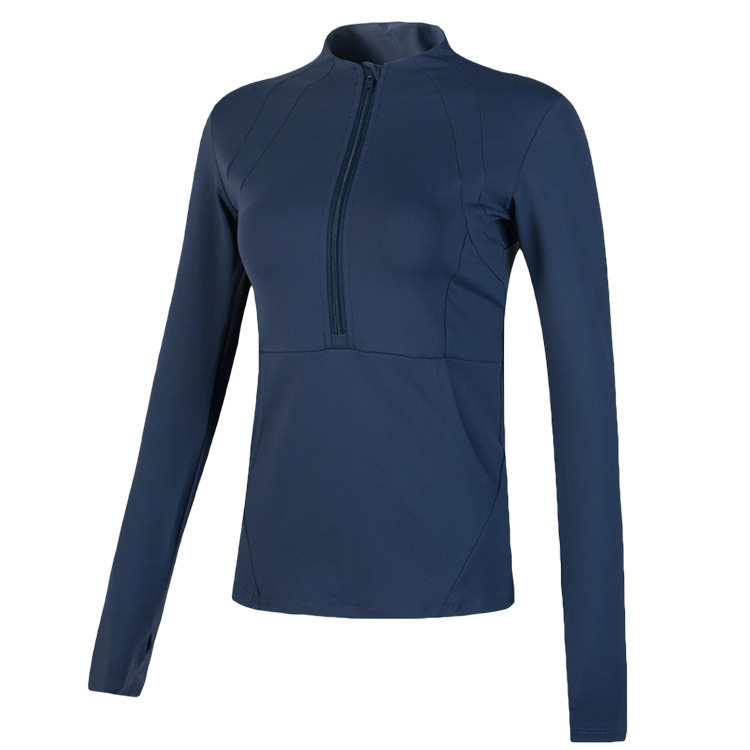
This is the product photograph from the linked catalogue reference. It illustrates the separate garment role; it does not prove compatibility with the proposed hero or confirm material performance. Review the actual selected pieces together before approving their relationship.
If the under-garment is still changing, explain which layer decisions can proceed and which depend on it. Artwork preparation may be possible before the final combined fit review, for example, while body ease or hem relationship may need the current under-garment. Give each task its own dependency instead of assigning the entire layer a vague waiting status.
How should the supplier receive the capsule as one brief?
Send a collection overview followed by style-specific records. The overview should explain the customer, hero, supporting roles, palette, shared assumptions and intended commercial units. Each style record should identify the reference, requested changes, materials, fit questions, branding, quantities and sample purpose. This gives the supplier both the range context and the details needed to review individual garments.
Use custom activewear development for the coordinated review when the capsule needs new product work. Ask the supplier to identify unclear dependencies and confirm the proposed sample sequence. A useful response should address the garment work and the relationships between pieces, not only repeat the style names.
Keep one version list for the collection. When the hero changes, note which supporting records have been reviewed against that change and which have not. Avoid sending a folder of mixed revisions without an explanation of what is current. The supplier should not have to guess whether a newer photograph overrides an older written measurement.
Make the next decision explicit at the end of the brief. The first request may be a feasibility review, a material discussion or a named sample. Asking for every possible deliverable at once can hide the information needed to start. A clear first decision helps both teams establish the next useful action.
What should be checked before the first capsule order is proposed?
- Define the intended customer and the capsule's product proposition.
- Name the hero garment and distinguish it from its individual SKUs.
- Give every supporting style a separate role.
- Exclude styles that do not yet have a clear purpose.
- Identify existing-style branding work and custom-development work.
- Record shared material and component assumptions precisely.
- Define the intended colour relationships across garments.
- Assign a question and decision to every proposed sample.
- Record dependencies and identify work that can proceed independently.
- Review garments individually and in the intended combinations.
- Connect the accepted styles to quantities, branding and packing.
- Preserve the approved versions and the conditions for later changes.
Use the packing checklist to define whether garments remain separate units or form an agreed set. The visual capsule and the sellable unit are different decisions. A shared photograph should not cause the receiving team to assume that every top and bottom arrives paired, or that every colour has the same size allocation.
For subsequent orders, the repeat-order production guide helps retain the accepted style, material, branding and packing records. Reconfirm the actual conditions and proposed changes. If feedback leads to a different hero fit or a new material platform, reopen the affected dependencies instead of carrying the earlier collection approval forward without review.
To begin a coordinated sourcing discussion, send your activewear capsule brief with the target wearer, hero product, supporting roles, product references, colour-size plan and sample priorities. Include the shared assumptions and the questions that could change more than one garment. InPACE Sports can review that scope as a collection while keeping each product's development and approval needs clear.
Product directions
Explore relevant activewear products
Use these product pages as practical references for your brief, then confirm materials, fit, customization, and production details through sampling.
Activewear Performance Collection
Select references by product role and identify which details should remain shared across the proposed capsule.
View product directionSide-Pocket Biker Shorts Reference
Use the waistband, leg and pocket direction to define the questions a proposed hero bottom must answer through sampling.
View product directionCustom Collection Development
Review the hero product, related garments, material assumptions and sample dependencies as one coordinated development brief.
View product directionFAQ
Buyer questions
How many styles should an activewear capsule collection contain?
There is no universal style count for every brand. Define the hero product and add garments that serve a clear customer or collection role. Consider the development questions, material relationships and intended channel before expanding the range. A compact brief is useful when its pieces have distinct purposes, not merely because it contains fewer items.
Is a hero SKU the same as a hero style?
Brands sometimes use the terms loosely, but the purchasing record should distinguish them. The hero style is the main product proposition; an individual SKU identifies a sellable style, colour and size combination. One hero garment can therefore create several SKUs that need accurate quantity and receiving records.
Can every garment in a capsule use the same fabric?
Only after the material has been reviewed for the requirements of each garment. A bottom, bra and layer may need different construction or material behaviour. State the proposed shared reference and identify which garment parts use it. One accepted sample does not automatically approve the material for all other uses.
Which sample should be developed first?
Prioritise the question that most affects the rest of the collection. It may concern the hero's defining feature, a shared material or a relationship between garments. Agree the sequence with the supplier and identify tasks that can proceed independently. The first sample should unlock a useful decision rather than simply complete a photograph.
Do matching tops and bottoms need a combined fit review?
They need their own garment reviews and a review of the intended combination. Check the coverage relationship, overlap or gap, movement and relevant size pairing. Matching colour or size names do not establish compatibility. Record individual approvals separately from decisions made about the outfit.
Can existing catalogue products form a first capsule?
They can provide concrete starting references. If the accepted garments mainly need selection, branding and packing, discuss the wholesale or light-customization route. When the brand changes fit, materials, construction or defining features, describe that custom work and its sample requirements explicitly.
What should a capsule collection sourcing brief include?
Include the intended wearer, hero product, supporting roles, selected references, requested changes, material and component assumptions, colour-size quantities, branding, packing and sample priorities. Show which decisions depend on other garments and identify the current version of each record. That lets the supplier review both the collection and the individual products.