
Teamwear & Uniforms
Short-Sleeve Zip Polo & Piped Pleated Skort Set Manufacturer
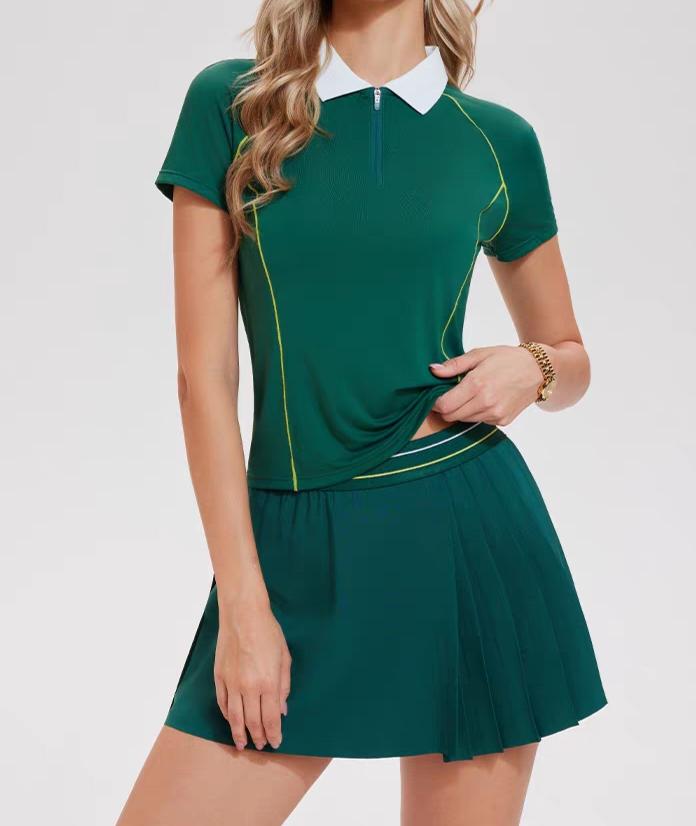
A coordinated short-sleeve zip polo and piped pleated skort set for private-label tennis, pickleball, club, and golf-program development. The supplied reference shows a contrast collar, short center zip, curved contrast piping, matching striped waistband, and pleated skort silhouette. Buyers can define fabric, inner-short and pocket construction, fit, club colors, logo, labels, sampling, QC, and packing through the approved development brief.
Product Features
Two-piece court and club set combining a short-sleeve zip polo with a coordinating pleated skort.
White pointed collar and short center-front zip create a recognizable polo-top direction.
Curved contrast piping on the polo and striped waistband detail create a club-color development opportunity.
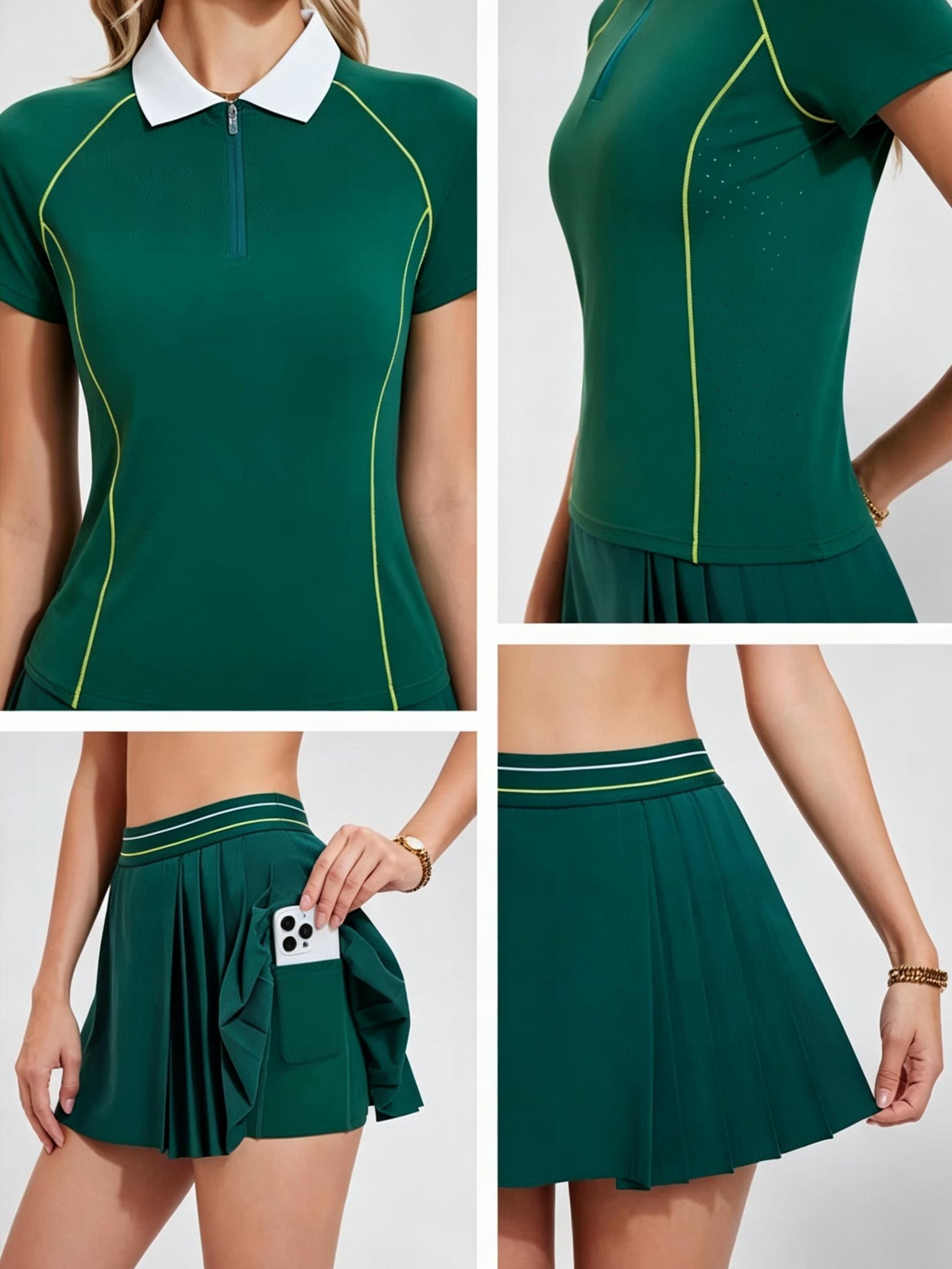
Pleated skort silhouette is paired with a storage-pocket area visible in the supplied detail reference.
Fabric composition, inner-short construction, pocket dimensions, stretch, coverage, sun protection, and performance claims require sample confirmation.
Use Scenarios
Tennis and pickleball club collections
Golf-club and resort programs with buyer-confirmed construction and dress-code requirements
Teamwear, league, academy, and event-uniform capsules
Coordinated racquet-sport retail color stories
Private-label club apparel and repeat-order programs
A coordinated polo and skort set needs two clear construction records
This short-sleeve zip polo and piped pleated skort set is a private-label development reference for tennis, pickleball, golf-club, resort, academy, league, and teamwear programs. The supplied images show a coordinated two-piece direction: a close short-sleeve polo with a pointed contrast collar, a short center-front zip, curved contrast piping, a matching striped waistband, and a short pleated skort. The detail image also shows a phone-sized storage area within the skort construction. These visible features are the factual basis for a buyer brief. The images do not confirm fibre content, fabric weight, inner-short material, pocket dimensions, opacity, stretch recovery, sun protection, moisture management, colorfastness, durability, test results, MOQ, price, stock, or lead time. Those commercial and technical facts must be established through material selection, sampling, and the approved production record.
The set should be treated as a coordinated program, not as a generic one-piece uniform. The polo and the skort have different measurement points, construction risks, grading needs, and logo areas. A club may want a shared palette, but that does not mean every component can be approved from a single color swatch or fit comment. Separating the decisions early lets the buyer preserve the visual match while still specifying the collar, zip, piping, waist, pleats, inner layer, pocket, and packing in a way that can be repeated.
Define the polo collar, zip, and piping before sampling
The top is identifiable by its short sleeves, pointed white collar, center-front short zip, close body, and curved contrast lines travelling from the shoulder and chest toward the lower body. A useful technical brief records the collar point shape, collar stand if used, neckline opening, zip length, zip tape and puller direction, piping route, piping width, sleeve length, sleeve opening, shoulder placement, body length, and hem finish. It should also state whether the visible contrast line is a sewn-in piping, binding, flat seam, panel edge, or another construction method. A line that looks balanced in a still image can pull or ripple when the material stretches if its trim tension or curve is not compatible with the polo fabric.
Fit review needs more than checking the front photograph. Ask the sample wearer to reach, rotate the torso, raise a racket, bend, sit, and walk. Review the collar position, zip comfort, armhole, sleeve opening, shoulder line, and the symmetry of the curved piping. If the program is for golf, buyers should also state any club dress-code requirement, preferred collar coverage, logo location, and range-of-motion expectation. If the program is for tennis or pickleball, the buyer may prioritise quick changes of direction and a top that remains aligned with the skort during play. These are development questions, not automatic evidence of a finished performance level.
The existing Short-Sleeve Performance Polo is a relevant internal product reference for buyers comparing a single polo program with a coordinated court set. It is not the same construction: this new reference adds the short zip, curved piping, matched waistband, and pleated skort. Keeping that distinction on the page prevents a club buyer from assuming that a logo or sizing decision can be copied without reviewing the different pattern and trim requirements.
Specify the pleated skort and storage route separately
The skort direction uses a short pleated outer silhouette and a contrast-striped waistband that coordinates with the polo piping. The detail image shows a phone-sized storage area, but it does not establish the exact construction behind it. The buyer should define whether the storage element belongs to an inner short, an attached lining, a side panel, or another solution; its opening, depth, dimensions, reinforcement, and how it behaves under movement must be reviewed on a sample. The same is true of the inner-short route itself. A skort name does not prove fabric, coverage, rise, inseam, or pocket capacity.
Record the waist height, front and back rise, waistband construction, pleat count or direction, pleat depth, skirt length, hem width, inner-short measurements if selected, and the relationship between the outer skirt and inner component. Movement review should include lunging, squatting, reaching, court steps, and seated posture. The team should observe whether the waistband stays in the intended position, pleats recover as required, the pocket remains accessible, and the layers sit smoothly. A buyer who needs a particular opacity, compression, anti-roll, or storage outcome should state that outcome and agree the material and test method before bulk production.
The Pleated Tennis Skirt is a useful existing product reference for comparing pleat direction, skirt-level sampling questions, and a tennis-specific product role. It should not replace the brief for this set, because the new style includes an independent polo, visible piping, a different waistband story, and a buyer-defined inner-pocket construction. Referencing related styles helps a product team build a coherent courtwear assortment without creating duplicate product pages for every color or coordinated look.
Make club colors and contrast trims traceable
The supplied material shows the coordinated set in a green-and-white direction and a separate color overview, but product images are not evidence of stock availability. Treat every body color, collar color, piping color, waistband stripe, logo color, and possible player or club identifier as buyer-selected development information. A club program often needs multiple components to match: polo body, skirt, trim, team crest, neck label, hangtag, and packing sticker. If the top and skort use different textiles, those materials can show the same nominal color differently under light or after care.
Create a written color map that identifies each component, its color standard, the required match relationship, and the approval stage. Lab dips and garment-level review can be used where appropriate. The activewear color approval guide explains why a buyer should maintain a single record of approved target, trim, version, and sample outcome. This provides a more reliable repeat-order foundation than reusing a campaign photo and asking a factory to match it by eye.
The contrast piping deserves particular attention. Confirm whether it stretches with the main fabric, whether it is sewn into a panel seam or applied on top, how corners and curves are finished, and how it behaves after care. The white collar and striped waistband need the same review. Their color, surface, recovery, attachment, and care behavior can materially affect the final appearance of a set, even when the main body color is approved.
Choose a private-label route that matches the collection plan
For a light-custom program, retain the visible polo-and-skort relationship and select an available fabric route, buyer colors, logo placement, labels, hangtag, size range, packing, quantity, and delivery context. For a factory-custom program, changes to collar construction, zip, piping map, body length, pleat geometry, waistband, inner short, pocket, fabric, or grading need a controlled sample route. The custom activewear development page describes how a product concept moves into material review, sample comments, and production preparation. The private-label service is the related resource for logos, labels, and retail packing.
A buyer can also choose whether the polo and skort are always packed as a set, sold as separate components, or offered in a mix-and-match capsule. That decision changes SKU logic, size ratios, barcode assignment, folding, and carton marks. It should be resolved early enough to guide sample quantities and production planning. The page should never imply that any pictured colors are available as ready stock; the final plan depends on the fabric, color, artwork, size, quantity, and packing discussion.
Build the fit, grading, and QC plan around both pieces
Fit comments should identify a base size and keep the top and skort measurement records distinct. For the polo, record chest, waist, body length, shoulder, sleeve length, collar, neckline opening, and zip position. For the skort, record waistband, rise, skirt length, pleat placement, inner component if used, pocket location, and leg opening. If the buyer requires the same set proportion across sizes, the grading plan must consider how a shirt length, waist seam, pleat location, and inner-short dimensions change together. The activewear size grading guide provides a useful framework for documenting those decisions.
The QC file should include the approved main fabric and trims, color standards, collar and zip construction, piping route, waistband stripe, pleat direction, pocket design, measurements, artwork location, labels, folding, poly bag, barcode, carton mark, and every buyer-required test or inspection point. Inspect top-to-skort color consistency, piping symmetry, zip operation, collar shape, seam stretch, waistband recovery, pleat consistency, pocket attachment, loose threads, measurement tolerance, logo execution, and packing accuracy. The sample-to-bulk production guide explains why the approved sample and written comments must remain connected to bulk preparation.
Prepare a buyer-ready RFQ
To request this polo and pleated skort set, send the reference images, intended tennis, pickleball, golf, club, resort, or academy use; target wearer and market; preferred top and skort fit; collar and zip direction; piping and club colors; pleat and skirt length; inner-short and pocket requirements; material and handfeel preferences; size chart; estimated quantity by color and size; logo artwork; labels, hangtags, barcode, and packing needs; destination market; target arrival window; and any compliance or test requirement. Mark unresolved choices as open rather than treating the image as a complete technical package.
The custom activewear RFQ guide can help organise those inputs. Once the buyer brief is clear, inPACE can review suitable material directions, trim construction, color control, sampling, fit comments, grading, QC checkpoints, set packing, and export preparation. The objective is a coordinated court and club program with a documented path from reference image to repeatable approved production, not a product page that overstates what one photograph can prove.
Specifications
- Product Type
- Short-sleeve zip polo and piped pleated skort set
- Top Direction
- Short sleeves, pointed contrast collar, short center zip, and curved contrast-piping layout
- Skort Direction
- Short pleated skort with a striped waistband; pleat depth and finished length require buyer confirmation
- Storage Direction
- A phone-sized storage-pocket area is visible in the detail reference; final inner-short, pocket location, dimensions, and finish require a technical brief
- Set Configuration
- Coordinated two-piece program; top and skort measurement and packing rules are confirmed by the buyer
- Size Range
- Buyer size chart or custom grading
- MOQ
- Discuss by fabric, trim, color plan, size ratio, logo method, labels, and order plan
- Packing
- Top and skort set folding, size sticker, individual poly bag, barcode, carton mark, and export-packing options
Fabric Information
- Main Fabric Direction
- Buyer-selected activewear or club-apparel fabric; exact composition, weight, handfeel, and finish are confirmed before quotation and sampling
- Piping and Collar Review
- Contrast piping, collar material, zip route, waistband stripes, color matching, stretch, recovery, and care behavior are reviewed on the approved sample
- Skort Construction Review
- Pleat retention, skirt drape, inner-short route, storage-pocket construction, coverage, and seam behavior require fit and movement review
- Color Development
- Buyer-selected club, team, or retail colors with lab-dip and bulk shade review where required
- Performance Claims
- Any quick-dry, opacity, sun-protection, moisture-management, colorfastness, or durability claim depends on approved material and test evidence
Customization Options
Top and skort fabric route, composition, weight, handfeel, coverage, stretch-recovery, and finish direction
Collar shape and color, zip length and puller, sleeve length, piping route and width, top body length, and hem finish
Waistband height, pleat depth, skort length, inner-short construction, storage-pocket size and position, and set proportion
Buyer club-color plan, logo method, logo placement, player or team identifiers, woven label, care label, hangtag, and barcode
Buyer size chart, separate top and skort grading, fit sample, movement review, size-set evaluation, and approved measurement record
Set folding, poly bag, carton mark, QC checklist, retail presentation, and export-packing requirements