
Teamwear & Uniforms
Long-Sleeve Half-Zip Court Pullover & Pleated Skirt Set Manufacturer
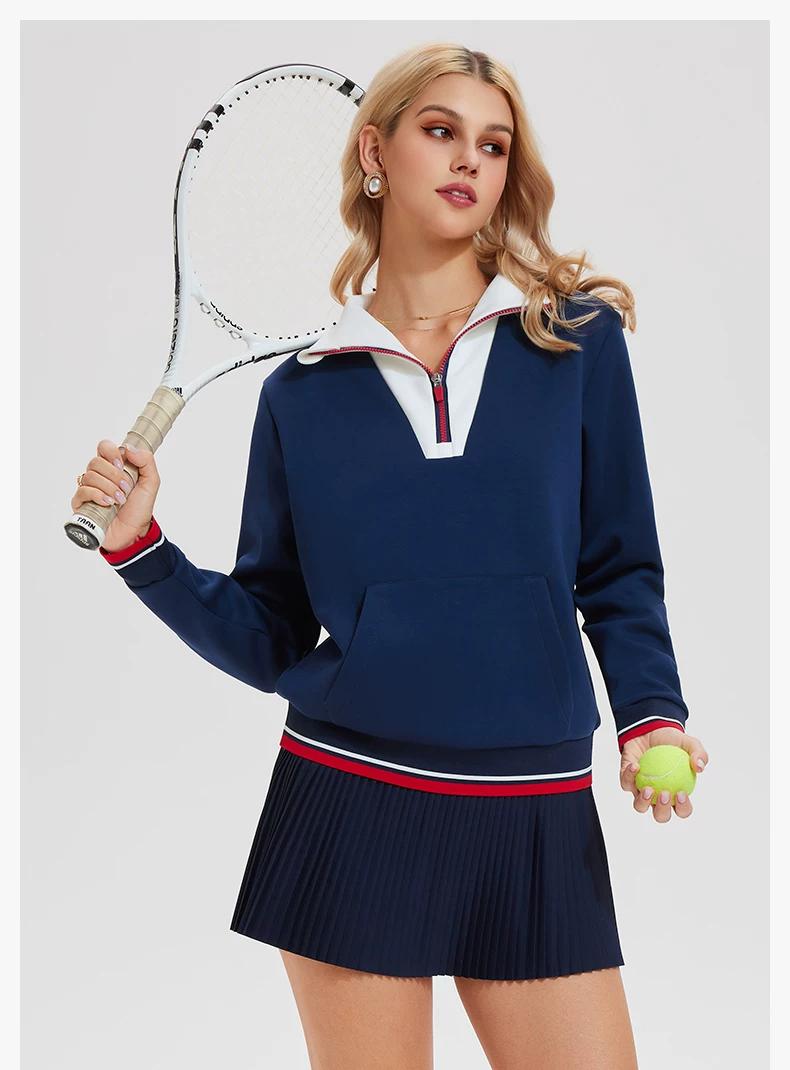
A long-sleeve half-zip court pullover and pleated skirt set for private-label tennis, pickleball, padel, club, and golf-capsule development. The reference shows a contrast stand-neck placket, short front zip, long sleeves, front pocket direction, striped cuffs and hem, plus a coordinating pleated skirt. Buyers can confirm fabric, fit, skirt construction, padel movement and ball-storage requirements, color, logo, sampling, grading, QC, and packing around the approved development brief.
Product Features
Coordinated long-sleeve court pullover and short pleated-skirt direction shown as a two-piece look.
Contrast stand-neck placket with a short center-front zip is visible in the supplied reference.
Long sleeves, contrast cuff bands, hem bands, and front-pocket direction create a club-color development route.
Pleated skirt silhouette can be coordinated with the pullover for a seasonal court or club capsule.
Fabric composition, pocket construction, inner-short route, skirt coverage, warmth, stretch, and performance claims require sample confirmation.
Use Scenarios
Tennis, pickleball, and padel warm-up or cool-weather capsules
Padel club, academy, and teamwear programs where layering, movement, skirt construction, and any ball-storage requirement are confirmed through the buyer brief and samples
Golf-club and resort collections with buyer-confirmed dress-code requirements
Club, academy, league, and event-uniform programs
Seasonal courtwear assortments pairing a long-sleeve layer with a skirt
Private-label coordinated sets and repeat color programs
A long-sleeve court set should be specified as two products that work together
This long-sleeve half-zip court pullover and pleated skirt set is a private-label development reference for tennis, pickleball, club, resort, and buyer-defined golf programs. The supplied reference establishes the visible design: a long-sleeve pullover with a contrast stand-neck placket, short front zip, front-pocket direction, contrast cuff and hem bands, and a coordinated short pleated skirt. These details make a useful starting point for a cool-weather or transitional courtwear capsule. They do not prove fibre composition, fabric weight, warmth, lining, pocket construction, inner-short construction, stretch recovery, opacity, sun protection, moisture management, colorfastness, durability, test results, MOQ, price, stock, or lead time. Those requirements must be agreed in a buyer brief and verified through material selection and samples.
The visual coordination matters, but the top and skirt still need separate construction records. The pullover has a collar and zip route, sleeve and cuff fit, pocket construction, and hem finish. The skirt has its own waist, pleat geometry, finished length, coverage, and potential inner component. Treating the set as one photograph rather than two related products makes it easy to miss a decision that affects fit, pattern work, color matching, grading, packing, or repeat orders. A stronger product brief preserves the coordinated appearance while assigning the correct specification to each garment.
Document the half-zip pullover before choosing the fabric platform
The reference shows a long-sleeve top with a white stand-neck and placket area, a short center-front zip, a contrast cuff route, contrast hem band, and a front pocket direction. Record the neckline and stand height, placket shape, zip length, zip tape and puller, the point where the white panel starts and ends, shoulder placement, sleeve length, cuff depth, body length, hem-band width, and front-pocket pattern. The pocket may be a pouch, welt, panel opening, or another construction; the image does not establish its internal build or storage capacity. That choice should be clarified before the pattern is approved.
The zip and contrast placket deserve a movement review. Openings can change how a neckline sits, how a garment stretches over the head, how layers are removed, and how the color relationship reads after repeated wear and care. Ask a sample wearer to reach, rotate, swing a racket, bend, and put the garment on and off. Review the collar position, zip comfort, shoulder line, cuff recovery, hem position, pocket behavior, and the symmetry of contrast bands. For a golf-club program, confirm whether the buyer needs a collar shape or logo zone that meets a particular club policy. For a tennis or pickleball program, document the desired layering and mobility direction rather than claiming a particular performance level from the image alone.
The existing Short-Sleeve Performance Polo provides a useful product comparison when a buyer is deciding whether the collection needs a short-sleeve club polo or a long-sleeve court layer. It is not the same style: this reference adds a long sleeve, half-zip stand-neck construction, front-pocket direction, contrast bands, and a coordinated skirt. The distinction helps a buyer plan separate samples rather than assuming one top pattern can serve both products.
Treat the pleated skirt as a separate fit and coverage decision
The coordinated lower piece has a short pleated silhouette. The source image shows its outward shape but does not confirm the pleat count, pleat depth, waist construction, inner short, pocket, lining, finished length, or coverage under movement. The buyer should provide the target waist position, front and back rise if an inner component is required, skirt length, desired pleat direction, waistband height, optional inner-short details, and the activity for which it will be used. A court program and a golf-oriented club capsule may need different length, coverage, or layering choices even when the visible color story remains the same.
Sample review should include walking, reaching, lunging, squatting, sitting, and the movements relevant to the intended sport. Observe the waist position, pleat recovery, alignment with the top hem, potential inner layer, and any seam or hem behavior. If the buyer needs a confirmed pocket, opacity, anti-roll waist, compression, or coverage outcome, that must be written into the construction and material brief and then evaluated with the actual sample. It should not be inferred from a styled photograph.
The Pleated Tennis Skirt is a helpful existing reference for comparing pleat-led courtwear programs. It should not replace this product brief because the set adds a coordinated pullover, a separate trim system, and a new relationship between top length and skirt waist placement. Linking the two product types lets a buyer build a coherent courtwear range without creating duplicate URLs for every color or styling variation.
Build the club-color system at garment level
The navy, white, and red contrast direction in the reference is an example of a coordinated palette, not a statement of available stock. The buyer should define body colors for the pullover and skirt, contrast colors at the neck, cuffs, hem, and waistband, any logo colors, the color standard, and which components must match. A top fabric, skirt fabric, rib or elastic band, zip tape, and logo film can all render the same nominal color differently. Lab dips and garment-level color review can be useful where a club requires an exact palette.
The activewear color approval guide explains how a product team can keep the target color, trim version, sample notes, and decision owner traceable. This record becomes especially important for replenishment. Without it, a later run can reproduce a similar navy body but miss the intended white panel, red zip accent, or waistband stripe relationship. A written color map is safer than asking a factory to match a lifestyle image by eye.
Select the right private-label development route
A light-custom program may retain the visible top-and-skirt relationship and focus on a buyer-selected fabric route, body and contrast colors, logo position, labels, hangtag, size range, packing, quantity, and destination. A full factory-custom route is appropriate when the buyer needs a different neck shape, zip route, pocket build, sleeve or cuff construction, hem band, pleat geometry, skirt length, inner component, fit block, or fabric platform. The custom activewear development page explains how these choices move from a reference into material review, sample comments, and production planning. The private-label service covers the linked questions of logo, labels, hangtags, and retail packing.
The buyer should also decide whether the top and skirt will always be packed as one set, offered as separate SKUs, or used in a mix-and-match club capsule. That decision changes size ratios, labeling, barcodes, folding, poly bags, carton marks, and replenishment logic. It is best made before the sample is approved, since a top and skirt may require different size distributions even if they share a color story.
Use separate grading and QC records for the two pieces
For the pullover, record chest, waist, body length, shoulder, sleeve length, cuff, stand-neck height, placket opening, zip placement, hem band, and pocket location. For the skirt, record waistband, skirt length, pleat placement, hem, inner component if selected, and any pocket direction. The activewear size grading guide provides a useful framework for carrying those measurements from a base size across the buyer's range. A set should look intentional across sizes, but the top and skirt do not have identical grading risks.
The QC file should identify the approved fabric and trims, color standards, zip specification, neck panel, cuff and hem construction, pocket build, skirt pleat direction, measurements, artwork placement, labels, folding, poly bag, barcode, carton mark, and any required test or inspection point. Inspect zip operation, collar shape, contrast-panel symmetry, seam condition, cuff and hem recovery, top-to-skirt color consistency, pleat consistency, waistband behavior, logo execution, measurement tolerances, and packing accuracy. The sample-to-bulk production guide explains why the approved sample and written comments must stay connected to bulk preparation.
Send a buyer-ready RFQ
To request this long-sleeve court pullover and pleated skirt set, send the reference image; intended tennis, pickleball, golf, resort, or club use; preferred layering and coverage; body and contrast colors; collar, zip, pocket, cuff, hem, waistband, pleat, and skirt-length requirements; material and handfeel direction; buyer size chart; estimated quantity by color and size; logo artwork; labels, hangtags, barcode, and packing needs; destination market; target arrival window; and every compliance or test requirement. Mark unresolved details as open rather than treating the image as a complete specification.
The custom activewear RFQ guide provides a practical way to organise those inputs. With a clear brief, inPACE can review material options, trim construction, sampling, fit, grading, QC checkpoints, set packing, and export preparation. The goal is a controlled, repeatable courtwear program built from an approved product record, not an unsupported promise based on one image.
Specifications
- Product Type
- Long-sleeve half-zip court pullover and pleated skirt set
- Top Direction
- Long sleeves, contrast stand-neck placket, short center zip, front-pocket direction, and contrast cuff and hem bands
- Skirt Direction
- Short pleated skirt silhouette; pleat depth, finished length, and any inner component require buyer confirmation
- Set Configuration
- Coordinated two-piece program; top and skirt measurement, size ratio, and packing rules are confirmed with the buyer
- Fit Direction
- Buyer fit block or custom development; movement review is required for the intended sport and layering use
- Size Range
- Buyer size chart or custom grading
- MOQ
- Discuss by fabric, trim, color plan, size ratio, logo method, labels, and order plan
- Packing
- Set folding, size sticker, individual poly bag, barcode, carton mark, and export-packing options
Fabric Information
- Main Fabric Direction
- Buyer-selected courtwear or activewear fabric; exact composition, weight, handfeel, lining, and finish are confirmed before quotation and sampling
- Zip and Trim Review
- Zip specification, stand-neck material, cuff and hem bands, color matching, stretch, recovery, and care behavior are reviewed on the approved sample
- Skirt Construction Review
- Pleat retention, drape, skirt coverage, any inner-short route, and seam behavior require fit and movement review
- Color Development
- Buyer-selected club, team, or retail colors with lab-dip and bulk shade review where required
- Performance Claims
- Any warmth, quick-dry, opacity, sun-protection, moisture-management, colorfastness, or durability claim depends on approved material and test evidence
Customization Options
Top and skirt fabric route, composition, weight, handfeel, coverage, stretch-recovery, lining, and finish direction
Stand-neck height, placket contrast panel, zip length and puller, sleeve length, cuff and hem-band construction, and pocket route
Pleat depth, skirt length, waistband height, optional inner-short construction, storage direction, and coordinated set proportion
Buyer club-color plan, logo method, logo placement, player or team identifiers, woven label, care label, hangtag, and barcode
Buyer size chart, separate top and skirt grading, fit sample, movement review, size-set evaluation, and approved measurement record
Set folding, poly bag, carton mark, QC checklist, retail presentation, and export-packing requirements