
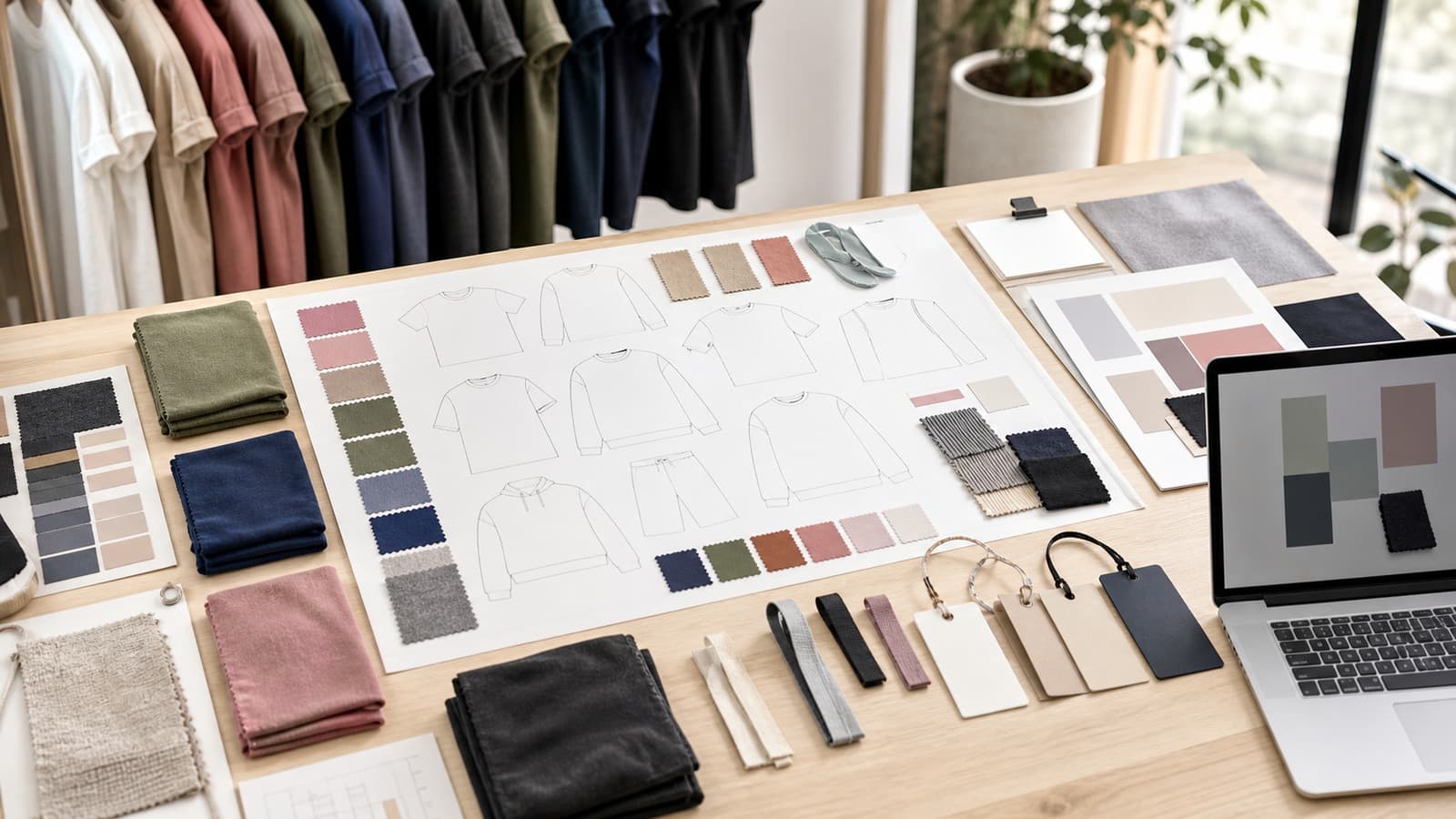
What does a private-label activewear system need to approve?
Private-label activewear is a controlled set of brand components attached to an identified garment programme. Before production, the buyer should be able to connect each logo, woven label, care or size label, hangtag, barcode field, bag, sticker, folding instruction, carton mark, and packing rule to the correct style, colour, size, version, and receiving route. A logo file on its own is not an approval system.
The practical question is not simply “Can you add our logo?” It is whether the chosen garment route, artwork, label copy, component materials, packing records, sample evidence, and release decision describe the same version of the product. That applies whether a buyer begins from an existing style direction or needs a new activewear product. The scope of any decoration, price, minimum, timing, material suitability, or delivery requirement still depends on the confirmed project.
This guide explains how B2B buyers can organise that branded-product record. It does not provide market-specific legal approval, fixed label wording, a universal logo method, test result, minimum order, or factory guarantee. The party responsible for the market, product information, claims, and approval needs to confirm those project-specific requirements.
First choose the product route, then add brand components
Private label can be a focused route when a buyer has selected an existing product direction and mainly needs the brand presentation to be reviewed. The brief may still need colour, size, logo, labels, hangtags, packing, quantity, and receiving information. It does not mean that a catalogue photograph establishes current material, measurements, available options, or production terms.
Factory-custom development is usually the more relevant discussion when the intended product needs a changed fit, fabric, panel, waistband, strap, lining, pocket, closure, construction, support direction, or other product feature. Logos and labels remain part of the brief, but they should follow the physical garment decisions rather than conceal an unfinished product-development question. See custom activewear development for that route and wholesale activewear with a custom logo for the lighter customisation path.
| Starting question | Catalogue-informed private-label discussion | Factory-custom development discussion |
|---|---|---|
| What stays fixed? | An identified style direction, subject to current option confirmation | The buyer's product purpose and reference inputs; garment decisions remain under development |
| Main buyer record | Brand-component pack linked to each selected SKU | Product-development brief plus the linked brand-component pack |
| First sample question | Does the selected garment present the artwork, labels, and packing components as intended? | Does the product and its branding work together after fit, material, and construction decisions? |
| What should not be assumed? | That a style photo proves all components, stock, terms, or logo suitability | That an artwork proof replaces a garment sample or settles product development |
The distinction helps a buyer ask for the right next action. An existing training top with a confirmed silhouette may need a logo-placement and label review. A top that needs a new neckline, fabric, and back construction needs those changes resolved before a polished hangtag or carton mark becomes meaningful.
Build one brand-component register, not separate message threads
Start a private-label register for the current collection or order. Give every file and physical component a name, version or date, owner, status, and the product styles it affects. The register can be a controlled spreadsheet, approval pack, or project system. Its value is that a buyer can see which input is approved, proposed, missing, replaced, or waiting for a sample check.
| Component | Record with the current version | Sample or production question |
|---|---|---|
| Garment logo | Artwork source, colour direction, size, location, orientation, application candidate, affected styles | Does the mark look and feel appropriate on the actual surface and movement area? |
| Main, size, and care labels | Exact copy supplied or approved by the responsible party, material, fold, attachment, location, affected sizes | Is the text, orientation, comfort, placement, and attachment consistent with the approved product record? |
| Hangtag | Artwork version, stock or finish direction, string or attachment method, style/SKU relationship | Does the attachment point and retail presentation suit the specific garment? |
| Barcode and stickers | Data owner, field structure, style-colour-size relationship, receiving or channel instruction | Do the data fields match the item, pack, and buyer's receiving system? |
| Bag, folding, and carton | Bag/sticker instruction, fold, assortment, carton mark, count context, receiving route | Can the selected pack be checked against an agreed, identifiable instruction? |
Avoid treating one column as a universal “approved” flag. A logo might be approved for a smooth training top but still open for a ribbed legging. A care label copy may be final while its attachment method is awaiting a physical review. A carton mark may be correct for one destination but not yet confirmed for another. Capture the scope of each decision so it is not copied into a style, colourway, or channel that has not been reviewed.
Give the logo a garment-specific approval question
Artwork is an input, not the result. Before choosing a method or calling a proof final, identify the fabric surface, stretch direction, texture, thickness, nearby seams, intended placement, artwork detail, desired visibility, handfeel question, and the way the garment is expected to move. A sports bra, legging, mesh-panel top, fleece layer, and woven shell can create different questions even when the brand artwork is identical.
The useful sample is the one that answers a named question. It might compare a proposed mark on the chosen material, look at a small chest placement next to a seam, review a waistband placement during extension, or check whether a large back mark still suits the garment's intended presentation. Do not turn a sample observation into a general promise about wash performance, stretch, durability, or a method's suitability across all fabrics unless authorised project evidence supports that claim. The activewear logo application guide covers the method-selection conversation in more detail.
When an artwork, material, placement, size, colour, or application route changes, treat that as a potential new approval question. The previous proof may remain useful context, but it does not automatically approve the altered item.
Treat labels and hangtags as controlled product information
Labels and hangtags look small, but they connect the brand, garment, retail information, warehouse handling, and customer-facing presentation. The buyer or its responsible product-information owner should supply or approve the applicable wording and fields. The manufacturer or production contact can help identify the physical format, location, attachment, and production dependencies for the confirmed project. That division should be stated rather than implied.
For each label, identify the style, size or colour relation where relevant, copy version, language direction where applicable, material or construction, location, attachment method, and person who can approve a change. For a hangtag, also link its artwork, finish direction, string or fastener, attachment point, and whether it is intended for retail, studio, wholesale, e-commerce preparation, or another channel. A care, fibre, origin, responsibility, safety, or claim requirement must not be invented from a generic activewear template.
Illustrative approval entry only—not a customer record
The following entry is fictional. It is not an inPACE order, a legal review, a production instruction, or proof that a particular label is suitable for a market.
| Field | Illustrative entry |
|---|---|
| Item | Training legging, selected colourway and size run under review |
| Component | Internal brand/size label and external hangtag, each with a named artwork or copy version |
| Physical question | Confirm attachment, orientation, comfort, garment location, and relation to the buyer's product and packing records |
| Evidence | Identified sample or photo, component reference, dated observation, and responsible approver |
| Status | Open for review until the actual component and product version are approved |
This type of entry prevents a file attachment from becoming an untraceable instruction. It also makes a late copy change visible to the people who need to check its effect on labels, hangtags, stickers, packing lists, and the next approval sample.
Connect packaging to the receiving route
Packing is part of the branded product system. It can include the individual bag, warning or handling information, size sticker, barcode label, folding, hangtag protection, accessory presentation, carton assortment, carton mark, and documents or identifiers needed by the buyer's receiving path. A product may look correct on a rail while still arrive with a mismatched sticker, mixed assortment, unrecognisable carton, or unapproved fold.
Use the approved record to connect each pack instruction to the product. The project may need the selling channel, destination, warehouse, retailer, studio, fulfilment partner, or other receiving context before all details can be finalised. Mark missing instructions as open. Do not assume that one buyer's barcode layout, polybag rule, carton quantity, or carton mark applies to every market or customer. The activewear packaging checklist can help organise a more detailed receiving discussion.
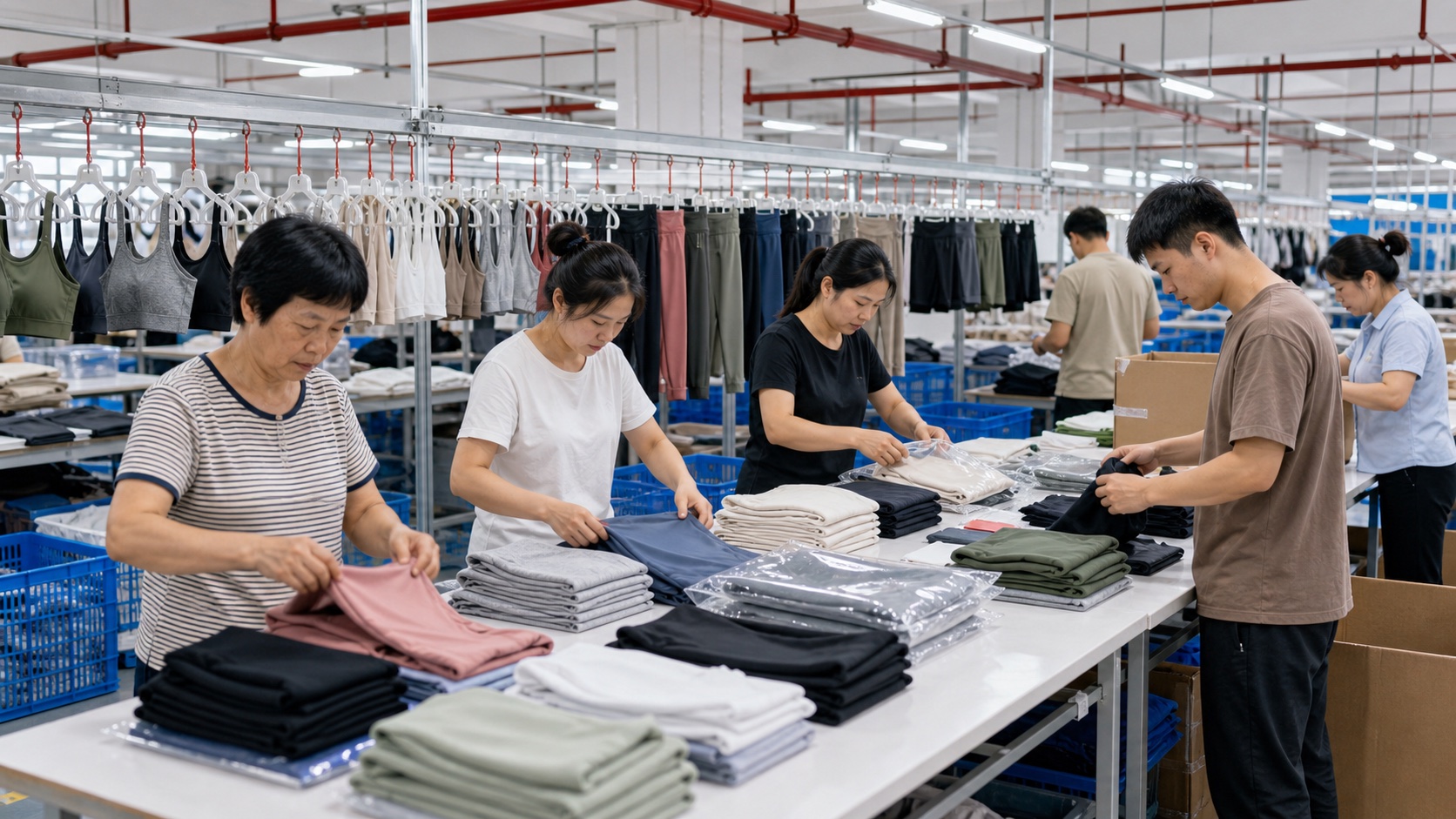
This image shows a production and packing context only. It does not identify a customer order, prove a packing standard, or show that another project used the same components, release decision, or receiving requirements.
Manage change as a system, not as an isolated file replacement
A brand-component change can affect more than one area. A revised logo may change its placement proof, label colour relationship, hangtag artwork, packaging insert, product photos, carton mark, and QC reference. A new fabric can reopen a logo sample question. A revised size range can change stickers, barcode fields, packing ratios, and carton marks. The buyer should be able to see that relationship before goods are released.
Use a simple change record: name the changed input, its previous and current version, affected styles or components, reason for the change, open evidence, owner, next review, and release status. A change does not need to create bureaucracy. It gives a buyer, designer, factory contact, and QC owner one place to see what is still valid and what must be rechecked.
| Change | Records that may need review | Decision to record |
|---|---|---|
| Artwork or colour revision | Logo proof, hangtag, label colour, packaging insert, product record | Which versions are withdrawn, which sample or proof is current, and who approves it |
| Material or garment-surface change | Logo method, placement proof, handfeel observation, construction and QC references | Whether the brand component needs a new physical check on the changed garment |
| Size/SKU or assortment change | Size label, sticker, barcode, packing list, carton mark, receiving record | Which data set applies to the revised assortment and who verifies it |
| Packing-route change | Bag, folding, carton mark, packing ratio, destination instruction | Whether prior packing approval remains relevant to the new receiving route |
Carry the approved system into QC and repeat orders
Before a shipment is released, a QC or release record should identify the current garment and brand-component references. The inspection does not need to make a universal quality claim. It should show what the project checked, against which current reference, what finding or question was raised, who owns the next action, and whether a recheck or release decision is still open. See activewear quality control for the evidence and disposition framework.
The same register becomes useful when a brand reorders. It tells the team what was approved in the earlier version and what changed later. Keep artwork, placement, label copy, component specification, sample observations, packing rules, approved product records, and recheck notes connected to the relevant style and season. A repeat order is easier to discuss when neither party has to reconstruct the approved brand system from scattered screenshots.
What should a buyer prepare before asking for a private-label proposal?
A request becomes easier to review when it separates confirmed inputs from open decisions. Start with the product role and route: an existing style with brand components, a catalogue-informed range needing option confirmation, or a garment that needs factory-custom development. Add the intended channel and receiving context so the discussion can distinguish product presentation from product changes. A studio uniform, wholesale range, online collection, and club programme may share garments while requiring different assortment and packing records.
For each style, include a reference identifier, intended wearer and use, proposed material or confirmed material source, colour direction, size range, and quantity assumptions. Mark whether each item is a requirement, preference, example, or unresolved question. If a reference photograph shows only the front, say what it is meant to communicate; do not let the image stand in for an unseen label, back construction, fibre content, or pack instruction.
Provide brand inputs in controlled files. Artwork should have an owner and revision date. State the desired logo zone, approximate scale, colour relationship, and any fixed exclusion area. For labels and hangtags, identify who supplies or approves the wording and data, which languages or channels are in scope, and what format is still being discussed. For packing, name the receiving point and share the fields or instructions that are already confirmed. Keep uncertain details visible instead of filling them with generic assumptions.
| Brief item | Useful buyer input | If it is not ready |
|---|---|---|
| Product | Style reference, use, size range, colour direction, and route | Mark what must be selected or developed before sampling |
| Branding | Artwork version, placement, label/hangtag owner, and open wording | Request a review of format or placement only; do not call it final approval |
| Order context | Quantity direction, channel, destination, and receiving point | Identify which commercial or packing assumptions need confirmation |
| Evidence | Sample purpose, review owner, and question to answer | State what a sample or production record would need to show |
This brief helps a supplier respond to the same scope the buyer intends to approve. It also makes a proposal easier to compare: one response may assume an existing garment and one decoration, while another may include new construction, multiple colourways, labels, and individually specified packing. Those are different scopes even if both use the words “private label.”
How should a buyer review a branding sample?
Before a sample is made, write down the question it should answer. A logo placement sample may test the selected artwork and location on an identified surface. A garment sample may answer fit or construction questions as well. A packing sample may confirm a fold, label, sticker, or assortment. One sample can support several observations, but the record should distinguish which points were actually reviewed and which remain open.
Record the sample identifier, style, size, colour, fabric or surface reference, component versions, review date, reviewer, and conditions that matter to the decision. Comments such as “looks good” are difficult to apply later. A more useful note names the accepted point and any exception: for example, the logo position is approved on the reviewed sample while its wash observation remains pending, or the label attachment is accepted while copy ownership stays with the brand.
Review physical details under the conditions relevant to the product. Look at the logo with the garment laid flat and worn or stretched as intended where that movement matters. Check a label for orientation, placement, and contact points on the sample. Follow the pack instruction and verify the sticker, fold, and carton information against the same product identifier. A photograph can help preserve a view, but it does not automatically establish handfeel, internal construction, durability, or every size and colour variation.
After review, give each decision a status and owner: approved for the identified scope, revise and resubmit, awaiting evidence, or not applicable. Link the decision to the actual file or sample version. If artwork or material changes before production, do not rely on a comment that lacks version context. Reopen only the affected question, but make the relationship clear so a later reviewer does not mistake an earlier approval for a blanket sign-off.
Which assumptions should be made visible in a supplier comparison?
Compare the scope and assumptions behind each response before ranking the proposals. Record the product route, garment reference, material basis, number of styles and colourways, logo approach under discussion, label and hangtag scope, packaging instructions, sample purpose, review rounds, inspection references, and open inputs. Ask which items are included, excluded, or awaiting confirmation. This does not force a supplier to promise a result; it helps the buyer see what the current discussion actually covers.
Keep commercial questions tied to that scope. Minimum quantity, sample charges, production costs, and timing can depend on the garment, colour, material, branding components, quantity plan, and approval sequence. A preliminary estimate based on one style and one logo cannot be compared directly with a proposal that includes custom development, several trims, and destination-specific packing. Ask each supplier to state its assumptions and the change that would require a revised quotation or schedule.
Use a simple comparison record with a source column. “Supplier stated” identifies an answer from the supplier. “Document reviewed” identifies a file and version. “Sample observed” identifies a physical review. “Buyer decision” records the party responsible for accepting the result. These labels prevent a marketing statement, an image, or an unverified note from becoming an implied production capability. If the required evidence is missing, record the gap and the next question rather than guessing at a pass or fail.
What should stay with the brand's product-information owner?
The brand should name a responsible owner for market-facing product information and claims. That owner supplies or approves the relevant copy, product data, language, barcode fields, destination assumptions, and final customer-facing description. A manufacturer or production contact can coordinate agreed physical formats and pass approved instructions into sampling, sewing, finishing, or packing. That coordination does not make the factory the owner of the brand's legal wording or market suitability decision.
Keep the content source and the physical component connected. A fibre statement on a hangtag should point to the material information approved for the relevant product version. A size sticker should match the size and SKU system used for the order. A barcode should be linked to the buyer's own receiving or sales data. If the online product page changes after a sample decision, the copy owner should determine whether the label, hangtag, pack insert, or receiving record also needs review.
When requirements differ across markets or sales channels, record the applicable destination and the person who confirmed the instruction. Do not copy wording from another style or a generic template just because the component dimensions are similar. The physical format may be reusable; the information and responsibility still need to fit the actual product and route.
inPACE can help B2B buyers organise a selected product direction, branding inputs, sample questions, label and packing records, and the production handover for a confirmed project, coordinating appropriate partner-factory discussions where needed. More than 30 years of garment-production experience informs those conversations. It does not establish a fixed logo method, legal label approval, MOQ, price, lead time, capacity, certification, or product-performance outcome. For a focused private-label review, share the selected styles, artwork, label/packaging inputs, target route, and open approval questions.
Private-label service
Review the existing-style branding route.
ExploreCustom activewear
Discuss garment changes and development.
ExploreStart a project brief
Share styles, artwork, and open approvals.
ExploreBuyer questions
FAQ: Private label activewear
What is private label activewear?
Private label activewear is a B2B manufacturing program in which garments are produced and prepared under the buyer's brand rather than the factory's brand. It can include logo application, labels, hangtags, bags, barcode stickers, carton marks, and packing instructions alongside the garment itself.
What is the difference between private label and fully custom activewear?
Private label focuses on presenting a garment under the buyer's brand. It can begin with a catalog-informed or existing style and add brand details. Fully custom development may also involve a new silhouette, fabric, construction, fit, color, or performance direction. The right route depends on the product plan and launch objective.
Which logo method is best for activewear?
There is no single best logo method for all activewear. The suitable approach depends on the fabric, logo artwork, placement, amount of stretch, desired handfeel, wash expectations, and order plan. A physical sample is the most reliable way to approve the final result before bulk production.
What private label details should be approved before production?
Buyers should approve logo artwork and placement, label wording and placement, hangtags, barcode data, bag and sticker requirements, folding instructions, carton marks, and size assortment information. These details should be reviewed with the garment sample or a clear production reference before bulk packing begins.
Does private label activewear have a minimum order quantity?
MOQ is reviewed by the complete product plan. Fabric availability, colorways, logo technique, labels, packaging, product complexity, and quantity can all affect the suitable minimum. A catalog-informed route may be discussed differently from a new product with custom fabric and extensive private-label components.
Can private label activewear be packed for US or EU delivery?
Packing can be discussed around the buyer's destination and receiving route. Requirements may include size stickers, barcode labels, poly bags, folding standards, carton marks, and packing ratios. Buyers should share these requirements early so they can be reviewed alongside labels, samples, and final inspection planning.