

When is a yoga set manufacturer the right partner for a collection?
A yoga set manufacturer is useful when a brand needs more than visually similar garments. A coordinated bra, legging, top, or light layer has to work as a product system: every piece has a commercial role, while fabric direction, fit expectations, colour relationships, brand details, and sample decisions stay connected. The goal is not to make every garment identical. It is to decide what should be shared and what must be reviewed separately before a production plan is discussed.
A catalogue-informed program can begin with a yoga silhouette that is already close to the intended use. The buyer may then focus on product selection, logo placement, labels, hangtags, packing, colour direction, and the quantity plan. This is a Wholesale or light-customisation route. A different route is needed when the brief calls for a new rise, waistband, underband, neckline, strap geometry, pocket, panel layout, lining, fabric character, colour system, or controlled sample-development plan. Those changes affect the garment itself and belong in factory-custom development.
This distinction prevents a common sourcing error. A matching mood board does not establish that a bra, legging, and top have the same construction, fit block, material, or approval path. The Yoga Activewear Catalog can help a buyer name a starting direction. It does not replace a project review of actual materials, components, branding, availability, and commercial assumptions.
Should a brand start with an existing yoga set or a custom development brief?
Begin with an existing product direction when the fundamental silhouette and construction already suit the buyer's purpose. A brand may be comfortable with the starting neckline, underband, waistband, leg opening, and construction while its key decisions concern colour, artwork, labels, packaging, size allocation, and how the pieces are grouped for a sales channel. A named catalogue reference helps the buyer, supplier, and manufacturer work from the same product version.
Move to custom development when the product promise depends on a change that the reference cannot reasonably answer. A bra may need another support direction, lining relationship, strap layout, or back construction. A legging may need a revised waistband, rise, panel, pocket, inseam, material behaviour, or visual proportion. A top or layer may need different coverage, length, sleeve shape, opening, handfeel, or branding zone. These are not finishing details. They can change the pattern, components, construction, sample purpose, and production discussion.
A collection can use both routes. A brand may keep a catalogue-informed layer while developing a new bra-and-legging set, or test a custom top alongside an established bottom. State the boundary style by style. It gives the manufacturer a basis for deciding what needs development, what can remain a reference, and what requires a physical sample before bulk is considered.
What should a buyer define before requesting a yoga-set sample?
The first brief does not have to be complete, but it must distinguish confirmed choices from open questions. “We need a premium yoga set” is too broad for a useful sample discussion. A buyer who identifies the wearer, product roles, intended movement, desired coverage, references, material direction, brand details, size range, quantity direction, and next sample question gives the team a workable starting point.
Use one collection record for every candidate style. It makes shared decisions visible without hiding the areas that remain unique to a bra, legging, top, or layer.
| Brief field | What the buyer should record | Why it matters |
|---|---|---|
| Product role | Core bra, legging, top, layer, test style, or seasonal addition | A matching image does not explain the job of each garment. |
| Wearer and use | Yoga, Pilates, low-impact studio, commute-to-class, or another stated context | The use context frames fit, coverage, support, and layer questions. |
| Starting reference | Product URL, photo, sample, sketch, or tech-pack version | It shows what is retained, changed, or only used as visual direction. |
| Fit question | Reviewed size, desired silhouette, and the area needing evidence | A sample needs a named decision rather than a vague request to improve fit. |
| Fabric direction | Handfeel, stretch relationship, coverage question, weight direction, and surface preference | A fabric name alone does not prove how it will work on each garment. |
| Brand and colour | Artwork version, placement, labels, colour relationship, and open points | It ties presentation details to the correct garment and version. |
| Size and quantity direction | Intended size range, preliminary colour split, order context, and market | It lets the factory identify assumptions without inventing MOQ, price, or timing. |
| Sample purpose | Development, fit, material, decoration, packing, or pre-production question | It prevents one physical piece from being treated as approval for everything. |
Describe the desired outcome in buyer language. “The legging must stay secure in the intended studio movement” is a fit-and-waistband question. “The bra needs a calmer neckline and more open back” is a product-and-construction question. “The mark must remain readable in the proposed colourway” is a branding-and-material question. The manufacturer can help turn those questions into sample points, but the buyer should make the priority and decision owner visible.
How should bras, leggings, tops, and layers work as one product system?
Every garment needs a clear role. A bra and legging may form the core matching set. A top can add coverage, another styling option, or a piece worn before and after class. A light layer can extend the collection into warm-up, travel, or community-wear use. These roles influence merchandising, but they also affect which parts of the product need a specific development review.
Some choices can be shared: a colour family, a logo-placement principle, a label system, a packing approach, and a brand-presentation brief. Other choices should remain style-specific. A bra and legging can require different lining, support, elastic, seam, coverage, material, or stretch-recovery discussions even if they are sold together. A top may use the same colour direction but need a different body length, armhole, neckline, or hem review.
This is why a yoga set manufacturer should not work from a collage alone. A studio can describe an instructor version, a member-facing core set, and an optional retail layer. An online brand can identify a hero set, a coordinating top, and a colour hierarchy for product photography. The correct mix depends on the actual customer, sales channel, and product plan, not a universal number of styles.
Use the Square Neck Cross-Back Sports Bra as a reference for discussing a neckline, strap layout, colour direction, and branding area. Name what the reference communicates; do not assume every detail carries into another style. If the brief needs a new fit, fabric, construction, or feature, use the custom activewear development route.
Which fabric and fit questions should be reviewed together?
Fabric and fit are connected. The same material direction can behave differently across a bra, legging, and top because each garment has different stretch zones, lining needs, openings, seam relationships, and wearer expectations. A swatch can begin a conversation about handfeel, surface, weight, and stretch. It cannot prove final fit, coverage, support, opacity, logo behaviour, or recovery across a whole set.
For leggings, make the waistband, rise, hip, leg, inseam, gusset, seam map, and intended coverage visible in the brief. For bras, identify the intended support direction, neckline, strap relationship, back construction, underband, lining, and cup or pad questions where relevant. For tops and layers, describe body length, armhole, sleeve, hem, neck, closure, and the relationship to the pieces worn underneath. inPACE can give fabric and fit direction, but final materials and fit should be confirmed on the relevant sample, reviewed size, and stated use case.
Avoid treating a material label as a product answer. A brand may want a softer handfeel for a studio top and a firmer direction for a core legging, or it may explore one material family across the set. Either route needs evidence. Record which material is proposed for the body, lining, mesh, binding, elastic, or another component. Then state the question the sample must answer. This lets the team distinguish a preference from an approved production instruction.
Use the fabric and trims overview for a broader material discussion. Use the activewear sample feedback guide to turn physical observations into a controlled revision record. Neither replaces a project-specific review of the intended garments.
How can custom design support turn references into a workable yoga set?
Custom design support is valuable when it turns a brand direction into choices a sample can test. A reference image may communicate a colour mood, shoulder line, waist proportion, layer relationship, or styling direction. It does not automatically supply measurements, pattern logic, material choices, construction sequence, or approval criteria needed for manufacturing.
inPACE can support B2B buyers who begin with a brief, reference image, existing sample, or tech pack and need to clarify product direction. The discussion can include what should remain from the reference, what must change, which fabric and fit questions are most important, where the logo and labels belong, and what the first sample should prove. The brand should still identify its customer, product role, non-negotiable features, and decision owner.
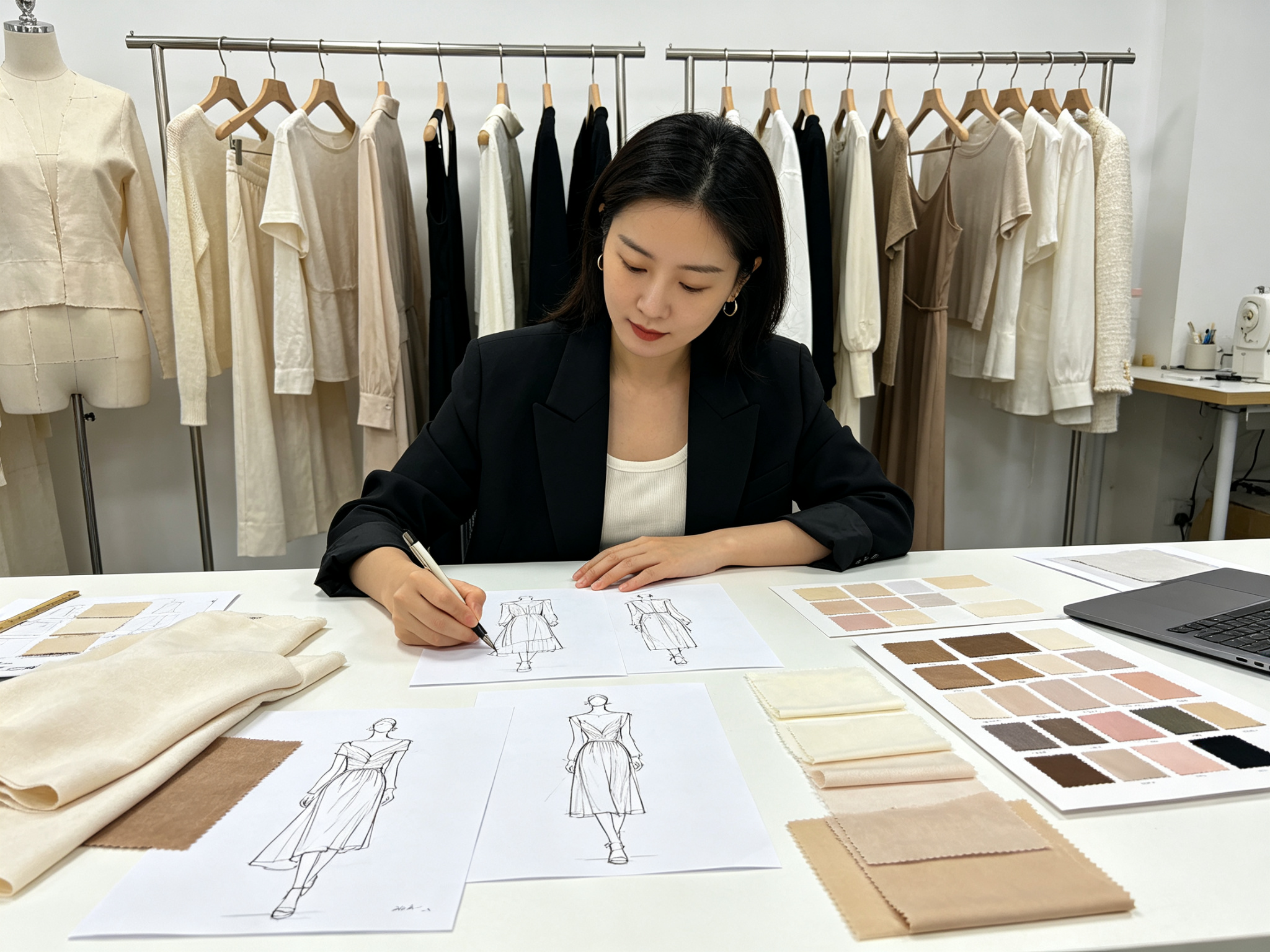
The design-review image illustrates a useful discipline: sketches, material options, and written notes should refer to the same garment version. If a reference changes, record whether it affects the bra, legging, top, or layer; the selected materials; the brand details; and the sample purpose. This is more reliable than treating one lifestyle image as a complete technical instruction.
How do supplier, manufacturer, and factory responsibilities connect?
The terms describe related but different buyer questions. A supplier discussion is about whether the project can be scoped, compared, communicated, packed, and coordinated in a usable way. A manufacturer discussion is about turning the product brief into material, fit, pattern, component, branding, and sample decisions. A factory discussion is about carrying approved information into production coordination, quality-control checks, packing, and delivery preparation.
For a yoga set, sequence matters. The supplier should first identify the assumptions in the brief. The manufacturer should separate shared collection choices from style-specific development questions. The factory route should carry forward only the decisions approved for the named products. A brand does not need a different organisation for every stage, but each responsibility should be visible in the project record.
| Buyer decision | Supplier contribution | Manufacturer contribution | Factory contribution |
|---|---|---|---|
| Select the route | Clarify catalogue, light-custom, or new-development scope | Identify product changes that need design, material, or sample work | Coordinate the approved route rather than infer it from a mood board |
| Define the set | Keep product references, quantity direction, and assumptions comparable | Review fit, fabric, component, and construction questions by style | Use approved product information in production planning where applicable |
| Review the sample | Keep version, buyer comments, and next action traceable | Turn observations into specific revisions or confirmations | Carry agreed evidence toward pre-production preparation |
| Prepare delivery | Collect labels, packing, channel, and receiving requirements | Check branded details against the selected garment and sample evidence | Coordinate QC, packing, carton information, and delivery preparation from the current record |
inPACE can coordinate an appropriate production path through multiple partner factories. Exact allocation depends on the garment, fabric, construction, decoration, order context, and confirmed scope; it is not a promise of fixed capacity or timing. The business is built on more than 30 years of garment-production experience, informing how product, sample, production, QC, and packing questions are organised for a buyer brief.
What sample evidence should protect the yoga set before bulk production?
Ask the first sample to prove the next decision, not every decision at once. An early development sample can test whether the product direction is understood. A fit sample can focus on named size, measurements, silhouette, movement, and construction questions. A material or component sample can focus on a selected fabric, lining, underband, waistband, trim, or logo area. A later pre-production reference can bring approved decisions together for a controlled production conversation.
This staged approach is useful for a set. The bra may need a support-and-strap review while the legging needs a rise-and-waistband review. The top may need a coverage-and-body-length review. A light layer may need a separate material-and-closure discussion. One sample can inform the collection, but it should not silently approve every colourway, size, material, or style.
Keep a versioned record with style name, sample version, reviewed size, material and component direction, artwork version, colour relationship, observations, requested action, decision owner, and next evidence needed. The activewear sample plan guide and sample types guide can help decide which pieces need separate review.
For inPACE projects, typical planning ranges are 5–10 days for samples and 25–50 days for production after relevant scope and approvals are confirmed. These are not fixed commitments. Materials, colours, components, printing, embroidery, wash effects, branding, packing, quantities, revisions, and the approved route can change the timing that applies.
How should logo, labels, packing, and colour follow the product decision?
Treat branding as product-specific. A logo placed on a bra may interact with stretch, lining, a seam, a curve, or a high-contact zone. The same artwork can need another review on a legging waistband, a top chest, or a layer sleeve. Name the product, area, artwork version, size, colour relationship, and the physical evidence needed before approval. The logo application guide helps connect a method to the actual fabric and garment zone.
Labels, hangtags, care information supplied by the buyer, barcodes, bags, fold direction, set grouping, and carton marks should live in the same working record as style and brand details. They should not be added after a sample is considered finished. A studio sale, online fulfilment, wholesale receiving, and retail partner can need different presentation and receiving information. The private-label activewear service and activewear packaging checklist help frame those decisions without assuming one packing method works for every project.
Colour deserves the same discipline. An image can indicate a direction, but it does not confirm a final appearance across every material, component, logo, and stretch condition used in a set. State which colours must match, which are optional, and which references require a sample or approval record.
How can inPACE support a yoga-set decision?
inPACE Sports works with B2B brands, wholesalers, studios, clubs, and online retailers that need a clear activewear product route. A project can start with a catalogue style, a brand brief, a reference image, a physical sample, or a tech pack. The team can support custom product and design discussion, give fabric and fit direction, and review how logo, label, packing, and sample choices relate to the intended yoga set.
When a brief needs new fit, material, construction, colour, or functional details, it can move into factory-custom development. inPACE can coordinate a suitable production route through partner factories and carry confirmed information into sampling, production planning, QC, and packing preparation. The useful outcome is a documented route showing what the buyer wants to prove, what needs factory review, and what remains open before bulk approval.
Project scope is confirmed in writing. Exact materials, fit, sample route, decoration method, timing, pricing, quantities, capacity, and order conditions depend on the real brief and approvals. If sampling includes printing, embroidery, or wash effects, those requirements should be visible from the start because they can affect the sample plan and production coordination.
What should a brand send before requesting a yoga-set quotation or sample discussion?
Use this buyer-ready checklist:
- Name each product role: bra, legging, top, layer, core item, test item, or seasonal addition.
- Share a product URL, sketch, marked image, existing sample, or tech-pack version for every reference.
- Identify what must remain, what should change, and what needs manufacturer advice.
- State the wearer, movement context, coverage, reviewed size, and target size range.
- List the material direction for body, lining, mesh, elastic, binding, and other relevant components.
- Identify the fit, support, waistband, strap, neckline, rise, pocket, inseam, or layer question the physical sample should answer.
- Provide current logo artwork, intended placement, label fields, hangtag, packing, and channel requirements.
- Show the style-colour-size quantity direction and destination market where known; mark estimates as estimates.
- State the sample purpose, decision owner, and next evidence needed before approval.
- Ask the supplier to record assumptions that affect the route, quotation, and production plan.
A complete brief does not mean every decision is closed. It means open decisions are visible. That allows a yoga set manufacturer to recommend a controlled route instead of guessing from a collection name or a photograph. Share a yoga set product brief when the product roles, references, and most important sample questions are ready for discussion.
Product directions
Explore relevant activewear products
Use these product pages as practical references for your brief, then confirm materials, fit, customization, and production details through sampling.
Yoga Activewear Catalog
Use the catalog to name a bra, legging, top, or layer direction before deciding which fit, fabric, colour, and branding points need a custom sample.
View product directionSquare Neck Cross-Back Sports Bra
Use this bra reference to discuss neckline, strap layout, support direction, logo areas, and the sample evidence needed for one product role in a yoga set.
View product directionCustom Activewear Development
Choose the factory-custom route when the yoga set needs a new fit, fabric, construction, component, colour relationship, or controlled sample plan.
View product directionFAQ
Buyer questions
What should a yoga set manufacturer help a brand decide first?
First decide whether the project can begin with an existing product direction plus branding or needs custom development. Then define the role of each bra, legging, top, and layer; the intended use; the current reference; fabric and fit questions; brand details; sample purpose; and assumptions that still need review.
Can one fabric work across a yoga bra, legging, and top?
One material family may be a useful starting direction, but it should not be assumed to work identically across every piece. A bra, legging, and top can have different support, lining, coverage, stretch, seam, and logo requirements. Review the material on the intended garments and record the questions the sample must answer.
When should a yoga set move from private label to custom manufacturing?
Move to a factory-custom route when the core requirement changes the garment itself, such as a new fit, fabric, construction, neckline, strap, waistband, pocket, panel, colour system, functional detail, or controlled sample plan. If the core silhouette remains suitable and the main work is logo, labels, hangtags, and packing, a light-customisation route may be appropriate after project review.
What should the first yoga-set sample prove?
It should prove one named next decision. That may be the interpretation of a product reference, a fit or support question, a waistband or strap relationship, a material or lining choice, artwork placement, or a packing detail. Record the style, sample version, reviewed size, inputs, observation, requested action, owner, and next approval point.
Can inPACE help with fabric and fit recommendations for yoga sets?
inPACE can support a buyer's fabric and fit discussion by reviewing the intended product, movement, material direction, coverage, support, construction, and sample question. Final material and fit decisions should be confirmed against the relevant physical sample and written approval record rather than a generic fabric name or image.
Does inPACE work with more than one factory for yoga-set production?
inPACE can coordinate an appropriate production path through multiple partner factories. The exact route depends on the garment, materials, construction, decoration, quantity plan, and confirmed scope. It should be discussed against the real project rather than treated as a promise of fixed capacity, timing, or commercial terms.
How long do yoga-set samples and production usually take?
For inPACE projects, general planning commonly allows about 5–10 days for samples and 25–50 days for production after relevant scope and approvals are confirmed. These are planning ranges, not fixed commitments. Product complexity, materials, colours, branding, packing, quantities, revisions, and the approved route can change the applicable timing.