
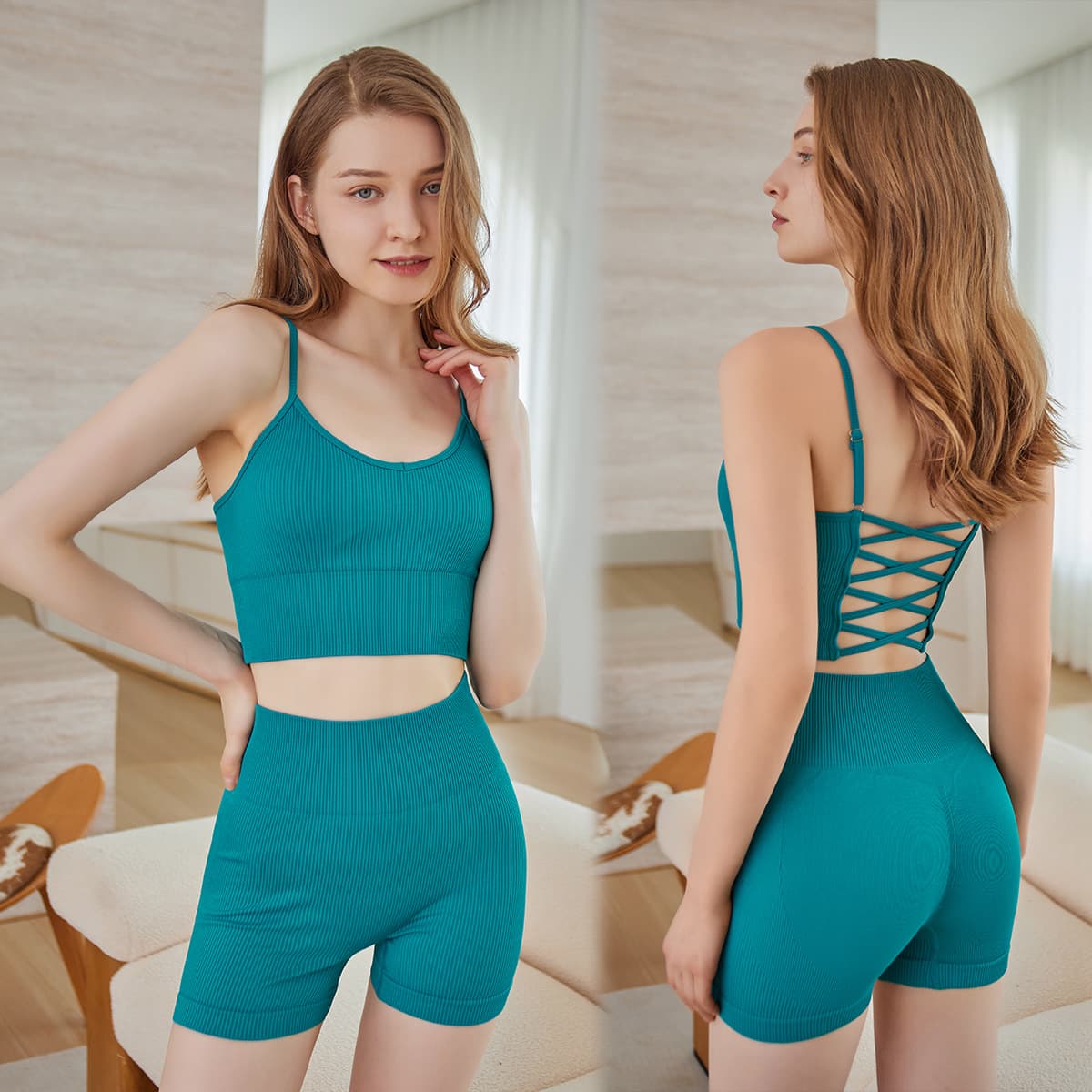
A coordinated outfit looks like one product in a photograph. In an order, it may involve two garment identities, two size decisions, separate artwork placements and a particular packing combination. The buyer needs those details to remain visible even when the consumer will see one collection name.
For brands and retailers choosing existing designs, the wholesale activewear sourcing route provides the starting point. Select the confirmed garment references, explain how the pieces will be sold and review the brand details. This article focuses on making those existing pieces into a clear, orderable range.
What should a workout sets wholesale supplier mean by a set?
Define the set's contents in words before attaching a quantity. Name the top and bottom and state whether any pictured layer or accessory is included. A two-piece crop-top and shorts outfit is a different supply request from a top, bottom and jacket combination, even if both appear under a broad training-set description.
Next, state the commercial unit. The buyer may intend to sell the garments separately, offer a fixed pair or allow customers to choose different top and bottom sizes. Each arrangement can be discussed, but it creates different quantity and packing questions. A photograph cannot decide those terms for the buyer and supplier.
Keep the individual pieces identifiable even where they form one selling unit. An order for a defined two-piece set needs the appropriate number of tops and bottoms, not just an unexplained set total. The receiver should be able to check whether the correct components and sizes have arrived together.
Ask whether the proposed arrangement is currently possible for the selected styles and quantity direction. Existing-style sourcing does not imply ready stock or unrestricted mixing of every catalogue option. The agreed supply conditions belong to the actual enquiry, including any work needed to brand and pack the garments as requested.
How do you choose existing top and bottom references?
Begin with a focused shortlist from the performance activewear collection. Give each proposed outfit a role in the range, such as a particular top coverage and bottom-length combination. The goal is a small group of distinguishable choices that the buyer can explain and review.
Use exact catalogue identities. AW-001, AW-003 and AW-008 are separate references for a set discussion. Request the current sample and component details for the chosen code rather than transferring a feature from another listing or inferring the full specification from a thumbnail.
The lace-back ribbed top and shorts reference provides another visible direction. The hero shows the teal cropped top and fitted shorts from front and back, including the top's back detail. These are catalogue views for selection; the order still needs its own accepted product, sizes and colour confirmation.
Record which existing features you want to retain. If the buyer likes the top of one reference and the bottom of another, list that proposed pairing explicitly. Ask whether the two accepted garments can be supplied and coordinated as intended. Do not describe a new garment assembled from features across several styles as though it were already in the catalogue.
The following comparison helps select the selling arrangement. It does not state that every option is available for every product or quantity.
| Proposed arrangement | What the buyer is selling | Quantity information to retain | Packing question to resolve |
|---|---|---|---|
| Separate garments | A top and bottom that can be bought independently | Individual quantities by style, colour and size | Will each piece arrive individually identified? |
| Fixed paired set | A defined top and bottom combination | Set quantity plus its component quantities and sizes | How is the approved pair identified outside the pack? |
| Mixed-size pair | A set whose top and bottom can have different sizes | Quantities for each approved size pairing | How are the two sizes kept clear at pairing and receiving? |
| Coordinated display only | Separate products photographed as an outfit | Each individual product's actual order lines | Does the packaging accurately reflect separate selling units? |
Should a wholesale workout set use fixed sizing or separate top-and-bottom sizes?
Decide the consumer offer before asking for a set price. A fixed set gives one top and one bottom a shared retail identity, but that does not remove their separate garment sizes. A mix-and-match offer lets the buyer combine approved top and bottom sizes, while separate-piece selling keeps each garment as its own stock and sales unit. Each route changes the quantity file, pack instruction, barcode structure and receiving check.
Do not assume that a person who wears a medium top also needs a medium bottom. The garments cover different body areas, may use different size logic and may not be made from the same construction. Review the top and bottom independently in the intended base sizes, then review the pair on the same intended wearer where the combined silhouette matters. A set photograph can show styling; it cannot establish the fit of either component.
| Selling route | What the customer chooses | Supplier quantity record | Buyer record needed at receiving |
|---|---|---|---|
| Fixed same-label set | One set label, such as S, M or L | Exact top code/size and bottom code/size behind every set label | Set ID, component IDs, quantity and the approved size mapping |
| Fixed mixed-size pair | One pre-defined combination, such as top M with bottom L | Quantity for every approved top-size and bottom-size pairing | Pairing code, both component sizes, barcode and packed-set count |
| Customer mix and match | Top and bottom sizes selected independently | Separate quantities by garment, colour and size; any pairing work stated separately | Separate SKU/barcode records plus the rule used to form or display outfits |
| Separate-piece sale | Each garment sold on its own | Independent top and bottom order lines | Independent receipt, stock and replenishment records |
If the brand wants a simple set label, create a controlled mapping rather than hiding the garment sizes. For example, the retail label “Set B” can refer to an identified top version in M and bottom version in L. Keep that mapping in the approved pairing table, the outward pack identifier and the receiving record. Do not let an internal nickname replace the component codes.
Quantity planning should begin with the component totals. Add all top quantities by colour and size, then do the same for bottoms. Reconcile those totals with the fixed-pair or mix-and-match schedule. This exposes a missing or duplicated component before packing. It also lets the buyer see whether the proposed selling route is practical for the selected styles and current project conditions.
A request for different size combinations does not by itself change the garments. A request for a new top length, altered support, another waistband, a different pocket or revised construction does. Route those changes through custom activewear development and define the sample question. The wholesale route remains centred on suitable existing styles, confirmed options and controlled branding or packing.
Why do top and bottom fits need separate decisions?
A matching outfit does not mean the wearer needs the same size in both garments. The top and bottom cover different body areas and may use different measurement guidance. Review the relevant size information for each piece before deciding how the set will be offered.
Identify whether a chart gives body guidance, finished-garment measurements or both. Keep those meanings visible, along with the agreed measurement method. If the brand wants one consumer-facing size name for a fixed pair, it still needs to understand the actual top and bottom specifications behind that name.
Review the pieces individually, then review the wearing combination. The top might meet its coverage requirement and the shorts might meet theirs, while the relationship between the top hem and waistband still needs discussion. Movement can change that relationship, so record the relevant observations in the intended use context.
Use specific comments. A note that a top lifts during a particular reach in the reviewed size is more useful than saying the whole set needs a better fit. It identifies which component and question need attention. Keep the sample identity and configuration attached to the comment so the supplier can interpret it correctly.
Where an existing size or style does not meet the requirement, consider another confirmed reference. If a new top length, waistband, pocket, strap or other construction is necessary, define it through custom activewear development. A coordinated appearance should not obscure the point where the request becomes garment development.
What must be approved separately before the complete set is approved?
Treat the top and bottom as separate garments first. Each needs an identity, current reference, size information, material record, fit question, colour version, artwork instruction, label assignment and approval result. Only then should the buyer approve the way the two pieces work as a set. A coordinated appearance does not prove that the individual garments are ready.
Use the same review headings for both components so omissions are visible:
| Approval field | Top record | Bottom record | Set-level decision |
|---|---|---|---|
| Garment identity | Style/code, version and sample ID | Style/code, version and sample ID | Which two approved versions form the offer |
| Fit and size | Base size, measurement reference and observed fit points | Base size, measurement reference and observed fit points | Fixed mapping, allowed mix-and-match pairs or separate sale |
| Material | Identified material or confirmed component record | Identified material or confirmed component record | Intended colour relationship and any combined-wear observation |
| Coverage and structure | Neckline, underarm, hem, strap or support questions relevant to the top | Waist, rise, length, pocket or liner questions relevant to the bottom | What must be checked when the garments are worn together |
| Branding | Artwork, method direction, colour, dimensions, position and reference points | Artwork, method direction, colour, dimensions, position and reference points | Whether the two applications create the intended visual hierarchy |
| Product information | Composition/care/size content and label position for the actual top | Composition/care/size content and label position for the actual bottom | Outer-pack contents line and set identifier |
| Approval evidence | Named sample/proof, observation, open item, owner and date | Named sample/proof, observation, open item, owner and date | Pairing, packing and release decision |
The material column must describe the actual component being reviewed. If the top and bottom use different fabrics, keep those records separate even when the supplier calls the outfit one colour. If they use the same stated composition, that still does not prove identical construction, surface, stretch, recovery, coverage or application behaviour. Ask for the information that is relevant to the selected garments and leave unknown fields open.
Fit comments should name the garment area, movement, reviewed size and observation. “Set fits well” is too broad for a supplier to act on. “Top hem lifts during the agreed reach in the reviewed M sample” or “bottom waistband position changes during the recorded squat sequence” identifies the component and question, but remains an observation under stated conditions rather than a universal performance claim.
The set-level approval should reference the two accepted component approvals, not replace them. Record how the top hem and bottom waist relate, whether the combined coverage matches the brief, whether colours have the intended relationship and whether the branding reads as one system. If one component changes, reopen only the affected decisions plus any set relationship that the change could alter.
inPACE can organise the discussion through per-component material, artwork and specification records, followed by a set pairing and packing record. That structure helps a brand compare AW-001, AW-003 or another direction from the performance activewear collection without transferring unconfirmed features from one product to another. The actual options and evidence still need confirmation for the selected project.
How do you specify a coordinated colour without assuming a perfect match?
Describe the intended relationship between the pieces. The buyer may want a close visual match, a deliberate tonal difference or a contrast combination. Those are distinct decisions, and a supplier should not have to infer which one applies from a general collection mood board.
Link the proposed colours to identified references and the agreed approval route. A shared retail colour name does not establish that two materials will look the same. Surface structure, garment construction and presentation can affect appearance, so review the actual combination where matching matters to the brief.
Keep approval scope clear. Accepting the top colour alone leaves the top-to-bottom relationship unresolved. Accepting a pair in one colour does not automatically approve every other proposed combination. Record which garments and colour versions were seen together and which questions remain open.
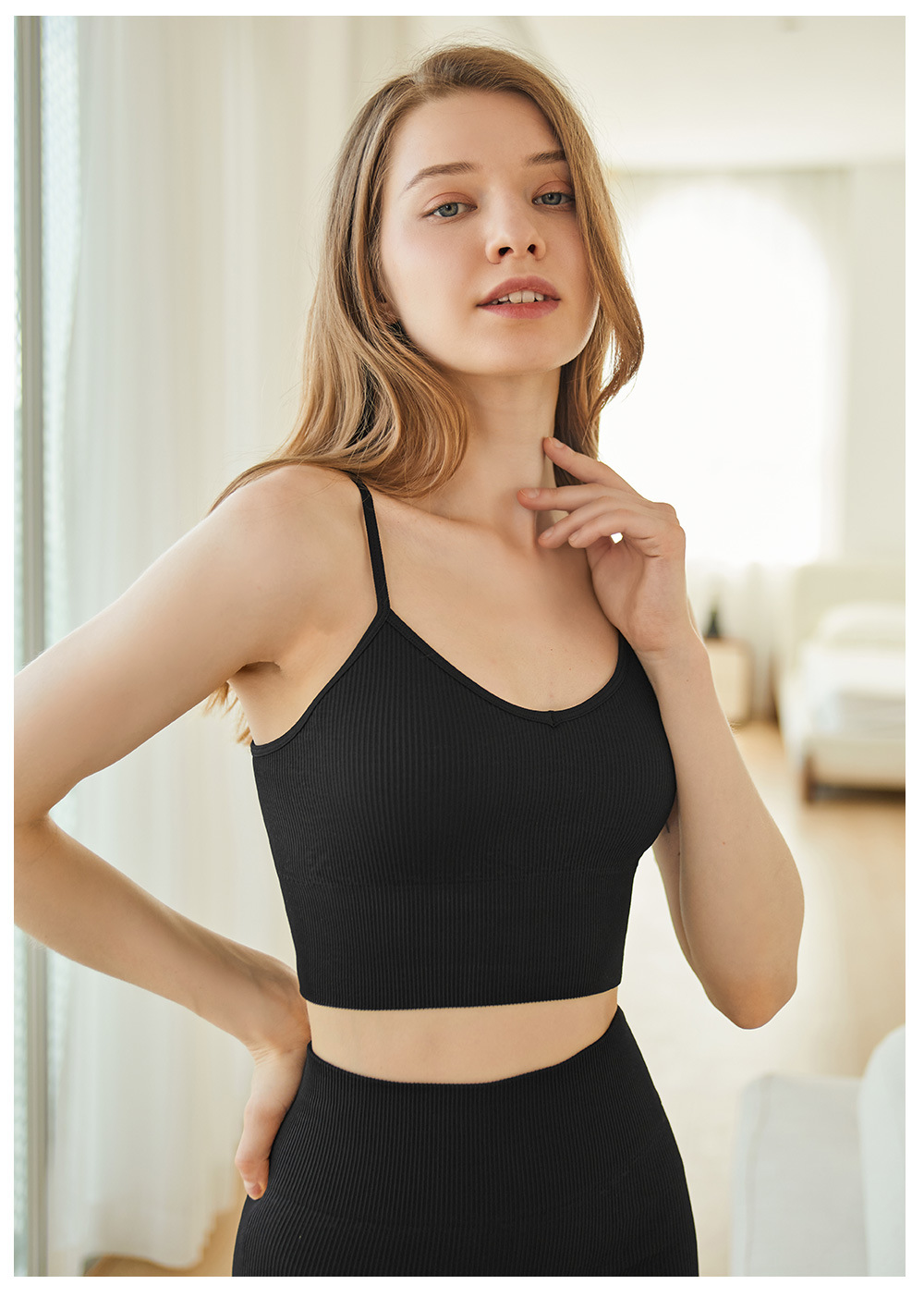
This black catalogue view shows the top front and part of the bottom waist. It helps compare a colour direction and visible component details. It does not show the full bottom, the top's back or a confirmed supply option for the buyer's order.
Use final images that correspond to the accepted combination. A consumer should be able to distinguish what is included in the offer and which colour relationship is shown. If the brand photographs separate garments together, keep the order and product information clear about whether they are sold as a pair.
How do separate size lists become a pairing schedule?
A pairing schedule identifies which top and bottom belong together where the buyer orders assembled sets. Include each garment code, colour and size, then state the quantity of that particular pairing. This makes a mixed-size arrangement understandable without reducing it to a misleading single size label.
For example, a top in M paired with a bottom in L needs both sizes retained in the record. The example describes a possible instruction, not a recommended fit or a confirmed ordering option. Whether a particular pairing can be supplied must be agreed for the selected products and quantities.
The size-colour quantity planning guide helps keep individual garment totals alongside assortment totals. Add the tops across all pairings to obtain the total top quantity, and do the same for bottoms. If additional separate pieces are ordered, identify them as separate lines rather than hiding them in the set count.
A change to a pairing can affect several records. Moving some orders from a same-size pair to a mixed-size pair may leave the total number of sets unchanged while changing the garment-size totals. Update the component quantities and packing instructions together so both still describe the intended assortment.
State whether the supplier is expected to create the pairs physically or whether the buyer will assemble them after receiving separately packed garments. The numerical combination and the physical packing work are separate parts of the brief. Confirm both before assuming that a set quantity answers every receiving question.
Why can the same logo colour need separate samples on different fabrics?
One artwork colour does not create one physical result across every garment. The top and bottom may differ in fibre blend, knit structure, rib depth, surface texture, stretch direction, base colour or panel position. The same nominal ink, transfer, thread or other application direction can therefore look, sit and move differently. Treat each material-and-location combination as a separate approval unless current physical evidence supports the exact proposed use.
Start with a controlled artwork file and colour reference. Then identify the garment, material or panel, base colour, proposed application direction, dimensions, position and sample purpose. The proof should answer a defined question: colour appearance, edge definition, placement, distortion during the agreed movement, interaction with seams or texture, or another project-specific concern. A digital mock-up is useful for scale and position discussion but does not prove the result on fabric.
| Logo variable | Why it can change the result | Evidence to retain |
|---|---|---|
| Top and bottom use different materials | Surface, structure and stretch can affect appearance and application | Separate identified samples or justified evidence for each material/location |
| Same material, different base colours | Contrast and visual colour can change | Approved result for each relevant base-colour combination |
| Same artwork, different dimensions | Fine details and spacing may behave differently | Final vector/file version, measured dimensions and photographed reference |
| Same colour, different position | Seams, ribs, waistbands and stretch zones create different conditions | Garment-specific reference points and physical placement proof |
| Same method, revised garment version | Panel or construction changes can move the application area | Link the approval to the exact garment/sample version |
Do not describe a sample as a wash, stretch or abrasion approval unless the actual method, conditions, observations and acceptance decision have been recorded. A visually acceptable first sample can still leave those questions open. The brand should decide which evidence is necessary for its intended claim and use, then keep the result with the garment and artwork versions.
Use the logo methods for stretch activewear guide to frame method questions, not to pre-approve a process for an unidentified fabric. If the project includes custom workout shirts in bulk, keep that garment and its application record in the Gym T-Shirt route. A shirt sample should not silently become evidence for a bra, legging, short or ribbed set component.
When the logo colour must appear coordinated across the set, review the samples together under a stated observation condition and also retain the individual approvals. The set decision can record whether the relationship is acceptable; the component records tell production which file, colour direction, dimensions, position and application belong on each garment.
What should stay shared across the range, and what needs separate branding approval?
The brand identity can be shared across the collection while artwork placement remains garment-specific. A logo on a top may need different dimensions and reference points from the same logo on a short or legging. Give each piece its own placement instruction tied to the accepted style.
Use the private-label activewear route to connect logo files, labels, hangtags and packing. Identify the final artwork version and any approved variations, such as a colour difference between garments. Keep shared brand decisions in one reference while retaining the separate application instructions.
The logo methods for stretch activewear guide helps frame method selection against the actual material and location. A ribbed top, a waistband and another garment area should not inherit an application approval solely because the artwork is the same. Agree which proof or sample answers the relevant appearance and application questions.
Review the branded pair together where that is part of the selling proposition. Two individually acceptable logo placements may create a combined appearance the buyer wants to adjust. Record the accepted relationship without losing the component-level dimensions and reference points needed for production.
A later artwork change should identify all affected pieces. If only the top logo changes, the bottom approval may remain separate, subject to confirmation. Avoid replacing a collection-level artwork folder without stating which garment instructions it supersedes. Clear scope lets the supplier carry the correct versions into the order.
How should logo size and position coordinate across a bra, top and bottom?
Build a placement map around the collection hierarchy. Decide which component carries the primary mark, which carries a secondary mark and whether a garment should remain unbranded externally. Repeating the same dimensions everywhere can make a small bra panel feel crowded and a larger leg or back panel feel weak. “Same logo” should mean controlled identity, not automatically identical physical size.
For every placement, record the garment code, sample size, artwork file, finished logo dimensions, reference points, orientation, base colour and intended application. Reference points should be measurable on the garment—such as a stated distance from a seam or centre line—rather than “about here” on a screenshot. If the placement varies by size, define how that variation is controlled and which sizes need evidence.
| Component | Placement decision | Coordination question | Approval record |
|---|---|---|---|
| Bra or cropped top | Small front, strap, hem, back or another identified panel | Does the mark remain legible and balanced without crossing the relevant seam or stretch area? | Garment/sample version, measured position, dimensions, artwork and physical result |
| Tank or T-shirt | Chest, back, sleeve or hem direction | Is this the collection's primary mark, and does its scale relate to the other pieces? | Separate shirt/top proof; route shirt-specific development through the existing guide |
| Legging or short | Waistband, hip, thigh, lower leg or another identified area | Is the position visible as intended when paired, and is the application evidence relevant to that surface? | Bottom version, size, location, dimensions, material/base colour and proof |
| Outer layer | Chest, sleeve or back direction | Does an outer layer hide or compete with the set marks? | Layer-specific artwork/placement plus a coordinated worn-view decision |
Review the outfit flat and worn for the agreed use. A top and bottom logo may align neatly when laid out yet compete or appear unintentionally stacked on the body. Conversely, a mark may disappear when a jacket is added. Record the specific outfit and sample sizes used for the combined review; do not turn one arrangement into approval for every size and style.
Any change to artwork, garment, material, colour, dimensions, position or application should trigger a scope check. The answer is not automatically “make every sample again,” but the brand and supplier should identify which existing evidence no longer answers the question. That decision and its owner belong in the approval record.
The private-label activewear route can support the logo, label, hangtag and packing discussion for suitable existing styles. New fit, material or construction remains a development project. Keeping those routes separate prevents an artwork request from being interpreted as approval of an unreviewed garment change.
Which garment information belongs to each piece?
Keep a separate information record for the top and bottom, even when they share an outer pack. Confirm the actual composition, care information, size identification and other applicable details for each garment. Similar appearance does not establish that both pieces need identical wording or care instructions.
The buyer should identify the destination, sales channel and person responsible for checking the required information. Give the supplier approved content and layout files with clear garment assignments. If a fact is still unresolved, mark it as a question instead of letting a copied label stand in for confirmation.
Decide how information survives separation. A customer may remove the top from the bottom, or a receiving team may open the pair during inspection. Each piece should remain traceable to its own style and size through the agreed identification method. A set-level identifier serves a different purpose: it connects those components to the approved combination.
Review physical label placement against the actual garments. A location that works on a waistband may be unsuitable for the cropped top. Discuss readability, appearance and wearing comfort through the relevant proof or sample, and record which piece was approved. Treat revisions to label content and revisions to the attachment position as separate changes.
What belongs in the set-packing, barcode and pairing table?
The pairing table should translate the commercial offer into physical contents. Give every approved combination a set ID, top ID and size, bottom ID and size, colour relationship, quantity, packing unit, outward identifier and barcode responsibility. If the garments can also be sold separately, keep their individual SKU and barcode records distinct from the set record.
| Field | What to record | Why the buyer needs it |
|---|---|---|
| Set or offer ID | Controlled ID for the approved commercial combination | Connects catalogue, order, pack and receiving references |
| Component IDs | Exact top and bottom codes/versions | Prevents a similar-looking garment from being substituted silently |
| Component sizes | Top size and bottom size in separate columns | Preserves mixed-size pairs and makes component totals auditable |
| Colour/version | Approved colour for each component | Distinguishes a matched pair, tonal pair or contrast offer |
| Quantity | Pair count plus calculated garment totals | Reconciles complete sets with the physical pieces required |
| SKU/barcode | Brand-approved set code and, where applicable, component codes | Supports the intended selling and receiving unit without inventing duplicate identities |
| Labels and hangtags | Which piece carries which information and whether an outer set tag is used | Keeps garment-level facts separate from set-level presentation |
| Pack method | Individual pieces, one shared bag, banded pair or another approved arrangement | Defines the supplier work and what receiving should see |
| Exception rule | Treatment of spare, replacement, sample or incomplete components | Stops intentional extras from becoming unexplained discrepancies |
The brand or its designated system owner should supply or approve barcode data and confirm the sales-channel requirements. A supplier can apply approved identifiers within the agreed scope, but should not invent a retail code or decide that one set barcode replaces every component record. Record who owns code creation, artwork, validation and final release.
Reconcile the table in both directions. Every set line must resolve into a top and a bottom, and every component allocated to a set must appear in one approved pair. Then compare the calculated totals with the purchase lines. If the buyer adds separately sold tops or replacement bottoms, keep them as separate quantities with their own packing and identification.
Review a representative packed set before release. Check that the two garments, sizes, colour relationship, labels, hangtags, barcode and outward contents line match the approved table. Photograph the packed reference with its version or approval ID. The photograph supports the record; it does not replace the written identities and quantities.
If the buyer will form pairs after receiving, say so explicitly. The supplier can ship individually identified components, while the buyer's warehouse owns the later pairing rule. If the supplier will form the sets, the order needs the pairing table and the approved pack reference. Quotation comparisons must use the same arrangement because physical pairing, separate packing and buyer-side assembly are different scopes.
How should paired sets be packed and checked at receiving?
Start with the selling unit, then define the physical arrangement. A buyer ordering assembled pairs should specify the components inside each pack, the outward-facing identifier and the way the two sizes are shown. A buyer ordering separates needs individual identification and a clear component quantity list.
The activewear packaging checklist provides a useful structure for folding, bags, hangtags, carton information and receiving records. Add set-specific instructions where needed. For example, a packing reference can show which garment is folded outside and where the second component sits, while a written contents line identifies both pieces.
Review a representative packed pair before relying on the instructions. Can the receiving team identify the intended combination without guessing from colour? Can they distinguish a fixed same-size pair from an approved mixed-size pair? A photograph can support this review, provided it is connected to the correct garments and packing version.
Receiving should reconcile complete pairs and component totals. Finding the correct number of tops does not establish that every bottom is present or correctly paired. Record shortages, wrong sizes and wrong combinations distinctly so the supplier can understand the discrepancy. Keep the relevant pack and garment identifiers with the evidence.
Agree how exceptions will be handled before the shipment is packed. An extra top, replacement bottom or sample placed in the carton needs a separate line and identification. Otherwise, an intentional extra can appear to be a packing error, or an incomplete set can be overlooked inside a correct total garment count.
What evidence makes a set approval complete?
Use an approval record that connects the shared presentation to the individual garments. It need not be complicated. The important point is that each acceptance answers a specific question and leaves the next person able to identify the approved version.
| Approval area | Record to retain | Question that still needs an answer if missing |
|---|---|---|
| Component identity | Top and bottom codes and the reviewed versions | Which two garments make this offer? |
| Fit and size | Separate measurement references and sample comments | What does each size mean for each piece? |
| Colour relationship | Identified pair reviewed together | Was this exact combination accepted? |
| Artwork and labels | Garment-specific final files and placement proofs | Which file and location apply to each piece? |
| Pairing and packing | Accepted contents line and packed reference | How will the approved combination reach receiving? |
Avoid using one broad approval message to close unrelated questions. An acceptance of the coordinated look may leave label wording, a bottom measurement or the outer-pack identifier open. List those items explicitly and assign the next decision to the appropriate person.
When a change arrives, name what it affects. Replacing the bottom style can reopen fit, colour, artwork and packing decisions even if the top remains unchanged. Updating a hangtag description may have a narrower effect. Review the affected scope and keep the accepted earlier records where they still apply.
How do you compare quotations for the same assortment?
Give each supplier the same component list, proposed pairings and branding scope. Ask whether the quotation describes individual garments, complete pairs, or a combination of both. Keep the unit visible wherever quantities and costs are compared; a figure without its unit cannot explain the offer.
Identify which work is included and which conditions require confirmation. Artwork application, labels, hangtags, physical pairing and packing should be traceable to the brief. If an option is unavailable for a selected style, ask the supplier to identify the affected line and proposed alternative so the buyer can review the consequences.
A revised proposal should carry a new version and explain its changes. Switching from assembled pairs to separately packed pieces changes receiving work even if the garments stay the same. Changing the bottom can alter the entire set proposition. Compare the revised scope before accepting a headline figure as an equivalent offer.
Record the agreed next step and its dependencies. That might be a component sample review, a paired colour review or a packing proof. Confirm project-specific quantity and timing conditions directly. A catalogue selection alone does not establish availability or reserve the assortment.
How should replenishment work when tops and bottoms sell at different rates?
Analyse sales and stock at component level before deciding to repeat a set. A shortage of bottoms does not automatically mean the full pair sold evenly, and leftover tops do not automatically prove a fit problem. The cause may involve the opening size mix, separate-piece sales, gifts, exchanges, returns, damages, pairing errors or unrecorded transfers. Use the buyer's actual records to distinguish those possibilities.
Create a simple review by garment, colour and size: beginning quantity, received quantity, set sales, separate sales, returns/exchanges, non-sales allocations, damaged or missing units and remaining usable stock. Reconcile the figures before using them to change an order. Keep planned demand or customer comments separate from completed transactions.
| Evidence pattern | Possible next discussion | Check before a supplier request |
|---|---|---|
| One bottom size is repeatedly depleted within approved sets | Adjust the future pairing or component-size allocation | Confirm transactions, exchanges, remaining tops and whether mixed-size pairs are currently feasible |
| Tops remain while bottoms were also sold separately | Replenish the bottom as a separate line or reconsider the selling unit | Confirm the accepted bottom version, present options, separate-sale identity and pack scope |
| One colour relationship underperforms | Reduce, replace or retest that specific combination | Separate colour-pair evidence from garment fit, price, display and availability questions |
| Returns identify a repeated component issue | Investigate the named garment and version before reordering | Retain reason, size, sample/production version and physical evidence; do not generalise from an unidentified comment |
| Set demand is supported and component balance remains controlled | Consider a repeat of the approved pair | Reconfirm current garment, material/colour, artwork, labels, packing, quantities and feasibility |
A repeat order is a new commercial request linked to an earlier approval. It is not an automatic continuation of stock, price, quantity or timing. Use the activewear repeat-order guide to identify the accepted versions and list any change. If only quantities or pairings change, recalculate component totals and the packing schedule. If the garment, material, colour, logo, label or pack changes, reopen the affected evidence.
Do not force balanced replenishment simply to preserve an original set ratio. If the brand sells separates, a component-level request may be more accurate. If the offer must remain a fixed set, revise the pairing plan only when the records justify it and the selected options are confirmed. Any excess component needs an explicit approved use; it should not disappear into an unexplained set count.
inPACE can use the top and bottom specification records, approved artwork and set-packing table to review the next request with the brand. The useful handoff is not “repeat the blue set,” but the exact component versions, present quantities, changed pairings, unresolved evidence and required confirmation.
How should a brand plan reorders when the pieces sell differently?
Retain the pair record and each component record after the first order. The activewear repeat-order guide explains how to reconnect a new request with an accepted reference. For sets, include the pairing schedule and the packing version alongside the separate garment information.
Use actual sales and receiving evidence to decide what needs replenishment. If the brand sells separates as well as pairs, distinguish those transactions before interpreting a shortage of one piece. Remaining tops may reflect a component imbalance, a changed customer size preference or simply the original allocation; the stock count alone does not identify the cause.
A reorder can retain the garments while changing the pairings or quantities. State that change clearly and recalculate component totals. Confirm whether previously selected options remain available and whether any material, colour, artwork or packing details have changed. Previous acceptance is a useful reference, while current order conditions still require confirmation.
Keep an accepted pair as a presentation reference where practical, together with the individual specifications. This helps a reviewer see the intended relationship without treating a photograph as a substitute for garment information. If the brand introduces a new colour or a different bottom, identify it as a new combination requiring its own review.
What can inPACE help a buyer prepare?
The company introduction describes inPACE's connection with Yinshan Garments and garment experience dating to 1986. That history provides company context; the decision about a particular workout set should still rest on its identified components, sample evidence and agreed order scope.
For an existing-style project, the conversation can begin with catalogue references and the buyer's proposed pairing. Logo placement, labels, hangtags and packing then need garment-specific instructions. Confirm the options for the selected products before presenting them as a settled range.
Where the desired top or bottom needs new fit, material or construction, identify that development work separately. This lets the buyer explain which parts of the coordinated range can follow an existing reference and which need a new sample decision. The result should be a brief the supplier can quote and the brand can use at approval and receiving.
What should you send in a workout set enquiry?
Prepare a concise brief with enough detail to distinguish the assortment from a styling image:
- Intended customer, activity, destination and sales channel.
- Existing top and bottom references, with each garment identified separately.
- Proposed selling unit: separates, fixed pairs or confirmed mixed-size pairs.
- Colour relationship and the exact combinations requiring review.
- Separate size references and any fit questions for each component.
- Quantities by garment, colour, size and assembled pairing where applicable.
- Artwork files, proposed locations and garment-specific dimensions.
- Approved label and hangtag content, with the responsible reviewer named.
- Physical pairing, folding and pack identification instructions.
- Sample and proof questions still open before order acceptance.
- Receiving records needed to check complete pairs and component totals.
- Requested next step, including project conditions that need confirmation.
Send your top-and-bottom references, separate size quantities, logo artwork and set-packing requirements to inPACE. Include the intended selling unit, component material and fit questions, logo positions, barcode ownership, proposed pairing table and the evidence still needed before approval. This gives the review a precise existing-style scope and identifies any garment change that should move into custom development.
Product directions
Explore relevant activewear products
Use these product pages as practical references for your brief, then confirm materials, fit, customization, and production details through sampling.
AW-001 Training Set Reference
Identify the exact top and bottom in this catalogue direction, then confirm their separate fit and order options.
View product directionAW-003 Set Reference
Use the product identity to request the current sample and confirmed component details before approving the assortment.
View product directionPrivate Label Service
Use the private-label route to coordinate garment-specific logo files, labels, hangtags and set-packing instructions.
View product directionFAQ
Buyer questions
What does a workout sets wholesale supplier need first?
Start with the existing top and bottom references, intended wearer and selling unit. Add the proposed colour combinations, separate size information and quantities. Explain whether the supplier should pack assembled pairs or separate garments, and identify the branding and sample questions that remain open.
Can the top and bottom have different sizes?
A mixed-size pair can be described in the brief, but the arrangement must be confirmed for the selected products and order. Retain both component sizes in the pairing schedule and packing identifier. One set-level size name should not replace the individual garment information.
Does a matching colour name guarantee that both pieces look identical?
No. A shared name does not establish the appearance of two different materials or garments. Define whether the buyer wants a close match, a tonal relationship or a contrast. Review the identified combination and record which pair and colour versions were accepted together.
Should quantities be stated as pieces or sets?
State the commercial unit clearly and retain the component totals. An assembled set quantity needs a defined top and bottom pairing. Separate garments need their own order lines. Additional individual pieces should remain identifiable so the supplier and receiving team can reconcile the actual assortment.
Does one logo approval cover both garments?
The same artwork may be shared, but each garment needs a clear placement and application instruction. Confirm the method against the actual material and location. Review the combined appearance where relevant while retaining the individual dimensions, reference points and accepted file versions.
When does an existing-style workout set become a custom project?
A request for new fit, material or construction needs a development discussion. Examples include a different top length, waistband structure, strap arrangement or pocket. Identify the affected component and required sample evidence rather than assuming a catalogue reference includes the proposed change.
What should be retained for a repeat order?
Keep the accepted component codes, size references, colour combination, artwork, labels, pairing schedule and packing version. Record any changes in the new request and recalculate component quantities. Confirm current options and order conditions before relying on the earlier assortment as an unchanged supply offer.
Does the same logo colour need separate samples on the top and bottom?
Treat each material, base colour and placement as a separate approval unless current physical evidence supports the exact proposed use. The same artwork colour can look or behave differently on another knit, rib, waistband or stretch zone. Retain the garment and material identity, artwork version, dimensions, position, application direction, sample observation and approval owner for each relevant component.
What should a barcode and pairing table show for mixed-size workout sets?
List the controlled set ID, exact top and bottom versions, both component sizes, colours, pair quantity, component totals, pack method and approved outward identifier. Keep individual SKU or barcode records where garments can be sold or replenished separately. The brand or its designated system owner should approve retail barcode data, while the supplier follows the agreed application and packing scope.