
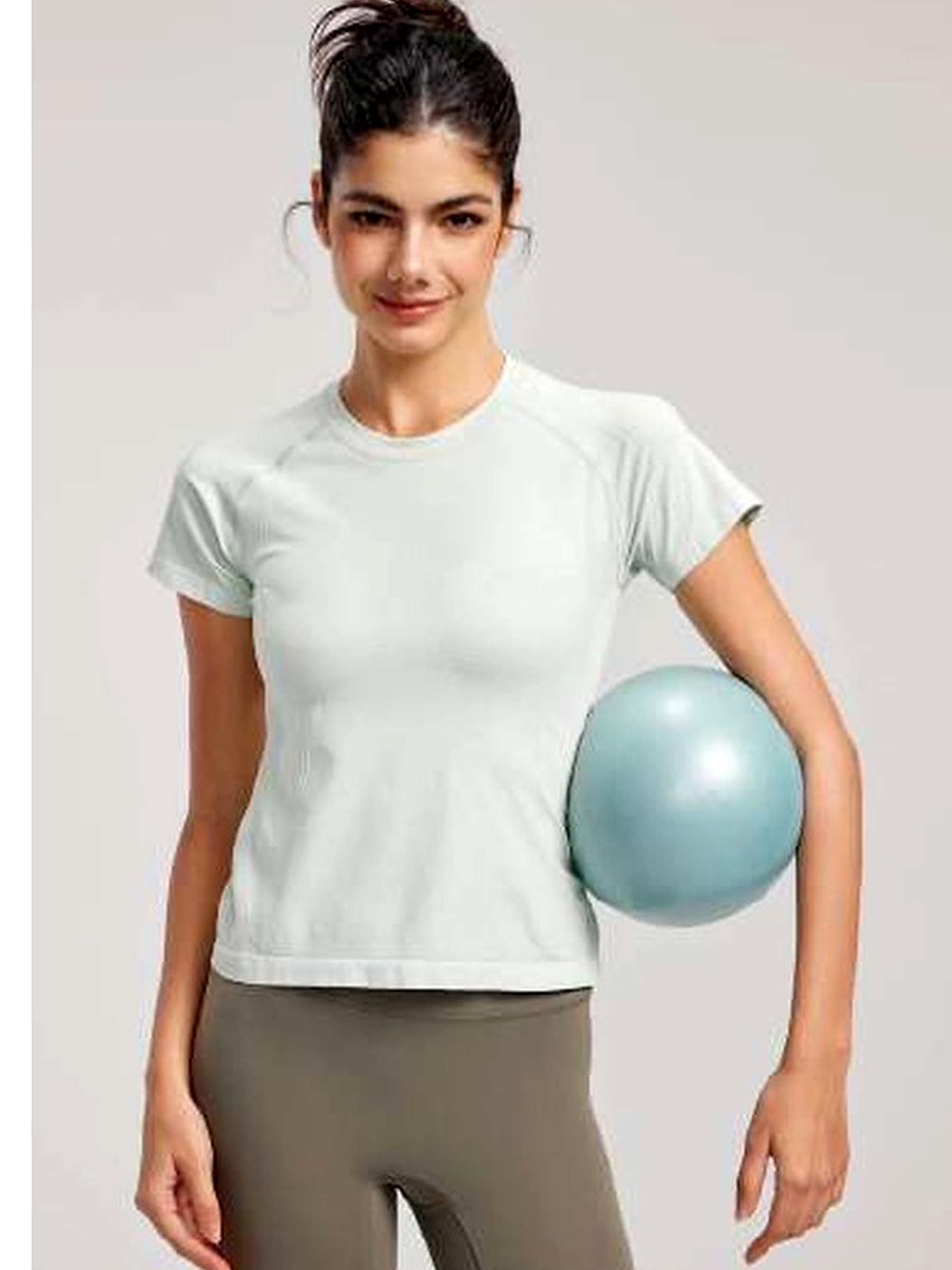
What should a gym T-shirt manufacturer review before a sample is made?
A gym T-shirt manufacturer should review the garment role, shoulder and sleeve proportions, armhole, body length, fabric and sweat-zone direction, logo position, grading, sample purpose, and approval record together. A catalogue reference can begin a branding conversation. A changed fit, panel map, material, or construction needs a factory-custom brief and a physical sample before production decisions are confirmed.
A T-shirt is often treated as the simple item in a gym range. In practice, it carries a high proportion of the collection's repeat use, wash exposure, logo visibility, and size feedback. It may be worn on its own, over a bra, under a layer, by instructors, or as part of a matched training set. That means a small adjustment to shoulder width, sleeve opening, or body length can change the silhouette, movement observation, print area, grade rule, and the way the garment relates to a bottom or outer layer.
The first buyer decision is the route. Choose a catalogue-informed or light-customization discussion when an existing short-sleeve direction, material family, and construction are already close and the project is mainly about branding, labels, hangtags, packing, or a limited colour request. Choose a factory-custom route when the brief needs a new shoulder, sleeve, armhole, length, panel, fabric, sweat-zone construction, logo position, feature, or fit direction. The Gym Wear Manufacturer solution is the practical starting point for separating those two conversations.
Neither route means that a product photo automatically defines the final garment. It can show a useful direction. It does not by itself state the pattern, material, seam allowance, base size, grade, trim, artwork scale, packing method, quantity, or market requirements. A manufacturer can discuss alternatives, but the project must keep confirmed choices separate from proposed and unconfirmed ones.
| Brief area | Useful buyer input | Why it matters to a gym T-shirt manufacturer | Evidence to request from the sample |
|---|---|---|---|
| Product role | Training tee, gym staff uniform, studio retail top, event layer, warm-weather top, or a named use | The role affects the desired silhouette, fabric, logo visibility, durability questions, packaging, and approval sequence | A sample reviewed in the stated use context rather than only on a hanger |
| Shoulder and sleeve | Shoulder point direction, sleeve length, sleeve opening, sleeve seam route, and fit reference | These elements work together and influence body balance, arm movement, chest and sleeve logo zones, and grading | Front, side, back, and named arm-motion observations in the stated base size |
| Armhole and body length | Underarm direction, side seam, hem position, side split if any, and intended bottom or layer | Armhole and length affect coverage direction, panel placement, material use, trim, and garment relationship | Review notes tied to the intended legging, short, or training layer |
| Fabric and sweat zones | Body fabric, mesh or perforated-panel direction, trim, colour, handfeel, and the question to test | Material and panel choices influence drape, stretch, recovery, surface, seam handling, print compatibility, and care discussion | The exact material and panel map documented against the sample version |
| Branding | Artwork file, intended position, approximate scale, colour, method under consideration, labels, and packing context | Logo placement is a construction decision as well as a visual decision | Artwork placement checked on the sample before production artwork is approved |
| Sample purpose | Development, fit, material, decoration, pre-production, or another named purpose | One sample should answer a defined decision instead of appearing to approve every later step | Written reviewer, observations, change request, approved scope, and next owner |
This is not a request for a finished tech pack before the first conversation. It is a way to make the open questions visible. For example, a note that says, “review sleeve opening and underarm mobility over the intended base layer during an overhead reach” gives the product team and factory a testable observation. “Make it more comfortable” does not show where the pattern, seam, material, or trim should be examined.
How should shoulder width, sleeve length, and armhole be planned together?
The shoulder is a starting line for the whole upper-body balance. A narrower shoulder can make the sleeve appear longer, move the armhole, and change how a chest logo relates to the garment. A dropped shoulder may create a looser visual direction but also changes sleeve construction, seam location, and the point at which a buyer should compare the front and back. A more fitted shoulder has a different interaction with the sleeve head, armhole, body fabric, and intended movement. None of those approaches is universally correct. The brief should name the product role and the reference relationship it wants to retain.
Start with the intended customer and use. A fitted studio tee, a regular training tee, a staff shirt, and a relaxed pump-cover layer may all be described as a “gym T-shirt,” but their shoulder, sleeve, and body-length directions can be different. Write down whether the goal is close fit, regular ease, relaxed ease, or a reference to be assessed. State the named base size, the intended layer beneath or above the tee, and the movement context. That lets the factory translate the visual request into pattern, construction, and sample questions rather than making assumptions from a single image.
Sleeve length also needs a clear reference. The buyer can describe the sleeve as short, mid-bicep, longer training sleeve, cap-sleeve direction, or open for recommendation. Then add the sleeve opening direction and the observation that matters: does it need to sit away from the arm, follow a more fitted line, avoid a particular visual proportion, or be reviewed during a named reach or pull movement? The sleeve opening is connected to the armhole. It should not be approved separately from shoulder placement and the side seam.
The short-sleeve activewear top reference is useful when a buyer needs to point to a fitted short-sleeve proportion. The seamless top reference can help when the conversation is about a closer body relationship and surface structure. These are product directions for a brief, not a claim that either item defines a final gym T-shirt specification. The actual pattern, materials, construction, branding, size range, and sample evidence remain project-specific.
Armholes create a similar connection. A higher or lower armhole affects the front, back, sleeve attachment, side seam, underarm visibility, seam bulk, and movement observation. Mark the point that is fixed, the point that is open for factory input, and the movement or layering situation to review. When the brief needs a new shoulder, sleeve, armhole, or fit route, link it directly to the custom activewear development path rather than presenting a catalogue photo as a complete manufacturing instruction.
What does “sweat zones” mean in a factory brief?
Sweat zones are not a universal performance claim. In a product brief, the phrase simply identifies areas where a buyer wants to discuss heat, ventilation, visual contrast, fabric feel, or panel construction. Common areas for a gym T-shirt discussion include the upper back, centre back, underarm, side body, chest, or sleeve. The useful next question is not “will this guarantee cooling?” It is “what material and construction direction should be sampled in this area, and what will the reviewer inspect?”
For example, a buyer may want a lighter or more open-looking panel at the upper back because the product is intended for gym training. The factory needs to know whether that is a visual panel, a different knit or mesh direction, a seam location, an existing reference feature, or an idea that still needs recommendation. It also needs to know how the panel should sit relative to the shoulder seam, neckline, armhole, chest print, back logo, and size grading. A panel that works visually in one size or body fabric may need a different construction review in another.
Material direction should be written with the same care. Rather than stating that a fabric is “breathable” or “sweat-proof,” describe the known body-fabric direction, weight or handfeel target if available, stretch expectation, surface, colour, and the question to investigate. The fabrics and trims resource can keep the body fabric, mesh, neck rib, tape, labels, thread, and decoration questions in a single record. It does not replace confirmation through the actual sample.
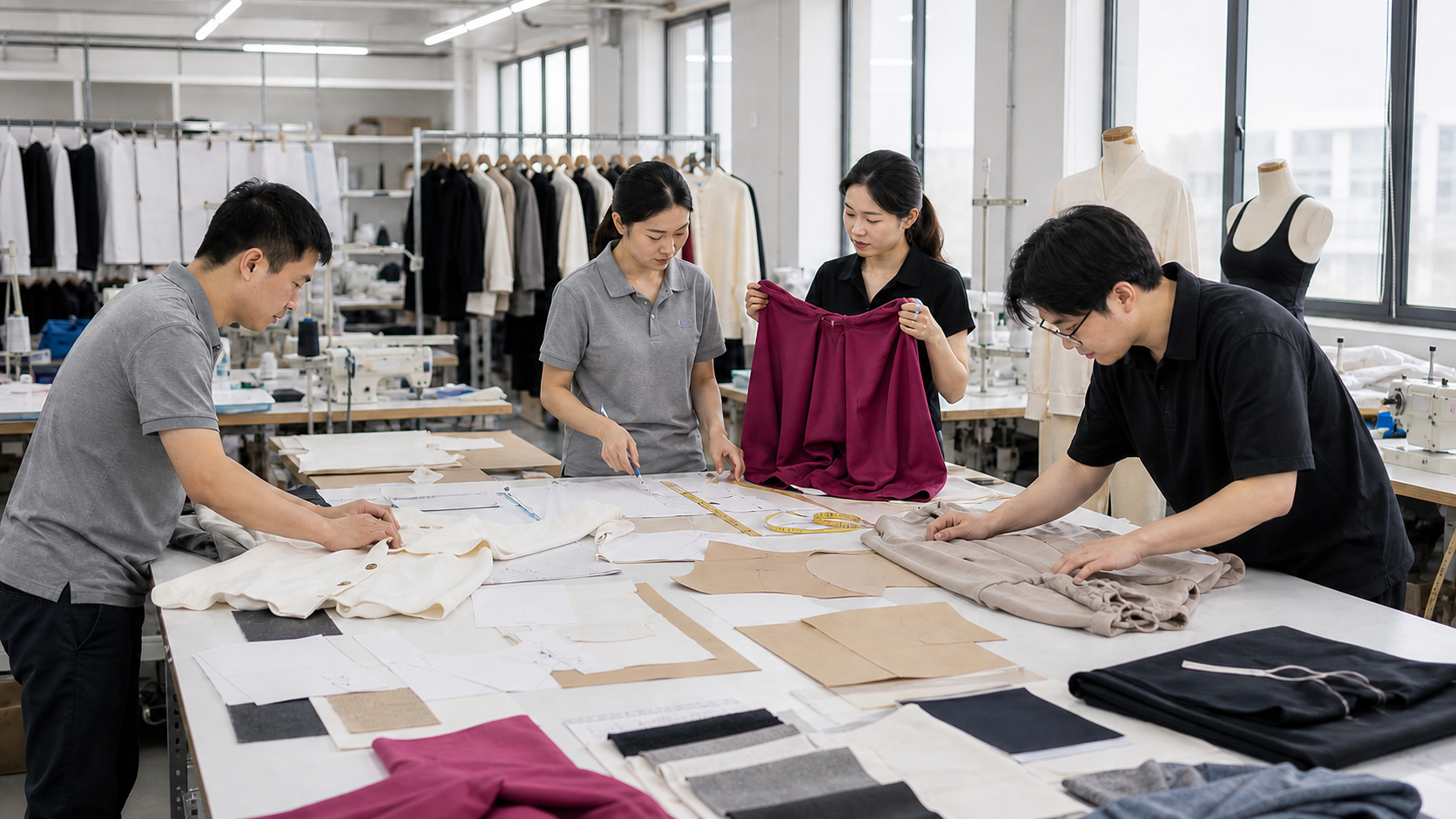
This factory-context image shows a development review setting. It is not evidence that a particular fabric, pattern, sample, or finish has been approved for every gym T-shirt. The useful record connects the exact material and panel decision with the sample version and the named review question.
The short-sleeve performance product direction can also help a buyer distinguish a simple fitted top from a more deliberate training-top discussion. Use product references to make the first call specific. Do not use them to skip the fabric, fit, construction, and sample route required for a different brand or brief.
Where can a logo sit without ignoring construction and fit?
Logo placement should enter the brief before a garment sample becomes the final reference. A small chest mark, centred front artwork, back-neck logo, sleeve print, side-body graphic, or hem label each relate differently to seams, stretch, panel breaks, garment balance, and printing or embroidery options. The visual position may look straightforward in a flat layout. On a body, it can move with the material, shoulder line, sleeve shape, side seam, or panel map.
Give the factory an artwork file when it is available. If it is not ready, name the intended zone, approximate scale, number of colours, and whether the work is a placeholder or a design to be developed. State whether a logo crosses a seam, sits near a mesh panel, must work on a textured surface, or needs to be compared against an existing brand guide. Do not ask a supplier to infer a production-ready artwork position from a social-media image or an unmeasured sketch.
The logo methods for stretch activewear guide is a useful adjacent resource when the buyer needs to compare how surface, stretch, artwork, placement, and sample review interact. It does not decide the decoration method for a gym T-shirt in advance. The fabric, artwork, size, position, colour, care direction, sample result, and quantity plan all need review together.
For a staff programme or light-customization project, a close catalogue direction may be appropriate if the silhouette and construction already work and the main tasks are branding, labels, hangtags, folding, and packing. For a new panel layout, changed fabric, new shoulder, special sleeve, or logo position that relies on a changed construction, move the project to factory-custom development. This keeps wholesale-style brand presentation separate from a true product-development request.
How do body fabric and size grading affect the same T-shirt?
The body fabric is not an isolated sourcing choice. It affects how the shoulder line sits, how the sleeve hangs, how the hem recovers after wear, how a logo surface looks, and how the side seam and any panel behave. Two materials with a similar colour can still respond differently to pattern tension, print, rib finishing, sewing, or wash handling. A buyer does not need to predict every technical result. The important task is to state the material direction and make clear which relationship the first sample should test.
Grading means the planned change from one size to another. It is relevant because a shoulder, sleeve, armhole, chest, waist, and body length relationship that appears balanced in one base size may not automatically communicate the same intent across a whole size range. Give the manufacturer the base size, the size-range direction, the target wearer or fit reference where available, and any size-specific questions. Keep the base-size fitting observation separate from a later all-size approval. A fit sample can confirm the garment that was reviewed; it does not automatically approve every later material, colour, logo, size, or production revision.
A product team can make this easier by using one version name for the sample. The record should show the reference, pattern or construction changes, exact material, trim, colour, artwork, base size, reviewer, observed shoulder and sleeve points, requested changes, and the next decision owner. The activewear fit-model brief explains why a named base size and movement observation are more useful than an unstructured request for “better fit.”
The buyer may also need the tee to coordinate with a legging, short, or jacket. Say so early. A gym T-shirt's length, hem, colour, and chest or sleeve branding can look different over a high-rise bottom than over a looser short. Coordination is a collection decision, not a reason to approve the tee without its own pattern and material review.
What should the first gym T-shirt sample prove?
Assign the first sample one job. A development sample may test whether the factory understood the shoulder, sleeve, armhole, hem, panel, fabric, and construction direction. A fit sample may focus on the declared base size, body length, sleeve opening, and a named movement. A material sample may compare body fabric and a sweat-zone panel or neck finish. A branding sample may focus on artwork scale, placement, labels, or packing context. The clearer the sample purpose, the easier it is to keep a later production discussion factual.
The sample record should not become a catch-all approval. If a buyer accepts a shoulder proportion, that does not automatically approve a final fabric, all colours, all grades, print method, labels, packaging, carton marks, quantity, QC points, or bulk-production scope. The activewear sample feedback guide gives a useful way to keep the style version, material, observation, requested change, approval boundary, and next owner linked instead of blending notes from different versions.
For inPACE projects, sample planning can include printing, embroidery, or wash-effect discussion when they are relevant to the confirmed scope. General planning often allows about 5–10 days for samples and about 25–50 days for production after scope and approvals are confirmed. These are planning ranges, not fixed commitments. Fabric and trim availability, colours, construction, decoration, labels, packing, quantity direction, revisions, and factory scheduling can change the actual route.
Sample charges are generally discussed as a project-specific multiple of the related bulk unit quotation, commonly in the 1.5–3 times range. For one style, the stated sample-fee refund guide is 10% at 100 units, 30% at 300, 50% at 500, and 100% at 1,000. This is a planning reference rather than a standing price or unconditional term. The exact style, materials, decoration, scope, quantity, order conditions, and approved agreement must be confirmed before it is applied.
How should a supplier, manufacturer, and factory role be described?
The words supplier, manufacturer, and factory answer different buyer questions. A supplier conversation can begin with usable product direction and the information required for a quote. A manufacturer conversation focuses on turning a brief into a sample-ready product record. A factory conversation focuses on confirmed materials, pattern and construction notes, decoration, QC, packing, and production coordination. A buyer receives a clearer next step when the article states which of those jobs is needed instead of using all three labels as interchangeable marketing terms.
inPACE can begin with a brief, reference, existing sample, sketch, or tech pack and discuss the T-shirt's role, shoulder, sleeve, armhole, body length, material, sweat-zone direction, fit, branding, sample purpose, QC points, and packing requirements. The goal is to make the route reviewable, not to promise that a reference can be copied unchanged or that an unapproved sample guarantees a later result.
More than 30 years of garment-production experience provides context for the manufacturing judgement used to connect a product brief with material and construction review, sampling, production coordination, QC, packing, and reorder records. It is not a claim that the inPACE brand has existed for that period, a capacity guarantee, or a promise of price, timing, certification, or technical performance. Where the confirmed style and scope make it appropriate, inPACE can coordinate a suitable path through multiple partner factories.
Which product directions make the T-shirt brief more concrete?
Fitted short-sleeve activewear top reference
Use the fitted short-sleeve activewear top to discuss shoulder position, sleeve length, a closer body relationship, front and back balance, and the hem-to-bottom relationship. It is useful for a brand that wants to start with a defined visual direction. It does not replace confirmation of the final material, grading, branding, construction, sample result, or production scope.
Seamless top reference
The seamless activewear top can help a buyer describe a close-to-body surface and a different construction direction. It is not interchangeable with a cut-and-sew gym T-shirt. If the desired garment changes the knit structure, paneling, logo zone, shoulder, sleeve, fabric, or sizing approach, record that difference and route it through sample review.
Short-sleeve performance top reference
The short-sleeve performance top gives a third point of comparison for sleeve, body length, training use, logo zoning, and collection coordination. Use it to name the starting feature that matters. The factory still needs the exact body fabric, trims, artwork, colour, fit, measurements, labels, packing, quantity direction, and sample purpose.
What should a buyer send before asking for a gym T-shirt quote?
- Name the intended customer, product role, channel, training or staff use, and any coordinated bottom or layer.
- Share the closest reference, existing garment, sketch, marked image, measurement sheet, or tech pack, and identify what must remain, change, or stay open for factory advice.
- State the shoulder, sleeve, sleeve opening, armhole, chest, side, back, body length, hem, panel, sweat-zone, and logo-placement directions.
- List the known body fabric, mesh or panel direction, neck finish, thread, labels, artwork, colour, packaging, and destination information.
- Identify the base size, size-range direction, first-sample purpose, named fit or movement observation, reviewer, and decision owner.
- Keep confirmed, proposed, substituted, and unresolved decisions separate before asking for a next sample or bulk-production plan.
The order workflow explains how a B2B brief can move from sample review through production coordination, QC, packing, and export preparation. Use the manufacturing workflow to keep the approved product reference, materials, components, construction notes, artwork, labels, packing instructions, sample evidence, quantity direction, QC focus, and version history connected. When the product brief is ready, send a gym T-shirt development request with the actual garment decisions rather than only a category keyword.
Product directions
Explore relevant activewear products
Use these product pages as practical references for your brief, then confirm materials, fit, customization, and production details through sampling.
Fitted Short-Sleeve Activewear Top
Use this product reference to discuss shoulder placement, sleeve length, body relationship, logo zone, and the fit questions that a gym T-shirt sample should answer.
View product directionSeamless Training Tee
Use this tee reference when the brief needs a close-to-body surface, sleeve and shoulder relationship, logo area, or a decision about whether a seamless construction route is appropriate.
View product directionCustom Activewear Development
Use the factory-custom route when shoulder, sleeve, armhole, body length, fabric, sweat-zone panel, logo placement, fit, or sample evidence needs to change from an existing product direction.
View product directionFAQ
Buyer questions
What should a gym T-shirt manufacturer brief include?
Include the product role, reference, intended customer, shoulder and sleeve direction, armhole, body length, fabric and panel direction, logo zones, base size, size-range direction, sample purpose, fit or movement observation, labels, packing context, quantity direction, and open decisions. Mark what is confirmed, proposed, substituted, or still needs review.
How should a brand describe shoulder and sleeve fit for a gym T-shirt?
Name the intended silhouette, shoulder placement, sleeve length, sleeve opening, base size, related layer or bottom, and the observation required from the sample. Shoulder, sleeve, armhole, material, construction, and grading work together, so a reference photo should begin the discussion rather than serve as a complete specification.
What are sweat zones in a gym T-shirt factory brief?
They are named areas where a buyer wants to discuss heat, ventilation, visual contrast, material feel, or panel construction, such as the upper back, underarm, side body, chest, or sleeve. They should be written as a material and sample-review question, not as a universal cooling or performance guarantee.
Can a catalogue T-shirt become a private-label gym shirt?
A close catalogue direction can be appropriate where the silhouette, material direction, and construction already suit the project and the main work is branding, labels, hangtags, packing, or limited colour direction. Logo method, artwork, labels, packing, quantities, materials, and approval requirements still need project-specific confirmation.
When should a gym T-shirt move to factory-custom development?
Use a factory-custom route when the project needs a new shoulder, sleeve, armhole, length, panel map, fabric, sweat-zone construction, logo position, feature, fit, colour, or controlled sample plan. That route lets the product team validate the requested changes rather than treating an image or catalogue item as a full production instruction.
How can inPACE support a gym T-shirt project?
inPACE can start with a brief, reference, sample, sketch, or tech pack and discuss product role, shoulder and sleeve balance, armhole, length, materials, panels, fit, branding, sample evidence, QC, packing, and production coordination. It can coordinate an appropriate route through partner factories subject to the confirmed style, materials, construction, decoration, quantity direction, and scope.
How long do gym T-shirt samples and production usually take?
For inPACE projects, general planning commonly allows about 5–10 days for samples and about 25–50 days for production after scope and approvals are confirmed. These are planning ranges, not fixed commitments. Materials, colours, components, construction, decoration, labels, packing, quantity direction, revisions, and factory scheduling can change the actual plan.