
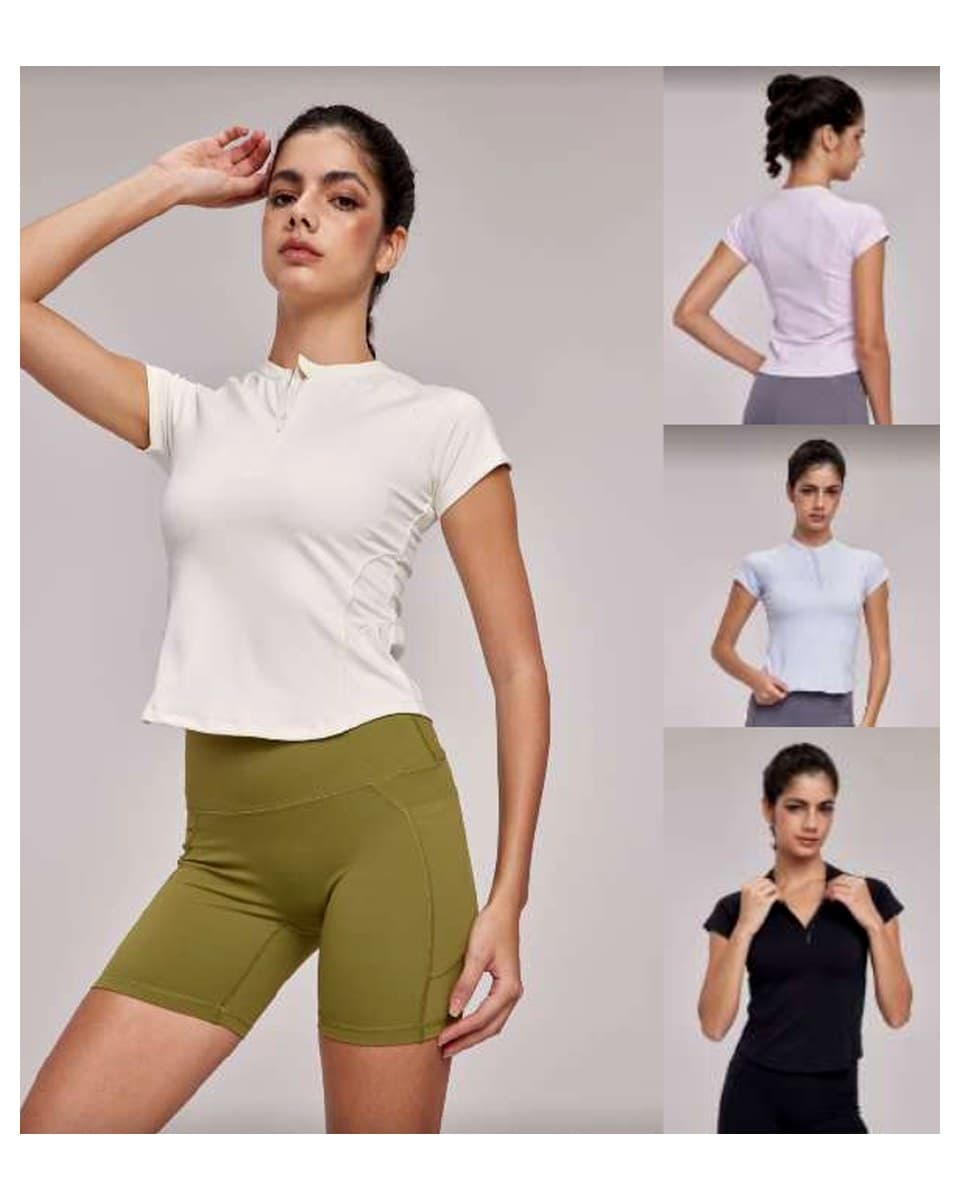
What should a workout apparel brand launch decide before choosing a channel range?
Start with how the customer will encounter the product. Will a studio team explain the garment in person, will a gym retail area present it alongside other items, or will an online page carry most of the product explanation? These are proposed selling arrangements to investigate with the actual operator. A channel name alone does not reveal the available space, staff knowledge, fitting arrangements or information the buyer will see.
This guide follows the wholesale/light-customization route: select suitable existing garments, then define the agreed logo, label, hangtag and packing work. The activewear performance collection provides references for that discussion. Existing-style selection does not imply current inventory or unconditional availability. Confirm the actual garment, colour, size and quantity proposal with the supplier before treating it as a launch commitment.
If the brief requires a new fit, material, construction or other physical specification, move that work into custom development. The wholesale versus custom manufacturing guide explains the distinction. Selling through a new channel does not automatically require a new garment, while describing a structural change as “private label” does not make the development work disappear. Keep those decisions separate from the channel plan.
Which product roles should be defined for each launch channel?
Assign a role before choosing a long list of styles. A role might be a core training item, an optional layer, a coordinated second piece or a branded member item. Explain why that role belongs in the proposed channel and what the operator must be able to communicate about it. Avoid selecting several visually similar products without identifying the difference the customer is expected to understand.
Choose a limited initial presentation that the team can describe and maintain accurately. That is an operational choice, not a claim that a particular number of styles always sells best. A studio with a defined member programme may ask a different assortment question from an online store presenting separate product pages. The brief should explain the actual use and selling arrangement rather than borrowing a range from an unrelated business.
Record whether pieces are offered individually, as an optional pairing or as a defined set. These choices affect identification, information and receiving instructions. A coordinated photograph can show two garments without establishing how they are sold. Make the commercial unit explicit so the brand, factory and channel do not use the same image to mean three different things.
How do studio, gym retail and online launch requirements compare?
Use the table as a planning checklist with the channel owner. Each row is a question to resolve, not an assumption about every studio, gym or online retailer. The garment can remain shared while the surrounding instructions differ.
| Launch decision | Studio programme | Gym retail area | Online store |
|---|---|---|---|
| Product role | What does the member or class audience need to understand? | How will the item be distinguished within the displayed range? | What question must the product page answer without staff help? |
| Presentation | Who explains the garment and any optional pairing? | Which approved information appears on the display or product card? | Which images and text represent the actual sellable version? |
| Size selection | What fitting or size-information process is available? | How will staff and customers identify available sizes? | How will size and measurement information be presented? |
| Branding | Which studio or brand identity is being applied? | How does the retail presentation match the garment branding? | Do the listing, label and delivered item use the same identity? |
| Sellable unit | Is this one item, a programme pack or an optional set? | How are separate pieces and sets distinguished at checkout? | What exactly does the selected variant include? |
| Receiving | Who checks and allocates the incoming garments? | How are products grouped for the retail team's receiving process? | What identifiers and grouping does the fulfilment operator require? |
| Feedback | Who records questions from the member conversation? | Who separates product comments from display or availability issues? | Who connects questions and returns to the correct product version? |
| Replenishment | Which accepted style and branding version is repeated? | Which size and colour gaps are real and documented? | Which listing version and physical item does the reorder reproduce? |
Resolve the important differences before changing the garment. A channel may need a different hangtag or unit identifier while using the same approved product. Another may request a physical feature that requires development. The supplier should receive those as distinct work items, with different evidence and approval needs.
What should a studio launch brief make clear?
Describe the programme and the person responsible for explaining it. The studio may be presenting its own branded merchandise, a partner range or products selected for a defined activity. Do not assume those arrangements have the same approval process. Identify who owns the artwork, who approves its use and who gives the final instruction for the garment, label and presentation materials.
Use the private-label service to discuss the physical branding scope. State the artwork version, intended placement and relevant garment reference. A logo shown on a digital mock-up is a proposal until the appropriate sample or other agreed evidence has been reviewed. If the studio wants a larger graphic, another location or a different application, ask whether that changes the review required for the actual material.
Prepare a short, approved explanation for the person presenting the product. It should distinguish what is known about the garment from marketing language or personal impressions. The focused first-release guide offers a related framework for controlling a small branded range; its location-specific context should not be copied as evidence about another market. For this launch, confirm the facts and responsibilities with the actual studio and brand team.
What does the gym retail team need before receiving stock?
Ask how the retail team will identify, display and reconcile the incoming items. Define style, colour and size references consistently across the order, labels and receiving list. If the display shows an outfit, confirm whether staff should sell the pieces separately or as a stated set. That distinction needs to survive beyond the launch photograph and into the unit the customer takes away.
Give the retail owner approved information about garment differences. A fitted top and a loose layer may serve different roles even when their colours coordinate. Explain those roles without inventing support, cooling or durability claims. The gym wear manufacturing overview can orient a supplier discussion about training garments, but the retail explanation should follow the specifications and evidence accepted for the actual launch items.
Record receiving and presentation questions before sending packing instructions. Does the operator need each variant identified for individual handling, or a grouping by an agreed display allocation? Ask the operator rather than assuming a universal gym-retail pack. Once confirmed, identify who supplies the values and who checks the proposed execution. A supplier cannot infer the receiving team's system from a brand name or a general instruction to make the order retail-ready.
What must an online product page carry that an in-person conversation might otherwise explain?
An online page needs a clear relationship between the selected variant, its images, its information and the delivered unit. Identify which garment version each image shows, what the offer includes and how size information is presented. The page should not rely on an unpublished conversation with the buyer to clarify whether a top and leggings are separate products or one set.
Keep an approved product-data record behind the listing. The international e-commerce private-label guide covers that record in more detail. For channel planning, the important point is ownership: the factory supplies or confirms information within its scope, the brand reviews the accepted product facts, and the channel publishes the correct approved version. A convenient text field in a store platform is not a reason to invent a missing fact.
Record changes after launch. If a photograph is replaced, a fit description is clarified or a variant is regrouped, retain the connection to the physical item. Customer feedback should identify what was shown at the time. Otherwise, a question about an old listing can be mistaken for a problem with the current garment, or a product improvement can be claimed when only the page description changed.
Who owns product data across the factory, brand and channel?
Assign responsibilities by field. The table is a working template to adapt to the project, not a statement that every supplier agreement includes the same deliverables. Information should move from an identified source through review to an approved consumer-facing version. Keep marketing choices and customer-service policies outside the factory's technical approval unless they are explicitly part of an agreed scope.
| Information field | Factory or supplier contribution | Brand responsibility | Channel responsibility |
|---|---|---|---|
| Garment identity | Connect the proposed item to its style and version records | Approve the product that belongs in the launch | Use the matching product and variant identifiers |
| Material composition | Provide relevant information for the actual proposed material | Review evidence and approve the final product information through the designated process | Publish the approved wording for the matching version |
| Care information | Supply relevant material and garment information within the agreed scope | Arrange appropriate review and approve instructions for the actual product | Reproduce the accepted instructions without unsupported additions |
| Measurements and sizes | Provide the agreed measurement and size references | Approve the specification and how it informs buyer guidance | Display the current guidance and distinguish sizes clearly |
| Fit description | Explain construction and sample differences where relevant | Relate the wording to the approved garment and fit evidence | Keep listing and staff descriptions consistent with that wording |
| Product images | Identify supplied reference or sample imagery and its scope | Approve images that represent the sellable garment | Associate the correct images with each offer and variant |
| Branding and packing | Review feasibility and execute confirmed instructions | Approve artwork, placement, unit identity and packing values | Confirm receiving needs and check the presentation used in the channel |
| Marketing and customer policies | Clarify manufacturing facts when requested | Own brand claims, commercial decisions and relevant policy approvals | Apply the approved customer-facing offer and service arrangements |
An empty field should remain an open question with an owner. Do not fill composition, care or fit fields by copying a reference garment's page. A provisional factory proposal should not become consumer copy merely because the launch date is approaching. Ask which evidence and approval will close the field, then keep that decision attached to the actual product version.
How should size information move from specification to selling guidance?
Distinguish a garment measurement from guidance about which size a customer should choose. The measurement describes an agreed point on the garment under a defined method; size-selection wording requires the brand's relevant review. Do not treat an unexplained sample measurement or a familiar letter size as sufficient evidence for a universal fit statement. Identify what the displayed information actually means.
The activewear size-grading guide provides context for discussions about the size range. In the launch brief, record which sizes have been reviewed, which references apply and what remains unresolved. A base-size approval does not automatically answer every question about a wider range. Keep those limits visible before the channel prepares a size chart or its staff explanation.
Use the same approved source across channels while adapting the presentation to each setting. A studio team may explain a fit note verbally; an online page may need that note in writing. The underlying product meaning should stay consistent. If feedback suggests the explanation is confusing, review the wording separately from any proposed garment change so the next action addresses the actual issue.
How can images and colour variants stay connected to the delivered product?
Build a simple image-to-variant map. Record the garment version, colour reference and any visible styling or pairing that could affect interpretation. If a photograph shows a pre-production sample, establish whether it represents the accepted commercial version before using it as product imagery. A visually similar reference is useful during development but should not quietly replace an accurate record of what the offer contains.
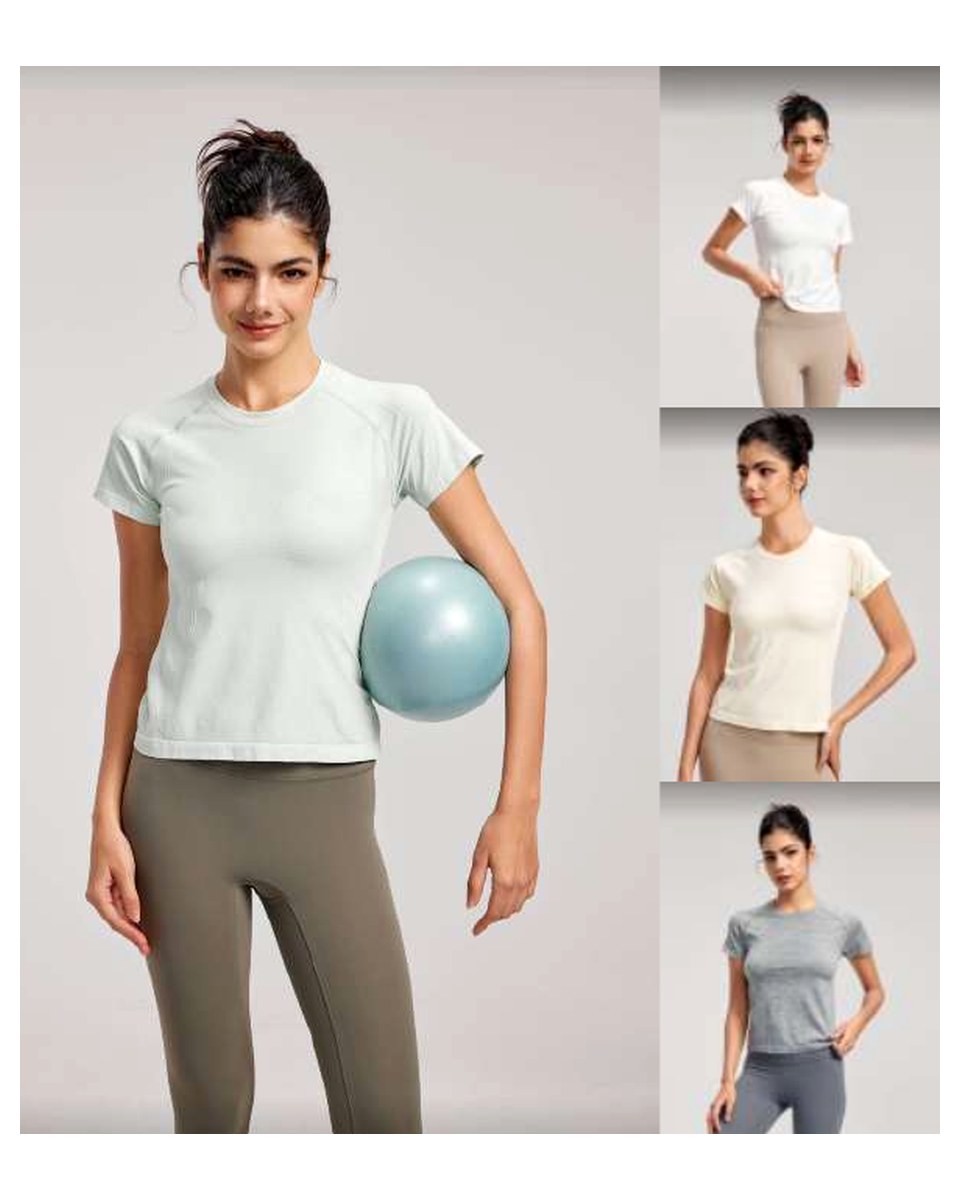
This catalogue photograph provides a product-direction reference for a multi-colour range. It does not establish current stock or an approved launch allocation. For the actual programme, confirm which colour and garment versions are offered, which images represent them and who updates the channel if an approved detail changes.
Keep technical records separate from display conventions. A channel may shorten a colour name for presentation, but the receiving and production records still need an unambiguous connection to the agreed reference. Resolve that mapping before labels and packing values are released. If a customer selects one variant, the channel and fulfilment team should be able to identify the intended physical item without interpreting a mood image.
How should logo, size-pack and packing decisions be approved?
Review the logo on the intended garment and material through the evidence agreed for the project. The logo-methods guide for stretch activewear helps frame questions about application and placement. Do not let a channel's preference for a larger or more visible logo bypass the product review. A change to the artwork application can create a new question even when the base style remains the same.
Define the size and colour allocation from the actual programme, not from a presumed standard pack. State whether quantities describe individual garments or sets, and identify any channel-specific grouping. If the studio and online store share a product but receive different allocations, keep those schedules separate while preserving one product identity. The supplier needs to know which differences concern quantity and packing and which concern the garment itself.
Use the activewear packaging checklist to prepare unit labels, bag or other pack instructions, and carton information where relevant. Ask the receiving operator to confirm its needs, then review the proposed example against those instructions. An approved garment sample does not automatically approve every barcode value, set configuration or destination allocation that appears later in the packing plan.
What should a shared product with three channel versions look like in the brief?
Consider an illustrative launch using one accepted training top. The studio wants its garments grouped for a named programme; the gym retail operator needs clear individual identification; the online team needs variant records connected to its approved product images. These are possible channel instructions, not customer cases or universal requirements. The brief should confirm whether the physical garment and branding are truly shared before treating the differences as packing and presentation only.
Create a master product record and a schedule for each channel. The master holds the accepted style, specification and product information. Each schedule states the offer, quantities, receiving instructions, relevant artwork or label differences, and responsible reviewer. If a channel requests a changed neckline, fabric or construction, return that request to product development rather than adding it as an unexplained note on the packing schedule.
Use the sample feedback guide when review produces a physical change. Record which versions are affected and which approvals need to reopen. For a wording correction, update the approved data record and the relevant channel presentation. This separation allows the team to fix the issue without unnecessarily changing every product or leaving one channel on an obsolete instruction.
What should be checked before releasing the first channel order?
Check the chain from accepted garment to customer-facing offer and receiving unit. The how-to-order workflow provides the general route from brief through sampling and production preparation. For this launch, use the checklist below to confirm that the channel-specific decisions have joined that product workflow rather than remaining in a separate marketing conversation.
- Confirm the channel, operator and product roles for the launch.
- Identify the accepted garment and each sellable variant or set.
- Separate existing-style branding from any custom-development request.
- Connect material, care, measurement and fit information to approved evidence.
- Name the owner who authorises the consumer-facing product wording.
- Match each product image to the actual version and offer it represents.
- Approve the relevant logo, label, hangtag and placement instructions.
- Confirm the size-colour allocation and whether quantities mean pieces or sets.
- Have the receiving operator confirm unit identification and grouping needs.
- Record which packing values are buyer-supplied and which party checks them.
- Keep marketing, return and customer-service decisions with their designated owners.
- Preserve the release record and the conditions that would reopen approval.
Keep unresolved fields visible. If a missing product-data approval prevents accurate presentation, record the hold instead of copying a reference value. If the issue is limited to one channel schedule, identify that scope precisely. A clear release record allows each team to understand what can proceed and what still needs a decision.
How should launch feedback guide replenishment and development?
Connect feedback to the channel, product version and information shown. A repeated size question may point to unclear guidance, an unavailable size or a garment concern; investigate the context before deciding which one it is. Similarly, a receiving problem may require a packing correction without changing the product. Ask the channel to preserve the actual observation so the brand can choose the right response.
If the response requires a new fit, material or construction, use the custom activewear development route. Keep that revision separate from a repeat of the accepted existing-style programme. For a reorder, confirm the version being repeated and any changed conditions. Previous approval is useful evidence, but it should not be stretched to cover an unreviewed garment or a different offer.
To prepare the supplier discussion, send your channel-based workout apparel launch brief with the product roles, selected references, physical changes, logo and size-pack plan, packing requirements and data-approval owners. Include the sample questions that remain open. inPACE Sports can review the proposed product and branding scope with those requirements in view, while the brand and channel retain responsibility for their approved commercial presentation and customer policies.
Product directions
Explore relevant activewear products
Use these product pages as practical references for your brief, then confirm materials, fit, customization, and production details through sampling.
Activewear Performance Collection
Choose existing garment references for the channel, then confirm the actual style, variant and branding scope.
View product directionHooded Training Set Reference
Discuss the role of a coordinated outfit and confirm whether the commercial unit contains one garment or an agreed set.
View product directionZip-Neck Set Reference
Use a specific product direction to map garment identity, images, size-colour allocation and the channel receiving plan.
View product directionFAQ
Buyer questions
Does each workout apparel sales channel need a different garment?
Not necessarily. The same approved garment may serve several channels while presentation, identification or packing differs. Confirm the product role and physical requirements first. If a channel requests a new fit, material or construction, treat that as development work rather than assuming it is only a change to the selling format.
What should a studio send for a branded activewear launch?
Send the programme, intended wearer, product references, branding scope, size-colour allocation, sellable unit and receiving needs. Identify who approves the artwork, garment and customer-facing explanation. Keep sample questions visible and confirm the actual existing-style availability and project conditions before treating the range as ready to order.
Who should approve composition, care and size information?
Assign a brand owner to the review and approval process for the actual product. The supplier provides relevant technical information within its scope, and the channel publishes the approved version. Keep the source evidence and product identity connected. Do not copy values from a reference garment or infer them from a photograph.
Can the factory's sample notes be used directly as product-page copy?
Only after the relevant facts have been reviewed and approved for the sellable product. Sample notes may describe a proposal, a temporary material or an unresolved fit issue. The brand should distinguish those states, approve the final wording and give the channel a controlled version that matches the actual offer.
How should a top-and-leggings photograph be used when pieces are sold separately?
Make the offer explicit and associate each image with the appropriate garment or variant. A styled outfit does not establish that both pieces are included. Keep the product page, staff explanation, identifiers and receiving instructions consistent with the approved commercial unit so the image does not create an unintended set offer.
Are marketing and return policies part of factory product approval?
They are separate responsibilities unless a particular service is explicitly agreed. The supplier can clarify manufacturing facts within its scope; the brand and channel own their approved marketing, commercial offer and customer-service arrangements. A garment sample approval should not be treated as approval of consumer policies or unsupported performance language.
When should a channel launch move from private label to custom development?
Move the physical product work into custom development when the request involves new fit, fabric, construction or another specification that the existing garment does not meet. Keep logo, label and packing work clearly scoped as well. Ask which sample evidence and approvals the proposed change requires before releasing a revised version.