
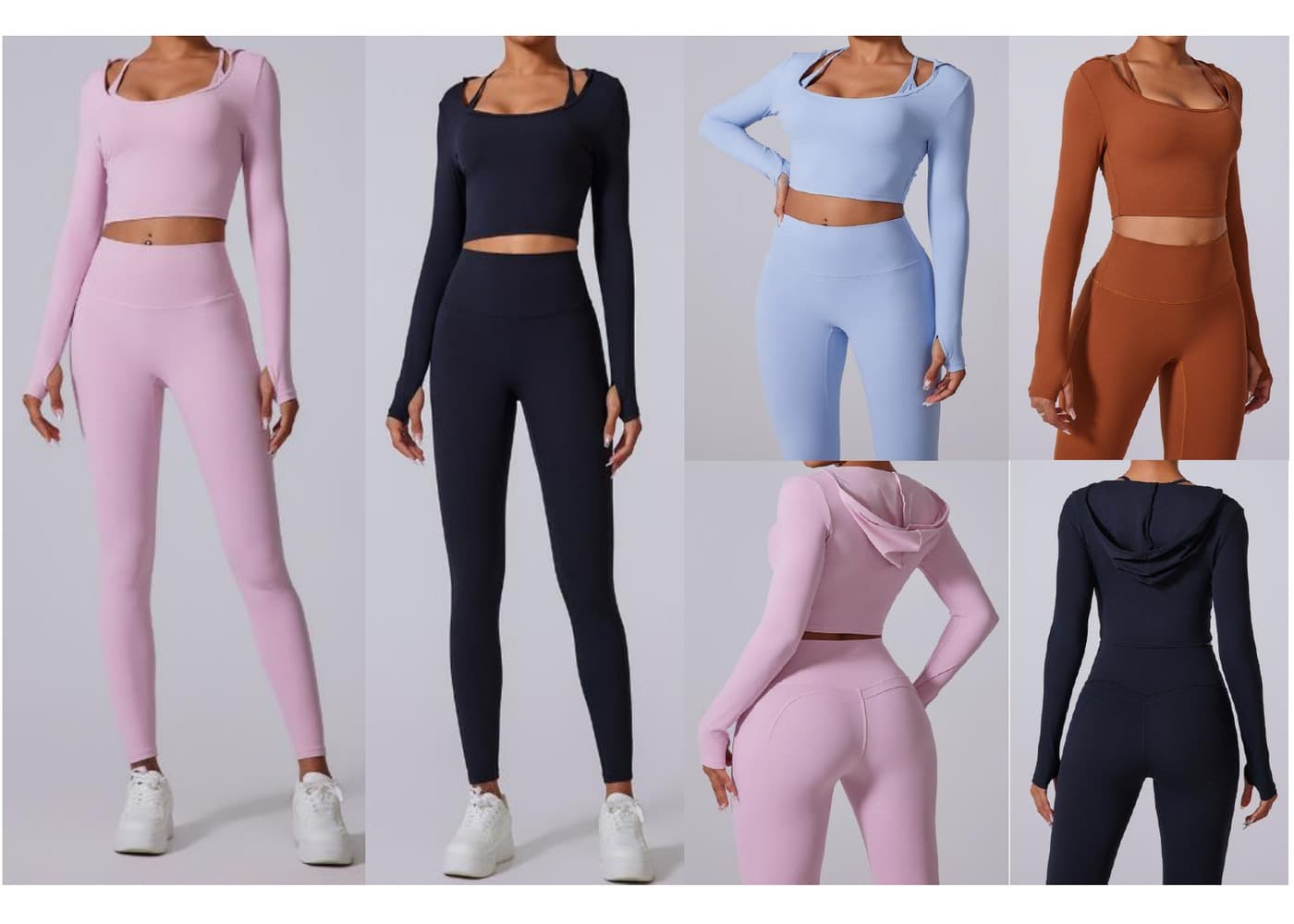
What should a private label activewear supplier Singapore enquiry establish?
When comparing a private label activewear supplier Singapore proposal, define what “start a line” means for the business. The first decision is which product promise the brand can support and approve with its available team. A larger catalogue does not automatically produce a clearer offer. Every added style, colour and size brings another set of decisions that someone must own.
This guide follows the private-label or light-customisation route: select an appropriate existing product direction and discuss logo, labels, hangtags and packing. It does not assume live stock, retail unit sales, dropshipping or a fixed minimum order. Availability, quantities, branding compatibility and commercial terms need confirmation for the actual proposal.
The private-label service is the relevant starting point. inPACE works from China with overseas buyers, including enquiries intended for Singapore. A Singapore-facing brief does not imply local manufacturing. Identify the actual manufacturing and receiving arrangements before using origin information in a label or a sales description.
If the product needs a new fit, material or construction, mark that change immediately. It belongs in a custom-development discussion with its own sample questions. Calling a project private label should never hide a substantial garment change from the supplier or the person approving the launch.
Which first-release question should the range answer?
Choose a clear commercial learning question. A studio may want to learn whether customers understand a coordinated training offer. An online brand may want to assess a particular silhouette within its existing audience. These are illustrative situations, not claims about Singapore-wide demand or reported inPACE customers. Use evidence from your own business to choose the question.
Select product roles around that question. An anchor product should carry the main offer; a supporting item should have a reason to be included. A third product is useful only when it contributes a distinct role the team can explain. Avoid adding a style solely because it is available in a supplier presentation.
The Activewear Performance collection helps identify possible references. Write one sentence for each candidate: who it is for, what role it plays and what needs to be checked. If two candidates have the same role, decide which comparison the launch is intended to make rather than treating both as essential.
Separate launch ambition from order commitment. A planning worksheet can include potential later products without placing them into the first approved range. This keeps the current sampling and branding scope manageable while preserving useful ideas for a later decision.
How can a brand reduce variants without losing the purpose of the range?
Map style, colour and size as separate dimensions. A style is a garment design; a sellable variant combines that design with the choices the customer can buy. Assign a stable internal code to each variant. This prevents a colour nickname or a size-letter change from creating confusion between design, production and receiving teams.
Choose colours because they support the initial offer, not because a broad palette looks impressive on a board. Explain whether a colour is intended to coordinate across garments or stand alone. A shared colour name does not establish that different fabrics will have the same appearance, so identify the actual combinations that require review.
Keep the size decision grounded in the intended product and audience evidence. Do not infer a complete size range from a single sample or from a general statement about local body types. Ask how the proposed size information was established and what the brand still needs to assess before making it customer-facing.
A compact variant matrix also makes missing decisions visible. Mark each cell as proposed, under review, approved or excluded. Do not use a blank cell to mean several different things. If a colour-size combination is excluded, record that choice explicitly so that it does not reappear accidentally in packing or sales files.
What evidence is needed to release each part of the line?
Use a release table to distinguish an attractive idea from a product the team is ready to approve. The evidence should refer to the actual item and version, not a general supplier assurance.
| Release area | Evidence to keep | Owner to name | Reason to hold |
|---|---|---|---|
| Product role | One-sentence use and channel brief | Brand product owner | The item has no clear role in the first range |
| Garment identity | Style reference, material details and version | Product and supplier contacts | The sample and quotation describe different items |
| Fit and size | Agreed measurement record and sample observations | Fit reviewer | The size description exceeds the available evidence |
| Branding | Approved artwork, method and garment placement | Brand design approver | A logo is approved only as a digital file |
| Product information | Verified source facts and approved market wording | Singapore-market reviewer | Claims or label wording remain unsupported |
| Packing | Variant codes, contents and identification instructions | Operations owner | A receiver cannot distinguish the intended units |
| Release decision | Dated status with open issues and exclusions | Final release owner | Approval is assumed from silence or a launch date |
The table is not a legal certificate or a supplier rating. It is a way to identify who can answer the next question. In a small business one person may hold several roles, but the distinctions still matter. A designer approving logo position is not necessarily approving the final product description or order quantity.
How should a private-label sample be reviewed?
First confirm that the sample represents the proposed garment. Record its style, size, colour, material and any differences from the quotation. If a supplier uses a reference piece for early discussion, identify which decisions it can support. Do not silently treat a convenient substitute as the final sellable product.
Review the intended use before focusing on packaging. Assess the fit questions relevant to the product and record observations consistently. For a top, this may involve openings, length and movement. For a bottom, it may involve rise, waistband and pocket behaviour. The project team chooses the appropriate method and acceptance conditions for the actual garment.
The sampling and order process can help organise the sequence. Separate garment acceptance from branding acceptance. A sample without the proposed logo cannot prove its final placement or appearance. A decorated reference in a different fabric may also have limits that should remain visible in the approval record.
Keep one current comment list. When a review changes the garment itself, stop and assess whether the project still fits the original private-label scope. A request for a different pattern or construction may require custom development rather than a routine branding revision. Resolve that boundary before relying on the earlier quotation or launch plan.
What does a product reference communicate, and what remains unknown?
A photograph can communicate silhouette, visible openings and the relationship between pieces. It does not identify every material, establish comfort or confirm the proposed size information. Use the reference as a starting point and annotate the feature you want to discuss, especially when several garments appear in one image.
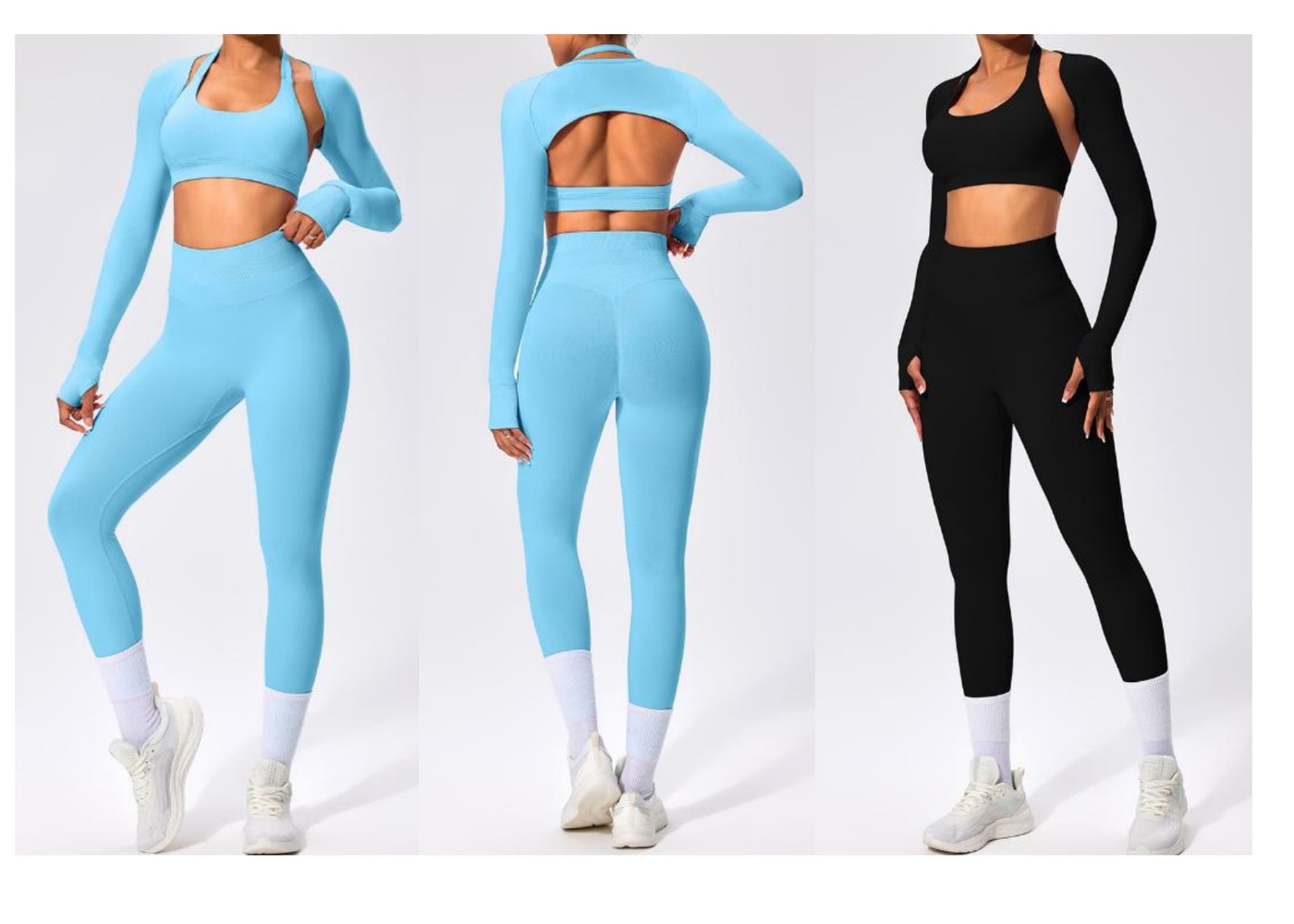
Range-planning reference from the project library. The image shows visible product relationships; it does not confirm stock, material specifications, order minimums or performance results.
For each pictured item, note whether it is part of the intended sellable offer or only a styling reference. A photograph showing a top, layer and bottom does not establish whether they share one product code or are packed separately. The brand must decide that structure and communicate it to the supplier.
If a reference includes features the brand does not want, mark them as excluded. This is especially useful when a supplier is comparing several catalogue directions. A simple annotation prevents a visual reference from becoming an accidental instruction to copy every visible detail.
How should logo, label and hangtag decisions be separated?
Create separate approvals for artwork content, placement and physical application. Artwork content includes the correct logo version and any accompanying text. Placement concerns its location and size on the garment. Physical application concerns how the chosen method behaves on the actual material and garment area. One approval does not automatically answer all three.
The custom-logo wholesale guide explains this narrower branding route. For a first release, keep the number of untested combinations visible. A different fabric or logo location may need its own evidence even when the same artwork is reused across the collection.
Treat labels and hangtags as controlled product information. Assign the wording owner, file revision and approval date. Keep supplier-provided facts distinct from the brand’s own product language. If the sample changes, check whether the text still describes the actual item before printing or attaching it.
Ask how unused or superseded artwork will be identified in the project handoff. An old logo file can remain visually familiar enough to escape a quick check. Use a clear revision reference and one approved source rather than asking the production team to choose between several attachments named “final.”
What must be decided before the online and studio channels share a product?
Decide whether the same garment is being sold in both channels or whether the channels have different variants. Keep any differences explicit: colour, set contents, packing, labels or included accessories. A shared marketing name can conceal an operational difference unless the underlying item codes remain clear.
Give staff the same approved product facts used by the online team. If a studio team explains the garment differently from the website, the brand may receive inconsistent customer expectations and feedback. Identify which statements are factual, which are styling suggestions and which still require evidence before anyone uses them as a product claim.
Use the e-commerce private-label guide for the detailed product-data handoff. This first-release guide focuses on deciding what is ready to launch. The supporting product record should make that decision usable across channels without asking each team to interpret the sample independently.
Keep photographs aligned with the approved version. If a shoot used a development sample, record any differences that affect what a buyer sees. Do not let a launch deadline quietly convert an outdated image into proof of the final product. Resolve the discrepancy before the brand presents the item as the approved offer.
Who reviews Singapore consumer-facing information?
Appoint a responsible reviewer for the actual product, sales route and consumer-facing statements. The Competition and Consumer Commission of Singapore’s CPFTA guidance explains the consumer-protection framework and links to the legislation. Use it as an official starting point for the appropriate local review, not as evidence that a supplier sample or product page has been approved.
Ask the reviewer what information and evidence the brand needs for its specific offer. Provide the material identity, intended use, proposed care wording, origin information and any performance statements being considered. The reviewer determines the applicable requirements; this working list is not a universal legal label template.
Keep the final wording tied to a product code and revision. A private-label logo does not transfer every information responsibility to the factory. The supplier can provide agreed manufacturing facts and work from approved files, while the brand must ensure its own product presentation remains accurate for the actual item and channel.
If an item is changed or substituted, reopen affected descriptions before release. Do not preserve a familiar claim simply because it appeared on an earlier product page. A clear “information approval pending” status is more useful than an unsupported assurance that all versions of the product are equivalent.
What packing decision is easiest to overlook in a small launch?
Define the unit the customer will receive. If top and bottom are sold as a set, specify the permitted size pairings and how the set is identified. If they are sold separately, give each item its own variant record. The manufacturing and packing teams should not have to infer the selling unit from a lifestyle photograph.
Record pack contents, garment identification and any inserts or tags in one instruction. Distinguish a customer-facing product name from the operational code used to check a shipment. Both can be useful, but only if the relationship is consistent and the receiving team can find it quickly.
Review the packing sample as a practical receiving task. Ask a person who did not write the instruction to identify the style, colour, size and contents from the proposed pack. If they need to open several units or guess between similar names, revise the identification before treating the packing as approved.
Discuss the handoff through the manufacturing process. Confirm who checks that the approved garment, label and packing records remain aligned. If a late change affects one component, identify the connected instructions that must be updated before the item is released.
How should the team make a go, hold or remove decision?
Use three clear outcomes for each product: release within the approved scope, hold for named evidence, or remove from this launch. A hold should identify the unresolved question, responsible person and next action. “Waiting for feedback” is too vague if nobody knows which decision the feedback is meant to support.
Evaluate the range as well as individual products. An anchor item being held may change the reason for including a supporting item. Revisit the original learning question before releasing a fragment of the planned collection. The team may choose a narrower launch, but that should be a conscious commercial decision.
Do not allow a launch date to act as technical approval. Record which tasks can progress while another question remains open and which commitments depend on its resolution. For example, an internal range presentation can be prepared while final product wording is still under review, provided it is not mistaken for the approved customer offer.
Use a short release meeting or written sign-off to close the decision. Each owner should confirm the relevant item and revision, including exclusions. Preserve the final decision where the supplier, brand and receiving team can refer to the same version without reconstructing the conversation.
What should be recorded after the first release?
Plan the feedback fields before launch so that the team can interpret what happens. Keep the product code, variant, channel and issue type together. A fit question, packing mistake and preference for a different colour are different signals; combining them into one complaint count can lead to the wrong product change.
Distinguish unavailable variants from rejected variants. If a customer could not choose a certain size or colour, that interaction does not show how they would have assessed the actual product. Record the limitation when interpreting feedback. Avoid claiming that a small first release establishes a whole market’s preferences.
For a proposed reorder, compare the approved baseline with the requested changes. Identify whether it is a repeat of the same specification or a new version needing further review. The sample-to-production guide explains why the approved record should remain connected to later manufacturing decisions.
Carry forward both resolved and unresolved information. A successful first shipment does not prove that every future material, colour or branding change will behave the same way. Keep the reorder brief specific enough to show what is retained, what changes and who will approve the difference.
What should the Singapore first-release checklist contain?
Prepare the following before asking a supplier to confirm the proposed scope:
- State the first release’s buyer question and intended sales channels.
- Assign a clear role to every proposed garment and remove unexplained additions.
- List the style-colour-size variants with stable internal identifiers.
- Identify the existing product direction and every requested branding change.
- Flag any fit, fabric or construction change that needs custom development.
- Record the sample identity, review purpose and limits of substitution.
- Separate garment, artwork, placement and application approvals.
- Name the Singapore-market reviewer for labels and customer-facing wording.
- Define each sellable unit, including set contents and size pairings.
- Confirm the packing identification and receiving instructions.
- Record the release, hold or remove decision for each product revision.
- Define the feedback and reorder fields needed to assess the first release.
Check that each line has an owner and a current status. The purpose is not to generate paperwork for its own sake. It is to prevent one unclear approval from being interpreted differently by the designer, supplier, sales team and receiver.
What can inPACE review before the first commitment?
inPACE can discuss suitable product references, private-label branding, samples, fabric and fit questions, production coordination, QC and packing within the confirmed scope. The useful enquiry is a compact range brief with a stated purpose and an honest list of open decisions. It does not need to pretend that every launch question has already been solved.
Use the Yoga and Activewear collection when those silhouettes match the intended offer. Keep product references linked to specific garment roles, and explain what should remain unchanged. If a new garment specification is essential, discuss it as a separate development requirement before relying on a private-label proposal.
Then send the first-release brief with the core range, channels, variants, logo and label scope, packing unit, sample questions and approval owners. Ask for the proposal’s assumptions and exclusions. This gives both teams a concrete basis for deciding what can move forward and what evidence is still needed.
Product directions
Explore relevant activewear products
Use these product pages as practical references for your brief, then confirm materials, fit, customization, and production details through sampling.
Private Label Activewear
Define logo, labels, hangtags and packing for a suitable existing product direction before approving the first release.
View product directionActivewear Performance
Select a core garment reference and explain its role in the initial range and the evidence needed for approval.
View product directionYoga and Activewear
Compare silhouettes for a studio or training offer, then confirm the actual garment and branding scope.
View product directionFAQ
Buyer questions
Does private label activewear supplier Singapore imply local production?
No. The phrase can describe a Singapore brand’s sourcing requirement. inPACE works from China, and the actual manufacturing, receiving and origin responsibilities must be confirmed for the project. Do not infer a garment’s origin from the buyer’s address or a search phrase.
How many products should a new private-label line include?
There is no universal number. Include only products with a clear role in the first release and a sample or approval process the team can manage. Keep possible later additions outside the approved launch scope until the brand has a reason and sufficient evidence to include them.
When does a private-label request become custom development?
When the request changes the garment’s fit, fabric, construction or other product specification, it needs a development discussion. A logo, label or packing change can be a narrower scope if the existing garment is suitable. Confirm the boundary before treating an earlier quotation or sample as applicable.
Can one sample approve all colours and sizes?
Do not assume so. Record the sample’s identity and the decisions it can support. The intended range may require additional fit, colour, material or branding evidence. Keep each approval linked to the relevant variant or clearly defined group of variants and identify what remains open.
Who approves the Singapore product description and labels?
The brand should appoint the appropriate local reviewer for the actual product and channel. The supplier can provide agreed material and manufacturing facts and use approved files. Artwork approval alone does not establish that every consumer-facing statement or label requirement has been reviewed.
Should a set share one code or separate garment codes?
That depends on the sellable unit. If garments are sold together, define the contents and permitted size pairing while retaining enough item-level identification for receiving. If sold separately, distinguish their variants clearly. Do not leave the packing team to infer the structure from a photograph.
What makes a reorder ready for discussion?
Provide the approved baseline, actual product feedback, affected variants and a clear list of retained or changed requirements. Separate a repeat specification from a revised product. Ask which changes require new samples or approvals rather than assuming the first release automatically supports every later version.