
Recouvrement en premier
Que signifie pour un acheteur de B2B les vêtements de marque OCR privés?
La marque possède la direction de la collection: ce dont l'athlète a besoin, quels vêtements sont inclus, comment ils sont et s'adaptent, quelles couleurs représentent la gamme, et comment les produits finis sont étiquetés et emballés. L'usine soutient le parcours de développement, mais un résultat utile dépend de l'acheteur rendant les hypothèses commerciales et de produit clés claires avant que les détails de production ne soient traités comme définitifs.
L'OCR se chevauche avec la course, la gymnastique et la remise en forme hybride, mais un bref d'obstacle extérieur ajoute des questions sur le terrain, l'humidité, l'escalade, le rampage, l'abrasion, la couverture et le changement de température. Guide de l'acheteur de vêtements OCR de définir ces conditions. Si la collection sert également les clients de run-and-fonctionnel-fitness, le Comparaison des vêtements d'entraînement HYROX vs OCR aide à séparer la base de produit partagée du mémoire spécifique au scénario. Pour une conversation B2B de bout en bout, utilisez le solution de développement de vêtements de course hybrides.
Planification des assortiments
Quels sont les produits qui font partie d'une première collection de vêtements de marque privée OCR?
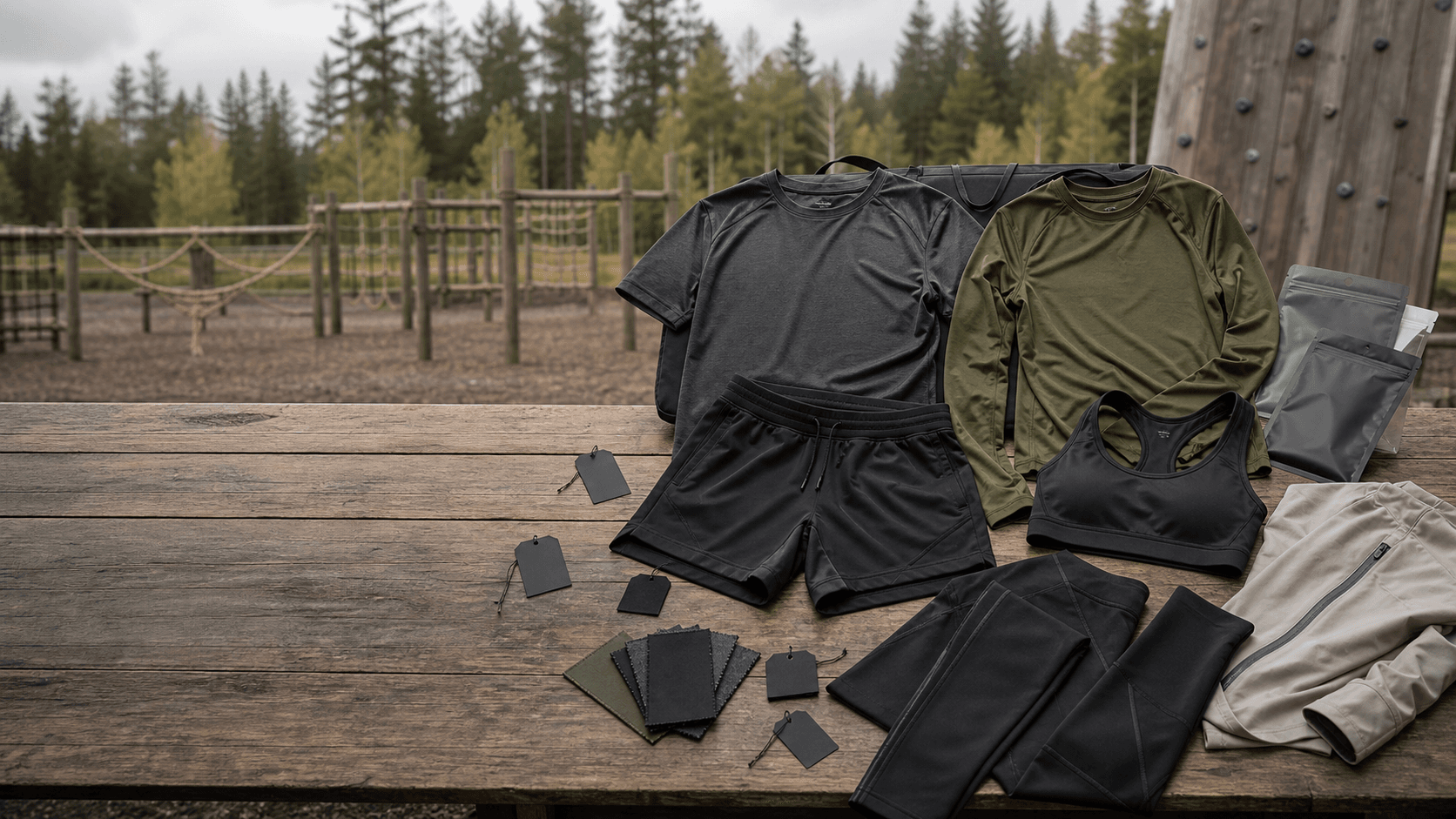
Une première collection efficace a généralement des rôles de vêtement clairs plutôt qu'un grand nombre d'UCQ peu liés. Commencez par les produits que votre athlète cible est le plus susceptible de porter, puis décidez quels rôles doivent être résolus pour l'entraînement à l'extérieur et qui peuvent partager une silhouette d'entraînement existante. Une marque peut choisir un tee court et technique de base comme sa fondation, ajouter un fond de couverture ou une pièce de support pour le client prévu, et ajouter une couche seulement lorsque son climat ou cas d'utilisation rend ce produit commercialement utile.
Les acheteurs peuvent revoir les styles de performance actifwear Le catalogue est une référence de développement, et non un substitut au dossier OCR: chaque article a encore besoin du bon comportement en tissu, des détails de construction, de la marque et du test d'échantillon pour le cas d'utilisation finale.
| Rôle des produits | Pourquoi il appartient à la capsule | Questions relatives au développement du Bureau | Décision d'achat |
|---|---|---|---|
| T-shirt ou réservoir technique | Un haut de course et d'entraînement qui établit l'approche de la main et du logo de collection | Chaleur, sueur, mouvement des bras, mouvement de l'ourlet, et confort graphique ou logo | Décidez s'il s'agit d'un style de base partagé ou si vous avez besoin d'une couverture spécifique à l'OCR ou d'une mise à jour de construction. |
| Formation courte | Une option polyvalente de bas-corps pour la course, les chariots et l'entraînement général | Stabilité du bandeau, rebond de poche, position du cordon de serrage, choix de la doublure et zones de contact | Utilisez la fiche produit pour indiquer où le court sera porté et si le sol humide ou l'escalade change la route de conception. |
| Legging ou le fond de couverture | Une option pour les athlètes qui ont besoin d'une plus grande couverture dans des conditions fraîches ou de contact au sol | Rétablissement de l'ajustement, exposition au genou et au siège, emplacement de la couture, opacité et zones d'abrasion | Ne présumez pas qu'un legging de studio est prêt pour les obstacles extérieurs sans examen d'échantillon spécifique à un scénario. |
| Soutien-gorge sportif ou plateau de soutien monté | Un produit qui peut compléter un assortiment de femmes ou coordonner avec des styles de fond partagés | Niveau de support, positionnement de la sangle, doublure, confort de couture, couverture et emplacement du logo | Définir l'activité, soutenir les attentes et tester les mouvements avant de décider de la construction finale. |
| Couche d'échauffement légère | Une pièce météo ou de voyage pour une capsule, plutôt qu'un ajout automatique à chaque lancement | Conditionnement, ventilation, construction des manchons, garnitures et le rôle qu'elle joue avant ou après l'entraînement | Ajoutez-le seulement lorsque le climat, l'athlète et la stratégie d'assortiment de la marque lui donnent une raison claire d'exister. |
Tissu et construction
Comment choisir le poids des tissus, les panneaux et les coutures pour les produits OCR?
Un haut technique peut avoir besoin d'une légère, respirante mainfeel et confortable récupération après la sueur. Un court peut avoir besoin de mouvement stable et des décisions pratiques de poche ou de doublure. Un legging peut avoir besoin de couverture, de récupération stretch, et une plus grande attention à l'exposition au genou, au siège ou aux coutures. La bonne direction matérielle dépend du produit, du climat, de l'athlète, du niveau de contact prévu, des attentes en matière de couleur et de logo, et de la direction du prix de la marque.
Le même principe s'applique aux panneaux et aux coutures. Le mesh peut être utile pour la ventilation, mais il peut ne pas convenir à toutes les zones de contact. Une couture peut sembler propre sur un échantillon d'ajustement mais devient perceptible lorsqu'un athlète rampe, monte ou travaille pendant l'humidité. tissus et garnitures aperçu peut commencer la conversation; le mémoire de collecte devrait expliquer ce que chaque produit clé doit faire avant qu'un itinéraire de construction ne soit confirmé.
Présentation de la marque
Comment les détails de l'étiquette privée devraient-ils traverser une capsule de l'OCR?
Une collection d'étiquettes privées est plus qu'un logo placé sur un vêtement. C'est un ensemble de décisions répétables qui aide l'acheteur à reconnaître la gamme par le biais du produit, de la couleur, des étiquettes, de l'emballage et de la réception. Ces décisions doivent être prises assez tôt pour apparaître dans l'examen d'échantillon. Une méthode de logo qui fonctionne sur un tee technique peut avoir besoin d'un placement différent sur un legging extensible ou une couche extérieure légère.
Méthode du logo
Choisissez une direction de logo qui convient à l'étirement, à la texture, au placement, à l'attente de lavage et à l'utilisation du produit.
Architecture des couleurs
Définir une direction de couleur de base et identifier les styles, les garnitures, les logos et les étiquettes doivent correspondre à travers la capsule. Une gamme limitée et cohérente est plus facile à évaluer que de nombreux coloris non liés.
Étiquettes et système de taille
Confirmer les étiquettes de cou, les étiquettes de soins, les étiquettes de taille, le placement et la gamme de tailles en même temps que les commentaires d'ajustement.
Emballage et réception
Les étiquettes de suspension, les sacs en poly, le code à barres ou le sticker de taille, la direction de pliage, les marques de carton et les exigences de destination.
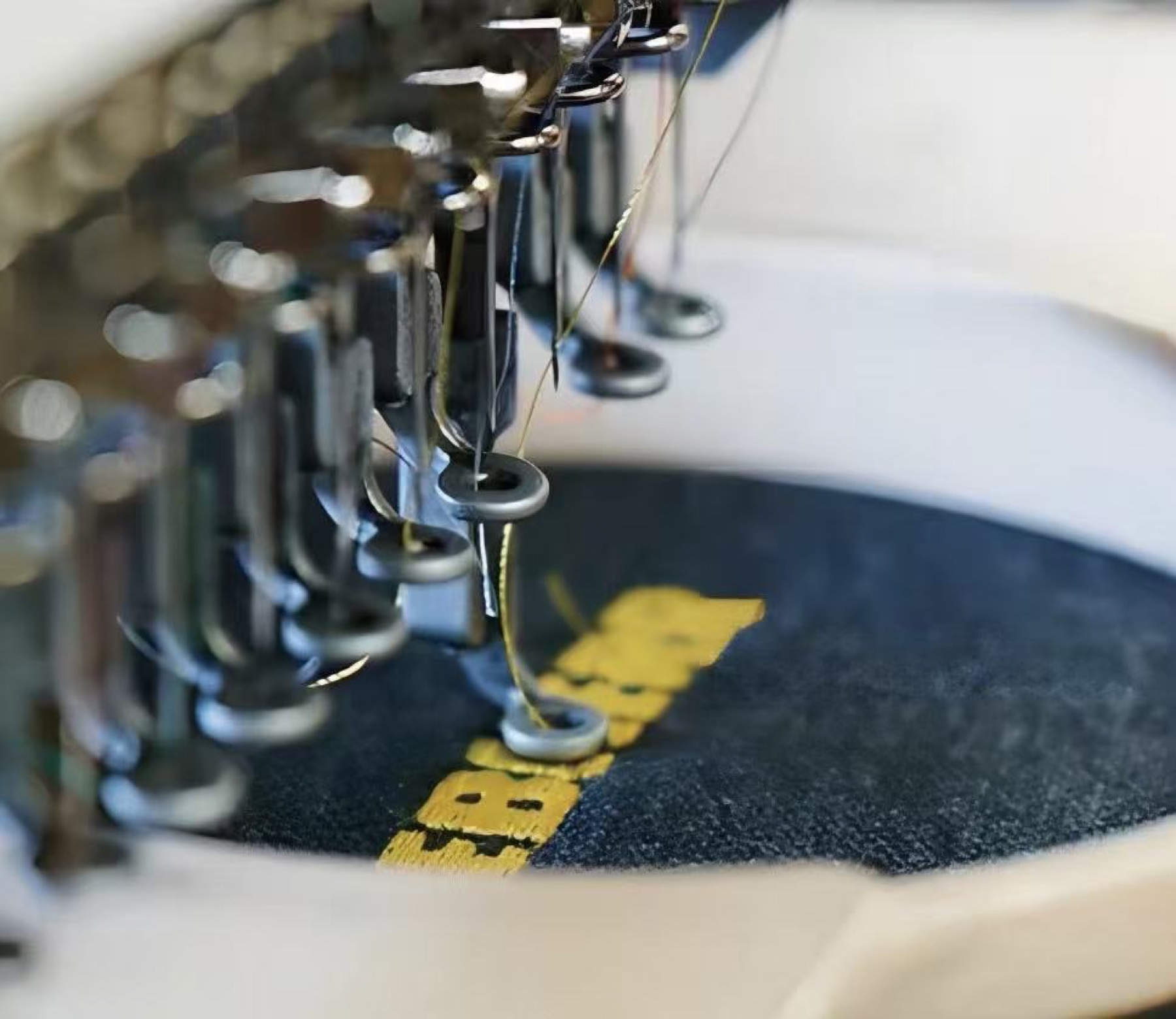
La méthode du logo, les étiquettes et l'emballage doivent être définis comme un système coordonné, puis transportés de façon cohérente à partir de l'échantillon approuvé jusqu'à la finition et à l'emballage.
Pour une vue plus large des identifiants de marque et des composants de paquet, voir le service de vêtements de sport sous marque privée. Gardez les décisions de produits OCR liées à ce plan: les étiquettes et les emballages doivent servir la même collection, le même marché et la même route de commande que le vêtement lui-même.
Ajustement, couleur et taille
Comment un plan de marque devrait-il s'adapter, couleur, et calibrage avant le premier échantillon?
Un acheteur peut préférer un t-shirt d'entraînement serré, une couche plus décontractée, un court avec une couverture particulière, ou un legging avec une ceinture stable mais non trop restrictive. Le slip devrait inclure des styles de référence, une gamme de tailles, des mesures de cible où on le sait, et des notes écrites sur ce que la marque veut retenir ou changer. Cela crée un point de départ utile même quand un pack technique complet n'est pas encore disponible.
La couleur est aussi une décision de produit, non seulement une décision de marketing. Expliquer quelles couleurs sont le noyau, qui sont facultatifs, si les hauts et les bas doivent coordonner, comment le logo doit lire sur chaque colorway, et si un produit a besoin d'une direction de couleur plus pratique à l'extérieur. L'usine peut ensuite discuter de la disponibilité des couleurs et de toute décision de développement connexe sans traiter un grand tableau d'humeur comme une approbation finale.
Apprentissage par petits lots
Comment une marque devrait-elle utiliser des tests de petits lots avant la reconstitution?
Un petit programme initial peut aider un acheteur à savoir pour quels rôles de produits méritent un plan de répétition plus grand, mais il devrait encore avoir un processus d'approbation réel. Tester l'échantillon ou courir tôt dans les conditions pour lesquelles la collection est conçue. Enregistrer ce qui arrive au mouvement, à la sensation de tissu, à la couverture, coutures, poches, comportement logo, étiquettes, et emballage. L'objectif n'est pas de rendre chaque projet plus complexe; c'est résoudre les quelques risques qui seraient coûteux à découvrir après une décision de production plus grande.
Définir le rôle de l'athlète, de l'environnement d'entraînement et du vêtement avant le début des essais.Courir, grimper, ramper, porter, s'agenouiller et se déplacer au chaud ou humide lorsque ces conditions correspondent à la promesse du produit.Capturer les commentaires d'ajustement et de mouvement séparément des commentaires de logo, d'étiquette, de couleur et d'emballage.Utilisez des photos concises et des notes écrites pour montrer l'emplacement d'une couture, d'une garniture ou d'un problème de construction.Examiner ce qui doit changer dans l'échantillon suivant et ce qui peut rester ouvert jusqu'à ce que le plan commercial soit plus clair.Confirmer les renseignements sur le produit final, la marque, les étiquettes, l'emballage et la taille avant de traiter les détails en vrac comme approuvés.
Voie de production
Comment peut-on préparer une collection d'OCR de marque privée pour une commande répétée?
Une commande répétée est plus facile à discuter lorsque la première collecte documente ses décisions. Conservez ensemble l'échantillon approuvé, les mesures, la direction du tissu, colorway, la méthode du logo, les étiquettes, l'emballage et la référence de qualité. Identifier les changements intentionnels pour la prochaine course et quels éléments doivent rester cohérents.
Le parcours de production reste conditionné par le plan de commande complet. La disponibilité du tissu, colorways, logo et condition d'emballage, la complexité du style, la quantité et le marché de livraison affectent tous ce qui peut être examiné ou confirmé. le processus de commande organiser ces exigences avant de demander la prochaine soumission ou discussion sur l'échantillon.
Limpidité des marques
HYROX est référencée ailleurs sur ce site uniquement comme un contexte de formation hybride et de préparation de course. HYROX est une marque déposée de son propriétaire respectif. inPACE n'est pas affiliée à HYROX ou endossée par HYROX.
Prochaine étape
Construisez le dossier de la marque privée avant que la collection devienne un problème de production
Une collection pratique d'OCR n'a pas besoin de résoudre tous les sports, le climat et le client à la fois. Il a besoin d'un athlète clair, d'un petit groupe de produits ciblés, d'hypothèses environnementales crédibles et de détails de marque privée qui peuvent être répétés d'échantillon en vrac. Commencez par les styles qui expriment le point de vue de la marque, puis donnez à l'usine suffisamment de contexte pour discuter du matériel, de la construction, de l'étiquetage, de l'emballage et des décisions d'essai qui rendent la gamme utilisable.
Discutez de votre mémoire de marque privée OCR
Cadre d'acheteurs de longue durée
Comment un acheteur peut-il transformer cette recherche en une décision prête à la production?
La tâche centrale dans construire une collection de vêtements de marque privée OCR décide quels vêtements, matériaux, détails de construction, composants de marque, essais d'échantillons, règles d'emballage et dossiers de réapprovisionnement appartiennent à une gamme ciblée d'obstacles-formationCette décision ne peut être prise à partir d'un prix global, d'une photo de produit ou d'une déclaration générale sur la personnalisation. Il faut un dossier qui relie l'objectif commercial au vêtement, au matériau, à l'ajustement, à la construction, à la marque, à la quantité, aux contrôles de qualité, à l'emballage et à la destination. Lorsque ces éléments sont visibles ensemble, un acheteur peut poser des questions plus précises et une usine peut expliquer le parcours sans prétendre que les détails ouverts sont déjà confirmés.
L'objectif du cadre ci-dessous n'est pas de transformer un fondateur de marque ou un acheteur en un technicien en vêtements. Il est de rendre la responsabilité et la preuve claires. L'acheteur définit les besoins du client et de l'entreprise, partage ce qui est connu, et identifie les décisions qui importent. raccorder les exigences de la collection en matière d'extérieur et d'obstacles au développement spécifique du produit et à un système de marque privée cohérent. Les deux parties enregistrent ensuite ce qui a été examiné, ce qui reste conditionnel, ce qui doit être approuvé physiquement, et quelles informations guideront la production ou une nouvelle commande ultérieure.
1
Construisez autour de quelques besoins des athlètes
Commencez par les rôles essentiels de base, de fond, de support et de couche plutôt que de remplir la collection de produits similaires qui divisent les quantités de commande.
Dans le cadre de cette décision, l'acheteur doit indiquer le résultat escompté, fournir les éléments de preuve les plus proches disponibles et identifier ce qui est flexible. Le fournisseur peut alors expliquer les implications du produit ou du procédé et signaler toute dépendance à l'égard de la disponibilité du tissu, de la couleur, de la construction, de la méthode du logo, des composants, de la quantité ou de l'emballage.
Enregistrez le résultat à l'intérieur un fichier de collection OCR reliant chaque UGS à l'environnement, le rôle du produit, le matériau, l'ajustement, la construction, l'image de marque, les essais, l'emballage et les informations de commande répétée. Inclure la date, le dossier ou l'échantillon pertinent, la personne responsable de la prochaine mesure et l'état de la décision. Si un changement ultérieur affecte l'ajustement, le matériel, l'exécution, la marque, l'assortiment ou la préparation de la livraison, retourner à ce dossier et déterminer quelles approbations connexes doivent être vérifiées à nouveau.
2
Attribuer les priorités matérielles par UGS
Une couche supérieure, courte, legging, soutien-gorge de sport, et la couche externe peuvent partager la direction de marque sans forcer le même poids, stretch, surface, ou le même comportement de séchage.
Dans le cadre de cette décision, l'acheteur doit indiquer le résultat escompté, fournir les éléments de preuve les plus proches disponibles et identifier ce qui est flexible. Le fournisseur peut alors expliquer les implications du produit ou du procédé et signaler toute dépendance à l'égard de la disponibilité du tissu, de la couleur, de la construction, de la méthode du logo, des composants, de la quantité ou de l'emballage.
Enregistrez le résultat à l'intérieur un fichier de collection OCR reliant chaque UGS à l'environnement, le rôle du produit, le matériau, l'ajustement, la construction, l'image de marque, les essais, l'emballage et les informations de commande répétée. Inclure la date, le dossier ou l'échantillon pertinent, la personne responsable de la prochaine mesure et l'état de la décision. Si un changement ultérieur affecte l'ajustement, le matériel, l'exécution, la marque, l'assortiment ou la préparation de la livraison, retourner à ce dossier et déterminer quelles approbations connexes doivent être vérifiées à nouveau.
3
Examiner la construction faisant face aux obstacles
Les coutures, les poches, les fermetures éclair, les renforts, les fixations, les ourlets, l'élasticité et l'exposition aux garnitures nécessitent des décisions axées sur le but pour l'environnement d'entraînement prévu.
Dans le cadre de cette décision, l'acheteur doit indiquer le résultat escompté, fournir les éléments de preuve les plus proches disponibles et identifier ce qui est flexible. Le fournisseur peut alors expliquer les implications du produit ou du procédé et signaler toute dépendance à l'égard de la disponibilité du tissu, de la couleur, de la construction, de la méthode du logo, des composants, de la quantité ou de l'emballage.
Enregistrez le résultat à l'intérieur un fichier de collection OCR reliant chaque UGS à l'environnement, le rôle du produit, le matériau, l'ajustement, la construction, l'image de marque, les essais, l'emballage et les informations de commande répétée. Inclure la date, le dossier ou l'échantillon pertinent, la personne responsable de la prochaine mesure et l'état de la décision. Si un changement ultérieur affecte l'ajustement, le matériel, l'exécution, la marque, l'assortiment ou la préparation de la livraison, retourner à ce dossier et déterminer quelles approbations connexes doivent être vérifiées à nouveau.
4
Créer une hiérarchie de logos cohérente
Les marques primaires, les marques secondaires, le placement, la couleur, l'échelle et la méthode d'application doivent se sentir liées tout en s'adaptant à différents tissus et zones de contact.
Dans le cadre de cette décision, l'acheteur doit indiquer le résultat escompté, fournir les éléments de preuve les plus proches disponibles et identifier ce qui est flexible. Le fournisseur peut alors expliquer les implications du produit ou du procédé et signaler toute dépendance à l'égard de la disponibilité du tissu, de la couleur, de la construction, de la méthode du logo, des composants, de la quantité ou de l'emballage.
Enregistrez le résultat à l'intérieur un fichier de collection OCR reliant chaque UGS à l'environnement, le rôle du produit, le matériau, l'ajustement, la construction, l'image de marque, les essais, l'emballage et les informations de commande répétée. Inclure la date, le dossier ou l'échantillon pertinent, la personne responsable de la prochaine mesure et l'état de la décision. Si un changement ultérieur affecte l'ajustement, le matériel, l'exécution, la marque, l'assortiment ou la préparation de la livraison, retourner à ce dossier et déterminer quelles approbations connexes doivent être vérifiées à nouveau.
5
Planifier les étiquettes et l'emballage par canal
L'information sur l'entretien et la taille, les étiquettes de suspension, les champs de codes-barres, les sacs, le pliage, l'assortiment et les marques de carton doivent correspondre à l'itinéraire du détaillant, du studio, du distributeur ou de l'exécution.
Dans le cadre de cette décision, l'acheteur doit indiquer le résultat escompté, fournir les éléments de preuve les plus proches disponibles et identifier ce qui est flexible. Le fournisseur peut alors expliquer les implications du produit ou du procédé et signaler toute dépendance à l'égard de la disponibilité du tissu, de la couleur, de la construction, de la méthode du logo, des composants, de la quantité ou de l'emballage.
Enregistrez le résultat à l'intérieur un fichier de collection OCR reliant chaque UGS à l'environnement, le rôle du produit, le matériau, l'ajustement, la construction, l'image de marque, les essais, l'emballage et les informations de commande répétée. Inclure la date, le dossier ou l'échantillon pertinent, la personne responsable de la prochaine mesure et l'état de la décision. Si un changement ultérieur affecte l'ajustement, le matériel, l'exécution, la marque, l'assortiment ou la préparation de la livraison, retourner à ce dossier et déterminer quelles approbations connexes doivent être vérifiées à nouveau.
6
Produits d'essai ensemble et séparément
Les essais de collecte doivent identifier l'interaction entre les couches tout en enregistrant les observations de la coupe spécifique au vêtement, de l'humidité, du contact, du confort et de la durabilité.
Dans le cadre de cette décision, l'acheteur doit indiquer le résultat escompté, fournir les éléments de preuve les plus proches disponibles et identifier ce qui est flexible. Le fournisseur peut alors expliquer les implications du produit ou du procédé et signaler toute dépendance à l'égard de la disponibilité du tissu, de la couleur, de la construction, de la méthode du logo, des composants, de la quantité ou de l'emballage.
Enregistrez le résultat à l'intérieur un fichier de collection OCR reliant chaque UGS à l'environnement, le rôle du produit, le matériau, l'ajustement, la construction, l'image de marque, les essais, l'emballage et les informations de commande répétée. Inclure la date, le dossier ou l'échantillon pertinent, la personne responsable de la prochaine mesure et l'état de la décision. Si un changement ultérieur affecte l'ajustement, le matériel, l'exécution, la marque, l'assortiment ou la préparation de la livraison, retourner à ce dossier et déterminer quelles approbations connexes doivent être vérifiées à nouveau.
7
Préparez-vous à la reconstitution dès le premier jour
Les matériaux, couleurs, mesures, œuvres d'art, composants, emballage, modifications préalables et résultats de vente approuvés aident l'acheteur à distinguer une nouvelle commande de nouveau développement.
Dans le cadre de cette décision, l'acheteur doit indiquer le résultat escompté, fournir les éléments de preuve les plus proches disponibles et identifier ce qui est flexible. Le fournisseur peut alors expliquer les implications du produit ou du procédé et signaler toute dépendance à l'égard de la disponibilité du tissu, de la couleur, de la construction, de la méthode du logo, des composants, de la quantité ou de l'emballage.
Enregistrez le résultat à l'intérieur un fichier de collection OCR reliant chaque UGS à l'environnement, le rôle du produit, le matériau, l'ajustement, la construction, l'image de marque, les essais, l'emballage et les informations de commande répétée. Inclure la date, le dossier ou l'échantillon pertinent, la personne responsable de la prochaine mesure et l'état de la décision. Si un changement ultérieur affecte l'ajustement, le matériel, l'exécution, la marque, l'assortiment ou la préparation de la livraison, retourner à ce dossier et déterminer quelles approbations connexes doivent être vérifiées à nouveau.
Scénarios d'achat
Comment la décision change-t-elle dans les situations d'approvisionnement courantes?
La question n'est pas de savoir si le mémoire est parfait; c'est de savoir si les informations manquantes sont visibles et si la prochaine étape produira des preuves. construire une collection de vêtements de marque privée OCR pratique sans convertir des hypothèses précoces en promesses.
L'acheteur a une direction mais des dossiers techniques incomplets
Commencer par le rôle du produit, cibler le client, l'utilisation prévue, le matériel de référence et les décisions déjà prises. Marquer les mesures manquantes, le tissu, l'oeuvre d'art ou les détails d'emballage comme des questions ouvertes. La réponse du fournisseur doit montrer ce qui peut être examiné immédiatement, ce qui a besoin d'un échantillon et quelles informations sont nécessaires avant que l'itinéraire devienne plus précis.
Appliquer le scénario à quels vêtements, matériaux, détails de construction, composants de marque, essais d'échantillons, règles d'emballage et dossiers de réapprovisionnement appartiennent à une gamme ciblée d'obstacles-formation. Noter ce qui peut être accepté comme direction, ce qui nécessite un examen de l'usine, et ce qui doit devenir une partie de un fichier de collection OCR reliant chaque UGS à l'environnement, le rôle du produit, le matériau, l'ajustement, la construction, l'image de marque, les essais, l'emballage et les informations de commande répétée avant que l'acheteur ne compare les fournisseurs ou n'approuve l'étape suivante.
Une référence de catalogue est proche mais pas exacte
Énumérer les caractéristiques qui fonctionnent déjà et séparer la présentation de la marque des changements de vêtements. Un logo, une étiquette, un accroche-étiquette ou un sac peut rester dans un itinéraire éclairé par le catalogue, tandis qu'un nouvel ajustement, un matériau, un motif, une construction ou une caractéristique de performance peuvent nécessiter un développement personnalisé.
Appliquer le scénario à quels vêtements, matériaux, détails de construction, composants de marque, essais d'échantillons, règles d'emballage et dossiers de réapprovisionnement appartiennent à une gamme ciblée d'obstacles-formation. Noter ce qui peut être accepté comme direction, ce qui nécessite un examen de l'usine, et ce qui doit devenir une partie de un fichier de collection OCR reliant chaque UGS à l'environnement, le rôle du produit, le matériau, l'ajustement, la construction, l'image de marque, les essais, l'emballage et les informations de commande répétée avant que l'acheteur ne compare les fournisseurs ou n'approuve l'étape suivante.
La commande contient plusieurs couleurs, tailles et composants de marque
Créez un enregistrement d'assortiment selon le style, la couleur et la taille, puis connectez chaque logo, étiquette, code à barres, sac et instruction de carton au bon UGS. Demandez quels choix affectent la planification du matériel, les méthodes d'application, les rapports d'emballage ou les hypothèses de cotation.
Appliquer le scénario à quels vêtements, matériaux, détails de construction, composants de marque, essais d'échantillons, règles d'emballage et dossiers de réapprovisionnement appartiennent à une gamme ciblée d'obstacles-formation. Noter ce qui peut être accepté comme direction, ce qui nécessite un examen de l'usine, et ce qui doit devenir une partie de un fichier de collection OCR reliant chaque UGS à l'environnement, le rôle du produit, le matériau, l'ajustement, la construction, l'image de marque, les essais, l'emballage et les informations de commande répétée avant que l'acheteur ne compare les fournisseurs ou n'approuve l'étape suivante.
Le programme devrait se répéter.
Décider quels documents approuvés seront conservés après l'expédition et quels changements devraient déclencher un nouvel échantillon. Spécifications du produit, matériaux et références de couleur, artwork, placement, étiquettes, emballage, notes de QC, et données de commande préalable rendent plus contrôlée la reconstitution ultérieure.
Appliquer le scénario à quels vêtements, matériaux, détails de construction, composants de marque, essais d'échantillons, règles d'emballage et dossiers de réapprovisionnement appartiennent à une gamme ciblée d'obstacles-formation. Noter ce qui peut être accepté comme direction, ce qui nécessite un examen de l'usine, et ce qui doit devenir une partie de un fichier de collection OCR reliant chaque UGS à l'environnement, le rôle du produit, le matériau, l'ajustement, la construction, l'image de marque, les essais, l'emballage et les informations de commande répétée avant que l'acheteur ne compare les fournisseurs ou n'approuve l'étape suivante.
Instructions de produit pertinentes
Quels produits peuvent rendre le prochain bref plus concret?
Utilisez ces pages de produit pour identifier une silhouette ou une direction de collection, puis indiquez ce qui doit rester, changer ou être examiné. Les images de produit sont des références utiles, mais le tissu, l'ajustement, la construction, la couleur, la marque, la quantité et l'emballage nécessitent toujours une confirmation spécifique au projet.
Collection de performance vêtements de sport
Comparez les ensembles d'entraînement existants, les soutiens-gorge de sport et les silhouettes de performance avant de définir les exigences en matière de tissu, de marque et de commande.
Ensemble d'entraînement à capuchon
Utilisez un ensemble d'entraînement coordonné pour discuter de l'ajustement, de la direction des couleurs, de la position du logo, des étiquettes, de l'emballage et des enregistrements de répétition.
Label privé Vêtements de sport
Planifiez la hiérarchie du logo, les étiquettes, les étiquettes, les champs de codes à barres, les sacs et les détails de carton pour une collection d'entraînement d'obstacles.
Compte rendu des décisions
Quels éléments de preuve l'acheteur devrait-il demander et conserver?
Le tableau transforme les questions clés de l'article en un format d'examen de travail. Il est intentionnellement plus large qu'une comparaison de prix unitaire parce qu'un programme complet de vêtements de sport comprend des produits, matériaux, échantillon, marque, emballage et hypothèses de livraison.
| Domaine de décision | Preuves de l'acheteur | Révision en usine | Enregistrement avant l ' homologation |
|---|---|---|---|
| Construisez autour de quelques besoins des athlètes | Référence, exigence, résultat escompté et toute contrainte non négociable. | Faisabilité, dépendances, hypothèses, besoin d'échantillon et effet sur les décisions connexes. | Référence approuvée, numéro ouvert, propriétaire, date et prochain point de contrôle. |
| Attribuer les priorités matérielles par UGS | Référence, exigence, résultat escompté et toute contrainte non négociable. | Faisabilité, dépendances, hypothèses, besoin d'échantillon et effet sur les décisions connexes. | Référence approuvée, numéro ouvert, propriétaire, date et prochain point de contrôle. |
| Examiner la construction faisant face aux obstacles | Référence, exigence, résultat escompté et toute contrainte non négociable. | Faisabilité, dépendances, hypothèses, besoin d'échantillon et effet sur les décisions connexes. | Référence approuvée, numéro ouvert, propriétaire, date et prochain point de contrôle. |
| Créer une hiérarchie de logos cohérente | Référence, exigence, résultat escompté et toute contrainte non négociable. | Faisabilité, dépendances, hypothèses, besoin d'échantillon et effet sur les décisions connexes. | Référence approuvée, numéro ouvert, propriétaire, date et prochain point de contrôle. |
| Planifier les étiquettes et l'emballage par canal | Référence, exigence, résultat escompté et toute contrainte non négociable. | Faisabilité, dépendances, hypothèses, besoin d'échantillon et effet sur les décisions connexes. | Référence approuvée, numéro ouvert, propriétaire, date et prochain point de contrôle. |
| Produits d'essai ensemble et séparément | Référence, exigence, résultat escompté et toute contrainte non négociable. | Faisabilité, dépendances, hypothèses, besoin d'échantillon et effet sur les décisions connexes. | Référence approuvée, numéro ouvert, propriétaire, date et prochain point de contrôle. |
| Préparez-vous à la reconstitution dès le premier jour | Référence, exigence, résultat escompté et toute contrainte non négociable. | Faisabilité, dépendances, hypothèses, besoin d'échantillon et effet sur les décisions connexes. | Référence approuvée, numéro ouvert, propriétaire, date et prochain point de contrôle. |
Liste de contrôle de l'acheteur
Qu'est-ce qui devrait être prêt avant la prochaine conversation d'usine?
Écrire la décision de l'acheteur dans une phrase: quels vêtements, matériaux, détails de construction, composants de marque, essais d'échantillons, règles d'emballage, et dossiers de réapprovisionnement appartiennent à une gamme ciblée d'obstacles-entraînement.Nommez le produit, l'activité prévue, le client, le canal de vente et l'objectif de lancement.Joindre les références et expliquer ce qui doit être conservé, modifié, testé ou ignoré.Décrivez le comportement matériel, l'ajustement, la construction, la couleur et les priorités de marque lorsqu'elles sont connues.Énumérez les styles, les couleurs, la gamme de tailles, la quantité estimée, la destination et la route de réception.Identifiez le logo, les étiquettes, les accroche-étiquettes, le code-barres, les sacs, le pliage et les détails de carton dans la portée.Définir ce que le premier échantillon ou l'examen physique doit prouver avant d'être approuvé.Demandez au fournisseur de séparer les faits confirmés, les recommandations, les hypothèses et les questions non résolues.Tenir un fichier de collection OCR reliant chaque UGS à l'environnement, au rôle du produit, au matériau, à l'ajustement, à la construction, à l'image de marque, aux essais, à l'emballage et aux renseignements sur les commandes répétées.Conservez le produit final, le composant, le QC, l'emballage et les dossiers de changement pour la planification de la reprise de commande.
Un acheteur peut commencer même lorsque certaines boîtes restent ouvertes. Étiquetez-les clairement et demandez-leur quelles preuves les fermeraient. Cette approche est plus utile que de cacher l'incertitude ou d'attendre un niveau impossible de perfection. Elle rend également le raisonnement d'un fournisseur plus facile à évaluer: la réponse devrait identifier les décisions liées et expliquer pourquoi un échantillon, approbation de composants, bref révisé, ou dossier d'emballage est nécessaire.
Continuer le voyage de l'acheteur
Maintenir la prochaine étape liée à la décision du produit
Continuer avec préciser les vêtements OCR pour les marques Si le projet est prêt pour l'examen de l'usine, envoyez le type de produit, la référence, le matériel et les priorités d'ajustement, la portée de la marque, la quantité estimée, les besoins d'emballage et le marché de destination. inPACE Sports peut alors discuter de la prochaine étape est la sélection de produit, examen de marque privée, développement personnalisé, échantillonnage, ou un bref de soumission plus complet.
Revoir le flux de commandeEnvoyer une fiche produit
Indiquer ce qui est confirmé, flexible et encore ouvert pour l'orientation de l'usine.
Demandez comment les décisions passent à l'échantillonnage, à la production, au QC et à l'emballage.
Conserver les dossiers d'approbation et de réception nécessaires à l'expédition et aux réordres.
Questions de l'acheteur
FAQ pour les acheteurs de vêtements de marque privée
Utilisez ces réponses pour clarifier un concept de collecte avant de passer à des échantillons, à des emballages et à une discussion sur la production de B2B.
Qu'est-ce que les vêtements de marque privée OCR?
La marque privée OCR vestimentaire est un cours de course d'obstacles et des vêtements d'entraînement de plein air développés pour une marque spécifique, avec une direction de produit convenue et des détails de la marque tels que logos, étiquettes, étiquettes, pendtags, emballage, couleurs, et la présentation de la taille.
Quels sont les produits qui devraient être inclus dans une première collection d'OCR de marque privée?
De nombreuses marques commencent par un petit système: un t-shirt technique, un legging ou court, un support le cas échéant, et une couche seulement lorsque la stratégie climatique ou de collecte l'exige. L'assortiment approprié dépend de l'athlète cible, de l'environnement, de la gamme existante, de la position de la marque et du plan commercial.
Une marque peut-elle utiliser des styles de vêtements de sport existants pour une collection OCR?
Souvent, un style existant ou une direction de catalogue peut être un point de départ utile. Il devrait encore être examiné pour l'utilisation extérieure prévue, y compris le placement de couture, la couverture, le comportement du tissu, les détails de poche ou de garniture, le placement du logo, l'ajustement, et les tests d'échantillon.
Qu'est-ce qui affecte le coût et le trajet minimum de commande pour les vêtements de marque privée OCR?
Le parcours approprié dépend du type de produit, de la disponibilité du tissu, des colorways, de la construction, de la méthode du logo, des étiquettes, de l'emballage, de la gamme de tailles, de la quantité et des besoins du marché de livraison.
Comment une marque devrait-elle tester un échantillon de vêtements de marque privée de l'OCR?
Testez l'échantillon dans des mouvements et des conditions proches de l'utilisation prévue, comme la course, l'escalade, le rampage, le transport, l'agenouillage ou l'entraînement extérieur humide, le cas échéant.