
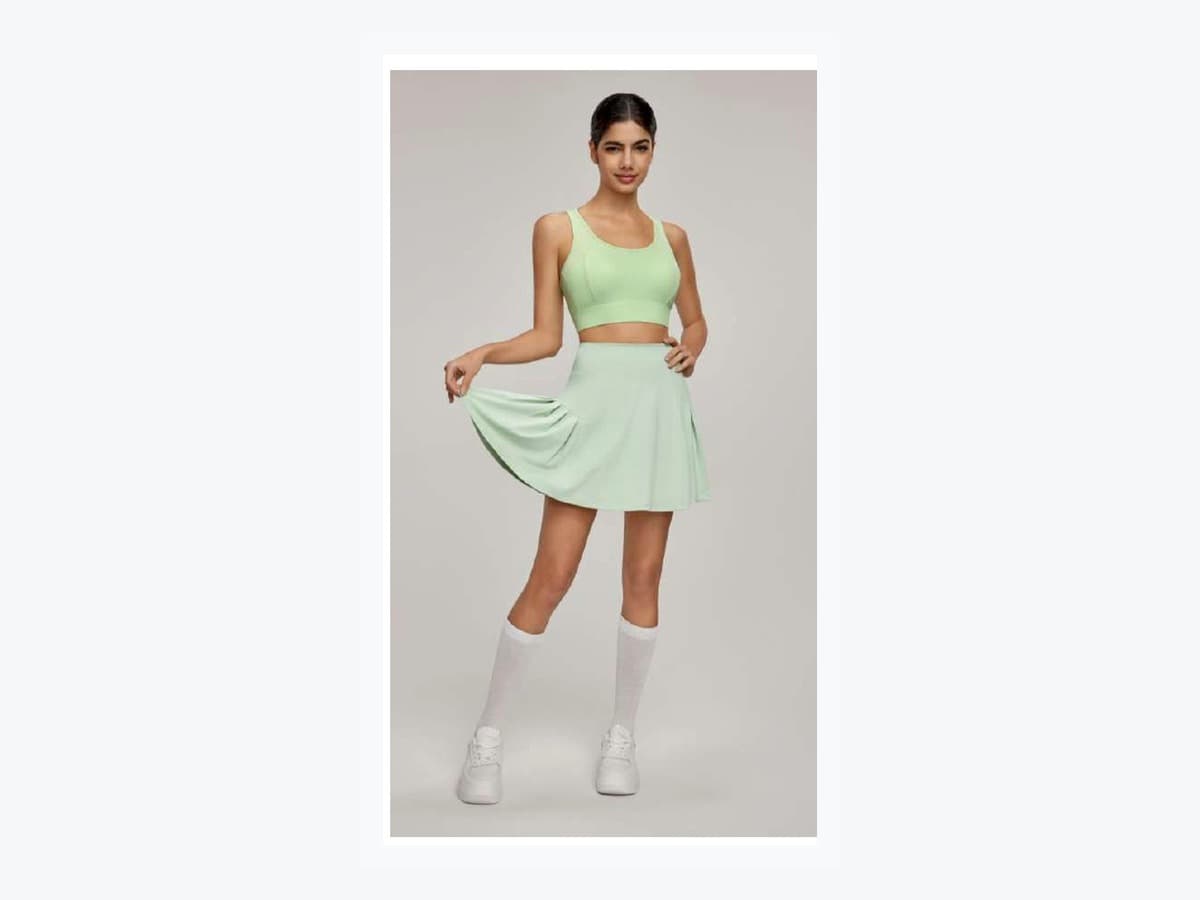
The difficult comment in a skort review is often “the skirt looks right, but something moves when I reach for the ball.” That observation could involve several connected details. The outer skirt may obstruct the pocket opening. The liner may rotate as the wearer reaches inside. The waistband may move under the load, or the opening may be awkward for the preferred hand. Changing only the visible skirt length may leave the underlying problem unresolved.
This guide helps adult apparel buyers turn those interactions into a development brief. It uses proposed review steps and illustrative comments, not results from an inPACE customer trial. A new liner, pocket, fit or material combination belongs in custom activewear development. If an existing style is accepted unchanged, keep its branding and packing scope clear; do not assume a catalogue selection includes unreviewed construction changes.
What should the first skort brief say about the intended use?
Start with the wearer and the occasions the garment must cover. A club practice skort, a competition kit option and a court-to-social retail piece may share an appearance while placing different emphasis on coverage, ball access and coordination. Describe which decisions are essential and which are preferences. “Pleated outer skirt with an accessible ball pocket” is more useful when the brief also says which hand will retrieve the ball and whether access should work without adjusting the waist.
Record the intended top pairing, desired waist position and whether the buyer expects the inner shorts to show below the skirt during movement. None of these choices has one universal answer. The purpose is to give the sample reviewer an identifiable target. A photograph of a stationary wearer will not explain which amount of liner visibility the brand accepts during a reach or crouch.
Keep the wider range plan separate. The training and tournament apparel guide covers garment roles across a collection. This brief should stay close to the skort itself: its reference size, outer shape, inner construction, pocket use and the observations needed before approval. Avoid adding several unrelated top and jacket projects to the same comment sheet.
How should a buyer choose between an A-line and a pleated outer skirt?
Use a reference to identify the feature you want, rather than treating the whole photograph as a specification. The DWD115066 A-Line Tennis Skirt provides one outer-silhouette starting point. The DWD115110 Pleated Tennis Skirt gives another. Select the reference by the construction you want to retain, then describe the requirements that differ for your intended use.
Explain how the desired outer skirt should hang at rest and open during movement. For a pleated direction, identify the area and visual rhythm that matter to the buyer. For an A-line direction, identify the desired sweep and where the wearer expects the skirt to clear the thigh. Ask the supplier to describe which pattern or material choices need sampling to achieve that direction.
Length also needs a measurement reference. State whether the proposed measurement is taken from the top of the waistband, from the waistband joining seam, or from another agreed point. Record front and back separately if the design requires it. Otherwise, two reviewers can agree on a number while measuring different portions of the garment.
Treat the main photograph as a visible outer-style reference. It does not establish the liner's dimensions, a hidden pocket configuration or tested movement performance. Those details belong in the specification and assembled sample review, even when the catalogue description suggests a starting construction.
What must be specified for the inner shorts?
Describe the liner as a garment component with its own fit requirements. Useful inputs include the intended waist position, rise, inseam, leg opening, material direction and the way the liner joins the outer skirt. Identify whether it is fixed throughout the proposed attachment area or whether the design includes another arrangement requiring development. A sketch with named joining points is easier to discuss than the instruction “comfortable inner shorts.”
Review liner coverage independently of the outer hem. A buyer may want the liner to remain visually discreet while still providing the intended coverage during a crouch. Another may accept a visible lower edge as part of the design. Record that preference before changing the inner length, because the two expectations can lead to different sample decisions.
Avoid prescribing a tighter leg opening as the automatic solution to movement. First record where migration occurs, in which activity, and whether the rise, attachment or pocket load is also involved. The supplier can then propose a change with a defined purpose. An unexplained instruction to tighten every opening makes the next sample difficult to assess.
The activewear inner-short brief provides a broader preparation framework. For a skort, add the interaction with the outer layer: visibility, access to the pocket and any tension transferred through the common waistband. Approving the liner on its own does not settle how the assembled garment will behave.
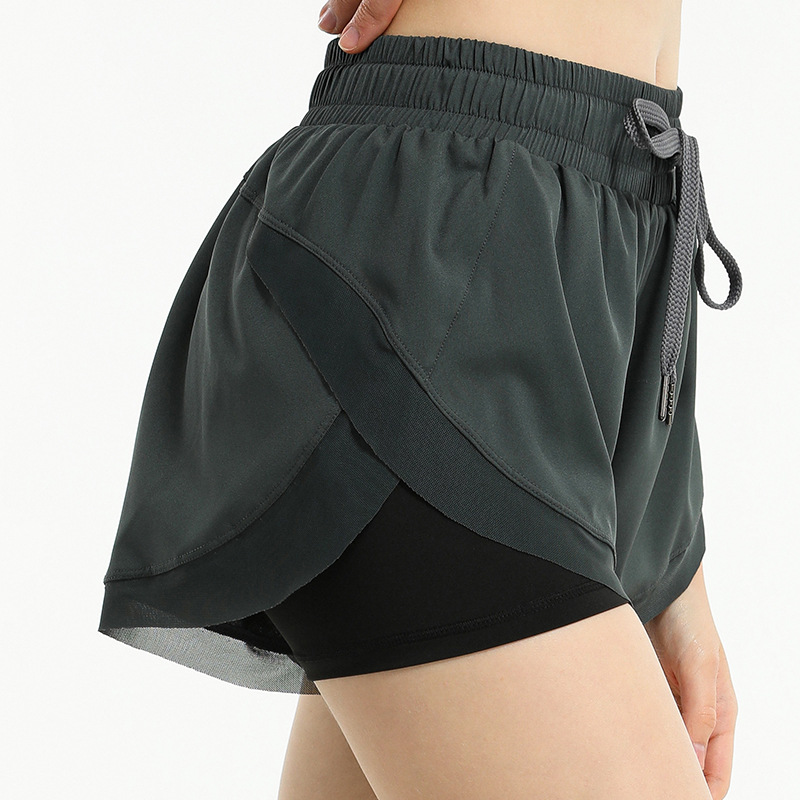
This photograph shows layered training shorts, not a skort. It helps separate the visible outer and inner components for discussion. It does not show a pickleball pocket, prove a proposed liner length or demonstrate that this construction can be transferred unchanged to the skirt reference.
How do you turn “add a ball pocket” into a reviewable requirement?
Provide the actual ball intended for the sample assessment, or identify the reference clearly enough for the supplier to obtain the agreed equivalent. State whether the proposed pocket is for one ball and whether it has any other intended use. A space described as suitable for a phone or tennis ball should not be treated as validated for this task without reviewing the actual configuration.
Mark the preferred side and access direction on the garment drawing. Distinguish the wearer's left from the viewer's left. Explain whether the hand should enter from above, below or through another proposed opening. Then consider whether the outer skirt blocks that route when the garment is worn. A pocket can look accessible when the skort is laid flat and behave differently under the outer layer.
Ask for the sample pocket's opening, depth and position to be recorded, with its material and attachment method. Do not borrow a universal measurement from another garment. The useful dimensions depend on the agreed ball, construction, fit and access direction. The first prototype should make those decisions visible rather than hiding them inside a generic “ball pocket” description.
Review loading and removal as separate actions. Record whether the wearer needs to hold the outer skirt, move the waistband or search for the opening. If a second hand is acceptable, say so; if one-handed retrieval is a priority, define that in the brief. These are buyer requirements to assess, not performance promises established by the presence of a pocket.
Why should the waistband be reviewed with the pocket loaded?
The waistband connects several parts of the skort. Review it in the complete proposed assembly, including the intended inner layer and ball-pocket placement. Start with the empty garment, then repeat the same observations with the agreed load. This comparison helps the reviewer describe whether an issue appears only when the pocket is used.
Record waist movement, outer-skirt rotation and any change the wearer notices near the pocket attachment. The comment should describe an observation rather than diagnose a cause prematurely. “The left side of the waist moved down during retrieval in this sample” gives the supplier something specific to investigate. “The elastic is wrong” may exclude other relevant causes before they have been considered.
If the proposed style includes a drawcord, grip detail or other waist feature, ask how it is intended to be used during the review. Record that setup consistently. A sample adjusted tightly for one photograph and loosely for the next cannot support a useful comparison of the same design.
Keep comfort comments in the wearer's own practical terms, such as pressure location, seam contact or the need to readjust. Do not turn an individual trial into a claim that the waistband suits every body or activity.
Which measurements should appear on the skort specification?
Agree measurement names, points and garment conditions with the supplier. A body measurement, pattern dimension and finished-garment measurement serve different purposes. Label them accordingly. If the buyer supplies only a desired body size range, the factory still needs to discuss the intended fit and the sample size used to review it.
| Specification area | What to define | Why it matters during review |
|---|---|---|
| Waist | Measurement points and relaxed or extended condition | Keeps reviewers from comparing different states |
| Outer length | Starting point, hem point and front/back distinction | Connects the number to the desired coverage |
| Outer sweep or pleat reference | Location, visual reference and measurement method where needed | Makes silhouette comments traceable |
| Inner rise and inseam | Named seams or joining points | Locates the inner-short coverage decision |
| Inner leg opening | Measurement condition and point | Helps assess a proposed fit revision |
| Pocket opening and depth | Entry direction and actual pocket boundaries | Defines the space being reviewed with the ball |
| Pocket position | Distance from agreed waist or seam references | Allows placement to be reproduced and compared |
| Layer attachment | Joining area and construction reference | Shows how movement can transfer between layers |
Use a marked diagram alongside the table. A short point-of-measure description is particularly useful where the inner shorts cannot be measured without moving the outer layer. State the units and identify any agreed tolerances separately from target measurements. Do not add arbitrary allowances merely to make the sheet appear complete.
Keep the first sample record even when later measurements change. Version history lets the reviewer connect a construction revision to the resulting fit comment. Without it, an improved pocket may be approved against an outdated liner specification.
How should the outer and inner materials be compared?
Specify material roles before asking for one composition to cover everything. The outer skirt contributes to drape and appearance; the liner also affects body contact, fit and pocket behaviour. They may use different materials. Record each proposed fabric separately, including the version and colour used in the sample, so an approval for one layer is not mistaken for approval of both.
Use the fabrics and trims review to discuss suitable directions and the evidence needed for the project. A fibre percentage alone does not settle the finished skort's movement, coverage or wash behaviour. Compare the proposed combination in the assembled garment, especially where an outer fabric and liner meet at a seam or waistband.
For coverage review, define the actual colour, lighting, garment fit and movement being assessed. Pale and dark samples should not be assumed equivalent merely because their style name is the same. If the buyer needs an assessment in damp conditions, agree how it will be performed and recorded. Keep a sample observation separate from any broader marketing claim about opacity or performance.
Also examine visible pocket outlines and layer edges under the outer skirt. These may be acceptable for one collection and distracting for another. A clear appearance target gives the supplier a reason to propose a material or construction change without guessing the brand's preference.
What should happen during the assembled movement review?
Prepare a short repeatable sequence that reflects the intended use. It might include standing, walking, sitting, reaching, crouching and a controlled side step or lunge within the wearer's ordinary range. Choose the actions with the reviewer, rather than presenting this list as a formal sport-performance test. The purpose is to observe the garment under agreed conditions.
Keep the sample size, wearer fit context and setup attached to the record. Review the same sequence with the pocket empty and with the agreed ball. Note when the outer skirt shifts, the inner edge moves, the waist needs readjustment or the hand cannot reach the opening as intended. Record the relevant view or measurement where useful, with the wearer's permission for any images.
Separate the observation, proposed change and acceptance decision. An illustrative note could read: “During the agreed retrieval movement, the outer hem covered the pocket entry; review entry position and outer clearance in the next sample.” This describes a hypothetical review issue. It is not a result claimed for either linked catalogue product.
| Review situation | Record what happened | Decision to discuss next |
|---|---|---|
| Standing and walking, pocket empty | Resting appearance and need for adjustment | Whether the starting fit matches the brief |
| Reach and crouch | Outer coverage and visible inner edge | Whether lengths or layer relationship need review |
| Same actions with the agreed ball | Pocket shape, waist movement and outer rotation | Whether loading changes the assembled fit |
| Loading and retrieving the ball | Hand route, access and adjustments needed | Whether entry position or clearance should change |
| Sitting and returning to standing | Seam contact and position after movement | Whether the wearer can resume without unwanted adjustment |
| Repeat after an agreed care review | Visible differences from the original record | Whether the material or construction approval remains valid |
Send a consolidated comment sheet using the sample-feedback framework. Do not scatter contradictory instructions across messages. Mark unchanged features as retained, and identify which previous approval must be reopened when a related component changes.
What can a wash review reveal before approval?
Define a care review for the actual sample combination, with a procedure agreed by the buyer and supplier. Record the sample version, method, drying condition and the observations to compare. The wash-sample brief helps organise those inputs without treating an informal review as a laboratory report.
Compare the assembled appearance as well as the individual dimensions. Record outer and inner lengths, waistband appearance, pocket opening and any visible change at the joining seams. If the outer and liner change differently, the relationship between them may matter more to the wearer than either isolated number. A comment about the finished garment should therefore identify which component changed and how that affected the agreed target.
Repeat the relevant access and movement observations after the agreed review, keeping conditions comparable. This is a way to ask whether the sample still meets the brief. It does not establish unlimited durability, a guaranteed number of wears or a claim that every care routine produces the same result. Use formal testing where the project requires it, with its scope and acceptance criteria agreed separately.
How should sample approval become a production record?
Close the development decisions in layers, but release them as a coherent garment. Retain the accepted outer silhouette, liner specification, pocket drawing, material references and assembled sample identification. If the buyer approves appearance while pocket access remains open, record a partial approval. The word “approved” should identify exactly what has been accepted.
The sample-to-bulk production guide explains why the reference version matters. For a skort, a later pocket or liner revision may reopen waist attachment, fit or outer appearance. Ask the supplier which connected checks must be repeated. Do not assume a change hidden beneath the skirt has no effect on the finished garment.
Use the manufacturing review to discuss which construction and inspection details will be carried forward. The buyer's final record should identify the agreed measurement sheet, materials, workmanship references and packing requirements. Development observations and production inspection are connected, but they answer different questions; a successful sample review is not an inspection report for an unmade order.
Quantities need their own reconciliation. Build the order by style, colour and size using the size-colour-quantity planning guide. Keep provisional figures visibly provisional until confirmed. A late addition of another colour or size may require more than copying the original approval, especially if the new variant has not been reviewed.
How can inPACE help organise a custom skort enquiry?
inPACE Sports brings a manufacturing background dating to 1986 to B2B activewear discussions. The useful starting point is a defined garment and a set of decisions to resolve. The company introduction provides context; the enquiry should supply the skort reference, intended wearer, outer silhouette, liner requirements, pocket direction and sample priorities.
For a development project, discuss how fabric review, pattern and sample comments, branding and packing will be coordinated. Ask which inputs the proposed sample will resolve and what remains to be confirmed afterwards. Photographs and sketches help communicate intent, while an accepted physical sample and specification support the later production discussion.
The working process connects those stages. Price, order conditions and timing depend on the actual scope and approvals and require project confirmation. A catalogue reference makes the conversation more concrete; it does not remove the need to review a new pocket, fit or material combination.
What should a buyer send in the first skort enquiry?
Send enough information to identify the proposed garment without pretending every development decision is settled. Use this checklist to distinguish confirmed inputs from questions for the sample review:
- Identify the adult wearer group, intended use and the garment's role in the collection.
- Supply the outer-skirt reference and mark the features to retain or change.
- Explain the desired waist position, outer length and movement-coverage preference.
- Describe the inner-short rise, length, opening and attachment direction.
- State whether visible liner below the outer hem is acceptable during movement.
- Provide the intended ball reference and proposed pocket capacity.
- Mark the wearer's pocket side, preferred hand and entry direction.
- Define material and colour references for the outer, liner and waistband separately.
- Attach a measurement sketch with units and clearly named points.
- List the movements, loading conditions and care questions for sample review.
- Share estimated quantities by style, colour and size, plus branding and packing needs.
- Name the reviewer and identify the decisions required before production approval.
A useful enquiry can contain open questions. Mark them as open, explain the priority and ask what the supplier needs to propose a sample route. That is more actionable than sending a finished-looking specification whose pocket and liner details were copied from an unrelated garment.
Share your skort reference, fit requirements, ball-pocket direction and sample priorities with inPACE to discuss custom development. Include the parts already accepted and the interactions still requiring review, so the next step addresses the whole garment.
Product directions
Explore relevant activewear products
Use these product pages as practical references for your brief, then confirm materials, fit, customization, and production details through sampling.
A-Line Court Skirt Reference
Identify the outer silhouette to retain, then review liner, waistband and pocket changes as a development scope.
View product directionPleated Court Skirt Reference
Use the pleated outer direction to discuss length, movement coverage and its relationship with the inner short.
View product directionCustom Activewear Development
Bring the outer skirt, inner shorts and actual-ball pocket requirements into one assembled sample review.
View product directionFAQ
Buyer questions
What does a pickleball skort manufacturer need before sampling?
Provide the outer-skirt reference, intended wearer and use, sample size, liner direction, waistband requirements and pocket purpose. Identify the ball, preferred retrieval hand and proposed entry direction. Add material and colour references, estimated quantities and the specific questions the assembled sample should resolve. Mark provisional information clearly.
Can an existing tennis skirt be used as the development reference?
Yes, an existing reference can establish the outer shape or other accepted details. It does not automatically validate a new pickleball pocket, liner fit or assembled movement requirement. Identify what stays unchanged and what requires review. Keep the original product identity and use a development brief for the proposed changes.
Is a phone pocket suitable for holding a pickleball?
Do not assume equivalence from the pocket name. Review the actual ball, opening, depth, position, material and access direction in the worn garment. Check loading and retrieval as well as retention during the agreed movements. Record whether the outer skirt or liner fit interferes with the intended hand route.
How long should the inner shorts be?
There is no single length that defines every buyer's skort. Set the desired coverage, fit and visible-liner preference, then review rise, inseam and leg opening together in the assembled sample. Record the measurement points and size. A stationary photograph alone cannot settle how the inner edge behaves during movement.
Should the outer skirt and liner use the same fabric?
They can have different material roles and may use different fabrics. Review the proposed combination for appearance, fit, body contact, pocket behaviour and care requirements. Identify each material and colour separately. An approval for the outer fabric should not be recorded as approval for an unspecified liner.
Can a ball pocket be changed after the rest of the skort is approved?
A change can be discussed, but identify which approvals it affects. Moving or resizing a pocket may require another review of access, liner fit, attachment and outer appearance. Record the revised drawing and sample version, and obtain confirmation of the next review step before treating the garment as fully approved.
Does a successful wear review prove all performance claims?
No. A recorded sample review supports decisions within its stated wearer, setup and conditions. It does not establish universal comfort, durability, moisture management or other claims outside that review. Agree any additional testing and acceptance criteria required for the project, and keep test evidence separate from ordinary fit comments.