
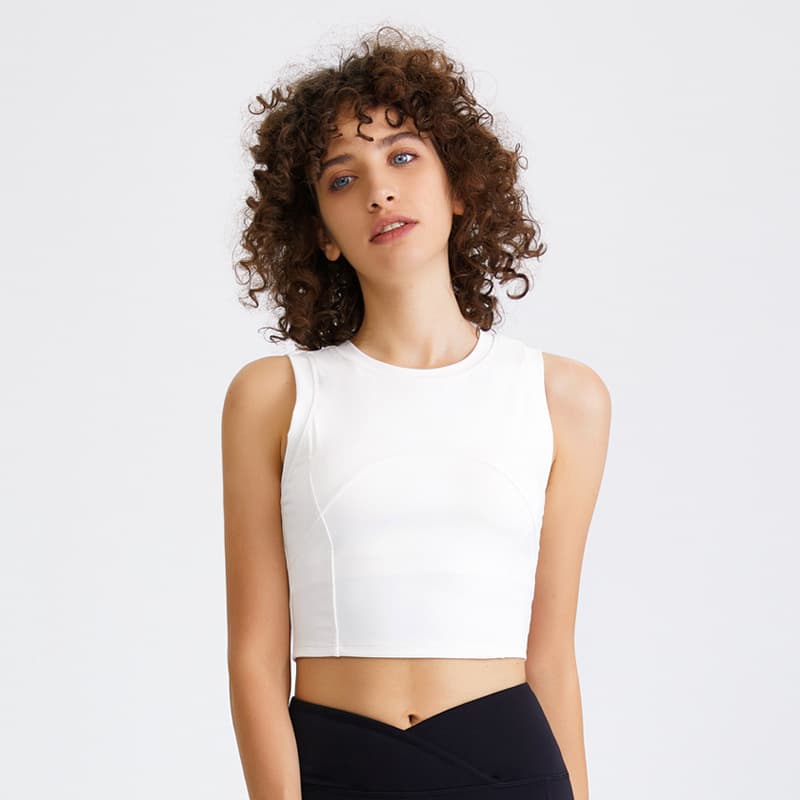
A club does not necessarily need two unrelated wardrobes for practice and competition. It needs to know which garments can perform the intended jobs and which decisions change at an event. A familiar training top might remain the core style, while the tournament version needs a reviewed colour or artwork layout. A new ball pocket, by contrast, changes the garment itself and deserves a separate sample task.
This guide helps brands, clubs and coaching programmes prepare that discussion with a factory. It uses an illustrative adult range comprising a training top and a choice of short or skort. It does not describe a tested customer collection. The main route is custom activewear development, because the brief may involve fit, material and functional decisions. If an existing garment is accepted unchanged, define its branding scope separately.
Which garments belong in the training and tournament range?
Assign a job to each proposed item before adding colours or logos. A top needs a defined coverage and movement brief. A short or skort needs a clear waist, leg and pocket direction. An optional layer may serve arrival, warm-up or time between sessions. A collection becomes easier to develop when the buyer can explain why each item exists and what evidence will support its approval.
For the illustrative range, begin with one core top and one lower-body direction. Consider a second lower-body option when the intended wearers have a clear reason to prefer it, rather than assuming everyone should use the same silhouette. Shared visual identity can come from a coordinated colour and artwork plan even when the garments use different patterns or materials.
The sleeveless training tank reference offers a visible starting point for armhole, hem and panel discussions. The photograph shows the garment's appearance; it does not demonstrate overhead-reach coverage or comfort during play. Record what you want to retain and which details need review with the intended wearers.
A court skort reference can start a different conversation about the outer skirt and inner short. Do not assume that a tennis-oriented product name confirms a pickleball pocket or the required liner behaviour. Similarly, a running and training short-set reference can suggest a product direction without establishing suitability for every court movement.
Use this table to decide which roles deserve samples. The review questions are a planning framework, not results for the pictured products.
| Garment role | Training question | Tournament question | Sample evidence to organise |
|---|---|---|---|
| Core top | Does coverage remain suitable through the intended session movements? | Can the accepted body support the event colour and artwork plan? | Reach and hem observations, actual-colour sample and branding proof |
| Training short | How do the waist, leg opening and intended pocket behave together? | Will the same construction meet the event-use brief? | Movement review with the intended pocket contents |
| Skort option | How do outer skirt and inner short move as one garment? | Is coverage suitable and any proposed ball access practical? | Outer and liner observations, pocket review if specified |
| Warm-up or between-session layer | When will it be worn and over which garment? | Does the event allow the proposed use and appearance? | Layering fit and opening or closure review |
A proposed range does not need every row. Removing an item with no clear role can make the first sampling discussion more focused. It also keeps the buyer from approving an attractive collection image while overlooking the individual garments that must be manufactured, sized and packed.
What can training and tournament versions share?
Start with the accepted garment, then list the differences. If the pattern, material, construction and functional requirements remain the same, the brand can discuss using one product reference for both versions. Record the separate colour, artwork or information requirements against that reference. Sharing a design direction is not the same as confirming current material availability or production conditions.
Some changes look small in an illustration but affect the physical garment. Extending a top, changing a neckline or adding an inner-short pocket can alter the development scope. A different material may change drape or fit even when the pattern is retained. Ask the factory to identify these consequences before treating the tournament version as a simple branding variation.
Keep sample approval specific. An accepted black training top does not automatically approve a lighter-coloured version's coverage, appearance or logo contrast. Nor does approval of a short establish acceptance of a skort made from a similar-looking fabric. Identify the exact colour and construction represented by the sample, and record which decisions it can support.
This is also where a club should separate product decisions from team administration. Names, numbers and squad allocation belong to an artwork or order record when required. They should not obscure open questions about the garment. A complete roster cannot resolve an uncomfortable armhole, and a suitable sample cannot confirm that every member's name has been written correctly.
How should tops be reviewed for court movement?
Write the intended movements into the sample brief. Relevant review situations might include an overhead reach, a lateral reach, a split stance and bending to retrieve a ball. Choose the sequence for the actual intended use and wearer group. These observations help identify garment issues; they are not a substitute for any separately agreed laboratory or formal performance assessment.
For a top, watch the relationship between the armhole, side seam and hem. The reviewer should note where the garment pulls, what coverage changes and whether an edge contacts the body in a way that needs attention. A request for “more freedom” is difficult to develop until the buyer explains which movement and part of the garment caused the concern.
Check the same garment with the intended lower-body item. A hem that looks suitable when standing may interact differently with a high waistband during reaching or rotation. Ask the reviewer to describe what happens before requesting a specific pattern correction. The factory can then assess whether the issue relates to length, shape, material or the combination of garments.
Record the sample size, relevant measurements, material reference and condition. If a temporary fabric or unfinished edge is used, state that limitation. Use the sample feedback guide to organise observations and photographs into one revision list. The product owner should distinguish accepted details from open issues instead of asking the supplier to interpret several conflicting messages.
A useful comment might read: “Reference size M, overhead reach: the front hem moves above the coverage point agreed in the brief. Review the proposed length and shape while retaining the accepted neckline.” This is an illustrative instruction, not a finding from the photographed tank. Its value lies in connecting the observation to the next decision.
What should the buyer check in shorts, skorts and proposed ball pockets?
Begin with the waist and lower-body silhouette. Describe where the waistband should sit, the intended leg or skirt length and the coverage needed during movement. Review whether the outer garment and any inner layer work together. An inner short that feels suitable by itself may still pull on an attached outer layer, so evaluate the proposed construction as a complete garment.
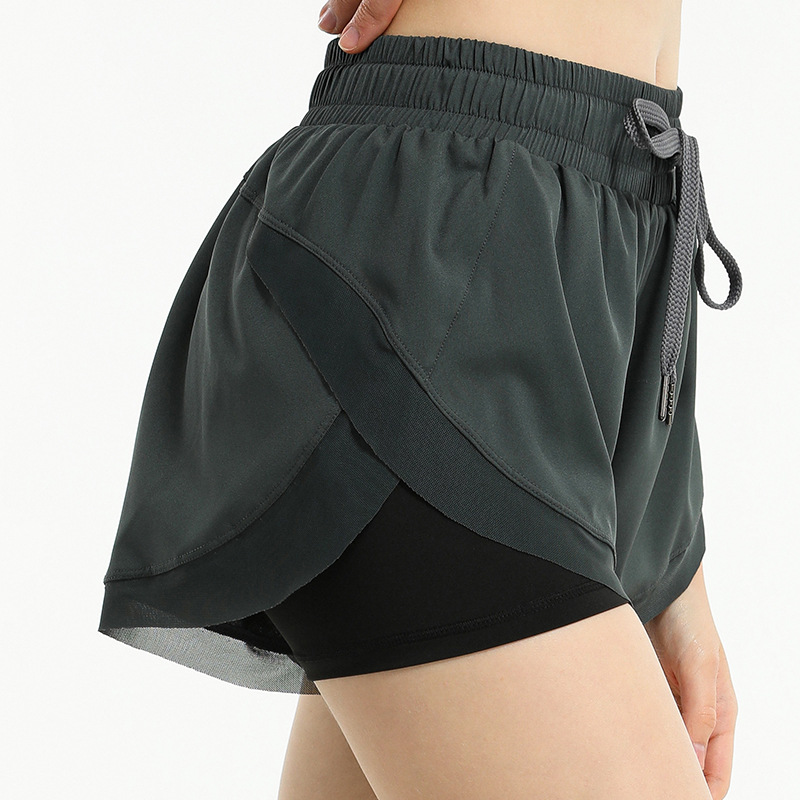
The layered training shorts reference shows an outer and inner layer for construction discussion. The image does not show a validated pickleball ball pocket or demonstrate retention, recovery or comfort. Use the visible details to identify sample questions and confirm the actual garment specification with the supplier.
If a ball pocket is required, state that explicitly. Provide the intended ball and describe how it should be placed, carried and retrieved. Do not substitute a phone-pocket reference for that task. The opening, position, depth, orientation and supporting material need to be considered with the wearer and garment. A pocket that holds an object while standing has not answered the movement question.
Ask whether the wearer will retrieve the ball with the left or right hand and how the opening should be accessed. For a skort, discuss whether the outer skirt obstructs access or moves when the pocket is used. For a short with an inner layer, review how the loaded pocket affects that layer and the waistband. Treat these as observations to collect, rather than assumed advantages of a particular design.
Avoid prescribing a universal pocket dimension from a photograph. The appropriate solution depends on the actual object, garment construction, material and intended use. The supplier can propose a direction, but the buyer should approve the relevant sample evidence. Keep any pocket revision connected to the outer appearance and fit decisions it may affect.
| Review situation | What to observe | What to record for the factory | Decision to keep open until reviewed |
|---|---|---|---|
| Overhead or lateral reach | Hem movement and armhole contact | Sample identity, movement and location of concern | Top length, shape or material revision |
| Lunge or split stance | Waist position, leg opening and coverage | Garment combination and observed restriction | Fit and construction adjustment |
| Ball placement and retrieval | Opening access and effect on the garment | Actual ball, preferred hand and pocket position | Pocket construction and location |
| Movement with a loaded pocket | Displacement of object, liner or outer layer | Movement sequence and observed behaviour | Retention and support acceptance |
| Sitting between sessions | Waist and pocket interaction | Loaded or unloaded condition and wearer comments | Whether a correction affects the approved fit |
Keep the review proportionate to the proposed garment. A style without a ball pocket does not need invented pocket claims to be useful. State its intended role clearly and concentrate on the features the buyer actually wants to approve.
How should fabric choices follow the intended use?
Describe the conditions in which each garment will be worn: indoor or outdoor sessions, the expected activity, the intended fit and the care routine the buyer plans to communicate. These inputs make a material discussion more useful than a request for “pickleball fabric”. A fibre description alone does not establish the behaviour of a finished top, short or skort.
Ask the supplier to connect each material proposal to a garment decision. A top may need review of drape, coverage and seam feel. An outer short and its inner layer may have different jobs. A pocket bag may need separate consideration from the visible outer fabric. The fabrics and trims guide provides a starting point for discussing those components without assuming one material will answer every question.
Keep moisture movement, drying, airflow and stretch-related requirements distinct when requesting evidence. If a performance claim matters to the collection, agree what will be assessed, on which material or garment, under which conditions and against what acceptance criterion. Do not translate a mesh appearance, a fibre percentage or a supplier's general description into a verified claim for your own order.
Review the proposed colour and branding with the material. The buyer may need to assess appearance when the garment is stretched or damp, or after care, depending on the intended claim and use. Record those conditions rather than relying on an unqualified “opaque” or “comfortable” approval. A test or observation on one colour or component may not answer the question for another.
Use a planned wash-sample review to check the details that matter after care. Agree the procedure and record the sample identity before comparing results. Separate dimensional observations, surface appearance, seam condition and artwork changes so that a problem can be traced to an actionable next step. Do not present an informal wash observation as a standardized test report.
Which tournament colour and branding decisions need separate approval?
Obtain the requirements for the actual event before approving the tournament version. The 2026 USA Pickleball Official Rulebook, in its sanctioned-tournament provisions at 18.B.3, allows the tournament director to require an apparel change, including when its colour approximates the ball. Treat that as an event-specific review point, not a universal ban on every yellow or green garment.
Ask the club or team contact to confirm the applicable event rules and anticipated ball colour, and discuss an alternative garment where needed. The factory can help prepare the agreed apparel version, but it does not grant tournament approval. Avoid printing a tournament name, approval mark or sponsor identity unless the buyer has provided the appropriate authorised artwork and instructions.
Review the whole visible garment, including panels and prominent graphics. A small digital colour swatch is an incomplete reference for an assembled kit. Keep the event review and the production colour approval connected, while recognising that they answer different questions: one concerns the event's requirements; the other concerns the agreed physical product.
Names, numbers and sponsor placements are not universally required for every pickleball garment. Add them only where the team's plan or actual event calls for them. Ask who approves spelling, artwork versions, placement and any alternative colour arrangement. If the logo method changes between training and tournament versions, review the relevant material and application rather than assuming an earlier proof covers both.
Make the alternative practical. Decide whether it is the same garment in another approved colour or a different accepted style. A last-minute substitution can reopen fit, coverage and branding questions. Record the accepted alternative alongside the main tournament garment so that it can be identified correctly in the order and packing instructions.
How does an accepted sample become a production brief?
Build one record that identifies the garment, material, colour, measurements, construction and artwork represented by the accepted sample. Attach the remaining conditions or exclusions. The sample-to-bulk production guide explains this handoff in more detail; for a pickleball range, make sure the movement and any loaded-pocket decisions remain visible in the record.
Separate approvals by scope. A fitting sample may establish the desired shape while a later sample represents the actual material or branding. A colour proof may support the colour decision without confirming garment function. State what each reference approves and what still needs review. The supplier should not have to infer full production approval from a positive comment on a single feature.
Discuss the planned manufacturing and inspection work against those accepted references. Identify the checks, reporting scope and responsible decision-maker for discrepancies. A development review with an intended wearer and a production inspection are different activities. Both can contribute useful evidence, but neither should be described as a guarantee that every garment will suit every player or event.
Confirm the size and colour quantity plan by garment. A coordinated top and lower-body option may need different size distributions. Keep any proposed estimates labelled until the buyer accepts the order breakdown. Do not turn the sample size into an assumed bulk assortment or require a wearer to choose matching size labels when the intended fits differ.
Record training and tournament allocations without confusing them with different physical products. If the garments are identical, an allocation field may be enough. If colours, artwork or labels differ, use identifiers that distinguish the versions. Ask the receiving team how it will find the right items and confirm the corresponding unit and carton information before packing.
How can inPACE support the development discussion?
inPACE can work from garment references, a brief, a sample or a tech pack to discuss fit, material and construction questions. For this range, the useful starting point is the intended movement and the role of each top, short or skort. That lets the product discussion focus on specific decisions such as hem coverage, inner-layer behaviour, pocket access and the proposed branding area.
The company's manufacturing background, including Yinshan Garments' garment-production experience since 1986, provides context for product and production coordination. It does not establish a pickleball test result, event approval or a particular order's performance. inPACE can help connect sample comments with the proposed production route and packing requirements; the actual material, technical scope, commercial conditions and acceptance decisions remain project-specific. Use the development process to identify the next useful sample or information step before treating the collection as production-ready.
What should the first pickleball apparel brief contain?
A useful enquiry connects the court-use questions with a manageable product scope. Mark existing decisions, estimates and open questions clearly. The buyer does not need to solve every construction detail before contacting the factory, but it should be clear who will review the proposed answer and what would make the next sample useful.
- Describe the intended wearer group and whether the range serves training, tournaments or both.
- Name the core garments and explain the role of each item.
- Attach product references and mark the details to retain or review.
- State coverage and movement priorities for the top and lower-body garment together.
- Provide the available size or measurement information and identify sample sizes to discuss.
- Specify whether a ball pocket is required, with the actual ball and access preference.
- Identify outer, inner-layer and pocket-material questions separately.
- Describe the relevant wear conditions, care plan and evidence needed for any performance claim.
- Supply the actual event requirements and an approved alternative-colour direction where needed.
- Provide authorised artwork and identify the person approving each garment version.
- Share estimated quantities by style, colour and size, plus training or event allocations.
- Explain receiving and packing needs, the remaining decisions and the next approval owner.
Send your training and tournament needs, product references and size-colour quantities to inPACE for a custom apparel development review. Include the functional questions and event requirements that remain open, so the first proposal can define the sample work and approvals the range actually needs.
Product directions
Explore relevant activewear products
Use these product pages as practical references for your brief, then confirm materials, fit, customization, and production details through sampling.
Sleeveless Training Tank Reference
Review armhole, hem and panel placement against the movement and coverage requirements in your own brief.
View product directionCourt Skort Product Reference
Use the existing garment direction to start separate outer-skirt, inner-short and pocket questions.
View product directionCustom Activewear Development
Connect training and tournament product priorities with material, fit, branding and sample decisions.
View product directionFAQ
Buyer questions
Can the same pickleball apparel be used for training and tournaments?
It can be considered when the accepted fit, function and construction suit both uses and the actual event requirements are met. Review the tournament colour and artwork separately. Changes to the garment's length, material, pocket or other functional details may require additional development rather than a simple branding variation.
Does a tennis skort automatically work as a pickleball skort?
No product name establishes suitability. Review the outer skirt, inner short, waistband, coverage and any required ball pocket with the intended wearer and use. A visible catalogue reference can start the brief, but the buyer needs relevant sample evidence before accepting the garment's proposed function.
What movements should a buyer include in a sample review?
Choose movements relevant to the intended use, such as overhead and lateral reach, a lunge, a split stance and bending to retrieve a ball. Observe coverage, restriction and garment displacement. Record the sample identity and review conditions. These observations are a development tool, not automatically a standardized performance test.
Can a phone pocket be treated as a pickleball ball pocket?
No. State the intended ball, access preference and movements in the brief. Review the pocket opening, location, depth and supporting construction with the complete garment. A photo showing a phone or an object held while standing does not establish ball retention or practical retrieval during play.
Are yellow and green garments banned at every pickleball tournament?
Do not assume a universal colour ban. Check the rules and ball colour for the actual event. Under the 2026 USA Pickleball sanctioned-tournament provisions, the director can require a change of inappropriate apparel, including a colour that approximates the ball. Plan an acceptable alternative with the event contact where needed.
Which fabric is best for pickleball training and tournament apparel?
There is no single fabric answer for every garment and brief. Define the intended fit, coverage, movement, conditions and care requirements, then review material proposals and relevant evidence. Treat moisture management, drying, airflow and stretch-related goals separately, and confirm the actual garment, colour and branding through the agreed sample process.
What should be approved before bulk production begins?
Confirm the relevant product specification, material and colour references, fit and functional decisions, artwork, quantities and packing instructions. Identify what each accepted sample represents and close or explicitly manage remaining issues. Keep event-requirement confirmation separate from production inspection and record the responsible buyer approval for each scope.