
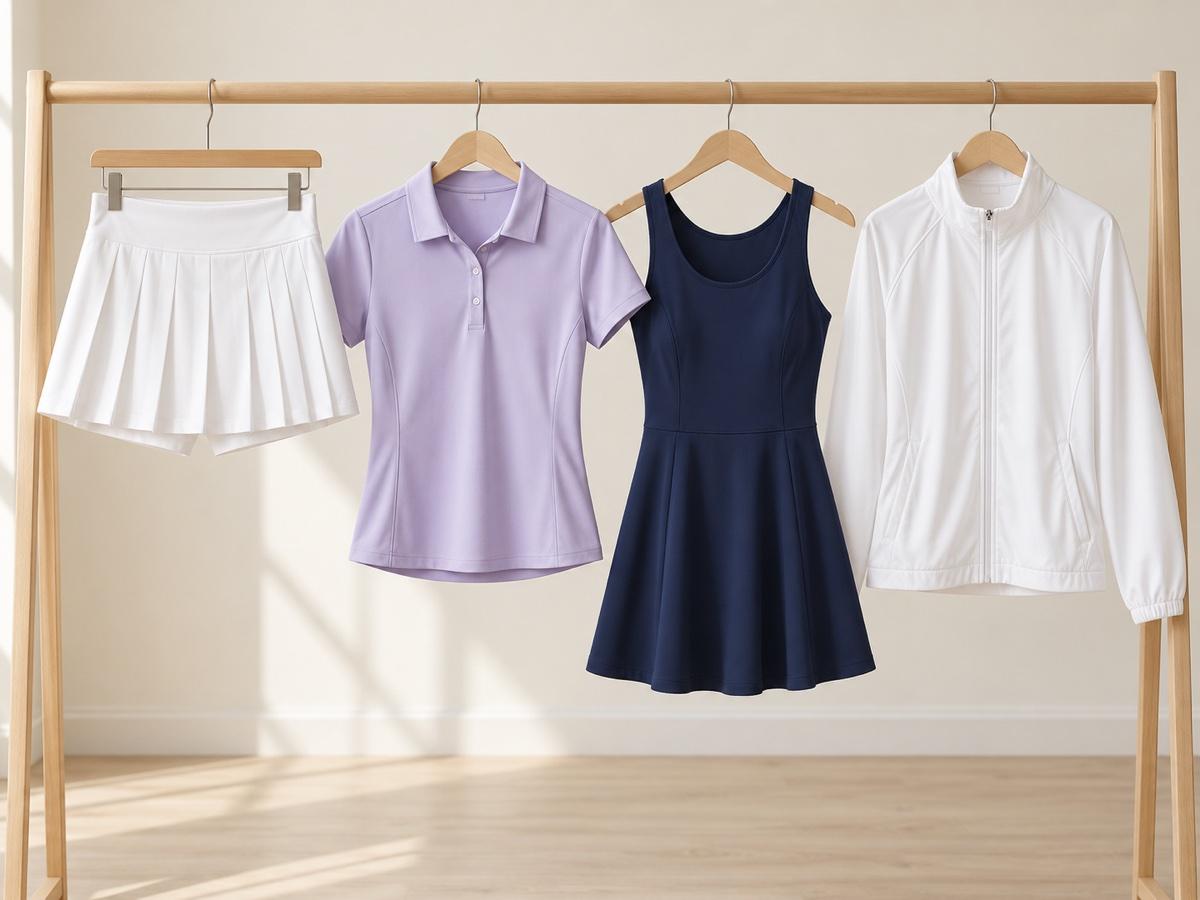
Padel and tennis clothing can share silhouettes and product references, but a brand should not change the sport name and assume the garment is fully validated. Audit the intended wearer, movement, fit, coverage, inner layers, ball storage, fabric, colour, branding, event requirements, and product claims. Retain what is supported; sample every changed or unproven decision.
This guide is for B2B brands, product teams, clubs, retailers, and designers adapting existing courtwear. It does not argue that every padel garment must be different from tennis clothing. It provides a controlled way to decide when the same product can serve both, when a limited revision is enough, and when factory-custom development is necessary.
What is the practical difference in padel vs tennis clothing?
Not always. Both categories can include tops, polos, dresses, skirts, skorts, shorts, socks, and warm-up layers. A garment may be suitable for more than one court activity when its fit, movement, coverage, construction, materials, storage, branding, and applicable rules have been reviewed for the intended use.
The difference for a product team lies in the brief and evidence, not the category label. A tennis skirt already accepted by the target padel customer may need no physical change. Another project may require a different inner short, ball-access route, waist, length, fabric, or colour. The decision belongs to the actual garment and user need.
Do not create duplicate web pages for the same physical product merely to target another keyword. Keep one stable product URL and add Padel as a relevant use scenario when the garment genuinely supports that discussion. Create a distinct product page only when there is a distinct physical style or approved specification that warrants its own record.
For search content, separate decision intent. The tennis apparel manufacturer guide owns a tennis collection brief. The custom padel apparel factory brief owns the broader padel development brief. This page owns the adaptation audit between them.
What can usually be retained from an existing tennis style?
Retain only features supported by the current product record and accepted for the new range. These may include the visible silhouette, pattern or fit block, neckline, sleeve, waistband, outer length, pleat direction, colour-block architecture, logo area, label format, or packing route. “Usually” does not mean automatically.
Create a carry-over register:
| Decision | Current tennis evidence | Padel question | Action |
|---|---|---|---|
| Product silhouette | Approved sample or specification | Does the target padel wearer accept the same role and look? | Retain, revise, or sample |
| Fit and measurements | Current fit block and size record | Do intended movements and coverage remain suitable? | Confirm through defined review |
| Fabric and colour | Identified material and approved colour | Does the same candidate support the new use and claims? | Retain evidence boundary or reopen |
| Inner layer and pocket | Current construction record | Is different storage or access required? | Retain or develop as a changed component |
| Branding and labels | Current artwork and component versions | Is the new collection identity or information different? | Create new controlled files |
| Packing and SKU | Existing order and receiving logic | Are products sold, grouped, or replenished differently? | Update the packing and inventory record |
The table prevents two opposite mistakes: redesigning a suitable garment without reason, or carrying every old decision into a new market without review. Both can waste time and obscure the actual product risk.
Which courtwear products can start a padel adaptation?
The A-Line Tennis Skirt and Pleated Tennis Skirt provide two lower-body directions. A buyer can retain an accepted silhouette while separately reviewing inner shorts, ball storage, length, waist, material, colour, and padel use. The product URLs should remain stable rather than being cloned into identical padel pages.
The Short-Sleeve Performance Polo can start a club-top discussion. The Sleeveless Training Tank offers another coverage and styling direction. The Layered Two-in-One Training Shorts can help a buyer separate outer and inner components, although it does not prove a padel-ball pocket or court suitability.
Use each reference to communicate a named feature. Confirm what the current page and physical product actually establish. Product photographs, catalogue text, and existing sport names are inputs; the new padel specification must identify anything changed or unverified.
When can one physical product serve both tennis and padel?
One product can serve both when the buyer has reviewed the intended customer and use, accepted the same product specification, and confirmed that no separate fit, construction, material, pocket, colour, artwork, label, packing, or claim is needed. The product can then carry both use scenarios in accurate site content and sales materials.
Keep the approval factual. State that the product is offered as a courtwear reference for tennis and padel, subject to project confirmation, rather than claiming universal performance or official approval. If the brand has conducted a defined wearer review, record exactly what it covered.
The product page should explain any open options. For example, an inner-short pocket may be available as a development direction but not part of the current base garment. That distinction helps buyers understand whether they are selecting an existing style or commissioning a changed product.
If only artwork or labels change, the private-label activewear route may be appropriate. If the garment changes, use the custom activewear development route. The commercial and sample scopes should follow the real difference.
Which changes require a new sample?
Request a new sample when a decision changes the product or when the current evidence does not answer the intended use. Common triggers include:
- New fit block, measurements, length, rise, armhole, sleeve, or waistband.
- Different fabric, colour, finish, lining, mesh, rib, elastic, or other component.
- Added or revised inner shorts, pocket, ball-access route, closure, or gusset.
- Different pleat, panel, seam, binding, collar, placket, or construction.
- Artwork on a new material, colour, size, position, or stretch area.
- New label content, placement, packing configuration, or set pairing.
- Product claim not supported by the current material or garment evidence.
- New size or colour that presents a meaningful coverage, appearance, or fit risk.
Do not use sample count as a quality signal by itself. Ask what each sample must prove. The activewear sample-types guide helps distinguish development, fit, material, size-set, decoration, and pre-production purposes.
How should movement and fit be compared?
Define the movements relevant to the intended product and wearer. Both sports can involve reaching, rotation, changes of direction, bending, and acceleration, but the garment decision should come from a repeatable sample review rather than a generic sport comparison.
For tops, observe neckline, shoulder, armhole, sleeve, side seam, body, and hem. For lower-body garments, observe waist position, rise, outer and inner lengths, leg opening, layer interaction, pocket, and coverage. For dresses, review both upper and lower relationships. For warm-up layers, include layering and removal.
Keep conditions consistent between the current tennis reference and proposed padel version. Record sample size, wearer context, material, colour, and garment version. A different fabric or size can make a direct comparison misleading.
Use one sample-feedback record to separate observations from proposed changes and approvals. “Feels more like padel” is not actionable. “During the agreed side-step and reach, the inner-short leg moved above the coverage point” gives the team a product question.
Do padel garments need different ball pockets?
They need the pocket that the intended user and product brief require. Some garments may not need on-garment ball storage. Others may need an inner-short pocket with a defined ball, side, capacity, opening, and access route. Do not assume that every tennis-ball pocket, phone pocket, or side pocket serves the padel requirement.
The padel skort with ball pocket guide explains the component-level decisions. Review the complete skort or short with the actual agreed ball. Observe access, displacement, waist, liner, outer layer, and retrieval. State what the review proves and what remains open.
If the current tennis product already has a pocket, inspect its real construction and dimensions. Decide whether the same feature is retained unchanged, revised, or excluded from padel positioning. Avoid marketing a pocket function that has not been physically confirmed.
How should fabric decisions be carried over?
Start from the exact current material identity, not the phrase “same tennis fabric.” Confirm supplier or internal code, composition and construction where known, weight where relevant, stretch direction, recovery, surface, colour, finish, and the evidence connected to the approved garment.
Then ask whether the padel version changes garment role, fit, colour, component, branding, climate, care, or claim. If nothing material changes and the current evidence remains relevant, the buyer can document the carry-over. If something changes, identify the smallest useful new material or garment review.
The fabric for padel clothing guide provides a product-specific comparison framework. A fabrics-and-trims record should support the sourcing conversation without inventing a performance claim for an unidentified material.
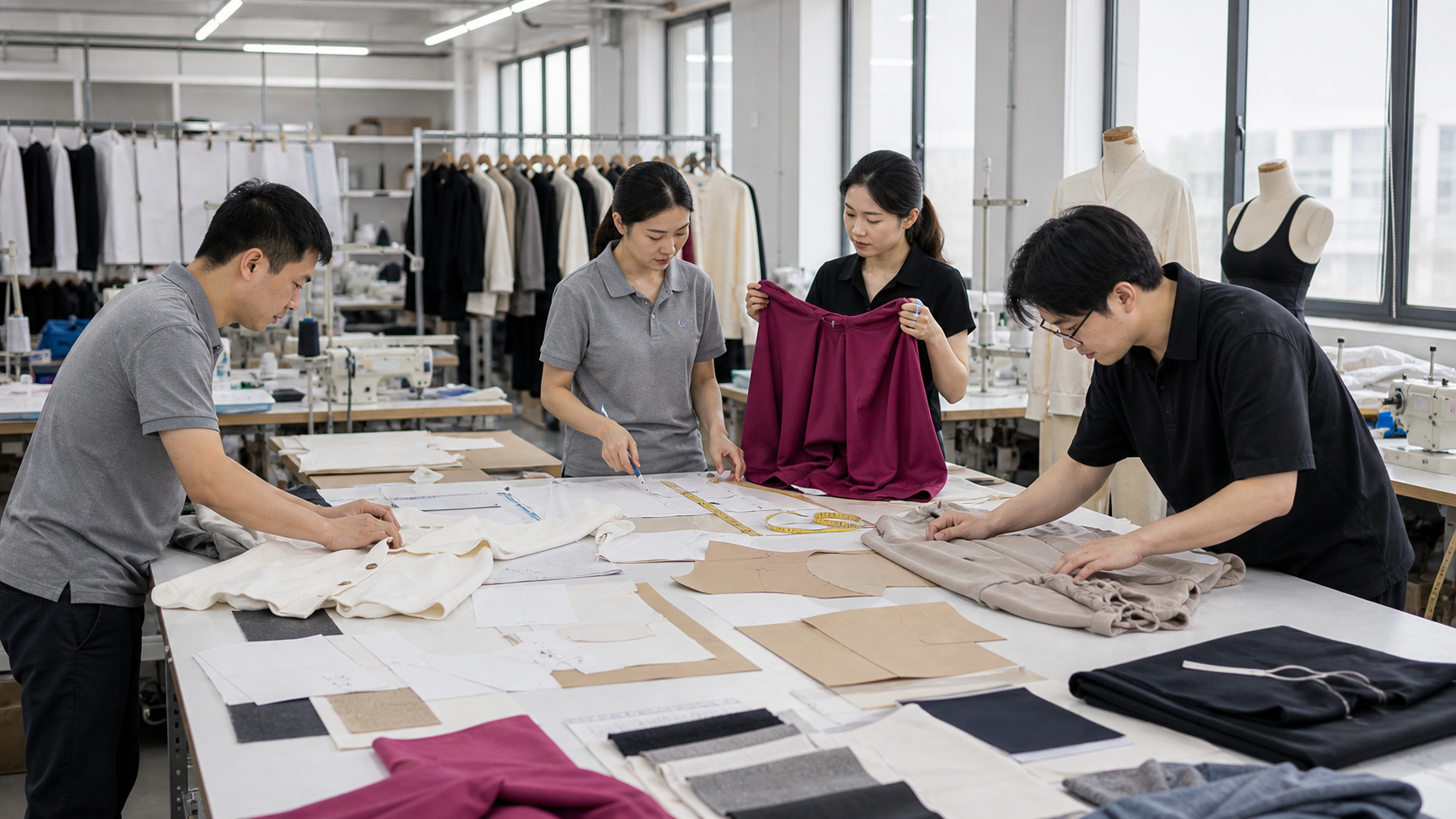
*Adapting an existing style requires the current pattern, sample, material, and revision record to stay connected. This image is factory context, not a padel or tennis test result.*
How should colour and event requirements be handled?
Keep three decisions separate: brand colour direction, physical production colour approval, and event or club acceptance. A brand can select a colour palette; the factory can prepare and compare material and components; the responsible event or club determines whether the garment meets its current requirements.
Build a colour map for every material and component. Record the target, lab dip, material, trim, artwork, sample, and reviewer. Do not assume the same nominal colour appears identically on a top, skirt, liner, rib, zip tape, thread, and logo.
If an existing tennis version has a colour accepted for one context, do not treat that as universal padel-event approval. Obtain the current requirements for the actual event and ball colour where relevant. Plan an alternative version if the buyer identifies that need.
How should branding change when a style moves into padel?
Decide whether the product joins the same master brand, a padel capsule, a club programme, or a team uniform. That decision affects logos, collection marks, names, numbers, sponsor artwork, labels, hangtags, packaging, and product-page language.
Do not simply replace the word “tennis” in a hangtag. Review every claim and information field against the actual product. If the garment is physically unchanged, describe it as a multi-court product where accurate. If it has changed, update the specification and evidence before the marketing copy.
Review logo application on the actual material and placement. Keep authorised artwork versions, dimensions, landmark relationships, colours, and sample approvals. Event and sponsor marks require buyer-provided rights and instructions.
For a complete private-label launch, a dedicated collection record should control labels, packaging, product data, and reorders.
What should change on the product page?
Add Padel to the use-scenario section when the product genuinely supports that buyer conversation. Explain the garment’s visible construction, current facts, development options, and the sample questions that remain. Do not change the stable URL or create a duplicate page solely to target “padel.”
Keep the original product name when it identifies the style accurately. A-Line Tennis Skirt can remain the product name while its use scenarios include padel club and courtwear development. Search relevance can come from natural body copy, internal links, and use-case information rather than an overloaded title.
Where a ball pocket or inner-short modification is optional, state that it is subject to development and sample approval. Where a performance claim is not verified, do not add it. Product content should help a buyer prepare an RFQ, not simulate a completed test report.
Link the product page to relevant buyer guides after the articles are public. Link articles back to real product references that return 200. This creates a useful courtwear content cluster without duplicate products.
How should the adaptation be costed and quoted?
Separate the unchanged product scope from the changes. An existing-style branding quote and a custom-development quote are not comparable if one includes new pattern work, materials, pockets, samples, or tests. Ask the supplier to state assumptions and exclusions.
Create a delta-cost brief:
| Scope area | Unchanged reference | Proposed padel change | Evidence or work required |
|---|---|---|---|
| Pattern and fit | Current approved version | Named measurement or silhouette change | Pattern review and fit sample |
| Material | Current identified candidate | New fabric, colour, or component | Swatch, colour, decoration, or garment review |
| Pocket and liner | Current construction | Padel-ball pocket or revised liner | Drawing, prototype, movement review |
| Branding | Current artwork and labels | Capsule, club, or team identity | New artwork proof and component approval |
| Packing | Current SKU and carton route | Set, club, or personalised grouping | Revised barcode, allocation, and packing record |
MOQ, price, and timing depend on the confirmed style, material, colours, components, artwork, labels, packing, quantities, revisions, and approvals. Do not publish fixed figures from a general comparison.
How should QC distinguish carry-over and changed features?
Mark each characteristic as retained, changed, or newly introduced. Retained features can use the accepted reference and current inspection method where still applicable. Changed features need updated specifications and evidence. New features need their own control points.
For a revised skort, QC may need updated waist, lengths, liner, pocket, pleat, seam, artwork, and label checks. For a top, it may need updated measurement, armhole, sleeve, hem, collar, colour, or logo checks. Carry approved records into production, inspection, packing, and export preparation through the agreed manufacturing handoff.
Do not use final inspection as a substitute for development. If ball access, fit, or material performance was never defined and sampled, inspection has no approved answer to compare against.
For reorders, retain both the original tennis reference and the approved padel delta. This makes it possible to identify whether a future request returns to the base product or continues the adapted version.
How should existing stock be described while a padel version is developed?
Do not rewrite existing tennis inventory as a newly validated padel product before the business has reviewed the intended use and current facts. The brand may describe the garment as a courtwear reference or invite buyers to discuss padel use, but it should distinguish available stock, current specification, development options, and unverified claims.
Create three commercial labels:
- Current product: the exact existing garment, colour, size, branding, and packing scope.
- Adaptation option: a proposed change such as new artwork, colour, liner, pocket, fit, or material.
- Approved padel version: the identified product and evidence that have completed the brand’s defined approval route.
This prevents sales, design, and sourcing teams from quoting different products under one code. It also keeps ecommerce copy aligned with what will be delivered. An optional ball pocket should not appear as a current feature. A development rendering should not be shown as production stock. A tennis photo should not imply tournament approval for padel.
If current stock is genuinely suitable for the intended club or retail programme without physical change, document that decision and update the use-scenario copy. Keep the original stable product record and add the new channel or sport context factually.
Which adaptation route should the buyer choose?
Use a decision tree:
- Is the existing garment physically accepted for the intended padel customer and use?
- Are current material, colour, size, pocket, branding, label, packing, and claim records complete?
- Does the buyer need only an authorised logo, label, hangtag, barcode, or packing change?
- Does any request change fit, fabric, construction, component, performance evidence, or product role?
- Which sample or proof is the smallest useful evidence for the changed decision?
If the product is accepted and only brand presentation changes, discuss an existing-style private-label route. If the garment changes, move into catalogue-informed or fully custom development. If the team cannot identify the current garment or evidence, resolve that gap before choosing either route.
The decision should be recorded in the RFQ and quote comparison. A low price for the unchanged style is not evidence that it includes a new pocket, material, sample programme, or testing scope. A custom-development quote should not be rejected as expensive when it answers a materially different brief.
What should a tennis-to-padel adaptation brief contain?
Prepare:
- Existing product URL, code, specification, and approved sample identity.
- Target padel customer, channel, market, and intended use.
- Retain/change/confirm/develop/exclude list.
- Fit and movement review requirements.
- Outer, inner, waistband, pocket, and closure changes.
- Exact material and colour carry-over or replacement candidates.
- Ball-storage need, actual ball, capacity, side, and access route.
- Artwork, labels, product copy, claims, packaging, and personalisation changes.
- Sample type and the question each sample must answer.
- Size range, colourways, preliminary quantities, and set/SKU logic.
- Event or club requirements supplied by the responsible buyer.
- QC changes, packing route, destination, and approval owners.
inPACE can review the existing product and the proposed delta through the how-it-works process, use catalogue references to reduce ambiguity, and route changed fit, material, construction, or component work into custom development. Ningbo Yinshan Garments Factory’s production background provides manufacturing context, but every suitability, performance, event, and commercial decision remains tied to the actual project evidence.
Send the existing tennis style, padel use case, delta list, size-colour plan, and sample questions to inPACE for an adaptation review.
Product directions
Explore relevant activewear products
Use these product pages as practical references for your brief, then confirm materials, fit, customization, and production details through sampling.
A-Line Tennis Skirt Reference
Keep one stable product URL and document which features can carry over to a padel use case.
View product directionPerformance Polo Reference
Audit the existing club-top direction before changing fit, material, colour, branding or claims.
View product directionCustom Activewear Development
Route changed fit, fabric, construction, pocket or component decisions into a controlled sample programme.
View product directionFAQ
Buyer questions
Can tennis clothes be used for padel?
They can when the actual garment, target wearer, fit, movement, coverage, construction, materials, pockets, colour, branding, and applicable requirements are accepted for the intended padel use. A tennis category name alone is not proof, and changed or unverified decisions should be sampled.
Does a brand need separate product pages for tennis and padel?
Not for the same physical style. Keep one stable product URL and add accurate use scenarios and development information. Create a separate product page only when there is a distinct physical style or approved specification, not merely to repeat another sport keyword.
Do padel skorts need a different ball pocket?
The pocket should follow the actual user and product brief. Review the intended padel ball, capacity, side, opening, position, liner, waistband, outer skirt, movement, and retrieval. Do not assume that a tennis-ball or phone-pocket statement proves the required function.
When does a tennis-to-padel change need a new sample?
Request a new sample when fit, measurements, material, colour, construction, inner layer, pocket, closure, artwork context, labels, packing, claim, or another product decision changes, or when the existing evidence does not answer the intended padel use.
Can the same fabric be retained?
Yes, when the exact material identity and current evidence remain relevant to the unchanged product scope. If garment role, fit, colour, component, branding, care, climate, or claim changes, identify the material and garment questions that need a new review.
Should the product title be changed from tennis to padel?
Not necessarily. Preserve a stable, accurate product name and URL. Add Padel naturally in use scenarios and buyer-facing body copy where relevant. Avoid stuffing both sports and multiple supplier terms into the title simply for search traffic.
What should be included in an adaptation RFQ?
Send the existing product record, target customer and use, a retain/change/open list, fit and movement questions, material and colour decisions, pocket requirements, artwork and label changes, samples, sizes, quantities, packing, destination, applicable event information, QC changes, and approval owners.