
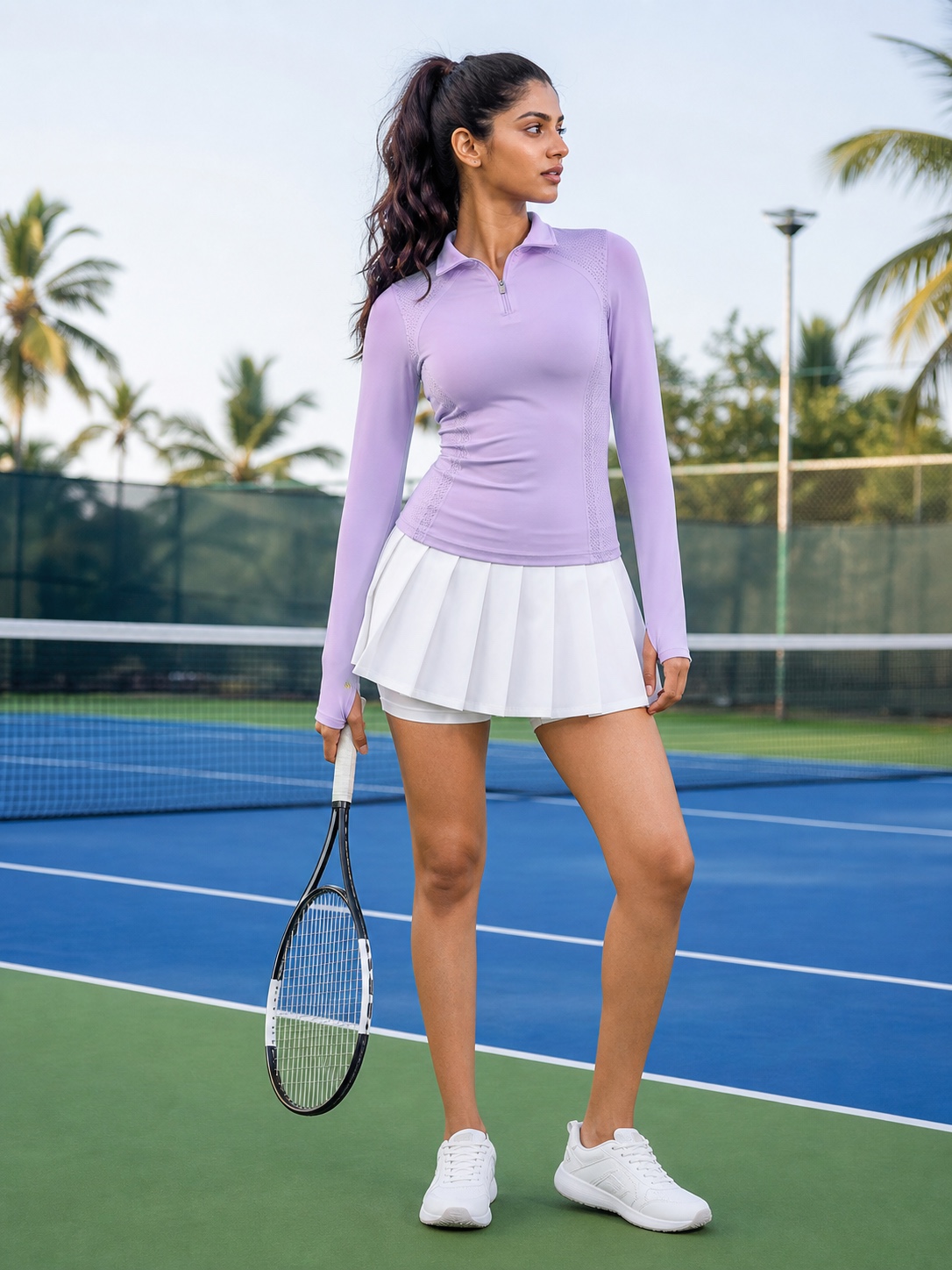
Direct answer. A tennis apparel manufacturer needs a collection brief that identifies the buyer, wearer, channel, product roles, fit direction, materials, decoration and sample decisions. Plan skorts, dresses, polos and layers as related but separately specified garments. Review each sample against its own measurements, intended use and buyer requirements; a product image cannot confirm construction, performance or event-rule compliance.
This guide is for brands, clubs, retailers and distributors building a tennis apparel range rather than ordering one already selected style. A collection may include court garments, warm-up pieces and club or staff polos, but each item has a different wearer, use context and approval path. The useful first step is to define how the items relate: which pieces form the player range, which are optional layers, and whether any product is intended for staff or club retail.
The route here is product development and Factory Custom where fit, fabric, design or construction needs development. If the buyer only needs an existing product and confirmed branding options, use the wholesale or light-custom route. The A-line tennis skirt reference and performance polo catalog page can help describe starting directions, but their pages do not confirm the specification, material or available options for a new collection. Project terms and approvals must be agreed separately.
What should a tennis apparel manufacturer know about the range?
Start with the customer and buying context. A club shop, independent tennis brand, retailer, academy and team distributor may want overlapping products but different assortment logic. Identify who selects and wears each garment, where it will be sold or distributed, what the collection needs to do and which decisions are still open. Avoid treating “tennis apparel” as one specification or assuming that a club and a retail customer want the same fit, branding or size plan.
Name the product roles before choosing styles. A skort may serve as a core court bottom; a dress may offer a one-piece outfit; a polo may be used for play, team presentation or staff wear; a warm-up layer may sit over the court range. These are possible roles for the buyer to confirm, not universal standards. Decide whether each role is necessary for the first range, an option for a later phase or only a visual reference.
Write a short collection brief that names the target user, channel, product roles, colour direction, size range, branding level, material status and intended sample review. Include a decision owner and the question each first sample should answer. For example, a buyer might need to compare a separate top and skort with a dress, while a club manager may need to review how a polo looks with the range colours. Specific questions help the team evaluate a capsule without turning every styling preference into a production instruction.
How should the collection balance court, club and retail needs?
Separate garments by user and purpose. A player product may need fit review through selected movements. A staff polo may prioritize collar, sleeve and logo presentation. A club-shop assortment might include pieces for different customer preferences and layering. Keep those use cases in the product plan so that the sample reviewer knows what to observe and the buyer can decide whether the garment belongs in a court range, club uniform, retail offer or more than one of them.
A collection does not need to include every garment type. Choose the smallest set that answers the buyer’s range question. A club could begin by comparing a skort, polo and warm-up layer; a retail brand might need to compare a dress with a two-piece outfit. The right set depends on the assortment strategy and buyer evidence. Avoid producing several styles that serve the same role unless the team has a reason to compare them.
Keep club and retail branding requirements distinct where they differ. A club may request a crest or sponsor mark, while a retailer may require its own label, packaging or product identifier. Record who supplies artwork, how it will be approved and whether placement differs by garment. Do not assume the same logo size or application suits a polo chest, skirt waistband, dress or outer layer. Review the actual sample and surface before approving decoration.
The yoga activewear product index offers a broader catalog context for discussing related silhouettes. Use it as a starting reference only, then name the selected style and list every required change. A catalog collection is not evidence that each item belongs to a coordinated tennis program or that the buyer’s desired colours, sizes or construction are available for a new order.
Which garments can form a useful first tennis capsule?
Assign each item one main job and one decision question. A skort might be reviewed for waistband, length, liner or pocket direction; a dress might be reviewed as a one-piece fit and styling option; a polo might be evaluated for collar, sleeve, body length and branding; a light layer could be assessed for how it works over the intended court outfit. The buyer should confirm which features matter instead of relying on familiar product names.
| Garment role | Buyer decision | Sample inputs to define | What still needs project evidence |
|---|---|---|---|
| Skort | Separate bottom for the range or club shop | Rise, length, liner direction, pocket question, size and fit sample | Actual fit, liner construction and pocket use |
| Tennis dress | One-piece option or range centerpiece | Length, neckline, sleeve or strap direction, closure and fit block | Sample fit and any buyer-required movement review |
| Polo | Player, club, staff or retail top | Collar, placket, sleeve, body length, colour and logo placement | Exact fabric, decoration and wearer approval |
| Warm-up layer | Optional layer for travel or pre-play | Layering garment, closure, coverage, branding and sizes | Fit over the agreed base garments and material details |
Use the table to decide whether an item is in scope now. If the first collection has four styles, record what each one is expected to teach the brand or fulfill for the buyer. If a style only duplicates another role, it may be more useful to defer it until the team has reviewed the first samples or gathered channel feedback.
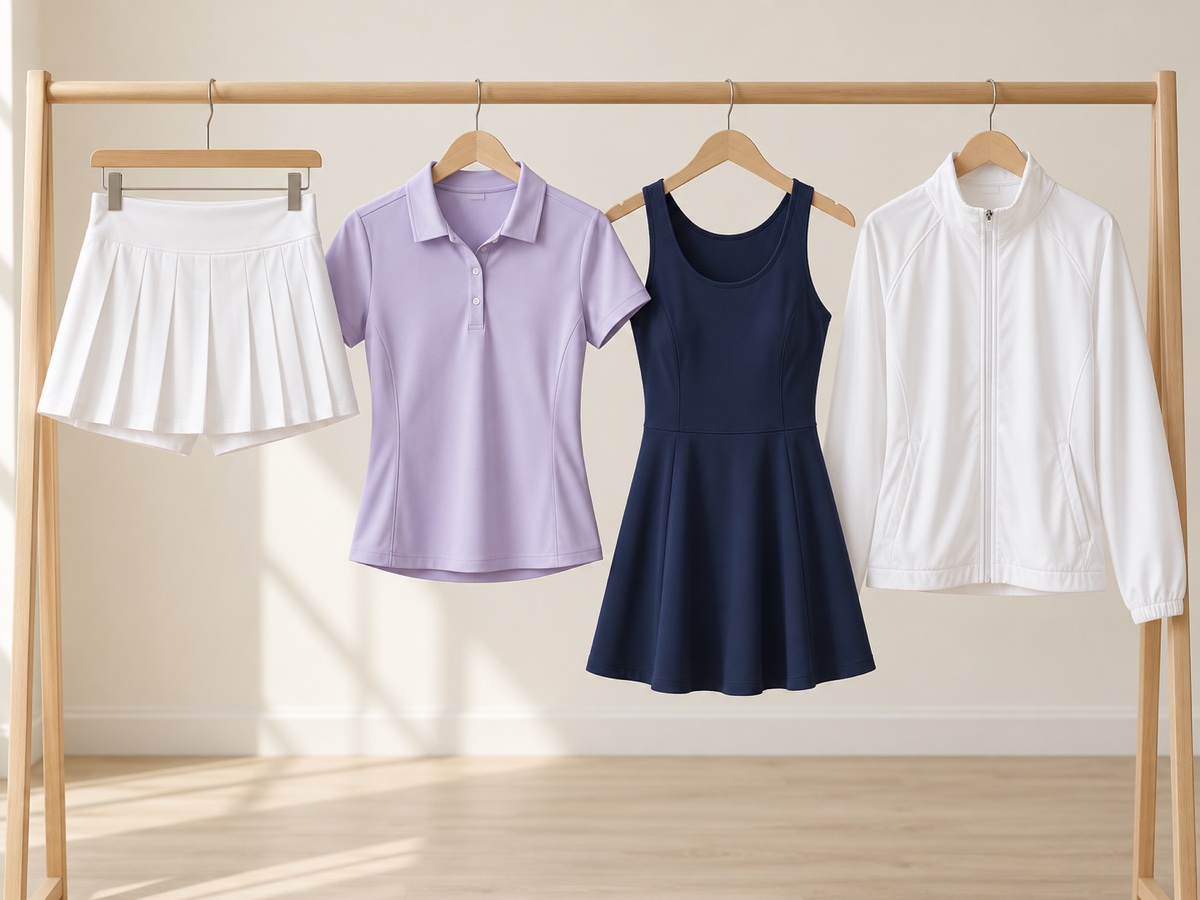
Caption: AI-generated assortment illustration. It helps discuss garment roles only and does not represent an approved inPACE range, material, fit or tennis-rule assessment.
How should a tennis skort be briefed within a collection?
Define the skort as one product in the range, not as a shorthand for every skirt-like garment. State the intended wearer, length direction, waistband, outer layer, liner plan and whether a pocket or other feature is required. If the buyer has a preferred reference, annotate what should stay and what should change. A skort concept can be compared with a tennis dress or separate short, but each item needs its own fit and construction record.
The liner may be a central buyer question, but the product team should describe the required configuration rather than assume a universal design. Identify whether a separate short is requested, which material direction is being considered and what the first sample should demonstrate. If a pocket is involved, state the item it is meant to hold and how the buyer wants to assess access. Do not infer pocket capacity or retention from a product photo.
Keep the detailed development of liner and pocket decisions in a dedicated review. The pickleball skort manufacturer guide covers related product-level questions; this tennis collection article focuses on how a skort fits among dresses, polos and club or retail products. The two sports may share garment forms, but the buyer should specify the intended product and use rather than assume one brief applies unchanged to both.
How should a tennis dress be compared with a two-piece outfit?
Compare the garment roles before choosing colourways or decoration. A dress can simplify a collection into one item, while a polo and skort can be selected separately; the buyer may value either format for its own range. The article does not assume that one format sells better. Ask the club, retailer or brand team which option fits its customer, then decide what the sample should answer about fit, coverage, styling and how the garment is worn with any planned layer.
Record the dress silhouette with front and back references, sample size, desired length, neckline, armhole or sleeve direction, closure and any built-in or separate component that the buyer expects. If the team is considering a built-in short or pocket, identify that as a construction decision and specify how it will be reviewed. A dress photo can illustrate an overall shape but does not confirm hidden construction or details across a size range.
When comparing a dress with a top-and-bottom combination, keep the questions comparable. The brand might review whether each option fits the desired product role, how the sizing system will be presented and which branding locations are available. Those choices should be documented for each garment. Do not treat a photograph or a single wearer’s preference as evidence about every buyer in the channel.
What should a tennis polo specification include?
Name the catalog or design reference and the intended role: player garment, staff polo, team presentation or club-shop item. Then define the details that need review, such as collar shape, placket, sleeve length, body length, fit direction, colour and branding location. If the polo will be worn with a skort or warm-up layer, identify the pairing and note any length or proportion relationship the buyer wants to assess.
A polo listing can help the buyer describe the intended silhouette. The short-sleeve performance polo reference shows an existing catalog direction; its image and page do not establish that the fabric, decoration, sizing or other options apply to a separate tennis project. Confirm the exact product scope and use the actual sample to review its details.
For a club or retail program, keep the logo file, dimensions, position and application method connected to a named garment version. A crest placed on a polo should not automatically be copied to a dress or skirt without a separate placement review. If the brand needs several logo treatments, list them by product and sample the relevant version before approving the collection. Maintain artwork ownership and approval records according to the buyer’s own process.
How should colour and branding connect the range?
Build a colour plan by product role. Name the core garment colours, optional accents, contrast panels and any club-specific palette. Clarify which colours apply to which styles and components: a polo body, collar, placket, skort panel and jacket zipper may not share the same material or colour reference. Distinguish an approved colour standard from a screen image, descriptive name or proposed palette.
A range can look coordinated without making every item identical. Decide which elements should repeat, such as a core neutral or logo treatment, and which can vary by garment. Record whether the collection uses the same branding placement across items or whether the buyer expects a different treatment on each. Ensure the palette and logo files are versioned with the sample so that a visual review does not get separated from the files later used for approval.
If event, league, club or retailer requirements apply, ask the buyer to supply the current rules and identify who will confirm compliance. Requirements may differ by event, market and garment; a manufacturer cannot infer them from an image. This article does not interpret a governing rulebook. Keep that check separate from sample fit and appearance approvals, and document the source the buyer has confirmed.
Which material details should be confirmed before sampling?
Identify the material reference for each garment and component when available. Record supplier or internal code, composition if documented, colour reference, finish and any confirmed care or test information. Separate a buyer’s target from a verified material specification. A skort liner, polo body and warm-up layer may need different materials; do not assume a fabric selected for one style automatically applies to all others.
The activewear bill of materials guide explains how to connect components and versions in a product record. For a tennis capsule, a BOM can list main fabric, liner, thread, elastics, labels, trims, artwork and packaging by garment. Mark unknown items as open and identify who can approve a selection or substitution. This helps prevent a color or trim choice from being treated as confirmed before it is reviewed.
Avoid claims about UV protection, moisture management, stretch, recovery, durability or other performance from a fiber name, product image or general description. If a claim is part of the brand’s product plan, define the exact wording, scope and evidence needed with the appropriate technical reviewer. A swatch can support some material comparisons, while a garment sample can answer specific construction questions; neither replaces a test where one is required.
How should fit and size approval work across a collection?
Choose the fit sample size and size chart for each garment. A dress, polo, skort and jacket have different measurement points and may require separate fit comments. Name the intended market labels, units, points of measurement, methods and current chart version. Identify whether a garment is meant to fit close, relaxed or another project-defined way, then connect that direction to the sample reviewers and buyer decisions.
Do not assume that approval of one item or size settles the rest of the collection. A polo sample may answer questions about the collar and sleeve but not the skort length or dress fit. Decide which sizes and garments need review before using fit information for a size range. The activewear fit-model brief helps structure movement, observation, sample identity and decision-owner notes.
For any movement review, name the garment, size, sample version, material and observation. Keep comments specific: what was seen, under which agreed condition, where it occurred and what question the buyer wants to resolve. Avoid treating one wearer’s preference as a universal fit standard. Reviewers should consolidate feedback and identify the person authorized to decide whether a proposed revision matches the brand’s intent.
How should the collection move from first samples to production approval?
Development samples answer questions about design direction, fit, construction and materials. A production release applies to a defined order and the versions that the buyer accepts. Keep those decisions separate. The buyer should identify the exact style, pattern or fit block, sample size, fabric and trim references, colour, artwork, labels, packing and size or quantity plan that will control the order.
A collection approval can include several garments, but each item needs its own status. Record which samples are accepted, which need revision, which materials remain provisional and which product decisions are still open. If a polo is approved but the skort liner is not, do not summarize the capsule as fully approved. Name the approval owner and retain the files that support each decision.
Before bulk production, agree which checks apply to each garment and who signs them off. A buyer may require measurement, colour, material identity, workmanship, logo placement or packaging review, depending on the order. This is an example list, not a universal standard. If any approved input changes, record the revision and decide whether another sample or review is needed before using the changed version.
What should a buyer send a tennis apparel manufacturer?
Prepare a concise collection packet before asking for a sample or quote. Identify the brand, club or retail channel; the intended wearer; each garment role; the selected product references; desired fit and size range; colours and artwork; material status; sample questions; and the person who consolidates comments. Provide marked front and back views and label each file as confirmed, provisional or open.
Use this checklist to keep the first discussion focused:
- List the garments in scope and the role of each item.
- Separate player, club staff and retail customer needs where they differ.
- Identify catalog references and every proposed change.
- Provide fit charts, base sample sizes and measurement methods by garment.
- Show the colour plan and logo placement by product.
- List fabric, liner, trim and label references or open selections.
- State the sample questions and any buyer-supplied event requirements.
- Name the feedback owner and approval decision maker.
- Keep sample, BOM, artwork and specification revisions together.
- Separate development review from the final order release.
For a project-specific conversation, share the collection brief, product references and current files through the inPACE contact page. The custom activewear development route is relevant when the project introduces new fit, fabric, construction or product features. A complete request lets the team discuss scope and missing inputs; it does not establish price, minimum quantity, timing or a production commitment before the project is confirmed.
A well-planned tennis apparel range gives each garment a clear job and each sample a clear question. It connects skorts, dresses, polos and layers through a buyer-approved brief, while retaining individual fit and construction records. Product references and images help start the discussion; confirmed specifications, appropriate reviews and explicit approvals determine which version can move forward.
Product directions
Explore relevant activewear products
Use these product pages as practical references for your brief, then confirm materials, fit, customization, and production details through sampling.
A-Line Tennis Skirt Reference
Use this catalog style to describe a starting silhouette; confirm fit, materials and options for the new range.
View product directionPerformance Polo Reference
Review an existing polo direction, then define the fit, colour, branding and fabric scope for the project.
View product directionCustom Activewear Development
Use the factory-custom route when the collection needs new fit, fabric, construction or product features.
View product directionFAQ
Buyer questions
What products can a tennis apparel manufacturer develop for a brand?
A buyer may discuss skorts, dresses, polos, warm-up layers or other garments based on the collection brief. The product list, materials, fit, branding and sample plan need to be confirmed for each project. A catalog image alone does not establish available options or an approved product specification.
How is a tennis collection different from a single skort project?
A collection brief defines the role and approval questions for several garments, such as a skort, dress, polo and layer. Each item still needs its own fit, construction, material and branding record. A single-skirt or skort brief can go deeper on that garment’s details without covering the full assortment plan.
Can a catalog tennis skirt be used as the specification for a new range?
Use it as a visual starting point and name the exact reference, then document what should stay or change. The product page does not confirm that its materials, measurements, colours or options carry over to a new project. Confirm those details in the brief and review the actual sample.
Should a tennis dress or a polo-and-skort set lead the collection?
That depends on the buyer’s customer, channel and range strategy. Compare the product roles and decide what each sample should help the team learn. The article does not assume one format sells better. Gather buyer or wearer input appropriate to the brand before approving an assortment direction.
What should a club include in a tennis polo order brief?
Identify the polo reference, wearer, fit and size chart, colour, collar and sleeve direction, logo file, dimensions and placement, and any club-specific requirements. Confirm which details are already approved and which need a sample review. Do not assume the same branding treatment applies to every garment in the range.
Do sample images confirm tennis event or dress-code compliance?
No. Images can support design discussion but do not confirm compliance with a club, event, league or market rule. The buyer should supply the applicable current requirements and identify who will verify them. Keep that confirmation separate from garment fit, material and appearance approvals.
How many sizes should be reviewed before approving a tennis capsule?
There is no universal number for every brand or garment. Define the size range and decide which sizes or fit blocks need review for each style. One polo or skort sample does not automatically establish fit for every size, colour or other product in the collection.
What should be approved before production of a tennis apparel collection?
Identify the order scope and approved version for each garment, including sample, pattern or fit block, material, colour, artwork, labels, size and quantity plan, and packing as applicable. Agree the checks and sign-off owner for each item. A development sample alone does not release a different bulk order.