
A uniform enquiry often starts with a team logo and a headcount. Those are useful inputs, but they leave much of the order undefined. Does everyone receive the same top? Are shorts and skorts separate options? Does the printed name match the roster spelling? Who confirms a late size change, and which packing record tells the team manager what should be inside each kit?
This guide uses an illustrative adult club-team order to explain those decisions. It is not a report of an inPACE customer or a tournament-approved collection. The focus is turning a roster, garment references and artwork into an order a supplier can understand. For the broader choice of training and match garments, start with the pickleball training and tournament apparel guide.
Where the team needs new fit, material or construction work, use the custom activewear development route. Where the garment is accepted and the request concerns logos, labels or presentation, define the narrower private label scope. A team name on an existing polo and a newly developed team polo are different projects, even if their finished illustrations look similar.
What must the team roster tell the manufacturer?
Treat the roster as an order input with an owner and a version. It should connect each wearer or kit identifier to the exact garment, fit option, size, colour, personalised text and quantity. The supplier should not need to interpret a chat history to discover whether the latest name spelling or size choice replaces an earlier one.
Use a stable identifier even when names will be printed. Two people may share a surname, and a nickname may change without changing the wearer. An identifier helps the team manager reconcile updates and packed kits. Share the information necessary for the order; a factory does not need unrelated personal details to make and identify a uniform.
Separate the garment size from the wearer's usual retail size. Ask the wearer or responsible fitter to choose against the agreed garment reference and size information. If the team uses more than one fit block, record which one applies. A size label without the product and fit reference can be ambiguous, particularly when tops and lower-body garments are different styles.
The following fields form a practical roster template. They are proposed controls for an order, not data from a real team.
| Roster field | Decision it controls | Check before approval | Responsible team role |
|---|---|---|---|
| Wearer or kit identifier | Which allocation the line belongs to | Unique and stable across revisions | Team order coordinator |
| Product and fit reference | Which garment will be made or supplied | Matches the accepted sample or specification | Product or fit approver |
| Size and colour | The specific garment variant | Confirmed separately for each item | Wearer selection owner |
| Exact personalised text | Name, initials or number where required | Spelling, case, accents and permitted characters | Artwork and roster approver |
| Quantity per item | How many pieces enter production | Includes approved extra or replacement pieces | Purchasing contact |
| Artwork version and approval | Which layout applies to the line | Agrees with the garment and current roster | Final order approver |
Do not leave blanks with meanings that the supplier must guess. A blank name could mean no personalisation, missing information or a generic spare. Use an explicit status agreed with the supplier. Likewise, identify a sample, a paid order item and a proposed extra separately so that provisional pieces are not included accidentally in production totals.
At each revision, summarise the changes: a size replaced, a garment option changed or a new piece added. Send the complete current roster as well as the change summary. A supplier can then reconcile the new version against the accepted order, flag consequences and confirm which earlier version is superseded.
Can one team identity include different garment fits?
Yes, but define what is shared and what is independent. A team can use a common colour direction and branding arrangement while offering different garment bodies or lower-body options. The goal is a coordinated appearance with accepted fit, rather than forcing every wearer into one pattern or assuming that equivalent size labels produce equivalent fits.
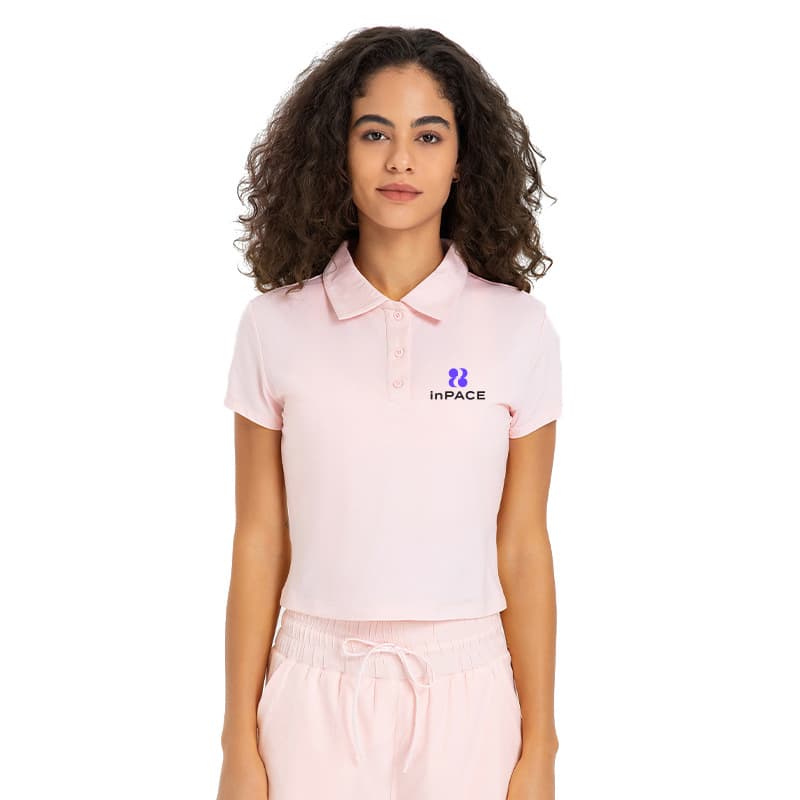
The short-sleeve polo reference shows a collar, button placket and chest branding area. Use those visible features to discuss a team-top direction. The image does not confirm your sleeve length, body length, fabric performance or artwork placement. State which features are references and which require an actual sample decision.
A pleated court skort reference may form another part of the same visual range. Review its outer shape, inner construction and intended coverage independently of the polo. Matching colour names do not establish a physical colour match across different fabrics. The buyer should review the materials and garments together where coordination matters.
Fit comments should describe the wearer, garment reference and observation without treating gender or team membership as a sizing specification. Record the sample size and relevant measurements. For a top, note how the collar, armhole, sleeve and hem behave during intended movements. For a lower-body item, review the waistband, opening and coverage in the garment combination the team expects to wear.
Allow tops and bottoms to have separate size choices in the roster. If a packed kit contains one top and one lower-body item, the packing instruction must preserve both selections. A convenience rule that assigns the same size letter to both can create an error even when the total number of kits is correct.
If sample feedback requires a new pattern or material decision, update the project scope. Do not hide development work inside an artwork revision. The supplier should explain which accepted features may be affected and whether another sample is needed before the revised garment can be associated with final roster sizes.
Who confirms that the team colours are suitable for the event?
The team should nominate an event contact to check the actual tournament requirements. Under the 2026 USA Pickleball Official Rulebook, the sanctioned-tournament provision at section 18.B.3 permits a director to require an apparel change, including a colour approximating the ball. That event authority is separate from the factory's approval of a physical colour sample.
Ask about the relevant rules and ball colour before fixing the uniform artwork. Where an alternative is needed, decide whether it is another colour of the accepted body or a different accepted garment. The alternative should have its own clear identifier in the roster and order. “Use the spare one” is not a sufficient instruction if several versions exist.
Review the full appearance, including panels and prominent graphics, rather than relying only on a small digital swatch. The event contact addresses the organiser's requirements. The buyer's product approver addresses the actual material, colour and garment references. Keep both decisions in the record without implying that one approval automatically supplies the other.
Names, numbers, sponsor marks and team insignia should follow the team's plan and any actual event requirements. Do not assume that every pickleball uniform must include all of them. Supply authorised artwork and identify who can approve its use. A manufacturer preparing a garment does not thereby certify it for a league or tournament.
How should personalised artwork be checked before production?
Approve the content and layout separately. First confirm the exact text on each roster line, including capitalisation, spaces, accents and any number. Then review how that content fits the proposed garment and placement. A correctly spelled name can still need a layout adjustment, while a visually balanced proof can still contain the wrong text.
Ask how the layout will handle long and short names. Decide whether the text size stays fixed, whether a permitted width range applies or whether specific long entries need separate approval. Use actual roster entries for the proof review with the buyer's permission. Do not let the factory silently abbreviate a name to fit an area that was approved for a shorter example.
Identify the placement with a drawing or agreed measurement reference. For a polo, consider the relationship with the placket, collar, seams and intended size range. A chest mark positioned only by eye on a digital image may not provide enough information for consistent application. The supplier should review the layout on the actual garment construction and flag any conflict.
Keep team-wide artwork distinct from person-specific content. The club logo might use one accepted file, while the back name varies by roster line. If a sponsor mark changes, identify which garments and proofs are affected. One replacement file should not automatically overwrite an already approved layout for an unaffected garment or alternative kit.
Use a final proof record that shows the garment reference, artwork revision, placement, colour direction and approved text source. The team approver should confirm it against the current roster. If the order changes afterwards, ask the supplier to confirm what can still be revised and what consequences follow before issuing a new production instruction.
Which branding method suits the proposed team garment?
Choose the method with the actual fabric and artwork in view. Printing, transfer and embroidery present different development questions; none is automatically the correct answer because the item is called a jersey or a polo. Use the logo-method discussion for stretch activewear to identify the relevant proof and sample checks for the proposed application.
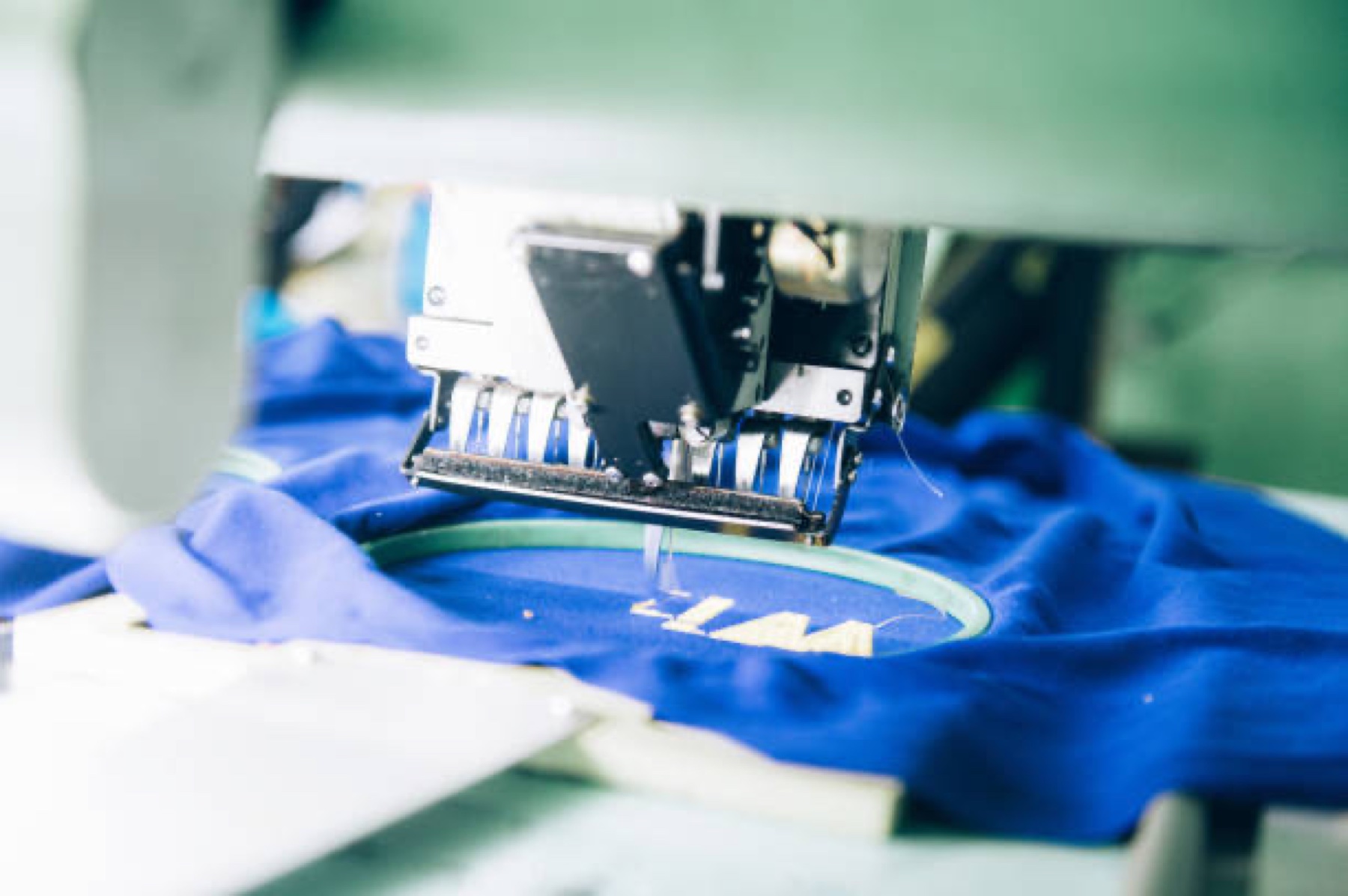
The embroidery image is a process reference. It does not show an approved pickleball team order, establish the method used on the pictured polo or confirm that embroidery suits every proposed material. Review the actual artwork, garment and application sample before selecting a production method.
For the team top, ask how the proposed application affects the garment's appearance and feel in the intended area. Consider the size of the mark, its relationship with stretch and seams, and the reverse surface where it may contact the wearer. These questions help define a sample task; they are not evidence of a problem or a passed result for a method in general.
Use fabrics and trims to connect branding requirements with the material decision. If the material changes after the artwork proof, ask whether the application needs another review. A digital logo file can remain unchanged while the physical result differs on another fabric or colour.
Confirm the care-related review appropriate to the project. Record the material, application, sample condition and agreed procedure before assessing appearance or other requested properties. Do not describe an informal observation as a standardized test, and do not assume that a process photograph establishes wash durability or suitability for your team garment.
What approvals should be complete before the roster becomes an order?
Connect the roster to accepted physical and visual references. The sample-to-bulk guide explains the wider handoff, but a personalised team order adds a specific requirement: the approved garment and artwork must remain connected to the correct wearer or kit allocation. A single signed sample cannot confirm every variable name or size choice.
Use the following approval record to find gaps before production. The documents may be combined where that is practical, but their different decisions should remain clear.
| Approval area | Reference to retain | Question to close | Effect of a later change |
|---|---|---|---|
| Garment fit and construction | Accepted sample and specification | Which body and fit option are approved? | May require another garment review |
| Material and colour | Agreed physical reference and version | Which actual combination will be used? | May affect fit, appearance and branding |
| Event appearance | Confirmation from the team's event contact | Which uniform and alternative are acceptable for the event? | May change colour or artwork scope |
| Personalised artwork | Final layout and approved roster version | Does each line contain the correct text and placement? | Requires a defined proof revision |
| Quantity and packing | Accepted order breakdown and kit list | Can every piece be assigned and counted? | Requires totals and allocation to be reconciled |
Nominate the person who can release the final order. Other team members can review spelling, fit or appearance, but the supplier needs a clear decision when comments conflict. State whether an approval covers only the reviewed feature or the whole remaining scope. The phrase “approved” should always have an identifiable object, version and responsible person.
Discuss manufacturing and inspection against the current specification and artwork. Identify how the supplier will report a discrepancy and who decides the next action. Fit approval, artwork approval and production inspection are connected checks, but each has its own purpose. None establishes that every garment will suit every wearer without the relevant product and size decisions.
How should quantities and team-kit packing be reconciled?
Count garments as well as people. A team may order a top for everyone, different lower-body options and separately approved extra pieces. The number of members therefore does not necessarily equal the quantity of any one style. Use the size and colour quantity plan to total each product variant from the accepted roster.
If the buyer wants individual kits, define exactly what each kit contains. The identifier on the kit should connect to the correct top, lower-body item and any alternative garment. A missing short cannot be explained away by a surplus top elsewhere in the shipment. Reconcile piece totals by style, colour and size, then reconcile the kit contents against those totals.
Distinguish unpersonalised extras from wearer-specific items. A generic spare may need a different label or allocation status, even when its body and colour match the team order. Confirm how it should be packed and counted. Do not create extra names or numbers to fill unused roster fields when the buyer intends a blank garment.
The packaging checklist helps connect the unit label, kit identifier, carton information and packing list. Give the receiving team a usable record so it can check the order before distribution. If items are packed by garment type instead of wearer, make that choice explicit; the team then needs a clear distribution list for assembling kits locally.
Review a representative packing example where appropriate. Confirm that a label identifies the intended item without confusing an internal code with the personalised text. Keep the approved packing version with the order. A roster change that affects a kit should trigger a check of the garment line, artwork where relevant, and packing allocation together.
How should a team handle late changes and an event date?
Establish a process for changes before they occur. A request to replace one size, add a member or change a name should identify the current order line and the requested replacement. Ask the supplier to confirm the affected work and whether the change is still feasible at the current stage. Sending a revised spreadsheet is not itself confirmation that the production instruction has changed.
Treat the event date as a planning input. Review garment development, approvals, production, transport and receiving as separate parts of the plan. Leave the team time to reconcile and distribute the delivered items according to the agreed schedule. The date printed on a tournament invitation does not create a delivery commitment from the factory or transport provider.
Use the development and order process to identify the next dependency. If the garment fit is open, collecting final personalised quantities may be premature. If only spelling is open, focus the review there. A clear sequence lets the team decide what to resolve next without assuming that every pending issue has the same effect on the order.
How can inPACE support a team uniform project?
inPACE can begin with the team's garment references, roster structure and artwork to discuss the required development and branding work. Useful support includes turning fit observations into sample questions, reviewing the proposed material and logo area, and connecting approved garment versions to the production and packing brief. The team retains responsibility for its wearer selections, authorised artwork and event information.
The company's garment-production background, including Yinshan Garments' experience since 1986, provides context for that coordination. It does not establish an event endorsement, a completed team project or a guarantee about a proposed garment. Product scope, materials, sample work, production arrangements and commercial conditions need confirmation for the actual enquiry. A clear roster and named approver help the discussion move from a general team look to the specific references and decisions needed for the next step.
What should a team send for a custom uniform review?
Send a brief that can be reconciled, not just a mood board. Mark estimates and unresolved selections so that the supplier can respond to the current state of the project. Keep the exact roster separate from informal team discussion, with one contact responsible for communicating accepted changes.
- Describe the team, intended use and actual event where relevant.
- Identify the order coordinator, fit reviewer, artwork approver and final decision-maker.
- Provide the garment references and explain what should remain or change.
- List the proposed fit options and size information for each garment.
- Use stable wearer or kit identifiers in a versioned roster.
- Supply exact personalised text, with explicit instructions for blank or generic pieces.
- Provide authorised logo and sponsor files where these are part of the plan.
- State the accepted colour direction and any required alternative uniform.
- Identify the sample, material, movement and branding questions still open.
- Share quantities by product, fit, colour and size, marking estimates clearly.
- Describe individual-kit or garment-type packing and the receiving record required.
- Include the event date, requested delivery plan and process for approving later changes.
Send your team roster, garment references, event requirements and approved artwork to inPACE for a custom pickleball uniform review. Include the decisions still needed, so the proposed next step can address the garment, artwork and order records together.
Product directions
Explore relevant activewear products
Use these product pages as practical references for your brief, then confirm materials, fit, customization, and production details through sampling.
Polo Uniform Reference
Use the collar, sleeve and chest branding area to discuss a team top with its own fit and artwork proof.
View product directionPleated Court Skort Reference
Consider a coordinated lower-body option while reviewing its size, coverage and construction separately.
View product directionCustom Activewear Development
Connect the team roster and event needs with confirmed garment, artwork and production decisions.
View product directionFAQ
Buyer questions
What information is needed to quote custom pickleball uniforms?
Provide garment references, proposed fit options, quantities by style and size, colour direction, branding scope and any personalisation. Identify the destination, packing needs and event date where relevant. Mark unresolved inputs clearly. The supplier can then discuss the sample and quotation scope without treating a team headcount as a complete product order.
Can players choose different sizes for tops and bottoms?
Yes, the order can be discussed with separate size selections for each garment. Record the product, fit option and size on each roster line. If pieces are packed as individual kits, the kit list must preserve both selections and reconcile them with the total quantities for every garment variant.
Are player names and numbers required on all pickleball uniforms?
Do not assume they are universally required. Confirm the team's plan and the actual event requirements, then provide the exact text and authorised artwork where needed. Use an explicit instruction for unpersonalised garments or generic extras so that a blank roster field is not mistaken for missing information.
Who approves the tournament colour and alternative kit?
The team should assign an event contact to confirm the organiser's requirements. The buyer separately approves the physical garment, colour and artwork references with the supplier. Keep both decisions recorded. A factory's colour proof or garment sample does not itself grant event approval.
Can the same artwork file be used across different garment sizes?
The source file may be shared, but placement and layout need review against the actual styles and size range. Check long names, available space, seams and the agreed branding area. Define how any size or width adjustments are approved rather than allowing unrecorded changes during application.
Is sublimation always the right method for a pickleball jersey?
No method should be selected only from the garment's sport or name. Review the actual material, artwork, placement and required evidence with the supplier. Printing, transfer, embroidery or another proposed process needs an appropriate application review. A digital proof does not establish the physical result or care performance.
What happens if the team roster changes after approval?
Identify the affected line, current version and requested change, then ask the supplier to confirm feasibility and consequences at the current stage. Reconcile garment quantities, personalised artwork and packing allocations where affected. Keep one accepted current roster; sending a new file alone does not confirm that production has been revised.