
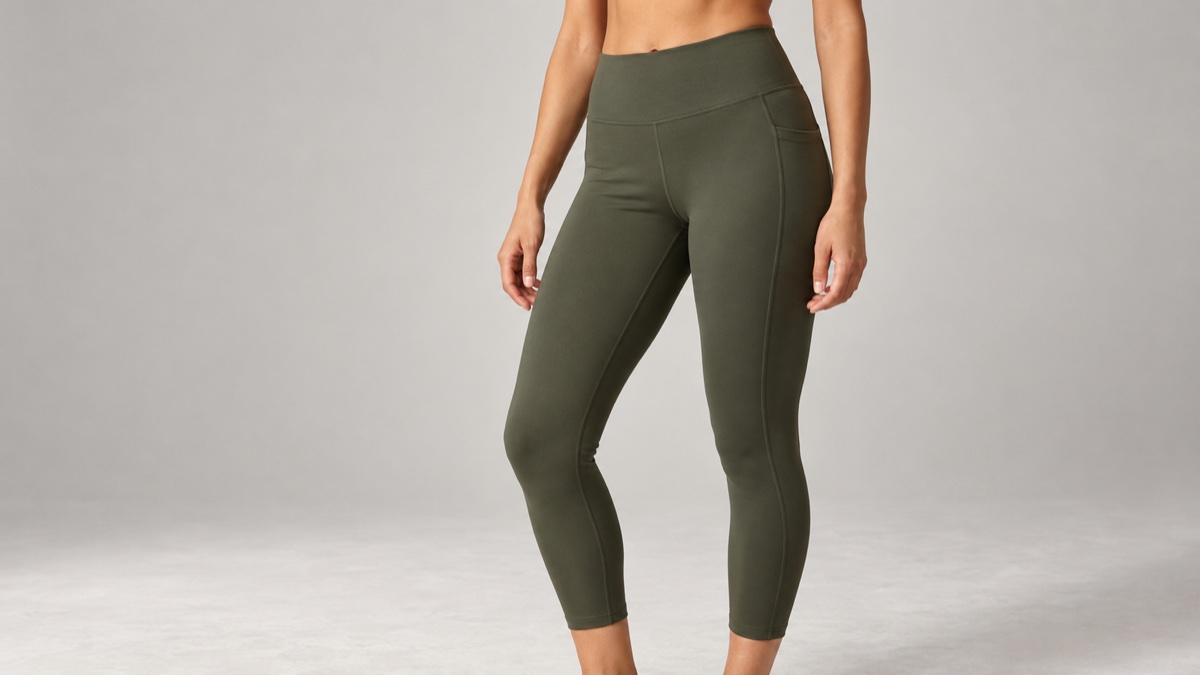
Direct answer. A custom leggings manufacturer needs a development brief that identifies the wearer, use, fit block, waistband, gusset, pocket plan, fabric direction, size range and the questions the first sample must answer. Review each choice on an identified sample and record approved changes by version. A photograph or fabric swatch cannot establish opacity, compression, fit across sizes or production approval.
This guide is for activewear brands, studios, teams and retailers developing leggings whose fit, fabric or construction needs to change. It helps a product team turn a concept into a reviewable sample plan. If the project begins with only a reference photo, the team still needs to define which features should stay, which should change and what the first sample is expected to show.
The route here is Factory Custom Product Development. If a suitable existing style already meets the product brief and the work is limited to agreed branding, labels or packing, start with the workout leggings wholesale supplier guide. This article covers new or revised fit, fabric, pattern, construction or feature decisions. It does not set a universal leggings block, opacity threshold, compression level, minimum order, price or lead time. Those conditions depend on the confirmed product scope and the buyer’s approvals.
What should a custom leggings manufacturer know before pattern work?
Start with the intended wearer and product job. Describe the activity, wearing context, preferred coverage, expected layering and the channel in which the garment will be sold. A training legging, a studio tight and a travel layer may share a silhouette name while needing different decisions. The name alone does not tell a product team which body areas, movements or styling details matter.
Separate product objectives from marketing claims. “Full length,” “high rise” and “side pocket” can become sample questions if the brand defines its reference. Words such as squat-proof, shaping, compressive or stay-put imply results that require clear definitions and evidence. During development, frame these as questions to investigate. Do not treat a fabric handfeel, a model photo or one fitting comment as proof of a performance statement.
Record what is fixed and what remains open. For example, the buyer may have approved a high-rise direction but still be choosing between a clean front and a concealed waistband pocket. Mark each item as confirmed, provisional or undecided, name the person who can approve it, and state which sample should answer the open question. A short priority list helps the manufacturer and brand resolve conflicts instead of guessing which preference matters most.
Provide annotated front and back references, fit size, chart, rise and length, waistband and gusset direction, pocket function, material, seam preferences and sample questions. Mark each detail confirmed, provisional or open.
How does Factory Custom differ from wholesale leggings?
Wholesale selects a known style and confirmed options, then defines branding, quantities and packing. Development begins when the brand changes fit, fabric, rise, waistband, gusset, seams, pocket or another garment feature. Because these changes affect pattern, materials or sample review, they need a separate brief and approval path.
Use a catalog as a visual starting point, not a specification. The AW-003 training-legging reference can identify a silhouette for discussion; its listing does not establish measurements, material, colour or options for a custom project. Name the starting reference and list every change before quoting or sampling.
When a request changes a pocket, waistband or fit, document it as development and confirm its sample and production scope. Keep simple approved logo placement on the wholesale path when the base style remains unchanged.
| Buyer request | Likely route | Information to confirm | What the image cannot establish |
|---|---|---|---|
| Choose an existing style and add an agreed logo | Wholesale / light customization | Style reference, available options, artwork, quantity and packing | Actual decoration quality or current availability |
| Change the rise, waistband or fit block | Factory Custom development | Base block, fit intent, measurement points and sample size | Fit on the intended wearer or all sizes |
| Add or reposition a pocket | Factory Custom development | Pocket purpose, opening, placement, dimensions and sample review | Capacity, retention or comfort in use |
| Request a different fabric or lining | Factory Custom development | Material target, confirmed composition and evaluation plan | Opacity, recovery, durability or performance |
For an overview of the product path and sampling discussion, use the sports bra and leggings development route. This article stays with leggings construction and sample decisions rather than repeating the broader service page.
Which fit block should the team use as its starting point?
A fit block is a pattern starting point tied to measurements and construction assumptions. It is not simply a size label. Before the first sample, identify the intended base size, the body or garment measurement reference the team will use, and the fit characteristics that should be retained or changed. Clarify whether the request is for a close fit, a more relaxed leg, a different rise, a longer body or another defined adjustment.
Document the measurement method alongside the target measurement. A point of measurement should identify where the tape starts and ends, whether the garment is laid flat or measured around, and what condition the sample should be in. The activewear measurement spec guide explains how POM definitions, methods, sample identity and project-specific tolerances connect. Avoid making up a universal tolerance or grading rule when the buyer has not supplied one.
State whether one base size is enough for the first review. A sample in one size can help the team discuss construction and proportion, but it cannot prove fit across a planned range. Buyers should decide which additional sizes, fit blocks or wearer reviews are required before sales or production decisions are made. If the range includes a different rise or body proportion, ask whether a single block is appropriate or whether the project needs separate fit work.
Identify each block and sample by size, date, pattern revision and material. A comment such as “tight at the waist” needs that context to guide the next sample rather than another style.
How should rise and waistband construction be briefed?
Describe the desired rise with a reference point and a measurement method. Terms such as high rise or mid rise are useful shorthand only when the team knows where the top edge should sit relative to the body or to a named garment reference. Record front and back rise separately when the design or wearer feedback calls for it. Note whether the waistband should remain the same depth around the body or change between front and back.
The construction brief should identify whether the waistband is a self-fabric panel, a folded extension, a separate band or another proposed route. Include the seam location, edge finish, topstitching and any internal component such as elastic if it is part of the intended design. If the team has not decided, keep the option open and ask the first sample to compare a limited number of constructions. Avoid adding an internal support feature simply because a reference image appears to have one.
Review the waistband at rest and during named movements. Record whether the top edge rolls, folds, gaps, shifts or creates a visible line, but treat these as observations on the sample and size reviewed. The same comment may have different causes: pattern balance, band depth, material behavior, garment size or how the wearer positions the garment. The team should investigate rather than assume a single fix.
Clarify whether a drawcord, pocket, seam or logo is allowed in the waistband. Each feature can affect bulk, stretch, placement and appearance. State the requested position and functional purpose, then inspect the sample for the specific question. Avoid making an unverified claim that a waistband will not roll or will stay in place in every use condition.
What gusset decisions belong in the first sample brief?
A gusset is a pattern and construction choice that changes seam intersections and material placement through the crotch area. Decide whether the design calls for a diamond, triangle, elongated or other gusset shape, or whether the manufacturer should propose an option for review. Provide a sketch, reference or annotated pattern view when possible. Also identify the intended seam arrangement, whether the gusset uses the main body material, and which areas should be free of bulky intersections.
Do not rely on a front product photo to define the gusset. Include an inside view or a simple marked diagram that shows its shape and seam joins. If the garment is intended for a specific movement context, list the movements the wearer or reviewer will use when assessing sample comfort and coverage. These observations can guide revision, but they do not prove the garment is suitable for every person or activity.
During sample review, look at symmetry, seam placement, fabric tension, smoothness and any wearer-reported discomfort. Note where the issue appears and whether it occurs while standing, sitting, bending or moving. Avoid vague feedback such as “fix the gusset.” A useful comment identifies the sample, size, movement, location, observation and requested decision.
Changing the gusset can interact with inseam length, front and back rise, thigh fit and seam allowances. If the team changes several of these at once, it may be difficult to determine what improved or caused a new issue. Keep changes grouped by the question they are meant to answer and maintain a revision record so the approved construction can be traced to a specific pattern and sample.
How should pocket design be made measurable?
First state what the pocket is meant to hold and how the wearer is expected to access it. A phone pocket, key pocket and hidden waistband pocket may have different opening directions and placement needs. Identify the intended object using an example or dimensions, but do not describe an approximate visual opening as a confirmed capacity. The pocket should be reviewed on the actual sample with the relevant object and use movement if that is part of the project brief.
Specify which leg carries the pocket, its relationship to the side seam, waistband and hem, the opening length, pocket depth and any closure or binding. If a buyer has no fixed preference, ask for a sample proposal and compare alternatives. Record the garment size that was reviewed, since pocket position can look different when the pattern is graded or when the garment is worn by another body.
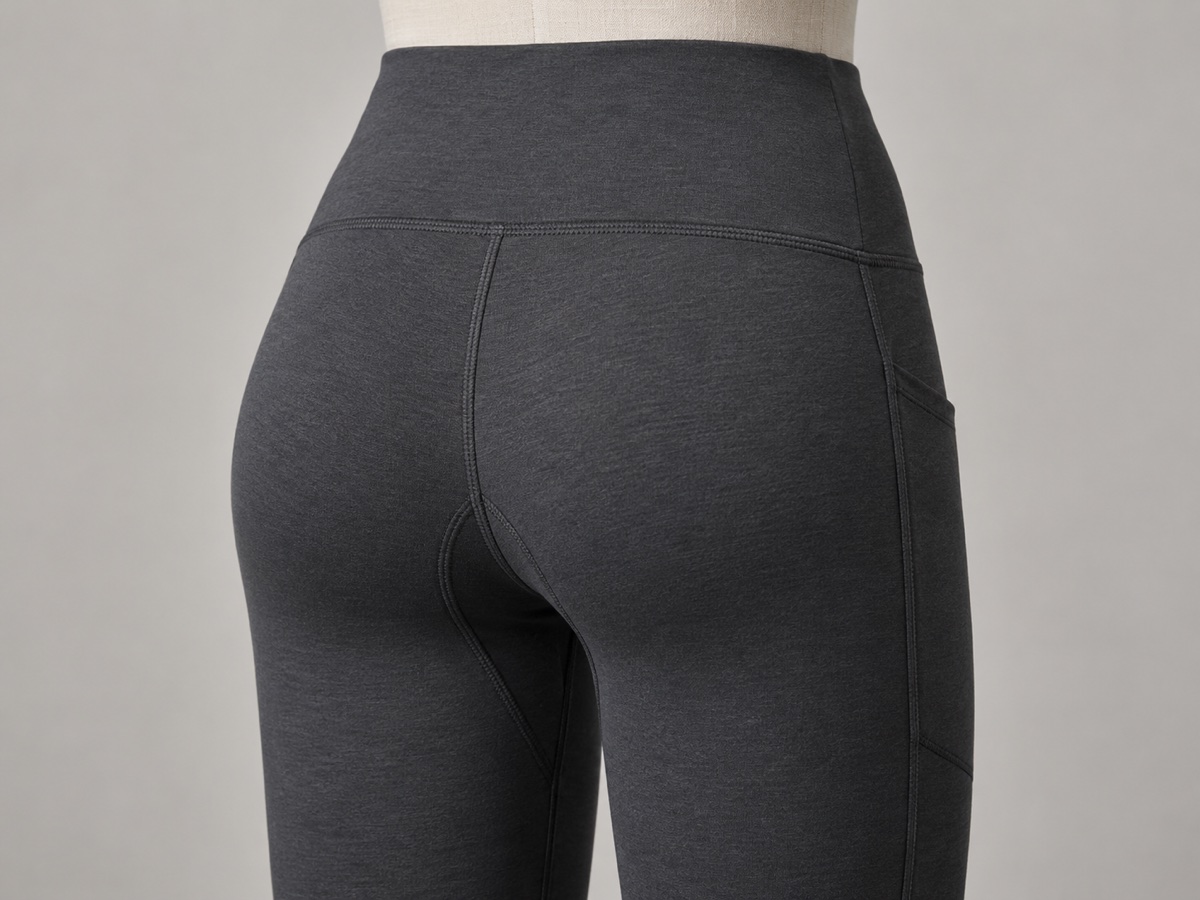
Caption: AI-generated development illustration. It is a visual reference only and does not verify pocket capacity, fit, opacity, comfort or production construction.
A visible pocket opening does not establish that an item will remain secure, that access will be comfortable or that the pocket can hold a particular device during movement. If those are product requirements, define the conditions and evaluation method with the brand’s product and technical reviewers. Keep those questions separate from simple styling decisions such as whether the pocket should be concealed or visually prominent.
Which fabric information is needed before sample approval?
Share the actual material reference when it is available: supplier or internal code, composition as documented, weight or construction data when confirmed, colour reference, finish and any relevant care or test information. Distinguish confirmed supplier documentation from a desired target. If the team is still choosing a fabric, label the sample as provisional and state what it is intended to help evaluate.
The activewear bill of materials guide helps teams keep fabric, thread, elastic, labels and other components connected to a named version. A legging brief should also say which garment panels use each material and whether the waistband, gusset or pocket bag uses a separate component. If a substitution is proposed, record who approves it and which checks must be repeated before the material is accepted.
Do not infer stretch recovery, opacity, compression, sweat performance or durability from the fiber name, a swatch, a product photograph or a fabric weight alone. The result depends on the actual material, construction, colour, layering, garment pattern and evaluation conditions. If the brand wants to make a claim, define the wording, product and test or review evidence with the appropriate specialists. The sample review should not silently turn into a performance certification.
A useful fabric review asks what evidence exists and what is still needed. A swatch may be suitable to compare handfeel, colour or surface direction, but it cannot answer every garment-level question. A sample can reveal how a material behaves in a particular construction, but claims about broader wear or care require a separately defined scope. Record the material version on every sample comment sheet.
How should opacity expectations be reviewed responsibly?
Opacity can mean a preferred studio appearance, coverage during movement or a formal claim. Define the intended use, garment colour, size, lighting, stretch condition and review procedure. If a third-party test is required, specify its method and acceptance criteria with the technical reviewer rather than inventing a universal threshold.
For a sample review, identify who assessed the garment and what they did. The brand may record visual observations under agreed lighting, during a named movement and in a specified size. Such notes document that review; they do not automatically establish a universal claim across every size, colour, production lot or wearer. If a formal result is needed, use an appropriate testing plan and retain its report with the product record.
A darker color, thicker-looking fabric or studio photograph cannot settle opacity. Stretching changes how a knit is viewed, while lighting, background and camera exposure can influence a photograph. Do not rely on online image editing or a model pose as approval evidence. When the first sample raises a concern, record the specific condition and ask whether the response should be a pattern, material, colour or construction change.
Keep the language in product copy aligned with the evidence actually collected. Until an appropriate evaluation is complete, describe the development status and design intent accurately. The manufacturer can discuss how a proposed material and sample relate to the scope, but the brand remains responsible for claims made to its buyers and for the evidence required in each market.
How can the team build a useful size range plan?
Name the intended market size labels and provide the brand’s approved chart or measurement targets. Do not assume that the same letter or number represents identical garment measurements across brands, markets or fit blocks. Indicate the sample size and whether the development question is about a base sample, grading, petite or tall proportions, extended sizing, or another range requirement.
Separate body measurements from finished garment measurements. If both are used, label them clearly and explain how each is measured. A chart should include units, measurement points, method, tolerances if already approved, and revision date. The brand should assign an owner for conflicts between an older chart and a new fit request; the factory should not choose silently between inconsistent references.
Decide which sizes require review. Some projects may begin with one sample for construction and then add sizes for fit review; others may require a broader fit-block plan before approval. The number and selection depend on the product and the brand’s evidence needs. One approved base sample should not be described as proof of fit for the entire range unless the brand has a justified review basis.
Record observations against size and sample version. A comment that is useful for a medium may not resolve a concern at a larger or smaller size. Keep each observation tied to the person who made it, the size, the material, the movement and the requested change. The activewear fit-model brief shows how to structure repeatable movement observations and keep reviewer comments linked to the sample under review.
How should fit comments turn into controlled revisions?
Use a repeatable review sequence: identify the garment, size, sample number, material and date; confirm the wearer and intended use; observe the garment at rest; then review agreed movements. Capture front, side and back images only where consent and internal process allow, and annotate the exact point being discussed. The aim is to make feedback actionable and traceable, not to collect photographs without context.
A strong comment names location, condition, observation, requested change and priority. For example, a note that sample L-02 in size M dips below the reference during a forward bend is more useful than “waist needs work.” Name who decides whether the revision matches brand intent.
Limit each sample round to a clear set of questions. If the team changes fabric, rise, pocket depth and gusset geometry at once, the next result may be difficult to interpret. Group requested revisions, mark decisions as accepted, rejected or pending, and identify the exact file or specification version that captures them. Where a new revision needs another sample, state what that sample is intended to validate.
Approval should state its scope. A sample may be accepted for visual direction while measurements or materials remain open. Another may be approved for construction but not for production. Use explicit status labels and name the person with approval authority. Do not convert silence, a photo response or a sample shipment into an assumed sign-off.
How does a development sample move toward bulk approval?
Development resolves product direction and sample details; production approval applies to a defined order scope. Identify the current sample, pattern, materials, colours, size and quantity plan, artwork, labels and packing. The sample-to-bulk production handoff guide explains how to connect an accepted sample to the order specification.
For a legging, make the accepted version precise: style, fit block, sample size, pattern revision, material and colour, waistband, gusset, pocket construction, seam map, labels and any approved decoration. State what has not been approved. A comment on one sample should not quietly authorize a different fabric or a change in the size range.
Before production, identify required checks and who signs them off. These may include measurement review, material confirmation, colour approval, artwork placement, workmanship criteria, size-set review or packaging details, depending on the buyer’s scope. Do not present this illustrative list as a universal legal or quality standard. The buyer and manufacturer should agree which checks apply to the actual order and retain the corresponding records.
A changed input can reopen an earlier decision. If material, pattern, colour, construction or artwork changes after sample approval, document the change and decide whether another sample or review is required. An explicit change log helps the team distinguish a controlled revision from an accidental substitution and supports a clearer reorder discussion later.
What should a buyer send for the first development discussion?
A useful package is brief enough to review but specific enough to frame the sample. Include the target wearer, activity and channel; a sketch or marked reference with keep/change notes; desired rise and leg length; waistband and gusset direction; pocket function and placement; size chart and base sample size; material references; seam and hem preferences; labels or artwork; open decisions; review owner; and the questions the first sample should answer.
Use this preparation list before sending files:
- Identify the product goal and the wearer or use context.
- Label references as visual, measurement, material or construction examples.
- Mark every detail as confirmed, provisional or open.
- Provide the current size chart, base size and measurement method.
- Show waistband, gusset, pocket, seams and hem in annotated views.
- Name material and trim references, or list them as selections still required.
- State the sample questions and movements to review.
- Identify who consolidates feedback and who can approve revisions.
- Keep a versioned record of files sent and samples received.
- Separate development approval from any production release decision.
For a project discussion, share these files and questions through the inPACE contact page. The team can review the proposed scope and indicate which inputs need confirmation before sample planning. A complete brief supports a focused conversation, but it does not promise a particular fit, performance result, price, minimum quantity or delivery schedule.
Product directions
Explore relevant activewear products
Use these product pages as practical references for your brief, then confirm materials, fit, customization, and production details through sampling.
Sports Bra & Leggings Development
Discuss leggings fit, waistband and gusset construction, pocket decisions and sample review.
View product directionAW-003 Training Legging Reference
Use this catalog style as a visual starting point; confirm materials, measurements and options for the project.
View product directionCustom Activewear Development
Use the factory-custom route when fit, fabric, coverage or construction needs development.
View product directionFAQ
Buyer questions
What should I send a custom leggings manufacturer?
Send the wearer and use context, marked design references, fit block or measurement chart, sample size, rise and length direction, waistband and gusset plan, pocket purpose, material references, seam details and the questions for the first sample. Label each item confirmed, provisional or open, and name the person who consolidates comments and approves changes.
Can a photo prove that leggings are squat-proof?
No. A photo cannot establish opacity under defined conditions. Agree the garment, colour, size, lighting, stretch or movement condition and review or testing method required for the product claim. Keep sample observations distinct from a formal test result and do not apply one reviewed sample automatically to every size or colour.
What is the difference between leggings wholesale and custom development?
Wholesale usually selects an existing style and its confirmed options, then defines branding and packing. Custom development changes a fit, fabric, waistband, gusset, pocket or another construction feature and requires a project brief, sample review and version control. A catalog image can guide discussion but does not confirm custom specifications.
How do I define waistband rise for a new legging?
Provide a reference point, front and back measurements where relevant, the measurement method and the intended base sample size. Explain how the top edge should relate to the wearer or a named reference garment. Review the actual sample and record any movement observations instead of relying on a rise label alone.
What details should a leggings gusset brief include?
Show the intended gusset shape or ask the manufacturer to propose an option. Identify seam joins, material, sample size and the movements or observations to review. Record the sample version and location of any issue. A front photograph alone does not specify gusset geometry or prove comfort for every wearer.
Can I approve a leggings fit from one sample size?
One size can answer defined development questions, but it does not by itself establish fit across the full range. State the base size and decide which additional sizes or fit blocks need review. Keep size-specific measurements and comments tied to the relevant sample, material and pattern revision.
Does a product swatch establish leggings performance?
A swatch can help compare some material characteristics, but it does not establish garment-level opacity, recovery, compression, care performance or durability. Define which claims matter and what evaluation or test evidence is required. Record the actual material version used in each sample and do not substitute it without review.
What should be approved before leggings production begins?
The buyer should identify the exact order scope and applicable approved versions of the sample, pattern, material, colours, size and quantity plan, artwork, labels and packing. Agree which measurements or quality checks apply and who signs them off. A development sample approval does not automatically release a different production scope.