
Which decisions belong in a GCC sourcing project before a supplier is chosen?
Start with the work, the garment and the actual destination. A brand may need local access to wearers while also seeking a China development partner. That arrangement can be useful, but two locations do not automatically create a complete service. Someone still needs to translate observations into decisions, resolve disagreements and authorise the next stage.
Consider an illustrative adult activewear project: a brand wants a long-sleeve layer worn over an existing exercise outfit. It plans an initial review with its UAE team and may later supply a Saudi sales channel. The team has questions about sleeve movement, hem coverage and the relationship between layers. This is a planning example, not an inPACE customer case or evidence of demand in either country.
The existing UAE coverage and layering brief explains how to define the garment requirements. This guide addresses a different decision: who develops, reviews and approves those requirements when work is divided between a local team and a China factory.
Write the current destination separately from any proposed later market. Identify the actual selling channel, product owner and importing or receiving arrangements where relevant. Keep an exploratory Saudi enquiry out of the approved UAE order until its own product and destination work is resolved. A regional ambition is useful context; it is not a complete production instruction.
When should a GCC brand consider a China workout apparel manufacturer?
Consider China development when the project has a product question that needs a manufacturing response and the brand can support the necessary review. In the example, changing a sleeve or extending a hem requires decisions about pattern, material and construction. The brand needs a partner willing to discuss that scope, together with a reliable way to assess the resulting samples.
Local supply may remain appropriate if a suitable partner can provide the garment and agreed service. A hybrid arrangement may suit a team that wants local sample evaluation while the factory develops the product. A China-led development arrangement still needs the brand to supply the intended use, consolidated decisions and destination responsibilities.
Use this comparison to identify what each proposal actually covers. The rows are possible arrangements for the illustrative project, not claims about the strengths of every supplier in a location.
| Route | Product work to confirm | Local or brand work to retain | Question before choosing |
|---|---|---|---|
| Local supply or locally managed development | Selected garment, development scope and the identity of production partners | Wearer intent, destination review and final brand decisions | Can the proposed service answer the specific layer brief? |
| Local review with China factory development | Pattern, materials, samples and the agreed production scope | Structured sample review, consolidated comments and destination information | Can both teams work from the same garment version and decision record? |
| China development coordinated directly by the brand | Factory development tasks and evidence needed at each stage | Access to relevant reviewers, approval ownership and receiving arrangements | Does the brand have the resources to make and communicate the decisions? |
The broader local versus China supplier comparison can support the initial discussion. For this project, judge each route against the unresolved layer questions. Do not assign a price, speed or quality advantage merely because a proposal uses a particular country name.
What must the brand retain even when review happens locally?
The brand retains the product intention. It decides which wearer group, activity and selling proposition the garment is meant to serve. A local reviewer can describe a sample's behaviour and give informed feedback, but should not have to infer whether the layer is intended for exercise, travel to a venue or another use.
Define the reviewer's authority before sending the sample. One person may collect wearer observations, another may assess garment measurements, and a destination specialist may review product information. The brand's decision owner needs to distinguish those contributions. A favourable comment from one reviewer does not settle questions outside that person's assigned task.
For the illustrative layer, the team could accept the neckline appearance while leaving sleeve movement unresolved. Record those decisions separately. The factory then knows what should remain stable and what needs investigation. A general message saying that the local team likes the sample provides much less direction.
Use role names that remain clear when staff change. Include the person currently responsible, the decision they can make and the record they should use. If approval is delegated, state its limits. This prevents an informal fitting session, translated message or sales-team preference from becoming an unintended instruction to begin production.
How can coverage and layering requirements travel between teams?
Send an agreed wearing combination with the brief. Identify the outer layer, the base garment and whether either piece will be used separately. The Yoga and Activewear collection can help establish silhouette references, but the local team must explain which visible features answer its own product intention.
For the long-sleeve example, mark where the body and sleeves should sit at rest and during the relevant movement. Specify the reference size and how each measurement is taken. Ask reviewers to use the same underlayer when comparing versions. Otherwise, a different base garment may be mistaken for an improvement or problem in the revised outer layer.
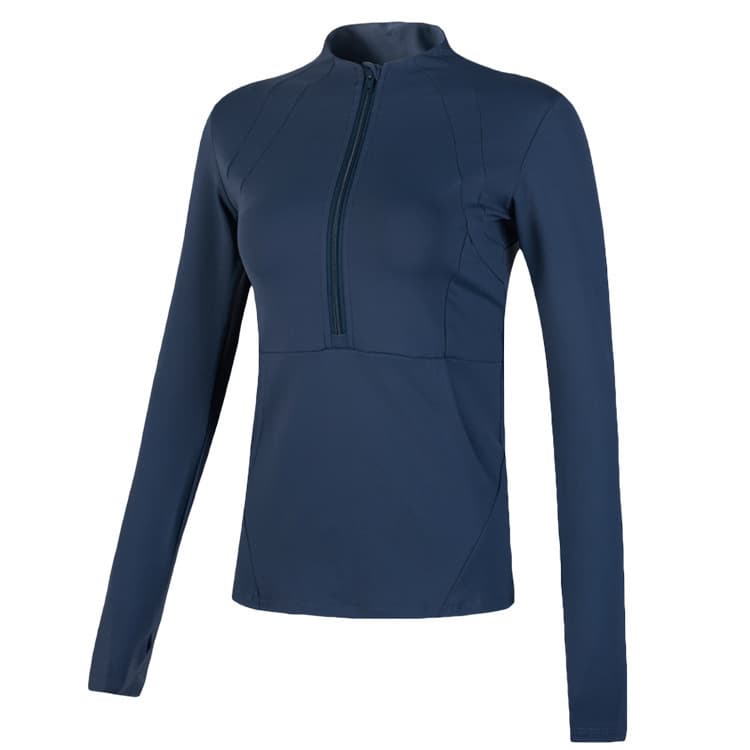
A partial-zip long-sleeve training top provides a visible neckline, sleeve and opening reference. It does not establish the required fit allowance, material performance or suitability for a new coverage brief. Identify which features are useful and which need development before treating the reference as a starting style.
Translate terms such as modest, loose or full coverage into the actual garment intention. Preferences belong to the defined audience and activity, not to every customer in the GCC. Give the factory drawings, reference points and the movement question it must answer. Keep cultural generalisations out of the technical instruction.
Which responsibilities should be written into the sample handover?
Create one short responsibility record before the first development sample. It should connect an input, an action and an approval. The table below illustrates the allocation; adapt the roles to the real arrangement rather than assuming a supplier or reviewer provides every listed service.
| Decision area | Brand or local input | Factory response to agree | Record needed for the next step |
|---|---|---|---|
| Intended coverage and use | Wearing combination, relevant movements and reference size | Proposed pattern and construction approach | Marked brief with unresolved questions |
| Material and fit | Desired observations, colour direction and wearer feedback | Identified sample materials, measurements and revision proposal | Sample identity, material reference and comment log |
| Product information | Destination, sales channel, proposed wording and review owner | Confirmed manufacturing facts within supplier scope | Approved text and artwork tied to the product |
| Production release | Final decisions and acceptance conditions | Confirmation of the authorised specification and process scope | Release record with approved files and remaining limits |
| Packing and receiving | Selling units, allocation and receiving instructions | Agreed labels, packing method and records | Variant and carton instructions linked to the order |
Do not leave the middle of the process implicit. If the local team records a sleeve issue, who decides whether to change the pattern, material or wearing combination? The reviewer can report the observation, the factory can propose a technical response, and the brand can approve the intended outcome. Those are separate contributions to one decision.
Use the record to identify missing work before requesting another sample. A named owner with an unresolved question is easier to coordinate than an apparently complete approval that hides a disagreement. The purpose is a clear next action, not extra paperwork for its own sake.
Can a locally altered sample become the factory's production reference?
A local alteration can help explain a preference, but it needs an explicit handover. Mark what changed and whether the alteration is only a demonstration. Include the original sample identity, relevant measurements and images of the affected area. The factory must understand the difference between the original construction and the proposed outcome.
For example, pinning a longer hem position over an underlayer may communicate the desired overlap. It does not establish the finished pattern, grading or seam construction. Likewise, opening a sleeve seam to relieve restriction shows where a problem may exist without proving that the same alteration is suitable for every size.
Ask the factory to evaluate the proposal and explain connected effects. A change to the armhole may affect the sleeve and surrounding body area. A longer body may alter the visual position of a front logo. The revised factory sample should show the agreed response, with its own version identity and the checks needed to accept it.
The sample-planning guide helps separate exploratory samples from samples used for later approvals. Keep the locally altered piece available as a communication reference where practical, but do not silently substitute it for the final factory-made garment. Both teams should be able to identify which physical sample supports each decision.
How should local wearer feedback become a useful revision request?
Record the observation before deciding its cause. In the example, a reviewer might report that the back hem moves above the agreed reference during an overhead reach. Include the sample version, size, underlayer and movement. That gives the development team something to investigate without assuming that adding body length is the only solution.
Separate appearance, movement and wearing preference. A wearer may prefer a looser feel even when the specified measurement is correct. Another may identify pulling in a particular position. The brand needs to decide which observations relate to the intended product and whether more evidence is needed before requesting a revision.
Consolidate comments before sending them to the factory. If one person requests a closer silhouette and another asks for more layering allowance, identify the conflict rather than forwarding both as simultaneous instructions. Ask whether the brief needs one priority, two separate product roles or another controlled sample comparison.
Use the activewear sample-feedback structure to connect each comment with a proposed action and closure status. Avoid collecting unnecessary personal information. Relevant garment observations and agreed size references are usually more useful to the supplier than an unstructured set of personal profiles or unrelated photographs.
What evidence is needed when a brief mentions hot conditions?
Describe the actual use setting. Distinguish the activity, its duration, indoor or outdoor conditions, the layers worn and the garment's intended role. A layer used to reach a venue raises different questions from one worn throughout a training session. A GCC destination alone does not establish those conditions.
Work through fabric and trim options with those questions in view. Identify the body material, any lining, closure and decoration separately. Ask which sample uses the proposed production material and which uses a substitute. A substitute may support a shape discussion while leaving the final wearing experience unresolved.
Treat cooling, moisture management, drying and breathability as distinct questions requiring suitable evidence. A light handfeel or an open zip does not establish a performance claim. Define the observation or test the project needs, the sample it applies to and how the result will be used. Do not turn a single wearer's preference into a general marketing statement.
Local review is useful when it reflects the intended conditions, but it does not replace appropriate technical assessment. Record any limits on the review and ask who will obtain additional evidence where required. If a material changes, revisit the conclusions that depended on it before retaining the same product wording.
How should UAE and Saudi destination reviews remain separate?
Assign a responsible reviewer for each actual destination and selling route. Shared design files can support several markets, but one country's review should not be copied into another country's approval record without assessment. The illustrative project's possible Saudi channel needs its own decision before it becomes a confirmed allocation.
The UAE Ministry of Economy and Tourism's consumer-protection legislation directory is an official starting point for the UAE owner. It brings together the consumer-protection law, amendments and implementing measures. The reviewer should check the current instruments and their application to the actual product and sales arrangement.
For Saudi Arabia, SASO's textile technical-regulation directory lists the second issue of the Technical Regulation of Textile Products. Use the current official material to organise the appropriate destination review. The directory entry does not establish that a particular garment, label or supplier is compliant, and it should not be extended to every GCC market.
Keep manufacturing facts, proposed brand descriptions and approved destination wording connected but distinguishable. Where several language versions are used, identify the approved pair or set and its owner. A factory can apply an agreed file; that action is different from determining every destination obligation or validating an unsupported performance claim.
How do branding decisions interact with the manufacturing route?
If a selected garment already meets the brief, the project may need a narrower private-label branding scope. Confirm the permitted logo, label, hangtag and packing work on the identified style. Review the proposed decoration on the relevant material and garment area, especially where an outer layer may hide or rub against it.
If the project changes sleeve shape, body length, material or functional construction, describe those changes through custom activewear development. Adding a logo does not make the underlying garment development disappear. Keep the development work visible in the quotation, sample plan and approval responsibilities.
Agree when placement can be finalised. A chest logo approved before the neckline or front opening changes may need another review. A label position accepted on a standalone garment may feel different when that garment becomes a close-fitting base. Connect the artwork decision with the actual garment version.
The local team can review brand presentation while the factory checks the agreed application scope. Neither review alone answers every question. Release the relevant artwork, garment and material references together so that the approved visual result can be understood by the people preparing production.
What must be clear before local approval becomes production approval?
Define the action being authorised. Approval to explore a longer sleeve is different from approval of a completed sample, and both differ from permission to proceed with a production order. The decision record should identify the garment version, accepted elements, unresolved items and the stage that may begin.
The manufacturing workflow provides context for discussing the factory handover. Ask how the current pattern, material, measurements, artwork and packing instructions are connected in the agreed process. If an old sample remains useful for one feature, label that limited role so it cannot be mistaken for the complete current reference.
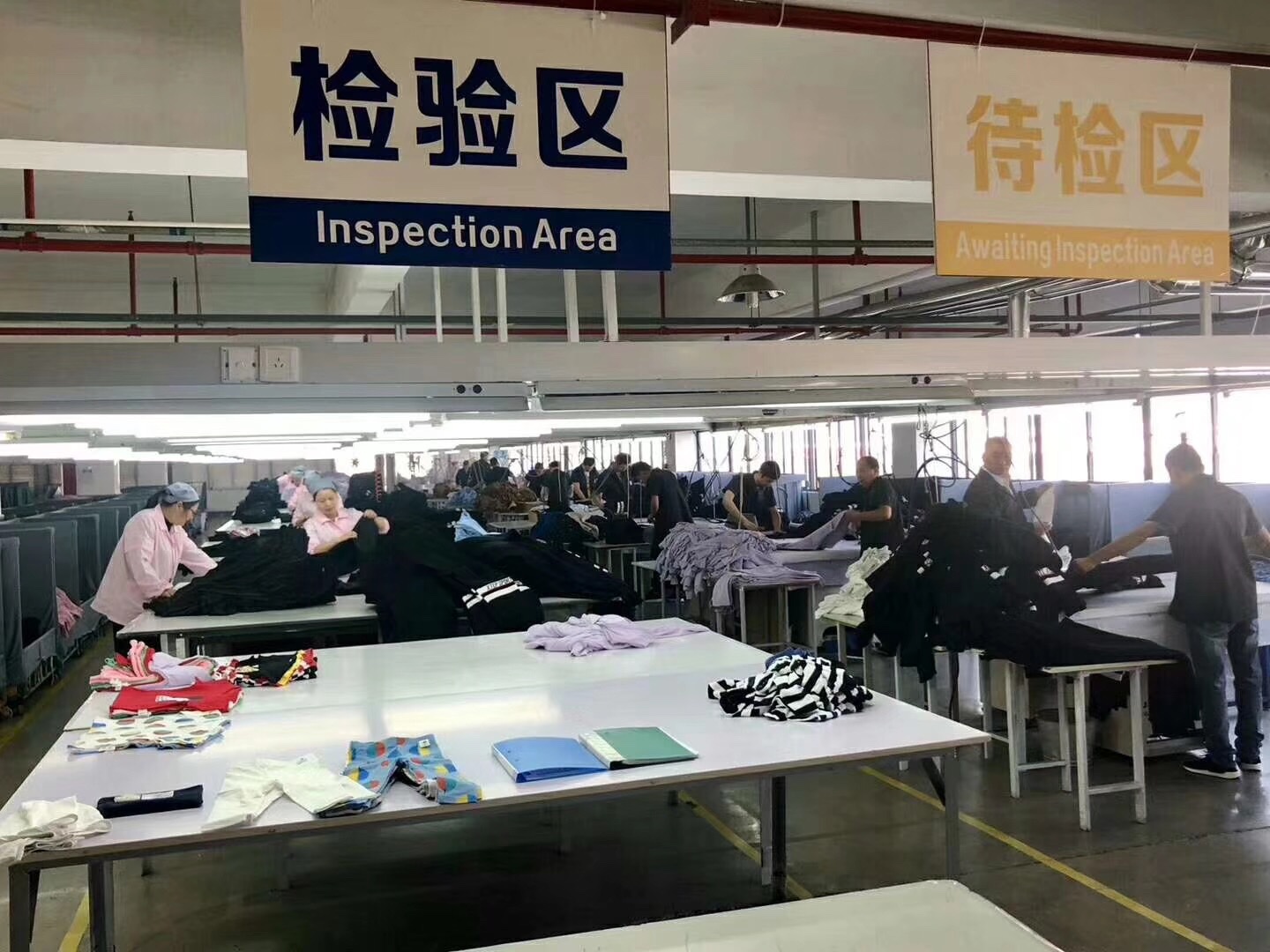
The inspection-area photograph gives operational context for status control. It is not a record of inspection or approval for the illustrative GCC project.
Before release, check whether a late revision affects earlier decisions. A changed material can reopen fit, coverage, decoration and product-information questions. A new packing combination can change labels and quantity reconciliation. Ask the factory to confirm the agreed impact and wait for the relevant owners to close the affected items.
How can quotations and packing reflect the same division of work?
Compare proposals after the scope is written. Identify the garment, development samples, material work, branding, packing and other responsibilities included in each offer. Record exclusions and questions separately. A local coordination service and a factory production quotation may cover different work even when both refer to the same style.
Use size and colour quantity planning to distinguish confirmed units from exploratory forecasts. If the Saudi channel is still being assessed, show that assumption separately. The supplier should not have to infer which quantities are authorised from a presentation showing the brand's broader regional plans.
Define whether the outer layer and base are sold together or separately. If sold as a set, identify the components and any permitted size pairing. If sold separately, avoid a pack description that implies both are included. The packing checklist can connect variant identifiers, destination allocation and receiving instructions.
Keep future reorders tied to the accepted garment record. If the brand later changes a coverage detail, colour, label or destination, identify the change before requesting the repeat. A familiar product name does not prove that the next order has the same specification or needs the same review work.
What should the brand prepare before the next joint review?
Use this checklist to turn the sourcing arrangement into a concrete sample or quotation request:
- Name the actual destination countries and separate possible later markets.
- Identify the garment, intended activity and selling channel.
- Define the base garment and outer layer used in the review.
- Mark the coverage and movement questions that need an answer.
- Provide the reference size and consistent measurement methods.
- Identify the local review roles and the brand's decision owner.
- State the factory development tasks and questions still open.
- Link each comment to a sample version, material and wearing combination.
- Separate branding-only work from changes to the garment itself.
- Assign destination information and language-review responsibilities.
- Confirm selling units, size-colour quantities and packing allocations.
- Specify the next authorised action and what remains unapproved.
A useful review ends with a decision that another person can act on. If the team cannot approve the sleeve yet, state the missing observation and the next sample question. If the layer is accepted but destination wording remains open, keep that distinction visible in the release plan.
How can inPACE support the agreed local and China workflow?
inPACE can discuss product development, material direction, sampling and production coordination for the defined activewear project. The enquiry should explain which tasks the brand retains locally and which it wants the factory to assess. That makes it possible to discuss the garment and the working arrangement together.
The company information provides a starting point for supplier review. Yinshan Garments' clothing-production experience since 1986 is manufacturing background; the current layer still needs its own material, fit and approval evidence. Relevant experience should help frame the questions, not substitute for the agreed project records.
Send inPACE the GCC development and review brief with the use scenario, coverage and layering requirements, material and fit questions, local approval process and proposed production scope. Include the current references and the next decision required. The discussion can then establish a practical division of work without assuming fixed quantities, pricing, timing or a universal regional product specification.
Product directions
Explore relevant activewear products
Use these product pages as practical references for your brief, then confirm materials, fit, customization, and production details through sampling.
Yoga and Activewear Collection
Select silhouette references and identify the role of each garment in the proposed wearing combination.
View product directionLong-Sleeve Training Layer Reference
Use the neckline, sleeve and front-opening direction to frame specific sample questions with the local review team.
View product directionCustom Activewear Development
Connect coverage, fit and material decisions with sample revisions and the confirmed factory production scope.
View product directionFAQ
Buyer questions
When can a China workout apparel manufacturer work effectively with a GCC local review team?
The arrangement can work when the brand defines the product intention, local reviewers have clear tasks and the factory receives consolidated decisions tied to identified samples. Agree who proposes technical changes, who approves the outcome and which destination matters need separate review. Location alone does not complete those responsibilities.
Does local review mean the garment is locally manufactured?
No. Review, development and production can happen in different places. Confirm the actual responsibilities and manufacturing arrangements for the project. A local fitting or coordination service should not be used to imply a different manufacturing origin or to leave the factory's role unclear.
Can a locally altered sample be sent straight into production?
It should first be assessed and translated into an agreed factory specification and sample where needed. Explain the alteration, its purpose and any limits. The factory must evaluate connected pattern, material and construction effects, while the brand confirms the intended result before authorising the relevant production stage.
Is modest workout apparel a complete specification for the GCC?
No. Define the intended audience, activity, coverage areas, movements and wearing combination. Preferences vary between people and channels. Drawings, measurement references and sample observations give the development team a practical brief without treating a regional description as a universal product requirement.
Does a lightweight long-sleeve layer automatically support a cooling claim?
No. Weight, handfeel, fit and openings do not by themselves establish cooling performance. Identify the actual material, garment and intended conditions, then obtain suitable evidence for any proposed claim. Keep individual wearer preferences distinct from technical findings and approved product statements.
Can the same label approval cover the UAE and Saudi Arabia?
Do not assume so. Assign a responsible reviewer for each destination and sales route, using current official requirements for the actual product. Shared manufacturing facts can support both reviews, but destination wording, evidence and final approval should remain identifiable. A factory-applied label is not proof of complete compliance.
What should be included in the first enquiry to inPACE?
Send the product reference, intended use, base and outer-layer relationship, coverage questions, material direction, sample size and local review process. Identify destinations, proposed quantities, branding and packing needs. State which tasks you want inPACE to assess and the decision the next sample or quotation should help you make.