
What should a local vs China activewear supplier comparison actually decide?
Start with the next product decision, not a preferred country. A brand that still needs to understand its wearer's fit problem has a different task from one holding an approved garment specification. Both may need a supplier, but they are asking that supplier to do different work. Write down what remains unresolved before collecting proposals. Otherwise, one response may cover a finished garment while another includes substantial development that the first leaves to the buyer.
This guide follows the factory custom manufacturing route for projects involving new fit, material or construction. It compares how local work, China factory development and a hybrid arrangement can support that route. Existing-style branding is a separate option when the chosen garment already meets the product brief; the wholesale versus custom manufacturing guide explains that boundary. Adding a logo and redesigning a sports bra should not appear as equivalent sourcing tasks.
Define the outcome in terms that a reviewer can recognise. For example: identify which route can develop a specified back construction, provide a sample for the brand's fit review and preserve the resulting approval for production. That is a useful comparison. Asking which country makes better activewear gives neither supplier a clear question to answer and encourages claims that may have little connection to the garment.
Which product work must be separated before comparing locations?
Divide the brief into decisions about the garment, its branding and its delivery presentation. The garment includes fit, measurements, materials and construction. Branding includes artwork and its application, labels and hangtags. Presentation includes how a sellable unit is identified and grouped for receiving. A party may be suitable for one part without taking responsibility for all three, so ask each proposal to show its actual scope.
Use a concrete reference from the activewear performance collection or your own approved product file. Mark what should remain and what must change. “Similar to this” leaves a supplier guessing whether the buyer means the silhouette, colour, material feel or inside finish. A short list of required differences is more useful than a large mood board without priorities. It also exposes whether the project needs development or simply selection and branding.
Separate a requirement from a preference. A necessary pocket position should remain a defined question through sampling; a colour direction that the team has not chosen should remain provisional. Ask every candidate to identify assumptions and exclusions against the same list. If a local supplier offers an existing style while a China manufacturer proposes a new pattern, reconcile the scope before comparing their commercial responses.
How do local, China manufacturing and hybrid routes differ in practice?
The useful distinction is where work and decisions sit. The table describes arrangements a buyer can explore; it does not promise that any supplier in a location provides the listed activity. Verify capability, availability and responsibility with the actual parties.
| Decision area | Local arrangement to examine | China manufacturing arrangement to examine | Hybrid handover to define |
|---|---|---|---|
| Product definition | Who translates local feedback into a usable garment brief? | Who reviews the brief for the proposed development scope? | Which approved brief crosses between teams? |
| Fit review | Can the relevant reviewer examine the sample nearby? | How are measurements and sample questions documented? | Who converts observations into one accepted revision? |
| Materials | Which actual materials can the party propose and document? | How are proposed fabrics and trims tied to samples? | Who approves a substitution before it is used? |
| Pattern and construction | What development work is included in the proposal? | What pattern, seam or component work needs sampling? | Which files and physical references transfer? |
| Branding | Who prepares and approves the artwork application? | Who reviews the proposed application on the garment? | Who retains the approved artwork and placement version? |
| Production | Which party manages the agreed manufacturing work? | How does the sample decision enter production instructions? | Who accepts the handover and reports a conflict? |
| Packing | Who defines the sellable unit and receiving instructions? | How will unit and carton instructions be reviewed? | Who checks that both teams use the same allocation? |
| Changes and reorders | Who holds the accepted product record? | What must be reconfirmed for the next order? | Who authorises a change across the entire arrangement? |
Read across one row at a time. If an answer is missing, the route is incomplete for that decision; it is not automatically unsuitable overall. A hybrid route may fill the gap, but only if the additional handover is manageable. Adding another party without assigning ownership can make the same uncertainty harder to resolve.
When is nearby product review valuable to the launch?
Nearby review can be useful when the unresolved question requires access to particular wearers, a fit specialist or the brand's merchandising team. That value comes from the people and evidence available, not simply from a local address. Establish whether the proposed arrangement actually provides access to the relevant reviewer and sample. A nearby office does not necessarily mean the garment is developed or manufactured there.
For fit work, specify the base size, intended wearer, movement and observation method. A comment such as “the top moves upward during this movement” provides a starting point for investigation. A general statement that the sample feels wrong leaves the development team without a precise target. The activewear fit-model brief helps structure that local review before comments travel to another team.
Keep the review separate from the technical remedy. A wearer can describe a problem without knowing which pattern or construction change will resolve it. Record the observation, ask the development party for a proposed response and agree what the next sample should demonstrate. If the brand relies on a local reviewer, confirm that this person remains available for the revision stage rather than assuming the first fitting closes the question.
When does a China factory development discussion become useful?
It becomes useful when the brand can describe the product work it wants the manufacturer to assess. The brief need not contain every final answer, but it should distinguish accepted requirements from development questions. A factory discussion can then address the proposed material, construction, sample sequence and production handover. The supplier's response should identify what it understands, what information is missing and what evidence is needed next.
Use the custom activewear development route for a new garment specification. Ask about the particular operation or material relationship that matters to the design. For a strappy top, that might be the interaction between strap placement, back construction and fit; for leggings, it might be the waistband and body-material combination. A general activewear catalogue is useful orientation but cannot establish that the proposed change has been developed successfully.
Assess the actual working relationship through a representative sample decision. Can the parties identify the same garment, understand the comment and maintain a clear revision? Can the proposed production instructions preserve the accepted result? These questions are relevant to any manufacturer. Do not assume a China route is automatically cheaper, faster or more capable, and do not reject it merely because a local team will conduct the wearer review.
How can a hybrid route work without creating competing instructions?
A hybrid arrangement separates tasks while keeping one product record. The brand might conduct wearer review locally and ask a China manufacturer to develop the garment and coordinate the agreed production work. Another arrangement may involve a local designer preparing the initial specification. In either case, assign one person to resolve conflicting comments before the supplier is asked to act. Two independently edited files are not a shared brief.
Consider an illustrative project for a top with a revised back detail. The brand's local reviewer observes that the sample shifts during a specified movement. The development team proposes a construction change. The brand then reviews the next identifiable sample against the original observation and the agreed proposal. This is a planning example, not an inPACE customer case or evidence that a particular alteration will solve the problem.
| Handover | What should move with the work? | What should not be assumed? |
|---|---|---|
| Local review to development | Sample identity, observed issue, relevant images and review conditions | A wearer comment is already a technical instruction |
| Development to brand | Proposed change, affected details and next sample objective | A feasible proposal has buyer approval |
| Revised sample to reviewer | New revision identity and the changes actually made | Every other feature stayed unchanged without checking |
| Brand approval to production | Accepted sample reference, current files and remaining exclusions | One fit approval releases artwork, packing and every size |
| Production question to brand | Specific conflict, proposed options and decision owner | Silence or an old message authorises a new change |
Make the receiving party acknowledge the handover. That acknowledgment should identify the version received and any question that prevents execution. It need not become a burdensome administrative exercise; its purpose is to stop a decision disappearing between a conversation, a drawing and the garment someone is making.
Who should own files, samples and revision decisions?
Agree who maintains the current working files, who may revise them and which party retains the accepted references. Also clarify access and permitted use where work is created by different contributors. Do not assume that paying for one service automatically provides every file or right the brand might want. Record the agreed deliverables and involve the appropriate adviser where contractual questions need review.
Operationally, each party should be able to identify the current drawing, measurement schedule, material reference and sample. A product code and revision label help only if they are used consistently. The tech-pack checklist identifies useful components of that record. During route comparison, ask who creates missing components and who updates them after the buyer accepts a change. Those tasks belong in the proposal.
Keep a concise revision log with the issue, proposed response, decision and resulting file or sample. The sample feedback guide provides a structure for comments. A hybrid team should consolidate those comments before release. If the fit reviewer and brand designer disagree, the supplier needs an authorised resolution, not two messages that both appear final. The same control matters when a brand changes suppliers later.
How should brands compare material and branding scope?
Ask each route to describe the actual material proposal and how it will be reviewed. A material name or colour image is not enough to compare two different fabrics. Identify the relevant swatch, intended garment location and unresolved question. Use the fabric and trim review page to frame a development discussion, then keep the resulting reference attached to the sample rather than leaving it in a separate conversation.
Branding also needs a defined scope. Through the private-label service, a buyer can discuss logo, label and packaging requirements, but an artwork file does not automatically settle application size, placement or suitability for the material. Ask which physical or documented evidence is proposed for approval. If local artwork preparation and factory application are split, identify who checks that the production file matches the accepted version.
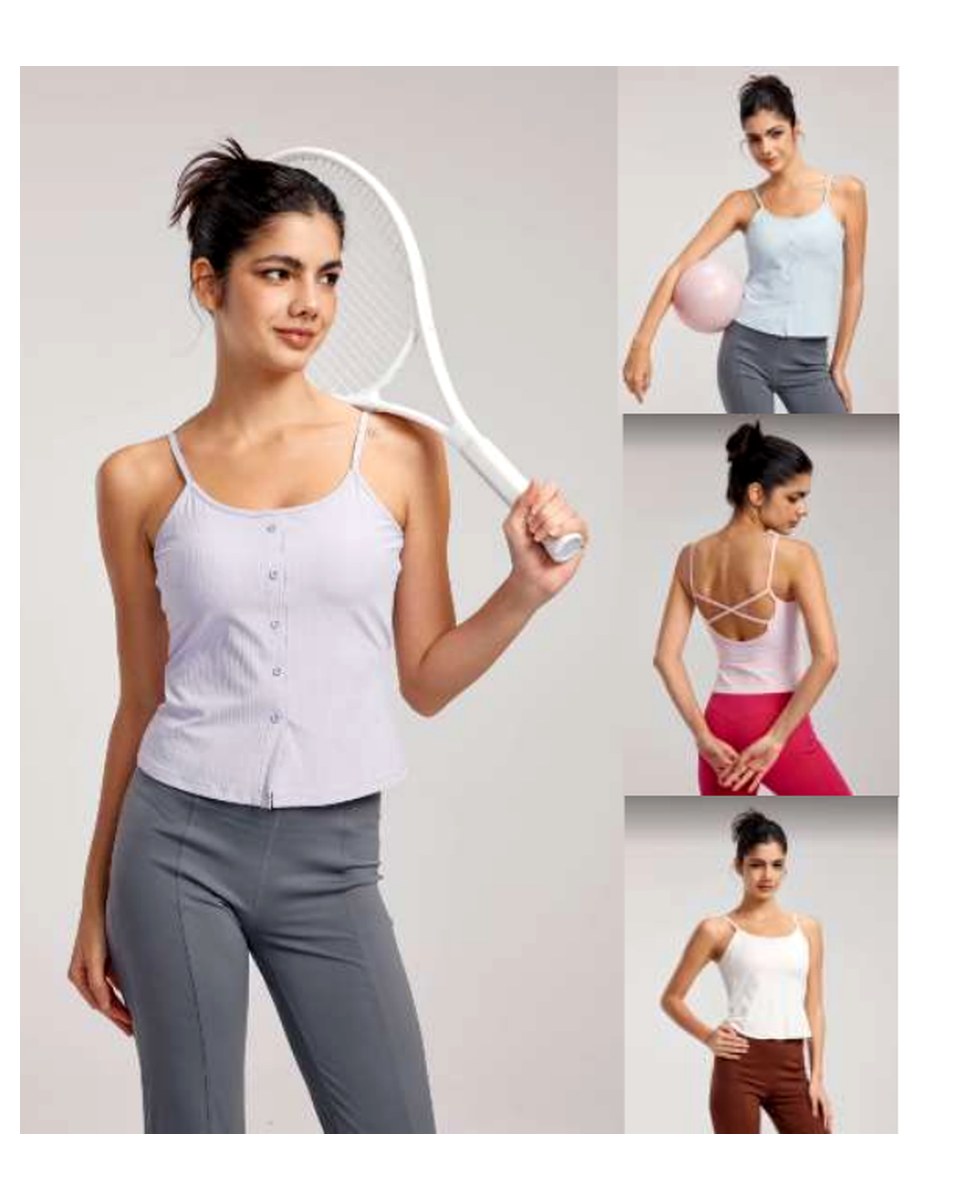
This catalogue photograph is a product reference. It helps a buyer point to garment features, but it does not show a completed custom-development project or establish current stock, material specifications or suitability for a market. Use a reference to define the question; use the agreed sample evidence to answer it.
How can proposals be compared without hiding missing work?
Give candidates the same product version and ask them to separate development, samples, garment production, branding and packing in their scope descriptions. The objective is to identify included work and exclusions before drawing a conclusion from a quoted amount. If one proposal assumes buyer-supplied patterns and another includes pattern development, the brand still needs to account for who will perform that work under the first arrangement.
Record the assumptions behind quantities, colourways and size allocation. Ask whether an alternative material, decoration method or packing arrangement changes the proposed scope. Do not convert a preliminary estimate into a fixed promise for a brief that is still moving. Compare responses at a shared level of definition, then request clarification of any difference that affects the product or the buyer's responsibilities.
Use a dependency sequence for timing discussions: information ready, sample prepared, review completed, revision resolved, production instructions released and receiving arrangements confirmed. Ask each party which activity it owns and what it needs before starting. Geographic proximity does not remove review work, and an overseas route does not by itself establish a delay. The relevant issue is whether the actual dependencies fit the launch plan the brand can support.
What should stay with the brand's market and channel owner?
The brand should identify the intended destinations, sales channels and receiving arrangements, then appoint the people who approve destination-specific product information and commercial requirements. Avoid treating a region as one uniform buyer. A studio programme, an online store and a wholesale delivery can create different product-presentation and receiving questions even when the garment itself is shared. Ask about the actual channel rather than assuming its needs from a country name.
For packing, distinguish a single garment from a coordinated set and define how each sellable version is identified. State which information comes from the brand, who checks it and how corrections are approved. The activewear packaging checklist covers detailed preparation. Here, the comparison is about ownership: which party prepares the instruction, which executes it and which reviewer confirms that the result matches the receiving plan.
Keep specialist market requirements with the designated local reviewer or adviser. A supplier can discuss implementing confirmed information within the agreed manufacturing scope, but that does not make a product photograph, sample approval or general sourcing conversation a destination-specific legal conclusion. If a requirement is not yet confirmed, name its owner and record the decision it prevents instead of asking the factory to guess.
How should the first sample influence the route decision?
Use the first sample to examine the uncertainty that justified development. Review the garment and the working process together: what was understood, what changed, how the change was recorded and what remains open. A visually attractive sample may still leave an important construction question unanswered. Conversely, an identifiable issue accompanied by a clear, reviewable correction proposal can provide useful information about how the parties work.
Record whether the next step is another sample, a clarified instruction, further verification or a hold. Keep the scope of any approval explicit. The manufacturing overview can orient the production discussion, while the how-to-order workflow explains the site's progression from brief to review and production planning. Neither replaces agreement on what the actual sample has established for this project.
Reassess the route if the work changes. A programme initially based on an existing garment may become custom development after repeated requests for fit or construction changes. A hybrid arrangement may need a different local reviewer if the next question is technical rather than commercial. For a reorder, retrieve the accepted record and reconfirm changed conditions; a previous order does not automatically approve a new material, size range or packing version.
What should be in the route-comparison brief?
Prepare one brief that every candidate can read against the same decision. Keep unresolved fields visible rather than filling them with invented certainty. Use this checklist to make the next supplier conversation specific enough to produce a meaningful proposal.
- State the destination markets, sales channels and representative garment.
- Define the wearer, use context and product question that needs evidence.
- Identify the reference version and the features that should remain unchanged.
- List required fit, material or construction changes separately from branding.
- Mark confirmed requirements, provisional preferences and unanswered questions.
- Assign local review, technical development and final buyer approval to named roles.
- Request the proposed sample objective, review evidence and revision process.
- Ask which files, references and sample deliverables each party will provide.
- Define artwork, label, packing and receiving-information responsibilities.
- Request scope assumptions, exclusions and dependencies from every candidate.
- Describe how decisions move between parties and who resolves conflicting comments.
- Record what must be established before production, launch or a later reorder.
Finish with a short decision note after proposals arrive. State the selected arrangement, the reasons tied to the brief and the unresolved conditions. For example, a brand might retain local fit review while asking a manufacturer to assess a defined construction change. The note should explain that division of work; it should not turn a preference for a location into a claim about all suppliers there.
How can inPACE Sports help with the China manufacturing part of the comparison?
Use the China activewear supplier overview to frame an enquiry about product development, samples, manufacturing coordination, QC and packing. Explain which work the brand will retain locally and which work it wants inPACE to assess. The team can review that proposed scope and identify the information needed for a useful next discussion; the actual project still determines feasibility and commercial terms.
Then send the local and China sourcing comparison brief with the market and channel, product reference, required changes, sample objective, branding and packing needs, and approval responsibilities. Include the points on which you need an explicit response from each candidate. A useful outcome is a clear allocation of work and evidence, followed by the next appropriate sample or review decision.
Product directions
Explore relevant activewear products
Use these product pages as practical references for your brief, then confirm materials, fit, customization, and production details through sampling.
Activewear Performance Collection
Choose a product direction and mark which features remain fixed and which require a development decision.
View product directionYoga and Activewear References
Use a garment reference to explain fit, coverage or construction questions to local reviewers and the development team.
View product directionCustom Activewear Development
Discuss the new fit, material or construction work assigned to the factory and the sample evidence needed for approval.
View product directionFAQ
Buyer questions
Is a local or China activewear supplier better for a new brand?
The better fit depends on the product work, evidence and responsibilities the brand needs. Compare actual proposals against one brief. A local address does not prove development capability, and a China manufacturing route does not guarantee lower cost or faster delivery. Choose the arrangement that can support the defined project and review process.
Can a brand review samples locally and manufacture in China?
Yes, a hybrid arrangement can allocate local wearer or brand review separately from factory development and production. It needs one current product record, a named decision owner and clear handovers. Consolidate feedback before asking the manufacturer to act, and identify which sample and file version each approval covers.
What is the difference between private-label selection and custom development?
Existing-style private-label work starts from a suitable garment and defines agreed branding details. Custom development addresses a new fit, fabric, construction or other product specification. The boundary follows the requested change, not the supplier's location. Review a sample appropriate to the actual scope before treating either route as ready for production.
How can two supplier quotations be compared fairly?
Use the same garment version, required changes, quantity direction, branding and packing brief. Ask each supplier to identify included work, assumptions and exclusions. Resolve differences such as buyer-supplied patterns or omitted sample revisions before comparing the commercial response. A lower amount may describe a different scope rather than an equivalent proposal.
Who should approve revisions in a hybrid sourcing arrangement?
Assign one authorised buyer role to consolidate input and release decisions. Local reviewers can provide observations, while the development team can propose technical responses. The record should distinguish those contributions from final approval and connect the decision to the relevant sample, drawing, material and artwork versions.
Does an approved local sample automatically transfer to another factory?
No. Identify the files, physical references, agreed access and technical information available for the transfer. Ask the receiving manufacturer to review the scope and any differences in proposed materials or construction. A further sample or verification may be needed before the new production arrangement can rely on that reference.
What should a brand send inPACE for a sourcing-route review?
Send the destination and channel, garment reference, required product changes, current files, sample questions, branding and packing scope, and the work retained by the local team. Name the approval owners and unresolved requirements. This gives inPACE a concrete basis for discussing the proposed factory development and production responsibilities.