
What makes an activewear project difficult to control?
A project becomes difficult to follow when several valid decisions live in different places. A fitting note changes the body length, an artwork message moves the logo, and a packing sheet still names an older colour. Each instruction may look clear on its own, while the supplier cannot tell which combination represents the current product.
Consider an illustrative adult activewear brand preparing a crop top for channels in Japan and South Korea. Its design team wants a defined front detail, its fit reviewer has comments on the back shape, and its retail team needs destination-specific product information. This is a planning example, not an actual customer case or a claim about regional consumer preferences.
Detail-heavy describes that project's brief. It does not describe a culture or imply that every East Asian buyer works in the same way. Name the actual destinations, products and decision makers. The useful sourcing question is whether the chosen arrangement can keep these decisions connected as the garment changes.
The existing Japan manufacturer briefing guide covers the information needed to begin an overseas development enquiry. The Korea supplier evaluation guide addresses how a brand can judge a proposed partner. This article follows the work after those initial questions: controlling changes and approvals across an active development project.
How should local, hybrid and China routes be compared?
Start with the unresolved work. If the team cannot yet describe the fit issue, access to a suitable local reviewer may help. If the garment direction is clear but material, construction or branding feasibility remains open, ask prospective partners to identify the development work they would perform and the evidence they would return.
| Route | Decisions to place with the brand | Partner responsibilities to confirm | Practical selection question |
|---|---|---|---|
| Local development and production | Product intent, destination requirements and final commercial approval | The actual pattern, sample, material and manufacturing work in the proposal | Can this partner provide the required development and keep its records aligned? |
| Local review with China development | Local fit observations, design choices and one consolidated approval | Assessment of the current brief, agreed sample revisions and production coordination | Can both teams work from the same garment version and close conflicting comments? |
| China development with remote brand review | Clear instructions, physical sample review and named decision owners | The confirmed development scope and identifiable sample evidence | Can the brand make the necessary decisions without leaving ambiguous approvals? |
Do not assume a local partner owns all development steps or that a China partner receives finished technical files. Ask what each proposal includes. The brand may retain some work, commission another specialist or ask the supplier to assess a missing part of the brief.
For the illustrative crop top, a hybrid arrangement could retain local fitting while assigning agreed garment development to a China manufacturer. It would only work if the local reviewer returns specific observations and the brand resolves them before issuing instructions. Adding another participant without defining that handover can create more uncertainty.
Use custom activewear development when the project needs a new fit, material or construction. If an existing garment already meets the need, confirm whether the requested logo, labels and packing can stay within a selected-style branding scope. The amount of product work, rather than the number of messages or the sourcing country, determines the appropriate route.
What should be treated as the current product record?
Create one index that identifies the files governing the current stage. It can be a simple table maintained by the brand. List the style reference, garment revision, measurement sheet, material reference, colour decision, artwork file, destination information and packing version, together with the status and owner of each.
Do not force every file to share one revision number. A measurement update may leave the approved logo artwork unchanged. The index should show that the new garment revision uses that existing artwork, while identifying any application evidence that needs another review. This preserves useful approvals without hiding dependencies.
Make statuses describe decisions. “Received” confirms delivery of a sample or file. “For review” means a decision is pending. “Approved for this sample” can authorise a limited next step. “Approved for production” should identify the complete scope being released. Agree the language with the supplier so the same word does not mean different things to different teams.
Retain superseded files for traceability, but separate them clearly from current instructions. An old sample may still help explain a problem; it should not look like an alternative production reference. If two revisions are intentionally active, identify the distinct purpose of each rather than leaving the supplier to choose.
The index is useful only if people can follow it. Before sending the next package, ask whether a colleague who missed the last call could identify the current garment and the decisions still open. If the answer depends on memory, update the written record before requesting more work.
Which details need separate approval evidence?
A garment can have an accepted silhouette while its colour or label information remains unresolved. Avoid a single approval cell that implies all details were checked together. Separate the evidence according to the decision it supports, then connect those decisions in the product index.
| Decision area | Reference to identify | Evidence or question for review | What the approval should state |
|---|---|---|---|
| Fit and measurements | Garment version, sample size and measurement sheet | Observed measurements and relevant fit comments | The accepted dimensions or the specific revision requested |
| Material and colour | Material identity and named physical colour reference | The relevant material or colour submission | Which reference is accepted and which related decisions remain open |
| Logo application | Artwork version, placement and application method | Proof or sample relevant to the actual garment | Accepted appearance and scope, with unresolved application questions named |
| Destination information | Product facts and Japan or Korea document version | Review by the responsible destination owner | The exact text and layout authorised for implementation |
| Packing and allocation | Selling unit, variant matrix and packing file | Agreed packing reference or documented review | Which garments, identifiers and quantities belong together |
This matrix is a suggested working structure, not a universal factory procedure or a substitute for technical assessment. Agree the sample and documentation needed for the actual product. Some questions can be answered from a drawing, while others require a physical garment or suitable testing.
For example, accepting a logo's shape on a digital proof does not necessarily resolve its placement on the revised top. Similarly, a colour decision does not establish fibre composition or validate consumer-facing care information. Make the boundary visible so another team does not treat a limited approval as permission to release everything.
How can a product reference make the detail discussion more precise?
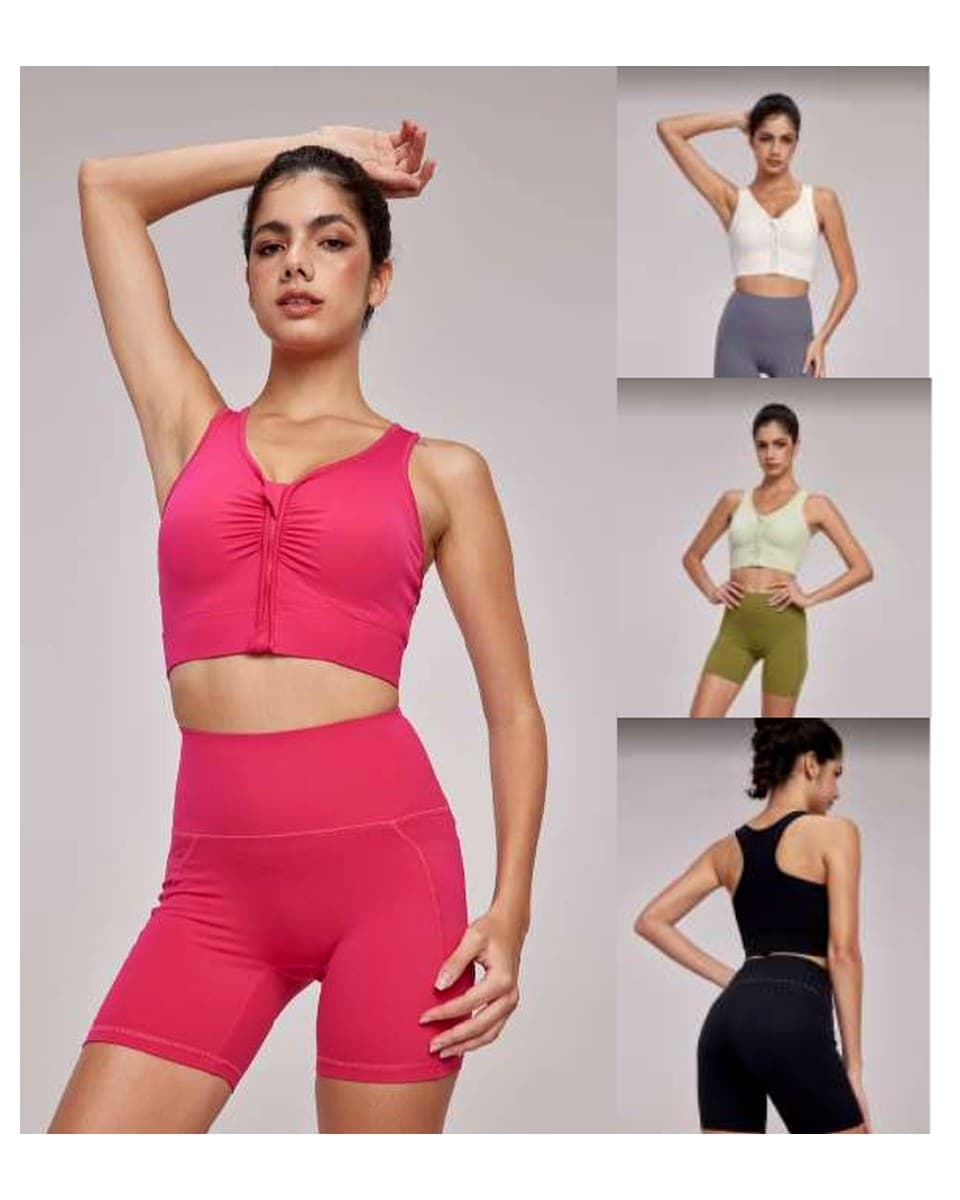
Begin with an identified garment from the yoga activewear collection. The gathered-front crop top reference provides visible front shaping and a racerback direction that can anchor the discussion. Confirm the actual construction and options with the supplier; the photograph is a reference, not the specification for a new order.
For the illustrative project, mark which features the brand wants to retain and which remain questions. It may retain the overall crop-top role while asking how the front detail, body length or back opening should be evaluated. Write the desired outcome before assuming that a change can be achieved by moving one seam or altering one measurement.
Distinguish design intent from the supplier's proposed solution. The brand can explain where coverage should sit or which visual relationship matters. The development team can then assess the material, pattern or construction implications. This avoids presenting an untested technical instruction as if it were already the agreed answer.
Keep the reference image separate from a sample photograph. If the current sample differs from the original catalogue direction, label both clearly. A reviewer should know whether an annotation describes the desired look, an observed issue or a feature already accepted on the latest garment.
How should fit comments become an actionable revision?
Record the garment identity, revision and size before writing the comment. State the observation, its location and the circumstances that made it relevant. If a measurement is involved, use an agreed measurement point, method and unit so the supplier can compare the note with its own reading.
Avoid converting a vague impression directly into a fixed adjustment. “The back opening needs review during this movement” identifies a question. A precise dimensional change requires a clear reference and an understanding of its effect on the rest of the garment. Ask the supplier to assess that relationship where it has not yet been resolved.
Use the sample feedback guide to separate observation, proposed action, owner and next decision. The brand should consolidate comments before sending them. If design and fit reviewers disagree, state the chosen direction or name the unresolved choice instead of asking the factory to satisfy incompatible requests.
Attach enough context to explain the issue without forwarding unrelated participant information. An annotated garment photo and a measured observation can be more useful than a long message thread. Keep the original comment available internally if necessary, while issuing one clear instruction for the next development step.
When the revised sample arrives, review the requested change and relevant connected areas. A body-length revision may alter the visual position of an existing logo. A change to the back shape may affect the review of coverage or adjacent seams. Close the original question only after confirming what the new sample actually demonstrates.
How can colour decisions remain connected to the garment?
Identify the material as well as the intended colour. A colour name is a convenient label for the range, but it is not enough to define the physical reference the supplier should use. Keep a named submission or agreed standard linked to the specific material and garment decision.
Use the fabric and trim discussion to clarify what is being reviewed. If the brand changes the material after accepting a colour direction, ask which colour and appearance decisions need to be revisited. Do not assume that an earlier photograph or approval automatically transfers to a different material.
A screen image can help identify a submission, but the team should agree the evidence required to accept colour. Record the reference, reviewer and decision so the next participant can tell whether a photograph was informational or formed part of the approved review method. Keep the method appropriate to the actual project.
Separate colour appearance from order allocation. The size, colour and quantity planning guide can organise the variant matrix after the selected options are confirmed. Check that the names used by design, the supplier and the receiving team point to the same approved references.
If one proposed colour remains unresolved, make that limitation explicit. The brand may revise the range or request further evidence, subject to the supplier's assessment. An accepted overall colour story should not conceal an individual submission that nobody has approved.
What should a logo approval cover beyond the artwork file?
Keep the artwork, placement and application method identifiable. A correct logo file can still be applied to the wrong garment version or interpreted with a different placement reference. State what the supplier should reproduce and which sample or proof will be used to review it.
The logo methods for stretch activewear guide can frame the application discussion. Ask about suitability for the selected material and garment area, then agree the evidence needed. Do not infer wash durability, stretch behaviour or another technical result from a clean digital mock-up.
If the garment changes, check the artwork relationship again. For the crop-top example, the brand may retain the logo design while reconsidering its position after a body-length adjustment. Record whether the artwork remains approved and whether the new placement needs a separate proof or sample.
Treat a supplier's clarification as part of the record. When the team agrees what a placement description means, update the file that will guide the work. An answer left only in a chat can disappear from view when another person prepares the sample or checks the packing information.
Who should approve Japan and South Korea product information?
Appoint a destination owner for each market actually included in the order. That person should connect the selected garment's facts with current applicable requirements and approved consumer-facing information. The design team can approve a brand's visual treatment without necessarily completing this destination review.
For Japan, the Consumer Affairs Agency's official representation guidance links the Household Goods Quality Labeling Act and the Textile Goods Quality Labeling Regulation. Use those official resources as starting points for the actual product review. Keep the resulting approved information identifiable in the project files.
For South Korea, the Korean Agency for Technology and Standards safety-standard-compliance page lists household textile products and provides an example of apparel information. The destination reviewer should confirm the product's classification and current requirements. Do not assume that one label, certification route or mark applies to every garment.
If a material or construction change affects product facts, revisit the linked destination records. A previously accepted label layout should not preserve outdated composition or other information simply because the artwork was already approved. The supplier needs the current authorised content, with a named owner for remaining questions.
This is a sourcing handover, not a complete legal checklist for a shipment. Obtain appropriate specialist review where needed. The practical requirement is to know which document each destination owner has accepted and which garment that document describes before implementation begins.
How should branded packing stay aligned with the selected variants?
Define the selling unit before discussing its packaging. The crop top may be sold individually, included in an agreed set or allocated to a particular channel. Confirm which garment, size, colour, label and identifier belong to that unit, rather than treating packaging as a separate decorative exercise.
Use the activewear packaging checklist to connect the packing file with the order matrix. If Japan and South Korea require different approved information or channel identifiers, show the allocation explicitly. A shared garment reference does not mean every packed unit has identical information.
Review the contents as well as the appearance of a packing reference. Check that the correct product and label versions are paired with the intended selling unit. Identify any folding, presentation or protection requirements the supplier has agreed to assess, without assuming that a particular pack format is automatically available.
When a variant changes, examine the affected downstream records. A renamed colour may need a corresponding update in the order matrix and packing identifier. A new size allocation may affect the assortment in a carton. The team should identify those consequences before sending a revised total quantity.
Retain an accepted packing reference with the product index. This gives receiving staff a concrete comparison and helps later orders identify what belonged to the previous scope. Confirm the current feasibility of the packing arrangement when ordering again rather than treating an old sample as a standing commercial promise.
What should happen when a late change arrives?
First identify the requested difference and why it matters. Record which current file or sample it changes, then ask the relevant owner to assess the effect on related approvals. A small visual adjustment may still affect artwork, a material submission or the packing record.
For example, suppose the brand changes the crop top's intended body length after accepting logo placement. The change record should name the affected measurement and ask whether the logo relationship still meets the approved design intent. The team should not quietly retain the old placement instruction without reviewing that connection.
Ask the supplier to confirm the implications for work already planned or performed. Timing, cost and feasibility depend on the actual stage and scope; this guide does not assign a universal penalty or revision allowance. Resolve those implications in writing before treating the request as accepted.
If instructions conflict, pause the affected decision and identify who can resolve it. This need not invalidate unrelated accepted work. A controlled record can retain the approved colour while leaving the changed garment or placement pending, provided the supplier agrees that distinction is practical.
After the decision, update the current index and mark the displaced instruction as superseded. The next sample request should state what changed, what remains fixed and what evidence will close the question. That gives both teams a shared reason for the next review.
How do approved details reach production and inspection?
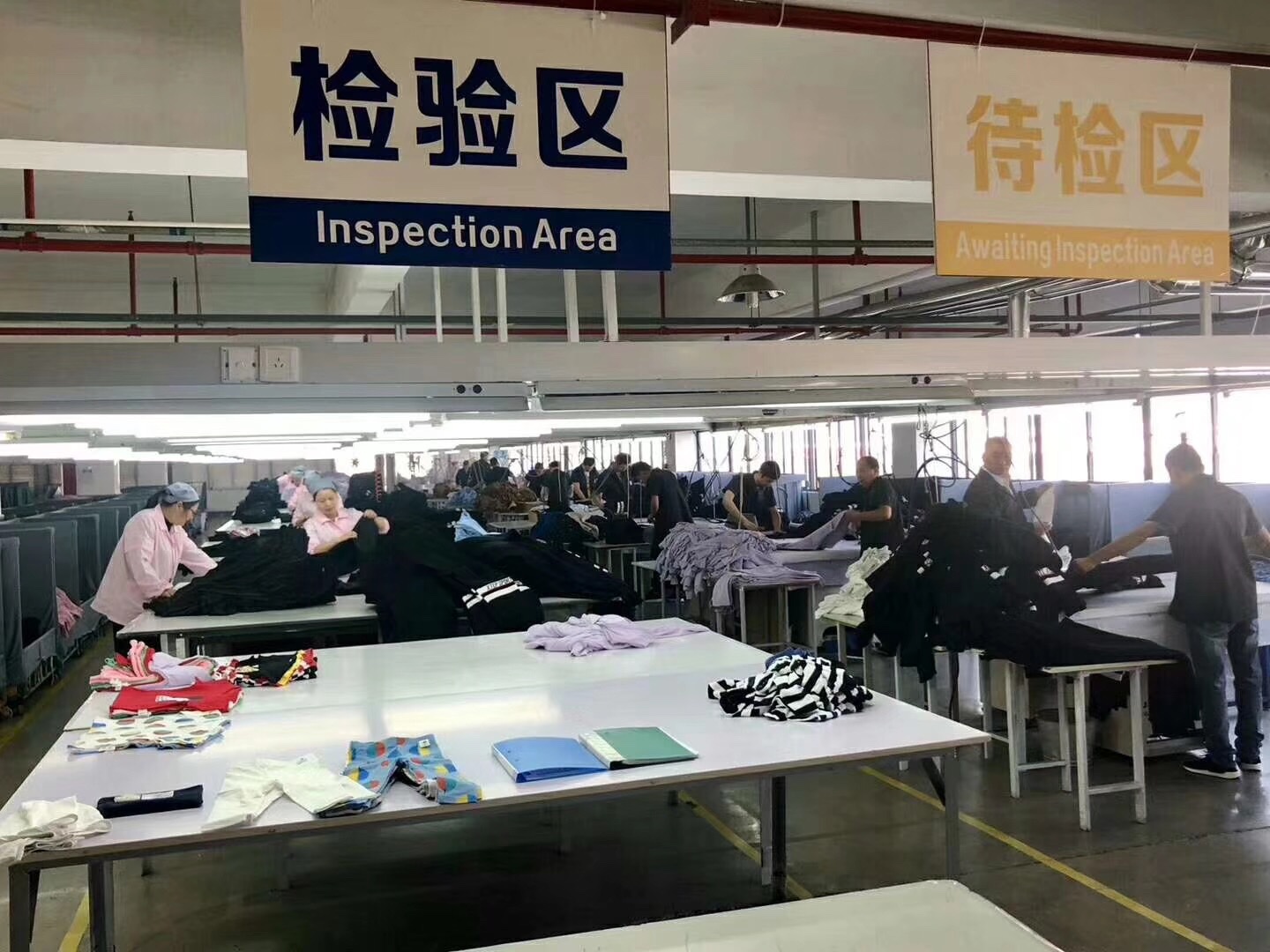
The inspection-area photograph provides process context, not proof that the illustrative crop top has been produced or inspected. The useful connection is the information an inspection team needs: an identified product, agreed references and a clear scope against which observations can be recorded.
Use the order workflow to distinguish sample development from the later production decision. Before issuing a release, check that the current garment, material, colour, artwork, destination information and packing records form an agreed combination. Approval should identify what work is authorised and which exclusions remain.
Discuss the relevant manufacturing and quality-control handover with the supplier. Confirm how the agreed records reach the people carrying out production, inspection and packing. A well-written brand file is only useful if the operational teams know which reference governs the current work.
Record findings against those references. A discrepancy should identify the affected style, version and detail so the brand and supplier can assess it without reconstructing the entire message history. Do not treat an inspection photograph alone as a complete quality result or a substitute for the agreed review scope.
What should the final detail-control checklist contain?
Before requesting the next sample or authorising an agreed production stage, check that another responsible person could understand the current product from the file package alone. Resolve missing ownership as carefully as missing artwork or measurements.
- Name the actual destinations, channels and adult garment use.
- Identify the selected product reference and current garment revision.
- List the measurements and fit questions still under review.
- Link each colour decision to the appropriate material reference.
- Identify artwork, placement and application-method versions separately.
- Consolidate comments into one instruction from the brand.
- Record the purpose and limitations of each sample approval.
- Assign Japan and South Korea product-information owners where relevant.
- Match destination documents to the current product facts.
- Connect the selling unit and packing record to the variant allocation.
- Mark superseded files clearly and assess late-change dependencies.
- State the next authorised action and the owner of each open decision.
How can inPACE contribute to this development process?
inPACE can discuss product, sample and production coordination from the brand's current brief. Its company information provides a starting point for reviewing that role. Yinshan Garments' clothing-production experience since 1986 is manufacturing background, while each proposed garment still needs its own development evidence and commercial agreement.
The most useful starting package is the one that shows what the brand knows and what it needs help deciding. It need not pretend that every technical question is solved. A clear reference, consolidated fit comments and an identifiable set of current files allow the supplier to assess the actual work.
Send inPACE the East Asia development brief with the tech pack or references, version-control method, fit comments, colour decisions, logo and branded-packing needs, actual destinations and approval owner. Identify the next sample's purpose and any unresolved dependencies. That makes the enquiry a defined development discussion rather than a request to interpret scattered instructions.
Product directions
Explore relevant activewear products
Use these product pages as practical references for your brief, then confirm materials, fit, customization, and production details through sampling.
Yoga Activewear Collection
Choose an identified product reference and list the fit, material and branding decisions still open in the brief.
View product directionGathered-Front Crop Top Reference
Use the front detail and back shape to define measurement, construction and sample-version questions.
View product directionCustom Activewear Development
Review the current specification, change record and approval responsibilities before the next sample or production stage.
View product directionFAQ
Buyer questions
What should a brand ask a China activewear manufacturer for East Asia first?
Ask how the supplier would handle the actual garment-development questions and the current file package. Name the destinations, product reference, sample objective and approval owner. Compare proposals against that defined work instead of assuming that a regional label establishes fit requirements, technical capability or the correct sourcing route.
Does every document need the same revision number?
No. A garment, artwork or packing file may change independently. Maintain an index showing the exact combination governing the current stage. When one item changes, review its effect on related decisions and record which approvals remain valid and which need further evidence.
Can local fitting be combined with China sample development?
Yes, if the local reviewer identifies the sample and returns specific observations. The brand should resolve conflicting comments and send one consolidated instruction. Agree what the next sample needs to demonstrate and who can approve it so the two teams do not work from different garment versions.
Is a digital colour or logo proof enough for approval?
It depends on the decision. A proof can establish identifiable artwork or illustrate a proposed direction, but it does not automatically establish physical colour, placement on a revised garment or application performance. Agree the evidence needed for the actual material and product question before recording an approval.
Can one packing file cover Japan and South Korea?
A shared structure may be useful, but destination and channel differences must remain explicit. Confirm the current product information, identifiers, selling units and variant allocations with the responsible owners. The supplier needs an unambiguous record of which approved version applies to each part of the order.
What should happen if a fit change affects an accepted logo position?
Identify the affected measurement and review the relationship between the revised garment and the logo. Keep the artwork approval separate from placement approval. Ask the supplier to assess the practical implications, then update the current files and specify what the next proof or sample must confirm.
Does sample approval automatically authorise production?
No. State the scope of each approval explicitly. Acceptance of one fit detail, colour submission or logo proof may leave other decisions open. Before authorising production, identify the agreed combination of garment, material, artwork, destination information and packing records and confirm the next action with the supplier.