
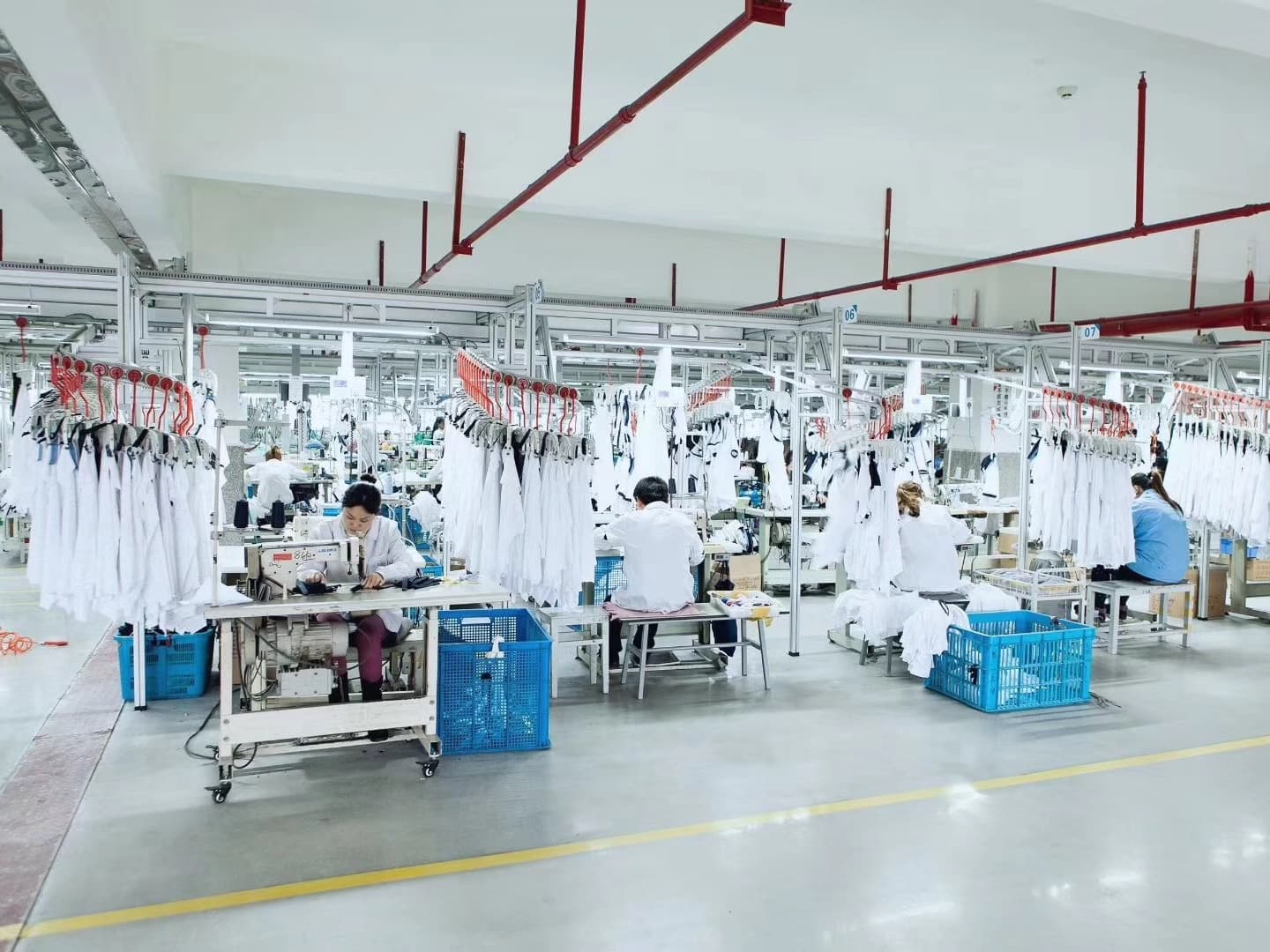
What does a gym wear manufacturer Korea enquiry need to establish?
An enquiry for a gym wear manufacturer Korea programme should make the sourcing geography explicit. This guide is for Korean brands evaluating an overseas development partner. inPACE Sports works from China; a Korea-facing brief does not mean that manufacturing takes place in Korea. State where development, production, inspection and receiving are expected to happen before comparing suppliers.
The primary route here is factory-custom manufacturing. It applies when a gym product needs a different fit, fabric, panel, pocket, neckline or construction. A request limited to branding an appropriate existing product can use a wholesale or light-customisation discussion instead. Neither route establishes stock availability or a fixed order minimum. The chosen garment, quantity, materials and approval scope still need confirmation.
Use the gym wear development service to frame the intended product work. The first useful question is narrow: can the team diagnose the most important unresolved feature in your garment? A polished presentation about many product categories cannot answer that question. A clear explanation of one relevant sample, its limitations and the next change can.
Decide which decision the evaluation will support. Selecting a team for a development sample is different from approving bulk production. Keep those decisions separate so that a promising first conversation does not become an accidental release of artwork, labels or production instructions.
Which product should represent the supplier evaluation?
Choose a style that exposes your main development uncertainty. If the range depends on a fitted training top, evaluate shoulder movement, armhole coverage and hem behaviour. If the anchor is a legging, examine waistband position, rise, gusset and pocket interaction. A decorative tee may tell you little about a supplier’s ability to resolve a complicated bra or close-fitting bottom.
The Activewear Performance collection provides product references for that conversation. Annotate what each reference communicates: silhouette, panel position, opening, colour relationship or styling. A picture does not identify the fabric, establish a size specification or authorise copying another brand’s design. Include references you have permission to use and explain the intended difference.
Limit the first assessment to a product whose sample you can review properly. Asking several suppliers to interpret a whole range without controlled inputs produces difficult comparisons. One supplier may assume an existing pattern, another a new pattern, and a third a substitute material. Their samples may look similar while answering different questions.
Write a short evaluation statement, such as: “Assess whether the proposed waistband construction remains in the intended position during the agreed movements in the named base size.” That is an illustrative brief, not a reported inPACE test result. Add the reviewer, observation method and decision date appropriate to the actual project.
What evidence separates a useful response from a vague promise?
Ask each candidate to respond to the same table. Record a reference for every important answer, including information that is missing. An open question is more useful than an unsupported “yes” because it identifies the next task and its owner.
| Evaluation question | Evidence to request | What a useful response explains | When to pause |
|---|---|---|---|
| What changes from the reference? | Annotated product image and change list | Which changes affect pattern, material or construction | The proposed sample silently uses a different scope |
| Who interprets the fit problem? | Named development contact and marked measurement points | How comments become a revised pattern instruction | No one owns the technical interpretation |
| Which material will the sample use? | Material identity, available details and substitution notes | What is known and what the sample cannot prove | A substitute is presented as the final material |
| What does the first sample answer? | Sample purpose, size and observation plan | Which decision is being evaluated | “Approved” has no defined scope |
| What work occurs at other facilities? | Agreed process and communication responsibilities | Who coordinates each relevant step | The handoff owner cannot be identified |
| How are problems closed? | A permitted example or a blank revision format | Evidence, requested action and closure status | Comments disappear without a recorded decision |
| What information goes to Korea? | Product-data fields and responsible reviewers | Which facts the supplier provides and who approves market wording | Generic claims replace product-specific review |
Treat the table as a comparison tool, not an audit certificate. A supplier may protect customer confidentiality while still demonstrating its working format with redacted or blank records. Do not demand unrelated customer files. Ask for enough relevant evidence to judge the proposed work and make the limits of that evidence visible.
How can a sample reveal the supplier’s technical reasoning?
Request an explanation alongside the sample. If the factory changes a seam position, ask what problem the change addresses and what else it affects. A revised side seam could change panel appearance, pocket position or the relationship between a top and bottom. Approving the appearance alone can miss those consequences.
Use a stable comparison method. Identify the sample, garment revision, material, size, wearer and observation conditions. Photograph the same areas from comparable angles where appropriate and with the wearer’s permission. Keep body measurements and garment measurements distinct. “The medium is tight” does not say which measurement or movement caused concern.
Divide comments into observation, interpretation and requested action. “The hem rises during an overhead reach” is an observation. “The armhole may restrict movement” is a possible interpretation. “Review armhole and sleeve relationship before changing body length” is a requested action. This separation lets the supplier investigate the cause instead of mechanically following a guess.
Ask the manufacturer to return a short interpretation of the consolidated comments. Differences should be resolved before another sample is cut. The sample-feedback guide explains how to organise that exchange in detail. Here, the evaluation is whether the candidate can maintain a clear reasoning trail through one meaningful revision.
Include a deliberate contradiction in the review only if it is already present in the real brief, and make it an explicit question. A buyer may want a closer neckline while retaining the existing opening and stretch direction. Ask the candidate which input needs clarification and what evidence would resolve it. Do not secretly test suppliers with misleading files. A transparent discussion reveals whether the team recognises interacting requirements and can explain a practical investigation. Record the agreed interpretation in the technical specification pack, so later reviewers can see why a proposed change was accepted or rejected.
Which material questions belong in this evaluation?
Keep material assessment attached to the garment problem. A soft fabric may suit a loose layer but behave differently in a waistband or fitted bra. Weight, composition and fibre name alone cannot tell you how the finished garment will move, recover, cover the body or accept decoration.
Ask which sample materials are intended for final consideration and which are temporary development substitutes. A substitute may help assess a general silhouette while being unsuitable for approving stretch, appearance or care information. Mark the sample’s limits where reviewers can see them, rather than leaving a warning in an old email.
Use the fabric and trim review resource to organise the discussion around body fabric, lining, elastic and components. For a pocketed legging, ask how the pocket opening and surrounding material interact. For a fitted top, ask whether the chosen edge finish changes the neckline or armhole observation. Those are specific development questions, not blanket performance promises.
If a report is offered, check its relationship to the actual material, colour and intended claim. Request clarification of sample identity and applicable test scope. A report for another material cannot automatically support the new garment. Specialist assessment may be needed to decide which additional evidence the project requires.
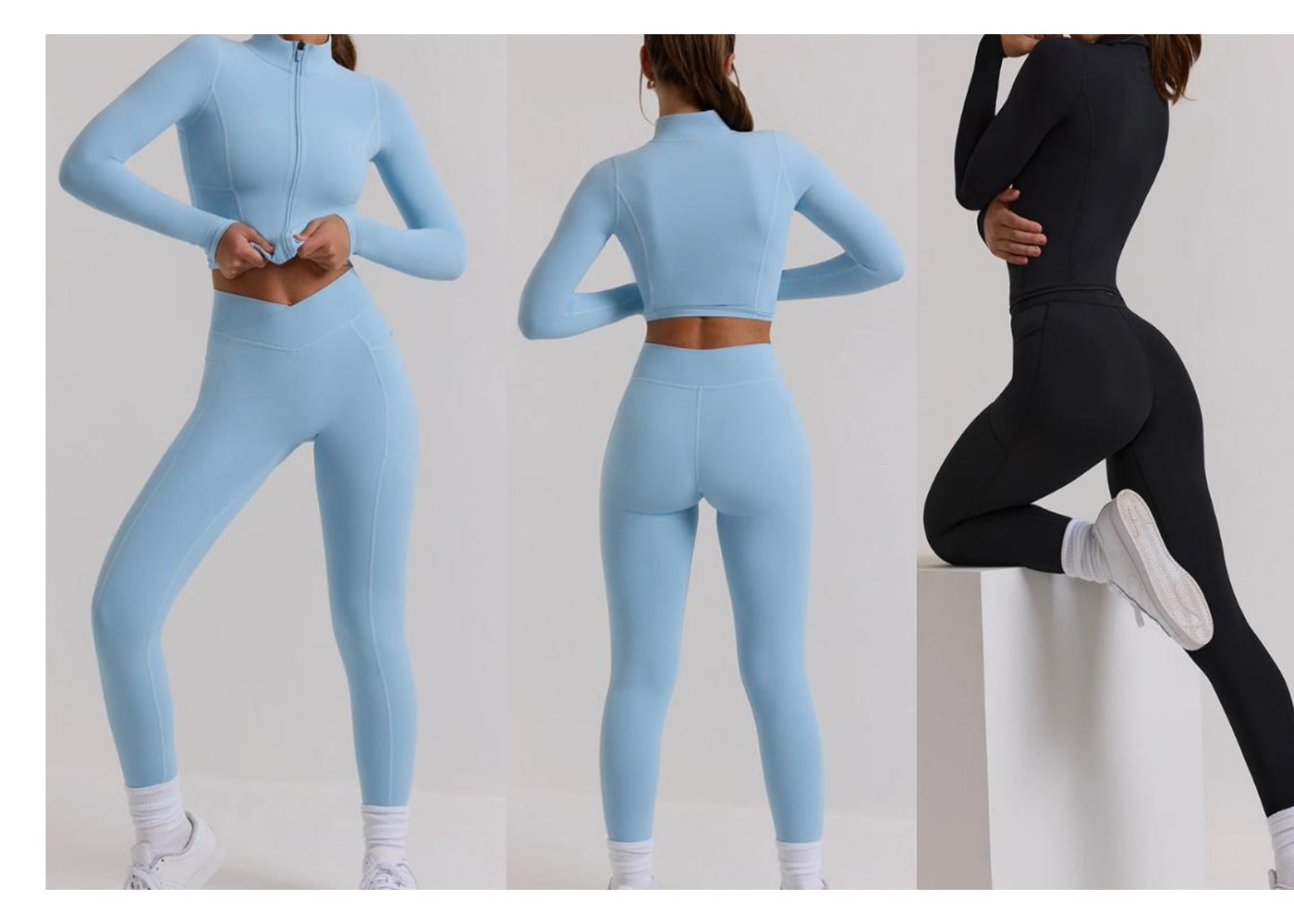
Visual reference for a waistband discussion. A photograph of extension cannot establish recovery, comfort or an agreed performance result; those require a defined sample assessment.
How should Korean and overseas teams control fit terminology?
Maintain one measurement reference with a short bilingual glossary where needed. Match the Korean term, working English term, diagram and unit to the same measurement point. Do not rely on a familiar size letter to communicate a finished garment dimension. A label is an identifier; the measurement specification explains the product.
Clarify whether a dimension is measured flat, around the garment, relaxed or under an agreed method. Define the start and end points for rise, inseam, body length and openings. A difference in method can look like a production error even when each team has measured consistently according to its own assumptions.
Separate the base-size fit review from the size-range decision. A good base sample does not establish that every size has the intended proportions. Ask the supplier which areas need particular attention when sizes change, then agree what evidence is needed. The size-grading guide covers the wider approval task.
Consolidate translated comments into one current issue list. Two languages must not create two competing versions of the instruction. Give each comment a number and retain the original meaning with an approved clarification. If a phrase such as “more fitted” cannot be translated into a clear observation or measurement question, resolve it before using it as a sample instruction.
Who reviews product safety and Korean consumer information?
Appoint a Korean-market reviewer early. The official Safety Korea standards directory separates product categories and safety-management routes. It is a starting point for identifying the applicable requirements, not evidence that a particular garment has passed them. Intended age group, product details and sales route must be assessed for the actual project.
Ask the responsible brand, importer or adviser to document the applicable product classification, information needed, evidence requested and approval responsibility. Keep that assessment separate from the factory’s confirmation of an artwork file or sewing instruction. The person who can print a label is not necessarily the person authorised to decide its final wording.
Create a product-information handoff with fields for material identity, composition evidence, care information, origin information, size description, responsible-party details and any proposed performance statement. The reviewer decides which fields and presentation are required for the particular product and channel. Avoid treating this working list as a universal legal label template.
For consumer-facing descriptions and online selling responsibilities, consult current Korea Fair Trade Commission information with the relevant local specialist. Keep the approved Korean wording linked to the SKU and revision. If a material changes after translation, reopen affected labels and product descriptions before releasing them for use.
What should factory coordination make visible?
Ask who handles product development, material sourcing, pattern work, decoration, sewing and packing for the proposed project. Several parties may contribute. The decision is whether the communication and approval responsibilities are controlled, not whether every step occurs in one building.
The manufacturing workflow can support this discussion. Request a project-specific handoff map showing which approved files accompany each relevant operation. If a logo process is completed elsewhere, identify who checks placement and appearance against the approved version before the garments move on.
Look for an escalation route when instructions conflict. For example, a revised logo may overlap a changed seam. The useful response is to hold the affected operation and obtain a decision from the designated owner. Continuing with whichever file arrived last can turn an administrative difference into physical rework.
How can brands compare candidates without inventing a score?
Use three evidence states: sufficient for the next decision, additional evidence required, and incompatible with the current brief. These states help the team act without suggesting that an arbitrary total proves factory quality. Record the reason and the document or sample behind each state.
Suppose one candidate proposes an available material that changes the handfeel while another requires a different development route. Neither answer is automatically better. Compare how each affects the target garment, sample purpose and unresolved risk. Decide whether the project can accept the change before comparing commercial proposals.
Keep development fit separate from broader supplier due diligence. A capable sample team does not establish every contractual, organisational or operational fact. Use the supplier-audit checklist for the deeper verification process. This article helps you decide whether the candidate’s product reasoning merits that next stage.
Document stopping conditions in advance. Examples include an unidentified sample material, repeated unapproved substitutions, unclear ownership of technical comments or an inability to explain a discrepancy. These are project evaluation criteria. They should be applied consistently and discussed with the supplier before the brand reaches a final decision.
How should one revision change the supplier decision?
Evaluate the second response against the original question. A supplier may improve appearance while leaving the main fit issue unresolved. Another may explain that the requested change creates a new problem and offer a sample comparison. Assess the reasoning and evidence, not just whether the answer agrees with the brand’s first preference.
Maintain a small revision record with the previous observation, approved action, actual change, new evidence and remaining question. Close an item only when the designated reviewer has assessed the relevant result. A new sample number alone does not show that a comment has been addressed.
For a training set, review the garments separately before checking their relationship. A top and bottom can share a colour story while requiring different material or fit decisions. If one item is ready to progress and the other is not, record separate statuses. Do not let a combined product photograph conceal an unresolved garment.
Use the review to decide among a further defined sample, a narrower product scope or a different supplier. The objective is an informed next step. It is reasonable to stop an unsuitable development discussion before placing a larger commitment, provided the team records the actual basis for that decision.
What belongs in the buyer’s evaluation pack?
Prepare a compact pack that a new development contact can understand without reconstructing your message history:
- State the Korean sales channel, intended wearer and overseas manufacturing route.
- Name one representative style and the specific decision it must support.
- Assign an internal SKU and a revision to each reference and drawing.
- Explain which parts of each reference are relevant and which are excluded.
- Provide the base size, measurement methods and intended size-range questions.
- Identify material, elastic, lining and component uncertainties by garment area.
- Define the first sample’s purpose, permitted substitutions and review limits.
- Name the reviewers and the movements or observations appropriate to the product.
- Supply controlled logo files and identify the Korean label-information owner.
- Request named contacts for technical interpretation, factory coordination and escalation.
- Set the evidence needed to move forward, request another sample or stop.
- Ask for the response assumptions and exclusions before comparing quotations.
The pack should distinguish facts from preferences. “Use the approved artwork revision” is a controlled input. “Explore a softer surface” is a development question. “Confirm applicable Korean product information” is a responsibility that remains open until the appropriate reviewer resolves it. Those differences should be visible in the status column.
For a small brand, one person may hold several roles. Record the roles anyway. This makes it easier to recognise when a decision needs additional expertise or when a designer’s preference has not yet been approved for production. It also helps an overseas supplier send the question to the correct person.
What can inPACE review from this pack?
inPACE Sports can discuss references, custom product development, fabric and fit questions, samples, branding compatibility, production coordination, QC and packing within the confirmed project scope. Its role is to help turn an open product question into a clearer manufacturing discussion. It does not replace the brand’s Korean-market specialist or guarantee the outcome of an untested design.
The wider manufacturing experience comes from Yinshan Garments, rather than implying that the newer inPACE brand has existed for the same period. Where cooperating factories or specialist processes are involved, responsibilities and approvals should be made explicit. Their involvement does not imply that every facility is owned by inPACE.
Use custom activewear development when the evaluation involves new fit, material or construction. Then send the representative garment brief with the unresolved product question, base size, material direction, sample evidence requested and review owner. A focused enquiry makes it easier to determine the right next sample and the information still needed from the Korean brand.
Product directions
Explore relevant activewear products
Use these product pages as practical references for your brief, then confirm materials, fit, customization, and production details through sampling.
Long-Sleeve Activewear Set
Use this set reference to identify sleeve, neckline and top-bottom questions for a representative supplier evaluation sample.
View product directionZip-Neck Sculpt Set
Use this reference to discuss front-opening, panel and close-fit questions that need explicit sample evidence.
View product directionCustom Activewear Development
Share one representative garment and the technical question a development sample should resolve before considering production.
View product directionFAQ
Buyer questions
Does gym wear manufacturer Korea mean the garments are made in Korea?
Not necessarily. The phrase can describe a Korean brand’s sourcing enquiry. This guide concerns an overseas manufacturing route, and inPACE works from China. Confirm the actual manufacturing locations, origin information and project responsibilities instead of inferring them from a keyword or the buyer’s address.
Which sample should a Korean gym brand request first?
Choose a representative garment that exposes the range’s main development uncertainty. State the sample purpose, material, size and observation method. A simple branded tee is unlikely to establish whether a supplier can resolve a complex bra, waistband or pocket-construction question.
Can a supplier use a substitute fabric for development?
A substitute can be useful if the buyer agrees to its purpose and limits. Record its identity and which decisions it can support. Do not use that sample to approve final material performance, colour, care information or product claims that depend on a different fabric.
How should fit comments cross the language boundary?
Use one numbered comment record, measurement diagrams and a short agreed glossary where needed. Separate observation from suggested cause and requested action. Ask the supplier to confirm its interpretation before revising the sample, and keep both language versions tied to the same SKU and revision.
Who confirms the Korean label and safety requirements?
The brand should appoint a responsible local reviewer, importer or appropriate adviser for the actual product and channel. The supplier can provide agreed material and manufacturing information and work from approved files. Printing a label or supplying a sample does not establish legal compliance.
Should supplier selection rely on a numerical score?
A score can hide an unresolved critical issue. Record whether evidence is sufficient for the next decision, requires clarification or is incompatible with the brief. Keep the supporting sample or document reference and stopping conditions visible before comparing commercial proposals.
Does a successful development sample approve bulk production?
No. A development sample answers its stated questions within its recorded limits. Production requires the relevant material, construction, sizing, branding and handoff approvals for the actual order. Use the development review to identify what is resolved and what remains open.