
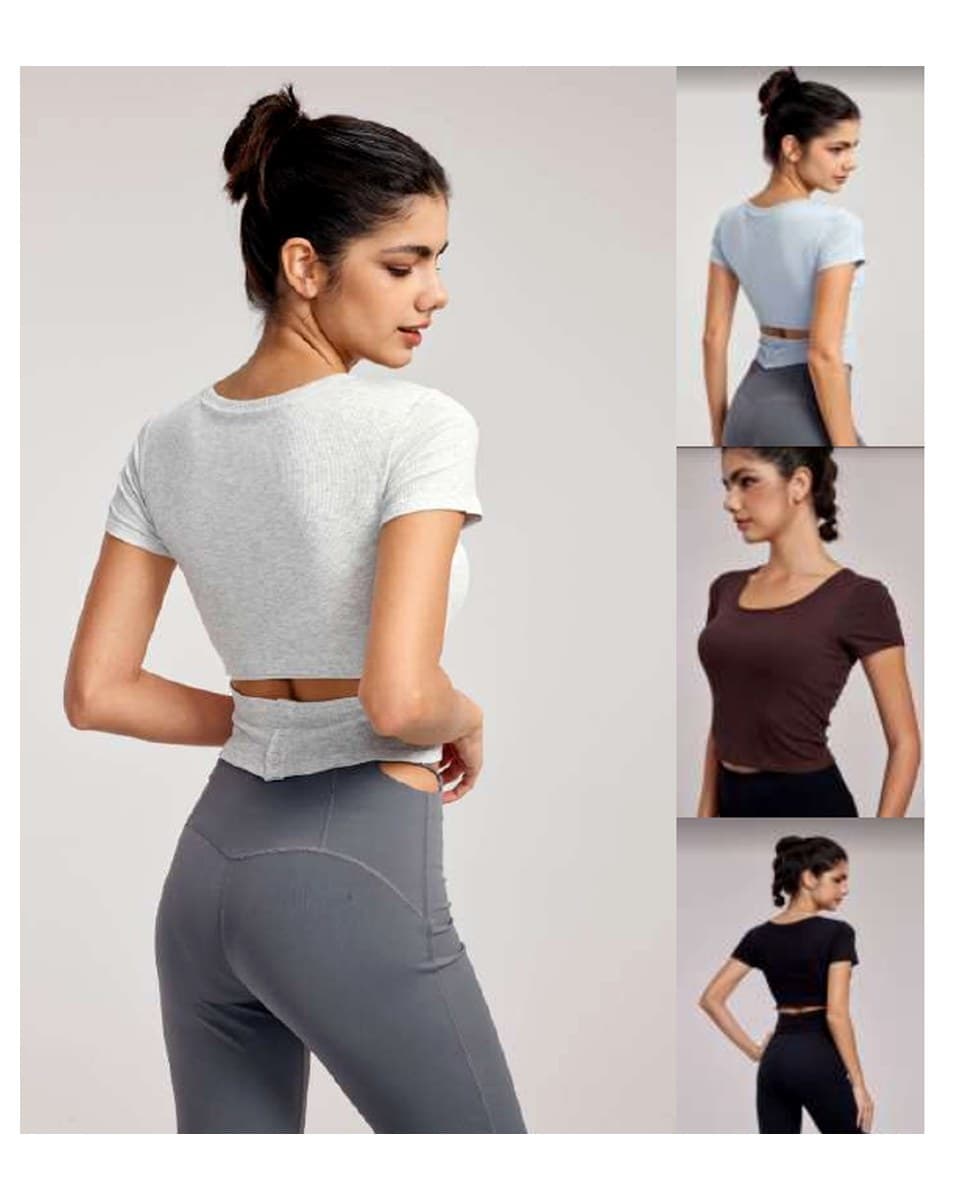
What should a yoga wear market test collection help a brand learn?
Choose a question that can change a product decision. A brand might want to understand whether a particular top provides the coverage its intended wearers want, whether two garments work together as a set, or whether a studio channel can explain the range clearly. Those questions need different evidence. “Test the market” is too broad to tell a supplier what to sample or a reviewer what to record.
This guide uses a small-batch custom development route for a focused collection with unresolved fit, material or construction questions. The proposed quantity and scope still need supplier confirmation; a focused test does not imply a fixed minimum order or ready stock. If suitable existing styles already meet the garment brief and only branding changes are needed, use the wholesale/light-customization route described in the wholesale versus custom manufacturing comparison.
Treat four styles as a planning constraint for this exercise, not a proven ideal assortment for every yoga brand. Each style should contribute a different answer. If two products serve the same role and test the same idea, consider whether one can wait. A smaller set of clear questions can be more useful than a larger collection whose results cannot be connected to individual product decisions.
How should the market hypothesis be written before selecting garments?
Describe the intended wearer, activity, buying setting and unresolved need. An illustrative hypothesis could be: a defined group of studio customers wants a fitted practice outfit plus a separate cover layer for arrival and departure. That is something a brand can investigate with those customers. It is not evidence that every buyer in a country wants the same outfit or that the proposed products will sell.
Identify what the brand already knows and where that knowledge came from. Direct wearer observations, previous product feedback and conversations with a channel partner can provide starting points, but record their scope. A remark from one customer is a reason to ask a better question, not a market-size estimate. Avoid turning a local preference into a country-wide requirement without appropriate evidence.
Write the possible decision before choosing colours or preparing campaign images. For example, the result might determine whether the cover layer belongs in the first range, whether the top needs a different hem relationship, or whether garments should be offered separately. Name the person who will make that decision and the information they need. This keeps the test connected to sourcing instead of becoming an open-ended collection launch.
Which four core styles can form a useful first test?
For this framework, use a sports bra, leggings, a fitted top and a loose cover top. They provide four distinct roles to examine: the base upper garment, the main lower garment, an alternative coverage choice and a layer worn over the outfit. These are examples to adapt to the brand's hypothesis. The yoga activewear collection provides product references for discussing silhouettes, not proof that a particular selection suits the new market.
Use the table to assign one principal learning question to each role. Add garment-specific detail in the supplier brief and keep coordination questions separate from individual fit approval.
| Core role | Question for the test | Sample evidence to prepare | Decision the result can inform |
|---|---|---|---|
| Sports bra | Does the proposed coverage and construction suit the defined wearer and activity? | Identifiable sample, agreed fit observations and relevant inside/outside views | Retain the concept, revise a detail or investigate another direction |
| Leggings | Does the waistband, length and movement relationship match the intended use? | Base-size review, measurement reference and observations for specified movements | Keep or reopen the fit and construction brief |
| Fitted top | Does this provide a useful alternative to the bra-only outfit? | Review alone and with the intended lower garment, recording hem and coverage observations | Keep it as a distinct role or reconsider overlap |
| Loose cover top | Is a separate over-layer useful in the defined channel and use context? | Review over the intended base outfit and document how it is put on and removed | Retain, revise or defer the layer |
Do not require every participant to want all four pieces. A useful result may be that one garment serves a narrower group or belongs in a later release. Record whether feedback concerns an individual item, a combination or the proposed purchasing format. Those are different decisions, even if they arise during the same fitting or product conversation.
What should the sports bra test establish before collection approval?
Define the wearer and activity first, then specify the observations that matter to the proposed product. Record the neckline and armhole coverage, band relationship, straps, inside construction and any movement concern identified by the reviewer. Ask the development team which sample can address those questions. Do not assign a support level or performance result from the appearance of the garment alone.
The pleated-front cross-back sports bra reference can help a buyer point to front and back details when preparing a brief. It should not replace an examination of the actual sample proposed for the project. If the brand wants a different strap arrangement or coverage, identify that as development work and ask what further evidence the change requires.
Keep feedback specific enough to review. “The wearer adjusted the strap during this movement” is more useful than “the bra was uncomfortable” without context. Preserve the sample identity and review conditions, then ask for a proposed response. A changed strap can affect other relationships in the garment, so the next review should check the intended correction and relevant interactions rather than treating the change as automatically approved.
How should leggings be assessed as both a garment and part of a set?
Start with the leggings' own fit and construction questions. Identify the base size, waist position, length, seam locations and relevant movement observations. Where the buyer needs evidence about opacity, recovery or another material property, define an appropriate evaluation for the actual garment and material. A product photograph or informal stretch demonstration does not establish those properties for a new sample.
Then assess the relationship with the proposed upper garments. Record whether the top and waistband meet, overlap or separate in the intended use, and whether that relationship matches the brief. Two garments may each be acceptable alone while the combination needs further review. Keep the set observation tied to the exact top and bottom versions so a later revision does not inherit an approval it never received.
Use the fit-model brief to make review conditions repeatable enough for a development conversation. If a concern appears only with one combination, investigate that combination before changing every garment. Distinguish a size-selection problem, an individual fit observation and a construction question. The supplier needs to know which issue the brand wants the next sample to address.
What makes the fitted top and cover top separate tests?
A fitted top can test an alternative upper-body coverage choice during the intended activity. A cover top can test how another layer works over the practice outfit. Write those roles separately; otherwise, the brand may interpret a preference for one wearing situation as rejection of the other garment. Ask when and how the participant would use each item, then compare that answer with the original product role.
If a fitted top includes its own cup or lining construction, establish how the buyer intends it to be worn. Do not assume it should always be layered over the sports bra. For the cover top, record the intended base outfit, opening and hem relationships, ease of putting it on and any movement concern. A loose silhouette does not prove that it works over every underlayer or for every wearer.
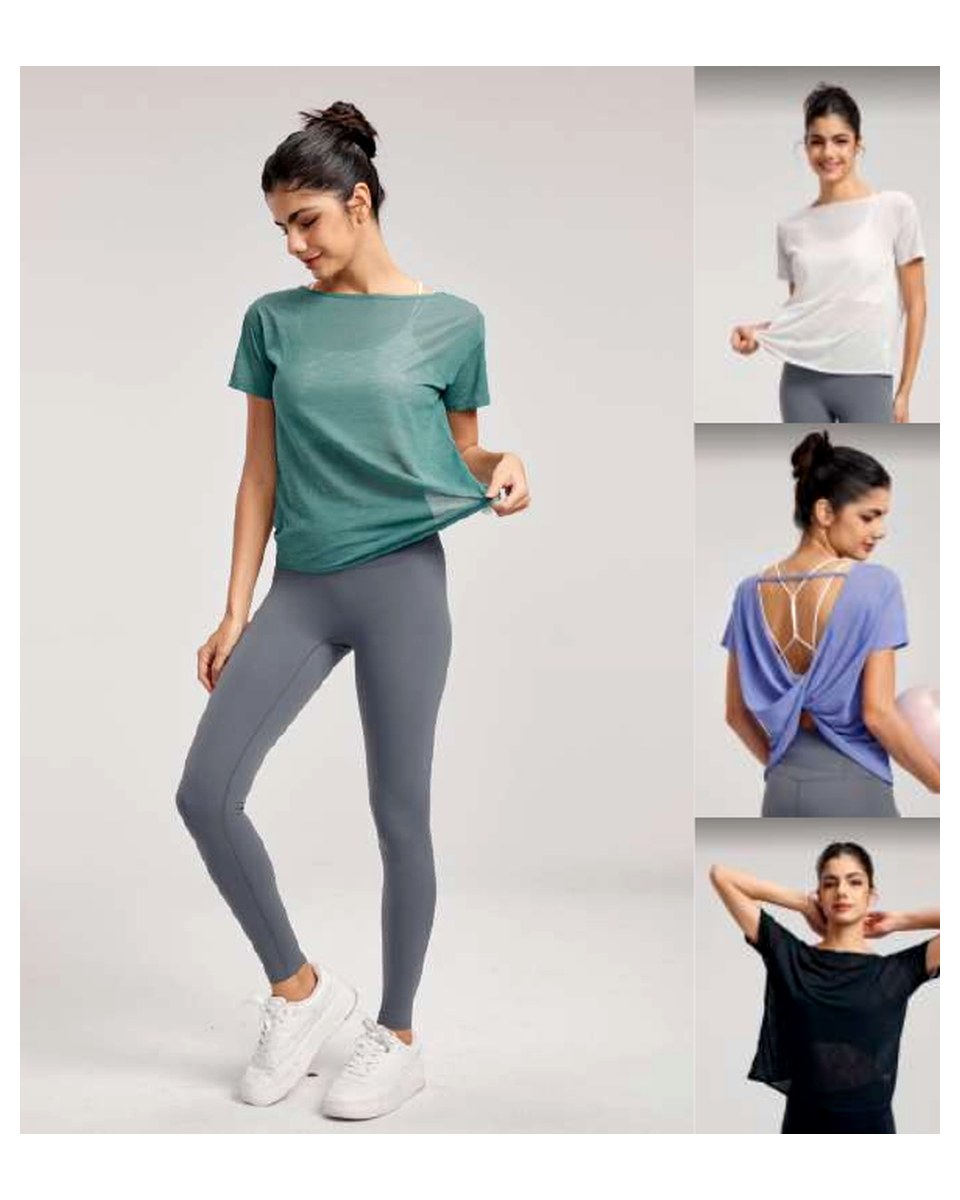
The cover-top product reference illustrates a separate layer role. The photograph does not establish a temperature benefit, tested performance or market preference. Ask the supplier to confirm the actual proposed garment and sample details. A useful review connects the visible design direction to the way the brand intends people to wear it.
How can materials and colours be controlled without making the test artificial?
Choose a manageable set of material and colour decisions that supports the hypothesis. If the test is mainly about silhouette or layering, changing fabric, colour and construction between every comparison makes the feedback harder to interpret. Some differences may be necessary because the garments perform different roles. Record those differences deliberately instead of pretending that every item can use one identical material.
Use the fabric and trim review service to discuss the proposed combination for each garment. Identify the material reference, relevant components and unresolved properties. For coordinated colours, specify what will be reviewed together and under what conditions. A shared colour name does not guarantee that different materials will appear identical, and a catalogue image does not settle the actual colour approval.
Keep a version record when a material or colour changes. If an early fitting uses one fabric and a later presentation uses another, the results belong to different versions. The change may be justified, but it should remain visible in the test record. Otherwise, the brand can end up reordering a version that was never actually reviewed or crediting a styling change with solving a garment problem.
Which samples are needed before a commercial test begins?
Separate product development from a commercial release. A prototype can help answer a construction question without being ready for customer use or sale. A fitting sample can support a defined review without approving every size, colour or branding detail. The activewear sample-plan guide helps assign a purpose to each sample so the team knows what it can decide from it.
For each core style, list the open question, the evidence requested, the reviewer and the next decision. Then identify any collection-level review, such as the top-to-waistband relationship or the cover layer over the intended outfit. This does not require every garment to move through an identical sequence. It requires the brand to know which evidence is missing before it presents a version as ready for its intended commercial use.
Confirm release requirements through the brand's normal product and destination review. Keep information, labelling and other market-specific questions with the designated responsible people. A limited quantity or a “test collection” label does not itself resolve those requirements. The supplier should receive the confirmed instructions within its scope, while unresolved items remain visible as reasons to hold or narrow the planned release.
How should a brand distinguish garment feedback from channel feedback?
Record what the person actually encountered. Did they examine a physical sample, try the garment, see a styled photograph or read a product page? A comment based on a photograph may concern presentation rather than fit. A person who could not find their size cannot provide the same evidence as someone who tried the relevant size. These distinctions matter before feedback is converted into a factory revision.
For a studio review, document the garment versions available and the context of the conversation. For an online test, retain the product-page version, images and information shown. The international e-commerce private-label guide explains the relationship between product records and customer-facing information. Use the relevant channel's evidence without assuming that results from one setting automatically describe another.
Separate observations from interpretation in the feedback log. “Three people asked whether the pieces are sold separately” is an observation if it was actually recorded; “customers do not want sets” is a broader interpretation that needs further examination. In an illustrative record, label numbers as examples rather than results. For the real test, retain the underlying entries and state the limits of the group and exposure before drawing a conclusion.
What information belongs in the test record for each style?
Create a record that links a response to the product and decision under review. The purpose is not to collect personal details beyond the review's needs; it is to prevent an anonymous comment from becoming an untraceable instruction. Follow the brand's normal arrangements for participant information and permission when organising the review.
| Record field | What to capture | Why it affects the sourcing decision |
|---|---|---|
| Product identity | Style, version, size, colour and relevant material reference | Keeps feedback attached to the garment actually reviewed |
| Exposure | Fitting, physical display, product page or other defined setting | Distinguishes wearing evidence from presentation feedback |
| Intended role | Individual item, coordinated set or cover layer | Shows which part of the collection hypothesis was tested |
| Observation | The specific comment or behaviour and its context | Preserves what happened before interpretation |
| Availability limits | Missing size, unavailable comparison or incomplete information | Prevents access problems being mistaken for product rejection |
| Proposed action | Retain, revise, investigate, retest or stop | Connects the finding to a concrete next decision |
| Owner and evidence | Responsible reviewer and what would close the question | Keeps a proposed change from becoming an unreviewed approval |
Use the sample feedback guide when an entry becomes a development request. Consolidate related comments, identify the proposed change and preserve the original issue. Avoid sending the supplier a long list of conflicting customer phrases without explaining which question the brand has decided to pursue. The brand owns that interpretation and the resulting product priorities.
How should branding, packing and product information support the test?
Keep the tested garment identifiable through its sample, product presentation and receiving record. Define the style and variant identifiers before preparing labels or a product page. If the bra and leggings can be sold separately and as a set, decide how those versions will be described and handled. The activewear packaging checklist helps translate that choice into instructions the supplier and receiving team can follow.
Branding should be sufficiently defined to review its interaction with the garment. A logo placed near a stretch area or seam raises a different question from a hangtag. Record what has been approved and what remains provisional. If the test compares product concepts, avoid interpreting a difference caused by inconsistent branding or incomplete information as a clear preference for one silhouette.
Use descriptions that match the evidence available for the actual version. Do not borrow a performance claim from a reference garment or present an intended improvement as an achieved result. For the first release, the brand needs a coherent connection between the accepted product, its images, its information and the unit that will be received. That connection also makes later feedback more useful.
What should trigger a revision, retest or reorder?
Decide the response categories before the results arrive. Retain a feature when the reviewed evidence supports its defined role and no unresolved issue prevents the next step. Revise when there is a specific product question that the brand chooses to address. Retest when the evidence is unclear, the sample changed materially or the original review could not answer the question. Stop or defer a style when its role is no longer justified by the current plan.
Keep the threshold proportionate to the decision. There is no universal sales number or feedback percentage in this guide that proves a new collection should expand. A small trial can reveal a question worth investigating without establishing demand across a whole market. Record the actual observations, limitations and commercial context rather than presenting a preliminary signal as a validated forecast.
Before a reorder, confirm which version is being repeated and what has changed. A revised waistband, new material or different set configuration may require a fresh approval. The sample-to-bulk production guide helps frame that handover. Keep the accepted garment record, size and colour allocation, branding and packing instructions connected so the reorder reflects the decision the brand actually made.
What should the four-style supplier brief contain?
Send the collection hypothesis together with garment-specific questions. A supplier can give a more useful response when it understands why an item exists, which details are fixed and what the next sample must establish. Keep the following preparation list alongside the individual style records.
- Name the target market, channel, intended wearer and test question.
- Give each of the four styles a distinct product role and reference.
- Separate accepted details from fit, material or construction questions.
- State whether each item follows existing-style branding or custom development.
- Identify the base size, review conditions and responsible fit reviewer.
- Record the material and colour references to be assessed together.
- Assign a purpose and next decision to every requested sample.
- Explain which garments must be reviewed as a combination.
- Define the branding, sellable-unit and packing instructions.
- Name the owner of destination and customer-facing product information.
- Describe how feedback will be recorded and translated into revisions.
- State what would reopen approval, trigger another test or permit a reorder discussion.
The yoga wear manufacturing overview provides a starting point for discussing these product and sampling requirements with inPACE Sports. Keep the proposed test scope visible in the enquiry. A supplier response should help clarify feasibility and evidence needs; it should not be treated as proof that the collection already has market demand.
To move the plan forward, send your four-style yoga collection brief with the hypothesis, product roles, sample objectives, fit and fabric direction, channel, branding, packing and conditions for reopening a decision. Ask inPACE to identify the information needed to assess the proposed small-batch custom project. That creates a concrete next step while preserving the distinction between a product idea, an approved sample and a justified repeat order.
Product directions
Explore relevant activewear products
Use these product pages as practical references for your brief, then confirm materials, fit, customization, and production details through sampling.
Yoga Activewear Collection
Choose references for four distinct product roles and mark the questions each garment should help the brand answer.
View product directionCross-Back Sports Bra Reference
Use the front and back construction as a discussion reference, then define the sample evidence for your intended wearer.
View product directionSmall-Batch Custom Project Review
Discuss the development scope, sample purpose and proposed quantities for a focused collection; project conditions require confirmation.
View product directionFAQ
Buyer questions
Why use four styles for a yoga wear market test collection?
Four styles provide a manageable framework for assigning distinct product roles and learning questions. In this guide they are a sports bra, leggings, a fitted top and a loose cover top. Four is a planning choice, not a universal ideal range or evidence of what every market will buy.
Does a market test require fully custom yoga wear?
No. Suitable existing garments may support a test focused on branding, presentation or assortment. New fit, fabric or construction questions need an appropriate development and sample route. Define the requested changes first, then confirm the supplier's scope and quantity conditions rather than assuming a test automatically qualifies for a particular order arrangement.
Can a brand use product photographs instead of samples?
Photographs can support a presentation or concept discussion, but they cannot establish fit, material behaviour or construction suitability for the actual garment. Record whether a response came from an image or a physical review. Use samples and other appropriate evidence for product questions that photographs cannot answer.
Should all four styles share the same fabric and colour?
Only where that combination suits their intended roles and is confirmed through review. Different garments may need different materials. Control the variables relevant to the test, identify each material and colour reference, and review coordinated pieces together. A shared colour name does not prove that different fabrics will match visually.
How can a brand tell whether weak feedback is a product problem?
Check the exposure and context before revising the garment. Missing sizes, unclear descriptions, an unavailable comparison or a confusing set offer can limit what the feedback means. Connect observations to the actual product version and distinguish garment issues from presentation, access and channel questions that need a different response.
What should happen before reordering a successful test style?
Identify the version that produced the relevant evidence and confirm any changes to materials, fit, size range, branding or packing. Resolve open issues and preserve the accepted records before discussing the repeat order. A promising trial does not automatically approve a modified garment or establish demand for every future variant.
What does inPACE need to review a small yoga collection project?
Share the market and channel hypothesis, four product roles, references, required changes, sample questions, fit and material direction, branding, packing and approval owners. Include proposed quantity direction and the conditions for revising or expanding the range. The project details determine the next development discussion and commercial confirmation.