
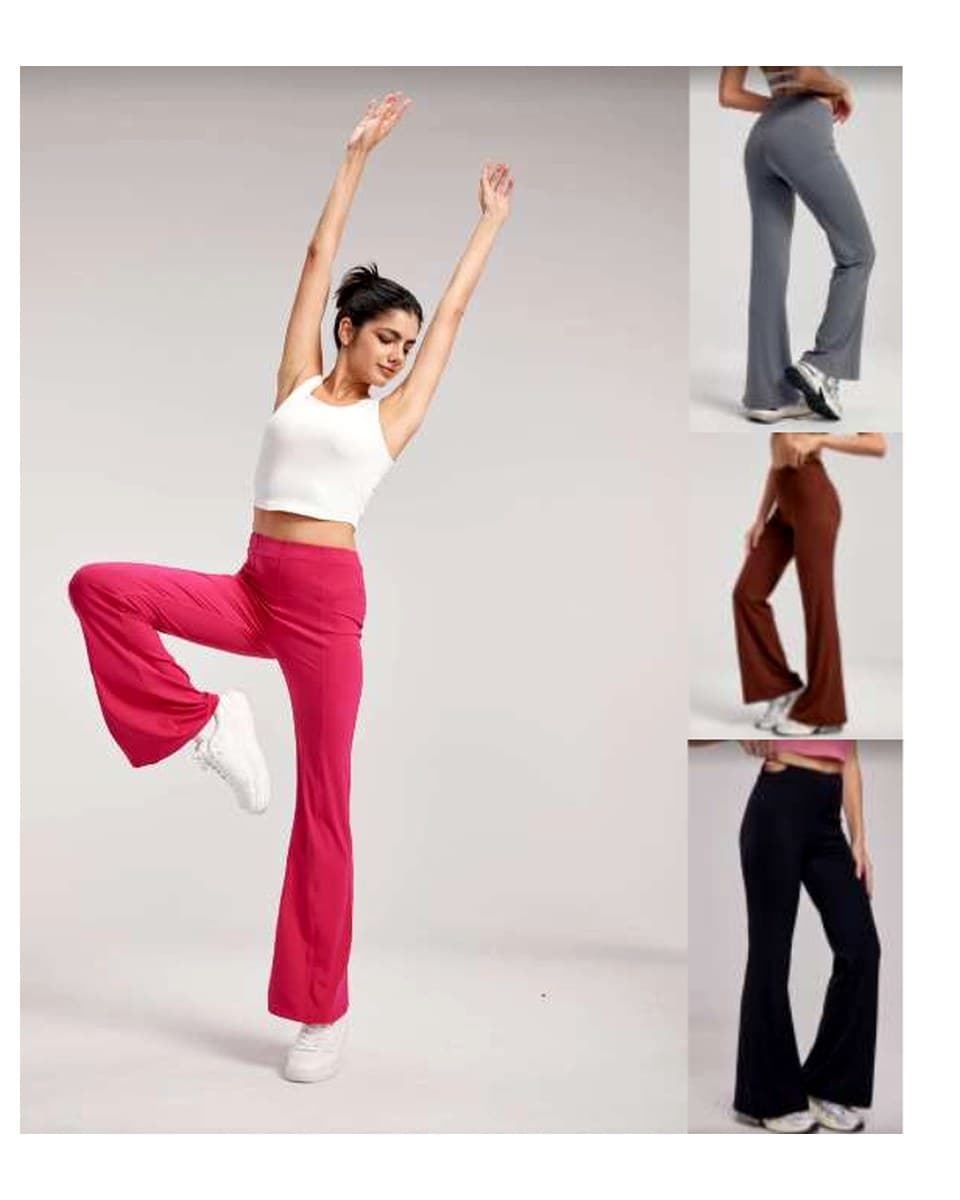
For a studio shop, independent label or wholesale distributor, the difficult part often comes after choosing a photograph. The buyer may like the waist on one pant, the length of another and the colour shown beside a third. Unless those decisions are separated, a request for an existing style can become an unrecognised development project.
A useful wholesale brief begins with a narrower question: which currently confirmed pant can fulfil this role in the range, with the branding and packing the business needs? The activewear wholesale sourcing route connects that selection with sample review and an agreed order record. This guide focuses on pants already represented in the catalogue, from close-fitting leggings to flared silhouettes.
What should a yoga pants wholesale supplier confirm first?
Start with a product code, a link and an identified reference image. Add a short statement of the intended role: a close-fitting studio pant, a flared option for a studio-to-daily-wear assortment, or another clearly described use. A supplier can then discuss one garment instead of interpreting a mood board as a specification.
The word wholesale does not establish whether garments are sitting in stock, will be produced against an order or can be supplied in every illustrated colour. Ask for the current position for the selected style and quantity direction. Record what is confirmed, what needs a sample and what remains open in the quotation.
Keep existing-style selection separate from changing the garment. Choosing among confirmed lengths is a selection decision. Requesting a new inseam, a different waistband or an added pocket may change the product and require a different sample scope. A small visible change can still affect pattern pieces, workmanship or the way a label is attached.
The yoga and activewear catalogue is useful for building a shortlist. Limit the first comparison to styles that could answer the same buying question. Comparing every pant on the site makes it harder to explain why a selected item belongs in the assortment or why a rejected item did not suit the intended wearer.
How do you choose between leggings, flared pants and micro-flare styles?
Treat leg shape as a product role, not a ranking. A fitted legging, a wider lower-leg silhouette and a micro-flare pant can serve different preferences. The choice should come from the planned use and the actual sample review, rather than an assumption that one outline is universally more flattering or suitable for yoga.
For a close-fitting reference, the catalogue identifies DWP115011 as a high-waist legging. Use that identity to request the relevant sample and measurements. The product name does not replace verification of the actual material, waistband feel, coverage or available size options for the proposed order.
DWL115027 provides a flared pant direction, while DWL115096 is listed as a micro-flare pant. Keep those codes separate throughout the enquiry. Similar colours or a shared size label do not make them interchangeable, and a photograph of one should not become the final listing image for the other.
Use the following comparison to decide which question each reference must answer. It is a selection worksheet, not a claim that a particular sample has passed the checks.
| Pant direction | Main selection question | What to review on the actual sample | Keep in the order record |
|---|---|---|---|
| Close-fitting legging | Does this existing fit suit the intended studio use? | Waist position, leg contact, movement coverage and accepted length | Exact style, size chart and sample identity |
| Flared pant | Does the wider lower leg suit the planned wearing context? | Hem position, lower-leg shape and clearance during intended movement | Accepted silhouette and confirmed length option |
| Micro-flare pant | Is this distinct enough to justify a separate assortment role? | The actual opening, transition through the leg and fit on the intended reviewer | Separate style code and selection reason |
| A requested hybrid | Can an existing style already meet the requirement? | Which features differ from the selected reference | A separate development brief if changes are required |
The hero image shows red flared pants with grey, brown and black inset views. It illustrates leg shape and catalogue colour presentation. It does not establish the current colour names, inventory or a recommended length for every wearer.
Which waist and length details matter before you allocate quantities?
Record where the accepted waistband sits on the reviewer and how it behaves during the intended movements. A high-waist description alone does not tell the buyer how the top edge feels, whether it folds in a seated position or how the rise relates to that person's proportions. Note the sample size and review context alongside the observation.
Use the supplier's agreed measurement method to identify waist, hip, rise and inseam information. A relaxed garment measurement and a body measurement describe different things. Do not put them into one column without labels or compare two charts as though they use the same method. Ask for clarification wherever the reference points are unclear.
For length, separate the garment measurement from the appearance on a particular model. The model's height, proportions, footwear and pose affect how the hem looks. In flared pants, an image may conceal part of the shoe or show the fabric extending toward the floor. The buying decision needs an actual accepted length and intended wearing context.
Review the existing length option with the footwear and activity relevant to the assortment. A studio review performed without shoes and a retail photograph made with trainers answer different questions. Keep those contexts visible in the notes instead of treating a single image as approval for both.
If no confirmed length meets the brief, state the gap. A new inseam or altered lower-leg shape belongs in custom activewear development, with its own feasibility and sample discussion. Do not hide the change inside a packing comment or assume that cutting the hem is appropriate for every construction.
How can a sample review support a wholesale selection without redesigning it?
Write the review questions before the sample arrives. For pants, useful questions include whether the existing waist position, coverage, length and leg shape suit the intended wearer and use. The purpose is to accept or reject a defined catalogue option, or to identify clearly why the enquiry needs a different route.
During the review, record what happened rather than assigning vague approval words. “Waist felt acceptable while standing but folded during seated movement” is more useful than “fit needs improvement.” Add the sample identity, size, reviewer context and relevant photographs where appropriate. A second reviewer should be able to understand the observation without reconstructing a call.
Keep comfort impressions, visible coverage observations and measured information separate. A wearer saying that a fabric feels soft does not establish a fibre composition or wash result. An image taken in one light does not demonstrate opacity across every colour and size. Ask which additional evidence is needed for any claim the brand wants to make.
An approval also has a scope. A plain sample may confirm the garment direction while leaving the logo, label and packaging unresolved. If an artwork proof is approved later, connect it to the same style and material record. Avoid one general “approved” message that leaves the production team guessing which elements it covers.
Use the sample and order process to agree the next step with inPACE. Where the buyer accepts the existing garment, concentrate the remaining review on confirmed options and brand details. Where the garment fails a core requirement, choose another reference or define development work before increasing the assortment.
How should sizes and colours become an orderable quantity list?
Create a line for each style, colour and size combination included in the proposed order. Give every line a quantity in pieces. If the commercial plan also uses packs, define how many pieces each pack contains and how its sizes are distributed. A total such as “mixed yoga pants” is too loose to support production or receiving.
Use the current confirmed size chart for each style. A medium in a flared pant and a medium in a fitted legging may have different garment measurements and intended fits. Keep those records distinct even if the brand ultimately presents a consistent consumer-facing size language. Any conversion between supplier and brand labels needs explicit approval.
There is no universal size ratio that suits every studio, online store or wholesale customer. Base the proposal on actual customer information, previous demand where relevant, or a clearly stated trial assumption. If the business has no reliable history, say so and explain how the first order will be reviewed. Do not turn a guessed ratio into a market fact.
Colour allocation deserves the same discipline. A buyer may want a core colour across several pant shapes and a smaller selection of additional colours. Confirm which combinations can actually be quoted, then reconcile the list with the planned total. Removing a colour from a visual assortment board must also remove or revise the corresponding quantity lines.
The size, colour and quantity planning guide explains how to keep that matrix readable. For a pants order, add the accepted length option where it is part of the product identity. This prevents two garments with the same visible size label from being combined when their lengths differ.
How do you keep colour references consistent across samples and listings?
Link a colour name to the supplier's identified reference, rather than relying on a screen alone. A catalogue image can help communicate direction, but different lighting and displays can make the same garment appear warmer, cooler, lighter or darker. Ask what reference will be used for approval and how the accepted version will be recorded.
Review the selected colour on the actual garment where its appearance or coverage affects the buying decision. Approval of a dark sample does not automatically settle a pale colour. Likewise, liking a colour on a top does not establish that the pant material will look identical beside it. Record any coordinated-outfit requirement explicitly.
Keep merchandising names and production identities connected. A brand can use a consumer-friendly colour name, but the order still needs an unambiguous mapping to the approved supplier reference. If two styles use the same retail colour name, note whether a visual match is required or whether they are deliberately presented as separate tones.
After approval, use images that represent the accepted style and colour. Do not label an inset from one product as a confirmed option for another merely because the shades look similar. If final photography is pending, track that as a content task; the sourcing record should still identify which garment and colour the photographer needs.
What should the logo proof establish on yoga pants?
Give the supplier the final artwork file and a placement instruction tied to visible garment reference points. “Small logo near the waist” leaves the size, side, distance and orientation open. Specify the proposed dimensions and position, then confirm them through a proof appropriate to the selected style and application method.
The private-label activewear route covers logos, labels, hangtags and packaging as related decisions. On pants, consider how the chosen location behaves when the waistband stretches or the garment is worn. A flat artwork layout can show position; a relevant application sample can answer different questions about the material and decoration.
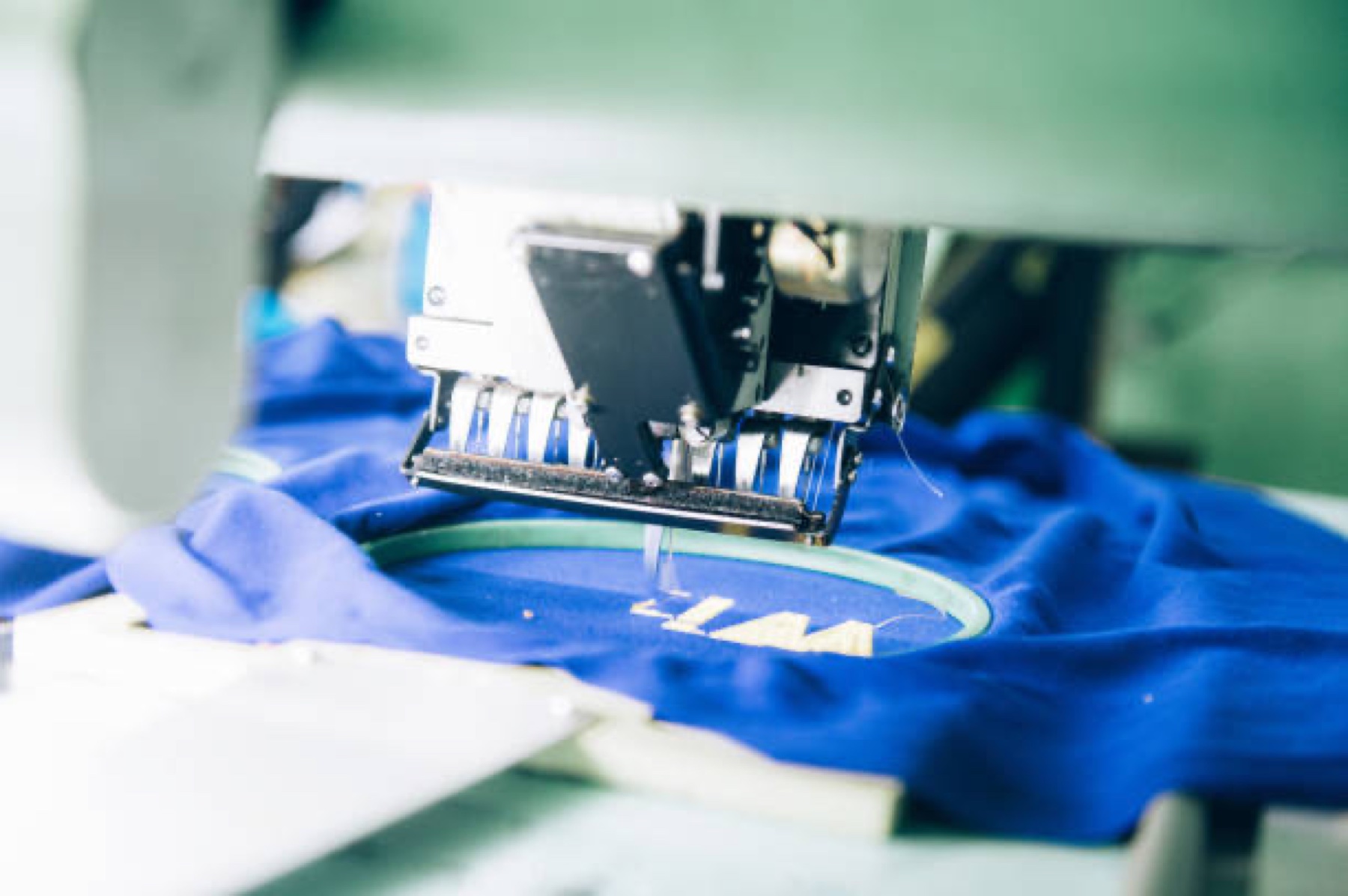
This process photograph illustrates an embroidery application setup. It does not establish embroidery as the right method for every stretch pant or show an approved logo for the reader's order.
Discuss the proposed decoration using the logo methods for stretch activewear guide. Ask which method suits the actual material, placement and artwork. Keep any requested stretch, appearance or care review tied to the agreed sample and conditions rather than accepting a general promise that the logo will work everywhere.
Approve the correct artwork version, not only the overall appearance. Check spelling, orientation, dimensions, colour and garment placement together. Where different pant styles need different placements, maintain separate instructions. One approval can cover several variants only when its scope explicitly names them and the relevant conditions are confirmed.
Which label and packing decisions affect a pants order?
Separate the brand label, size identity, garment information, hangtag and outer packing requirements. These items serve different people: the wearer, the retailer and the receiving team. Combining them into “private-label packing” can conceal missing text or a mismatch between the size inside the garment and the size printed on its bag.
Use verified information for composition and care content, and have the responsible buyer confirm destination-specific requirements. Do not copy generic label wording from another pant. If a material or construction is changed, the information review may need to change with it. Keep approved text attached to the relevant style and version.
Decide whether pants will be packed individually or within a defined assortment pack. For each format, state what the outer identification must show so the receiver can find the correct style, colour and size without unnecessary opening. Confirm the folding direction and logo presentation where they matter to the sales channel, rather than leaving them as assumptions.
The activewear packaging checklist helps connect product identity with labels and carton instructions. For a mixed pants shipment, give the receiving team a record of which variants belong in each carton or agreed grouping. A carton total alone cannot explain whether the right size-colour mix arrived.
Use a packing sample, photograph or agreed record to confirm the required arrangement. The correct evidence depends on the issue: a text proof can resolve a spelling change, while a physical pack may be needed to discuss how the garment and hangtag sit together. Record which question was answered instead of calling every document a packing approval.
What should you compare in supplier proposals?
Compare proposals against the same selected style and order scope. Differences in the garment, colour allocation, artwork method, label set, packing format or delivery responsibilities can change what a quotation includes. A number is not meaningfully comparable until those inputs are aligned.
Ask the supplier to identify unresolved assumptions. These might include a pending colour reference, an unconfirmed quantity split or artwork that has not been supplied in the needed format. Keep such items visible before treating a proposal as ready for production. A later change should be reviewed for its effect on the agreed conditions.
The following record separates the major approvals so a buyer can see what is actually ready. It is a document structure, not a mandatory inspection standard or a report of completed work.
| Record | What it identifies | What remains open if it is missing |
|---|---|---|
| Accepted garment reference | Style, sample version, measurements and confirmed length | Whether the supplied pant matches the selected product |
| Variant allocation | Colour, size, quantity and unit for each line | The actual assortment to produce and receive |
| Branding approval | Artwork version, method, size and placement | Which logo application is included |
| Label and packing approval | Approved text, identifiers, pack format and carton plan | How the goods will be identified and handled |
| Confirmed commercial scope | Included work and agreed order conditions | Whether two proposals cover the same supply request |
Keep the final agreed record accessible to the buyer, supplier and receiving owner. If information changes after approval, issue a clear replacement version and identify what changed. Do not expect the production team to resolve contradictory attachments by choosing the most recent email.
How should the first order inform a later reorder?
At receiving, compare the actual goods with the accepted style, variant and packing records. Keep quantity discrepancies separate from garment observations and separate again from sales results. A missing size label, an unexpected hem appearance and slow sales each call for different follow-up questions.
Record the evidence behind a reorder decision. If a particular length receives repeated comments, identify the style, size and wearing context involved. If a colour sells quickly, check whether its starting quantity was much smaller than the others before treating it as a clear preference. Use actual business records rather than a general assumption about the category.
The repeat-order production guide explains how to retain approved samples, specifications and changes. For yoga pants, keep the exact waist, leg shape and length identity visible. Reordering “the black pant” is ambiguous if the first programme included several black styles or different accepted lengths.
Reconfirm the current supply conditions for the repeat request. The previous order defines what was accepted; it does not reserve material or guarantee that every option remains available. If an alternative is proposed, compare it with the retained reference and approve the relevant differences before treating it as an unchanged repeat.
How can inPACE help organise the selected-style brief?
A shortlist can combine different waist shapes, lengths, colours and logo ideas without showing which choices belong to the same order. That makes it difficult to tell whether the request is still selecting an existing style or has become a new development brief.
For an agreed enquiry scope, inPACE can work with the buyer to separate the selected catalogue styles, confirmed options, sample questions, branding and packing decisions, and unresolved changes. The buyer can then review a style-by-style selection record that identifies the reference and version, accepted size and length information, colour and quantity lines, branding proof, packing decisions, approval owner and remaining open points. The exact record and review steps should be agreed for the project; this is a planning aid, not evidence that any sample or order has already been approved.
That record helps the buyer decide whether the existing pant options can support the intended range or whether a requested fit, length, material or construction change needs a separate custom-development discussion before quantities are committed. Confirm current supply conditions and commercial terms for the actual enquiry. A catalogue reference alone does not establish availability or an order commitment.
What should you send with a yoga pants wholesale enquiry?
Prepare the following information in one current brief. Mark unknown items as questions so they can be resolved deliberately.
- Product codes, links and reference images for the shortlisted pants.
- The role of each style and the intended wearing context.
- The existing waist and leg shape you want to retain.
- Confirmed length options, or a clear question about the available lengths.
- The relevant size chart and any proposed brand-size mapping.
- A quantity list by style, colour and size, with the unit stated.
- Colour references and any coordinated-outfit matching requirement.
- Final logo artwork and proposed size, method and placement.
- Brand label, garment information and hangtag requirements.
- Individual or assortment packing needs and receiving identifiers.
- The sample questions, approval owner and accepted version where available.
- Destination, delivery target and the conditions still to be confirmed.
Send your selected pants and wholesale brief to inPACE. Include the waist and length decisions, size-colour allocation, logo and packing requirements so the discussion can address the actual assortment and identify any work that needs a separate development review.
Product directions
Explore relevant activewear products
Use these product pages as practical references for your brief, then confirm materials, fit, customization, and production details through sampling.
High-Waist Legging Reference
Identify the existing waist and close-fitting leg direction, then review actual measurements and confirmed order options.
View product directionFlared Yoga Pant Reference
Compare the wider lower-leg silhouette and confirm the intended length before allocating colours and sizes.
View product directionMicro-Flare Pant Reference
Keep this separate style identity and its sample approval clear when planning a coordinated pant assortment.
View product directionFAQ
Buyer questions
Does a yoga pants wholesale supplier always hold ready stock?
No. A wholesale enquiry can involve different supply arrangements. Confirm the actual availability or production conditions for the selected style, colour, size and quantity before relying on a delivery plan. A catalogue listing alone is not a stock commitment.
Can I order leggings and flared pants in one branded range?
You can discuss an assortment containing different existing styles, but keep each garment's code, measurements, accepted length, colour and size quantities separate. Confirm whether the proposed combination and branding requirements can be supplied under the agreed order conditions.
Should every pant style use the same size ratio?
Not automatically. Use actual customer information or a clearly stated trial assumption for each product role. Different fits and lengths may serve different buyers. Reconcile every proposed size-colour line with the total quantity instead of applying an unexplained universal ratio.
Is changing a catalogue pant's length still a wholesale selection?
Choosing a length that is already a confirmed option is selection. Requesting a new inseam, hem treatment or leg shape may require garment development and sample review. Identify the change explicitly so the supplier can confirm the appropriate route and scope.
Can the same logo proof cover all colours and pant styles?
Only if its approved scope and relevant application conditions are confirmed for those variants. Different materials, colours, placements or garment shapes may need separate review. Record which styles and versions the approval covers rather than assuming that one proof applies everywhere.
What packing information matters for mixed yoga pants orders?
Identify each style, colour, size and quantity, then define the individual or assortment pack and carton allocation. Keep garment labels, bag labels and receiving records consistent. Confirm the required format with the people who will receive and handle the goods.
What should be retained for a yoga pants reorder?
Keep the accepted sample identity, specification, size and length records, colour references, artwork, labels and packing instructions. Add actual receiving and customer observations. Reconfirm current material, option and order conditions before accepting the repeat as unchanged.