
What should a remote activewear factory audit in China actually decide?
Start with the buying decision. Are you deciding whether to develop a sample with a supplier, whether a proposed production route is understandable, or whether an unresolved quality issue needs escalation? These are different questions. A camera tour can be useful for one part of the discussion without answering the others. Write the intended decision before compiling a long list of photographs to request.
This guide follows the factory custom manufacturing route, where a brand needs fit, fabric, construction or other garment development. The purpose is to evaluate how a supplier handles that work and provides relevant evidence. It is not a certification protocol or a substitute for a qualified assessment of working conditions, regulatory requirements or product safety. Broader supplier selection belongs in the activewear supplier audit checklist; this article focuses on making a remote evidence review useful and traceable.
Choose a representative garment and identify its difficult detail. That might be a waistband, a lining relationship, a stretch seam or an artwork application. Following one relevant product through the proposed process can reveal more about communication and decision ownership than receiving unrelated examples from every department. State which parts of that product are confirmed and which remain proposals, so the supplier knows what the review is meant to test.
How should a buyer set the scope before requesting a video call?
Send an agenda with questions, requested evidence and the people needed to explain it. A production coordinator may describe the handover, while a sample reviewer explains a pattern revision. If the right person cannot attend, agree how their answer will be obtained. Do not assume the camera operator can authorise a product decision or explain every record shown during the call.
Identify which supplier, operating location and activity the review covers. When development, decoration, inspection or packing is performed by different parties, ask how the work is allocated and who controls each handover. A buyer does not need a claim that everything happens under one roof; the buyer needs an accurate account of where the relevant work occurs and who answers for it. Request appropriate identity information through the brand's normal supplier-verification process.
Agree practical boundaries as well. Confirm the communication language, whether recording is permitted, which documents can be shared and how other customers' information will be protected. Redacted or representative records can support a process discussion when their limitations are stated. If a restriction prevents a material question from being answered, record the gap and choose another appropriate verification method rather than treating unavailable evidence as satisfactory.
How can brands distinguish a supplier claim from useful evidence?
A claim describes what someone says happens. Evidence helps the reviewer examine whether that account is relevant and supported. “We inspect every stage” is a claim. A dated inspection record tied to an identifiable product, accompanied by an explanation of the check and its follow-up, is something a buyer can evaluate. Neither a document title nor a photograph should automatically become a positive audit conclusion.
Ask what the item represents, when it was produced, who supplied it and which question it answers. A historical production photograph might explain the layout of a work area, but it does not establish the current allocation of a new order. A sample measurement sheet may demonstrate how a dimension was recorded, but it does not prove that the full size range or a later bulk order meets the same requirement.
Keep those distinctions in an evidence register: a simple list that links each question to the material reviewed and the resulting decision. Use stable identifiers such as E01 or E02 so the discussion can refer to the same item without ambiguity. Record observations separately from interpretations. “The record contains a sample code and revision date” is an observation; “the order handover is adequately controlled” requires a broader judgment about the relevant process.
Which evidence requests are most useful for a custom activewear project?
Use the table to choose a small, relevant evidence set. The requests are examples for a buyer-led review, not mandatory audit requirements. Add or remove rows according to the garment, sourcing stage and questions still open.
| Review question | Evidence to request | Connection to check | What it cannot establish alone |
|---|---|---|---|
| Who will perform the work? | Activity map and responsible contacts | Location, party and process match the proposed project | Ownership, capacity or authority without further verification |
| Can the team manage revisions? | An appropriate sample-comment and revision example | Comment, revised file and next sample refer to the same issue | Consistency across every future project |
| How is material identity retained? | Swatch or material reference and its garment record | Reference follows the relevant panel or component | Laboratory performance or suitability for another material |
| How is construction reviewed? | Clear operation view and an identifiable sample | Shown detail matches the technical question | Whole-garment durability or production-wide quality |
| How are problems handled? | Redacted finding, disposition and recheck example | A recorded issue leads to an identifiable action | Effectiveness for issues outside the example |
| How is packing controlled? | Unit-identification and allocation example | Garment, identifier and receiving record agree | Accuracy of an order not yet inspected |
| Who can release or stop work? | Responsibility and escalation record | Named people own approvals and unresolved decisions | A guarantee that every future issue will be prevented |
| What remains unverified? | Open-item list and proposed next evidence | Each material gap has an owner and next action | Closure before that action actually occurs |
Keep the record proportionate. A first sampling discussion does not need confidential records from an unrelated customer order. Ask for an appropriate example or a demonstration using your own project once it exists. If the supplier substitutes another evidence item, assess whether it answers the same question. A polished presentation is not an equivalent replacement for a missing connection between a garment, its instruction and its approval.
How should a live factory walkthrough be conducted?
Use the walkthrough to follow the agreed process rather than to count machines on screen. Ask the presenter to identify the area, explain the activity and show the relevant detail clearly enough for discussion. Where practical and agreed, begin with a wider view before moving closer. This helps the reviewer understand what the close-up belongs to, although it cannot independently establish every fact about the site.
Let the buyer's questions guide the sequence. If the agenda concerns how sample comments reach production, ask to see how the current instruction is identified at the relevant handover. If the issue concerns a pocket opening, ask for a view that shows the actual operation and finished detail. A distant shot of a busy sewing floor does not answer a question about seam placement, inside finish or approval status.
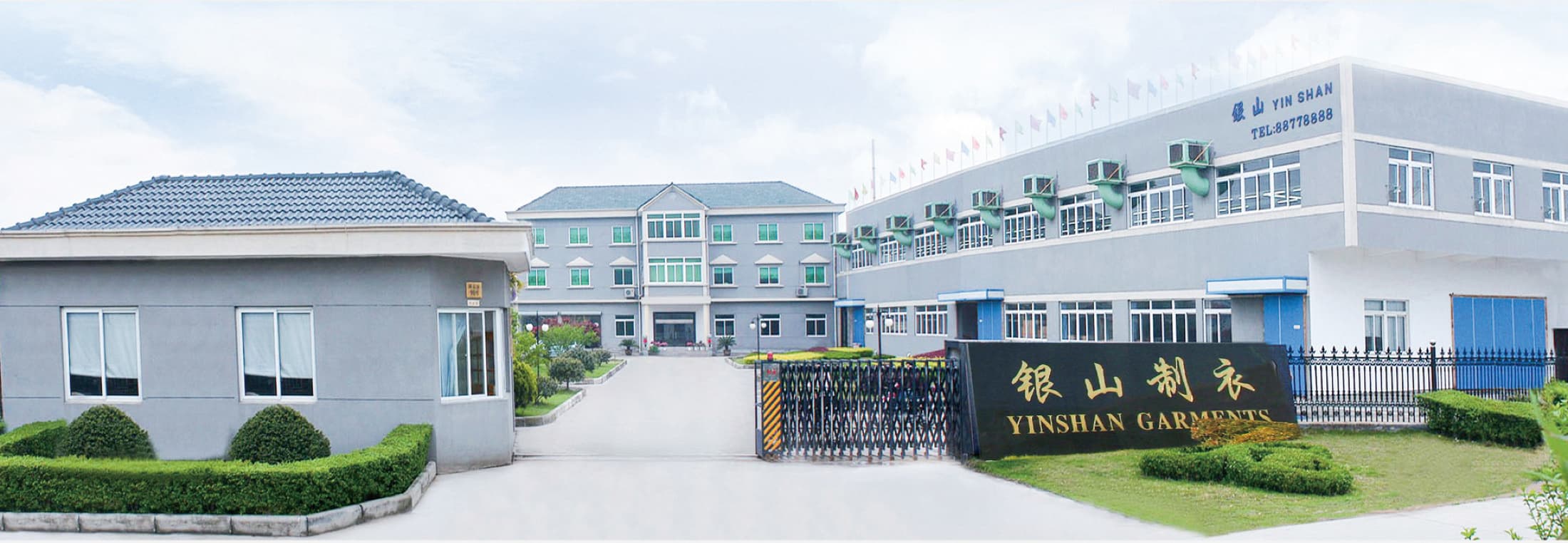
Record interruptions and blind spots. Poor focus, weak sound, an inaccessible area or a missing person may prevent a conclusion. Agree a follow-up view or another evidence method instead of filling the gap with an assumption. The manufacturing and factory-tour overview can help orient the conversation, but website photographs are background material. The supplied exterior photograph in this article likewise identifies a visual reference, not proof of a current audit result or order allocation.
How can a buyer check the path from technical instructions to a sample?
Choose one sample decision and follow its references. Ask which garment file the sample used, where a proposed change was recorded, who reviewed it and what happened next. A useful demonstration might connect a measurement comment to a revised drawing and an identifiable later sample. The objective is to understand the chain of decisions, not to collect impressive-looking forms without a common product identity.
Use the activewear tech pack checklist to identify the technical information relevant to the garment. During the remote review, focus on how that information is read and kept current. Ask the team to distinguish an accepted instruction from a proposed option. A sample maker choosing a feasible temporary solution is different from the buyer approving that solution for production; the record should make the distinction visible.
Look for an explanation of discrepancies rather than a promise that discrepancies never occur. If the sample differs from the drawing, ask how the difference was noticed, communicated and resolved. Keep the explanation tied to the actual item. The sample feedback guide provides a practical structure for comments, while the remote review tests whether the supplier can maintain those connections in a real or appropriately demonstrated workflow.
What can remote material and construction checks establish?
They can help clarify which material or construction detail is being discussed and how the supplier records it. Ask to see the material reference alongside the garment or component it applies to. For a seam, request views of the relevant inside and outside surfaces and an explanation of the intended operation. Note the viewing conditions and anything that the camera cannot resolve.
They cannot turn a fibre name, a stretch demonstration or an attractive close-up into a verified performance claim. If the buyer requires evidence about recovery, colourfastness, durability or another property, identify the appropriate method, sample and qualified review needed for that project. Keep those requirements separate from a general video conversation. Do not describe an informal hand-pull demonstration as a laboratory test.
The fabric and trim review service can help organise the material questions for a development project. Follow the exact proposed combination: body fabric, lining, elastic, thread or other relevant components. If the supplier shows a different garment to explain a technique, label it as a process example. Its usefulness depends on the question being asked; it is not evidence that your own material and construction have already been approved.
How should QC evidence show what happened after a problem was found?
Ask to follow an appropriate finding from observation to disposition and recheck. A finding is the recorded issue; disposition is the decision about what happens to the affected item or work. The supplier should be able to explain the relevant acceptance requirement, who reviewed the issue and what evidence was used to close it. An image of a checklist with every box ticked tells little about this process by itself.
For a measurement concern, look for the sample or order reference, size, point of measure and applicable instruction. For workmanship, ask which location and condition prompted the finding. The activewear QC checkpoints guide is useful for defining the product questions. A remote review then examines how the supplier documents and communicates those checks, without claiming to inspect an entire production lot through a few selected images.
Include the unresolved outcome. If rework is proposed but has not been rechecked, the item remains open. If the original record cannot be connected to the shown garment, note that limitation. The buyer's response may be a clearer sample requirement, another evidence request or an independent inspection plan. It should follow the significance of the gap to the project rather than the supplier's confidence during the call.
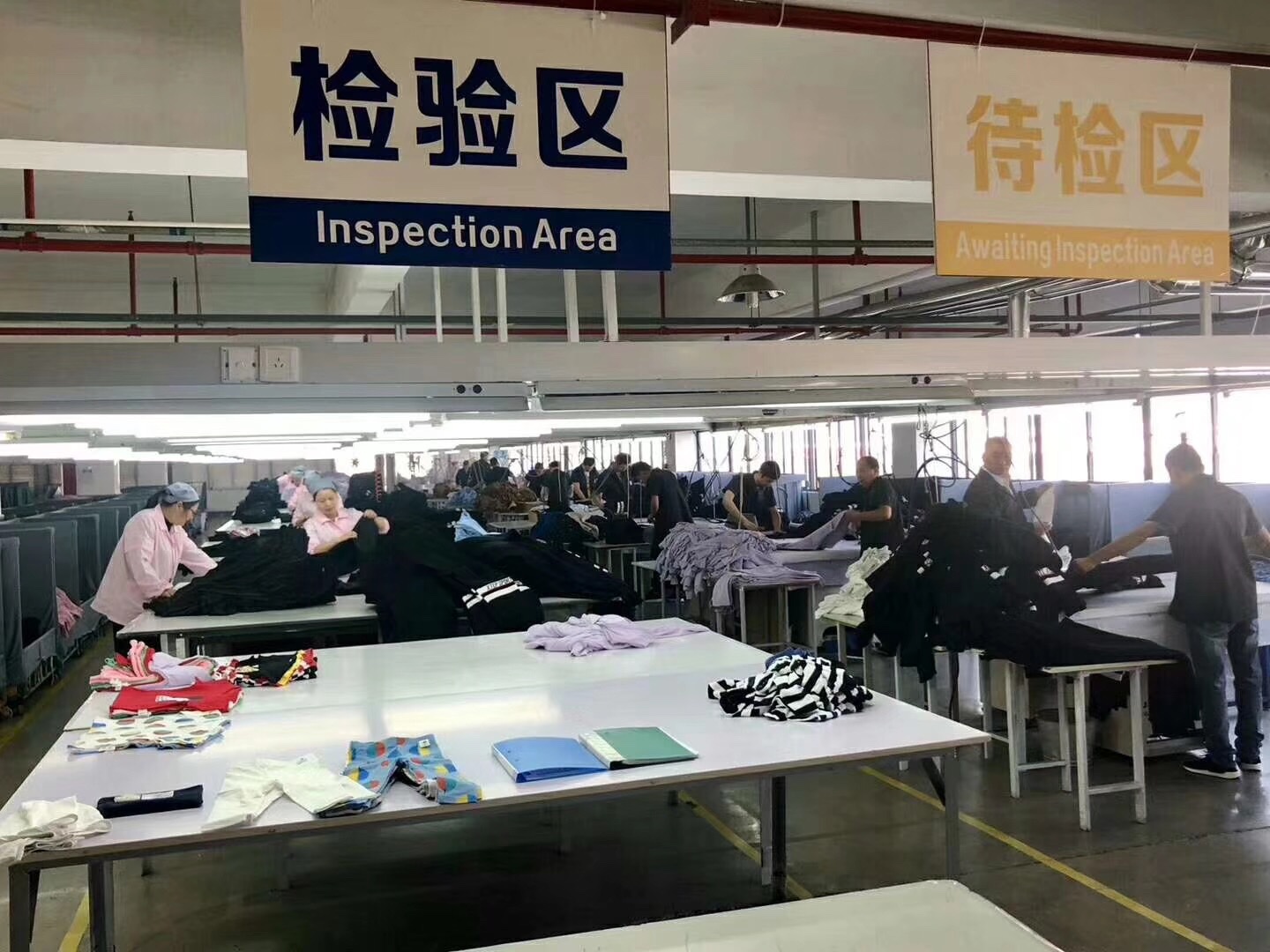
This photograph shows an inspection-area arrangement. It does not document the checks, results or acceptance decision for a buyer's order. A useful remote request connects the physical area to the relevant garment record and the person responsible for resolving findings.
What should be checked in packing and production handovers?
Follow one unit through the proposed identification system. Ask how the garment's style, colour, size and set configuration connect to its label, bag or other pack and the receiving record. Where information is buyer-supplied, identify who provides the approved values. A supplier should not have to infer a commercial identifier from a product photograph or an old conversation.
Discuss an appropriate packing example before treating it as an order instruction. Check the version, the intended receiving arrangement and any temporary fields. The activewear packaging checklist explains the detailed preparation work. In the remote review, the useful question is whether the parties can trace and explain the relationship between the approved unit and the instructions used to identify and group it.
Then ask what moves from sampling into production. An approved garment does not automatically approve every label, colour allocation or carton instruction. Use the sample-to-bulk production guide to frame the handover questions. Identify the records that travel together, the person who checks for conflicts and the procedure for communicating a later change. Keep evidence of that process separate from approval of an order that has not yet been produced.
How should brands evaluate a missing or contradictory answer?
First describe the gap precisely. “The factory was unclear” gives the next reviewer little to work with. “The shown sample carries revision V1 while the measurement sheet refers to V2, and the presenter could not explain the relationship” identifies a question that can be followed up. Ask for the relevant explanation and supporting record, then assess the response against the original decision.
Distinguish an access problem from an observed product or process problem. A video connection that cannot show a seam clearly is an evidence limitation. A clearly visible seam that differs from the agreed instruction is an observation requiring review. Both may justify further action, but they should not be described as the same finding. This distinction keeps the report honest about what the buyer actually knows.
Agree escalation before the next commercial commitment. Some gaps can be addressed through a controlled sample or a clarified file. Others may call for independent document verification, testing or an on-site assessment by an appropriate professional. Do not create a universal pass score from a handful of positive answers. A small number of unresolved issues can matter more than a large number of completed checklist fields when those issues affect the intended product or supplier relationship.
When is a remote review insufficient for the decision?
It is insufficient when the evidence available remotely cannot support the decision the buyer needs to make. That may concern the identity or scope of a party, a requirement that needs physical assessment, or a material discrepancy that the available records do not resolve. State the limitation and choose the next method deliberately. A longer call is not automatically a better method.
For context, ISO's published description of ISO/IEC TS 17012:2024 on remote auditing methods treats remote methods as tools for an audit and states that they are not intended to replace on-site methods. This guide does not claim to implement that technical specification or to deliver a management-system audit. The practical implication for a sourcing team is to define the confidence needed and acknowledge where its own remote review falls short.
Keep certification, social-compliance assessment and order inspection distinct. If the project calls for one of those activities, identify the applicable scope and competent provider rather than relabelling a sourcing conversation. A supplier's willingness to join a video call is helpful for communication; it is not, by itself, a certificate, a compliance conclusion or a guarantee about future production.
What should a buyer record before closing the remote review?
Use a concise close-out list so the conversation produces decisions that another team member can understand. Preserve the agreed source files and permissions for any retained material; do not circulate another customer's confidential information as a substitute for evidence about your own project.
- Name the supplier, location, activities and product scope that the review actually covered.
- Record the review date, participants, roles, language support and any recording agreement.
- State the sourcing decision and the representative garment or process question under review.
- Give every evidence item a stable identifier, source, date and description of what it represents.
- Link technical files, samples, measurements and comments to the same product and revision.
- Separate direct observations from supplier explanations and the buyer's own interpretations.
- Record restrictions, poor visibility, unavailable documents and other limits on the review.
- Connect each material finding to an owner, requested response and appropriate next evidence.
- Keep proposed corrections open until the relevant follow-up has actually been reviewed.
- State whether the next step is sampling, further verification, an on-site assessment or a hold.
- Specify what any approval covers and what remains outside its scope before moving the project forward.
Send the written close-out record for factual clarification, especially where a translation or technical term could have changed the meaning. Correct misunderstandings without erasing the original issue or inventing a resolved outcome. The record should make the next decision easier, not turn uncertainty into a positive result because the meeting has ended.
How can inPACE Sports support a focused remote supplier discussion?
Start with the garment and the evidence question. The China activewear supplier page describes inPACE's B2B sourcing and development context. A factory-custom enquiry can then focus on sample management, materials, construction, quality checkpoints or packing, with an agreed scope for the information to be discussed. Available evidence and any additional review should be confirmed for the actual project.
To prepare that conversation, send a remote factory-review brief with your product references, intended development route, audit or review objective, requested evidence, responsible reviewers and unresolved questions. Identify where you need a sample, a process explanation or independent verification. A useful next step is agreement on what can be shown, what must be checked another way and which decision the resulting evidence will support.
Product directions
Explore relevant activewear products
Use these product pages as practical references for your brief, then confirm materials, fit, customization, and production details through sampling.
China Activewear Supplier
Frame the supplier discussion around your product, development work and the evidence needed for the next sourcing decision.
View product directionManufacturing and QC
Identify the relevant production, inspection and packing handovers to discuss in a focused remote process review.
View product directionCustom Activewear Development
Use one representative garment to define fit, material or construction questions that require sample evidence.
View product directionFAQ
Buyer questions
Can a remote factory audit prove that an activewear supplier is suitable?
A remote review can support a specific sourcing decision when the evidence is relevant and traceable, but it cannot establish every aspect of suitability. Define the product, activities and questions covered, record limitations, and identify any further sampling, verification or on-site assessment needed before a broader commitment.
What should a brand request before a remote activewear factory review?
Send the objective, representative garment, agenda, requested evidence and participant roles. Agree how documents, video and confidential information will be handled. Ask for records that connect to the actual product or an explicitly identified process example, rather than requesting a large collection of unrelated factory photographs.
Is a live video tour stronger evidence than a recorded factory video?
A live tour allows follow-up questions and requests for relevant views, which can improve the discussion. Its value still depends on what is shown, how it is identified and whether it answers the question. Neither a live nor a recorded video automatically proves identity, capacity, compliance or order quality.
How can buyers review activewear quality remotely?
Use identifiable samples, clear technical references and appropriate records to discuss specific measurements, workmanship or material questions. Record viewing limits and connect findings to follow-up actions. A few images or an informal demonstration do not replace a defined product test, inspection plan or review of the actual production order.
Should a supplier share other customers' production records?
The evidence plan should respect confidentiality and agreed permissions. A redacted example or a demonstration using the buyer's own project may explain a process without exposing another customer's information. If that evidence cannot answer a material question, record the limitation and agree an appropriate alternative method of verification.
What should happen when the evidence does not match the supplier's explanation?
Describe the discrepancy, identify the affected evidence and ask for clarification or supporting material. Keep the issue open until the response has been reviewed. Depending on its importance, the next step may be a sample, independent verification, an on-site assessment or a pause in the sourcing decision.
Does a remote sourcing review count as certification or a social-compliance audit?
No. A buyer-led sourcing review has the scope and limitations agreed for that exercise. Certification, social-compliance assessment and other formal activities require their own applicable scope and competent review. Do not present a factory video, a supplier conversation or this guide as a substitute for those processes.