
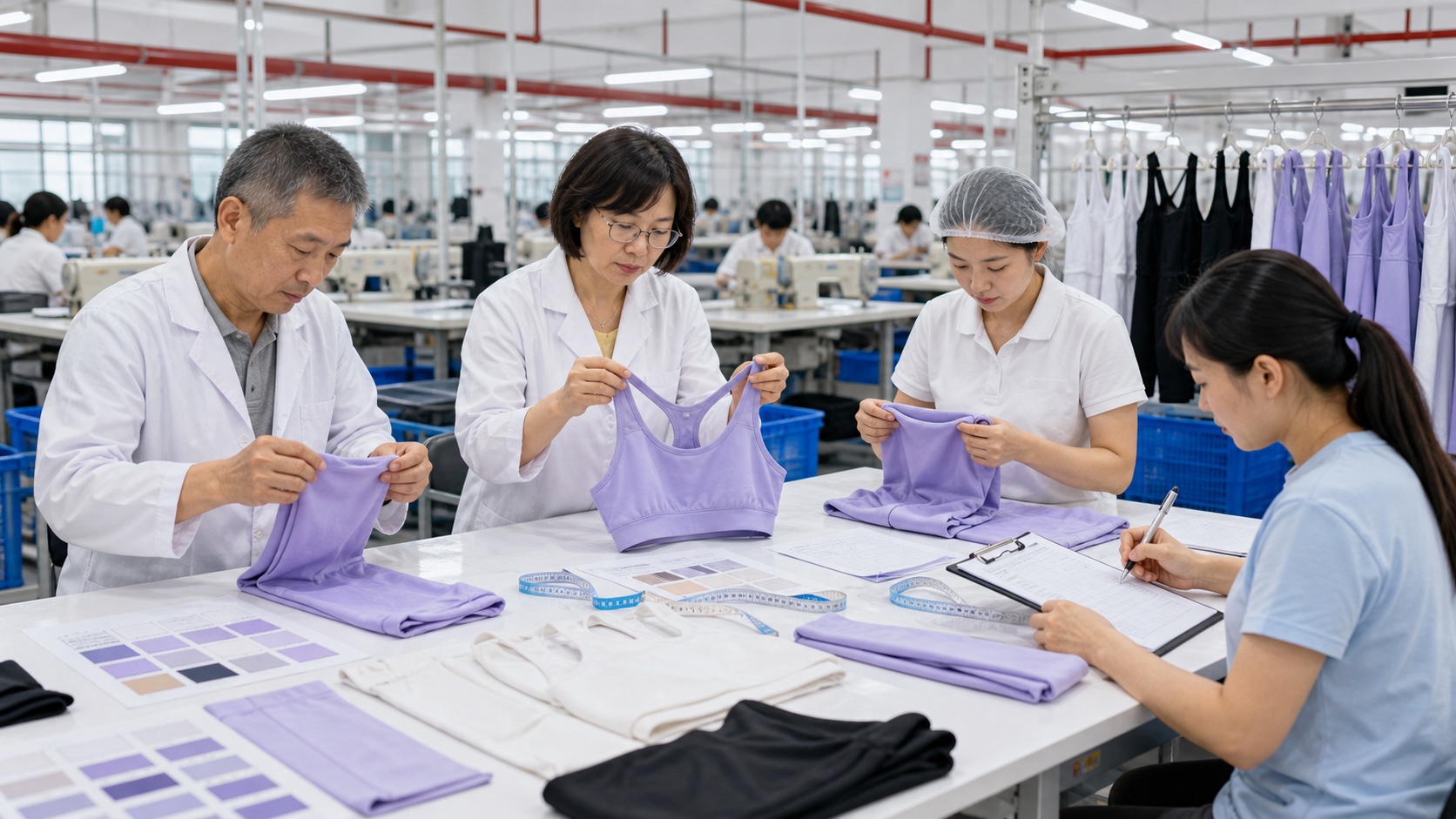
A French yoga brand can launch a private label yoga wear collection more clearly when it first separates an existing-style branding route from factory-custom development. Define the customer, product roles, fit and fabric questions, logo and label files, packaging responsibilities, sample purpose, and owner of France-facing information. A catalogue reference can support a defined range; a changed fit, coverage, support, fabric, or construction needs sample evidence before it becomes a production instruction.
*Factory-context reference: this image illustrates a garment review step, not a claim about a particular French programme, material, test result, certification, capacity, or delivery outcome.*
What does a private label yoga wear France brief need to decide first?
The phrase private label yoga wear France can describe two different conversations. One starts with an existing product direction and focuses on the brand presentation around it: a logo zone, label, hangtag, folding instruction, size-colour plan, and packing. The other asks for a different garment outcome: a new legging rise, a softer or more structured handfeel, a changed bra coverage or support direction, a distinct waistband, a new panel arrangement, or a construction detail that has to be tested. Treating both as the same request leaves too much for a supplier to guess.
Start by naming the customer and the product job. A studio-led collection may need a legging, a low-impact bra or top, a light layer, and one simple coordination piece. An ecommerce launch may instead need a clearly differentiated core set, a size plan, product-page evidence, and a receiving route. The brand does not need to decide every production detail before the first call. It does need to mark what is a reference, what is a preference, and what has to be proven on a sample.
Use the Yoga Activewear Catalog to name product roles, not to assume a future item has the same fabric, colour, construction, price, quantity, or availability. When logo, labels, and packaging are the central changes to an existing product direction, the private-label activewear service is the relevant commercial path. When a reference has to change in fit, material, coverage, support, or construction, move the request to custom activewear development.
Which route fits a French yoga collection?
The right route can differ by style. A brand might use one established yoga-top direction as a starting point while developing a new legging because its waistband, coverage, fabric hand, or movement behaviour needs to change. That is more useful than trying to make one broad phrase such as “private label collection” carry every technical decision.
| Buyer situation | Useful route | What to share first | What still needs approval |
|---|---|---|---|
| The product role is established and the main change is brand presentation. | Existing-style branding / light customisation. | Product reference, intended channel, logo zone, labels, hangtags, packing, size-colour direction, and a list of open questions. | Actual style, material, colour, application method, quantity direction, and packing components. |
| The garment needs a changed fit, material, coverage, support, construction, or function. | Factory-custom development. | Annotated reference, body or garment measurements, intended movements, material questions, sample purpose, and change priorities. | Pattern, material, construction, fit, sample evidence, consumer wording, and final production files. |
| The brand is testing a narrow range before wider distribution. | Small-batch custom discussion. | Core product roles, what the sample or limited learning cycle should test, feedback method, and potential next decision. | Scope, quantity, materials, commercial terms, schedule, re-order assumptions, and evidence from the review. |
The route is not a promise of stock or a preset order threshold. It is a way to make a productive first brief. A reference to the racerback yoga top, high-waist yoga bottom, or yoga bra direction can give a team a shared product language. Each is a reference point only. The selected material, fit, colour, construction, brand application, size plan, and production scope still need a project review.
How should a brand define the first four yoga product roles?
Give each core item one shopper and one approval question. A legging may be the range anchor because it needs a clear waist, rise, inseam, gusset, seam, and coverage review. A top can provide a layer relationship and an armhole or body-length decision. A bra or shelf-support style can focus the discussion on neckline, underband, straps, lining, and support direction. A light layer can clarify transition use, sleeve movement, closure, and logo placement.
Do not copy a competitor's item and call it a specification. Classify every image, garment, or sketch as a fit reference, material-feel reference, construction reference, visual direction, or logo-position example. That lets the factory see what it should investigate and what it must not infer. A screenshot often cannot show fibre composition, inside construction, stretch recovery, fabric weight, lining, grading, or approved claims.
The activewear colour approval guide is useful when a launch needs a controlled colour reference rather than a loose mood-board colour. For a private-label collection, colour is connected to fabric, logo contrast, label, pack presentation, product photography, and size-colour assortment. A colour direction becomes more dependable when the brand records the source, version, product role, and approval owner.
What fabric and fit questions should a yoga brief make visible?
Yoga garments are close to the body and often stretch in several directions. The brief should describe the wearer and movements the team wants to review, then connect each observation to a garment area. For leggings, those questions might include waist stability, rise, gusset shape, inseam behaviour, seam comfort, coverage in named positions, and recovery after movement. For tops and bras, they might include neckline position, armhole comfort, hem or underband stability, coverage, strap relationship, lining, and logo-zone behaviour.
Describe questions rather than promising outcomes. “We want to review coverage in forward fold, squat, and twist positions on the intended base size” is a sample objective. “The garment is squat-proof for every wearer” is a broad performance claim that a sourcing brief cannot establish. The same distinction applies to compression, breathability, support, softness, and durability language.
Use the fabrics and trims review to organise composition, handfeel, stretch direction, recovery, surface, opacity question, lining, elastic, binding, mesh, zipper, and logo compatibility. If a material changes after a fit sample, reopen the related fit, colour, support, label, packaging, and product-copy questions. The new fabric may not behave like the first reference, even if the silhouette appears similar.
Why should French consumer information have a named owner?
This is a sourcing guide, not legal advice. The brand should assign an owner for information that will reach the French market before label artwork, packaging, product pages, and bulk instructions are treated as final. That owner can coordinate the appropriate internal and external review of fibre information, language, product claims, care wording where used, packaging information, and channel-specific requirements.
Regulation (EU) No 1007/2011 sets rules on textile fibre names and related fibre-composition labelling and marking for textile products made available on the Union market. It calls for fibre-composition information to be legible, visible, clear, and available to consumers before purchase, including online. It also provides that labelling or marking is supplied in the official language or languages of the member state where a textile product is made available to consumers, unless that state provides otherwise.
For a French launch, the operational implication is not that a factory should make a legal conclusion. It is that the product team should not leave the fibre statement, label artwork, web copy, and responsibility for final French-market review in an unlabelled folder. A manufacturer can supply agreed material and production information and work from approved files. The brand should decide which information is accurate for its product and sales route with the appropriate advisers.
How should packaging and the French Info-tri question enter the project record?
Packing is more than the last line in a purchase order. It joins the approved garment to a warehouse, studio, retailer, ecommerce fulfilment partner, or end customer. The brief should state the receiving point, SKU logic, size-colour plan, barcode need where applicable, fold direction, individual-pack direction, carton marks, and which person owns the final market-facing files.
France's Ministry for Ecological Transition explains that the Triman symbol and Info-tri help consumers identify whether and how a product or component should be sorted. Its wider extended producer responsibility guidance describes Triman and sorting-information obligations for products within applicable producer-responsibility schemes. The exact role of an importer, producer, marketplace, distributor, or brand depends on the real route and should be checked by the responsible party. A supplier should not substitute for that review.
The practical brief can still make the work easier. Keep the product label, packaging, hangtag, bag, shipping carton, and ecommerce information as separate, versioned items. Mark which file is a production instruction, which is a draft for market review, and which remains open. If packaging, fibre composition, intended channel, or sales country changes, the brand's information owner should decide whether the previous approval still applies.
What should a first yoga sample prove?
Give every sample a named job. A first legging sample might test waistband stability, movement coverage, seam comfort, material feel, and logo-zone position. A top or bra sample might test neckline, shoulder relationship, hem stability, lining, and support direction. A light layer might test sleeve movement, body length, closure, and layering. Trying to approve every garment, all brand files, and every market-facing statement from one unstructured sample usually produces weak evidence.
The activewear sample plan can help the brand record the version, material direction, colour, base size, reviewers, movements, observations, decisions, and open questions. Keep the sample review separate from consumer claims. A sample can reveal what a team needs to change; it does not turn an untested claim into a general product fact.
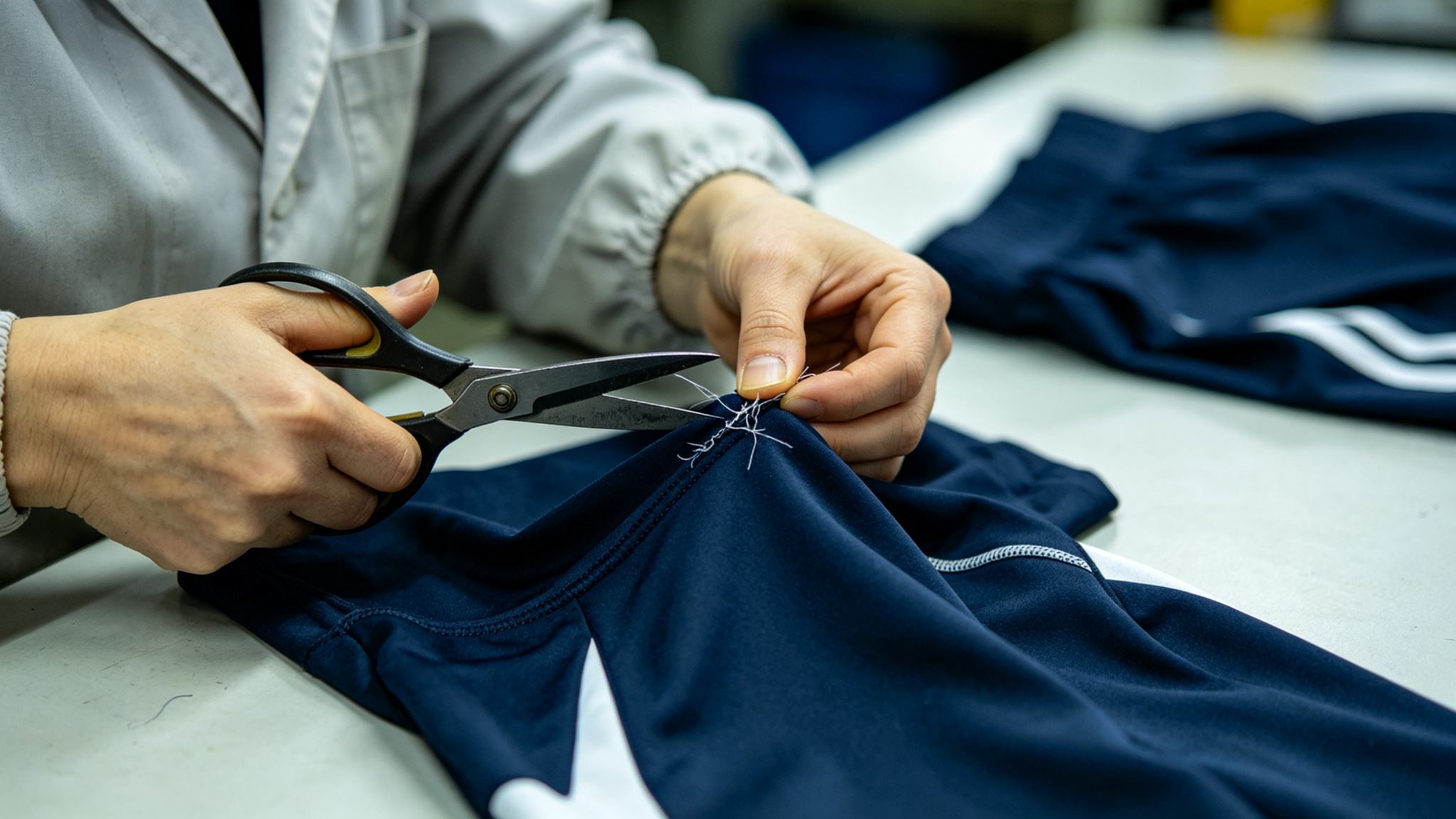
*Factory-context reference: the image supports a discussion of a named seam review. It does not identify the pictured garment as a yoga product, or prove that a particular seam, material, quality level, or approval applies to a French collection.*
inPACE can discuss sampling support, including printing, embroidery, or wash effects where the selected fabric, construction, placement, and project scope make them suitable. Planning ranges are conditional: samples are commonly discussed at about 5–10 days and production at about 25–50 days after scope and approvals are confirmed. Those ranges are not promises. Material availability, components, revision rounds, quantity direction, cooperating-factory schedules, and unresolved decisions affect the actual plan.
How should a French yoga brand compare private-label proposals?
Compare assumptions before comparing a headline number. Ask every potential supplier to state the product route, reference source, material direction, construction questions, branding scope, sample purpose, size-colour plan, packing assumptions, available evidence, and unresolved items. A response based on a different fabric, fewer colours, a different logo method, or no packing detail is not describing the same work.
The activewear manufacturing workflow helps explain why approved materials, construction notes, artwork, QC records, and packing instructions need to travel together. A productive supplier question is: “Which points can you review from this brief, which need a sample, and which French-market files remain our responsibility to confirm?”
The answer should distinguish product development from commercial and market decisions. Freight, tax, customs, consumer-law conclusions, and destination-specific obligations require the appropriate owner or adviser. That boundary does not weaken the factory brief. It prevents a supplier comparison from combining unlike garments and unlike responsibilities.
Which product and brand files should be controlled before bulk approval?
Keep a short controlled evidence set for each style: product role, versioned reference, measurement direction, material and component notes, colour reference, sample request, artwork, label layout, hangtag, packaging direction, fit comments, receiving instructions, and change log. Give each item a status such as reference only, proposed, approved for sampling, approved for production, or still open.
Before a bulk discussion, compare the production-facing files with the actual reviewed sample. A material, colour, grade, construction, logo method, label text, packaging item, or sales-country change may require a new decision. The activewear packaging checklist can organise the pack and receiving conversation, but it cannot replace the final files for the selected product.
If the brand changes a point after sample review, write down the prior version, requested change, reason, affected product area, person requesting it, person approving it, and evidence still needed. A revised sample can answer a named fit, construction, or brand-application question. It does not automatically approve a product listing, a legal statement, a packaging symbol, or a performance claim.
How should a studio route differ from an online yoga launch?
A studio route often begins with use in a real class. The brief can state how an instructor or member will layer the garment, which movements make coverage or comfort worth reviewing, whether the product is staff wear, member merchandise, or a small retail offer, and who receives the cartons. It should not treat the presence of a studio as proof that an existing reference is appropriate for every wearer or class format. The product team still needs a reviewed size range, material direction, sample purpose, and a decision about what information belongs on a product page or hangtag.
An online launch needs the same product discipline plus a way to connect the physical garment to a reliable listing. Keep the approved product name, colour reference, size guidance source, fibre information, logo position, photography status, product-page text owner, and pack instructions traceable to the selected version. A content or ecommerce colleague should be able to ask where a comfort, support, coverage, or material statement came from and receive a specific answer: a controlled product decision, a sample observation, or a claim that still needs review. The factory can make agreed components and packing visible in production files. It should not be asked to silently convert a mood board into consumer wording.
The Yoga Activewear Catalog can help a team see a category and product-role vocabulary. The how it works page can help it structure an inquiry, sample review, and production handoff. Neither page substitutes for the product-specific files or destination review for a French launch.
When should a brand return to a fabric or sample decision?
Return to the relevant decision whenever the input that supported it changes. A new colour may change the product photography, logo contrast, or coverage question. A new fabric can affect handfeel, recovery, seam behaviour, lining choice, label compatibility, and the wording the brand hoped to use online. A new logo zone can affect the sample purpose or which component the production team needs to assess. A packing change can affect barcode placement, folded presentation, or the file the receiving team relies on.
This is not unnecessary paperwork. It gives a buyer a short route back to the evidence rather than forcing a factory, merchandiser, and ecommerce team to compare screenshots from different versions. The activewear sample plan and fabrics and trims review are useful process aids when the affected question needs to be restated. Record the reason for reopening the point, who must decide it, and whether a new sample, a revised production file, or a market-information review is needed.
What should be in the first inquiry to a yoga wear manufacturer?
Use this checklist before asking a manufacturer to respond:
- Name the French sales channel and the first product roles in the range.
- Identify the route for each style: existing-style branding, factory-custom development, or a small-batch learning discussion.
- Classify each reference as fit, material, construction, visual, colour, or branding direction.
- State wearer, activity, base size, intended size range, and layering context.
- Record the material questions: handfeel, stretch, recovery, coverage, lining, surface, and component compatibility.
- Give each sample a purpose and name the movements or product questions it should address.
- Supply controlled artwork and note logo zone, label location, hangtag, packaging, and version status.
- Name the owner of fibre information, product-page wording, packaging review, and French-market information.
- State the size-colour and quantity direction without presenting either as a fixed commitment.
- Identify the receiving point, barcode and carton questions where relevant, and the packing owner.
- Separate confirmed information from questions for the sample, supplier, buyer, or adviser.
- Ask the manufacturer to state assumptions in writing before a quotation or timing discussion is compared.
What can inPACE discuss from a well-prepared France brief?
inPACE can discuss catalogue-informed product direction, factory-custom development, fabric and fit questions, sample planning, branding compatibility, QC and packing records, and coordination across cooperating production factories. That discussion can draw on more than 30 years of garment-production experience in the wider production context without becoming a capacity, certification, price, schedule, or legal claim.
Share the product roles, reference purpose, selected route, material and fit questions, controlled artwork, sample objective, receiving plan, and the owner of France-facing information. Send an activewear product brief to inPACE to separate the decisions an existing-style branding programme can address from the questions that need factory-custom development and sample evidence.
Product directions
Explore relevant activewear products
Use these product pages as practical references for your brief, then confirm materials, fit, customization, and production details through sampling.
Yoga Activewear Catalog
Use the catalogue to set the product roles for a French yoga collection, while confirming the actual garment, material, fit, colour, branding, quantity, and market-facing information.
View product directionPrivate Label Activewear
Use the private-label path when a defined existing product direction needs a logo, labels, hangtags, packaging, and a controlled assortment brief.
View product directionCustom Activewear Development
Use factory-custom development when the French yoga range needs a changed fit, fabric, coverage, support direction, construction, colour, logo zone, or sample evidence.
View product directionFAQ
Buyer questions
Can a French yoga brand start with an existing product direction?
Yes. That is useful when the product role already works and the meaningful changes are logo, labels, hangtags, packaging, and a defined assortment. The actual garment, material, colour, size range, application method, quantity direction, and packing still need confirmation. A different fit, fabric, coverage, support, construction, or function needs a custom-development and sample discussion.
Who should own fibre, label, and product-page information for France?
The brand should assign an owner for final market-facing information. A manufacturer can provide agreed product and material data and make from approved files, but it should not replace the buyer's legal, regulatory, or destination-specific review.
Does EU textile fibre labelling settle every French-market question?
No. The EU framework addresses fibre-composition information. A brand should separately identify language, packaging, sales-channel, product-claim, and other consumer-information questions that need review for its actual product and French sales route.
What should the first private-label yoga sample prove?
It should answer named product questions: fit, movement coverage, waistband or hem stability, seam comfort, material behaviour, lining, logo placement, label position, or packing presentation. Record its version, inputs, reviewers, observations, decisions, and open questions.
How should a brand compare private-label supplier responses?
Compare the assumptions first. Confirm the product route, material direction, construction, branding, sample purpose, size-colour plan, packing, and unresolved decisions are the same. Otherwise, two proposals may describe different garments or different levels of completed work.
Are sample and production schedules fixed for a French yoga collection?
No. Planning depends on the material and components, construction, artwork readiness, revision rounds, quantity direction, schedules across cooperating production factories, and approvals. Discuss a project-specific plan after the relevant inputs are reviewed.
What belongs in the first inquiry?
Send the sales channel, product roles, reference source and purpose, route preference, fit and material questions, size-colour direction, branding files, sample purpose, receiving plan, packing needs, and owner of French-market information. That gives a manufacturer a practical basis for identifying missing information and proposing the next review.